
Cost Breakdown: What Goes Into New Residential Well Drilling in 2026?
Planning a private water supply requires looking at your property’s complete infrastructure rather than just drilling a simple borehole. When establishing a realistic budget for new residential well drilling, reviewing a comprehensive guide to residential water well installation helps clarify where every dollar goes. Drilling rates vary based on depth, local soil formations, dynamic aquifer pressures, and site accessibility, which makes an all-inclusive perspective essential for every homeowner.
| Well Depth & Formation Category | Typical Depth Range | Primary Geological Characteristics | Key System Components Included |
|---|---|---|---|
| Shallow Alluvial Well | 50 to 100 feet | Loose sand, gravel, high water table | Casing, drive shoe, stainless screen, shallow-set pump |
| Standard Glacial Till Well | 100 to 250 feet | Mixed clay, dense silt, gravel layers | Steel or heavy PVC casing, grout seal, 0.5 to 1.5 HP pump, pressure tank |
| Bedrock Well | 250 to 450+ feet | Limestone, shale, or dense fractured rock | Heavy-wall casing seated in rock, high-head submersible pump, advanced filtration |
A fully functional water delivery system includes the borehole, the structural casing, the pumping mechanism, surface controls, delivery plumbing, and electrical distribution. Skipping any of these essential elements during early planning inevitably leads to unexpected expenses and costly change orders down the road. For Central Indiana homeowners, regional drilling conditions frequently involve dense glacial till, stubborn boulders, and shallow limestone bedrock, meaning a detailed site evaluation is the best way to avoid budget surprises.
Geological Factors Influencing New Residential Well Drilling
Subsurface geology dictates the drilling method, daily drilling speed, tooling wear, and overall depth required to reach a stable, potable aquifer. In regions dominated by loose alluvial sand and gravel, drilling progresses relatively quickly, though continuous-slot well screens must be placed with absolute precision to keep fine sediment out of the water supply. In contrast, glacial till presents unpredictable, alternating layers of dense hardpan clay, compacted silt, and heavy granite boulders that require steady rotary power and specialized heavy equipment.
When encountering dense limestone formations or fractured sedimentary rock, penetration rates change dramatically, requiring specialized roller-cone or hammer drill bits. Understanding how deep water wells go helps property owners understand why neighboring properties can experience drastically different well depths, static water levels, and overall installation investments. Mobilizing large rotary rigs across wet lawns, sloped parcels, or heavily wooded acreage can also influence site preparation requirements and overall project timelines.
Key Equipment and Components for New Residential Well Drilling
A modern water well is a finely engineered mechanical and plumbing assembly. Understanding how water wells work makes it easy to see why every individual component must be sized correctly to match household peak demand:
- Well Casing: Heavy-duty thermoplastic PVC or carbon steel pipe lines the borehole to prevent collapse, stabilize the borehole walls, and keep shallow surface contaminants out of the drinking water supply.
- Grout and Sanitary Seal: High-solids bentonite clay slurry or neat cement grout fills the annular space surrounding the upper casing to block contaminated surface runoff from migrating downward along the exterior of the pipe.
- Submersible Pump: Sized to match your exact well depth, column head, and desired flow rate, this multi-stage pump sits submerged beneath the dynamic water level to push water up to the surface efficiently.
- Pitless Adapter: A precision sanitary brass fitting installed below the local frost line that routes water horizontally underground into the home while maintaining an airtight, sanitary seal at the surface casing.
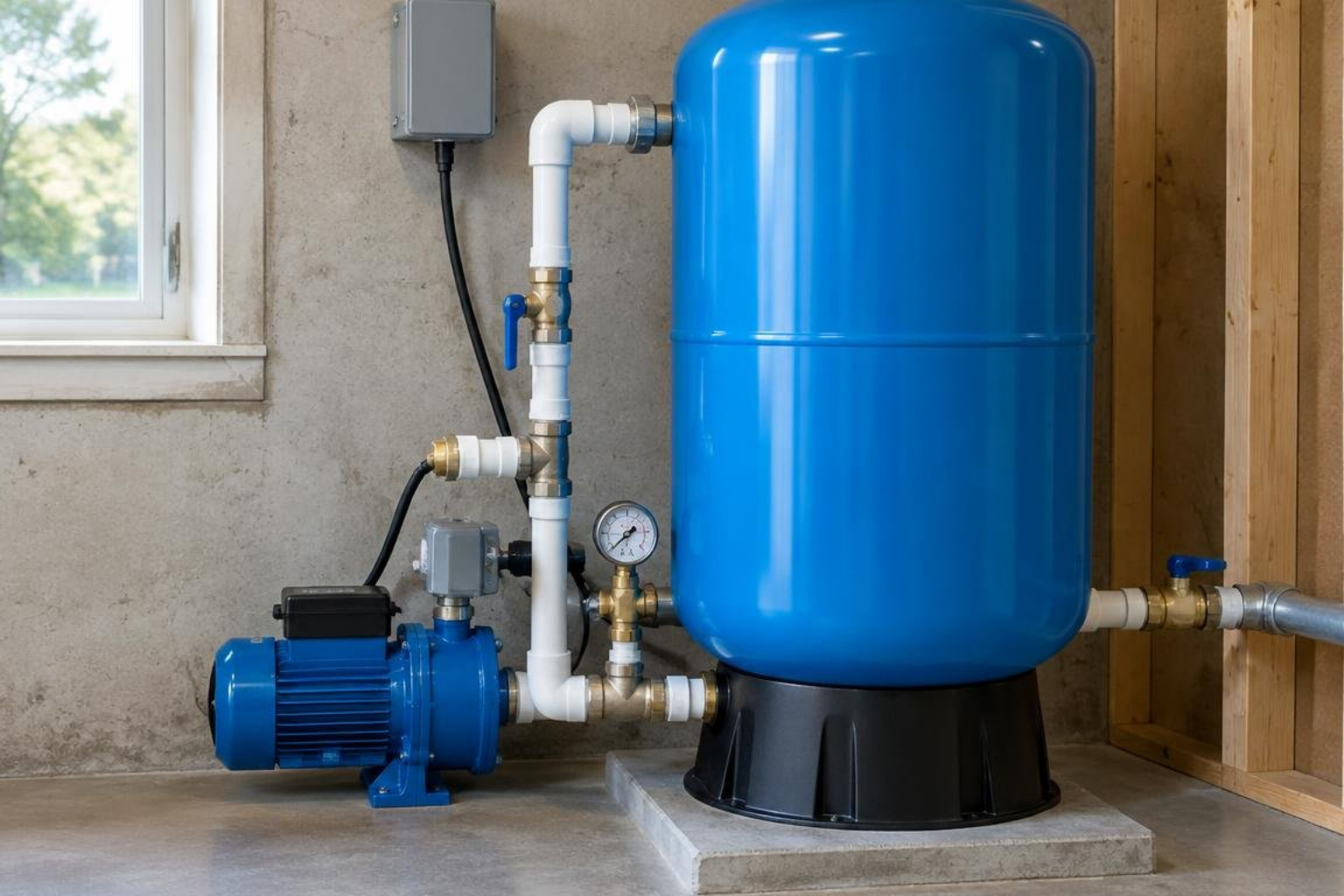
- Pressure Tank: A pressurized bladder tank inside the home that maintains household water pressure, provides emergency reserve storage, and prevents the pump motor from cycling on and off too frequently.
Modern, clean drilling practices utilize advanced separation technology like Mud Puppy recycling units, which continually clean and reuse drilling fluids while minimizing property mess. This closed-loop mud recycling approach is especially valuable on established residential lots where preserving landscaping, keeping the jobsite tidy, and controlling slurry disposal are top priorities.
Crucial Permitting, Water Testing, and Siting Requirements
Drilling operations cannot begin without properly verifying boundary lines, underground utility corridors, and mandatory environmental setbacks. Siting a new well requires balancing close proximity to the home against strict separation distances from potential contamination sources like septic drain fields, driveways, outbuildings, and property lines.
Health Codes, Setback Regulations, and Permits
State health departments and local environmental agencies enforce strict construction standards to protect regional groundwater quality and prevent cross-contamination. A drilling permit must be secured before breaking ground, and completed installations must be officially registered with the Indiana Department of Natural Resources. Professional contractors handle these administrative filings to ensure full compliance with state water resource regulations.
Setback rules dictate that your well head must remain a safe distance from septic tanks, absorption fields, sewer mains, livestock pens, and chemical storage areas. Maintaining these strict physical buffers prevents wastewater discharge, organic pathogens, and surface runoff from migrating into your drinking water supply. Local county health departments in Central Indiana provide specific setback distances that apply to your exact parcel size and soil percolation conditions.
Initial Yield Testing and Water Quality Verification
Once drilling reaches the target aquifer and the casing is securely set, the well must be developed, flushed, and thoroughly tested. A standardized yield test measures the sustainable output of the well over several continuous hours of pumping:
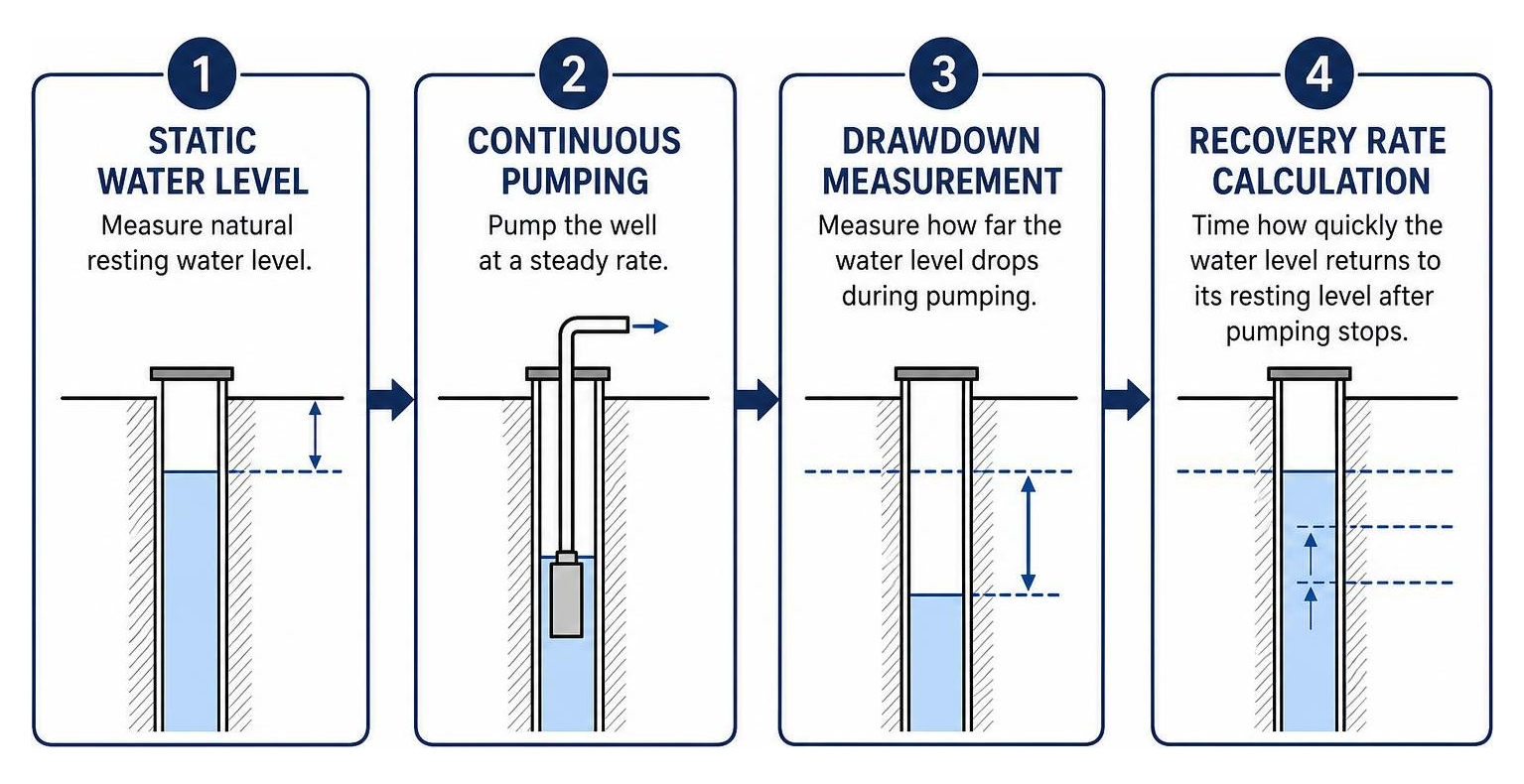
- Static Water Level Measurement: Recording the natural resting depth of the water column before any pumping begins.
- Continuous Flow Pumping: Pumping the well steadily at fixed intervals to confirm stable gallons-per-minute (GPM) yield over extended runtimes.
- Drawdown Assessment: Tracking exactly how far the water column drops inside the casing during sustained, active pumping.
- Recovery Rate Calculation: Timing how quickly the aquifer returns to its initial resting level after the test pump is shut down.
After confirming an adequate flow rate, raw water samples should be collected and sent to a state-certified environmental testing laboratory. Certified testing panels analyze total coliform bacteria, E. coli, nitrates, nitrites, heavy metals, hardness, pH, and dissolved minerals, ensuring the fresh supply meets safety guidelines. The Indiana State Department of Health provides detailed guidance on private well water testing standards and recommended seasonal sampling schedules for residential well owners.
How to Evaluate Quotes and Avoid Hidden Drilling Surprises
Evaluating contractor bids involves far more than simply comparing the lowest initial advertised number. Reviewing the overall cost to drill a well requires checking that all essential equipment, electrical wiring, excavation tasks, and site containment methods are fully included in the initial scope of work.

Comparing Itemized Estimates vs. Per-Foot Rates
A bare-bones per-foot drilling rate can be highly misleading if it covers only the borehole excavation while omitting essential components like the casing, sanitary seal, trenching, and pump package. High-quality contractors provide fully itemized proposals that separate drilling labor, casing footage, pump equipment, drop pipe, electrical lines, and trenching below the frost line. When selecting your system configuration, consider these comprehensive equipment tiers:
- Good: Standard single-speed submersible pump, baseline pre-charged diaphragm pressure tank, reliable mechanical pressure switch, and standard single-stage sediment filtration.
- Better: Upgraded heavy-duty stainless-steel submersible pump, oversized commercial-grade pressure tank to reduce motor starts, whole-house cartridge filtration, and integrated lightning surge arrestors.
- Best: Advanced constant-pressure variable frequency drive (VFD) pump system providing city-like constant water pressure, commercial-grade filtration with automatic backwashing, smart remote leak monitoring, and whole-home electrical surge protection.
A transparent proposal should outline the exact casing wall thickness, pump horsepower rating, delivery pipe diameter, trenching depth below local frost penetration, and all required electrical connections for drilling wells safely and reliably according to state building codes.
Managing Change Orders, Dry Holes, and Unexpected Geology
Subsurface drilling always involves natural geological variables that cannot be fully predicted from the surface. An ethical contractor establishes clear policies for handling unexpected subsurface conditions before any drilling begins on your property:
- Dry Hole Terms: Clear terms outlining the fee structure and labor rates if an exploratory borehole fails to produce adequate water and needs to be safely plugged and relocated.
- Deep Drilling Clauses: Pre-agreed rates per foot if the drill string must advance deeper than initial estimates to tap into a reliable, high-yielding aquifer.
- Mud and Cuttings Containment: Explicit plans for managing drill cuttings and recirculating drilling fluids to protect your lawn, landscaping, and adjacent properties.
- Site Restoration Contingencies: A realistic understanding of rough grading, trench backfilling, and surface cleanup responsibilities once heavy rigs leave the property.
For Central Indiana properties, verifying these policies before signing a contract is the best way to keep your new residential well drilling project running smoothly, on budget, and on schedule without unexpected surprises. Checking verified homeowner experiences on Google Reviews will give you confidence in your contractor’s reputation and reliability.
Frequently Asked Questions About Residential Wells
What Ongoing Costs Should I Expect From a Private Well?
Unlike municipal utility connections with recurring monthly usage bills and escalating meter fees, ongoing well costs are limited to the minor electrical power needed to run the submersible pump motor and routine preventative maintenance. Budgeting for periodic professional water quality testing and occasional mechanical checkups keeps your system operating smoothly for decades. Most Central Indiana homeowners find that investing in a private well delivers substantial savings over time compared with rising municipal utility rates, while providing superior water independence and personal control over home water quality.
What Happens if the Driller Hits a Dry Hole?
If a borehole does not produce a sufficient sustainable flow rate, your contract will specify the precise procedure for decommissioning it. The contractor will safely seal and abandon the dry hole using approved impermeable bentonite grout or neat cement to safeguard the regional aquifer from surface contamination. After decommissioning, the crew will relocate the drilling rig to an alternate approved site on your property and drill a new borehole under pre-agreed contract terms. Reputable drillers explain these dry hole policies clearly before equipment mobilization so that you are never caught off guard.
What Are the Best Well-System Options if Yield Is Low?
If your property’s underlying aquifer produces a low yield (for example, between 1 and 3 gallons per minute), you can still enjoy outstanding, reliable water pressure throughout the home. Highly effective engineering options include installing an atmospheric storage tank system paired with an internal booster pump, incorporating an oversized pressure tank array, or setting the submersible pump deeper within a large-diameter casing to create a substantial standing reserve column of water. A professional evaluation of your well yield and peak household water demand will determine the ideal equipment combination for your home.
How Do Clean Drilling Technologies Protect My Yard?
Modern well drilling utilizes advanced portable solids control and fluid recycling systems, such as Mud Puppy equipment, to filter out rock cuttings and recirculate drilling fluid. This keeps the drill site clean, reduces the footprint of heavy machinery on your turf, minimizes messy slurry overflow, and streamlines post-drilling cleanup so your yard recovers quickly.
Conclusion: Choosing the Right Partner for Your Water System
Drilling a new residential well provides long-term independence, clean drinking water, and dependable water pressure for your family. Because your well and pump represent critical home infrastructure, partnering with experienced, licensed professionals ensures your entire system is properly sized, fully compliant with Indiana health codes, and engineered to last for decades. DIY approaches and unqualified contractors risk aquifer contamination, premature pump failure, and costly property damage.
As Your Local Central Indiana Provider, Blair & Norris brings over 75 years of trusted experience to every project. We provide 24/7 live phone support and complete care for your private water infrastructure, from professional well and pump installation services and emergency well pump service to preventative well system maintenance and testing. In addition to clean water solutions, our dedicated team supports regional residential and commercial property needs with reliable septic system service, cleaning, and pumping, as well as specialized commercial grease trap maintenance and car wash drainage pumping.
Contact Blair & Norris today to schedule an on-site consultation and receive a clear, comprehensive estimate for your new residential well drilling project.