
What You Need to Know About Septic Tank Inspection in Indianapolis, IN
Getting a septic tank inspection in Indianapolis IN is one of the most important steps you can take to protect your home, your family’s health, and your property value. Here’s a quick overview of what Indianapolis homeowners need to know:
Quick Answer: Indianapolis Septic Inspection Essentials
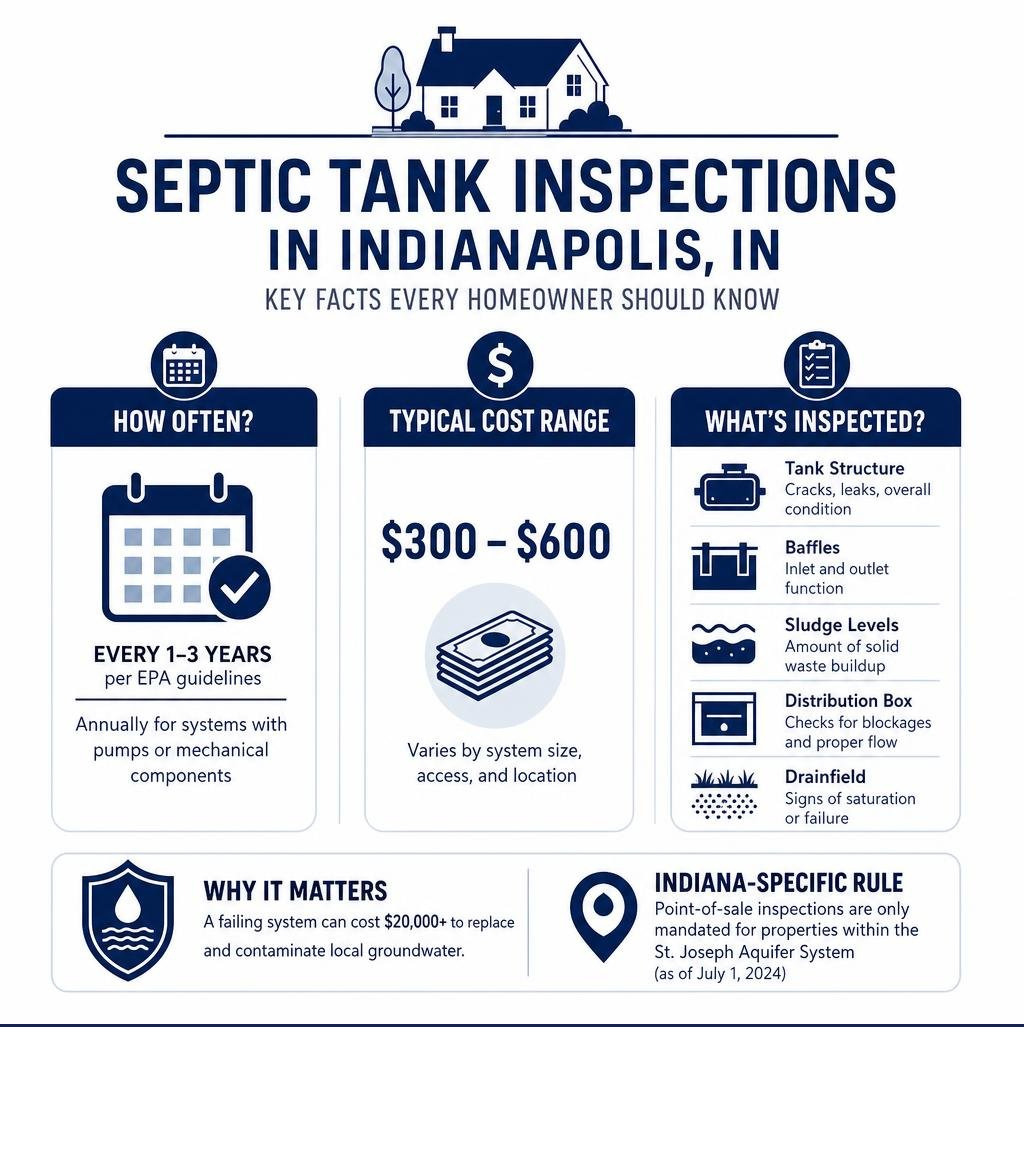
- How often: Every 1-3 years, per EPA guidelines (annually for systems with pumps or mechanical components)
- When it’s required: During many real estate transactions and when lenders require it
- What’s checked: Tank structure, baffles, sludge levels, distribution box, and drainfield
- Who should do it: A licensed, certified professional — not a standard home inspector
- Why it matters: A failing system can cost $20,000+ to replace and contaminate local groundwater
About 1 in 5 American households rely on a septic system. In central Indiana, that number is significant — and the stakes are high. A neglected septic system doesn’t just fail quietly. It can back up sewage into your home, leach contaminants into the ground, and leave you facing a repair bill that rivals a new car.
Think of your septic system like your car’s engine. Skip the oil changes long enough, and you’re looking at a full replacement.
I’m Mack Blair, and with over 30 years of hands-on experience providing septic tank inspection in Indianapolis IN and across central Indiana, I’ve seen how a simple, routine inspection can save homeowners thousands of dollars. At Blair & Norris, we’ve built our reputation on honest assessments and reliable service — and in this guide, I’ll walk you through everything you need to know.
Septic tank inspection Indianapolis IN word guide:
Core Septic Problems and Their Costly Implications
When a septic system works, it is a marvel of biological engineering. Wastewater leaves your home, solids settle in the tank where bacteria break them down, and the liquid effluent flows out to the drainfield for natural filtration. However, when this process is disrupted, the consequences are messy and expensive.
In Central Indiana, our unique geographical features present specific challenges. Many properties in Marion, Hamilton, and Hendricks County sit on dense clay soils. Clay soil has very small pores, meaning it absorbs and filters water much slower than sandy soil. When a system is neglected, or when heavy rains saturate the ground, this slow percolation can lead to complete drainfield failure.
Without regular inspections, several invisible problems can develop:
- Drainfield Clogging: If solid waste rises too high, it escapes into the drainfield, clogging soil pores and preventing filtration.
- Environmental Contamination: A malfunctioning system can leach untreated sewage into local groundwater. For homes in rural Johnson or Morgan County relying on private wells, this poses a direct threat of bacterial contamination.
- Sewage Backups: When the tank or drainfield cannot accept more liquid, wastewater backs up into your home’s drains.
Addressing these issues early is critical. If you suspect your system is struggling, reading about the 5 Unmistakable Signs You Need Septic Tank Repair can help you identify trouble. Additionally, professional diagnostic services like a Best Sewer Camera Inspection in Indianapolis – Indyspect™ LLC can pinpoint exact blockages within your lateral lines.
Why a Septic Tank Inspection Indianapolis IN is Critical
Many homeowners view their septic system as “out of sight, out of mind.” However, a professional septic tank inspection in Indianapolis IN is a crucial preventative measure.
First, it protects groundwater. Your septic system sits directly above the aquifers supplying drinking water across Central Indiana. A leaking tank or saturated drainfield allows pathogens and chemicals to seep into the water supply. Regular inspections ensure your system protects, rather than pollutes, our environment.
Second, inspections are vital during real estate transactions. Standard home inspectors rarely have the specialized training or tools required to evaluate an underground septic system. Relying on a basic home inspection can leave a buyer with a failing system costing tens of thousands to replace. A dedicated septic evaluation provides a clear picture of the system’s true condition. For a deeper look, check out our Real Estate Septic Inspection Guide 2025.
Finally, inspections preserve the structural integrity of your tank. Over time, concrete tanks can crack and steel tanks can corrode. An inspector can identify these weaknesses early, allowing for targeted repairs rather than a complete replacement.
Common Signs of Septic System Failure in Central Indiana
Your home and yard will often drop hints that something is amiss. Keep an eye out for these common warning signs:
- Gurgling Drains: Distinct gurgling sounds when draining indicate a restriction or a full tank.
- Soggy, Spongy Grass: Unusually wet or spongy ground over your drainfield indicates effluent is rising to the surface.
- Unusually Lush, Green Grass: Bright green, fast-growing grass over the drainfield indicates wastewater is fertilizing the lawn from below.
- Sewage Odors: A persistent rotten-egg smell around your yard or indoor drains means sewer gases are escaping.
- Pooling Water: Standing water near your tank or drainfield indicates a system at its capacity limit.
If you notice these red flags, consulting a comprehensive Septic System Maintenance Guide can help you understand the next steps before calling in professionals.
The Hidden Risks of DIY Septic Inspections and Maintenance
In the era of internet tutorials, the temptation to handle home maintenance yourself is strong. However, when it comes to your septic system, DIY inspections and maintenance are incredibly risky.
First, there are severe safety hazards. Septic tanks are confined spaces filled with toxic gases like methane and hydrogen sulfide. Inhaling these gases can cause immediate unconsciousness or death. A professional inspector uses specialized safety equipment and never enters a tank without proper ventilation.
Second, DIY inspections often result in incomplete assessments. A homeowner might open the lid, see that the water level looks fine, and assume everything is perfect, missing a cracked baffle, a slow leak, or early-stage root intrusion.
Furthermore, attempting DIY repairs or using harsh chemical “cleaners” can damage your system. Many store-bought chemical treatments kill the beneficial bacteria inside your tank that break down solids. Once these bacteria are gone, solids accumulate rapidly, leading to clogs. Improper digging or lid removal can also violate local health department regulations, leaving you legally and financially liable.
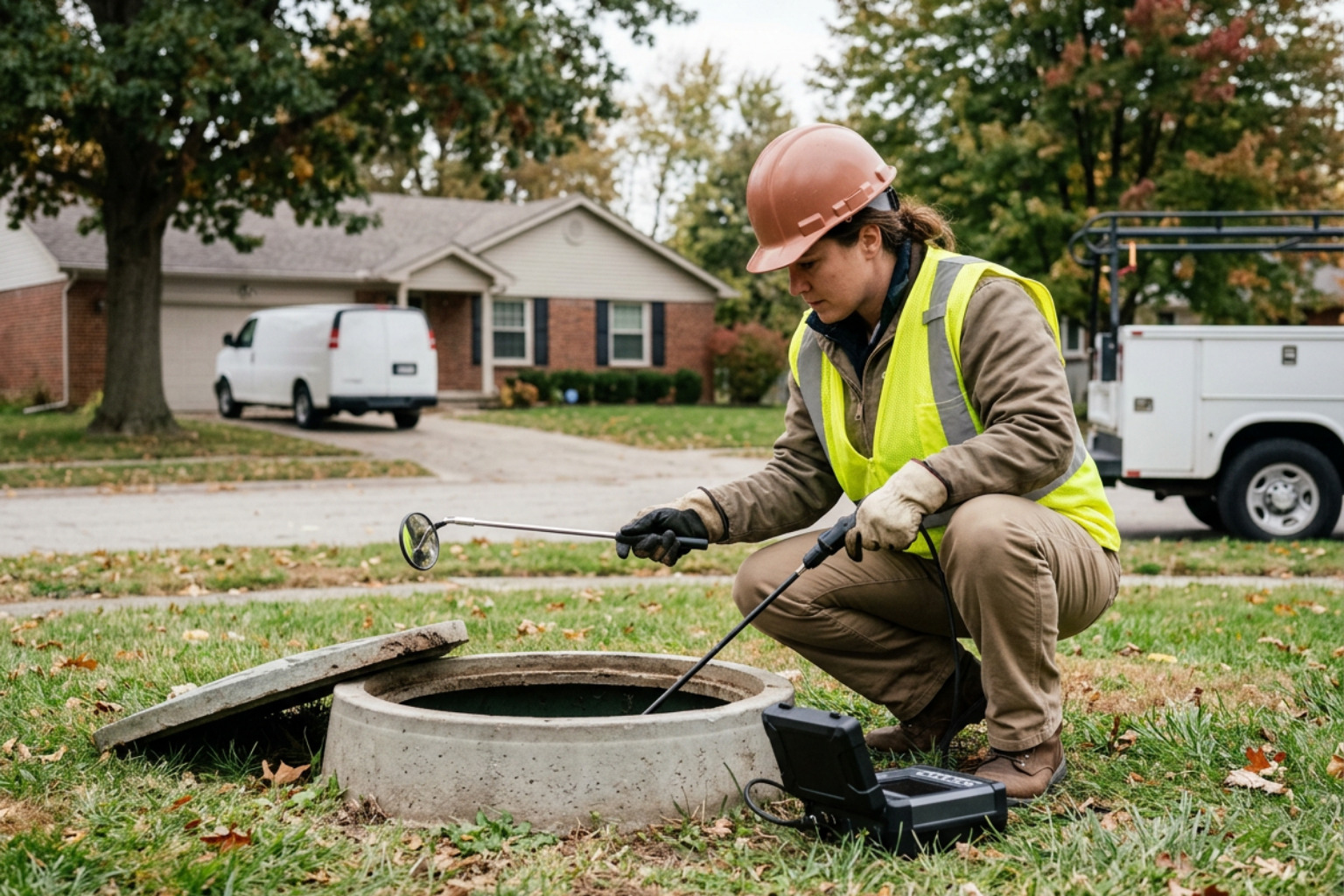
Why Dye Tests Alone Fall Short
When purchasing a home, some buyers are offered a “dye test” as a quick, cheap septic inspection. During a dye test, a colored dye is flushed down the toilet, and the inspector walks the yard to see if any colored water surfaces.
While a dye test can identify a system that has already completely failed, it falls short of a true evaluation. Dye tests are strictly surface-level checks. They cannot tell you:
- If the septic tank has structural cracks or leaks below the water line.
- Whether the inlet and outlet baffles are corroded or missing.
- If tree roots have intruded into the tank or lateral lines.
- The actual thickness of the sludge and scum layers inside the tank.
If a system has been sitting vacant, a dye test will almost always pass because the dry soil can easily absorb the small amount of water used. Once a family moves in, the system will quickly fail. To truly understand your system, you need an evaluation that looks inside the tank. For a detailed breakdown, read Everything You Need to Know About Well and Septic Inspections.
Choosing the Right Septic Tank Inspection Indianapolis IN Service
When hiring a professional for a septic tank inspection in Indianapolis IN, you shouldn’t trust just anyone. In Indiana, look for an inspector certified by the Indiana Onsite Wastewater Professionals Association (IOWPA). An IOWPA certification ensures the technician understands local soil conditions and adheres to strict environmental regulations set by the Indiana Department of Health.
Additionally, a quality service provider will utilize advanced technology, such as high-resolution sewer cameras, and provide a comprehensive, written report detailing their findings.
To help you understand your options, we’ve broken down the typical tiers of septic inspection services available in Central Indiana:
| Inspection Level | What’s Included | Best For | Pros & Cons |
|---|---|---|---|
| Good (Visual Inspection) | Visual check of the yard, running water inside, basic dye test. | Quick, routine checkups. | Pros: Inexpensive, fast. Cons: Misses internal, structural, and underground issues. |
| Better (Standard Professional) | Locating and uncovering tank lids, checking baffles, measuring sludge/scum layers, inspecting the distribution box. | Homeowners wanting to keep up with routine maintenance. | Pros: Identifies most common tank issues. Cons: Cannot inspect the bottom of the tank without a pump-out. |
| Best (Comprehensive with Pump-Out & Camera) | Everything in “Better,” plus pumping the tank to inspect bare walls/floor, and a camera scope of the lines. | Real estate transactions, older systems, or active drainage issues. | Pros: Complete peace of mind; reveals 100% of hidden issues. Cons: Requires more time. |
What a Professional Septic Tank Inspection Indianapolis IN Includes
When we perform a professional septic tank inspection in Indianapolis IN, we follow a meticulous, multi-step process:
- Locating and Uncovering the System: We locate the septic tank and distribution box using specialized locating equipment to avoid tearing up your lawn.
- Measuring Sludge and Scum: Using a “sludge judge,” we measure the exact thickness of the scum and sludge layers to determine if the tank needs immediate pumping.
- Checking Baffles and Filters: We inspect the inlet and outlet baffles, which prevent solids from escaping into your drainfield, and clean the effluent filter.
- Evaluating the Distribution Box (D-Box): We ensure the D-box is level and that water is flowing equally to all drainfield lines.
- Drainfield Stress Test: We run water through the system for 30 to 45 minutes to observe how quickly the drainfield absorbs liquid.
To understand how this process aligns with routine maintenance, read about What to Expect During a Septic Pumping Service. For homes with complex layouts, integrating Indianapolis Sewer Camera Inspections – Sewer Scope services provides ultimate diagnostic clarity.
Advanced Equipment and Mud Recycling Technology
At Blair & Norris, we use the best tools available to protect your property. Traditional excavation can turn a beautiful yard into a muddy mess. That is why we utilize advanced, low-impact machinery and clean drilling practices.
Specifically, when septic repairs or new well drilling require excavation, we highlight the use of Mud Puppy equipment for clean mud recycling and drilling.
The Mud Puppy system is a game-changer for residential properties. It continuously recycles the drilling mud, separating solids and sand from the liquid slurry. This means:
- We use significantly less water during the drilling or excavation process.
- We eliminate the messy, overflowing mud pits that traditional drilling rigs leave behind.
- Your lawn, landscaping, and driveways remain clean and undisturbed.
By investing in high-tech, environmentally friendly equipment like the Mud Puppy, we ensure that your septic or well service is completed quickly, efficiently, and with minimal disruption to your daily life.
Frequently Asked Questions About Indianapolis Septic Inspections
How often should I schedule a septic inspection in Indianapolis?
According to EPA guidelines, most residential septic systems should be professionally inspected at least every 1 to 3 years. However, the ideal frequency depends heavily on your household size, the age of your system, and your water usage habits.
If your system includes electrical components, pumps, or mechanical aerators, it should be inspected annually. Regular checkups allow us to catch minor issues—like a failing pump float or a clogged filter—before they lead to a complete system backup. Knowing When to Pump Your Septic Tank Signs Frequency and Benefits is a key part of this maintenance cycle, ensuring your tank is emptied before solids can escape to the drainfield.
Are septic inspections required when buying or selling a home in Indiana?
In most of Indiana, septic inspections are not universally mandated by state law for every real estate transaction. However, they are almost always required by mortgage lenders, insurance companies, and savvy buyers as a condition of the home sale.
There is one major regional exception: as of July 1, 2024, property transfer septic inspections are legally required for homes located within the St. Joseph Aquifer System if the property has not transferred ownership or had a new system installed within the last fifteen years. For properties outside this zone, an inspection is still highly recommended to protect both parties from unexpected post-closing liabilities. You can learn more about these specific requirements in our guide on Well and Septic Inspection.
How much does a professional septic inspection cost in the Indianapolis area?
The cost of a professional septic inspection in Central Indiana varies depending on the depth of the inspection and whether the tank needs to be pumped during the service. A basic visual inspection is the most affordable option, while a comprehensive inspection—which includes uncovering the lids, pumping the tank for complete visual access, and performing a drainfield stress test
While a comprehensive inspection requires an upfront investment, it is incredibly cost-effective. Finding a cracked tank or a clogged drainfield before you purchase a home can save you tens of thousands of dollars in replacement costs. For existing homeowners, catching a minor issue like a broken baffle during a routine inspection prevents a catastrophic drainfield failure.
Conclusion
Your septic system is one of the most hardworking, critical components of your home. Keeping it running smoothly doesn’t require constant worry—it simply requires consistent, professional care. By scheduling regular inspections, paying attention to early warning signs, and avoiding the risks of DIY maintenance, you can ensure your system lasts for decades.
When you need a trusted partner to care for your home’s water and wastewater systems, Blair & Norris is here to help. As Your Local Central Indiana Provider, we have spent over 75 years delivering high-quality, ethical service to families across Indianapolis, Carmel, Fishers, Noblesville, and the surrounding communities.
We are proud of our reputation, and we invite you to read what our neighbors say about us on our Google Reviews. With our family-owned values, 24/7 live phone support, and commitment to using advanced, low-impact technology like Mud Puppy mud recycling, we make septic maintenance completely hassle-free.
Don’t wait for a backup to find out if your system is in trouble. Schedule your septic inspection with Blair & Norris today, or contact us for an honest, professional estimate. We are ready to help you protect your home and gain complete peace of mind.