
Why Clean Septic Pumping Is Critical for Your Home’s Health
Your septic system is one of the most expensive and essential components of your home, yet it’s almost entirely out of sight. This can lead to an “out of mind” approach to maintenance, but neglecting your system can have disastrous consequences for your property, your wallet, and the environment. Clean septic pumping is the single most important service for ensuring your system’s health and longevity. It’s far more than just removing liquid waste—it’s a comprehensive cleaning that removes all accumulated solids, sludge, and scum to keep your septic system running efficiently and prevent catastrophic failures.
Many homeowners don’t realize there’s a significant difference between a basic pump-out and a thorough cleaning until they’re facing thousands of dollars in preventable repairs. A septic tank is a delicate ecosystem where waste separates into three layers: a top layer of scum (oils, grease), a middle layer of liquid effluent, and a bottom layer of heavy sludge. A proper cleaning addresses all three.
What a True Clean Septic Pumping Includes:
- Complete Waste Removal: A comprehensive service removes not just the liquid effluent and floating scum but also the thick, compacted sludge at the bottom of the tank. This sludge is the primary cause of system failures when it accumulates and flows into the drainfield.
- Tank Wall and Bottom Cleaning: Technicians use specialized tools to stir the tank contents and scrape the walls, breaking up hardened sludge that basic pumping leaves behind. This restores the tank to its full operational capacity.
- Thorough Component Inspection: A professional will inspect the tank’s crucial components, including the inlet and outlet baffles (which prevent scum and sludge from escaping) and the effluent filter. Identifying a cracked baffle early can save you from a complete drainfield replacement.
- Multi-Compartment Service: Many modern septic tanks have two or more compartments to improve waste treatment. A proper cleaning involves locating and pumping out every compartment to ensure the entire system is reset.
- Proper and Legal Waste Disposal: A reputable company ensures that the septage is transported and disposed of at an approved treatment facility, protecting Central Indiana’s groundwater and adhering to environmental regulations.
The confusion between “pumping” and “cleaning” is a costly one. As one industry expert noted: “Often the terms ‘cleaning’ and ‘pumping’ are used interchangeably when referring to septic tanks. However, there is a slight difference between these two terms.” That slight difference can be the deciding factor between a system that lasts for decades and one that fails prematurely.
Basic pumping only removes liquids and some floating solids. True cleaning removes everything, including the dense, compacted sludge at the bottom that can clog your drainfield pipes and cause irreversible damage. The EPA recommends septic tank service every 3-5 years, but the thoroughness of that service is what truly matters. A well-maintained septic system can last 30 years or more, while a neglected or improperly serviced system can fail in as little as 15-20 years, requiring a replacement that can cost tens of thousands of dollars.
I’m Mack Blair, and with over 30 years in the septic industry, I’ve witnessed how proper clean septic pumping extends system life and prevents stressful, expensive emergencies. At Blair & Norris, we’ve built our 75-year reputation on providing thorough, honest service that protects our neighbors’ investments and our shared environment here in Central Indiana.
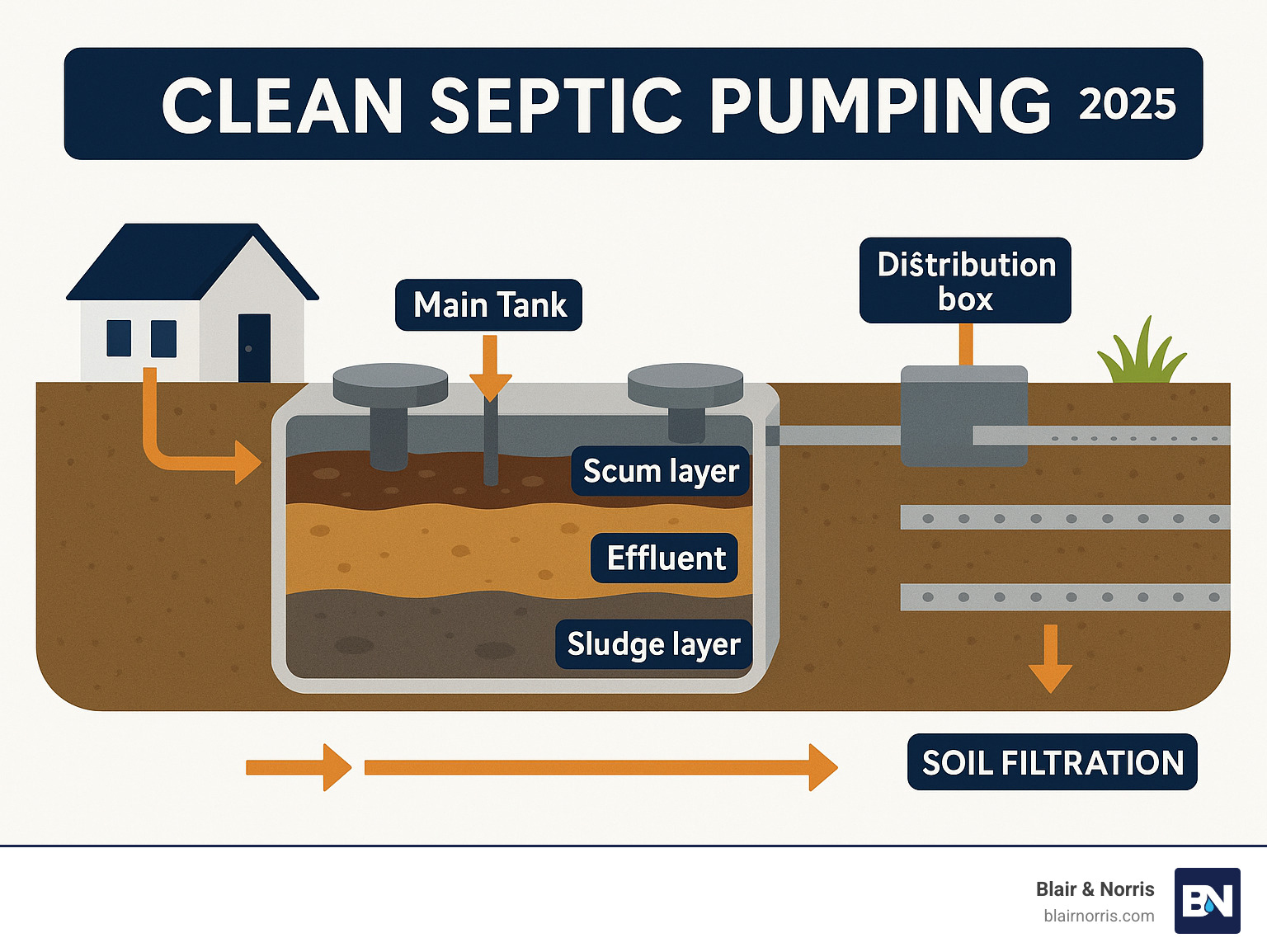
For homeowners across the Blair & Norris service area—from busy Carmel and Fishers to the quiet countryside near Morgantown—septic care is not a luxury; it is a necessity for preserving day-to-day comfort and protecting Indiana’s pristine waterways. Because most septic components are buried, you rarely get a visual cue that something is starting to go wrong. By the time you see or smell a symptom, the underlying problem may already be severe. Scheduling routine, clean septic pumping before those warning signs appear is the best insurance policy you can buy for your property.
A properly cleaned tank also protects public health. The White River, Sugar Creek, and the many small aquifers that supply Central Indiana drinking water can all be affected by a single failed septic system. When you invest in thorough service, you are doing your part to keep nitrates, pathogens, and household chemicals out of our shared watershed. It is a small, local step that supports the larger goal of safeguarding clean water for future generations.
Finally, consider the peace of mind that comes with 24/7 availability. Emergencies rarely happen between 9 and 5, which is why Blair & Norris maintains live phone support every hour of every day—even on holidays. Whether you live in Indianapolis proper or in the growing suburbs of Zionsville, Westfield, or Avon, expert guidance and rapid dispatch are only a phone call away. That commitment to round-the-clock service is another reason so many Indiana families have trusted us for three-quarters of a century.
In short, when you combine preventative scheduling, comprehensive cleaning techniques, and an experienced local team, you eliminate the guesswork—and the potential disasters—from septic ownership. The result is a cleaner tank, a healthier home, and a happier wallet.
Septic Pumping vs. Septic Cleaning: What’s the Real Difference?
Here’s a critical piece of information that surprises most homeowners: septic pumping and septic cleaning are not the same service. While both involve removing waste from your tank, the difference in what’s removed and the long-term result can mean saving—or spending—thousands of dollars on your septic system.
Think of it like maintaining your car. A basic oil change is essential, but it’s not the same as a full tune-up where a mechanic inspects the belts, checks the filters, and diagnoses potential issues. One keeps the car running for now; the other ensures it runs reliably for years. Similarly, basic pumping is a temporary fix, while a full cleaning is a long-term investment in your home’s health.
| Aspect | Septic Pumping (The Shortcut) | Septic Cleaning (The Solution) |
|---|---|---|
| What’s Removed | Primarily liquid waste (effluent) and some easily accessible floating solids (scum). It leaves behind the heavy, compacted sludge at the bottom. | All contents are removed: liquid effluent, floating scum, and, most importantly, the entire layer of compacted sludge from the tank bottom and walls. |
| Goal | To quickly lower the liquid level in the tank to provide temporary relief from symptoms like slow drains or to meet a minimum service requirement. | To fully empty and reset the septic tank, restoring its original capacity and ensuring that solids do not flow into and destroy the drainfield. |
| Thoroughness | A quick, surface-level fix that addresses immediate overflow concerns but ignores the root cause of future problems. | A complete system restoration that maximizes tank capacity, includes a visual inspection of key components, and significantly extends the life of the entire system. |
The confusion between these terms costs homeowners dearly. Many believe they are receiving a comprehensive clean septic pumping service when they are, in fact, only getting a minimal pump-out that leaves the biggest threat—compacted sludge—behind.
Pumping: The Basic Minimum
Basic pumping, often advertised as a low-cost option, primarily addresses the liquid portion of your tank. A technician will insert a vacuum hose and remove the wastewater (effluent) and the floating scum layer. While some of the looser sludge might get sucked out in the process, the heavy, dense layer that has settled and hardened at the bottom remains.
This approach does provide temporary relief. Your drains might run faster, and unpleasant odors may subside for a while. However, it’s a band-aid on a problem that requires surgery. The compacted sludge left behind continues to accumulate and harden, sometimes becoming so dense that a simple vacuum hose can’t budge it. This reduces your tank’s effective capacity, meaning it fills up faster and gives solid waste less time to settle. Eventually, these solids are forced into the delicate pipes of your drainfield, causing clogs that lead to system-wide failure.
Cleaning: The Comprehensive Solution
True clean septic pumping is a commitment to removing everything from your tank. A professional service technician will not only pump out the liquids but will also use specialized techniques to break up and remove the stubborn sludge layer. This may involve backflushing—using the tank’s own liquid to agitate and liquefy the solids—or using high-pressure water jetters to scour the tank walls and bottom.
This process ensures every bit of floating debris and rock-hard sludge is removed. But a thorough cleaning doesn’t stop there. It also includes a crucial inspection of all visible components, such as the baffles and the effluent filter. The technician will check for cracks, blockages, or signs of deterioration that could compromise your system.
This comprehensive approach is focused on long-term system health and prevention. By removing the sludge, you protect your drainfield, which is the most expensive part of your system to replace. A clean tank functions as designed, allowing for proper settling and anaerobic digestion. Instead of just buying you a few months of relief, a proper cleaning can extend your system’s life by years, even decades. When you consider that a failed drainfield can cost $15,000 to $30,000 to replace, the value of a thorough cleaning becomes crystal clear. Protecting your drainfield is paramount, as it’s the final and most critical stage of wastewater treatment on your property. For more on this, the “Shield Your Field!” EPA’s Quick Tip Video explains how to safeguard your drainfield.
The bottom line is simple: don’t settle for a basic pump-out when your system’s longevity depends on a full cleaning. As we’ve learned over 75 years in this business, doing the job right the first time is always less expensive than fixing a major failure later. Is Septic Tank Cleaning Necessary? 5 Benefits further explains why this comprehensive approach is the best way to protect your wallet and your property.