
Understanding the Warning Signs of Well Pump Failure
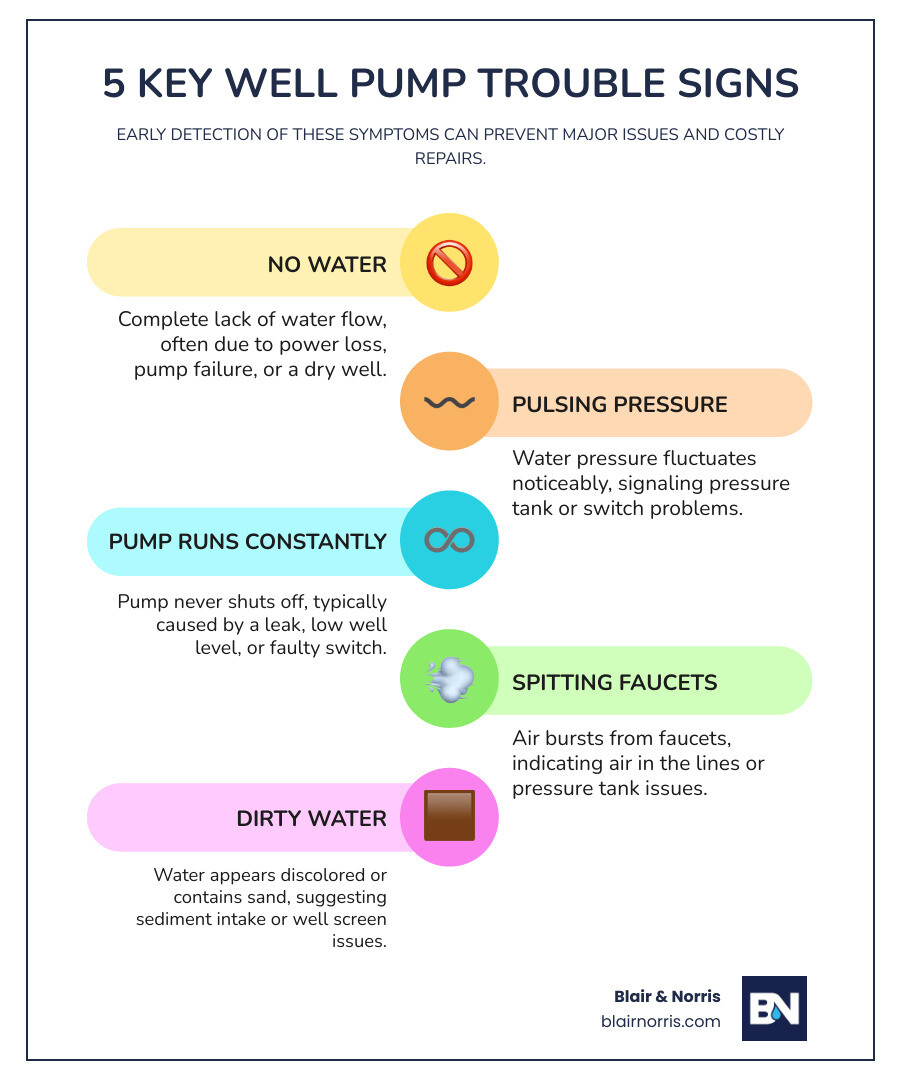
Diagnosing well pump problems begins with recognizing the signs that something is wrong. Issues like no water pressure, a constantly running pump, or dirty water often point to specific problems you can identify and sometimes fix yourself.
Quick diagnostic checklist for common well pump problems:
- No water at all – Check circuit breaker and pressure switch first.
- Pulsing/fluctuating pressure – Usually indicates pressure tank or switch issues.
- Pump runs constantly – Often caused by leaks, faulty switch, or low water levels.
- Spitting faucets – Points to air in the system or pressure tank problems.
- High electric bills – May signal a pump working harder due to worn components.
- Dirty/sandy water – Could indicate the pump is drawing sediment or the well screen is failing.
Many well pump issues have clear symptoms that point you toward the root cause. Start with the basics—power supply and pressure readings—before moving to more complex diagnostics. With the right troubleshooting approach, you don’t have to wait for a complete breakdown to address problems.
I’m Mack Blair, and with over 30 years in the water systems industry, I’ve seen it all. My goal is to help Central Indiana homeowners like you learn the basics of diagnosing well pump problems. Most people can safely perform initial checks that either solve simple issues or provide valuable information for a professional, saving time and money.
Explore more about diagnosing well pump problems:
First Signs of Trouble: Common Well Pump Symptoms
When your well pump starts failing, it usually gives you warning signs. Recognizing these early symptoms is the first step in diagnosing well pump problems before they become expensive emergencies.
- Pulsing water pressure, where the flow fluctuates between strong and weak, usually points to a problem with your pressure tank, such as a waterlogged tank or a ruptured internal bladder. This causes the pump to short-cycle (turn on and off rapidly), which damages the motor.
- The dreaded no water at all scenario can be caused by something as simple as a tripped circuit breaker or a faulty pressure switch. While it could mean a failed pump, always check the simple things first.
- If your pump runs constantly, it’s a clear sign of a problem. This usually indicates a leak in your system, a faulty pressure switch, or a worn-out pump that is struggling to build pressure. It can also mean your well water level has dropped too low.
- Frequent cycling (or short-cycling) is when your pump turns on and off rapidly, even with no water running. This is very hard on the motor and often points to a ruptured bladder in the pressure tank or a small leak.
- Spitting or sputtering faucets that shoot out air indicate air in your water lines. This can be caused by a low well water level, a leak in the suction line, or pressure tank issues.
- Discolored or sandy water is often a sign that your pump is drawing sediment from the bottom of the well. This could mean the pump is set too low or your well screen is damaged.
- Don’t overlook high electric bills. A pump that runs constantly or cycles frequently uses much more electricity. If your power bill spikes, your well system could be the culprit.
- Strange noises like grinding, banging, or unusual humming deserve immediate attention, as they can indicate worn bearings, a failing motor, or a clogged impeller.
For a deeper dive into these warning signs, check out our guide on 5 Telltale Signs You Might Need a New Well Pump.
| Symptom | Most Likely Cause(s) |
|---|---|
| No Water | Power issue (breaker, switch), failed pump, dry well |
| Pulsing Water | Pressure tank (waterlogged, ruptured bladder), faulty pressure switch |
| Constant Running | System leak (plumbing or well pipe), faulty pressure switch, low well level, worn pump |
| Frequent Cycling | Ruptured pressure tank bladder, small system leak |
| Spitting Faucets | Air in system (low well water, suction leak), waterlogged pressure tank |
| Discolored Water | Pump drawing sediment, damaged well screen, low well level |
| High Electric Bill | Constant running, frequent cycling, inefficient pump |
| Strange Noises | Worn pump bearings, failing motor, clogged impeller, pressure switch issues |
A Homeowner’s Guide to Diagnosing Well Pump Problems vs. Plumbing Issues
Diagnosing well pump problems starts with determining if the issue is with the well system or your home’s plumbing. The key is to isolate the problem.
If only one faucet has low pressure, it’s likely a simple plumbing issue, like a clogged aerator. This is a much easier fix.
However, if every faucet and fixture in your home is affected, the problem is almost certainly with your well system. When the kitchen sink, shower, and washing machine all have the same issue, focus on your pump, pressure tank, or pressure switch.
Also, check your water treatment systems. Many homes have iron filters or water softeners that can get clogged. Most have a bypass valve. Try bypassing your iron filter or water softener; if pressure returns to normal, you’ve found the culprit. If bypassing doesn’t help and the problem is house-wide, it’s time to focus on the well pump system. For more on low pressure, see: What does it mean when my home has low water pressure?
What Causes a Well Pump to Run Constantly or Cycle Frequently?
A pump that won’t stop running is working too hard and wasting electricity. Here are the common causes:
- Water leaks are a primary culprit. Even a small leak from a running toilet, dripping faucet, or hidden pipe forces the pump to run constantly to maintain pressure. A leak in the well piping itself is trickier to spot but has the same effect.
- A faulty pressure switch can fail to tell the pump to shut off. The switch can get clogged with sediment, have corroded contacts, or simply malfunction.
- A waterlogged pressure tank has lost its air cushion, meaning it can’t store pressurized water. The pump runs continuously trying to satisfy the pressure switch.
- The check valve prevents water from flowing back into the well. If it fails, water drains back down, causing the pressure to drop and the pump to start again, creating a constant cycle.
- A worn-out pump may struggle to build enough pressure to satisfy the switch, causing it to run without ever reaching its cut-off point.
- Low well water levels, especially during a drought, can cause the pump to run constantly while producing little water. Running a pump dry can cause severe damage.
For more on this issue, see this resource: Help! My Well Pump Keeps Running.
Your Initial DIY Checklist: Where to Start When the Water Stops
When the water stops, don’t panic. Many problems have simple solutions, and diagnosing well pump problems often starts with a few basic checks. A systematic approach can save you time and a costly service call.
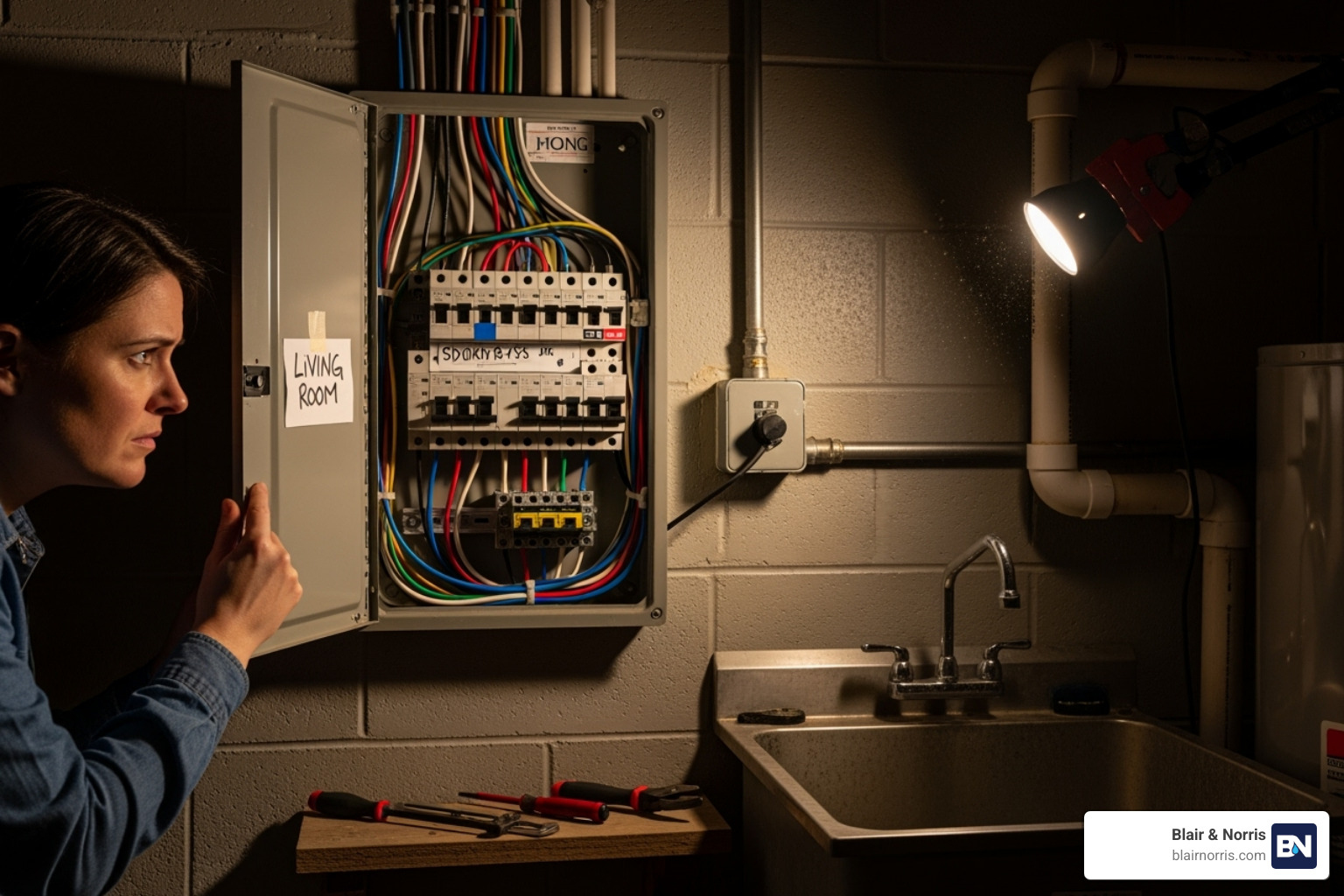
Safety first. Before touching any part of your well system, turn off the power. Well pumps use high voltage (220-240 volts) that can be fatal. Find the well pump’s circuit breaker in your main electrical panel and switch it to “OFF.” Also, turn off any main power switch near your pressure tank.
Diagnosing Well Pump Problems Related to Power
Most “no water” calls are due to a lack of power to the pump. These are often the easiest issues to fix.
- Check your circuit breaker. Go to your electrical panel and find the double-pole breaker labeled “Well Pump.” If it’s tripped (in the middle or OFF position), switch it fully OFF, then firmly back to ON.
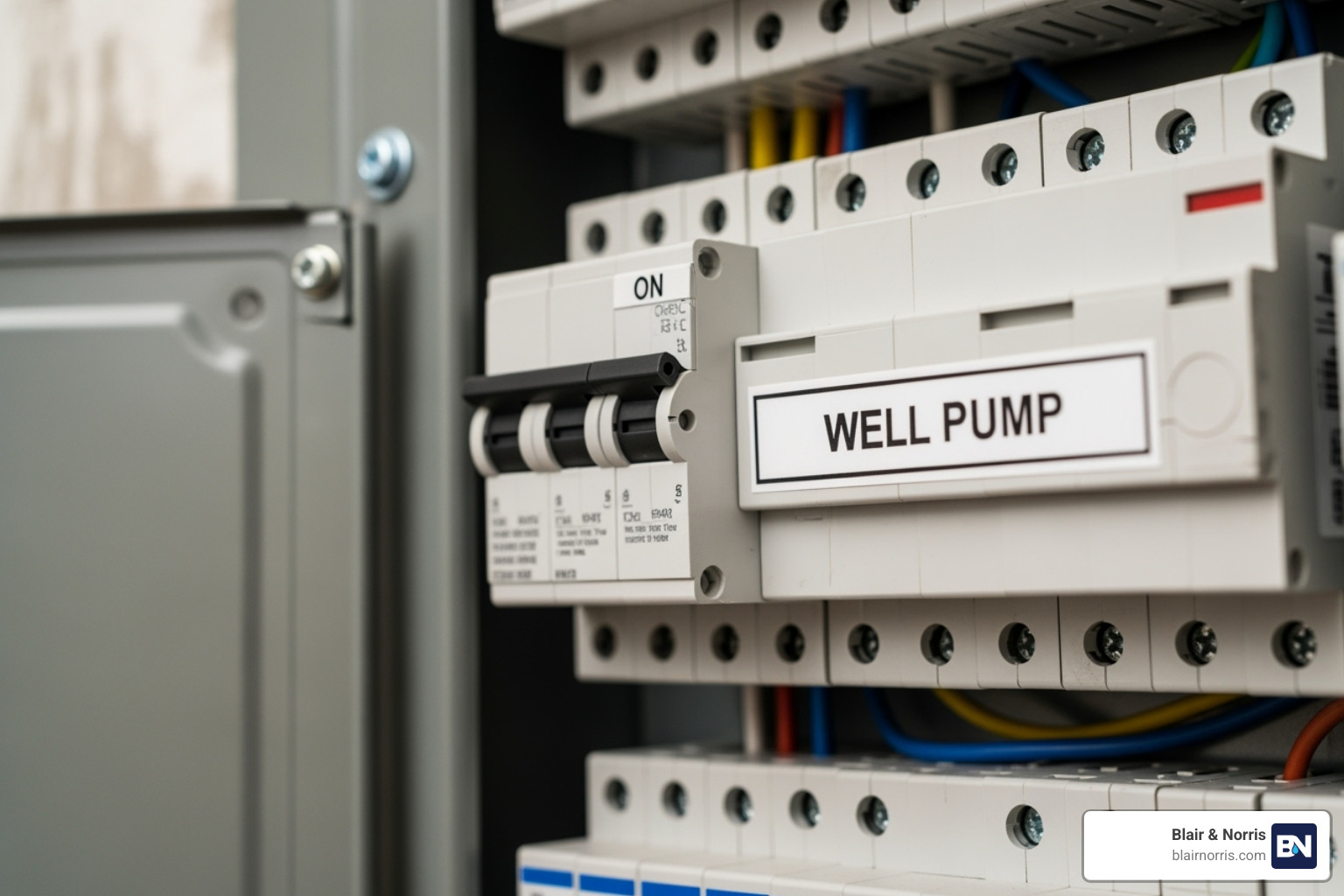
- If the breaker trips again immediately, stop. This indicates a serious electrical fault that requires a professional. Do not keep resetting it.
- Look for fuses on older systems, especially those with external control boxes, and replace any that are blown with one of the exact same amperage.
- Find the dedicated well pump switch, often located near the pressure tank. It can sometimes be bumped to the OFF position by accident.
- Check for a reset button on the pump motor itself. If it has popped out, push it back in firmly.
- If you have a voltage tester and are comfortable with electrical work, you can verify that power is reaching the pressure switch or control box. Use extreme caution.
When power issues persist, it often points to a deeper problem with the pump. For issues with control boxes, see our guide on Well Pump Control Box Replacement.
Checking the Pressure Tank and Pressure Switch
Your pressure tank and switch work together to maintain water pressure. A failure in either component can mimic a pump problem, so checking them is key to diagnosing well pump problems.
- Check the pressure gauge. This gauge on or near your pressure tank is a vital sign monitor. If it reads zero pressure, the system has lost its prime, likely due to a power outage, a major leak, or a pump that failed to turn on.
- Look at the pressure switch. With the power OFF, remove the switch’s cover. Check the electrical contact points inside. If they are burnt or pitted, they may not be making a good connection. Sometimes a light tap on the tube leading to the switch can free stuck contacts and start the pump, but this is a temporary fix—the switch needs replacement.
- Check for debris. Ants and other debris can build nests inside the switch housing, blocking the contacts. Cleaning it out can often solve the problem.
For a complete overview of your system, see our guides on Components of a Water Well System and Well Water System Diagram: 22 Key Components Explained. Remember to keep the power off when inspecting electrical components.
Advanced Guide to Diagnosing Well Pump Problems
If the initial DIY checklist doesn’t solve your water problem, it’s time for a deeper dive into diagnosing well pump problems. This requires more technical knowledge, but understanding these concepts can help you communicate effectively with a service technician.
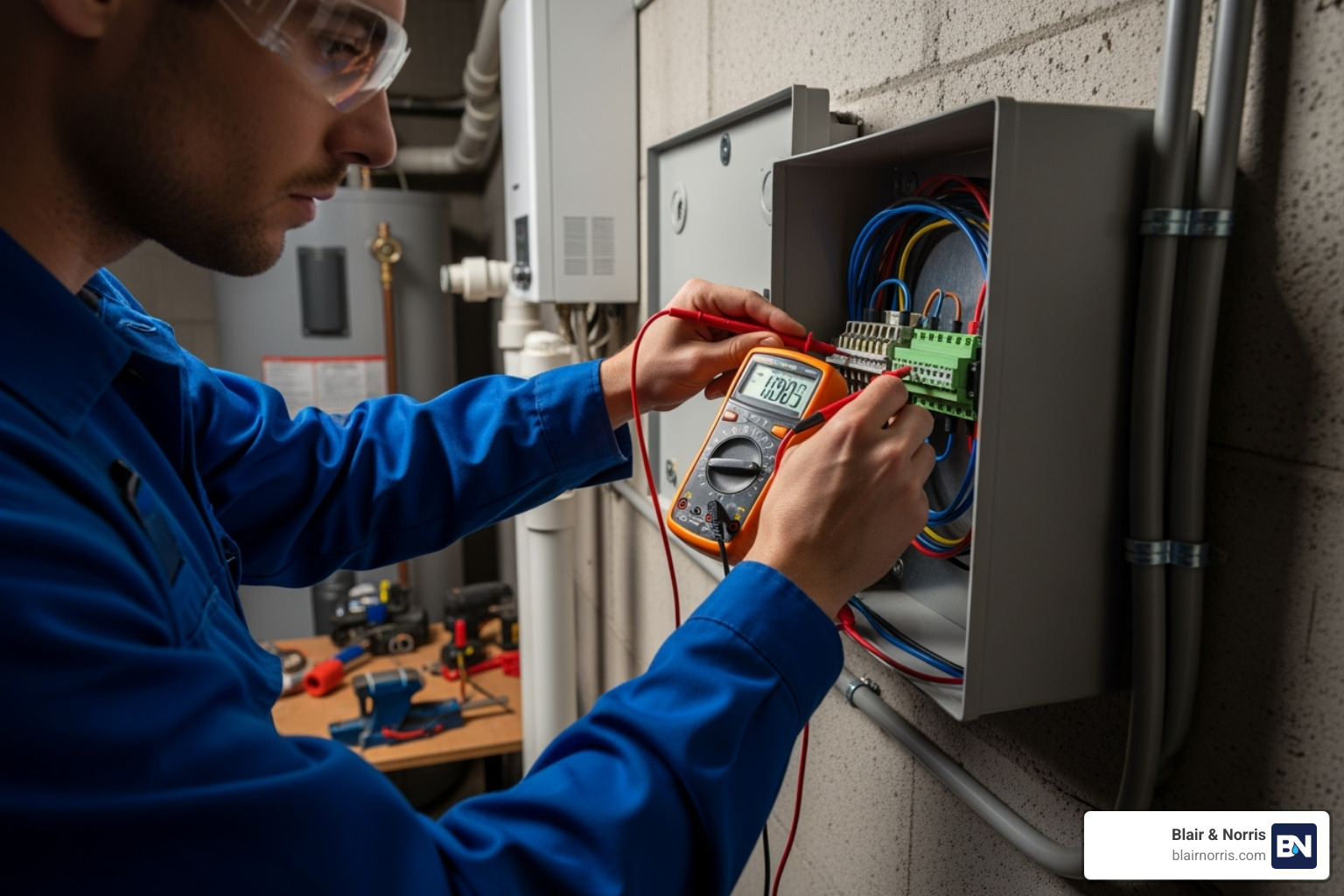
Advanced diagnostics often involve electrical testing to pinpoint failures in components like submersible pumps or jet pumps. Since well pumps operate on dangerous high voltage, this is where many homeowners should consider calling a professional. If you’re not completely confident, professional help is invaluable.
For additional DIY guidance, The Family Handyman offers comprehensive instructions: Well Pump Troubleshooting and DIY Repair.
How to Test the Pressure Tank and Pressure Switch
A faulty pressure tank or switch can mimic a failing pump. Proper testing is crucial for an accurate diagnosis.
- Test for a waterlogged tank. A tank without its air cushion causes the pump to cycle rapidly. Turn off the pump’s power and drain the system. Find the Schrader valve (like a tire valve) on the tank. Press the pin; if water comes out, the internal bladder has failed, and the tank needs replacement.
- Perform an air pressure check. If only air comes out of the valve, use a tire gauge to check the pressure. With the system drained, the tank’s air pressure should be 2 PSI below the pump’s cut-in pressure (e.g., 28 PSI for a 30-50 PSI system). If it’s low, add air with a compressor.
- Try rocking the tank. A properly charged tank will feel relatively light and rock easily. A waterlogged tank will feel very heavy and solid.
- Pressure switch adjustment can resolve minor issues, but be careful. The switch has a cut-in pressure (pump on) and cut-out pressure (pump off). Incorrect adjustments can damage your pump. For detailed guidance, see our guide: Your Guide to Water Pressure: How to Increase Low Well Water Pressure.
Troubleshooting the Check Valve and Foot Valve
These valves prevent water from draining back into the well. A failure causes pressure loss and frequent pump cycling.
- A leaky check valve is the likely culprit if your pressure gauge slowly drops even when no water is being used. The check valve is a one-way gate that holds pressure in the system; when it fails, water trickles back into the well.
- Foot valve failure causes similar symptoms but is harder to fix. The foot valve is at the bottom of the well pipe and keeps the pump primed. If it fails, the pump may run but deliver no water. Replacing it requires pulling the pump from the well, which is a job for a professional.
For more on this topic, see our guide: Check Valve Well Pump Troubleshooting.
Common Submersible Pump Failures
Submersible pumps live deep underground and face many challenges. Understanding their common failures is helpful when diagnosing well pump problems.
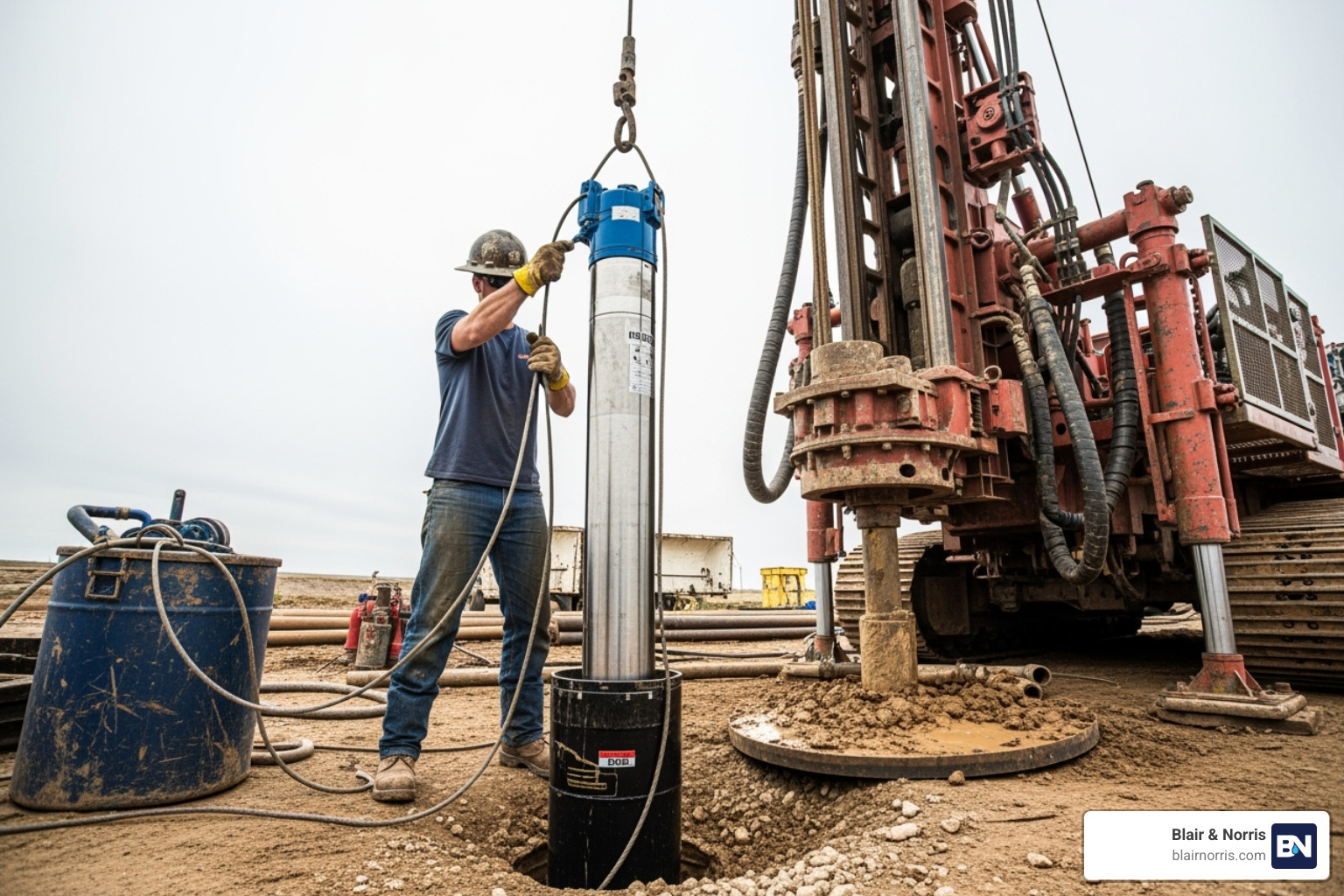
- Worn impellers are common, especially with sandy water. Sediment erodes the impellers, causing the pump to run but deliver low pressure because it can’t move water efficiently.
- Motor failure can be caused by overheating, electrical shorts from damaged wiring, or worn bearings. Signs include a pump that won’t start, repeatedly tripping breakers, or grinding noises.
- Broken wiring in the cable running down the well can be caused by abrasion or twisting. Electrical testing with a multimeter can identify these breaks. The Franklin AIM Manual for electrical values provides professional specifications for testing.
- Overheating is a major cause of pump death. It can happen if the pump runs dry, impellers are clogged, or there is insufficient water flow for cooling.
- Pumping sediment means the pump is set too low or the well screen has failed. Sand and silt act like liquid sandpaper, rapidly wearing out internal parts. If you see sandy water, shut off the pump to prevent further damage.
Most submersible pump issues require pulling the pump from the well, a job best left to professionals. If you have low pressure, our guide can help: Submersible Water Pump Low Pressure.
Maintenance, Safety, and When to Call a Professional
The best way to handle diagnosing well pump problems is to prevent them with regular maintenance. This helps you catch small issues before they become emergencies.
Most well pumps last 8 to 15 years, while pressure tanks often need replacement every 10 years or less. Regular maintenance is key to longevity. Check your pressure tank’s air charge monthly (it should be 2 PSI below the cut-in pressure). Periodically inspect your system for leaks, corrosion, or unusual sounds. Pay attention to changes in water quality, as this can signal a problem.
Keep your wellhead secure to prevent contamination. For a complete maintenance guide, see The Importance of Water Well Maintenance, and learn more about pump longevity here: What is the Average Life Expectancy of a Well Pump?.
Electrical safety is non-negotiable. Well pumps use high voltage (220-240 volts) that can be fatal. Always turn off the power at the breaker before working on your system and use a voltage tester to confirm it’s off. If you are not 100% comfortable with electrical work, call a professional.
Signs You Need to Call a Pro Immediately
While DIY troubleshooting is great, some situations require immediate professional help for safe diagnosing well pump problems and repair.
- If your breaker keeps tripping, stop resetting it. This indicates a serious electrical short or a seized motor that could damage your system further.
- If you suspect leaks in well piping, whether inside the well or underground, you’ll need a professional with specialized equipment to find and fix them.
- Pulling a pump from the well is not a DIY job. It’s heavy, complex, and requires special equipment to avoid damaging the well or the pump.
- If you’re uncomfortable with electrical work at any point, stop and call a pro. It’s always better to be safe.
- If your well has run dry (pump runs but no water comes out), turn the pump off immediately to prevent it from burning out. A professional can assess the well’s water level and recommend solutions.
- After a repair that opens the wellhead, the system must be properly disinfected to ensure your water is safe. This critical process, detailed in this well disinfection procedure, is best left to professionals.
Conclusion
Diagnosing well pump problems is manageable when you know what to look for. By following a systematic approach, you can often identify the cause, from a tripped breaker to a faulty pressure tank. Recognizing symptoms like pulsing water pressure or a constantly running pump allows you to address issues before they become emergencies.
However, it’s crucial to recognize the limits of DIY troubleshooting. When faced with high-voltage electrical work, leaks in the well pipe, or the need to pull a submersible pump, it’s time to call a professional. Your safety is paramount, and some jobs require specialized tools and experience.
At Blair & Norris, we’ve helped Central Indiana families with their water systems for over 75 years. As a family-owned business, we know how stressful a water outage can be. That’s why we offer 24/7 live phone support and have built our reputation on ethical, high-quality service.
Whether your troubleshooting has revealed a complex issue or you’d rather have an expert handle it from the start, we are here to help. Our experienced technicians can quickly diagnose the problem and get your water flowing again.
Don’t let well pump problems disrupt your life. Contact us for professional residential well pump repair and get the peace of mind that comes from working with true water system experts.