
How to Get Steady Water Pressure From Your Well
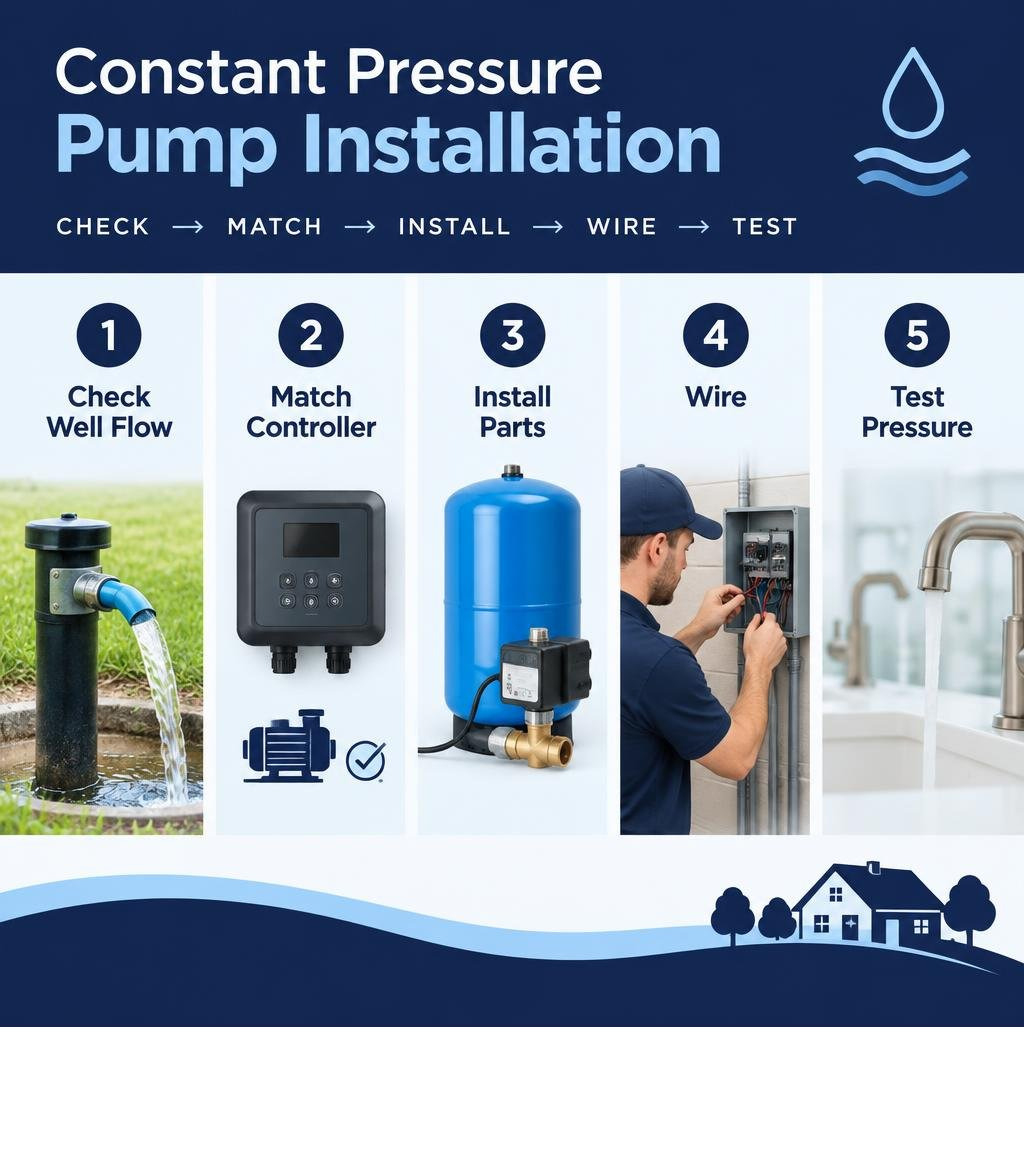
For a constant pressure pump installation, start by checking that your well can supply the flow your home needs. Then choose a controller that matches your pump, install its pressure sensor and small buffer tank as the manufacturer directs, and have a qualified electrician handle the wiring. Set the target pressure and test it with more than one faucet running. Do not start the pump until the plumbing is ready and any pump that requires priming has been primed.
Unlike a standard well setup that switches the pump on and off, a variable-speed system adjusts pump speed as water demand changes. That can keep a second shower from causing a sudden pressure drop.
I’m Mack Blair. After more than 30 years working with well and pump systems in Central Indiana, I help homeowners make sound choices about constant pressure pump installation.
Understanding Constant Pressure Systems vs. Traditional Well Setups
Anyone who relies on a private water well has likely experienced sudden drops in water pressure. You might be enjoying a comfortable morning shower when someone starts the dishwasher or turns on the garden hose outside. Instantly, the water stream dwindles to a trickle, or you get hit with an icy temperature swing.
This issue happens because of how a traditional well pump setup operates. In a standard configuration, a single-speed pump turns completely on or completely off based on a mechanical pressure switch. The switch typically uses a wide 20 PSI differential, commonly operating between 30 and 50 PSI or 40 and 60 PSI. Water is stored in a massive pressure tank. When you turn on a faucet, water flows from the tank until the pressure drops to the cut-in threshold. Only then does the pump kick on at full speed, running at maximum capacity until the system reaches cut-out pressure. This cycle creates a continuous wave of fluctuating water pressure and high electrical inrush.
In contrast, a constant pressure setup uses an intelligent electronic drive that continuously modulates pump motor speed to match exact demand in real time.
| System Feature | Traditional Well Setup | Variable Speed Constant Pressure System |
|---|---|---|
| Pressure Stability | Swings widely across 20 PSI (e.g., 40 to 60 PSI) | Steady output maintaining exact target PSI (+/- 1-2 PSI) |
| Pump Operation | Full speed ON or complete OFF cycling | Continuous variable-frequency speed modulation |
| Pressure Tank Size | Large footprint (typically 40 to 80+ gallons) | Compact buffer tank (typically 2 to 4 gallons) |
| Electrical Demand | High startup inrush current (8 to 15 amps per cycle) | Gentle soft-start ramping, lower average running amps |
| Audible Noise | Loud mechanical contact clicks and pipe vibration | Quiet operation (15 to 25 dB lower audible noise) |
| Motor Longevity | Higher mechanical wear from thousands of starts | Extended lifespan by avoiding on/off thermal cycling |
How Variable Speed Drives Maintain Constant PSI
The heart of a constant pressure configuration is the Variable Frequency Drive (VFD) or dedicated constant pressure controller. The system relies on a solid-state pressure transducer installed in the delivery line. This sensor constantly monitors water line pressure and sends continuous electrical signals back to the drive.
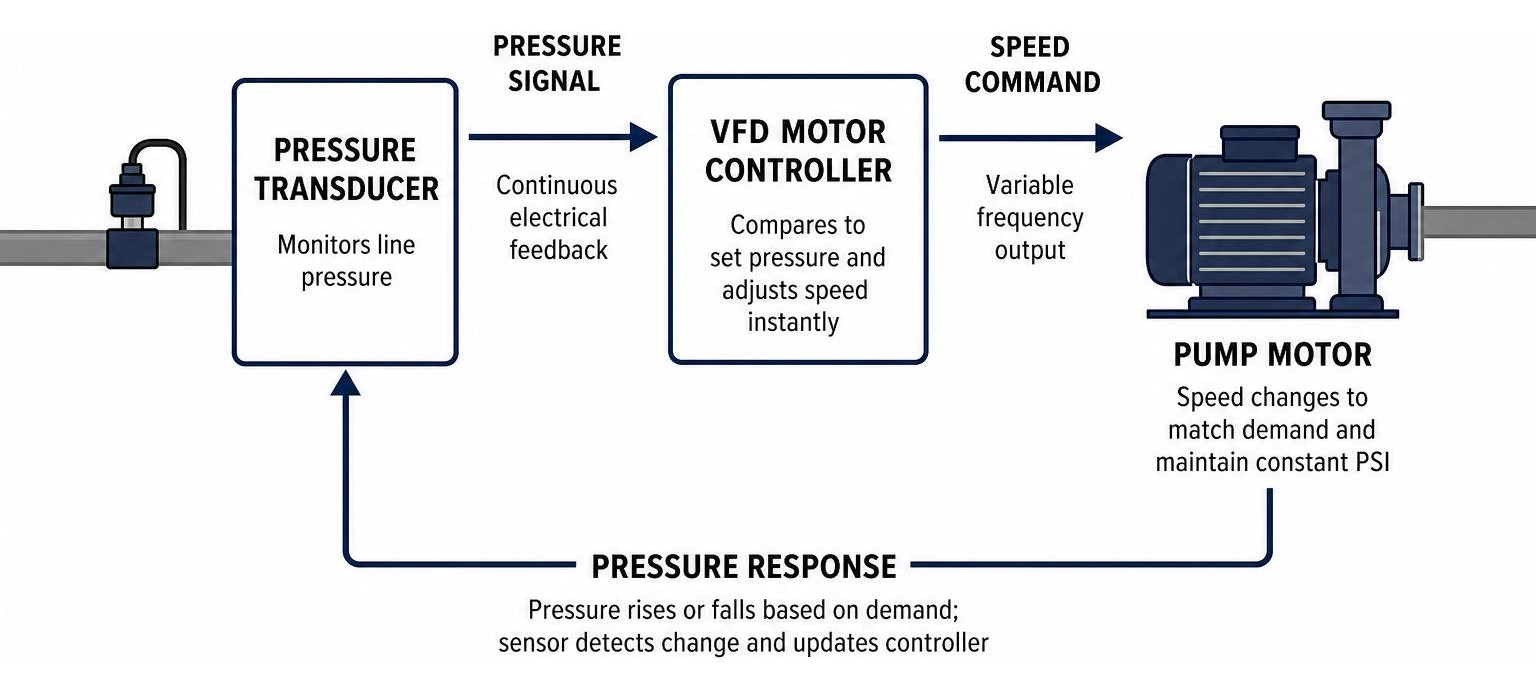
When you open a single faucet, the transducer detects a tiny drop in pressure. The drive immediately commands the pump motor to spin at a low, energy-efficient frequency. When a second, third, or fourth fixture opens, the drive instantly increases electrical frequency to spin the pump faster, keeping output pressure completely steady throughout the entire plumbing network.
Most residential controllers operate across a configurable range of 25 to 80 PSI. Homeowners can review the technical manual specifications for constant pressure systems to see how modern controllers boost incoming line pressure by up to 60 PSI while handling flow rates up to 35 gallons per minute.
When evaluating pressure upgrades, homeowners generally choose among three tiers of equipment:
- Good (Standard Mechanical Upgrade): High-capacity standard pump paired with a properly sized large bladder tank and a precision high-differential mechanical pressure switch.
- Better (Dedicated Inline Booster): Compact inline variable-speed booster pump designed to boost existing municipal or private low pressure lines for multi-level residential fixtures.
- Best (Full Variable Frequency Submersible System): Premium 3-phase or smart single-phase submersible well pump driven by a wall-mounted NEMA-rated VFD controller and precision digital transducer.
Energy Efficiency, Noise Reduction, and Extended Pump Life
Constant pressure setups provide significant functional and economic benefits. Because a VFD system modulates motor speed to meet actual demand rather than running full-bore at every startup, it reduces total pump energy consumption by 30% to 40%.
On a standard pressure switch, a 2-horsepower well pump running at full load can cost between $180 and $250 annually in electricity at typical utility rates. With variable frequency modulation operating at an average 40% to 60% load, that power cost drops to between $90 and $150 per year. Over several years, these electrical savings offset a substantial portion of the initial equipment investment.
The technology also incorporates soft-start engineering. Instead of slamming the motor with full starting current, the controller gradually ramps power over 2 to 3 seconds. This soft-start eliminates mechanical torque shock, prevents water hammer throughout household plumbing, and reduces operational noise by 15 to 25 dB. By removing the harsh wear and tear of frequent on/off cycling, a constant pressure setup can add 5 to 10 years of reliable service life to your well pump equipment.
Step-by-Step Guide to Constant Pressure Pump Installation
Proper execution of a constant pressure pump installation requires careful mechanical assembly, code-compliant electrical work, and systematic calibration.
Before beginning physical work, technicians conduct a comprehensive pre-installation site evaluation. This includes evaluating the well flow rate, static water level, pumping water level, and total dynamic head to ensure the water source can sustain the desired target flow. If you are retrofitting an older system, conduct a complete well pressure tank replacement by isolating the water line, shutting off electrical disconnects at the main breaker, and draining the plumbing lines completely.
Plumbing Configuration for Constant Pressure Pump Installation
Plumbing layout directly dictates the operational efficiency and hydraulic stability of your variable-speed system. Every fitting and pipe run must be planned to minimize friction loss and prevent air binding.
- Pipe Sizing: Size suction and delivery lines to maintain water velocity below 8 feet per second. For flows up to 12 GPM, use at least 3/4-inch to 1-inch pipe; for flow rates up to 20 GPM, use 1-1/4-inch piping to minimize frictional resistance and avoid turbulence.
- Check Valve Placement: Install an inline check valve on the supply line upstream of the transducer. This prevents backflow, protects against water hammer, and maintains solid line pressure when the pump is idle.
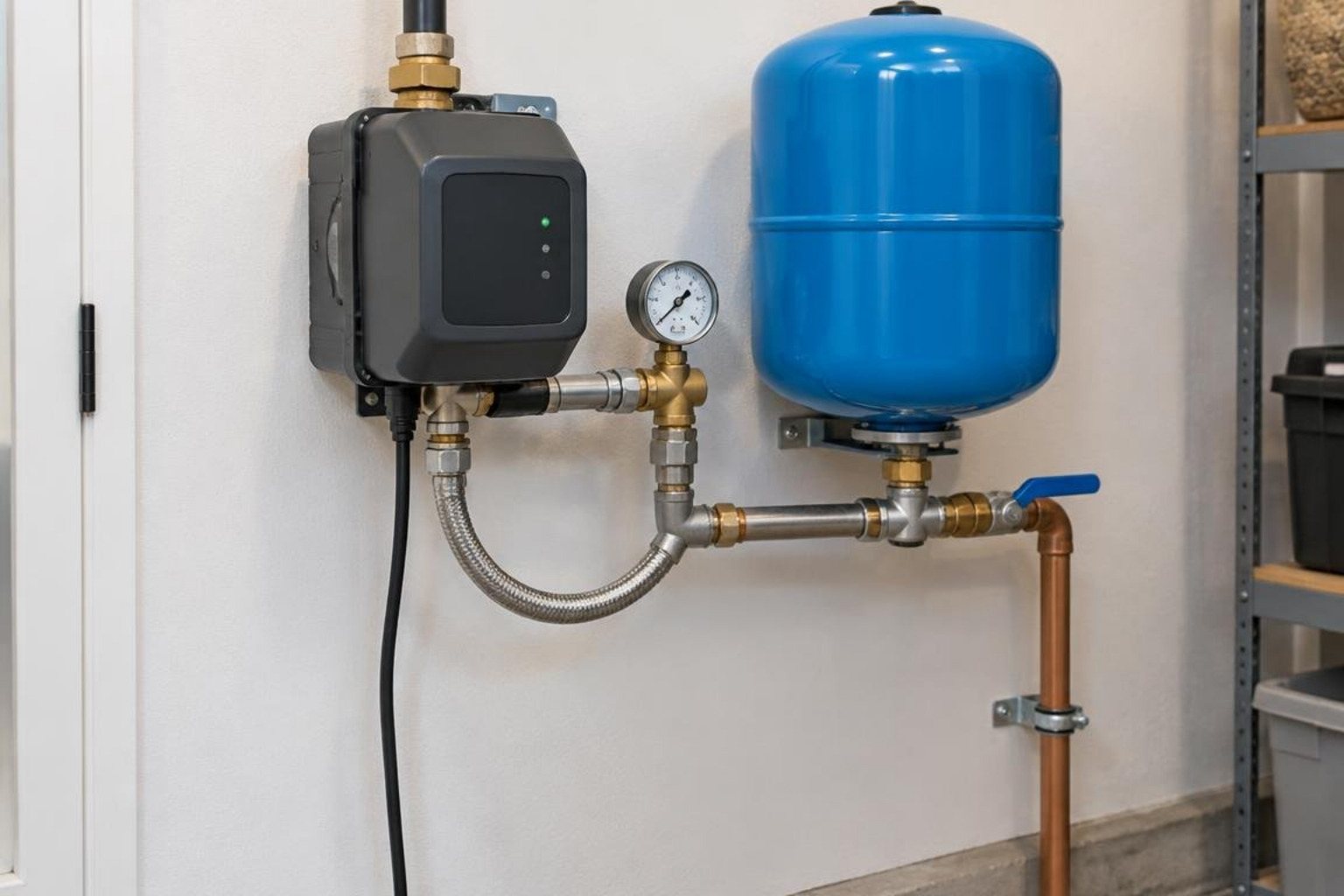
- Buffer Tank Installation: Install a compact 2-to-4-gallon diaphragm buffer tank downstream of the pump. This small tank absorbs momentary hydraulic shock and prevents the pump from spinning up for tiny draws, like filling a single drinking glass or flushing a low-flow toilet. Set the empty tank air pre-charge to exactly 70% of your chosen target operating pressure (for example, 35 PSI pre-charge for a 50 PSI system setting).
- Safety Relief Valve: Always install a certified 100 PSI pressure relief valve capable of passing full pump discharge volume to protect plumbing lines and household appliances against accidental over-pressurization.
Consult the manufacturer submersible system installation guide for exact physical clearances and piping schematics.
Electrical and Wiring Protocols for Constant Pressure Pump Installation
Variable frequency controllers contain sensitive microprocessors and power electronics that require strict adherence to National Electrical Code (NEC) Article 430.
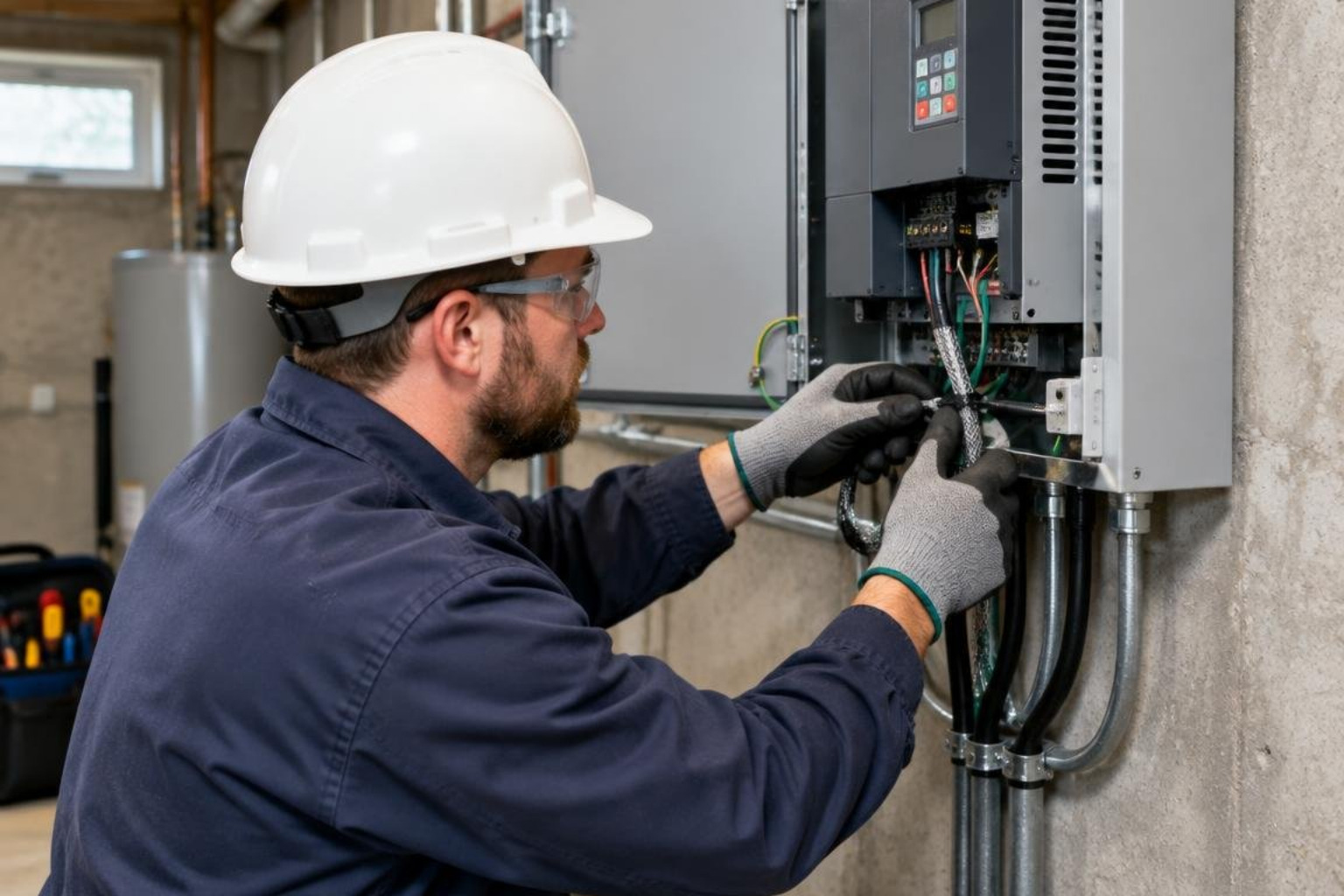
- Dedicated Power Supply: Run a dedicated 230V single-phase branch circuit from the main electrical service panel protected by a dedicated 15-amp or 20-amp dual-pole circuit breaker sized to motor specifications.
- Controller Clearances: Mount the drive unit on a secure vertical surface in a dry, ventilated area with at least 6 inches of open clearance on all sides to allow proper heat dissipation. Maintain an outdoor NEMA 3R or NEMA 4 enclosure rating when exposed to weather or damp basement conditions.
- Separation of Wiring: Never route incoming AC line power conductors and motor output wiring through the same conduit. Maintain a minimum of 8 inches of physical separation between AC power leads and sensitive transducer signal cables to prevent electromagnetic interference (EMI) from disrupting sensor communication.
- Grounding and Shielding: Use shielded four-conductor motor cable between the drive and the pump. Ensure the drive chassis, well casing, and service entrance are bonded to a verified earth ground to eliminate stray currents and protect sensitive microprocessors.
Transducer Calibration, System Priming, and Commissioning
Once the plumbing and electrical connections are locked down, the system is ready for initial calibration and commissioning.
- Transducer Setup: Install the pressure transducer directly on the water manifold upstream of any whole-house filtration units or water softeners. Adjust the mechanical calibration screw using a 7/32-inch hex wrench if fine-tuning is required; one quarter-turn adjusts system pressure by roughly 3 PSI.
- System Priming: Fully flood all suction pipes and pump casings before applying electrical power. Running any pump dry will instantly destroy mechanical seals and cause impeller warping within seconds.
- Commissioning and Cavitation Checks: Power on the drive and allow the motor to soft-start smoothly. Gradually open the main discharge isolation valve. Listen closely for any rattling sounds resembling gravel moving through the pipe, which indicates hydraulic cavitation. If cavitation noise appears, adjust the discharge throttle valve slightly until water flow runs smooth and quiet.
- Multi-Fixture Verification: Open multiple plumbing fixtures simultaneously across the home to verify that line pressure remains pinned to your set point, just as you would when setting your well pump pressure switch during traditional maintenance routines.
Common Pitfalls and the Risks of DIY Installation
While variable-frequency pumping equipment delivers exceptional performance, improper installation can lead to rapid component failure, home flooding, or severe safety risks. Attempting a DIY installation without specialized electrical instruments and hydraulic training often creates hidden hazards that void equipment warranties.
- Lethal Stored Electrical Voltage: Variable frequency drives utilize high-capacity internal capacitors to smooth AC power. These electrical components can hold lethal voltage charges for 5 minutes or longer after the main electrical breaker has been shut off, creating a severe shock hazard for untrained individuals.
- Incorrect Tank Pre-Charge Ratios: Setting the buffer tank pre-charge incorrectly (either too close to system PSI or under-charged) causes rapid pressure hunting, where the drive erratically revs up and down trying to find hydraulic equilibrium. This rapid cycling wears out motor windings and leads to nuisance error trips.
- Undersized Piping and Friction Loss: Using small-diameter lines forces water velocity above 8 feet per second, generating excessive friction loss, pipe erosion, and persistent controller over-current alarms.
- Sensor Placement Errors: Installing the pressure transducer downstream of whole-home water filters or water softeners causes the sensor to read artificial pressure drops as filters load with sediment, driving the pump to over-pressurize the well line and strain internal pipe joints.
- Thermal Overheating and Moisture Intrusion: Installing electronic drives in direct sunlight, tight unventilated closets, or damp crawlspaces subject to winter freezing will cause internal electronic components to fail prematurely.
- Improper Grounding and High Harmonic Noise: Failing to install dedicated ground rods or omitting shielded cabling can allow electromagnetic noise to feed back into household electrical circuits, interfering with smart appliances, home internet routers, and security systems.
Choosing a Qualified Professional Service Partner
Because a constant pressure system integrates high-voltage electronics, sensitive digital controls, and precision plumbing, partnering with an experienced, licensed well contractor ensures your investment performs reliably for decades.
A qualified professional service partner will:
- Perform down-hole flow testing and static level drawdown checks prior to equipment selection to confirm water recovery rates.
- Use specialized water-well drilling and mud recycling equipment, utilizing Mud Puppy equipment for clean mud recycling and drilling to keep boreholes pristine and safeguard local aquifers.
- Calculate exact friction loss curves, total dynamic head, and wire gauge voltage drop requirements tailored to your property layout.
- Complete multi-point electrical diagnostics, including running amperage checks, line-voltage balance testing, and harmonic distortion dampening.
- Provide clear, transparent written estimates and comprehensive warranty coverage on parts and labor.
When selecting a service provider, always check verified local customer feedback and confirm that technicians are licensed, insured, and experienced with your specific well depth and geological conditions. Homeowners needing dependable assistance can rely on our dedicated Indianapolis well pump service team for prompt system evaluations.
Beyond residential well systems, high-capacity water and waste management requires specialized maintenance. Commercial facilities, restaurants, and agricultural sites depend on regular commercial grease trap pumping and car wash drainage cleanouts to keep drainage systems flowing without expensive backups. Maintaining these heavy-use commercial systems requires high-volume vacuum trucks, precise waste disposal compliance, and routine service scheduling to prevent severe environmental violations and structural plumbing blockages.
Frequently Asked Questions About Constant Pressure Systems
What size pressure tank is required for a constant pressure system?
A constant pressure system only requires a small 2-to-4-gallon buffer tank for low-to-medium flow residential applications (up to 12 to 15 GPM) or an 8-gallon tank for high-flow installations. Because the variable-speed motor adjusts speed continuously to supply active water demand, large 40-to-80-gallon storage tanks are unnecessary. The small tank simply cushions against minor plumbing leaks, buffers against sudden fixture opening, and absorbs pressure surges during valve closures.
How much money can a constant pressure system save on electricity?
Most homeowners save between 30% and 40% on well-pump electrical costs after upgrading to a variable speed drive. Because the pump operates at modulated partial load (40% to 60%) during typical usage rather than running at maximum wattage, average electricity costs drop by $90 to $100 annually. Over time, these savings deliver a typical equipment payback period of 3 to 6 years, depending on household water consumption and local utility rates.
Can I upgrade my existing submersible well pump to constant pressure?
In many cases, yes. If your existing 3-wire single-phase or three-phase submersible well pump motor is in sound electrical condition and matches the drive manufacturer horsepower specifications, a standalone variable frequency controller can be wired directly to the system. A technician will perform insulation resistance testing (megohmmeter check) on the existing motor windings before installation to confirm compatibility and verify winding integrity.
How does a constant pressure system handle irrigation and outdoor watering?
Constant pressure systems excel at high-volume applications such as multi-zone lawn irrigation. When your sprinkler system activates, the controller ramps up motor speed to supply continuous volume without diminishing indoor water pressure, allowing you to run laundry and irrigation simultaneously.
Conclusion
Upgrading your private well to a constant pressure system provides smooth, reliable water pressure that rivals municipal city supplies. Eliminating fluctuating shower temperatures, stopping pipe-shaking water hammer, and lowering monthly energy bills makes this one of the most valuable upgrades you can make to your home’s water infrastructure.
As your local Central Indiana provider for more than 75 years, Blair & Norris delivers dependable well drilling, pump installation, and septic tank pumping services across Marion County, Hamilton County, Hendricks County, Johnson County, and surrounding communities. Whether you live in Noblesville, Brownsburg, Carmel, or Indianapolis, our family-owned team provides friendly, ethical service and true 24/7 live phone support whenever you need assistance.
Take a look at our verified Google Reviews to see why generations of Indiana homeowners trust our workmanship. Contact us today to schedule your system evaluation and get an estimate for professional well and pump services.