
Why Understanding Deep Well Components Matters for Indiana Homeowners
Deep well components are the essential parts that work together to bring groundwater from depths of 22 to 120 feet up to your home’s faucets. These systems serve about 15 percent of Americans who rely on private wells for their water supply.
Key Deep Well Components:
- Well Casing – Tubular structure that prevents collapse and contamination
- Submersible Pump – Motor and pump assembly that pushes water to the surface
- Drop Pipe – Carries water from pump to wellhead
- Pressure Tank – Stores pressurized water and reduces pump cycling
- Pressure Switch – Controls when pump turns on and off
- Well Screen – Filters out sand and gravel while allowing water flow
- Pitless Adapter – Provides frost-proof connection below ground
- Check Valves – Prevent water from flowing backward
- Well Cap – Protects well from contamination and debris
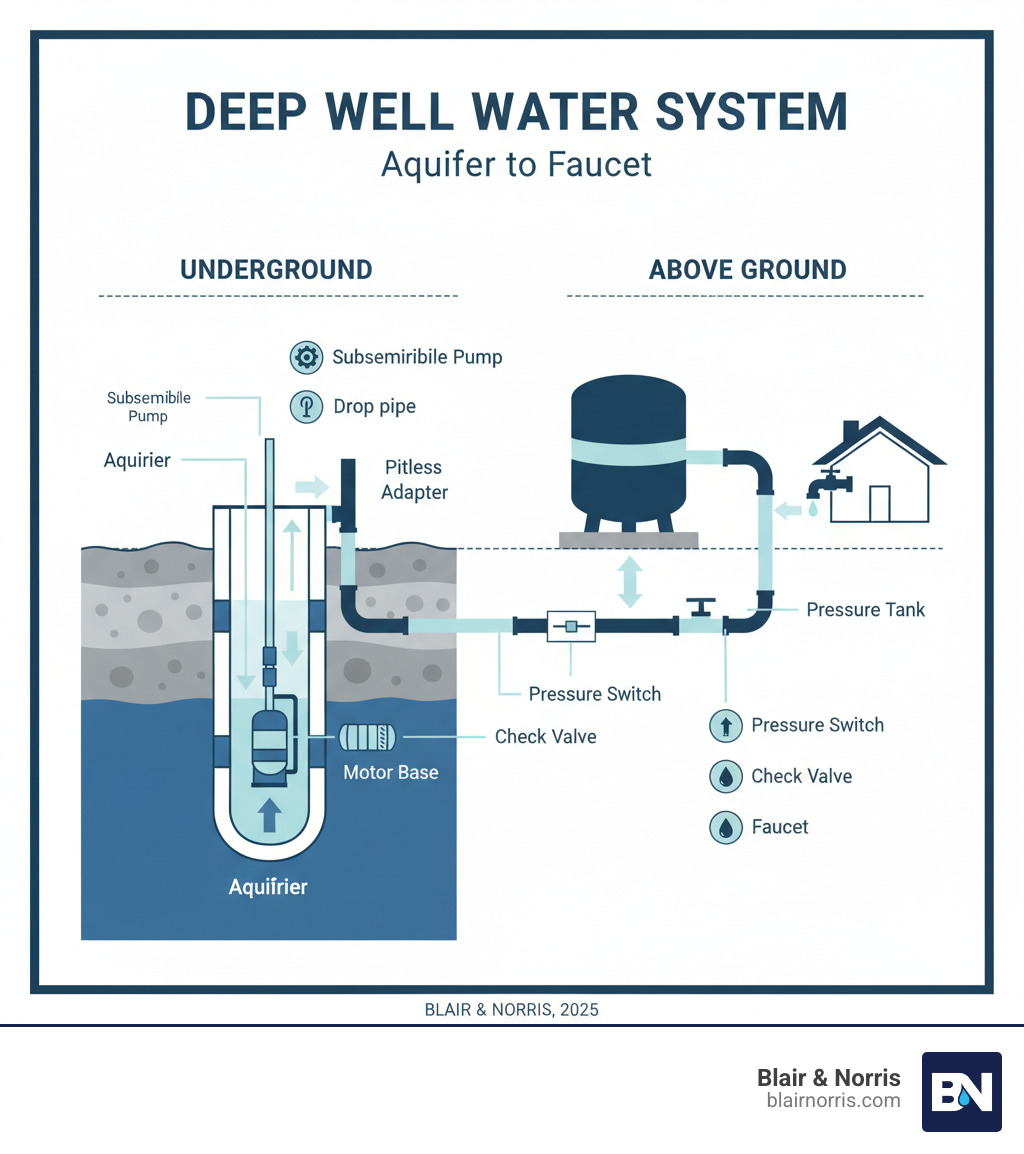
When you turn on a faucet in your home, a complex system springs into action. Water flows from the underground aquifer through your well screen, gets pushed up by your submersible pump through the drop pipe, travels through your pitless adapter to your pressure tank, and finally reaches your tap.
Understanding these components helps you spot problems early, communicate better with service technicians, and make informed decisions about repairs or upgrades. A failing pressure switch might cause your pump to cycle constantly, while a clogged well screen could reduce water flow throughout your home.
I’m Mack Blair, and over my 30 years in the water well industry, I’ve installed, repaired, and maintained thousands of deep well components across Central Indiana. From my early days learning from my grandfather to building Blair & Norris into a trusted local company, I’ve seen how proper component selection and maintenance can mean the difference between reliable water service and costly emergency repairs.
The Core of Your System: Primary Deep Well Components
Your deep well components work as a team, with some members stationed deep underground while others handle duties at the surface. Think of it like a relay race – each component passes the baton (or in this case, water) to the next one in line. Understanding where each part lives and what it does helps you become a more informed homeowner.
Key Down-the-Hole Deep Well Components
Down in the depths of your well, a hardworking crew of components extracts water from the aquifer and sends it on its journey to your home. These underground heroes rarely see daylight, but they’re absolutely essential to your water supply.
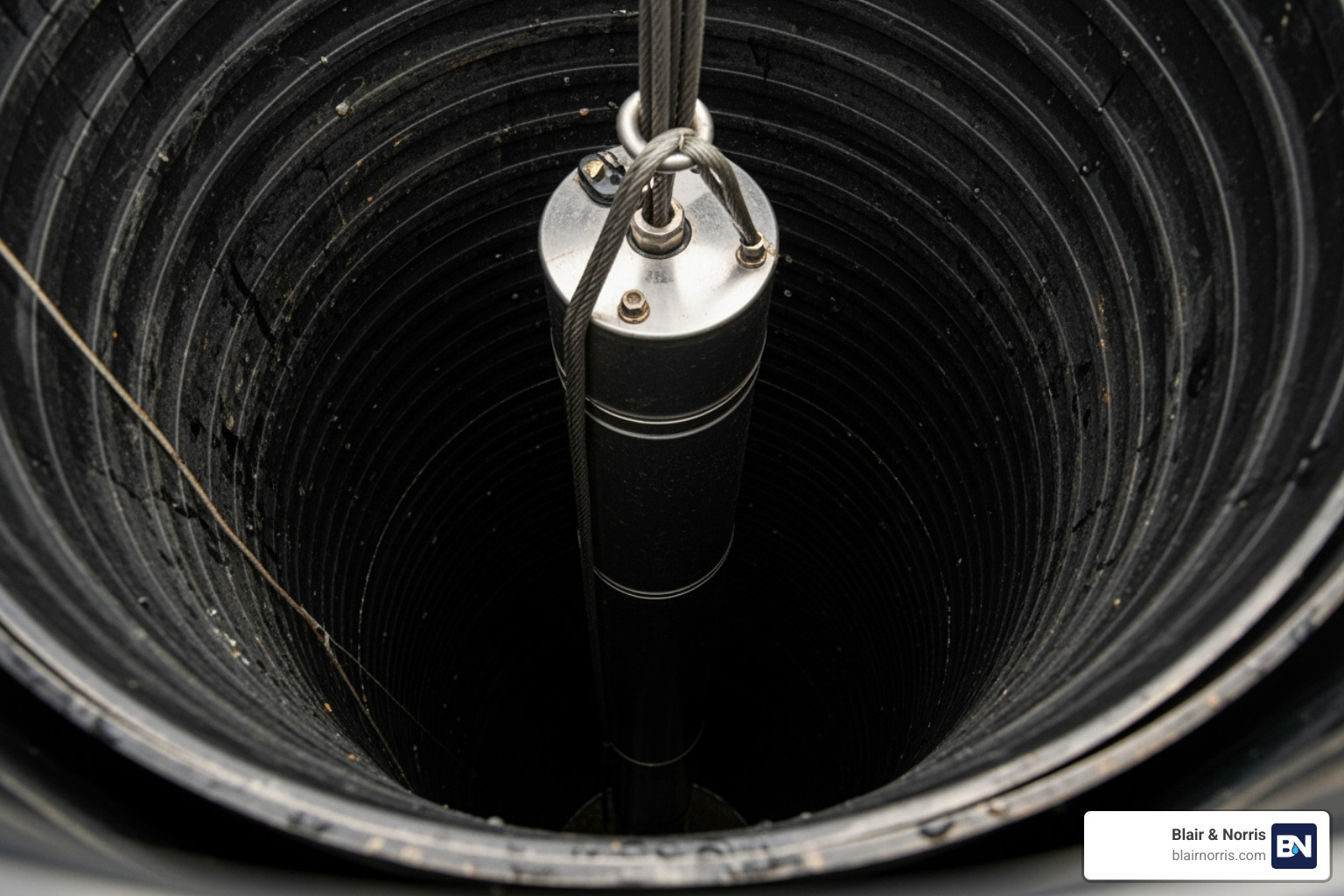
The well casing serves as your well’s protective skeleton. This sturdy tube – made from PVC, stainless steel, or carbon steel – keeps your well from caving in and prevents nasty surface water from contaminating your clean groundwater. The material choice depends on your local geology and groundwater quality. It’s like having a bodyguard for your water supply.
At the bottom of your casing sits the well screen, which acts like a sophisticated bouncer at an exclusive club. It welcomes water in while firmly turning away sand, gravel, and other unwanted particles. The continuous slot type offers the best filtration for most situations, protecting your pump and plumbing from gritty damage that could cost you big money down the road.
Your drop pipe is the highway that carries water from deep underground up to the surface. Made from galvanized steel, copper, or plastic, it needs to be tough enough to handle the weight of all that water pressing down from above. The deeper your well, the stronger this pipe needs to be.
The star of the underground show is your submersible pump. Unlike pumps that try to suck water up (which doesn’t work well from deep depths), this powerhouse sits right in the water and pushes it upward. It’s designed to work underwater 24/7, making it one of the most critical deep well components in your entire system.
Your foot valve acts like a one-way door at the bottom of your system. This special type of check valve prevents water from flowing back down into the well when your pump takes a break. It keeps everything primed and ready for the next time you turn on a faucet.
Speaking of preventing backflow, check valves are scattered throughout your system like traffic cops directing water flow. You’ll find them on the pump discharge and near the surface, ensuring water only moves in the right direction. For deeper wells over 200 feet, multiple check valves prevent water hammer – a destructive force that can damage your entire system.
When your submersible pump starts up, it wants to twist like a dancer. The torque arrestor keeps it centered and prevents this twisting motion from damaging your pump cable or well casing. Think of it as a stabilizer that keeps everything running smoothly.
The safety rope might seem simple, but it’s your insurance policy. Made from nylon or stainless steel, it prevents your expensive pump from becoming a very costly paperweight at the bottom of your well if something goes wrong with the drop pipe.
Finally, the pitless adapter is a brilliant invention that allows your water line to exit the well below the frost line. Here in Indiana, where winter temperatures can be brutal, this component prevents your water line from freezing while maintaining a sanitary seal. It’s much better than the old-fashioned well pits that were hard to maintain and often unsanitary.
For more detailed information about these vital parts, check out our comprehensive guide on well system components.
Essential Above-Ground Deep Well Components
Once water emerges from your well, a different team of components takes over. These surface-level parts store, regulate, and deliver water throughout your home with the consistency you expect every time you turn on a tap.
Your well cap is more than just a lid – it’s your well’s first line of defense against contamination. Made from aluminum or plastic, it keeps out debris, insects, and small animals while allowing your well to “breathe” through vented screens. We always make sure it sits at least 12 inches above ground, or higher if you’re in a flood-prone area.
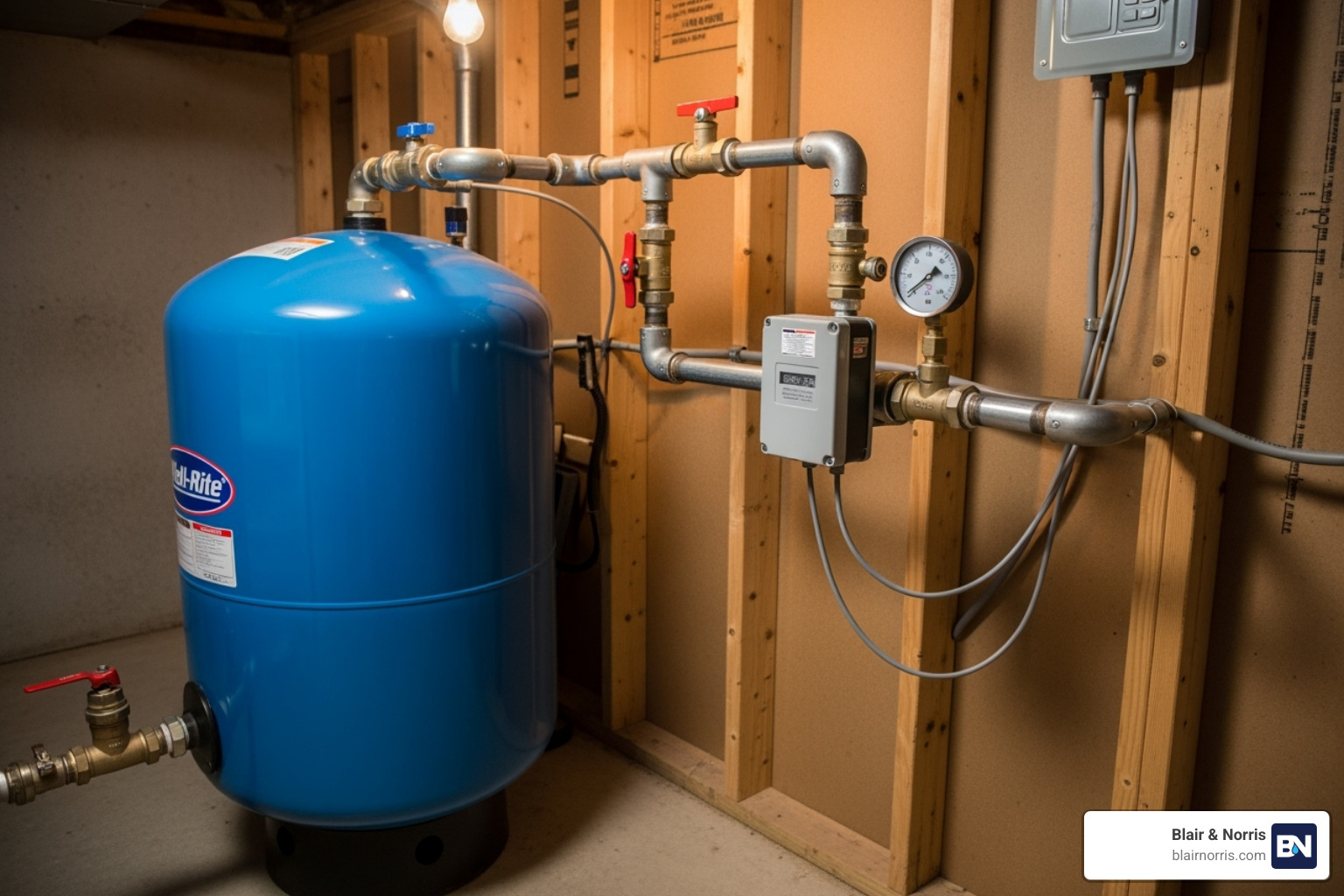
The pressure tank is where your water waits patiently under pressure, ready for instant delivery. Inside, a bladder or diaphragm separates air from water. When you use water, pressure drops, signaling your pump to refill the tank. A properly sized pressure tank prevents your pump from cycling constantly, which extends its life significantly.
Your pressure switch is the brain of the operation, constantly monitoring pressure levels. When pressure drops to the preset low point (usually around 40 PSI), it tells the pump to start working. When pressure reaches the high point (typically 60 PSI), it signals the pump to take a break. This automatic control keeps your water pressure consistent throughout your home.
The pressure gauge gives you a window into your system’s health. Located near the pressure tank, it provides a quick visual check of your water pressure. It’s like having a dashboard for your water system.
If you have a 3-wire submersible pump, you’ll need a control box above ground. This box contains the starting capacitors and relays that help your pump motor get going. Two-wire pumps have these components built right in, but 3-wire systems rely on this external control box as one of their essential deep well components.
The tank tee serves as Grand Central Station for your water system. This multi-port fitting connects your water line from the well, the line to your house, and provides connection points for your pressure switch, pressure gauge, and safety valves. It keeps all your connections organized in one convenient location.
A ball valve on your water supply line acts as a master shut-off switch. Located on the discharge side of your pressure tank, it lets you isolate your home’s plumbing from your well system when you need to perform maintenance or handle emergencies.
When your pressure tank starts showing its age, our Well Pressure Tank Replacement Guide can help you understand your options and make the right choice for your home.
The Heart of the Matter: Jet Pumps vs. Submersible Pumps
When it comes to deep well components, the pump is truly the heart of your system. You’ve got two main options for deep wells: jet pumps and submersible pumps. Each has its own personality and way of getting water from deep underground to your kitchen sink.
Think of it like choosing between two different approaches to the same job. Both pumps want to deliver water to your home, but they go about it in completely different ways.
How a Deep Well Jet Pump Works
Deep well jet pumps are the overachievers of the pump world. They sit above ground – maybe in your basement or a pump house – and use a clever two-pipe system with an ejector assembly down in the well to do their work.
Here’s where it gets interesting: these pumps use recirculation of water as their secret weapon. The pump sends some water back down into the well through one pipe, called the drive line. This water flows through a specialized ejector assembly that includes a nozzle and venturi function.
The nozzle speeds up the water, and as it passes into the venturi, something magical happens – it creates a high-speed, low-pressure zone. This low-pressure area acts like a vacuum, drawing fresh water from the aquifer through the foot valve.
But here’s the catch: jet pumps are essentially suction systems trying to pull water up from great depths, which physics doesn’t love. They need to pump and recirculate 3 to 4 gallons for every single gallon that actually reaches your pressure tank. It’s like having to run four laps to move forward one – it works, but it’s not exactly efficient.
Altitude effects on performance can make things even trickier. If you live at higher elevations, your jet pump’s maximum depth capability drops even further. For more details on pump mechanics, check out How Does a Well Pump Work?.
Submersible Pumps: The Modern Standard
Submersible pumps are the strong, silent type – and honestly, they’re pretty impressive. Instead of sitting above ground trying to suck water up, these pumps dive right in and get located inside the well, completely submerged near the bottom.
This design is brilliant because submersible pumps push water to the surface rather than trying to pull it up. No suction struggles, no recirculation waste – just straightforward water delivery from bottom to top.
The benefits are pretty compelling. They’re more energy-efficient because they don’t waste energy on recirculation. We’re talking about up to 70% less electricity usage compared to jet pumps delivering the same amount of water. Your electric bill will definitely notice the difference.
They also offer quieter operation since the motor is underwater and deep underground. You’ll barely hear them running, which is a nice change from the sometimes noisy jet pumps chugging away above ground.
Plus, submersible pumps have fewer priming issues. Since they’re always surrounded by water, they can’t lose their prime – a common headache with jet pump systems. For more insight into these reliable workhorses, explore our guide on Parts of a Well Pump.
Comparing Deep Well Jet Pumps and Submersible Pumps
When choosing between these deep well components, several factors come into play. Pumping depth is crucial – jet pumps work for wells 22 to 120 feet deep (and up to 200 feet, though efficiency drops significantly), while submersible pumps can handle practically any depth and are preferred for anything over 80 feet.
Efficiency is where submersible pumps really shine. While jet pumps recirculate 3 to 4 gallons for every gallon delivered, submersible pumps use up to 70% less power for the same water output.
For maintenance, jet pumps are prone to nozzle plugging and mineral deposits, plus they require priming. Submersible pumps need less frequent maintenance, though retrieving the pump from the well can be more complex when service is needed.
Priming needs differ significantly – jet pumps can lose prime and need repriming, while submersible pumps are self-priming since they’re always submerged.
The noise level comparison isn’t even close. Jet pumps with their above-ground motors can be quite noisy, while submersible pumps operate very quietly thanks to their in-well location.
Cost considerations include both upfront and operating expenses. Jet pumps often have lower initial costs but higher operating costs due to energy inefficiency. Submersible pumps cost more upfront but save money on electricity over time.
Best use cases depend on your specific situation. Jet pumps work well for wells 22-120 feet deep, especially when you need the pump offset from the well location. Submersible pumps are ideal for any well depth, particularly those over 80 feet with sand-free water.
Understanding how these systems compare to other well types can help you make the best choice. Learn more in our article Deep Well vs. Shallow Well: Key Differences Explained.
Keeping Your System Healthy: Maintenance and Troubleshooting
Even the most robust deep well components need a little love and attention to ensure they keep providing your home with clean, fresh water. Regular maintenance can prevent costly breakdowns, and knowing how to troubleshoot common issues can save you a lot of headaches (and cold showers!).
Routine Component Maintenance
Just like your car needs regular oil changes, your well system benefits from routine checks.
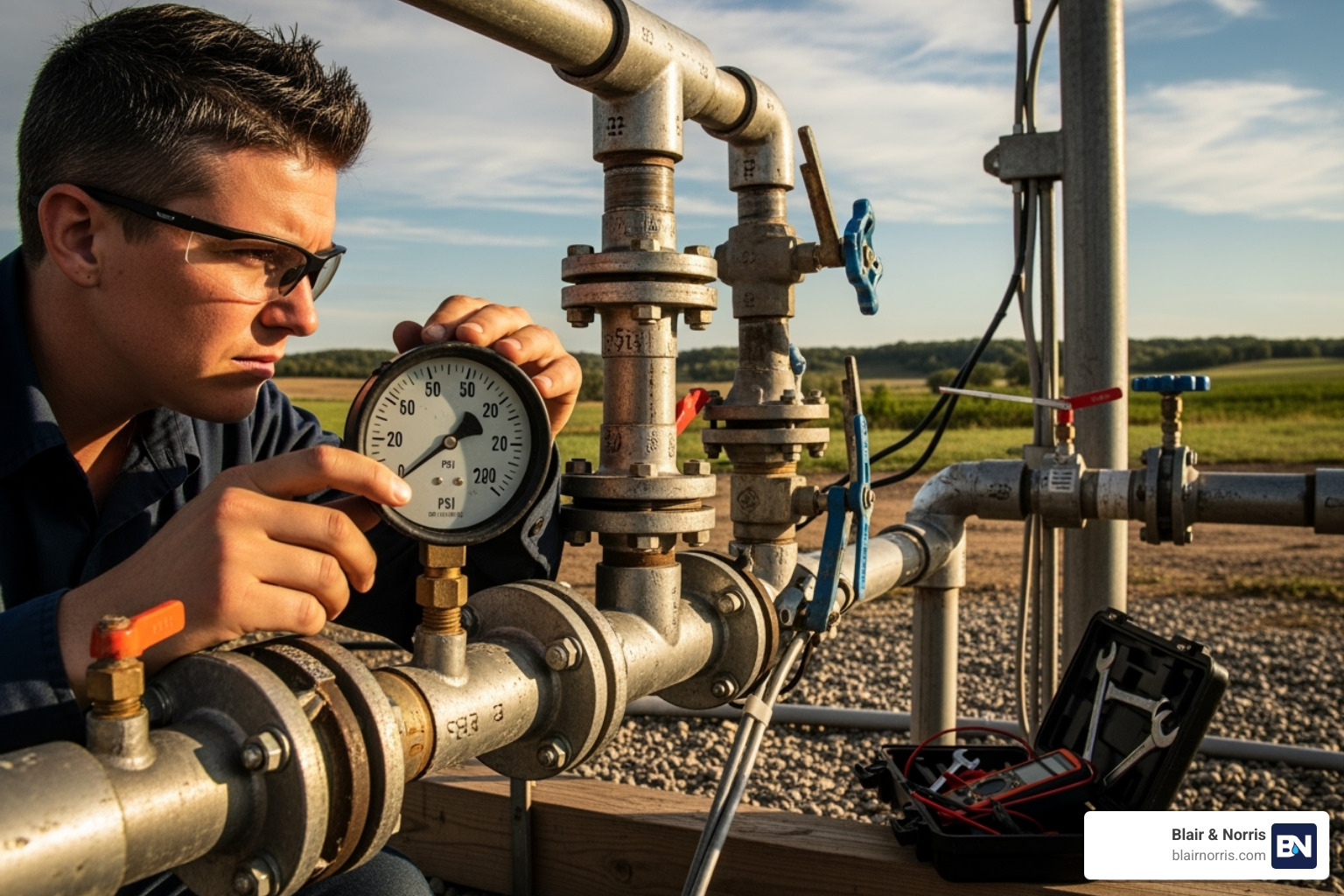
- Inspect the Pressure Tank: Periodically check your pressure tank’s pre-charge (the air pressure inside the tank when it’s empty of water) and look for any signs of leaks or corrosion. An improperly charged tank can cause your pump to cycle too frequently, wearing it out prematurely.
- Clean the Well Screen: While this is typically a professional task, understanding its importance is key. Over time, mineral deposits or fine sediment can clog the well screen, reducing water flow. Regular maintenance helps prevent this, ensuring optimal water intake.
- Check the Well Cap Seal: Your well cap is your first line of defense against contaminants. Routinely inspect it to ensure it’s securely fastened and the seal is intact. A loose or damaged cap can allow debris, insects, or even surface runoff to enter your well.
- Water Quality Testing: This is arguably the most important maintenance step for your family’s health. We recommend testing your well water annually for bacteria and nitrates, and every few years for other contaminants like lead, arsenic, and volatile organic compounds. The type of water filtration you choose for your well is determined by the contaminants in your well water. For comprehensive testing, consult a laboratory listed on the EPA’s certified laboratory list.
- Winterization: For above-ground components, especially jet pumps and exposed pipes, winterization is crucial in colder climates like ours in Indiana. This involves insulating pipes and ensuring any pump enclosures are properly sealed and heated to prevent freezing. While the water deep in your well won’t freeze, exposed pipes and pumps certainly can.
For a deeper dive into overall well care, read our article on The Importance of Water Well Maintenance.
Common Issues and Troubleshooting Steps
Even with the best maintenance, things can sometimes go awry. Here are some common problems with deep well components and initial troubleshooting steps.
- Loss of Prime (Jet Pumps): If your jet pump is running but not delivering water, it may have lost its prime.
- Turn off the electricity to your pump.
- Remove the priming plug on the wet end of the pump.
- Fill the priming vent with water until it reaches the top.
- Turn the power back on. If the pump doesn’t draw water within four to five minutes, re-prime.
- Low Water Pressure: This can be caused by a variety of issues, including a failing pressure tank, a faulty pressure switch, a clogged water filter, or even a problem with the pump itself.
- Pump Cycling Frequently: If your pump turns on and off too often, it’s usually a sign of a waterlogged pressure tank (bad bladder) or a leaking check valve. This can quickly wear out your pump motor.
- Sputtering Faucets: Air in your water lines, a low water level in the well, or a partial loss of prime can cause your faucets to sputter.
- No Water: This is the big one! It could indicate a power outage, a tripped circuit breaker, a complete pump failure, or an empty well. Always check your electrical panel first.
For more detailed troubleshooting, refer to our guide on Well Pump Problems.
Safety Precautions
Working with deep well components and electrical systems requires caution. Your safety, and the safety of your water supply, is paramount.
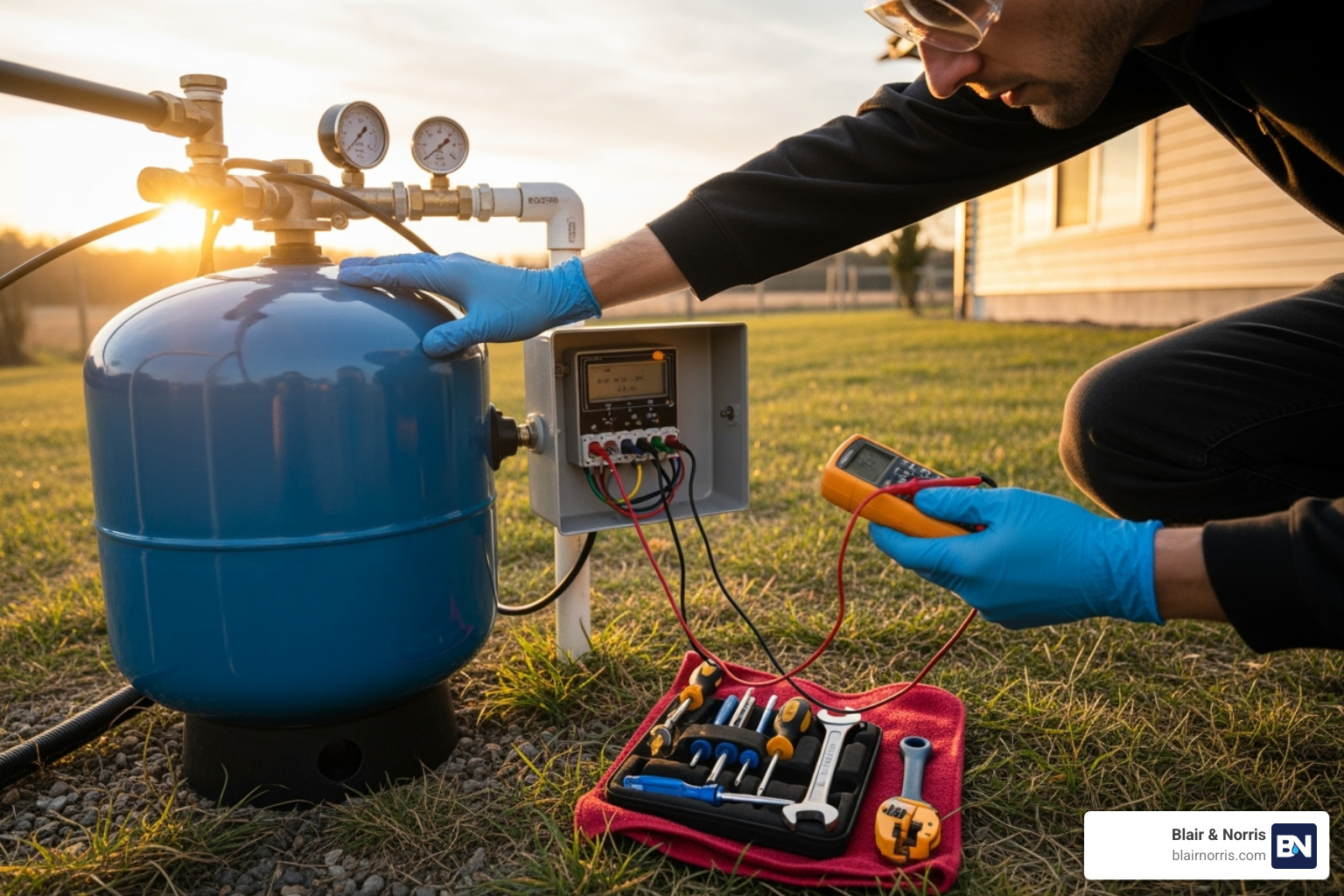
- Working with Electricity: Always, always turn off the power to your well pump at the circuit breaker before attempting any inspection or maintenance. Water and electricity are a dangerous combination.
- Handling Heavy Components: Well pumps, pressure tanks, and lengths of pipe can be surprisingly heavy. Use proper lifting techniques, and don’t hesitate to ask for help or use specialized equipment.
- Confined Spaces: While pitless adapters have largely eliminated the need for well pits, if you have an older system with a well pit, be aware of confined space hazards like poor ventilation or dangerous gases.
- Professional Assistance: Many tasks involving deep well components are complex and best left to licensed professionals. Retrieving a pump from deep in a well, diagnosing intricate electrical issues, or replacing major components requires specialized knowledge and tools. Don’t risk injury or further damage to your system by attempting repairs beyond your skill level.
For guidance on installations and other related services, our article Your Guide to Installing a Well Pump: Types, Costs, and Maintenance offers valuable insights.
Conclusion
Throughout this guide, we’ve explored the fascinating world of deep well components that work tirelessly beneath your feet and around your property to deliver fresh water to your home. From the protective well casing deep underground to the pressure switch that automatically controls your system, each component plays a vital role in your water supply.
Think about it – every time you turn on a faucet, brush your teeth, or start a load of laundry, you’re relying on this intricate network of submersible pumps, pressure tanks, check valves, and pitless adapters working in perfect harmony. Understanding how these parts function together empowers you to spot potential problems early, communicate effectively with service technicians, and make smart decisions about your system’s care.
A well-maintained deep well system is like a reliable friend – it’s there when you need it, doesn’t cause drama, and serves your family faithfully for years. Regular maintenance of your deep well components not only ensures consistent water pressure and quality but also prevents those middle-of-the-night emergencies that no homeowner wants to face.
While checking your pressure gauge or inspecting your well cap are tasks many homeowners can handle, the more complex aspects of deep well care – like retrieving a submersible pump or diagnosing electrical issues with your control box – require the expertise of experienced professionals.
When your deep well system needs attention, you want a team you can trust. For expert diagnosis and reliable service of your deep well components in the Indianapolis area, trust the family-owned team at Blair & Norris. With over 75 years of experience passed down through three generations, we’ve seen it all – from simple pressure switch replacements to complete system overhauls.
What sets us apart? We answer our phones 24/7 with live support because water problems don’t wait for convenient business hours. Whether it’s a Sunday morning or a holiday evening, we’re here to help restore your water supply quickly and efficiently.
Don’t let a failing well component leave your family without water. Contact us today for professional residential water well repair and experience the Blair & Norris difference. Your reliable water supply is our priority, day or night.