
Why Your Deep Well Needs a Drain Back Valve
A deep well drain back valve is a crucial component for any well system in a cold climate. It automatically drains water from the drop pipe back into the well when the pump shuts off. This simple action prevents water from freezing in the pipe above the frost line, saving you from burst pipes and costly emergency repairs during harsh Central Indiana winters.
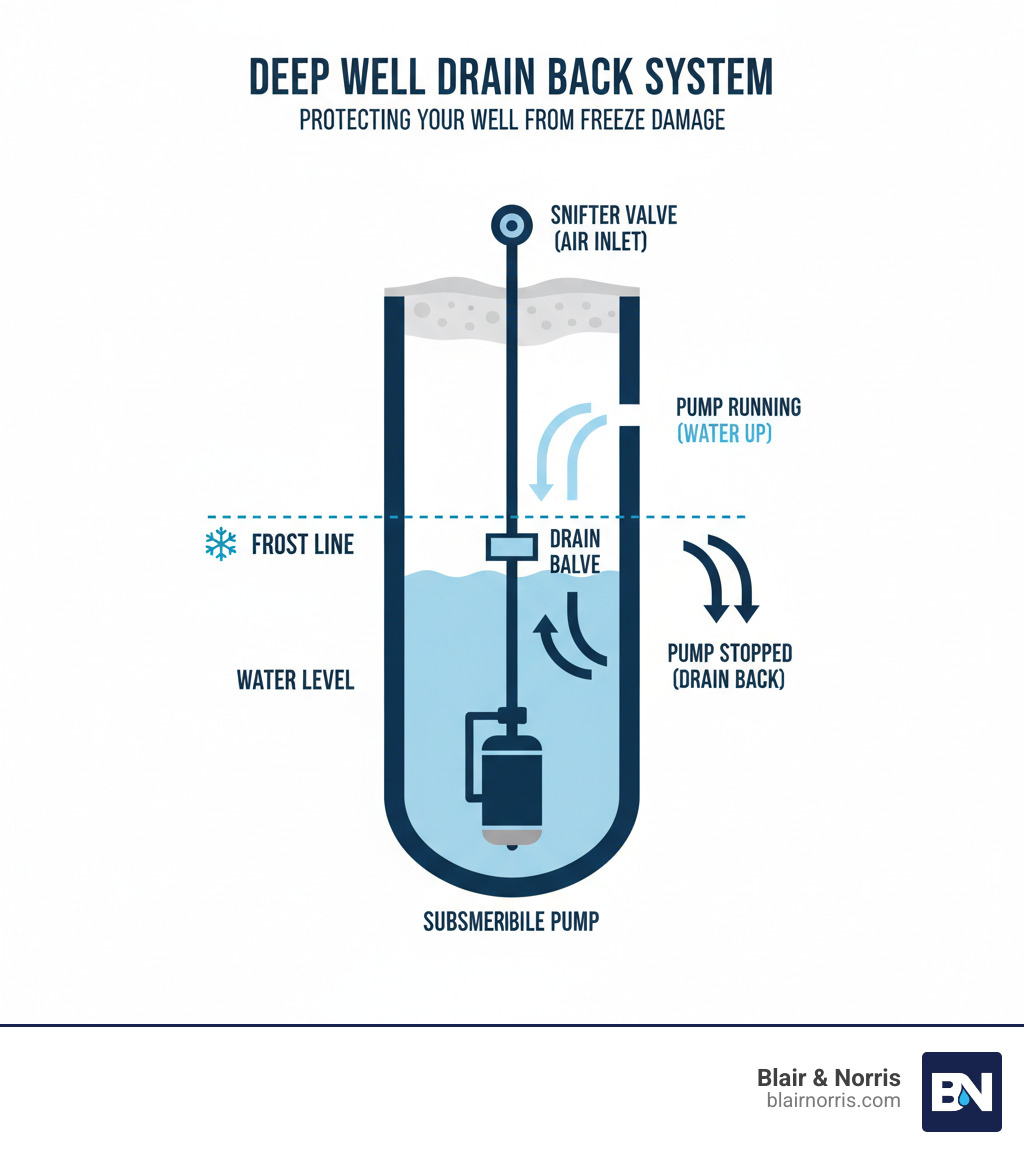
When the pump stops, system pressure drops, causing the valve to open. Gravity then pulls the water column down below the frost line, and a snifter valve allows air to enter the pipe, ensuring it drains completely. Unlike heated lines that use constant electricity or manual draining that relies on memory, a drain back valve offers automatic, energy-free protection every time your pump cycles.
Beyond freeze protection, these valves also make pump maintenance easier and safer. By draining the water from the drop pipe, they can reduce the weight that needs to be pulled during servicing by over 50% for PVC pipes. With more than 75 years of experience installing pump systems across Indiana, Blair & Norris has proven that a properly installed deep well drain back valve is essential to ensuring a reliable winter water supply.
Deep well drain back valve vocab to learn:
The Science of Freeze Protection: How a Drain Back Valve Works
When your submersible pump shuts off, the column of water in the drop pipe becomes vulnerable to freezing. A deep well drain back valve uses a combination of pressure changes and gravity to automatically protect your system. For a complete overview of the pump cycle, see our guide on How Does a Well Pump Work?.
How Automatic Draining Prevents Freezing
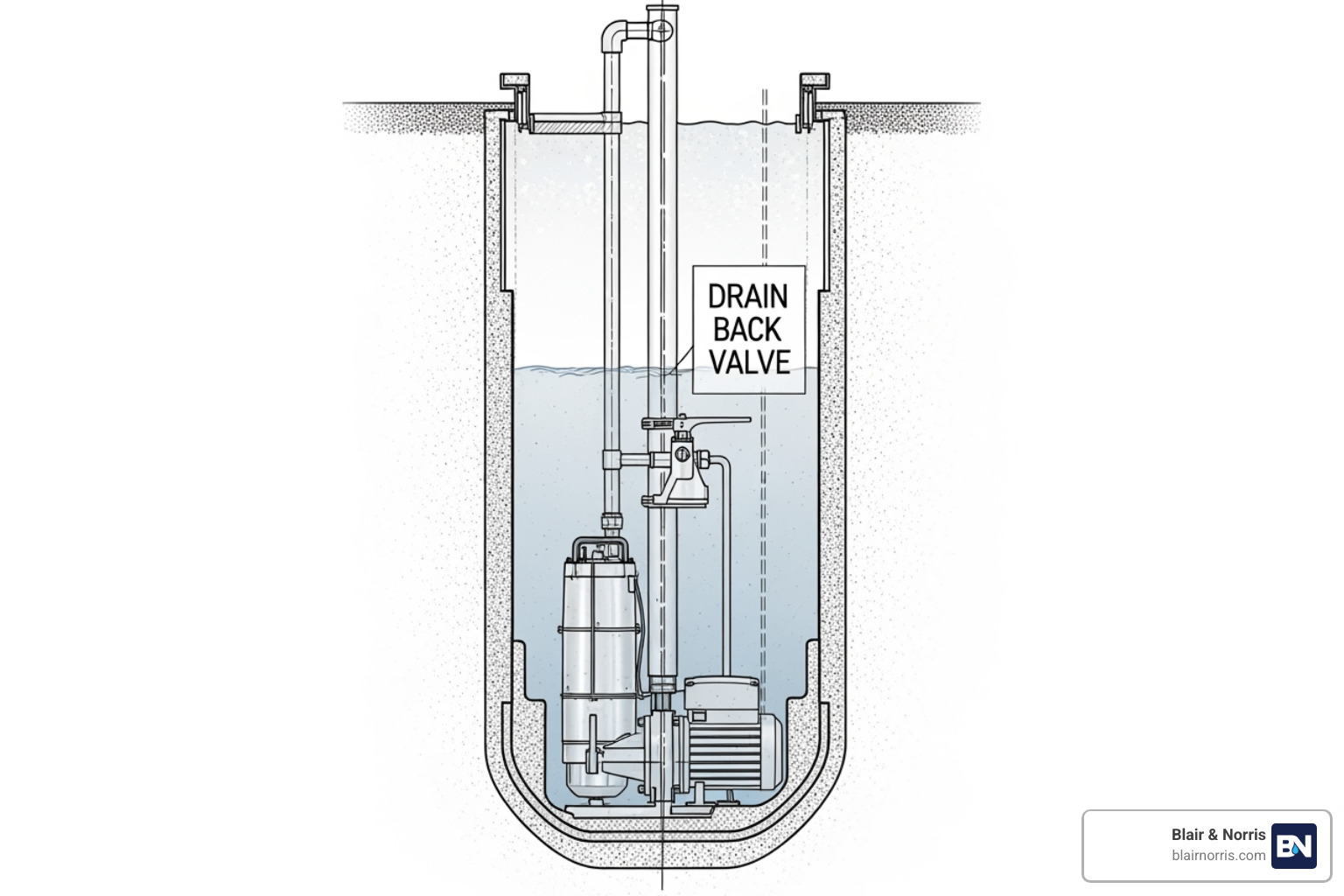
The genius of a deep well drain back valve is its automatic, passive operation. When the pump stops, the pressure in the drop pipe falls. Once it drops below a certain threshold (typically 5-10 PSI), the valve opens. Gravity then takes over, and the water in the pipe flows back down into the well, safely below the frost line). No water is left in the upper pipe to freeze and cause a burst.
To ensure complete drainage, a snifter valve is often used. This small air inlet opens as the water drains, preventing a vacuum from forming that could trap water in the pipe. It’s a critical component, especially in older systems with bladderless tanks. This synergy between the drain back valve and snifter valve is what makes the system so reliable. Learn more about how these parts work together in our article on Components of a Water Well System.
Types of Drain Back Valves
While all drain back valves serve the same purpose, they operate in slightly different ways. Knowing the type in your system can be helpful.
- Spring-loaded valves: The most common type. A spring holds the valve closed under pressure. When pressure drops, the spring releases, and the valve opens to drain.
- Orifice-style bleeders: These have a tiny, fixed hole that allows a constant, slow trickle of water back into the well. They are effective but can slightly reduce pump efficiency.
- Manually activated plug valves: These are designed for maintenance. A weight is dropped down the pipe to trigger a plunger, opening the valve to drain the system before pulling the pump.
Valves are typically made from corrosion-resistant materials like brass or stainless steel to ensure durability within the well environment.
Why Use a Drain Back Valve? Key Benefits & Comparisons
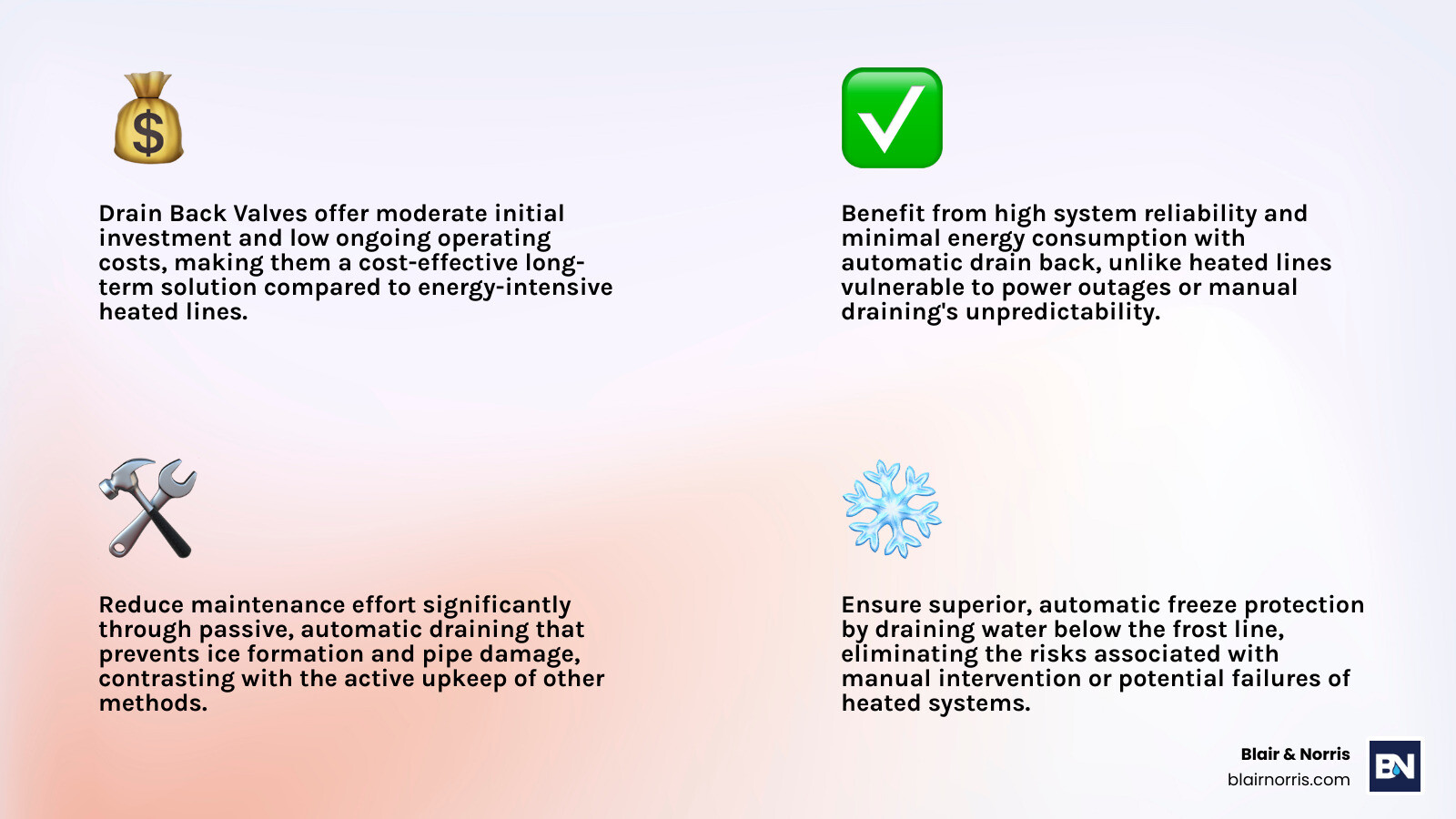
Installing a deep well drain back valve is a smart investment in your system’s health, efficiency, and longevity. The primary benefits include energy efficiency, as the system uses no electricity, and superior reliability, since it operates automatically and is unaffected by power outages. This proactive approach to The Importance of Water Well Maintenance prevents expensive emergencies.
Drain Back Systems vs. Other Winterization Methods
When protecting a deep well from freezing, a drain back system is often the most convenient and cost-effective solution compared to the alternatives.
| Feature | Drain Back Valve System | Heated Lines (Heat Tape) | Manual Draining |
|---|---|---|---|
| Cost | Moderate initial investment, low operating cost | Moderate initial investment, high operating cost | Low initial cost, high labor cost (your time) |
| Energy Use | Minimal (only pump operation) | High (constant electricity for heating) | None (relies on manual effort) |
| Reliability | High (automatic, passive protection) | Moderate (vulnerable to power outages, heat tape failure) | Low (human error, forgetfulness) |
| Maintenance | Low (periodic checks for valve function) | Moderate (inspect heat tape, thermostat) | High (requires consistent manual action) |
| Power Outage | Unaffected (system drains by gravity) | High risk (pipes freeze if power is lost) | Unaffected (if drained before outage) |
| Convenience | High (fully automatic) | Moderate (always on, but requires monitoring) | Low (requires active effort for each winter event) |
- Heated lines (heat tape) consume significant energy and fail during power outages, leaving your pipes vulnerable when you need protection most.
- Manual draining is labor-intensive and relies on you remembering to act before every freeze, making it prone to human error.
To ensure your system is ready for freezing temperatures, schedule a professional winterization inspection with Blair & Norris. Our team will evaluate your well, pump, and drain back components to confirm they’re prepared for Indiana’s harsh winter conditions.
How Drain Back Valves Improve Pump Longevity
A drain back valve also extends the life of your submersible pump. By draining the water from the drop pipe, it significantly reduces the pulling weight during service, making maintenance safer and more efficient. This can reduce the weight by over 50% for PVC pipes. Furthermore, it reduces backpressure on the pump motor after each cycle and helps prevent water hammer, a destructive force caused by sudden stops in water flow. Less strain on the motor and components means a longer-lasting pump and fewer repairs. Learn more in our guide on Well Pump Repair or Replacement: The Important Considerations.
Limitations and Drawbacks
While highly effective, drain back systems are not a universal solution. Key considerations include:
- System Slope: The piping must have a continuous downward slope to the well for gravity to drain the water. Dips or “bellies” in the line will trap water.
- Terrain: Not all properties can accommodate the required slope.
- Air in Lines: A brief sputter of air from faucets after the system has drained is normal but can be surprising.
- Component Compatibility: The system requires correct placement of check valves and other components to function. Professional installation is crucial to avoid these pitfalls.
Installation and Key Components of a Deep Well Drain Back Valve System
Proper installation is paramount for a deep well drain back valve to function effectively. This is not a DIY project; it requires specialized knowledge of well systems and local codes to ensure every detail is correct. If your system shows signs of aging or you’re considering upgrades ahead of freezing temperatures, Blair & Norris offers professional well pump installation and inspection services to ensure your system is fully protected before winter sets in.
Essential Components for a Drain Back System
A functional drain back system requires several components working in harmony. The submersible pump sends water up the drop pipe, where the deep well drain back valve is installed. A snifter valve may be needed to let air in for complete drainage. A foot valve or check valve on the pump maintains prime, while the pressure tank stores water and reduces pump cycling. All these parts must be configured correctly for the system to work. For a deeper look at these parts, explore our guide to Deep Well Components.
Professional Installation is Key
While the concept is simple, professional installation is critical. Key steps include:
- Locating the frost line: The valve must be installed below the local frost line, a depth our experts know for communities across Central Indiana.
- Ensuring proper slope: All piping must have a continuous downward slope back to the well. Any low spots will trap water and freeze.
- Correct component placement: Check valves must be placed correctly to allow drainage without letting the pressure tank empty.
- System testing: After installation, the system must be cycled and tested to confirm it drains properly.
Attempting this without experience can lead to a system that fails when you need it most.
Regulations and Plumbing Codes
Well system modifications must comply with local plumbing codes and well construction regulations to ensure water safety. These rules govern everything from valve placement to backflow prevention. For example, industry guidelines like the American Water Works Association’s backflow preventer standards help protect your potable water supply. Our team is well-versed in all local Indiana codes, ensuring every installation is safe, compliant, and built to last. Always consult a professional before modifying your well system.
Keeping Your System Flowing: Maintenance & Troubleshooting
While a deep well drain back valve is reliable, preventive care ensures it protects your system all winter. Small maintenance steps can prevent major headaches. For a broader look at potential issues, see our Complete Well Pump Troubleshooting Guide.
Routine Maintenance Checks
Maintenance for a drain back system is straightforward. Before winter, perform these checks:
- Visual Inspection: Look for leaks or water pooling around the well head and pressure tank.
- Listen for the Snifter Valve: After the pump shuts off, you should hear a brief hiss of air entering the system. No sound could mean a stuck valve.
- Test the Drain Function: Turn off the pump’s power, then open a faucet. The pressure gauge should drop to zero as water drains back into the well. If pressure holds, the valve may be stuck closed. Our Maintenance: Well Maintenance services cover these critical checks.
Potential Problems with a Deep Well Drain Back Valve
Knowing what can go wrong helps you spot issues early. Common problems include:
- Valve Failing to Open: This is the most critical failure. Water trapped in the pipe freezes and can cause it to burst. This is often caused by sediment or mineral buildup.
- Valve Failing to Close: If the valve stays open, the system can’t build pressure, leading to low water pressure and constant pump cycling. This wears out the pump and increases electricity bills.
- Sediment and Mineral Buildup: Well water in Central Indiana can be rich in minerals, which can clog the valve mechanism over time.
- Incorrect Installation: Improper valve placement, lack of slope, or incorrect check valve configuration will prevent the system from working.
If you notice any of these symptoms, contact us to diagnose and fix these well pump problems before they become an emergency. These routine checks are part of the comprehensive well system maintenance and inspection services Blair & Norris provides to ensure your equipment performs reliably throughout the winter.
Cost Considerations for Installation and Maintenance
Investing in a deep well drain back valve is a cost-effective way to protect your well. While the valve itself costs between $50 and $200, professional installation is key to its function. The real savings come from eliminating the need for energy-hungry heat tape and, most importantly, avoiding the high cost of emergency repairs for a frozen, burst pipe, which can run into thousands of dollars.
The initial investment in a properly installed drain back system pays for itself through energy savings and the prevention of a single winter disaster. For a detailed breakdown of local costs, see our Local Well Pump Replacement Cost Guide.
Frequently Asked Questions About Deep Well Drain Back Valves
Here are answers to some common questions we hear from homeowners about the deep well drain back valve.
Can a drain back valve be used with a bladder-style pressure tank?
Yes, but the system must be configured correctly. Traditional drain back systems with snifter valves were designed for older, bladderless tanks. For modern bladder-style tanks, a snifter valve is often unnecessary. The key is proper check valve placement—a check valve is needed before the pressure tank to prevent it from draining back into the well. Due to this complexity, professional installation is essential to ensure compatibility.
How do I know if my drain back valve is working?
There are two simple tests. First, after your pump shuts off, listen near the well head for the sound of water draining back down. Second, you can perform a pressure test: turn off the pump’s power, open a faucet, and watch the pressure gauge. The pressure should drop to zero as the system drains. If the pressure holds, the valve may be stuck or blocked, and you should call for service before the first freeze.
Will a drain back valve affect my water pressure?
No. A properly functioning deep well drain back valve will not affect your water pressure. The valve is designed to stay closed while the pump is running and only opens after the pump shuts off and system pressure drops significantly. If you are experiencing low water pressure, the cause is likely another issue, such as a problem with the pump, pressure tank, or clogged pipes. Our guide on Submersible Water Pump Low Pressure can help you troubleshoot.
Protect Your Well System This Winter
Winter in Central Indiana brings sustained, severe cold that places significant stress on unprotected well systems. When temperatures drop and the ground freezes solid, your well system faces its toughest test of the year. But here’s the good news: with a properly installed deep well drain back valve, you don’t have to worry about waking up to frozen pipes or spending thousands on emergency repairs.
Throughout this guide, we’ve explored how these ingenious devices work—automatically draining water below the frost line when your pump shuts off, protecting your investment without consuming energy or requiring you to remember manual tasks. We’ve looked at the science behind freeze protection, the key components that make the system work, and the maintenance steps that keep everything running smoothly year after year.
The reality is simple: freeze protection isn’t optional in our part of the country. It’s a necessity. And when you compare the alternatives—energy-hungry heated lines that fail during power outages, or manual draining that relies on perfect human memory—a deep well drain back valve system stands out as the reliable, cost-effective choice.
Beyond just freeze protection, you’re also investing in your pump’s longevity, easier maintenance down the road, and the peace of mind that comes from knowing your system is working for you automatically, every single day.
At Blair & Norris, we’ve been protecting well systems across Indianapolis, Fishers, Carmel, Zionsville, and surrounding communities for over 75 years. We’re a family-owned business that takes pride in doing things right the first time. Our technicians know Indiana’s frost lines, local codes, and the specific challenges our region’s well systems face. When you call us—any time, day or night—you’ll talk to a real person who cares about solving your problem.
Winter is coming, and your well system deserves the best protection available. Don’t wait until the first hard freeze to find your pipes aren’t ready. Whether you need a new drain back valve installed, want your existing system inspected, or have questions about how these systems work with your specific setup, we’re here to help.
Contact us today for residential water well repair! Let’s make sure your water keeps flowing all winter long—no frozen pipes, no emergency calls, no stress. Just reliable water, exactly when you need it.