
Septic System Services That Keep Your Home Running Smoothly
Septic System Services help protect your home from backups, odors, and yard damage. For most Central Indiana homeowners, the essential service is scheduled septic tank pumping and cleaning, usually every 3 to 5 years. Call for prompt help sooner if drains slow down, toilets gurgle, sewage backs up, or wastewater pools in the yard.
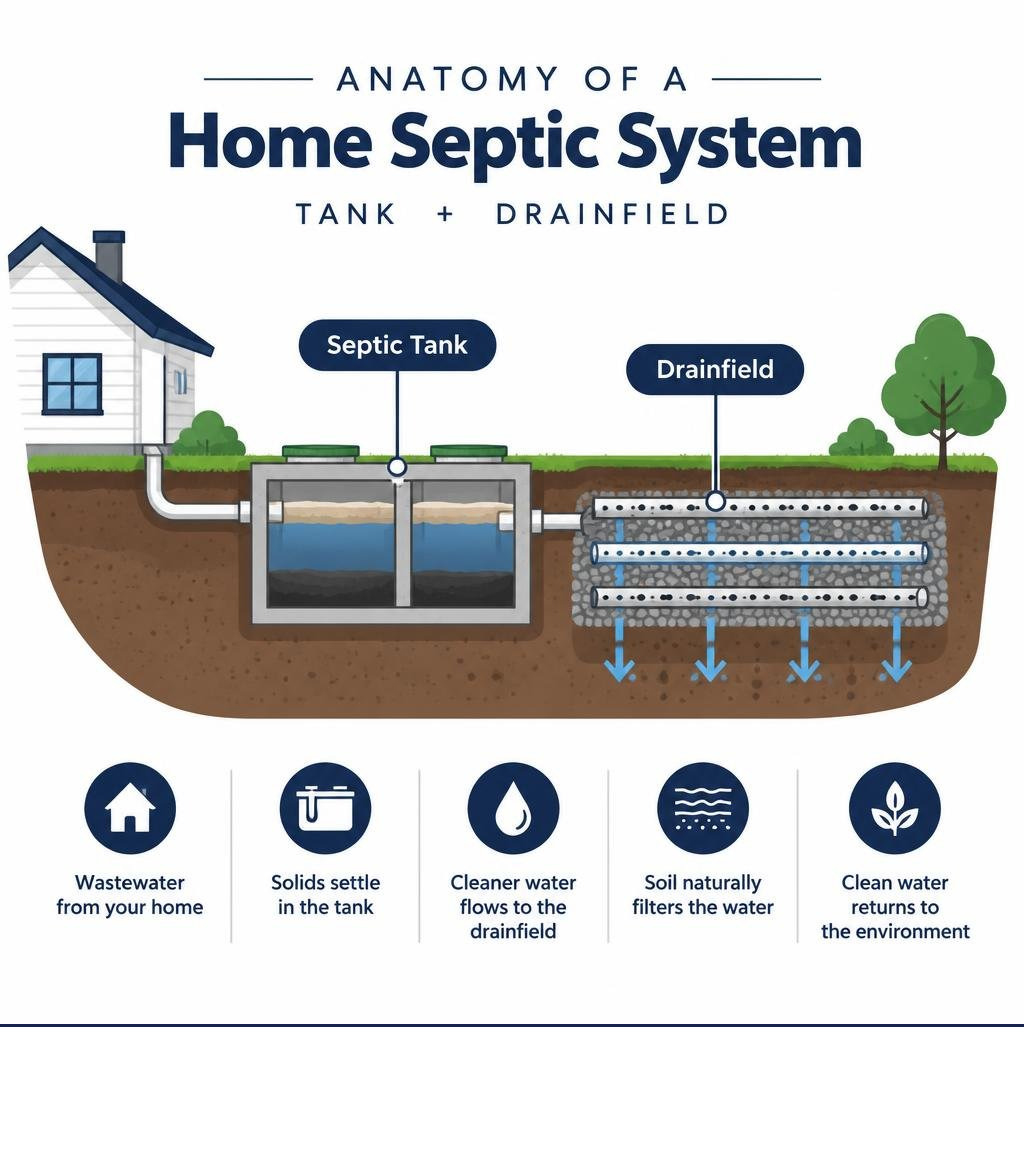
An onsite septic tank functions as a specialized settling and preliminary digestion chamber designed to separate heavy solids and buoyant scum from household wastewater. Liquid effluent gradually moves downstream into your soil absorption field, while the denser waste remains captured inside the tank compartment. When sludge and scum accumulate beyond safe operational thresholds, these solids migrate into the underground lateral lines, creating severe blockages, compacted trenches, and potential groundwater contamination. At Blair & Norris, your local Central Indiana provider, our septic work is focused strictly on reliable septic tank service, cleaning, and pumping, with clear communication and respect for your property.
I am Mack Blair, and I have spent more than 30 years serving Central Indiana homeowners after learning the trade alongside my grandfather. Today, I bring that hands-on experience to Septic System Services designed to make routine care and urgent problems less stressful. Whether you are addressing an unexpected drainage backup or adhering to a scheduled maintenance regimen, working with an experienced local technician ensures your home’s wastewater infrastructure remains clean, compliant, and fully operational through every season.

Regularly servicing your septic tank helps avoid expensive emergency repairs and protects your family from environmental hazards. Because our team focuses on residential maintenance, we prioritize non-invasive pumping, thorough sediment agitation, and dependable waste removal that prolongs the life of your existing drainfield lines without unneeded disruption to your landscape.
Septic System Failures: Core Problems, Warning Signs, and Property Risks
When an onsite wastewater setup begins to fail, the consequences can quickly escalate from an annoying bathroom nuisance into an environmental and financial nightmare. At its core, system failure happens when the delicate balance between wastewater volume, bacterial digestion, and soil absorption breaks down. Understanding the progression of these issues helps you stop a disaster before raw sewage reaches your living space.
The Underlying Causes of Failure
A septic tank is engineered to hold wastewater long enough for heavy solids to settle into a sludge layer at the bottom while oils and grease float to the top as scum. The clarified liquid, known as effluent, flows out into the absorption field. However, several mechanical, biological, and environmental factors can disrupt this cycle:
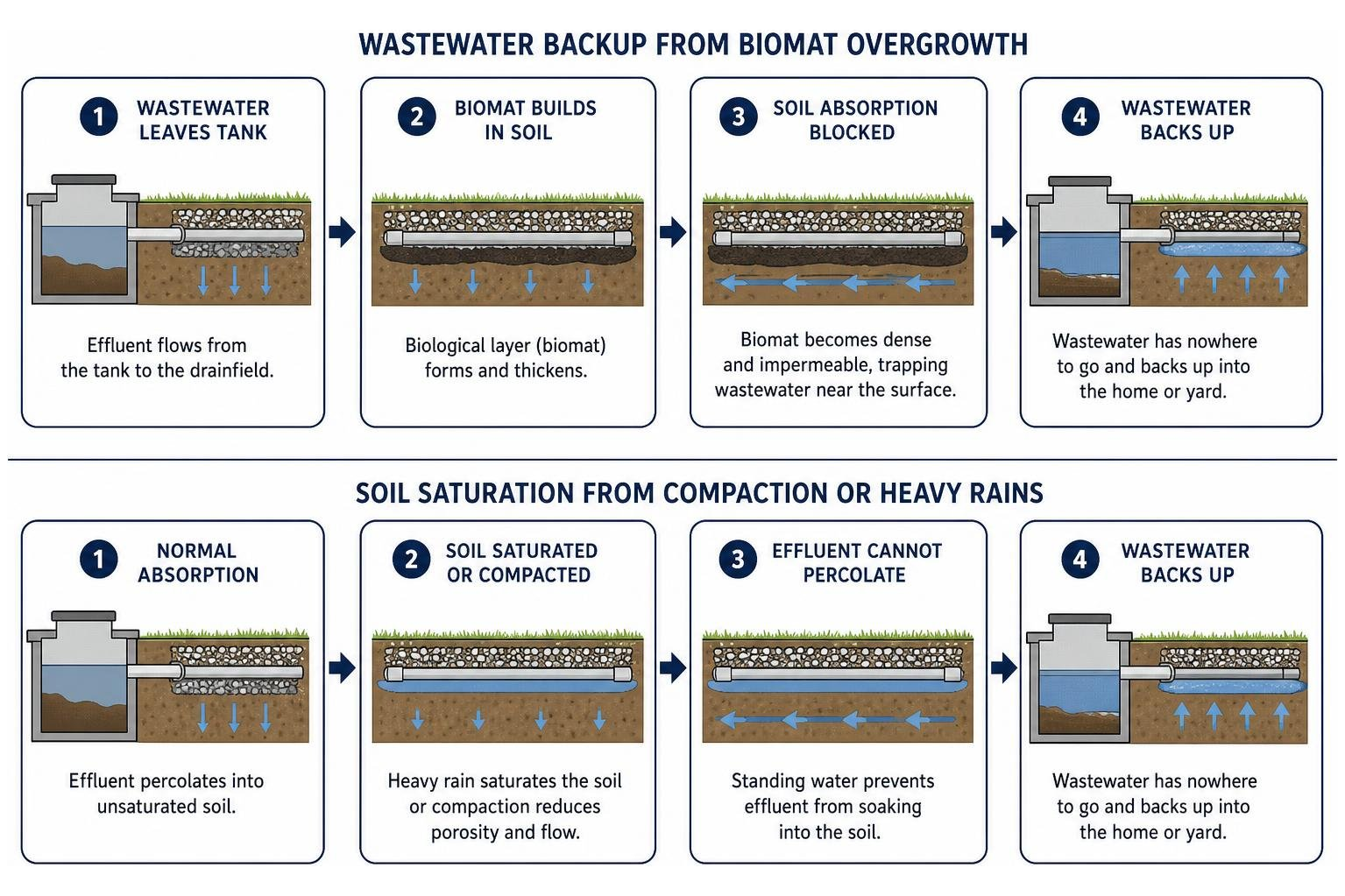
- Biomat Overgrowth: Over time, anaerobic bacteria in the soil absorption trench form a biological slime layer called a biomat. While a thin biomat is normal and helps filter minor impurities, excessive solid accumulation pushes unfiltered waste into the lines. This causes the biomat to become thick, dense, and impermeable, preventing water from draining into the soil and backing up wastewater into the tank.
- Soil Compaction and Heavy Rains: Driving vehicles, parking heavy machinery, or constructing structures over the absorption field crushes underground perforated pipes and compacts surrounding soil particles. In Central Indiana, heavy seasonal spring rains saturate the ground, temporarily eliminating the soil’s natural permeability and preventing effluent from percolating downward.
- High Seasonal Water Tables: A rising water table diminishes the critical vertical separation distance between the bottom of your gravel absorption trenches and the saturated groundwater level. Without sufficient unsaturated soil depth, natural aerobic microbes cannot thrive, halting biological filtration and allowing untreated wastewater to enter subterranean aquifers.
- Structural Baffle Deterioration: In aging concrete septic tanks, hydrogen sulfide gases corrode concrete and sanitary tees over time. If an outlet baffle collapses, floating scum and grease escape directly into the drainfield lines, coating the gravel bed and clogging soil micropores in a matter of days.
Critical Warning Signs
Homeowners must stay alert for early indicators of trouble. If you notice any of the following symptoms, your system requires prompt attention:
- Sluggish Drains and Gurgling Pipes: Sinks, bathtubs, and toilets that drain slowly or produce distinct bubbling noises indicate that air and liquid are fighting hydraulic backpressure in the main sewer line.
- Foul Sewage Odors: Distinct smells of hydrogen sulfide, sewer gas, or sulfur near your tank lids, around yard vents, or rising through basement floor drains mean gases are escaping backward toward your living quarters.
- Spongy, Hyper-Lush Grass Patches: An unusually vibrant, bright green patch of grass directly over your absorption trenches often indicates that effluent is surfacing rather than filtering downward through the subsurface soil profile.
- Standing Surface Water or Black Sludge: Dark, foul-smelling puddles pooling on your lawn indicate severe drainfield ponding and present an immediate biohazard to your household and neighborhood pets.
Ignoring these warning signs leads to catastrophic property damage. Raw sewage backups ruin finished basements, destroy flooring, rot drywall studs, and create structural contamination. Furthermore, untreated effluent risks carrying dangerous pathogens, nitrates, and bacteria into local groundwater tables and private drinking wells. You can review local safety standards through the Fishers Health Department septic guidelines to understand how local health agencies regulate onsite wastewater management.
Comprehensive Septic Tank Services for Residential Properties
Maintaining an efficient onsite sewage setup involves active stewardship of your tank mechanics, biological ecosystem, and structural integrity. While our work at Blair & Norris focuses strictly on septic system service, cleaning, and pumping rather than septic system or riser installation, we believe an informed homeowner is best equipped to protect their home.
To help you decide on the right maintenance approach for your property, consider this service spectrum:
- Good (Reactive Basic Care): Calling for a pump-out only when drains begin to slow down or when an odor is noticed. While this addresses the immediate clog, it risks long-term drainfield damage by allowing solids to build up near the outlet baffle between visits.
- Better (Scheduled Periodic Pumping): Establishing a rigid 3-to-5-year pump-out schedule based on household occupancy and tank capacity. This consistent cadence prevents solids from ever migrating beyond the tank outlet and keeps hydraulic retention times optimal.
- Best (Comprehensive Proactive Care): Combining routine scheduled pumping with seasonal water conservation, careful visual tank checks, prompt resolution of running indoor fixtures, and meticulous maintenance recordkeeping.
Essential Septic System Services: Pumping and Tank Cleaning
The cornerstone of all residential septic care is routine waste extraction. As your household uses water for cooking, cleaning, showering, and sanitation, non-biodegradable particles, cellulose fibers, and settled biological matter gradually build up at the bottom of your concrete or poly tank. If this sludge layer exceeds one-third of the total liquid depth, the functional settling capacity of the chamber drops significantly, allowing suspended solids to wash downstream into your lateral lines.

During a standard pump-out, our high-capacity vacuum equipment removes both the floating scum blanket and the dense bottom sludge layer. We thoroughly agitate and clean the chamber to ensure that heavy compacted solids are fully mobilized and vacuumed away. This restores the full liquid capacity of the tank and gives your system a fresh operational cycle.
Investing in scheduled professional septic tank pumping protects your drainfield from premature hydraulic failure. Routine pumping prevents costly remediation and keeps your waste treatment cycle running cleanly year after year.
Maintenance Planning and Property-Transaction Considerations
Whether you are settling into a home for the long haul or preparing to list your property on the real estate market, structured maintenance planning is invaluable. Prospering real estate transactions often require verifiable maintenance documentation to prove that an onsite wastewater setup has been responsibly serviced and maintained.
When scheduling routine care, pairing your septic servicing with an active routine septic maintenance plan ensures your home remains in peak condition. For national benchmarks and educational guidelines on domestic wastewater systems, the U.S. Environmental Protection Agency septic system guidance provides comprehensive information regarding environmental safety, tank sizing, and proper homeowner habits.
The Hazards of DIY Septic Maintenance vs. Professional Service
Attempting to service, unclog, or diagnose a malfunctioning septic tank on your own presents severe health, safety, and financial dangers. The environment inside an underground sewage tank is volatile, hazardous, and strictly regulated by state and local authorities.

The Dangers of Chemical Additives
Many commercial retail products claim to clean your tank, eliminate pumping needs, or dissolve sludge through miracle chemical or biological additives. In reality, these additives often do far more harm than good:
- Caustic Cleaners and Solvents: Strong chemical treatments disrupt the natural anaerobic bacterial colonies responsible for digesting organic waste. When these beneficial bacteria die off, natural waste digestion halts entirely.
- Emulsifiers: Solvent-based additives break down floating grease into micro-droplets, allowing scum to bypass the outlet baffle and enter the drainfield, where it re-solidifies and clogs the soil absorption pores permanently.
- Yeast and Enzyme Injections: Over-activating biological activity can cause violent gas generation, churning up settled sludge and pushing suspended solids straight into lateral distribution pipes.
Physical Safety Hazards
The physical hazards of opening, probing, or entering a septic tank cannot be overstated:
- Lethal Gases: Decomposing sewage generates high concentrations of methane, hydrogen sulfide, carbon monoxide, and ammonia. Inhaling these toxic gases in a confined underground space can cause rapid asphyxiation, respiratory paralysis, and sudden unconsciousness.
- Structural Collapse: Aging tanks made of substandard materials or decaying concrete can cave in under the weight of an individual standing on an unreinforced access cover.
- Biohazard Exposure: Direct contact with raw wastewater exposes individuals to harmful pathogens, parasitic worms, viruses, and enteric bacteria such as E. coli and Salmonella that cause debilitating illnesses.
Navigating onsite wastewater systems requires professional personal protective equipment, industrial vacuum machinery, and certified disposal protocols. State and local environmental regulations mandate that extracted septage be safely transported and treated at licensed sanitary disposal facilities. Trusting an experienced team eliminates legal liabilities and keeps your household completely safe.
Emergency Septic System Services and Warning Signs
Plumbing catastrophes rarely happen at convenient hours. A true septic emergency demands rapid, professional intervention before raw sewage backs up through floor drains, tubs, and toilets.
Our responsive 24/7 emergency septic services are standing by around the clock. When emergencies strike, our technicians arrive equipped to assess the issue, relieve liquid pressures, and pump out backed-up tanks, helping protect your home from devastating interior water damage.
What to Look for in a Licensed Septic Contractor
Choosing the right service provider requires looking beyond a company name. You need an established contractor that brings experience, proper licensing, and the right equipment to your property.
- Full Licensing and Insurance: Always ensure your contractor maintains comprehensive liability and workers’ compensation coverage to protect your property during maintenance visits.
- Modern Equipment and Advanced Solids Control: Advanced vacuum trucks and clean fluid handling machinery ensure jobs are completed cleanly without tearing up your lawn. In our broader drilling and fluid management operations, we utilize advanced systems such as Mud Puppy equipment for clean mud recycling and drilling, ensuring dependable, environmentally conscious solids control.
- Family Ownership and Integrity: Working with a family-owned company ensures you receive honest assessments, transparent explanations, and friendly customer care from professionals who live in your community.
- Comprehensive Water Knowledge: Because septic dynamics work hand-in-hand with residential water pressure, utilizing providers who understand integrated well and pump solutions guarantees your entire plumbing and wastewater ecosystem functions as a unified whole.
Frequently Asked Questions about Septic Maintenance
How often should a home septic tank be pumped?
A standard residential septic tank should be pumped every 3 to 5 years. However, the precise interval depends on four main variables:
- Household Size: More occupants mean higher daily wastewater output and faster solids accumulation.
- Total Water Consumption: High water usage shortens the settling period inside the tank, requiring more frequent servicing to prevent solid carryover.
- Tank Capacity: Smaller tanks have less reserve volume for solids and need more frequent clean-outs.
- Use of Garbage Disposals: Disposals send dense food scraps into the tank, increasing sludge accumulation by up to 50% and shortening the time between required pump-outs.
What is the difference between a septic tank, seepage pit, and drainfield?
While all three components handle wastewater, each performs a distinct function in the treatment sequence:
- Septic Tank: A watertight concrete, fiberglass, or polyethylene container buried underground. Its primary job is physical separation and anaerobic digestion, settling heavy solids into sludge and trapping oils at the surface.
- Drainfield (Absorption Field): A subsurface network of perforated pipes laid inside gravel trenches or plastic chambers. It distributes clarified effluent across a broad surface area, allowing natural soil microbes to purify the water.
- Seepage Pit (Drywell): An older alternative design consisting of a deep, perforated vertical brick or concrete chamber surrounded by crushed stone. Effluent enters the pit and seeps outward into the surrounding soil profile.
How do Indiana soil types and high water tables affect septic systems?
Central Indiana geology presents unique challenges for onsite wastewater systems. Much of the region is characterized by dense, poorly draining glacial till rich in clay. Heavy clay soils possess tiny pore spaces that absorb water slowly, making them prone to seasonal saturation.
During wet spring seasons, high water tables saturate the upper soil layers, restricting oxygen diffusion and reducing the absorption capacity of traditional drainfields. This makes regular septic tank pumping essential; if excess solids escape into clay-rich trenches, soil pores clog permanently, leading to premature drainfield failure.
Conclusion
Taking proactive care of your residential septic system protects your property investment, safeguards your local environment, and ensures your home plumbing operates without stress. Regular septic tank pumping is the most cost-effective maintenance step any homeowner can take to avoid major backups and expensive repairs.
At Blair & Norris, your local Central Indiana provider, we take pride in serving Central Indiana homeowners. Backed by a 75-year legacy of ethical service, our family-owned company delivers dependable septic tank cleaning, pumping, and 24/7 live phone support across Indianapolis and surrounding communities. See what our neighbors say by reading verified Google reviews for Blair & Norris Well and Pump Services.
Do not wait for drains to back up or warning odors to appear. Contact Blair & Norris today for an honest, upfront estimate and keep your septic system operating at peak performance.