
Why Local Water Well Repair Matters for Central Indiana Homeowners
Local water well repair is essential when your well system starts showing signs of trouble. When you depend on a private well, you need a reliable expert on call. Here’s what you need to know when choosing one:
- Look for licensed, insured professionals with verifiable experience in well systems
- Check local reviews and Better Business Bureau ratings for reliability
- Verify they offer emergency service, clear communication, and a documented scope of work before service begins.
- Ensure they serve your area in Central Indiana and can respond quickly
- Ask about their experience with your specific well type (submersible, jet, etc.)
Your well pump is the heartbeat of your home’s water supply. When it fails, everything stops—no showers, no laundry, no cooking, no flushing toilets. Unlike municipal water that comes from a city supply, well water depends entirely on your pump system working correctly. And when something goes wrong, you can’t just call the city—you need a local water well repair professional who understands your system and can respond fast. In the greater Indianapolis area, where many homes rely on the White River watershed and various local aquifers, having a technician who understands the specific geological conditions of Central Indiana is a significant advantage.
Well systems are complex. They involve electricity, water pressure, underground pumps, pressure tanks, control boxes, and check valves. A problem with any one component can shut down your entire water supply. And because most of the system is either underground or involves both electricity and water, attempting repairs yourself carries real risks—from electric shock to well contamination that could affect your family’s health. Furthermore, the integration of modern plumbing with older well infrastructure requires a nuanced understanding of how pressure dynamics change over time.
Ignoring early warning signs can turn a minor well issue into a complete loss of water, so early diagnosis matters. These numbers matter because ignoring early warning signs often leads to more expensive emergency repairs later. A small issue today can become a complete system failure tomorrow. For instance, a pump that cycles too frequently might only need a minor pressure switch adjustment today, but if left unchecked, it will burn out the motor, leading to a multi-thousand dollar replacement next month.
Professional diagnosis is critical. What looks like a pump problem might actually be a pressure tank issue, a faulty pressure switch, a clogged line, or even a dropping water table. Licensed well contractors have the specialized tools and knowledge to diagnose the real problem quickly—saving you time, money, and the frustration of guessing. They use advanced diagnostic equipment like ultrasonic flow meters and high-precision multimeters to test electrical resistance in the pump motor without ever pulling it out of the ground.
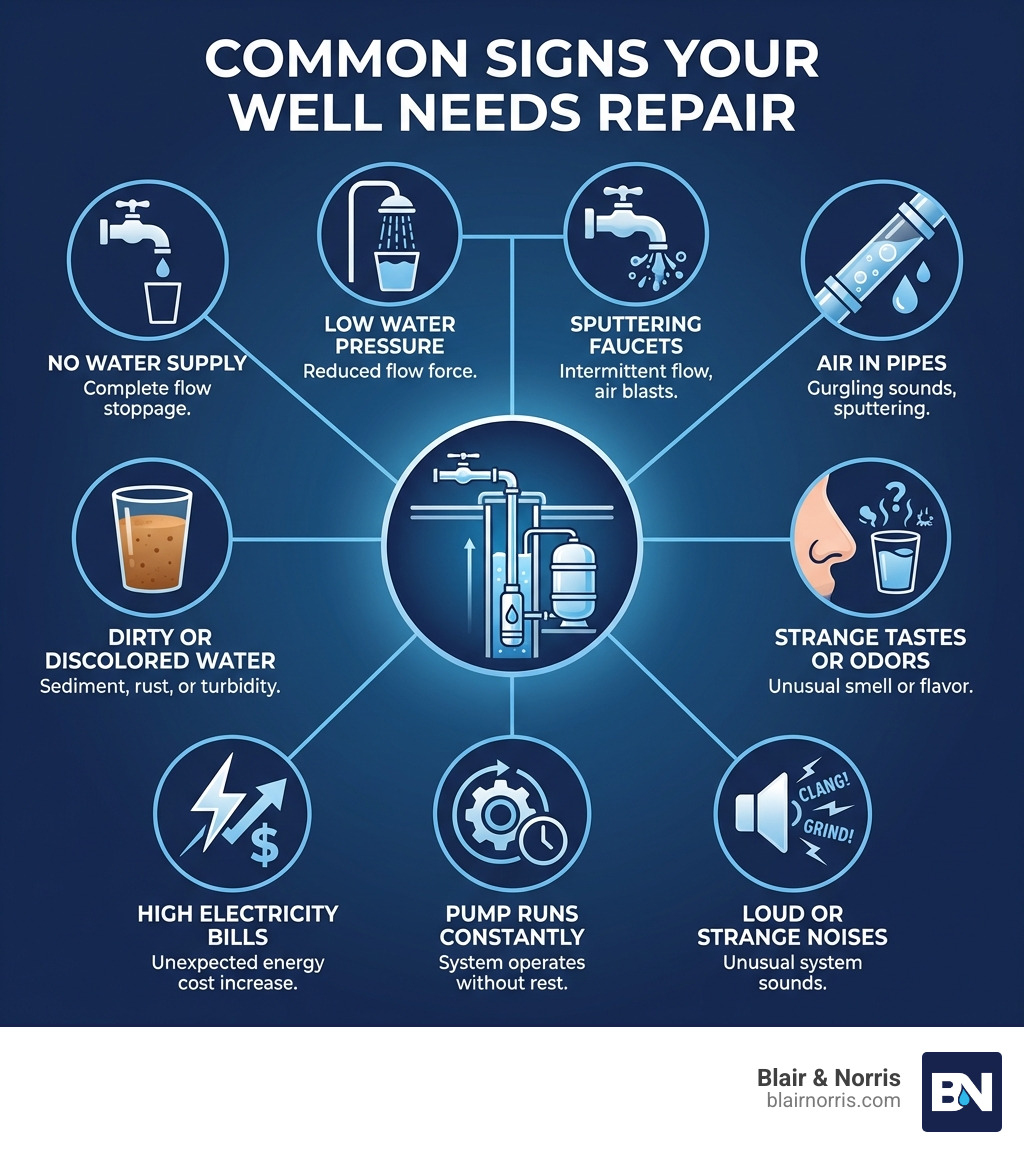
Recognizing the Red Flags: Common Signs Your Well Needs Repair
When you turn on the tap and get nothing, a weak trickle, or muddy water, it’s more than an inconvenience—it’s a clear sign you may need local water well repair. Well systems are reliable, but they do develop problems. Recognizing these warning signs early can save you from a major headache and a more expensive repair later. In many cases, the system will try to tell you it is failing long before the water actually stops flowing.
Let’s explore the common symptoms that tell you something is amiss with your well system:
- No water supply: The most urgent sign, indicating anything from a tripped breaker to a failed pump. It could also mean the water table has dropped below your pump’s intake level, a common issue during Indiana’s drier summer months.
- Low water pressure: Weak showers or slow-filling faucets point to pump issues, a failing pressure tank, or clogged lines. If the pressure starts strong but fades quickly, the pressure tank is likely the culprit.
- Sputtering faucets: Air spitting from faucets suggests the pump is drawing air, possibly due to a low water table or a cracked pipe. This is often referred to as “coughing” faucets and can lead to cavitation damage in the pump.
- Air in pipes: Often heard with sputtering faucets, this indicates air is entering the system, which can damage the pump. It can also be caused by a failing check valve that allows water to drain back into the well, creating a vacuum.
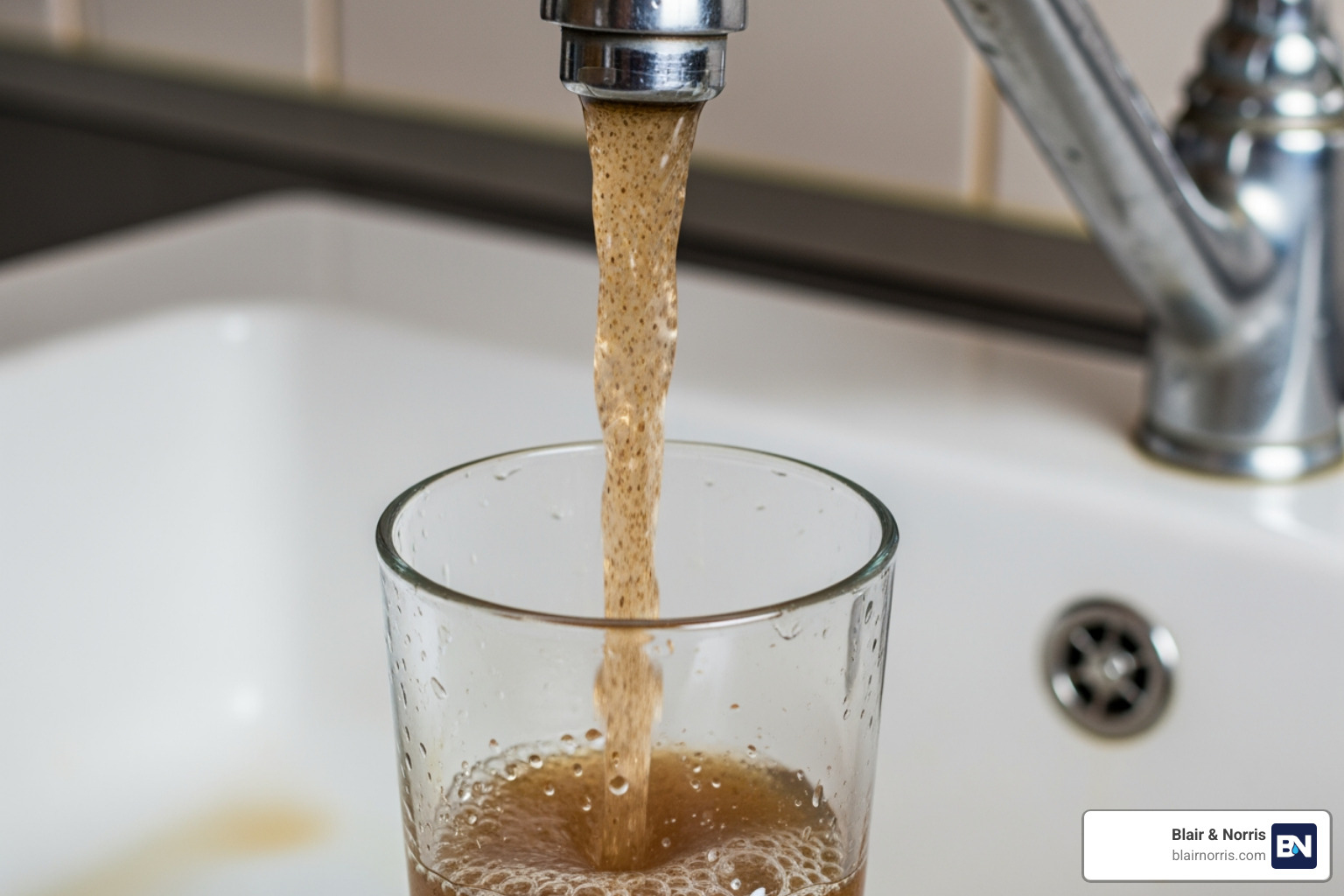
- Dirty or discolored water: Cloudy, muddy, or discolored water often means the pump is pulling sediment from the well bottom, a sign it may be set too low or is too powerful. In Central Indiana, this can also indicate a breach in the well casing allowing surface runoff to enter.
- Strange tastes or odors: Changes in taste or smell can signal contamination or mineral issues (like iron) that lead to sediment buildup and damage the pump. A “rotten egg” smell often indicates sulfur bacteria, which can be treated but requires professional intervention.
- Unusually high electricity bills: A sudden spike in your electric bill can mean your pump is running constantly or cycling too frequently, indicating a serious inefficiency. Because well pumps are high-voltage appliances, a pump that won’t shut off can add hundreds of dollars to your monthly utility costs.
- Well pump runs constantly: A pump that never shuts off points to a pressure switch failure, a leak in the system, or a pressure tank problem, all of which cause premature wear. This is often caused by a hole in the drop pipe inside the well casing.
- Loud or strange noises: Grinding or clanging sounds from the pump or tank are red flags for worn bearings, a failing motor, or debris in the system. If you hear a clicking sound near the pressure tank, that is the pressure switch rapidly engaging and disengaging, a sign of a waterlogged tank.
If you’re noticing any of these signs in your Central Indiana home, it’s time to investigate. Ignoring these red flags can lead to more severe damage and a complete loss of water. For a deeper dive into these issues, you can always check out our guide on well pump problems.
Understanding the Root Causes and Components of Your Well System
To understand why a well fails, it’s important to know its intricate parts and common failure points. Pinpointing the exact cause of a problem is the first step in any effective local water well repair. Central Indiana’s geology, characterized by glacial till and limestone bedrock, presents specific challenges. The depth of the aquifer can vary significantly from Hamilton County down to Johnson County, affecting how pumps are set and the types of minerals—like calcium and magnesium—that can lead to scale buildup.
Main Causes of Well Pump Failure
Well pumps are robust, but they aren’t invincible. Several factors can lead to their demise:
- Electrical problems: Power supply issues, from a tripped breaker to a faulty control box or wiring, are common culprits that can stop a pump from running. Lightning strikes are a frequent cause of electrical failure in Indiana’s rural areas.
- Control box failure: The control box acts as the pump’s brain; its failure means the pump won’t get the signal to operate, causing service interruptions. This is especially common in older 3-wire pump systems.
- Worn-out motor: A pump’s motor wears down over time, eventually leading to reduced efficiency and total failure. Bearings can seize, or the internal windings can short out due to heat.
- Clogs from sediment or minerals: Sediment and mineral buildup (like iron) can clog the pump’s impeller and pipes, restricting flow or causing the pump to seize. Iron bacteria can create a thick slime that chokes the system.
- Low water table: Drought or dry seasons can lower the water table, causing the pump to ‘run dry,’ which leads to overheating and serious damage. Many pumps lack “dry-run protection” and will burn out quickly without water to cool them.
- Improper pump sizing: An undersized pump will overwork and fail prematurely, while an oversized pump can run the well dry and pull in damaging sediment. Proper sizing requires calculating the “total dynamic head” of your specific well.
- Age and wear: Most pumps lose efficiency after 8-10 years. While maintenance helps, all mechanical parts eventually wear out and require replacement. A pump that is 15 years old is living on borrowed time.
Understanding these potential causes is the first step toward effective local water well repair. For a comprehensive look at all the components involved, we’ve put together a detailed explanation of well system components.
Key Components of Your Water Well System
Your well system is more than just a pump. It’s a network of interconnected parts working in harmony. If one part fails, the entire system is compromised.
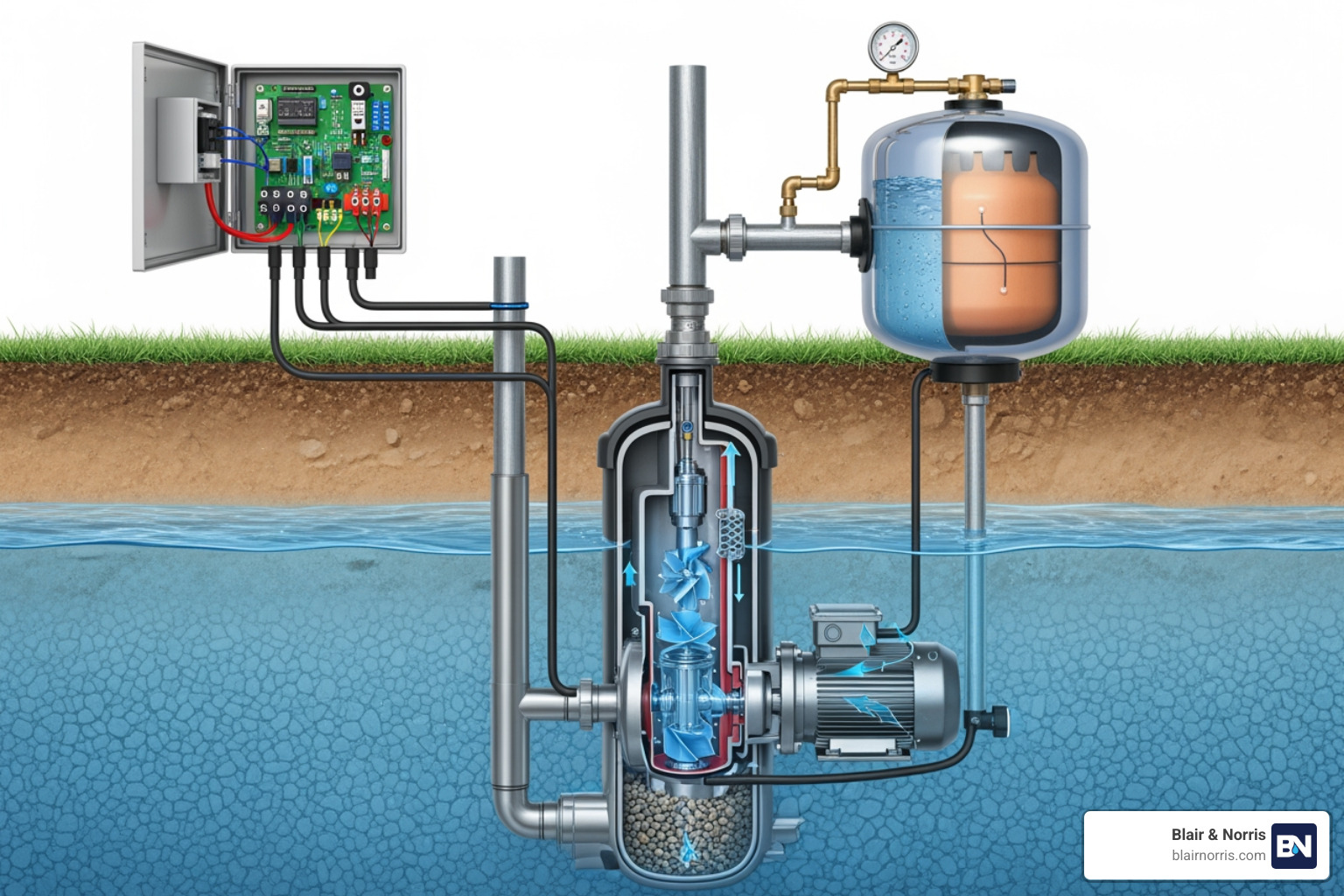
- Submersible pumps: Located deep inside the well, these pumps push water to the surface. Being submerged helps keep them cool, often extending their lifespan. They are typically more efficient than jet pumps but harder to access for repair.
- Jet pumps: Used for shallower wells, these above-ground pumps pull water up via suction and are usually found in a basement or well house. They are easier to service but can lose their “prime” if air enters the line.
- Pressure tank function: The pressure tank stores water under pressure, providing consistent flow to your home and reducing pump cycling, which extends the pump’s life. It uses a compressed air bladder to push water through your pipes.
- Waterlogging issues: A ‘waterlogged’ tank, often due to a failed air bladder, causes the pump to short-cycle (turn on and off rapidly), requiring prompt repair. Short-cycling is the number one killer of well pump motors.
- Pressure switch failure: This switch controls the pump based on system pressure. If it fails, the pump may not run, run constantly, or cycle erratically. Insects like ants are strangely attracted to the electrical arc in these switches and can cause them to fail.
- Faulty check valves: A check valve stops water from flowing back into the well. A faulty valve can cause the pump to lose its prime and cycle too often. There is usually one check valve on the pump and often another near the tank.
- The Pitless Adapter: This critical component provides a sanitary, frost-proof connection between the well casing and the water line leading to your home. If the seals on the pitless adapter fail, you might experience a loss of pressure or surface water contamination.
If you’re trying to better understand how all of these parts work together before you call for help, our in-depth well pump problems guide walks through common failure scenarios and how pros approach them.
Water Quality, Shortages, and Your Well’s Health
The health of your well system is intrinsically linked to the water it draws. Poor water quality, characterized by high levels of sediment, iron, or other minerals, can clog and damage your pump and pipes over time. Regular water quality testing is crucial not only for your family’s health—identifying contaminants like bacteria—but also as a diagnostic tool for your well’s condition. Furthermore, issues like a dropping water table or aquifer problems can lead to water shortages, causing the pump to run dry and sustain damage. In Central Indiana, seasonal fluctuations can affect water levels, making shallow wells particularly vulnerable. Understanding these environmental factors is key, as they can be the root cause of many pump-related failures. Homeowners can find valuable information on their specific well through the Indiana DNR Water Well Record Database, and the Indiana Department of Natural Resources Water Division provides statewide resource information. Knowing your well’s “static water level” and “drawdown rate” can help a technician determine if your pump is set at the correct depth for long-term reliability.
The Risks of DIY vs. The Value of Professional Local Water Well Repair
When your well acts up, you might consider a DIY fix. However, for local water well repair, attempting complex jobs without the right expertise can be dangerous and costly. Well repair is not like fixing a leaky faucet; it involves high-voltage electricity and the potential to ruin your entire water source.
Can You Troubleshoot Basic Issues Yourself?
You can safely handle a few simple checks that might save you a service call or at least give a technician helpful information:
- Check circuit breakers: A tripped breaker is a common cause of power loss to the pump. Check your electrical panel and reset it. If it trips again immediately, do not reset it a second time, as this indicates a short circuit.
- Reset GFCI outlets: If the pump uses a GFCI outlet (common for some jet pumps), check if it has tripped and press the reset button.
- Inspect the pressure gauge: Check the pressure gauge on your tank. If it reads over 20 PSI but pressure is low at the tap, the issue may be a clogged whole-house filter or a problem in your home’s plumbing, not the well.
These basic troubleshooting steps can often resolve minor issues or help you gather crucial information before calling us. For more detailed self-help, refer to our complete well pump troubleshooting guide.
Why Professional Local Water Well Repair is Crucial
Beyond basic troubleshooting, well repair quickly enters the field of specialized expertise. Here’s why calling a professional for local water well repair is not just convenient, but essential:
- Safety risks: Well systems combine electricity and water, creating a serious risk of electric shock. This is especially true for submerged pumps and faulty wiring. Professionals use insulated tools and follow strict safety protocols.
- Potential for well contamination: Improperly opening a well can introduce bacteria and other contaminants, posing significant health risks to your family’s drinking water. A professional knows how to maintain a “sanitary seal” throughout the repair process.
- Specialized equipment needed: Professionals use specialized equipment like pump hoists and “up-z-daisy” pullers to safely pull submersible pumps from deep underground. Attempting to pull a pump by hand can result in the pump falling to the bottom of the well, often making the well unrecoverable.
- Risk of causing more expensive damage: A DIY mistake, like misdiagnosing a problem or dropping a pump down the well, can turn a simple fix into an expensive disaster. If you cross-thread a pipe deep in the well, you may have to drill a new one.
- Voiding warranties: Attempting your own repairs can void manufacturer warranties on your pump and other components. Most major brands like Grundfos or Franklin Electric require professional installation for warranty claims.
Our team is trained to move from symptom to root cause quickly—whether that’s a failing pressure tank, a control box problem, or an issue down in the well itself. If you want an overview of how we weigh repair vs. replacement once we’ve diagnosed the problem, you can review our guide on well pump repair or replacement considerations.
Finding a Qualified Professional
When your water supply is on the line, you need a trustworthy expert. Here’s what to look for in a local water well repair professional in Central Indiana:
- Licensing requirements: Ensure your technician is a licensed plumber or specialized well contractor. In Indiana, well drillers and pump installers must be licensed by the DNR. Always ask for proof of licensing.
- Importance of insurance: Verify the company has full liability and worker’s compensation insurance to protect you from accidents or damage. If a technician is injured on your property without insurance, you could be held liable.
- Verifying experience: Choose companies with a long history and experienced technicians. Decades of service, like ours, indicate reliability and deep expertise in local soil and water conditions.
- Checking local reviews: Read online reviews from local customers to gauge a company’s reliability and quality of service. Look for mentions of punctuality and fair pricing.
- Indiana DNR Water Well Record Database: Use the Indiana DNR Water Well Record Database to find your well’s construction details, which is helpful information for your technician. Knowing the original depth and casing size can speed up the repair process significantly.
When you balance the serious safety concerns and the risk of misdiagnosis against the cost of a professional visit, relying on experienced local technicians is almost always the safer and more economical route.
Navigating Repair vs. Replacement: Signs, System Age, and Reliability
One of the big questions we help Central Indiana homeowners answer is whether their well pump needs a repair or a full replacement. This decision isn’t always straightforward and involves weighing several factors, including costs and expected lifespan. Sometimes, a $200 repair is all you need; other times, that $200 is just throwing good money after bad.
Deciding Between Repair and Replacement
Deciding whether to repair or replace your well pump involves a few key factors. If your pump is over 10-12 years old, losing efficiency, or requires frequent repairs, replacement is often the more economical long-term solution. A professional cost-benefit analysis is key; if a repair costs more than 50% of a new pump’s price, especially on an older unit, replacement offers better future reliability and efficiency. Modern pumps are significantly more energy-efficient than those made just a decade ago, meaning a new pump can actually pay for itself over time through lower electricity bills.
What to Expect During Service
When you call us for local water well repair in Central Indiana, here’s a general idea of what the process looks like:
- Professional diagnosis process: Our licensed technicians perform a comprehensive on-site inspection using specialized tools to accurately diagnose the root cause. We test the pressure switch, the tank’s air charge, and the pump’s electrical draw.
- Typical repair time: 2-5 hours: An above-ground jet pump replacement typically takes 2-4 hours, while a submersible pump replacement takes 4-5 hours due to the labor of pulling the pipe. Simpler jobs like replacing a pressure switch can be done in under an hour.
- Planning for water interruption: Your water will be shut off during the service. We recommend planning for this interruption by filling a few buckets for toilet flushing and having bottled water on hand. We work efficiently to minimize downtime and get your life back to normal.
Proactive Well Maintenance to Prevent Future Emergencies
An ounce of prevention is worth a pound of cure, especially when it comes to your well system. Regular maintenance can extend the life of your pump, ensure consistent water quality, and help you avoid unexpected and costly local water well repair emergencies. Many homeowners forget about their well because it is “out of sight, out of mind,” but a little attention goes a long way.
Here’s what we recommend for homeowners in Central Indiana:
- Annual inspections: We recommend having your well system inspected annually by a qualified professional. During an inspection, we’ll check the pump’s performance, inspect the pressure tank and switch, examine electrical connections, and look for any signs of wear or potential issues. We also check the air pressure in your tank, which is the most common maintenance item overlooked by homeowners.
- Regular water quality testing: Beyond the mechanical components, the quality of your water is paramount. Test your well water at least once per year for core indicators like bacteria and nitrates, and add tests based on local risks or changes in taste, odor, or appearance. High mineral content can lead to “scaling” inside your pipes, which reduces water pressure over time.
- Protecting the wellhead: The wellhead is the part of your well that extends above ground. It’s crucial to keep it protected from damage and contamination. Ensure it’s properly sealed with a locking, vermin-proof cap to prevent surface water, pests, or debris from entering the well. Keep the area around the wellhead clear of tall grass and debris.
- Winterization and freeze protection: For Central Indiana’s cold winters, proper winterization is key to preventing costly freeze damage. This involves insulating exposed pipes, ensuring your well house (if you have one) is heated, or even temporarily draining certain components if the well isn’t in use. A single frozen pipe can burst and flood your basement or well house.
- Shock Chlorination: If a water test reveals bacteria, or if you’ve recently had the well opened for repair, shock chlorination is necessary. This involves disinfecting the entire system with a concentrated chlorine solution. This should be done by a professional to ensure the correct concentration is used and that the system is properly flushed afterward.
For more on this, check out our guide on the importance of water well maintenance.
Conclusion: Your Partner for Reliable Water Well Services in Indianapolis
A functioning well is a necessity, not a luxury. When you face issues like low pressure, strange noises, or no water at all, a prompt and professional response is critical. Attempting complex repairs yourself can be dangerous and lead to costlier problems. The risks of DIY repairs—from electrical hazards to well contamination—far outweigh any potential savings. In the long run, the peace of mind that comes from knowing your water system was handled by an expert is invaluable.
For over 75 years, our family-owned business, Blair & Norris, has provided Central Indiana homeowners with ethical, high-quality well services backed by 24/7 live support. Our licensed, insured, and highly experienced team handles everything from diagnosing mysterious pressure issues to full pump replacement and proactive water well maintenance. We understand the local landscape, from the sandy soils of the north side to the heavy clay of the south side, and how these conditions affect your well’s longevity.
If you’re noticing warning signs like cloudy water, sputtering faucets, or a pump that won’t shut off, don’t wait for a small issue to become a major crisis. We can help you understand whether you’re looking at a quick repair, a larger system upgrade, or a replacement that will improve both performance and efficiency over the long term. Our goal is always to provide the most cost-effective solution that ensures your family has safe, reliable water for years to come.
Don’t let well problems disrupt your life any longer. Contact Blair & Norris today to schedule an inspection and receive an honest, upfront estimate for local water well repair service anywhere in the greater Indianapolis area. Our expert technicians are standing by 24/7 to respond to your emergency. Your family’s water supply is too important to risk—call us now or visit our website to request immediate service and get your water flowing again. With Blair & Norris, you’re not just getting a repair—you’re getting peace of mind from Central Indiana’s most trusted well service experts. We take pride in our work and stand behind every repair we perform, ensuring that your home remains the sanctuary it should be.