
Why Understanding Well Drilling Matters for Every Property Owner
Drilling wells is the process of creating a hole in the ground to access natural resources like groundwater. Whether you want water independence, lower utility bills, or reliable clean water, understanding how wells work protects your investment.
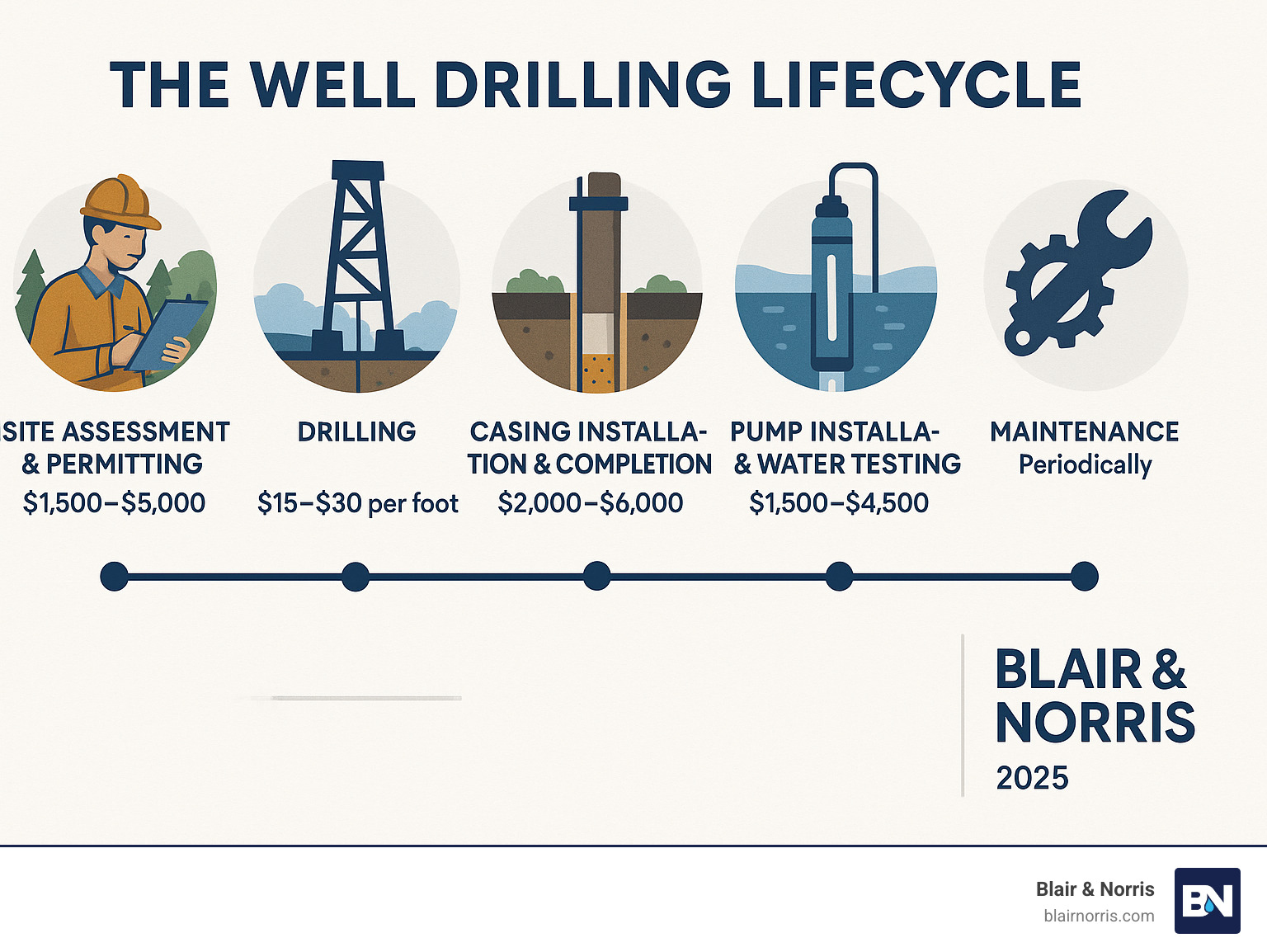
Quick Answer: Well Drilling Process Overview
- Planning: Site selection, permits, geology assessment
- Drilling: Creating the borehole using rotary, cable tool, or air drilling
- Completion: Installing casing, screens, and grout sealing
- Testing: Water quality analysis and yield testing
- Production: Pump installation and system commissioning
About 15 million US homes use private wells. Water wells can be drilled quickly, while oil and gas wells take longer. The process requires special equipment and strict safety protocols to ensure a reliable, contamination-free water source.
Cost factors for water wells range from $15-30 per foot, varying by depth, geology, and regulations. Modern rigs can drill over 1,000 feet deep, with hole diameters from 3-24 inches.
Common challenges include equipment failure, dry holes, and contamination risks, but proper planning and professional expertise minimize these issues.
I’m Mack Blair. With over 30 years in the well drilling wells industry, I’ve grown Blair & Norris from a single truck to a trusted enterprise. My experience covers everything from residential water wells to large commercial projects across Central Indiana, and I know that proper planning is the key to success.
Drilling wells terms you need:
Why & Where We Drill: Purposes, Well Types & Siting
Drilling wells connects you to the earth’s resources. We drill for a family’s water supply, to tap into oil and gas reserves, to use geothermal energy, or for monitoring groundwater quality. A residential water well in Indianapolis provides fresh water without a monthly city bill, typically reaching aquifers 100-300 feet deep. In contrast, oil and gas wells can plunge thousands of feet to reach energy reserves.
The methods vary too. Dug wells are hand-dug, driven wells are pounded into the ground, bored wells use an auger, and rotary drilling spins through rock with precision. Each method suits different soil conditions and depth needs.
Residential wells serve individual homes, while municipal wells supply entire communities, meeting different regulatory standards and water demands. Understanding hydrogeology—how water moves underground—is crucial. We use aquifer maps and follow strict setback rules to keep wells safe from contaminants like septic systems.
While some believe in dowsing (using forked sticks to find water), science shows it’s unreliable. We use GIS data and geological surveys to pinpoint the best drilling locations.
For more detailed guidance on planning your well project, check out our 6 crucial questions to ask before drilling a well.
Picking the Perfect Spot
Finding the right spot for drilling wells is like detective work. The terrain offers clues about underground geology and potential water sources. Fracture zones in bedrock are natural highways for water, often producing higher flow rates. We also study neighboring wells for data on local depths and yields. Sometimes, we drill smaller test holes to confirm conditions before committing to the full well.
Different Wells for Different Needs
Every drilling wells project is unique. Water wells in Central Indiana, our specialty, range from shallow to deep rotary-drilled wells with protective casing and screens. Oil wells and gas wells are much deeper, using advanced techniques like directional drilling. Geothermal loops use the earth’s stable temperature for heating and cooling, while injection wells serve special purposes like wastewater disposal.
Busting the Dowser Legend
Let’s address dowsing, or water witching. While a popular myth, scientific studies show it’s no better than random chance at locating water. Water doesn’t flow in underground “rivers” but saturates porous rock and soil like a sponge. We rely on geological surveys, topographic analysis, and sometimes test drilling to find the most promising locations, ensuring you get the reliable water source your family deserves.
For a fascinating deep dive into the science behind this topic, check out this Scientific research on dowsing myths that explains why the practice persists despite lack of scientific support.
Drilling Wells: Methods, Rigs & Step-By-Step Process
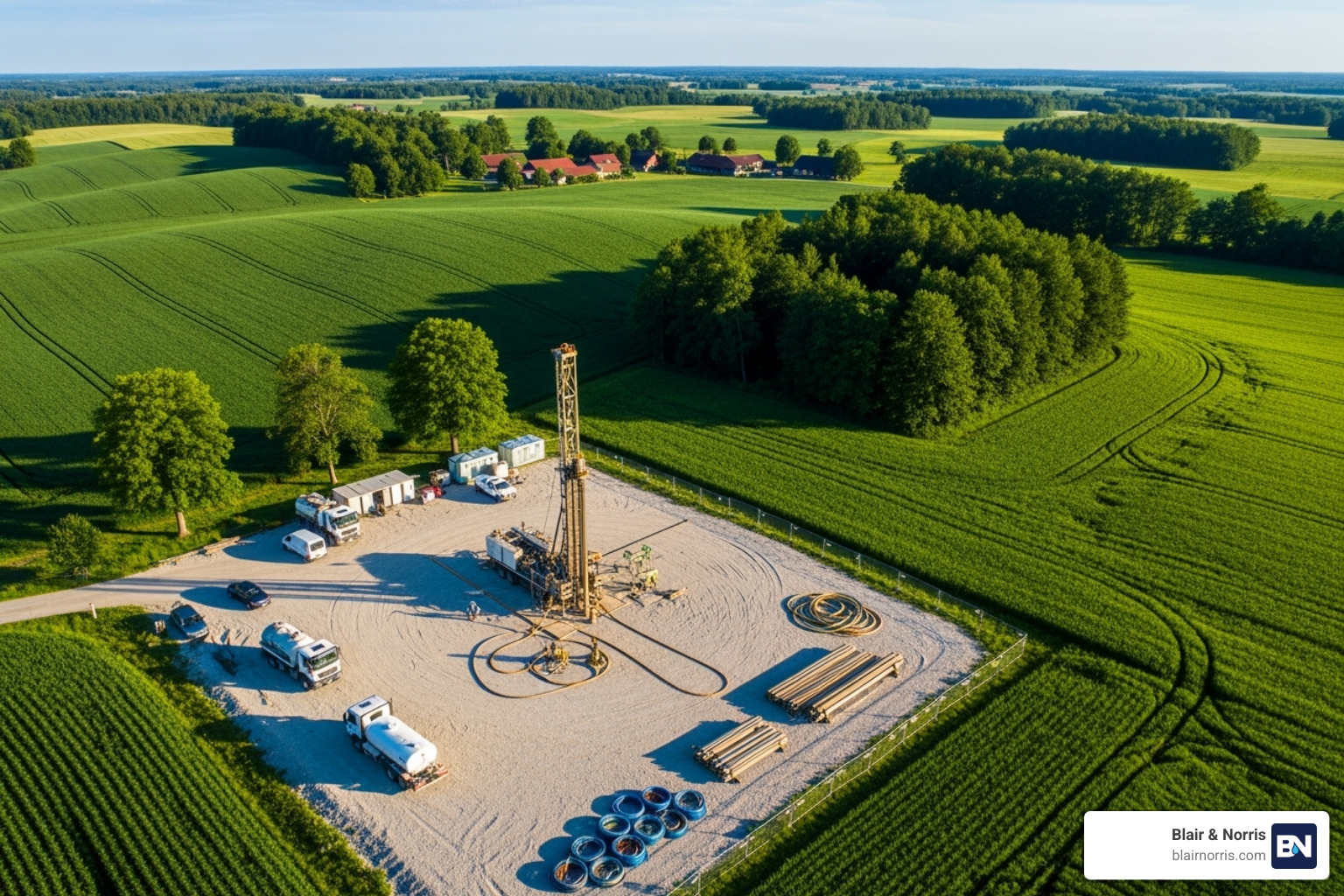
Once we’ve found the perfect spot and secured all permits, it’s time for the exciting part: actually drilling wells. The drilling method we choose depends on the geology, the required depth, and the well’s purpose. A shallow water well in sandy soil requires a different approach than a deep geothermal well in bedrock.
Planning Your Drilling Wells Project
Proper planning is what separates a smooth project from a costly one. We first secure all necessary permits, which vary by county and state. Then, we study geology logs to understand underground conditions, helping us choose the right method and anticipate challenges. Finally, we plan for rig mobilization, ensuring safe and efficient site access.
For more details on what happens before we start drilling, check out our guide: 7 steps that need to happen for well drilling.
Method Match-Up: Choosing the Right Technique
There are many ways to drill a well, but some methods work better in certain situations.
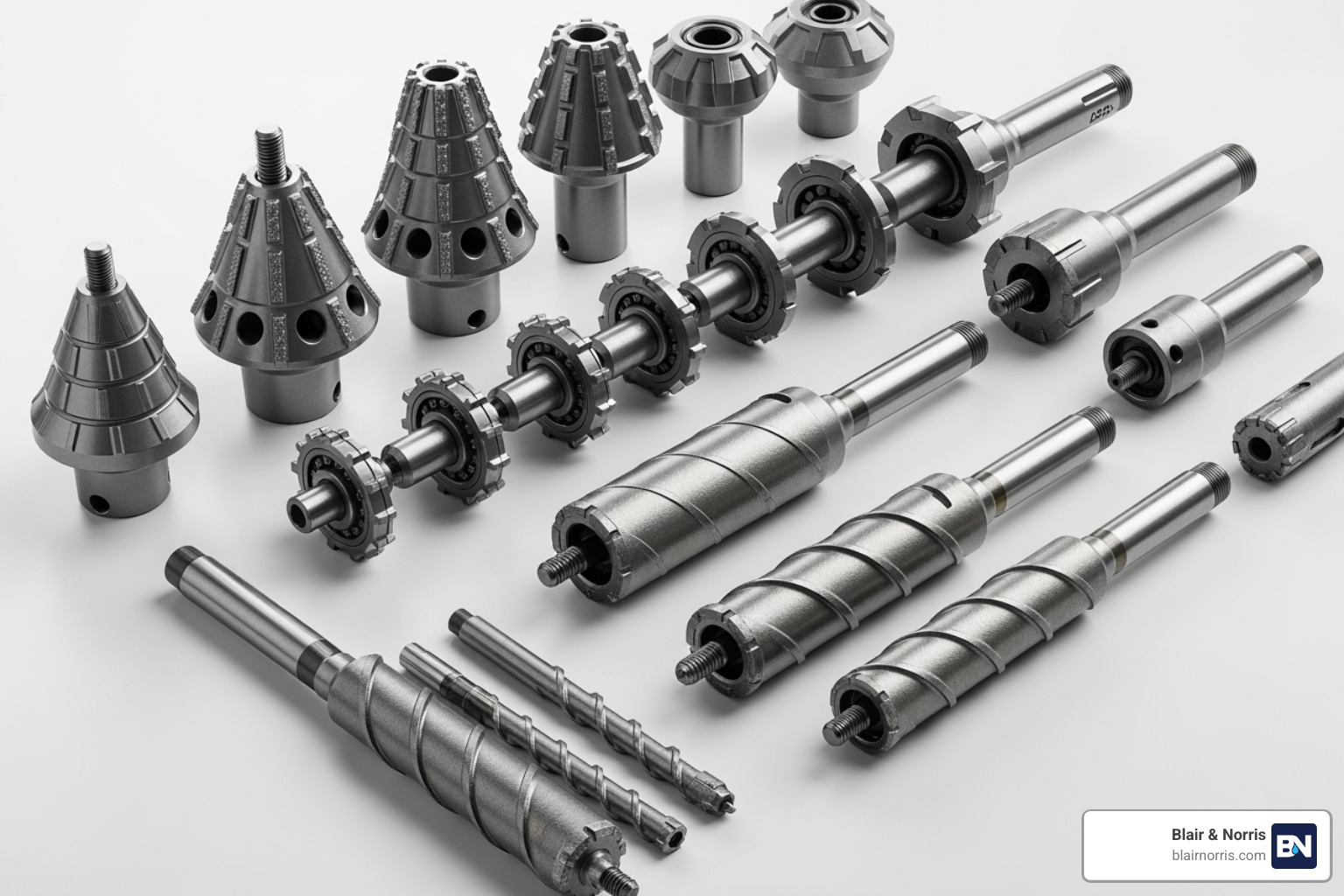
Rotary drilling is our most versatile method, capable of drilling over 1,000 feet deep. Mud rotary uses a slurry to cool the bit and remove cuttings, ideal for softer ground. Air rotary uses compressed air, which is faster and cleaner in hard rock.
Cable tool drilling is a slower, traditional method where a heavy bit is repeatedly dropped to pound through rock. It’s excellent for very hard formations and provides great rock samples.
Jetting uses high-pressure water to wash out a hole, suitable for shallow wells in soft soil. Auger drilling uses a large screw to bore into the ground, ideal for soft, sticky soils.
Choosing the right drill bit is also critical. We use PDC bits for softer formations and roller cone bits for harder rock, based on geological data.
| Feature | Rotary Drilling | Cable Tool Drilling |
|---|---|---|
| How it works | Rotates drill bit, circulates fluid/air | Lifts and drops heavy bit repeatedly |
| Best for | Various soil types, deeper wells, faster drilling | Hard rock, accurate samples, delicate formations |
| Speed | Generally faster | Slower, lots of “break time” |
| Removing debris | Fluid/air carries it up | Bailing bucket removes accumulated debris |
| Keeping hole stable | Drilling fluid or casing | Casing installed as drilling progresses |
The 9 Core Steps From Spudding to Screen
No matter the method, drilling wells follows a proven sequence.
- Site preparation: We clear and level the area for safety and containment.
- Pilot hole & surface casing: We start the hole and install initial casing to protect the aquifer from surface contaminants.
- Drilling: The borehole is extended to the target depth using the chosen method, with drilling fluid to cool the bit and remove cuttings. For oil and gas wells, blowout preventers manage downhole pressure.
- Permanent casing installation: A steel or PVC pipe is placed to maintain the well’s integrity.
- Grouting: The space between the casing and borehole wall is sealed with cement or bentonite to prevent contamination.
- Well development: We flush out fine sediments to improve water flow and clarity.
- Well screen installation: A screen is placed at the water-bearing zone to let water in while keeping sand out, sometimes with a gravel pack for extra filtration.
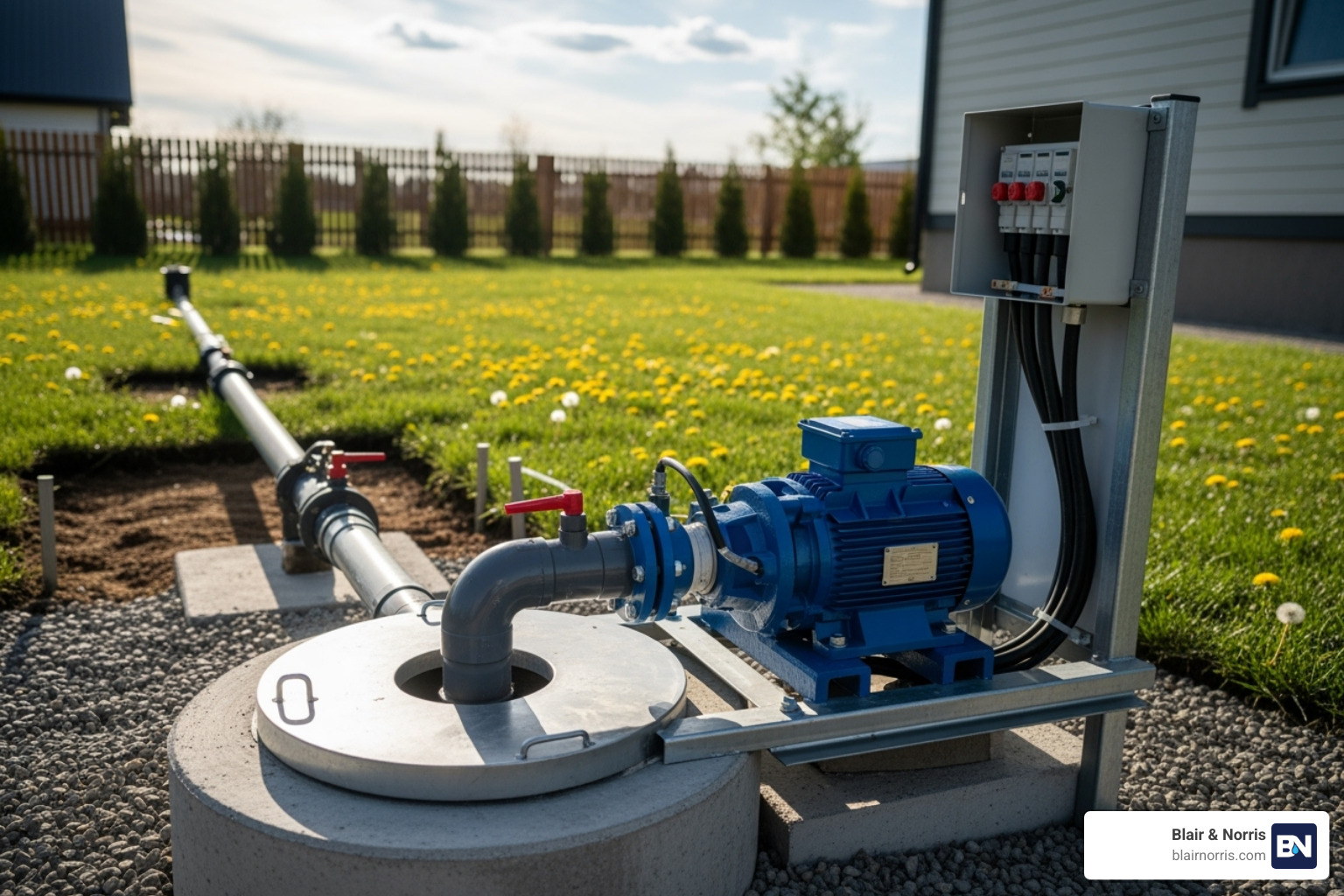
- Pump installation: The submersible pump, piping, and pressure system are installed.
- Water testing & disinfection: We test for contaminants, disinfect the system, and confirm the water is safe.
Dollars & Defense: Costs, Risks, Regulations & Environmental Safeguards
Understanding the costs, risks, and regulations involved in drilling wells helps you make informed decisions and avoid surprises. With proper planning, you can manage both your budget and potential risks effectively.
Cost Drivers You Can Control
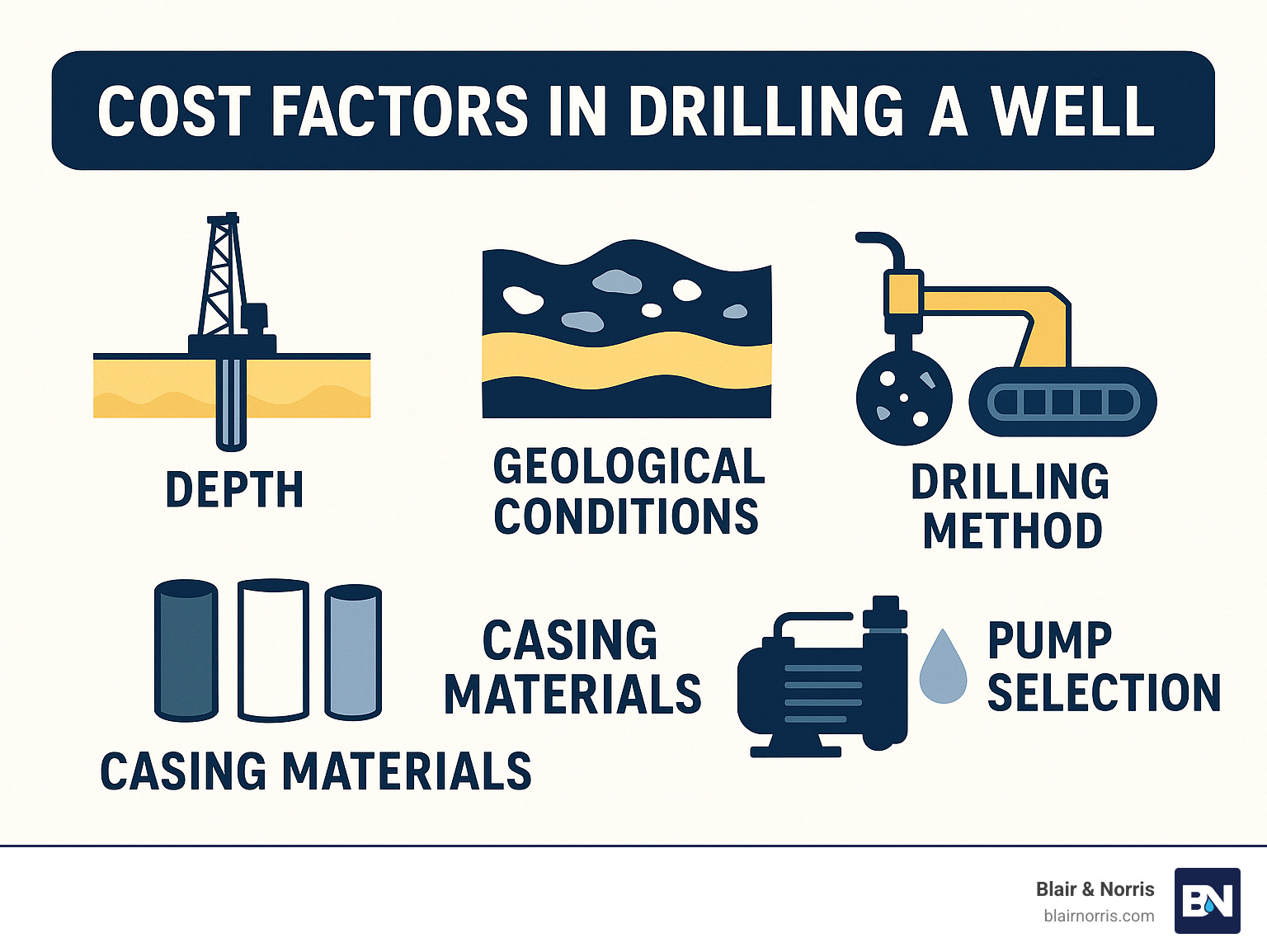
Water well costs typically range from $15 to $30 per foot, but several factors influence the final price. The biggest drivers are depth and diameter, as they determine material and labor needs. The geology is also key—drilling through hard granite costs more than soft clay. Your choice of drill method, pump system, local permit fees, and equipment mobilization costs also affect the total.
For a detailed breakdown of what affects your specific project costs, check out the well drilling cost guide.
Managing Risks & Challenges
Every drilling wells project has risks, but our experience helps us manage them. Challenges include equipment failure, which we minimize with rigorous maintenance, and lost circulation, where drilling fluid is lost to fractures. While rare, dry holes are a possibility. We prevent serious issues like aquifer cross-flow and contamination hazards with proper casing and grouting. Blowouts (uncontrolled releases) are managed with blowout preventers. We carry comprehensive insurance and communicate openly about any challenges that arise.
Green & Legal: Doing It Right
Environmental responsibility is the right thing to do. Regulatory compliance is the foundation of every project. We handle all permits and follow strict construction standards, setback requirements, and water quality testing protocols. Our closed-loop mud systems recycle drilling fluid, reducing water waste and environmental impact. All drill cuttings are contained and disposed of according to regulations. Site reclamation means we restore your property after the job is done. Our goal is sustainable drilling—creating wells that provide reliable water for decades without harming the aquifer.
For more insights on sustainable well planning, this resource offers valuable information: Scientific research on sustainable drilling.
From Hole to Flow: Completion, Quality Assurance, Maintenance & Tech Trends
The magic of drilling wells happens after the borehole is complete, when we transform it into a reliable, long-term water source. The completion work is what ensures you’ll have clean, safe water flowing from your taps.
Ensuring Clean, Safe Output
After drilling, we focus on ensuring clean, safe water. This starts with well development to remove sediment and improve flow. A properly selected well screen and surrounding gravel pack act as the primary filter. Grouting around the casing provides a crucial seal against surface contamination. We then conduct comprehensive water quality testing, including bacteriological tests for E. coli and coliforms. While well water contains natural minerals, excessive mineral precipitates can cause sediment or staining, which may require sediment filters. Finally, we disinfect the entire system and install a correctly sized pump based on your home’s needs and the well’s yield.
Preventive Care & Typical Lifespans
A well needs regular care to perform at its best. We recommend annual inspections to check the pump, pressure tank, and overall system integrity. Monitoring your well’s yield and water quality can catch issues early. If a well’s performance declines, rehabilitation options like acidizing or mechanical brushing can often restore it.
The lifespan of a properly maintained water well can easily be 50 years or more. The casing often lasts the full 50+ years, while pumps typically need replacement every 10-20 years.
Modern technology is making wells even more reliable. Smart sensors can monitor performance in real-time, while horizontal drilling and managed pressure drilling (MPD) offer more precise control.
For more specific information about residential well care in our Indianapolis area, check out what to know about residential well drilling in Indianapolis.
FAQs About Drilling Wells
How long does it take to drill a well?
A residential water well can often be drilled in a few days to a week, depending on depth and geology. The entire process, including permits, testing, and completion, takes longer. Oil and gas wells are much more complex and can take 50-60 days for drilling alone.
What if my well runs dry?
Though rare with a properly constructed well, it can happen in severe droughts. Solutions include deepening the existing well, drilling a new one, or installing a storage system. Contact a professional as soon as you notice a drop in performance.
Can I DIY a shallow well?
Yes, you can DIY a shallow well using methods like “jetting” in soft soil for depths up to 50 feet. However, these wells are limited to about 25 feet for suction pumps, are more vulnerable to contamination, and won’t work in rocky terrain. Always check local regulations and test your water thoroughly if you choose this route. For detailed DIY guidance, you might find this helpful: basic well drilling steps.
Conclusion
The world of drilling wells is constantly evolving. Modern innovations like horizontal drilling, smart sensors that monitor well performance, and Managed Pressure Drilling (MPD) systems are pushing the boundaries of what’s possible in our industry.
Future-proofing your well involves embracing new technology while sticking to proven principles of quality construction and environmental stewardship. Exciting developments include automated drilling systems, advanced water treatment, and AI-powered geological analysis that can predict drilling locations with greater accuracy.
What hasn’t changed is the importance of a reliable water source. Whether you seek independence from municipal systems or the pure taste of well water, drilling wells remains one of the smartest investments for your property.
As a family-owned business for over 75 years, Blair & Norris has been part of this industry’s evolution. We’ve adapted to new methods and higher standards while maintaining our commitment to 24/7 live phone support and the ethical, high-quality service our Central Indiana neighbors trust.
Our legacy is measured in the peace of mind we’ve provided to families who know their water source is reliable, safe, and built to last. When you’re ready to tap into one of life’s most precious resources, we’re here to guide you.
Ready to explore your well options or need expert care for your existing system? Let’s discuss how we can help you access the clean, reliable water your family deserves. For a complete understanding of how all the pieces work together, take a look at our detailed guide to well water system components.