
When Your Septic System Becomes a Crisis
Emergency septic repair becomes necessary when your septic system fails suddenly, threatening your property and family’s health. A septic system emergency is generally when any issue arises that makes it so that you can’t or shouldn’t use your building’s plumbing – most commonly when sewage begins backing up into the building or if the septic tank is suspected of leaking.
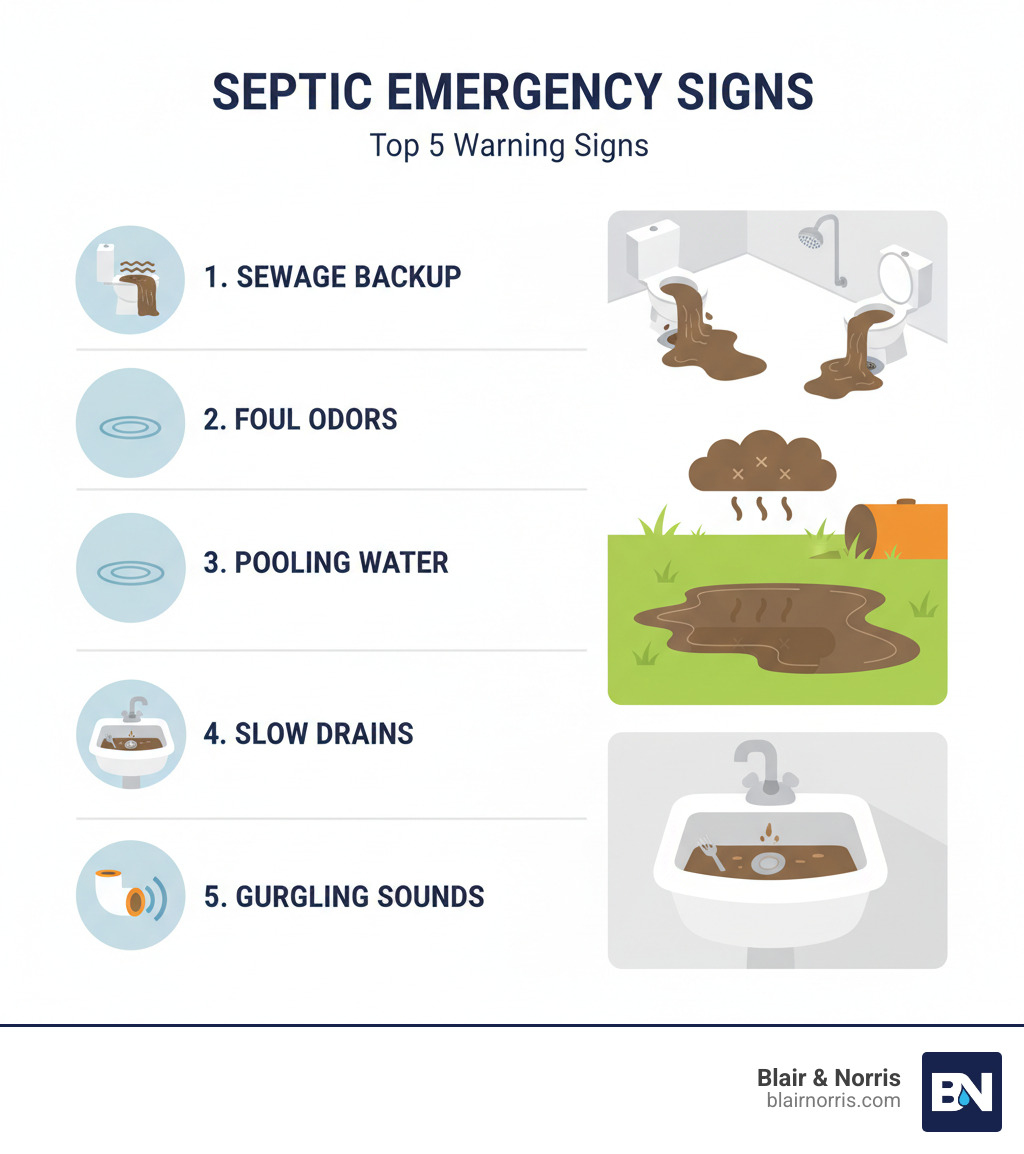
Immediate signs requiring emergency septic repair:
- Sewage backup into your home through drains, toilets, or sinks
- Standing water or pooling sewage in your yard
- Strong sewage odors inside or outside your home
- Multiple slow drains throughout the house
- Gurgling sounds from plumbing fixtures
- Septic alarm activation (if installed)
The stakes are high with septic emergencies. A sewage backup not only poses health risks due to exposure to harmful bacteria and pathogens but can also result in significant property damage if not addressed swiftly. Raw sewage contains dangerous contaminants that can make your family sick and contaminate your groundwater.
Swift action is critical – septic system emergencies can arise at any hour, potentially leading to significant fines and posing serious health and safety risks. Most septic system emergencies can be fixed, and repairs often cost only a fraction of installing a new system.
I’m Mack Blair, and over my 30 years in the septic industry, I’ve responded to countless emergency septic repair calls throughout Central Indiana. My team at Blair & Norris provides 24/7 emergency response because I understand how quickly a septic crisis can escalate from an inconvenience to a health hazard.
Recognizing a Septic Emergency: Key Signs and Immediate Actions
Your septic system sends clear signals when something is seriously wrong. Recognizing these distress calls can save you significant grief and money, helping you know when it’s time for an emergency septic repair.

One of the most alarming signs is sewage backup, where wastewater and raw sewage emerge from drains, toilets, or sinks. This clearly indicates a significant blockage or system failure that demands immediate attention.
If multiple sinks, tubs, and showers are draining sluggishly, it’s a red flag. While a single slow drain is often a local clog, widespread slow drains point to a problem in your main septic line or tank, often preceding a need for emergency septic repair.
Gurgling sounds from toilets or drains, especially after use, can indicate trapped air from a blockage.
A strong, persistent foul odor of sewage inside or outside near your tank or drain field is a definitive sign of trouble. The smell indicates that harmful gases are escaping due to leaks or an overwhelmed system.
Watch your yard for pooling water or damp spots near the septic tank or drain field, especially when it hasn’t rained. Unusually lush, green grass in this area can also indicate a saturated drain field or a leak. Learn more in our guide: 5 Warning Signs of a Septic System Backup Emergency.
Ignoring these signs leads to serious health and environmental risks. Raw sewage contains harmful bacteria, viruses, and parasites. A failing system can contaminate groundwater, local waterways, and your drinking water, resulting in environmental damage and potential fines.
What to Do Immediately When You Suspect a Septic Emergency
If you spot these signs, take these immediate steps to minimize damage while you wait for professional help:
- Stop all water use immediately. Every drop of water adds to the problem, pushing more wastewater into an already compromised system.
- Turn off washing machines and dishwashers. These appliances use large volumes of water and can quickly overload a struggling septic system.
- Do not flush toilets. Flushing can worsen a backup, potentially bringing more sewage into your home.
- Keep people and pets away from affected areas. Raw sewage is a biohazard. Cordon off any areas with standing water or damp spots.
- Locate your septic system components if known. Knowing where your tank and drain field are helps our technicians diagnose the problem faster.
- Call a professional. As soon as you notice an emergency, call us. We offer 24/7 live phone support because septic emergencies don’t stick to business hours.
Quick Fixes and Temporary Solutions
While you wait for professional emergency septic repair, some temporary solutions can help. An emergency septic pumping can provide immediate relief for an overflowing tank, restoring plumbing function temporarily. If your water supply is compromised, switch to using bottled water for all consumption and hygiene needs.
In severe cases, shutting off your home’s main water supply will halt all water flow into the system. For extended outages, renting portable toilets can maintain sanitation. These are temporary measures; a professional diagnosis is essential for a permanent solution. For more guidance, see our article: What to Do If You Have a Full Septic Tank.
Common Causes and How to Prevent Future Disasters
Understanding why septic systems fail is key to preventing future problems. Failure is often caused by a mix of controllable factors.
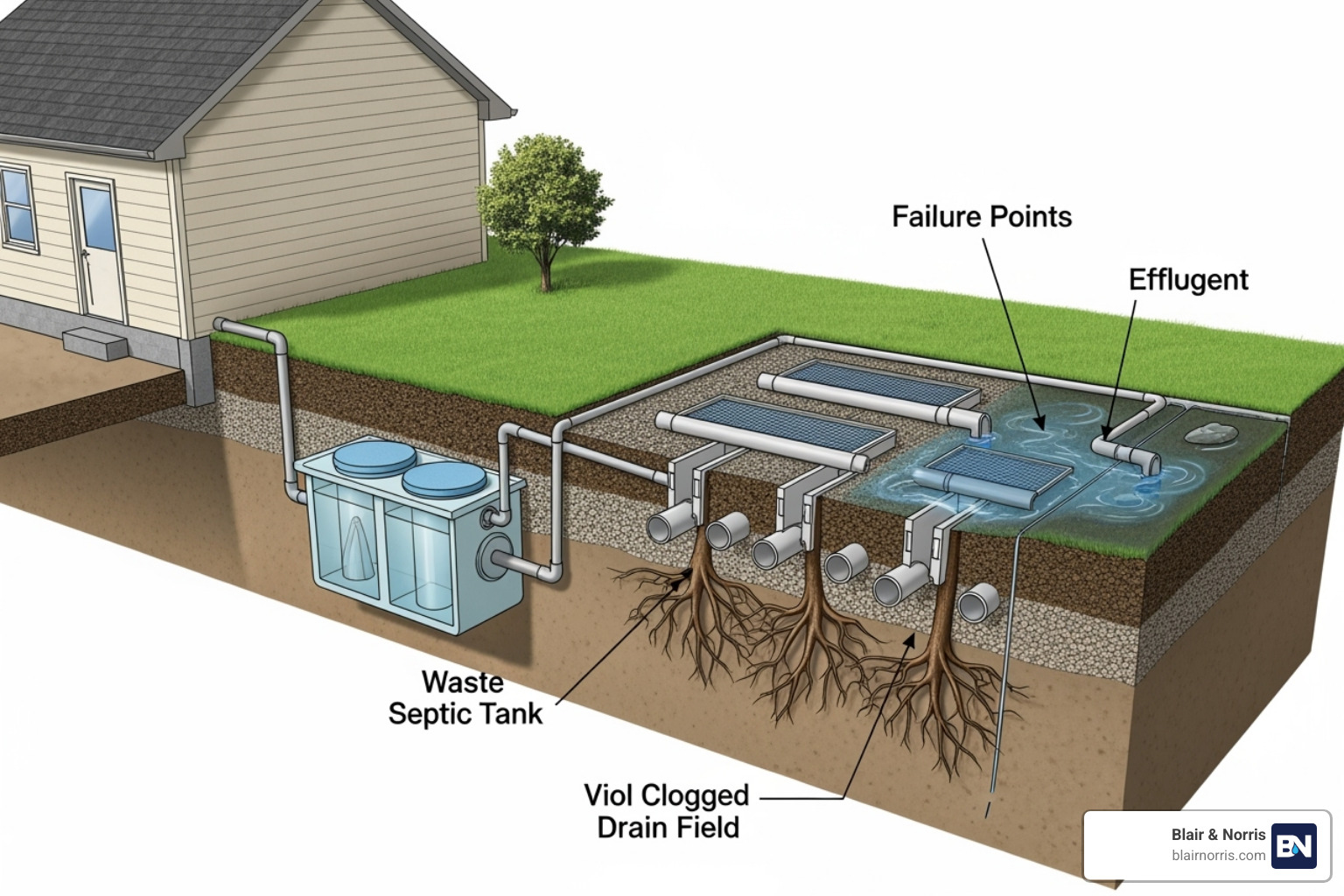
One of the biggest reasons for emergency septic repair is a lack of maintenance and overdue septic pumping. The EPA suggests pumping every three to five years. If you wait too long, solids build up and can escape into the drain field, causing clogs and system breakdown. Regular pumping is the best way to prevent this.
Clogged pipes or a clogged drain field are another common issue. Items like grease, “flushable” wipes, feminine hygiene products, and harsh chemicals create stubborn blockages and harm the beneficial bacteria in your system that break down waste.
Tree root intrusion is a sneaky culprit. Roots seek moisture and can enter pipes or the tank through tiny cracks, growing to create serious blockages or pipe damage that requires emergency septic repair.
Sometimes, the issue is with damaged system components, such as a broken baffle, a failed pump, or collapsed drain field lines from heavy vehicles driving overhead. When one part fails, the whole system can suffer.
Hydraulic overloading from excessive water use can overwhelm a healthy system. Concentrating water-heavy activities (laundry, long showers) on one day, especially when the ground is saturated from rain, can push the system past its limit and cause backups.
Preventing Septic System Emergencies
The best way to handle an emergency septic repair is to prevent it. Consistent care and mindful habits are your strongest allies. Our comprehensive Septic System Maintenance Guide offers details, but here are the key takeaways:
- Regular Inspection and Pumping: Stick to a regular schedule. The EPA suggests every 3-5 years, but this varies with household size and water use. Annual inspections can catch small issues early. Learn more here: How Often Does Your Septic System Need Septic Pumping?.
- Proper Waste Disposal: Only flush human waste and toilet paper. Avoid putting grease, fat, oil, food scraps, or harsh chemicals down the drain, as they clog pipes and kill essential bacteria.
- Water Conservation: Spread out water-heavy activities like laundry, take shorter showers, and fix leaky faucets to reduce strain on your system.
- Protect the Drain Field: Never pave over or drive heavy vehicles on your drain field. Direct downspouts and yard drainage away from the septic area to prevent oversaturation.
- Septic Alarms: A professionally installed alarm can alert you to high water levels in your tank, giving you a crucial heads-up before a backup occurs.
For more detailed guidelines, consult the EPA recommendations for septic care. Following these practices can save you thousands of dollars and significant stress.
Understanding the Emergency Septic Repair Process
When your septic system has a meltdown, understanding what happens next can help you feel more in control. After three decades in this business, I’ve seen it all – and I know how overwhelming it can feel when you’re dealing with a septic crisis.

The good news? Emergency septic repair doesn’t have to wait. At Blair & Norris, we offer 24/7 availability because septic emergencies don’t care if it’s 2 AM on a Sunday. When you call our emergency line, you’ll speak with a real person. We’ve been doing this for 75 years, and we understand that when sewage is backing up into your home, you need help now.
Our typical response times vary, but we prioritize emergencies to get a technician to your property as quickly as possible, often within a few hours. Every minute counts, so we move fast.
It’s helpful to understand the difference between routine maintenance and emergency repair. Routine maintenance is preventative care. An emergency septic repair, on the other hand, is for when your system has failed to the point where using your plumbing could make things worse or pose health risks. Our Emergency Septic Repair Services are designed for these urgent situations.
When our technician arrives, the diagnostic process begins with a thorough visual inspection. If we can’t immediately identify the issue, we often use camera inspection technology. This involves feeding a small, waterproof camera through your pipes to spot clogs, broken pipes, or tree root intrusions without having to excavate your yard.
What to Expect During an Emergency Septic Repair Call
Once we’ve diagnosed the problem, we’ll explain it and discuss your options. The specific services depend on the cause of your emergency.
Emergency pumping is often our first line of defense, especially if your tank is full. This relieves immediate pressure and usually gets your plumbing working again temporarily, a process that takes one to two hours.
For stubborn blockages, we might use hydro-jetting. This involves sending high-pressure water through your pipes to blast away grease, sludge, and other debris.
If our camera inspection reveals broken pipes, pipe repair or replacement becomes necessary. This usually means some excavation, but we work efficiently to minimize disruption.
Drain field remediation comes into play when your drain field is failing. Depending on the severity, we might use aeration, specialized jetting, or replace sections of the drain field. Many drain field problems can be fixed without replacing the entire system.
For systems with pumps or alarms, component replacement might be needed. A malfunctioning septic pump can cause backups, while a broken alarm leaves you unaware of your system’s condition. We cover these issues and more in our guide: 7 Common Septic Tank Issues. Our goal is always to provide a lasting solution, not just a temporary fix.
Typical Costs of an Emergency Septic Repair
The cost of emergency septic repair varies widely depending on the problem’s complexity. However, most septic emergencies can be repaired for a fraction of a complete system replacement cost.
| Repair Type | Average Cost Range |
|---|---|
| Septic Pipe Repair | $1,000 – $4,000 |
| Clogged Drain Field | $600 – $3,000 |
| Emergency Pumping | $300 – $800 |
| Septic Alarm Repair | $100 – $500 |
| Septic Pump Repair | $500 – $2,000 |
These are average costs and can vary based on severity, accessibility, and specific parts needed.
The average cost of pipe repair is around $2,500. Factors influencing the final cost include the severity of the damage and accessibility; a problem under a driveway will cost more to excavate. The specific parts needed also affect pricing. We always provide a detailed quote before starting work, so you’ll know exactly what to expect.
Regarding homeowner’s insurance coverage, it’s complicated. Sudden and accidental damage is more likely to be covered than problems from neglect. I always recommend checking your policy and documenting everything for potential claims.
The importance of getting a detailed quote can’t be overstated. We believe in transparency and will explain exactly what needs to be done, why, and what it will cost. No surprises, just honest, upfront pricing.
Repair or Replace? Making the Right Long-Term Decision
After dealing with an emergency septic repair, a big question often comes up: “Should I just fix this, or is it time for a brand new system?” It’s a huge decision, and one we understand can feel overwhelming. But don’t worry, we’re here to walk you through it.
There are several important things we’ll look at together to help you make the best choice for your home and budget. First, consider the age of your system. Septic systems generally last 20-30 years with good care. If yours is getting up there in years and has needed a lot of fixes lately, a replacement might be a smarter long-term investment than constant repairs.
Next, we’ll assess the extent and type of damage. Is it a small, isolated issue, like a single broken pipe that’s easy to access? Or is it a widespread problem, perhaps a completely failed drain field that’s beyond simple remediation? Minor, contained repairs are almost always the preferred path. However, if the damage is extensive and affects core components, it changes the picture.
Then, there’s the all-important cost of repairs vs. replacement. This is often what tips the scales. Generally, repairing your septic system after an emergency septic repair is far less expensive than installing a whole new one. We often find that repairs and remediation cost just a fraction of a new system. However, if the repair costs start climbing to around 50% or more of what a new system would cost, then replacement begins to look like the more economical choice in the long run. Our goal is to find solutions that avoid costly replacements whenever possible, often through new technologies and methods.
We’ll also look at the frequency of past problems. If your system seems to be constantly acting up, with different issues popping up every few months, it might be telling us it’s just worn out or has a fundamental flaw. Lastly, soil conditions around your drain field play a role. Sometimes, changing soil conditions can make effective repairs very difficult, gently nudging the decision towards replacement.
At Blair & Norris, our philosophy is simple: we always explore repair options first. We want to save you thousands of dollars if we can. We believe in being upfront and honest, giving you a clear picture of the pros and cons of both repair and replacement, without any pressure. We’re here to educate, not just fix. And when you’re looking for someone trustworthy to guide you through these critical decisions, Choosing the Best Septic Contractor in Indianapolis is key.
Frequently Asked Questions about Emergency Septic Repair
When your septic system decides to stage a rebellion at 2 AM on a Saturday, you probably have a million questions racing through your mind. Don’t worry—we’ve heard them all! Here are the answers to the most common concerns homeowners share with us during septic emergencies.
How quickly can professionals respond to a septic emergency?
Here’s the thing about septic emergencies: they don’t care if it’s Christmas morning or the middle of a thunderstorm. That’s exactly why we offer 24/7 live phone support at Blair & Norris. When you call our emergency line, you’ll reach a real person—not a recording or answering service.
Most professional services, including ours, prioritize emergency septic repair calls because we understand the urgency. Response times can vary depending on your location and current demand, but our goal is always to arrive within hours to prevent further damage. We serve Indianapolis and the surrounding areas, including Beech Grove, Lawrence, Speedway, Carmel, Fishers, Noblesville, Westfield, and Zionsville, among many other Indiana communities.
The key is calling as soon as you suspect a problem. The sooner we can assess the situation, the faster we can get your system back to normal and your family back to their regular routine.
Will my homeowner’s insurance cover a septic system emergency?
Ah, the million-dollar question! Unfortunately, there’s no simple yes or no answer here. Coverage depends heavily on your specific policy and what caused the failure in the first place.
Sudden and accidental damage is more likely to be covered than issues stemming from neglect or lack of maintenance. For example, if a pipe bursts due to ground shifting or freezing temperatures, your insurance might step in. However, if your system fails because you haven’t pumped your tank in ten years, you’ll probably be on your own financially.
Here’s our advice: always check your specific policy before you need it. Look for language about sudden water damage or system failures. When an emergency does occur, document everything—take photos, note dates and times, and keep detailed records of what happened. Contact your insurance provider as soon as possible to discuss potential coverage.
Even if insurance doesn’t cover the repair, fixing your system is usually much less expensive than replacing it entirely. Most septic system emergencies can be resolved for a fraction of what a new installation would cost.
How often should I pump my tank to prevent emergencies?
This is hands-down the most important question for preventing emergency septic repair situations. The EPA recommends pumping every 3 to 5 years, but that’s just a starting point.
Your actual pumping schedule depends on several factors. Household size is huge—a family of six will fill up their tank much faster than a couple living alone. Tank size matters too, since larger tanks can handle more solids before reaching capacity. Your water usage habits play a role as well—if you’re doing multiple loads of laundry daily or taking long showers, you’ll need more frequent pumping.
Here’s a reality check: regular pumping is your best insurance policy against septic disasters. It’s much cheaper to pump your tank every few years than to deal with an emergency backup in your living room. We’ve seen too many homeowners learn this lesson the hard way!
For personalized guidance on your pumping schedule, check out our Septic Tank Pumping Frequency Guide. We can also inspect your tank during regular maintenance visits and give you a customized recommendation based on your specific situation and usage patterns.
The bottom line? Don’t wait until you have problems. Preventive maintenance is always easier (and cheaper) than emergency repairs.
Conclusion
Whew! We’ve covered a lot of ground, from those tell-tale gurgles and foul odors to the messy reality of a sewage backup. Facing a septic system emergency can feel overwhelming, messy, and even a little scary. It’s a clear signal that your home’s most essential underground worker needs immediate, professional attention. Ignoring these vital warning signs won’t make them go away; in fact, it can lead to bigger headaches, significant health risks, environmental damage, and much, much more costly repairs down the road.
The good news? Most septic system emergencies aren’t the end of the world. They can be fixed, often without needing a full system replacement. Even better, with a little proactive care and consistent maintenance, many of these stressful situations can be prevented entirely. When an emergency septic repair situation does strike, knowing what to do immediately – like stopping all water use and calling in the experts – is your best line of defense.
At Blair & Norris, we don’t just see a problem; we see your home, your peace of mind, and your family’s safety. With over 75 years of family ownership, we’ve built a reputation in Central Indiana for being ethical, reliable, and always delivering high-quality service. We understand that septic problems don’t stick to business hours, which is why our 24/7 live phone support means you’ll always talk to a real person, ready to help, whenever you need us most.
Don’t let a septic emergency turn into a disaster. For immediate assistance and genuine peace of mind, don’t hesitate to reach out. Contact our friendly team today for Expert Septic Tank Pumping & Maintenance in Indiana. We’re always ready to help you get things flowing smoothly again!