
When Your Water Suddenly Stops: Understanding Emergency Water Well Service
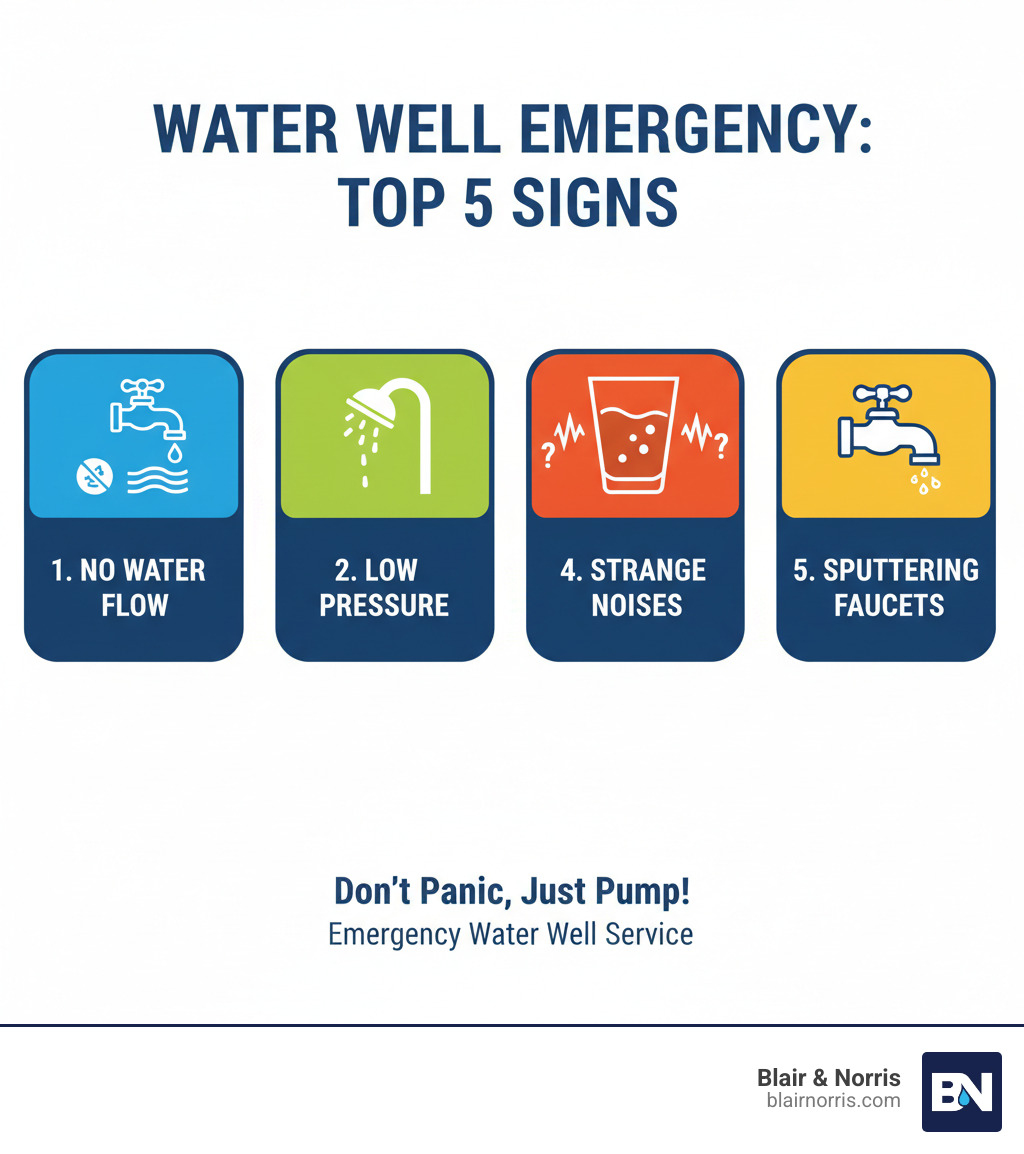
Emergency water well service in Central Indiana is a 24/7 professional response to sudden well system failures. You should call for help immediately if you have no water, a sudden pressure drop, dirty or foul-smelling water, strange noises from your equipment, sputtering faucets, or a pump that won’t shut off.
The process is straightforward:
- Call an emergency water well service in Indianapolis.
- Turn off power to your well pump at the circuit breaker.
- A technician will arrive for a full system diagnosis.
- A repair or temporary solution is provided to restore water service.
It’s 2 a.m., and you turn on the kitchen tap—nothing comes out. This scenario is why emergency water well service exists. The good news is that most well emergencies can be resolved quickly. Addressing problems immediately often prevents more expensive damage, as the average well pump replacement costs between $1,000 and $3,000. Most emergency calls are due to pump failures, pressure drops, or winter weather, and they often happen outside normal business hours.
I’m Mack Blair, and with over 30 years in the well industry, I’ve handled countless emergency water well service calls across Central Indiana. From frozen pipes to pump failures on holidays, I’ve seen how a reliable water supply can become a crisis—and how the right response gets families back to normal fast.
Simple emergency water well service glossary:
What is a Water Well Emergency? Key Signs You Need Help Now
A water well emergency is any situation that disrupts your access to clean, safe water or threatens your system’s ability to function. It can be a sudden loss of water or a gradual change in quality. The biggest mistake homeowners make is waiting to call for help. Well problems rarely fix themselves; they get worse, leading to burned-out pumps, water damage, or contaminated drinking water.
More info about well pump problems.
Common Signs of a Well System in Distress
When your well system has a problem, it will give you warning signs. Here’s what to look for:
- No water or extremely low pressure: This is the most obvious alarm. Low pressure (below 20 psi) often points to pump trouble, a failing pressure tank, or a low water level.
- Sputtering faucets: If your faucets spit air, the pump is struggling to pull a steady stream of water, which can indicate a low water level or a failing pump.
- Strange noises: Grinding, clanking, or loud humming from your pump or pressure tank signals a mechanical breakdown. A pump that cycles on and off constantly is also a red flag.
- Unexplained spikes in your electric bill: A pump that runs continuously due to a leak or malfunction can drastically increase your electricity costs while wearing itself out.
- Dirty, discolored, or foul-smelling water: This is a serious concern as it directly affects your family’s health. Any change from clear, odorless water requires professional diagnosis.
Dealing With Sediment in Well Water
Pee-Yew! Smelly Well Water: A Well Water Treatment Guide
The Dangers of Contamination and Delay
Putting off well repairs is risky and almost always more expensive in the long run.
Health risks are serious. Your well can become contaminated with bacteria (like E. coli), nitrates, or heavy metals, leading to gastrointestinal illness and other health problems. Children and the elderly are especially vulnerable.
12 Signs Your Well Water Is Making You Sick
Structural damage and escalating costs are also major concerns. A small leak can damage your home’s foundation, and a constantly cycling pump will burn out prematurely, turning a simple repair into a costly replacement.
Without water, your entire household grinds to a halt. For rural properties with livestock or crops, a well emergency can threaten your livelihood.

First Response: What to Do While You Wait for Help
When your well stops working, it’s natural to feel a moment of panic. But before you do anything else, take a deep breath. There are a few safe, simple steps you can take while waiting for a professional to arrive.
Complete Well Pump Troubleshooting Guide.
Safety and Simple Checks
Your well system combines electricity and water, so safety is paramount. These checks can prevent further damage and may even reveal a quick fix.
- Turn off the power to your well pump. Go to your electrical panel and flip the well pump’s circuit breaker to “off.” This is crucial because a pump running without water can overheat and destroy itself. It also eliminates electrical hazards.
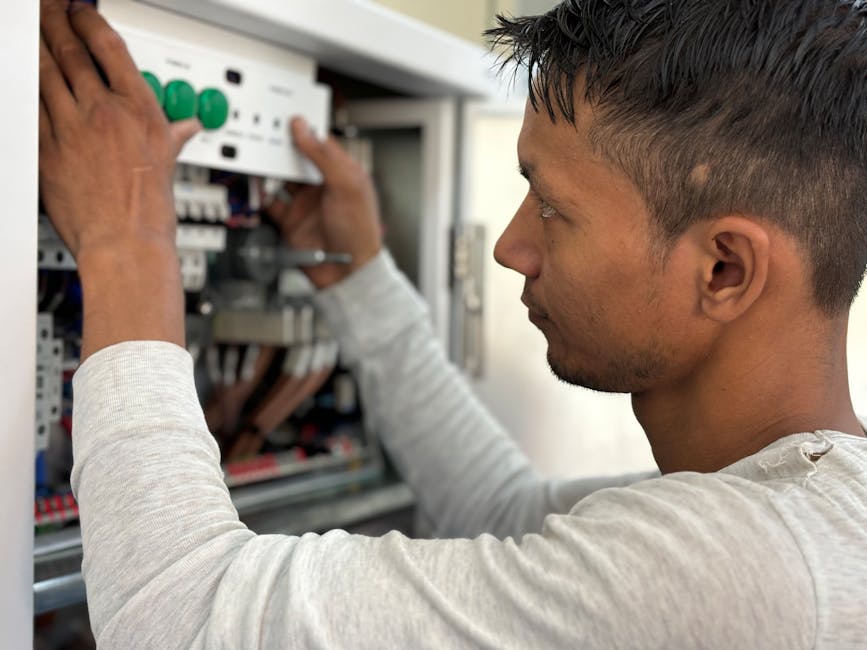
- Check if the circuit breaker has tripped. Sometimes the fix is as simple as resetting a tripped breaker. However, if it trips again immediately, do not force it. This indicates a more serious electrical problem that needs a professional.
- Look at your pressure tank. Check the pressure gauge; a reading below 20 psi indicates a problem. If you knock on the tank and hear water sloshing around, the internal air bladder may have failed, a condition known as being “waterlogged.”
Well Pressure Tank Replacement Guide.
- Look for visible leaks. Use a flashlight to inspect the pump, pressure tank, and surrounding pipes for drips, wet spots, or puddles. Note any leaks to show the technician.
When to Immediately Call a Professional
While basic checks are useful, some situations require immediate expert help. Call a professional if:
- You are uncomfortable working with electrical components. Well systems use high voltage, and mistakes can be dangerous.
- You hear complex mechanical issues like grinding noises or notice the pump won’t stop running. Attempting a DIY repair can often make the problem worse.
- You’ve done the basic checks and still can’t find the problem. The issue is likely down in the well itself, requiring specialized diagnostic equipment.
- You notice any change in your water quality. Cloudy, smelly, or discolored water is a sign of potential contamination and poses a health risk. Do not drink the water.
Well emergencies often happen at the worst times, which is why our emergency water well service includes 24/7 live phone support. You’ll talk to a real person who can dispatch help, not an answering service.
What to Expect from a Professional Emergency Water Well Service
When you have a well emergency, you need help fast. At Blair & Norris, we offer 24/7 live phone support so you’ll always speak with our staff, not a machine. We dispatch a technician immediately, typically arriving within two hours. Our service trucks are mobile workshops, stocked with diagnostic equipment and common replacement parts to facilitate on-the-spot repairs.
Our process is simple: we diagnose the problem, explain our findings clearly, and provide honest recommendations. We’ve built our 75-year reputation on trust, not upselling.
Typical Emergency Services Offered
We are equipped to handle all common well emergencies, including:
- Well pump failure: Pumps last 8-15 years but can fail unexpectedly. We can often repair them or provide a quick replacement.
- Pressure tank problems: A waterlogged or failed tank can cause pressure issues or constant pump cycling. We can repair or replace it.
- Water line repair: We have the equipment to locate and repair underground leaks or breaks.
- Well cleaning and rehabilitation: This service removes sediment and mineral buildup to improve water flow.
- Electrical problems: Our technicians can safely fix faulty pressure switches, control boxes, and wiring.
- Temporary water solutions: For complex repairs, we can provide portable cisterns so you’re not left without water.
Understanding the Costs of Emergency Water Well Service
The cost of emergency water well service depends on the repair, parts, and labor. A well pump replacement typically ranges from $1,000 to $3,000, while a pressure switch replacement is less expensive. We believe in upfront pricing and, unlike some providers, we do not charge extra for after-hours or weekend calls. The price is the same whether it’s Tuesday afternoon or midnight on Saturday. Preventative maintenance is almost always cheaper than an emergency repair.
Winter Weather Emergencies
Central Indiana winters are tough on well systems. Common issues include:
- Frozen pipes: Expanding ice can crack or burst pipes.
- Frozen pumps: Exposed components can freeze solid in extreme cold.
- Contaminant infiltration: Melting snow and ice can carry pollutants into your well.
- Power outages: Winter storms can knock out power, leaving you without water. A backup generator is a wise investment.
Proper insulation and regular maintenance can prevent many winter emergencies. But if you do have a problem, we’re here to help 24/7.

Prevention is Key: How to Avoid Future Well Emergencies
While we’re always ready to provide emergency water well service, we’d rather help you avoid emergencies altogether. Most well failures give warning signs, and regular maintenance is the best way to catch them early, saving you stress and money.
Creating a Well Maintenance Schedule
A proactive maintenance schedule is your best defense against breakdowns.
- Schedule an annual professional inspection: A technician can spot subtle signs of wear on your pump, pressure tank, and electrical components before they fail.
- Test your water quality annually: Many dangerous contaminants like bacteria, nitrates, or arsenic are undetectable by taste or smell. Regular testing is the only way to ensure your water is safe.
- Check your pressure tank and switch: Ensure your pressure gauge reads above 20 psi. Frequent pump cycling is an early warning sign of a problem.
- Inspect your well cap: Twice a year, check that your well cap is secure and free of cracks to prevent contamination.
- Keep detailed records: A log of inspections, tests, and repairs provides a valuable history for diagnosing future issues.
Preparing Your Home for a Water Outage
Even with perfect maintenance, outages can happen. Being prepared makes them manageable.
- Store emergency water: Keep a three-day supply of water (one gallon per person, per day).
- Consider a backup power source: A generator can keep your well pump running during a power outage, which is critical in winter.
- Keep emergency contacts handy: Post our number in a visible place. Having your well’s information (depth, pump type) ready helps us respond faster.
- Understand well safety: Familiarize yourself with how your system operates to spot problems early.
Information on well regulations and safety
A small investment in maintenance and preparation provides peace of mind and ensures your well system serves you faithfully for years.
Frequently Asked Questions about Emergency Water Well Service
When your well fails, you have questions. Here are answers to some of the most common ones we hear.
How quickly can a technician arrive for an emergency?
We offer 24/7 emergency water well service with live phone support. In most cases, a technician can be at your door within a couple of hours. Our trucks are fully stocked, allowing for immediate diagnosis and repair. Factors like severe weather or community-wide outages can affect arrival times, but we will always give you an honest estimate when you call.
Can my “dry” well be fixed?
Most of the time, a “dry” well is not actually out of water. The problem is usually a pump failure or another mechanical issue that we can fix. If the water level has genuinely dropped, we have several solutions, such as well deepening or rehabilitation, to restore your water supply. We always perform a thorough assessment to find the real cause before recommending a new well.
Is it safe to drink my well water after a repair?
Your family’s health is the top priority. After any repair that opens the well system, we recommend shock chlorination to disinfect it. We will then guide you through flushing the system to remove the chlorine. Finally, we strongly advise post-repair water testing to confirm the water is safe before you use it for drinking or cooking. Until testing is complete, use bottled water.
Conclusion: Get Your Water Flowing Again with Expert Help
A water well emergency is one of those situations that can turn your world upside down in an instant. One moment you’re going about your day, the next you’re standing at a dry faucet wondering how you’ll manage without water. But here’s the thing: you don’t have to face it alone.
Understanding the warning signs of a well system in distress, knowing those crucial first safety steps, and having a trusted professional just a phone call away—these three things can transform a full-blown crisis into a problem that gets solved quickly and efficiently.
For more than 75 years, families and businesses throughout the Indianapolis area have turned to Blair & Norris when their wells stopped working. We’ve built our reputation on something pretty simple: showing up when we say we will, treating people fairly, and doing the job right the first time. As a family-owned business, we understand that when your water stops, everything stops. That’s why we offer 24/7 live phone support—you’ll always talk to one of our actual staff members, never an answering service.
Whether you’re needing an emergency well repair in Indianapolis right now or you’re thinking ahead and want to set up a maintenance plan to prevent future problems, we’re here to help. Regular maintenance really is your best defense against those middle-of-the-night emergencies, and we’d be happy to create a schedule that works for your system and your budget.
Don’t wait until a small problem becomes a big one. If you’re experiencing any well issues or simply want peace of mind knowing your system is in good shape, give us a call today. Our team is ready to get your water flowing again.