
What to Do When You Have a Well Pump Failure
Well pump failure repair starts with knowing whether you actually have a pump problem or something simpler like a tripped breaker or a faulty pressure switch. When the water stops flowing, the clock starts ticking on potential plumbing strain, household disruption, and water quality concerns.
Here’s a quick overview of the most important steps to take immediately:
- Check your circuit breaker first — many “pump failures” are just tripped breakers caused by power surges or electrical fluctuations.
- Inspect the pressure switch — look for burned or corroded contacts that prevent the electrical signal from reaching the motor.
- Test the pressure tank — press the Schrader valve; air means it’s likely healthy, water means the bladder has failed and the tank is waterlogged.
- Check for leaks — a running toilet or broken pipe can cause the pump to run non-stop, leading to overheating and eventual failure.
- Call a licensed well professional — if the breaker keeps tripping, the pump runs constantly, or you have no water after the steps above.
Safety warning: Well pumps run on 240V electricity. If you’re unsure at any step, stop and call a professional.
Over 13 million U.S. households depend on private wells for their daily water supply. When your well pump fails, the impact is immediate — no water for showers, cooking, laundry, or even flushing a toilet. In Indiana, mineral buildup and sediment can also accelerate wear on pressure switches, tanks, piping, and pump components.
The key is knowing the difference early. I’m Mack Blair, owner of Blair & Norris, and with over 30 years of hands-on experience diagnosing and repairing well pump systems across Central Indiana, well pump failure repair is something my team handles every day. In this guide, we’ll first explain the most common well pump problems and what they can lead to, then cover why DIY repair can be risky, and finally show you when professional help is the smartest and most cost-effective choice.
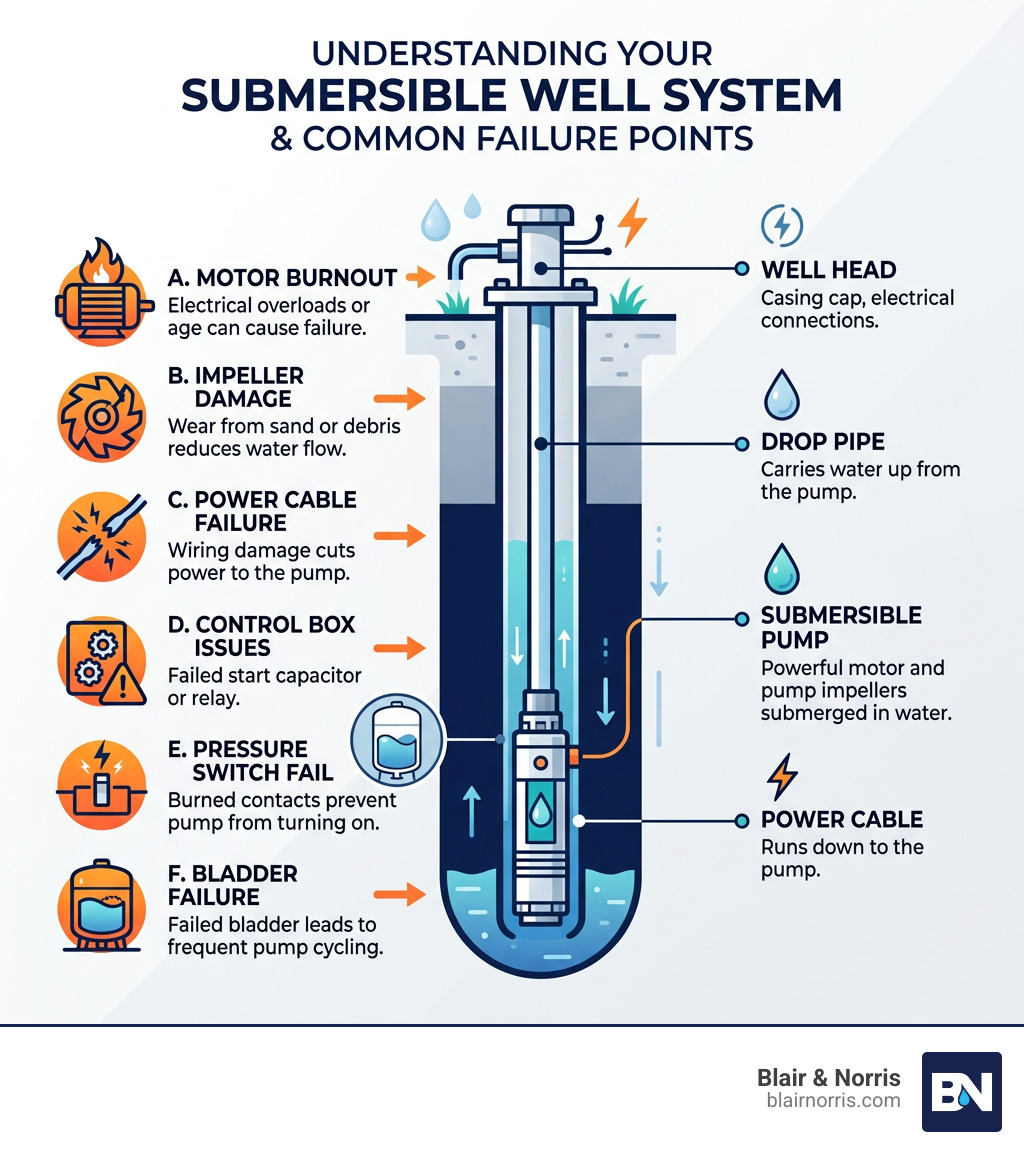
Well pump failure repair vocabulary:
Identifying the Core Problems and Their Implications
When we receive a call for well pump failure repair in Indianapolis or Noblesville, the homeowner is often in a panic because they have little to no water flow. While “no water” is the most obvious sign of trouble, your system usually gives earlier warnings.
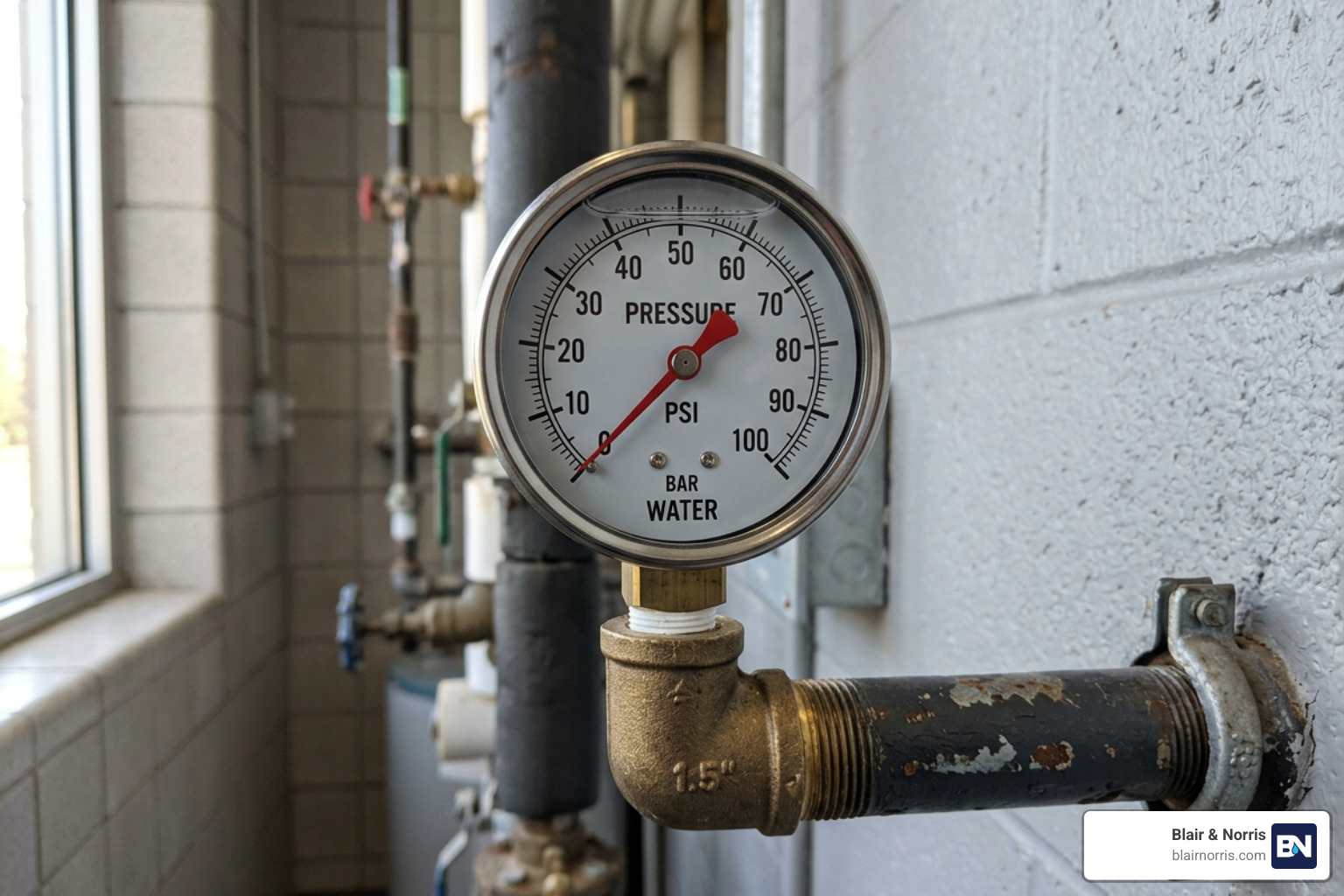
A common indicator of trouble is a pressure gauge reading zero, even when no water is being used. If your faucets are sputtering or “spitting” air, this can indicate a breach in the drop pipe, a leak, or a lowering water table. Homeowners may also notice some of the 8 common signs of well pump failure, such as sediment in toilet tanks or a sudden spike in the electric bill. That increase can happen because a failing motor must work harder to move the same amount of water, drawing more amperage and running longer cycles.
One of the most common questions we hear is: “What is the average life expectancy of a well pump?” In many homes, a quality submersible pump lasts roughly 8 to 15 years. If your pump is approaching the upper end of that range and you start hearing clicking from the pressure switch or noticing short cycling, the system is signaling that something is wrong.
Recognizing Water Quality Changes
Changes in water appearance or taste can point to deeper system issues. If your water turns murky, gritty, or metallic, the pump may be drawing in sediment or the system may have corrosion-related wear. Submersible well pump troubleshooting often shows that sand in the water acts like an abrasive on impellers and seals, speeding up mechanical damage.
Interpreting Pressure Fluctuations
If the pressure drops during a shower and then surges back, the pressure tank may be losing its air charge or the bladder may be failing. When that happens, the pump turns on too often, increasing wear on the motor and controls. Our complete well pump troubleshooting guide covers these warning signs in more detail.
Troubleshooting Before Assuming a Total Pump Failure
Before you assume you need a brand-new pump, start with a few quick checks. In many cases, a “no water” situation is caused by an electrical or control issue rather than a failed motor.
First, check your electrical panel. Power surges during Indiana storms can trip a double-pole breaker. If the breaker is tripped, switch it fully off and then back on. If it trips again immediately, there may be a short circuit in the motor or in the wiring going down the well.
Next, inspect the pressure switch. This is the small box, usually mounted near the pressure tank. Burned or pitted contacts can stop power from reaching the pump.
Testing the Pressure Tank Bladder
The pressure tank helps regulate water delivery and protects the pump from excessive cycling. To test it, find the Schrader valve on top of the tank and briefly press the pin.
- If air comes out: The bladder is likely still intact, though pressure may still need adjustment.
- If water comes out: The bladder has ruptured and the tank is waterlogged.
A waterlogged tank should be addressed quickly because it causes the pump to start and stop far too often. That repeated cycling dramatically shortens motor life.
Pressure Switch and Control Issues
Most residential systems are set to operate around 30/50 PSI or 40/60 PSI. If you have the proper tools and training, you can verify whether power is entering and leaving the switch correctly. In some cases, the switch itself is fine, but the small sensing tube is clogged with sediment and no longer reads pressure accurately. If you’re left without water and need prompt help, emergency well pump service near me is often the safest next step.
Advanced Well Pump Failure Repair and Component Replacement
When basic troubleshooting doesn’t restore your water, we move into advanced diagnostics. This often involves opening the control box (for 3-wire systems) and using a multimeter to test the capacitor and start relay.
2-Wire vs. 3-Wire Submersible Pumps
Understanding which system you have is critical for well pump failure repair.
| Feature | 2-Wire Pump | 3-Wire Pump |
|---|---|---|
| Control Box | None (Built-in) | External Box on Wall |
| Starting Components | Inside the Pump | Inside the Control Box |
| Ease of Repair | Must pull pump for all repairs | Can fix starting issues without pulling pump |
| Reliability | Good for shallow/medium wells | Preferred for deep wells and high HP |
For 3-wire systems, we can often resolve a “dead” pump by simply replacing a $50 capacitor in the control box rather than pulling the entire pump. If we determine the motor is the problem, we must pull the pump. This involves disconnecting the pitless adapter, inspecting the drop pipe for cracks, and replacing the check valve to ensure the system holds pressure. Our well and pump services include a full inspection of these components during every pull.
Diagnosing Submersible Motor Issues
We use specialized tools like an ohm meter to check the resistance of the motor windings. If the meter reads “OL” (Open Line), the internal wiring has snapped. If it reads “0,” the motor has shorted out. We also check for ground faults; if electricity is “leaking” into the well water, the system is dangerous and must be shut down immediately. We also perform Megger testing, which uses high voltage to test the integrity of the wire insulation deep underground.
Addressing Constant Pump Running
If your pump won’t stop running, it’s often due to one of three things:
- A leak in the house: A running toilet can waste hundreds of gallons a day.
- A hole in the drop pipe: Water is leaking back into the well before it reaches the tank. You might hear water spraying or splashing inside the well casing.
- Aquifer depletion: The well itself is running low on water, and the pump can’t reach the “cut-off” pressure. This is increasingly common during dry Indiana summers.
The Hidden Dangers of DIY Well Pump Repair
We understand the temptation to DIY. However, well systems present unique risks that go beyond standard plumbing. The combination of high-voltage electricity, extreme physical weight, and the potential for environmental contamination makes this a job for licensed professionals.
The most immediate risk is electrical shock. Well pumps typically run on 240V—the same voltage as your electric stove or dryer. A wiring error doesn’t just break the pump; it can lead to fire or even electrocution through your metal faucets.
Then there is the physical weight. A submersible pump, combined with 100+ feet of water-filled pipe and electrical cable, can weigh several hundred pounds. If you lose your grip while pulling the pump, the entire assembly can crash to the bottom of the well, often shattering the well casing or “wedging” the pump so deep it can never be retrieved.
Furthermore, any time you open a well cap, you risk introducing bacteria like E. coli or Coliform into your drinking water. Even a small amount of surface runoff or a single insect entering the well can contaminate your entire supply. The Indiana Department of Health has strict protocols for well disinfection that must be followed after any repair to ensure the water remains safe for your family.
Electrical Safety and Voltage Risks
Safety is our top priority. We use lockout-tagout procedures to ensure no one flips a switch while we are handling live wires. DIYers often overlook the “torque” of the motor; when a pump starts, it kicks with enough force to rub wires raw against the casing if not properly secured with torque arrestors and cable guards.
Physical and Environmental Hazards
A well is a direct portal to the groundwater your community shares. If the sanitary seal is broken or the pitless adapter is misaligned during a DIY attempt, you risk contaminating the aquifer. We ensure every “seal” is airtight to prevent vermin intrusion and surface water runoff from entering your supply.
Why Professional Well Pump Failure Repair Saves Money
While a service call has an upfront cost, professional well pump failure repair usually saves money in the long run. By using expert diagnostic equipment like megohmmeters (to test wire insulation) and sonic well sounders (to measure water levels without opening the well), we identify the exact failure point.
Expert Diagnostic Equipment
Our team arrives with flow meters and specialized pullers designed to handle the heavy lifting safely. We also offer more info about well and pump services that include installing sediment filters and surge protectors. We also use down-hole cameras to inspect the condition of the well casing and screen, identifying potential collapses before they happen.
Long-Term System Optimization
When we replace a pump, we don’t just “swap like for like.” We calculate your household’s actual water demand. If you’ve added a bathroom or an irrigation system since the original pump was installed, you might need a higher horsepower motor or a larger pressure tank to prevent the “short cycling” that kills pumps prematurely. We also evaluate the “drawdown” of your well to ensure the pump is set at the optimal depth for year-round reliability.
Frequently Asked Questions about Well Pump Failure Repair
How long does a typical well pump last?
Most residential well pumps last between 10 and 15 years. However, factors like high sediment levels (sand), acidic water, or an undersized pressure tank can shorten that lifespan to 5 or 6 years. In Indiana, the presence of heavy minerals can also lead to scale buildup on the motor, which reduces its ability to dissipate heat.
What is the average cost of well pump repair vs replacement?
Minor repairs, such as replacing a pressure switch or a control box capacitor, typically range from $250 to $800. A full pump replacement, which includes the pump, labor, and often new wiring or drop pipe, generally costs between $3,000 and $6,000. We provide transparent estimates before any work begins.
Why is my well pump tripping the circuit breaker?
This is usually a sign of a “ground fault” or a “locked rotor.” If the motor bearings seize up (locked rotor), the pump draws massive amounts of electricity trying to start, which trips the breaker to prevent a fire. If the insulation on the underwater wires has rubbed through against the well casing, the electricity “leaks” into the ground, also causing a trip.
Can I use my water immediately after a pump repair?
If the well was opened, we recommend a shock chlorination treatment. You should not drink the water until the chlorine has been flushed and a bacteria test confirms the water is safe. We provide detailed instructions on how to flush your system and can assist with water quality testing to ensure your family’s health is protected.
Conclusion
At Blair & Norris, we know that water isn’t just a convenience—it’s a necessity for your family’s health and comfort. For over 75 years, our family-owned business has provided ethical, high-quality well and septic solutions to our neighbors across Indianapolis, Greenwood, and the surrounding counties. We pride ourselves on our 24/7 live phone support because we know well emergencies don’t wait for business hours.
Whether you’re dealing with a minor pressure fluctuation or a total system collapse, our team has the experience and the specialized equipment to get your water flowing again safely and efficiently. Don’t risk your home’s safety or your family’s health on a DIY “guess” that could lead to much more expensive repairs down the road. Trust the experts who have been serving Central Indiana for generations.
Contact Blair & Norris today for a professional service estimate and let us restore your peace of mind.