
Introduction: Tapping into the Earth’s Natural Coolness
Searching for ways to keep your home cool and save on energy bills? Geothermal cooling offers a powerful solution by using the earth’s natural, consistent temperature.
Here’s a quick look at what geothermal cooling is:
- It’s a system that cools your home by moving heat from inside to the cooler ground outside.
- It uses the stable temperature of the earth, which stays between 40-70°F year-round, unlike fluctuating air temperatures.
- It’s a highly energy-efficient and sustainable way to control your home’s comfort.
This method is very different from traditional air conditioners. Conventional AC units try to dump hot air into an already hot summer atmosphere. Geothermal systems, however, efficiently transfer unwanted heat into the cool earth. This process keeps your home comfortable, often using the same system that heats your home in winter. It’s about working with nature, not against it, to achieve year-to-year comfort, significant energy savings, and a smaller carbon footprint.
I’m Mack Blair, and with over 30 years of experience, I’ve seen how effective geothermal cooling systems are in Midwest homes. Our team at Blair & Norris is committed to bringing these reliable, efficient solutions to our community.
How a Geothermal System Cools Your Home
Think of the earth beneath your home as nature’s own cooling system. While summer temperatures soar above ground, just six feet below the surface, the earth maintains a steady, comfortable temperature between 40°F and 70°F all year long. That’s the secret behind geothermal cooling – we’re simply borrowing the earth’s natural coolness.
A geothermal heat pump works like your refrigerator, but instead of keeping your food cold, it keeps your entire home comfortable. The heat pump doesn’t actually make cold air. Instead, it acts like a heat moving service, picking up the warm air from inside your house and delivering it to the cool earth outside.
The ground loop system is what makes this heat transfer possible. Picture a network of underground pipes filled with a special fluid that acts as a messenger between your home and the earth. This fluid travels through the buried pipes, collecting heat from your house and dropping it off in the cooler ground below.
Want to see this fascinating process in action? Watch how geothermal works or learn more about Geothermal Heat Pumps.
How the process of geothermal cooling works
The geothermal cooling process is beautifully simple once you understand the steps. It all starts when your heat pump pulls warm, sticky air from your living spaces. Inside the unit, this warm air passes over coils filled with cold refrigerant, which eagerly soaks up all that unwanted heat.
Next comes the clever part. The now-heated refrigerant moves to a heat exchanger inside the heat pump, where it passes its collected heat to a special fluid that’s about to take a trip underground. This fluid – usually a mix of water and antifreeze – becomes the heat delivery service for your home.
The warmed fluid then gets pumped through the ground loops buried in your yard. These pipes snake through the earth below the frost line, where temperatures stay consistently cool. As the warm fluid travels through these underground highways, the surrounding earth acts like a giant sponge, soaking up all that heat you don’t want in your house.
Once the fluid has given up its heat to the earth, it cools down and heads back to your heat pump, ready to collect another load of unwanted warmth. Meanwhile, the refrigerant cycle continues, and cool air gets blown through your home’s ductwork.
There’s even a bonus feature – dehumidification. As your system cools the air, it also removes excess moisture, eliminating that uncomfortable, sticky feeling that makes summer days feel even hotter.
The Key Components: Ground Loops and Heat Pumps
Every geothermal cooling system depends on two main components working together like a well-rehearsed dance team.
The ground loop is your system’s underground network, made from tough HDPE (High-Density Polyethylene) pipes that can handle decades of use. These pipes create a closed circuit that carries the heat transfer fluid between your house and the earth. Because they’re buried safely underground, they’re protected from weather, lawn mowers, and everything else that could damage an outdoor unit.
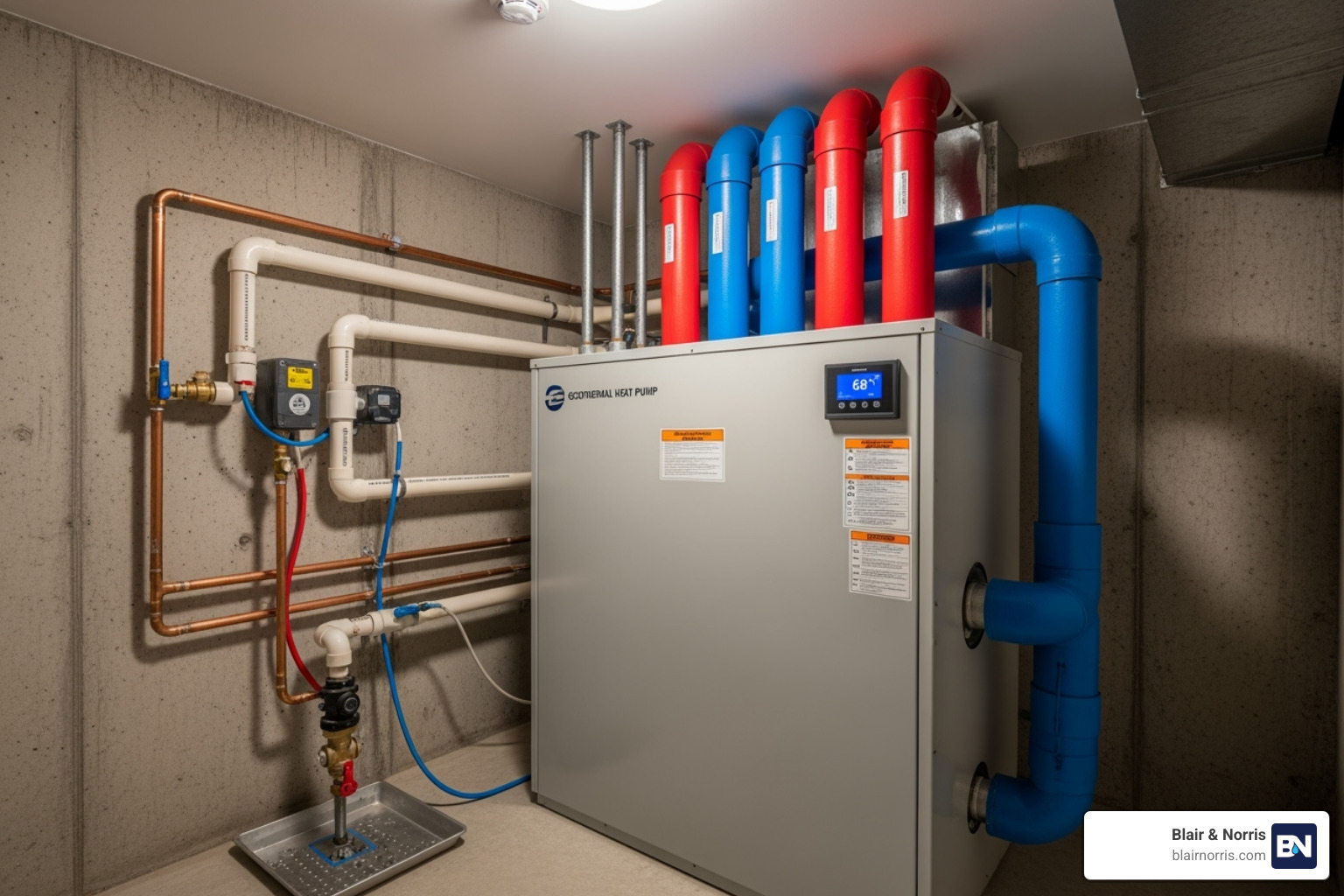
The heat pump lives indoors – typically in your basement, utility closet, or garage – where it stays safe from harsh weather that can wear down traditional AC units. Inside this compact unit, you’ll find the blower fan that moves conditioned air through your home, the compressor that manages the refrigerant cycle, and the circulating pump that keeps the fluid flowing through those underground loops.
This indoor location is a game-changer. While traditional air conditioners sit outside, battling sun, rain, snow, and storms, your geothermal heat pump enjoys a protected environment that helps it last much longer.
For a deeper dive into how these systems work, check out More on Geothermal Energy Explained.
The Core Benefits of Geothermal Cooling vs. Traditional AC
When it comes to keeping your home perfectly cool, geothermal cooling truly sets itself apart from traditional air conditioning. It’s not just an alternative; it’s a significant upgrade that brings lasting comfort and savings. With over 75 years of experience serving Indianapolis and the surrounding communities, we at Blair & Norris have seen how these systems transform homes. They offer benefits that conventional AC simply can’t match.
Here’s a quick comparison that highlights the key differences:
| Feature | Geothermal Cooling System | Conventional AC System |
|---|---|---|
| Efficiency (EER) | Typically 15 to 25 | Typically 9 to 15 |
| Lifespan | Heat pump: 20+ years; Ground loop: 50+ years | 12 to 15 years |
| Operational Costs | 25% to 50% lower electricity use; Significant savings | High electricity consumption; Higher monthly bills |
| Noise Level | Very quiet operation (indoor unit only) | Often noisy (outdoor condenser unit) |
| Maintenance | Low, due to protected indoor components and durable ground loops | More frequent, due to outdoor exposure and moving parts |
These aren’t just numbers on a chart. They represent tangible energy savings and a much smarter, long-term investment in your home’s comfort and value. You can dive deeper into all the ways these systems benefit homeowners by exploring the full Benefits of Geothermal Systems.
Superior Energy Efficiency
The incredible energy efficiency of geothermal cooling is often its most appealing feature. Think about it: a traditional AC unit works hard to dump hot air into an already scorching summer atmosphere. It’s like trying to cool a room by opening the door to an oven. Geothermal systems, however, work with nature, using the earth’s stable, cool temperatures. This fundamental difference leads to truly impressive efficiency gains.
We measure cooling efficiency using something called the Energy Efficiency Ratio, or EER. Simply put, a higher EER means you get more cooling for every bit of electricity you use. Geothermal AC systems typically boast EERs ranging from 15 to 25. Now, compare that to many conventional AC systems, which often fall between 9 and 15 EER. This superior performance means a lot less strain on your wallet. In fact, installing a geothermal cooling system can slash your electricity use for cooling by a remarkable 25 to 50 percent!
It’s no wonder the U.S. government supports these efficient systems. You can learn more about U.S. government efficiency standards. For a deeper look at how geothermal cooling compares to other options, check out our guide on Geothermal vs. Traditional HVAC.
Best Lifespan and Low Maintenance
Another huge advantage of choosing geothermal cooling is its exceptional lifespan and surprisingly low maintenance needs. Unlike traditional AC units that sit outdoors, constantly battling harsh Indiana weather, the key parts of a geothermal system are either safely buried underground or housed inside your home. This protection makes a world of difference.
Let’s talk longevity:
- Underground Loops: These tough pipes, usually made of High-Density Polyethylene (HDPE), are virtually indestructible once installed. They’re safe from sun, rain, snow, and even curious critters. These loops are designed to last for 50 years or more – some even last for a century!
- Indoor Heat Pump: The heat pump itself, which is the heart of the system, lives inside your home. This means it’s protected from extreme temperatures and outdoor wear and tear. This protection significantly extends its life, with many units lasting 20 to 24 years. Compare this to conventional central air conditioners, which often only last 12 to 15 years, with major components sometimes failing much sooner.
Because so much of the system is protected, there’s less to break down or corrode. While routine checks are still a good idea, geothermal cooling systems require much less hands-on maintenance than their traditional counterparts. This translates into more peace of mind and fewer repair bills over the decades you’ll enjoy your system. Find more about Geothermal System Maintenance.
Environmental and Health Advantages
Beyond the financial savings, choosing geothermal cooling offers wonderful benefits for both our planet and your family’s health. It’s a choice you can feel good about for many reasons.
Traditional air conditioners contribute a lot to carbon emissions. In the U.S. alone, they release over 100 million tons of carbon dioxide into the air each year. Geothermal cooling systems, however, work differently. They move heat using electricity and the earth’s natural, renewable energy. This means they can reduce greenhouse gas emissions by more than two-thirds compared to systems that burn fossil fuels. It’s a powerful step toward a cleaner, greener future.
A huge safety benefit is that geothermal cooling systems operate without any on-site combustion. Unlike furnaces that burn gas or oil, there’s no flame, no exhaust, and no risk of gas leaks or carbon monoxide. Carbon monoxide is a silent danger – it’s an odorless, tasteless, and colorless gas that can be deadly. With geothermal, you completely remove this risk, making your home a safer place for everyone. The CDC offers important information on Carbon Monoxide and its dangers.
Another plus is how wonderfully quiet these systems are. Since the noisy compressor unit is typically located indoors, you won’t have the constant hum or rumble of an outdoor AC unit. Your backyard barbecues and quiet evenings will remain undisturbed. Plus, by eliminating combustion byproducts and effectively reducing humidity, geothermal cooling systems help create cleaner, healthier indoor air. This means a more comfortable home, free from common pollutants linked to traditional heating methods.
Understanding the Investment: Costs, ROI, and Incentives
Let’s talk openly about the investment in a geothermal cooling system. It’s true that the initial setup cost is usually higher than for a conventional air conditioning system. This is mainly because of the significant work involved in installing the ground loops – whether that’s digging trenches for horizontal loops or drilling deep boreholes for vertical ones. However, this upfront investment is exactly what makes these systems so incredibly efficient and built to last, leading to huge savings over their long lifetime.
Many homeowners find the operational savings of their geothermal AC system become obvious the moment they see their first electric bill. These savings are so substantial that the extra initial cost can often be “paid back” in energy savings within just 5 to 10 years. This timeframe can vary based on things like energy costs in your area and any incentives available. This relatively quick payback period means a strong return on investment (ROI), making geothermal cooling a smart financial choice for the long haul. For a comprehensive look at the financial aspects, explore Geothermal System Costs.
Understanding the costs of geothermal cooling
When you’re thinking about investing in a geothermal cooling system, it helps to understand where the costs come from:
- Ground Loop Installation: This is typically the biggest part of the initial expense. Whether it’s trenching your yard for horizontal loops or drilling multiple boreholes for vertical ones, the labor and special equipment needed to prepare the ground are significant. This is often why the initial cost for geothermal can be two to five times that of a traditional HVAC system.
- Heat Pump Unit Cost: The indoor geothermal heat pump itself is a sophisticated piece of equipment. It’s designed for top-notch efficiency and longevity, so its cost will naturally be higher than a standard air conditioner.
- Labor: Installing a geothermal system isn’t a DIY job. It requires specialized knowledge and skilled technicians. From carefully assessing your property’s geology to correctly sizing and installing the loops and connecting the indoor unit, expert work ensures you get a high-quality, super-efficient system.
Even with the higher initial price tag, the long-term financial benefits are truly impressive. With your electricity use cut by a remarkable 25-50% and very little maintenance needed, your monthly utility bills will shrink considerably. Over the many decades your geothermal system operates, these savings will far outweigh the initial investment, proving it’s a wise decision for savvy homeowners.
Incentives and Rebates
We understand that the upfront cost can seem a bit daunting, but here’s some really good news! To encourage more people to adopt this eco-friendly technology, various government and utility programs offer financial incentives. These can significantly reduce your initial investment, making geothermal cooling even more accessible.
- Federal Tax Credits: The U.S. government often offers generous federal tax credits for homeowners who install geothermal heat pump systems. These credits can be substantial, sometimes covering a significant percentage of the installation costs. It’s always smart to check the latest information from official sources like Energy.gov to see what’s currently available. You can find more Information on tax credits from Energy.gov.
- State and Local Incentives: Beyond federal programs, many states (including Indiana!) and local municipalities offer their own incentives, rebates, or even loan programs for renewable energy systems like geothermal. These can differ quite a bit depending on where you live, so it’s definitely worth looking into what’s available in your specific area.
- Utility Rebates: Your local electric or gas utility company might also offer rebates or special rates for homeowners who switch to high-efficiency geothermal systems. They often recognize the long-term benefits of reduced energy demand on their infrastructure.
Staying informed about these opportunities can make a big difference in the overall cost-effectiveness of your geothermal cooling installation. We recommend subscribing to updates from organizations like the Geothermal Technologies Office to ensure you don’t miss out on potential savings.
Is Geothermal Right for You? System Types and Key Considerations
So, you’re thinking about diving into geothermal cooling – that’s fantastic! Deciding if it’s the perfect fit for your home is an exciting journey, and it really comes down to looking at a few key things: your property’s unique features, your long-term comfort goals, and what makes sense for your budget. The wonderful thing about geothermal is how flexible it is; there’s often a system designed just for you, no matter your property’s size or layout.
Our team at Blair & Norris believes in getting things right from the start. That’s why a thorough property evaluation is always our first step. We’ll take a good look at your land, understand your soil conditions, and consider your specific heating and cooling needs. We even factor in your local climate to ensure we recommend the best system. Whether you’re building a brand-new dream home or looking to upgrade your current one with a major renovation, geothermal cooling can be seamlessly integrated. For a closer look at how we bring these systems to life, visit Geothermal System Installation.
Closed-Loop Systems
For most homes, the magic of geothermal cooling happens through what we call closed-loop systems. Think of them as a continuous, hidden network of pipes buried beneath your property. A special heat transfer fluid circulates through these loops, quietly exchanging heat with the earth. There are a few clever ways we can set these up:
Horizontal Loops: If you have plenty of land – say, about a quarter to three-quarters of an acre – horizontal loops can be a super cost-effective choice, especially for new construction. We gently dig wide, shallow trenches, typically at least four feet deep, and lay the pipes horizontally. It’s like giving your yard a cozy underground accept!
Vertical Loops: For properties with smaller yards, tighter spaces, or even challenging rocky terrain, vertical loops are often the hero. This method involves drilling deep, narrow boreholes, usually 100 to 400 feet deep and spaced about 20 feet apart. We then insert U-shaped pipes into these holes, filling the space with a special grout to ensure amazing heat transfer. This approach minimizes disruption to your beautiful landscape.
Pond/Lake Loops: Do you happen to have a suitable body of water on your property, like a pond or lake? If it meets certain depth and volume requirements (typically a half-acre, 8-foot-deep pond for an average home), this can be the most budget-friendly option! We submerge coiled pipes at least eight feet below the surface, where the water’s temperature is stable and ideal for heat exchange.
While not as common for residential cooling, you might hear about Open-Loop Systems. These systems actually use groundwater or surface water directly. Water is drawn from a well or body of water, sent through the heat pump, and then returned to the earth or water source. This option requires a consistent, clean water supply and often specific local regulations, making closed-loop systems the go-to for most homeowners.
Finding a Qualified Installer
Choosing the right type of geothermal cooling system is a big step, but finding the right team to install it is absolutely crucial. This isn’t your average DIY weekend project! A perfectly installed geothermal system means peak efficiency and a long, happy life for your unit, saving you money and headaches down the road.
A truly qualified installer isn’t just about digging trenches or drilling holes. They bring specialized knowledge to the table, starting with a thorough site assessment. This involves carefully analyzing your soil conditions, understanding your property’s layout, and even considering the local geology. All of this information helps them create a system design that’s custom-custom for your home’s exact needs, ensuring maximum efficiency and comfort. Incorrect sizing or a sloppy installation can unfortunately lead to higher energy bills and components wearing out too soon.
We always recommend working with professionals who are experienced and certified in geothermal technology. Organizations like the International Ground Source Heat Pump Association offer excellent resources to help you find trusted installers and learn about best practices. With Blair & Norris, you’re tapping into 75 years of experience in water systems, and our team handles every geothermal installation with expert care and precision, ensuring your investment pays off for decades to come.
Conclusion: Accept a Cooler, Greener Future
As we wrap up our exploration of geothermal cooling, it’s clear that this remarkable technology offers something truly special for homeowners. By tapping into the earth’s steady underground temperatures, these systems deliver exceptional efficiency that traditional air conditioners simply can’t match. With Energy Efficiency Ratios between 15 and 25, compared to conventional AC units at 9 to 15, you’re looking at genuine energy savings of 25% to 50% on your cooling costs.
The longevity story is equally impressive. While your neighbor might be replacing their traditional AC unit every 12 to 15 years, your geothermal cooling system’s ground loops will likely outlast your mortgage – and then some – with lifespans exceeding 50 years. The indoor heat pump components typically run strong for over 20 years, all while requiring minimal maintenance thanks to their protected indoor location.
But perhaps most importantly, choosing geothermal means choosing sustainability. You’ll dramatically reduce your home’s greenhouse gas emissions while eliminating the carbon monoxide risks that come with combustion-based systems. It’s a win for your family’s health and our planet’s future.
Yes, the upfront investment is higher than conventional systems, but the math works beautifully in your favor. With payback periods typically ranging from 5 to 10 years, plus available federal tax credits and local incentives, geothermal cooling proves itself as a smart long-term investment that actually increases your property value.
For homeowners throughout the Indianapolis area – from Beech Grove and Lawrence to Carmel, Fishers, and beyond – the key to success lies in professional installation and design. That’s where Blair & Norris comes in. With over 75 years of trusted service in water systems and geothermal technology, our family-owned business brings the expertise and reliability you need for such an important investment.
Ready to explore the benefits of geothermal energy for your home? Contact us today to discuss how your well and pump system impacts geothermal cooling.