
What Every Indiana Homeowner Should Know About Cleaning a Septic Filter
Cleaning a septic filter is a straightforward maintenance task that takes 30–45 minutes and can prevent costly sewage backups, drain field damage, and expensive repairs. In the state of Indiana, where many homes rely on onsite sewage systems, understanding the mechanics of your tank is not just a matter of home maintenance; it is a matter of protecting your property value and the local environment. Many homeowners in areas like Noblesville, Fishers, and Carmel are surprised to learn that a small plastic component, often no larger than a liter bottle, is the only thing standing between a healthy system and a $20,000 leach field replacement.
Here’s how to clean a septic filter in 5 steps:
- Safety First: Put on heavy-duty rubber gloves and eye protection to shield yourself from pathogens and splashes.
- Access the Tank: Remove the lid from the outlet chamber of your septic tank. If you have a riser, this is a simple matter of unscrewing the cover; if not, some light digging may be required.
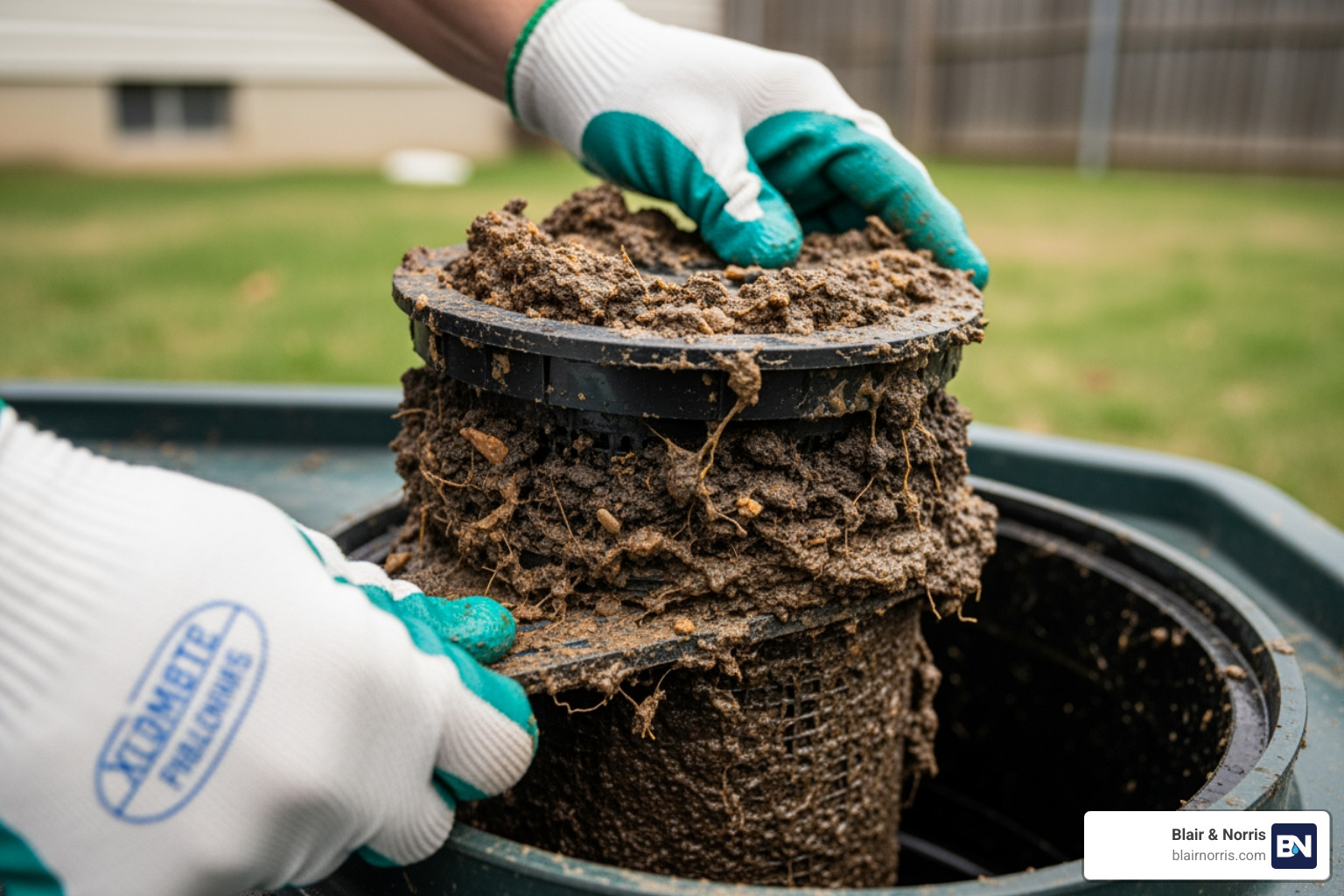
- Extract the Filter: Pull out the filter cartridge using the T-handle. Do this slowly to allow the liquid to drain back into the tank rather than splashing.
- The Rinse: Rinse the filter with a garden hose over the open tank until the water runs clear and all mesh openings are visible. Never rinse the filter on your lawn or in a sink.
- Secure Reinstallation: Reinstall the filter securely into its housing and replace the lid immediately, ensuring all safety screws are tightened to prevent accidental entry.
Most homeowners should clean their septic filter every 6 to 12 months, depending on household size and water usage. If you have a large family or use a garbage disposal frequently, you may need to move to a quarterly schedule.
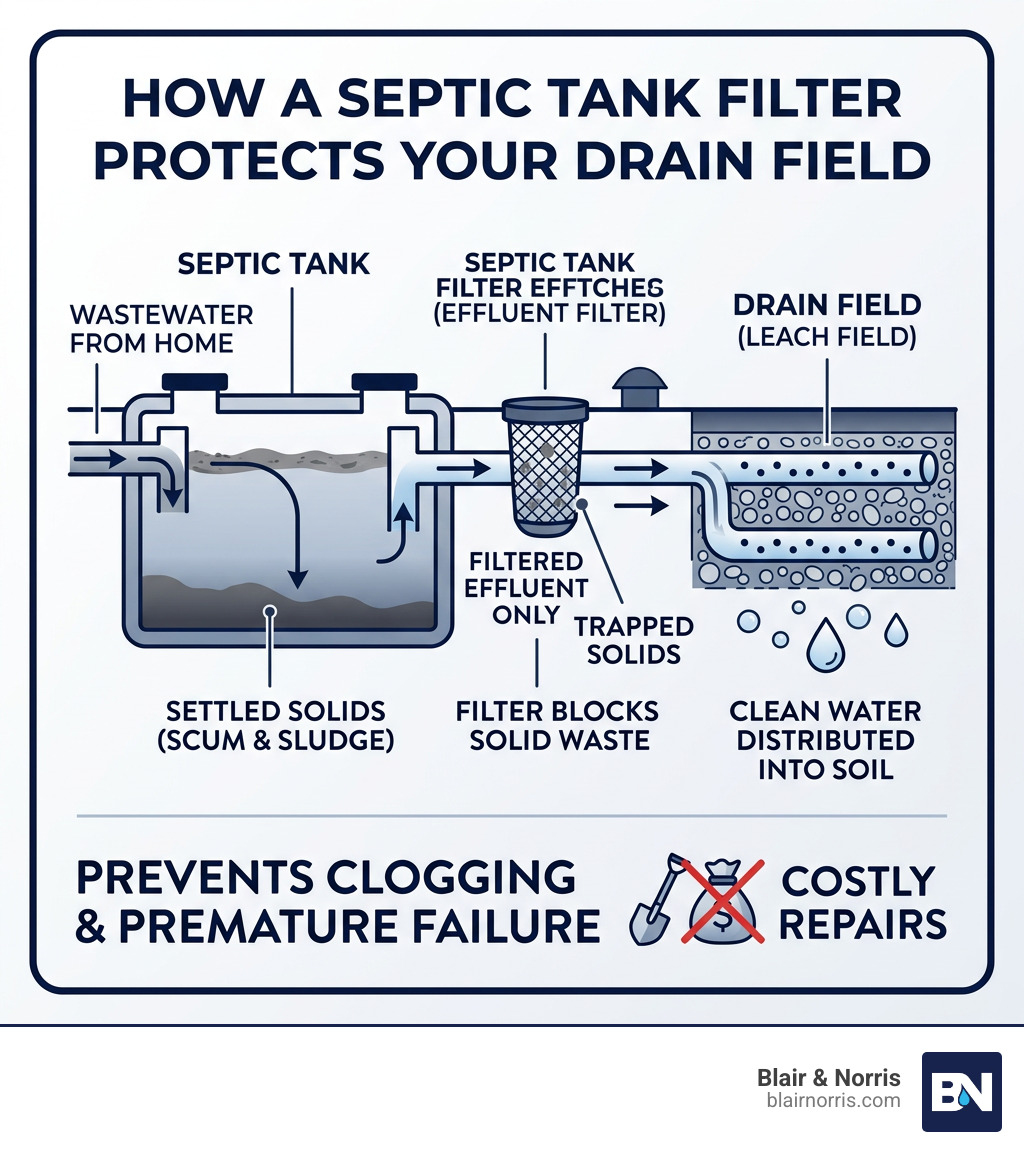
Your septic filter, also called an effluent filter, sits at the outlet of your septic tank. Its job is simple but critical: it stops solid waste from flowing into your drain field, where it can cause irreversible damage. When the filter gets clogged, wastewater has nowhere to go. That means backups, foul odors, soggy patches in your yard, and potentially a five-figure repair bill. In Indiana’s heavy clay soils, once a drain field is clogged with solids, it rarely recovers without professional intervention.
I’m Mack Blair, and with over 30 years of hands-on septic service experience across Central Indiana, I’ve seen what neglected filters can do to an otherwise healthy system. Cleaning a septic filter regularly is one of the simplest ways to protect your home. I have walked through thousands of properties where a simple 30-minute cleaning could have saved the homeowner from a catastrophic failure. Let me walk you through everything you need to know to do it safely and without making a mess.
Simple cleaning a septic filter word guide:
Why Cleaning a Septic Filter is Critical for Your Home
In wastewater management, your effluent filter is the “bouncer” of your septic system. It stands at the exit of the tank, allowing only liquid (effluent) to pass through to the drain field while trapping hair, lint, grit, and small solid particles. Without this barrier, those solids would migrate into your soil treatment area, eventually sealing the soil pores and causing a total system failure. This process is known as “carryover,” and it is the leading cause of premature drain field death in Indiana.
The environmental and health hazards of septic failure are significant. When a filter is neglected, untreated wastewater can leak into the surrounding soil or back up into your home. This poses a risk to groundwater quality and creates unsanitary conditions for your family and neighbors. Following a proper Septic System Maintenance Guide ensures that the effluent flow remains steady and the biological balance of your tank is preserved. A healthy tank relies on a delicate ecosystem of bacteria; when the filter is clogged, the hydraulic pressure can disrupt these colonies, leading to poor treatment of waste.
In Indiana, maintaining these systems isn’t just a good idea; it’s often a matter of regulatory compliance. The Indiana Septic Tank Requirements emphasize the importance of keeping solids where they belong – inside the tank. High household water usage, such as running multiple loads of laundry back-to-back, can push solids against the filter more forcefully. This is known as hydraulic loading. If the filter isn’t clean, that pressure has nowhere to go but back up your pipes, often manifesting first in the lowest drains of the house, such as a basement shower or floor drain.
Signs You Need to Prioritize Cleaning a Septic Filter
Your septic system usually tries to tell you when it’s struggling. If you notice gurgling sounds coming from your pipes or slow-draining sinks and toilets, don’t ignore them. These are often the first signs that the filter is becoming restricted. You might notice that the toilet takes two flushes to clear or that the kitchen sink drains slowly after doing the dishes. These symptoms indicate that the water level in the tank has risen above the normal operating level because the filter is restricting the exit flow.
Other red flags include foul “rotten egg” odors near the tank or soggy, overly green patches of grass in your yard. This lush growth occurs because the effluent is being forced out of the top of the tank or through a leak in the riser rather than through the filter. Learning 15 Things Homeowners Should Know About Septic Tank Cleaning can help you identify these symptoms before they turn into a full-blown emergency. Early detection is the difference between a $100 maintenance visit and a $20,000 replacement.
The Consequences of Neglecting Your Effluent Filter
What happens if you just let it go? Eventually, the filter will clog completely. This leads to massive drain field clogging, which is often irreversible. Once the soil in your leach field is saturated with solids, it can no longer filter the water. The soil pores become physically blocked by “biomat,” a slimy layer of bacteria and solids that prevents water from percolating into the ground. Understanding why maintain your septic system is key to avoiding the astronomical costs of a full system replacement, which can easily exceed $20,000 in Central Indiana. Regular cleaning is a small investment of time that protects you from groundwater contamination and massive financial headaches. Furthermore, a failed septic system can make a home legally uninhabitable, preventing you from selling the property until the system is replaced.
The Hidden Dangers of DIY Septic Maintenance
While cleaning a septic filter is a task many homeowners choose to tackle, it is not without its risks. Septic tanks are confined spaces filled with hazardous gases. Methane and hydrogen sulfide are not only foul-smelling but can be toxic or even explosive in high concentrations. Hydrogen sulfide, in particular, is dangerous because it can deaden your sense of smell at high concentrations, leading you to believe the air is safe when it is actually lethal. This is why you should never, under any circumstances, lean your head inside the tank or attempt to enter it.
Safety should always be your first priority. There is a real tank drowning risk if lids are left unsecured or if someone attempts to enter the tank. Every year, tragic accidents occur involving children or pets falling into unsecured septic tanks. Beyond the health risks, there’s the risk of chemical damage to the system’s biological flora if you use harsh cleaners on the filter. Bleach or heavy degreasers can kill the beneficial bacteria that break down waste in your tank. Reviewing Septic Tank Cleaning Tips can help you avoid these pitfalls. Always ensure you are following Indiana Onsite Sewage System Regulations regarding lid safety and waste handling to prevent accidents. If your lid is cracked or the screws are stripped, replace them immediately to ensure the tank remains a closed, safe environment.
Step-by-Step Guide to Cleaning a Septic Filter Safely
If you’ve decided to handle the cleaning yourself, the goal is to be efficient and clean. The filter is typically located in the outlet tee, which is the pipe leading out of the tank toward the drain field. Most modern systems installed in Indiana in the last 20 years have Septic Tank Risers and Covers that make accessing the filter much easier than digging up the yard. If your tank is older and lacks a riser, you may need to use a shovel to locate the outlet lid, which is usually about 12 to 24 inches below the surface.
Preparation for Cleaning a Septic Filter
Before you even open the tank, gather your supplies. You will need:
- Heavy-duty rubber gloves (disposable or dedicated for septic use)
- Safety goggles or a face shield (to protect against high-pressure splashes)
- A face mask (to help with odors and airborne particles)
- A garden hose with a high-quality spray nozzle
- A large bucket (to transport the filter if you absolutely must move it)
- An allen wrench, screwdriver, or drill (depending on your lid fasteners)
- A long-handled hook or pliers (in case the T-handle is difficult to reach)
Having everything ready at your Septic Tank Cleaning Indianapolis site ensures you won’t have to walk back into the house with dirty hands or leave the tank open and unattended while you search for a tool.
The Process of Cleaning a Septic Filter Without the Mess
- Lid Removal: Carefully unscrew and remove the lid over the outlet chamber. Set it aside where no one will trip over it. Take a moment to observe the water level. If the water is above the outlet pipe, the filter is definitely clogged.
- Filter Extraction: Reach in and grab the T-handle attached to the filter. Pull it straight up slowly. If it feels stuck, do not yank it; wiggle it gently to break the seal of the solids. Let the excess liquid drip back into the tank for at least 30 seconds.
- Spraying Over the Tank: This is the secret to a mess-free clean. Hold the filter over the open tank manhole. Use your garden hose to spray the debris off the filter so that everything falls back into the tank. Do not rinse the filter on your lawn! The debris on the filter contains concentrated pathogens that should stay in the treatment system.
- Debris Management: Continue rinsing from top to bottom. Pay close attention to the mesh or the slots in the plastic. You want to see the original color of the plastic and be able to see through the filter elements. If there is grease buildup, you may need to use a soft-bristled brush, but never use harsh chemicals.
- Directional Arrows: Some filters, like those from Polylok or Zabel, have an arrow indicating the direction of flow. Make sure this points toward the outlet pipe when you put it back. If installed backward, the filter will clog almost instantly.
- Firm Seating: Slide the filter back into the housing. Press down firmly to ensure it is seated properly in the “saddle.” You should feel it click or lock into place. If it’s loose, solids will bypass the filter and head straight for your drain field, defeating the purpose of the filter.
- Lid Security: Replace the lid immediately and tighten the screws. This is critical for preventing children or pets from falling in. Ensure the gasket is clean so the lid creates a proper seal to keep odors in and surface water out.
Following these Essential Septic System Maintenance Tips for Homeowners will keep your system running smoothly for years. Remember, the goal is to keep the solids in the tank and the liquids in the field.
When to Call the Professionals for Septic Service
Even with the best DIY efforts, there are times when you need an expert. If you clean your filter and still experience persistent odors or slow drains, there may be a deeper issue, such as root intrusion in the main line or a crushed pipe between the house and the tank. Sometimes, the filter isn’t the problem; the drain field itself may be saturated due to heavy rains or a high water table, which is common in certain parts of Central Indiana during the spring.
Our Septic Services include comprehensive inspections where we check for baffle damage and structural integrity. While you can clean the filter every 6 months, we recommend a professional inspection every 3 years. During a professional visit, we don’t just clean the filter; we check the sludge and scum layers to determine if the tank needs pumping. We also inspect the “sanitary tee” to ensure it hasn’t become brittle or detached. Often, filter cleaning is best performed during your regular pumping service, as the technician can clean the filter and the tank simultaneously.
If you’re unsure of when you last had service, check our Expert Septic Tank Pumping Maintenance in Indiana guide to see if you’re overdue. A professional can also identify if your filter is undersized for your home’s usage. For example, if you’ve added a bathroom or a high-efficiency washing machine, you might benefit from a larger, high-capacity filter that requires less frequent cleaning.
Frequently Asked Questions About Cleaning a Septic Filter
How often should I be cleaning a septic filter?
For a standard family of four in a home in Carmel or Fishers, we recommend cleaning a septic filter every 6 months. However, if you have a large household, use a garbage disposal frequently, or have a water softener that discharges into the tank, you might need to check it every 3 to 4 months. Seasonal cottages or homes with only one or two residents might only need an annual check. The best way to determine your specific schedule is to check the filter every 3 months for a year to see how quickly it accumulates debris.
What are the signs my filter is clogged?
Aside from the gurgling and slow toilets mentioned earlier, watch for water backing up when you run the washing machine. The high volume of water from a laundry cycle (often 30-50 gallons at once) often exposes a partially clogged filter because the tank cannot discharge the water as fast as it is coming in. You might also notice an alarm sounding if your system is equipped with an effluent pump and a high-water float. If you see “ponding” or standing water over the septic tank area, that is a clear sign that the filter is blocked and the tank is overflowing.
Can I damage the filter during cleaning?
Yes. Avoid using high-pressure power washers, as they can tear the fine mesh or plastic bristles of the filter. A standard garden hose with a spray nozzle is usually sufficient. Also, be careful not to drop the filter into the tank—it can be a real “stinky” situation to retrieve it! If the material feels brittle or “crunchy,” it’s time for a replacement. Plastic components in a septic tank eventually degrade due to the acidic environment; most filters have a lifespan of 10 to 15 years before they need to be replaced.
What if my septic tank doesn’t have a filter?
Many older systems (pre-2000) were not installed with effluent filters. If your system doesn’t have one, it is highly recommended to have a professional retro-fit your tank with a filter and a riser. This is one of the most cost-effective upgrades you can make to an older system. It adds a layer of protection for your drain field that wasn’t standard in the past, potentially extending the life of your system by decades.
Should I use additives after cleaning the filter?
While many products claim to “clean” your tank or “boost” bacteria, most experts agree that a healthy human diet provides all the bacteria your septic system needs. After cleaning your filter, you don’t need to add anything special to the tank. Simply continue to be mindful of what you flush—avoiding grease, wet wipes, and excessive chemicals is more effective than any store-bought additive.
Conclusion
At Blair & Norris, we’ve spent 75 years serving our neighbors in Indianapolis, Noblesville, Greenwood, and throughout Central Indiana. As a family-owned business, we believe in ethical service and empowering our customers with the knowledge they need to protect their homes. Cleaning a septic filter is a small task, but it’s one of the most important things you can do to avoid the mess and expense of a system failure. We have seen the industry change over the decades, but the fundamental need for regular maintenance remains the same.
If the idea of reaching into a septic tank isn’t for you, or if you suspect your system needs more than just a quick rinse, we are here to help. We offer 24/7 live phone support to handle your emergencies and routine maintenance needs with the high-quality care our reputation is built on. Our technicians are trained not just in the mechanics of septic systems, but in the specific environmental conditions of Indiana, ensuring you get advice that is relevant to your specific property.
Don’t wait for a backup to happen! Contact Blair & Norris today for an estimate or to schedule your Expert Septic Tank Pumping Maintenance in Indiana. Let our family take care of yours and ensure your home’s wastewater system remains invisible, efficient, and safe for years to come.