
Clear a Septic Tank Clog Without Damaging Your System
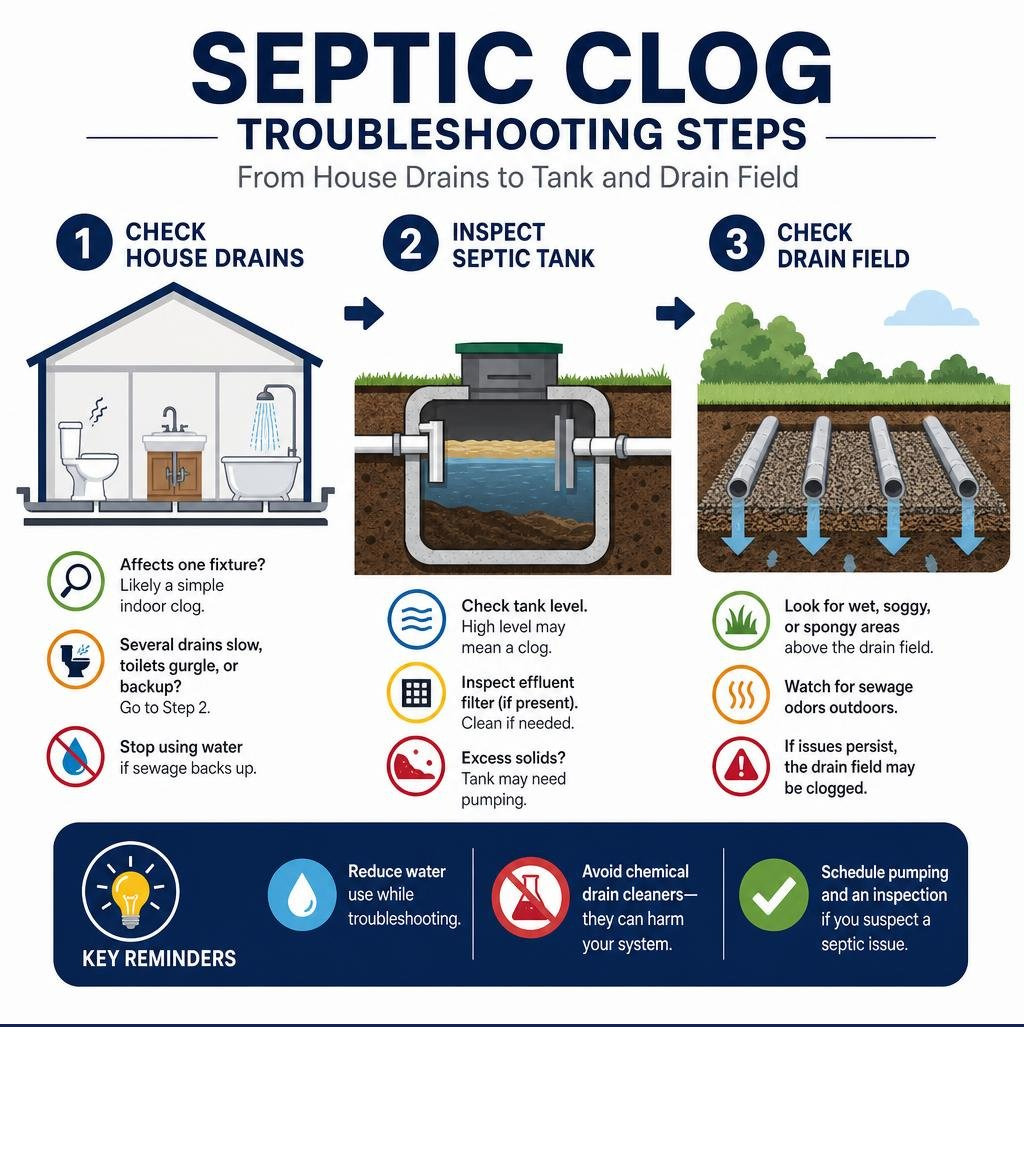
If several drains are slow, toilets gurgle, or sewage backs up into basements and tubs, stop using water right away. First, rule out a simple indoor fixture clog by checking whether the problem affects only one isolated drain. A single slow sink or bathtub typically points to a localized branch-pipe clog that may respond safely to a plunger or manual drain snake. However, whole-house drainage sluggishness, pervasive sewage odors, or soggy ground near your septic tank or drain field signals a serious septic tank clog, blocked effluent filter, inlet baffle obstruction, or advanced drain field problem.
Avoid using harsh chemical drain cleaners under any circumstances. Caustic store-bought chemicals severely disrupt the beneficial anaerobic bacteria responsible for digesting biological waste inside the tank, and they can accelerate drain field failure. For suspected septic complications, immediately minimize water consumption and arrange professional septic tank pumping and diagnostic inspection.
As your trusted local Central Indiana provider, Blair & Norris focuses on comprehensive septic system service, cleaning, and routine septic tank pumping to help homeowners address minor issues before wastewater backups become hazardous health emergencies. I am Mack Blair, and with more than 30 years of Midwest septic experience, I have witnessed firsthand how quickly an undetected septic tank clog can disrupt a household and damage property when early warning signs are ignored.
Recognizing and Diagnosing a Septic Tank Clog

When wastewater leaves your home, it flows through a primary sewer line directly into the septic tank chamber. In a properly balanced system, heavy solid matter settles to the bottom as sludge, lighter fats and oils float to the top as a scum cap, and clear liquid effluent exits safely into the soil absorption field. Natural anaerobic bacteria digest up to 50 percent of the organic solids within this airtight chamber. Following the EPA guide to septic system care is essential to preserve this delicate biological ecosystem and protect groundwater resources across Central Indiana.
When a severe blockage forms within the plumbing or at the tank entrance, wastewater has nowhere to escape. Recognizing the warning signs of a septic system backup early helps you prevent catastrophic interior property damage, structural rot, and expensive environmental remediation. Understanding wastewater flow clarifies why early detection is critical: every additional gallon introduced from sinks, showers, dishwashers, and laundry appliances increases hydraulic pressure against the obstruction, forcing contaminated blackwater backward into your lowest living spaces.
Key warning signs of an developing septic clog include:
- Multiple plumbing fixtures backing up simultaneously across different bathrooms, utility sinks, or basement drains.
- Distinct bubbling or gurgling noises in toilets and sink traps whenever a washing machine, tub, or dishwasher drains.
- Persistent sewer gas and sulfur odors lingering near basement cleanouts, floor drains, the underground tank cover, or the absorption field.
- Spongy ground, standing gray water, or pooling effluent over your underground tank lid or absorption trenches.
- Pervasive slow drainage patterns that continue throughout the entire house despite clearing local surface traps.
Signs of a Main Pipe vs. Septic Tank Clog
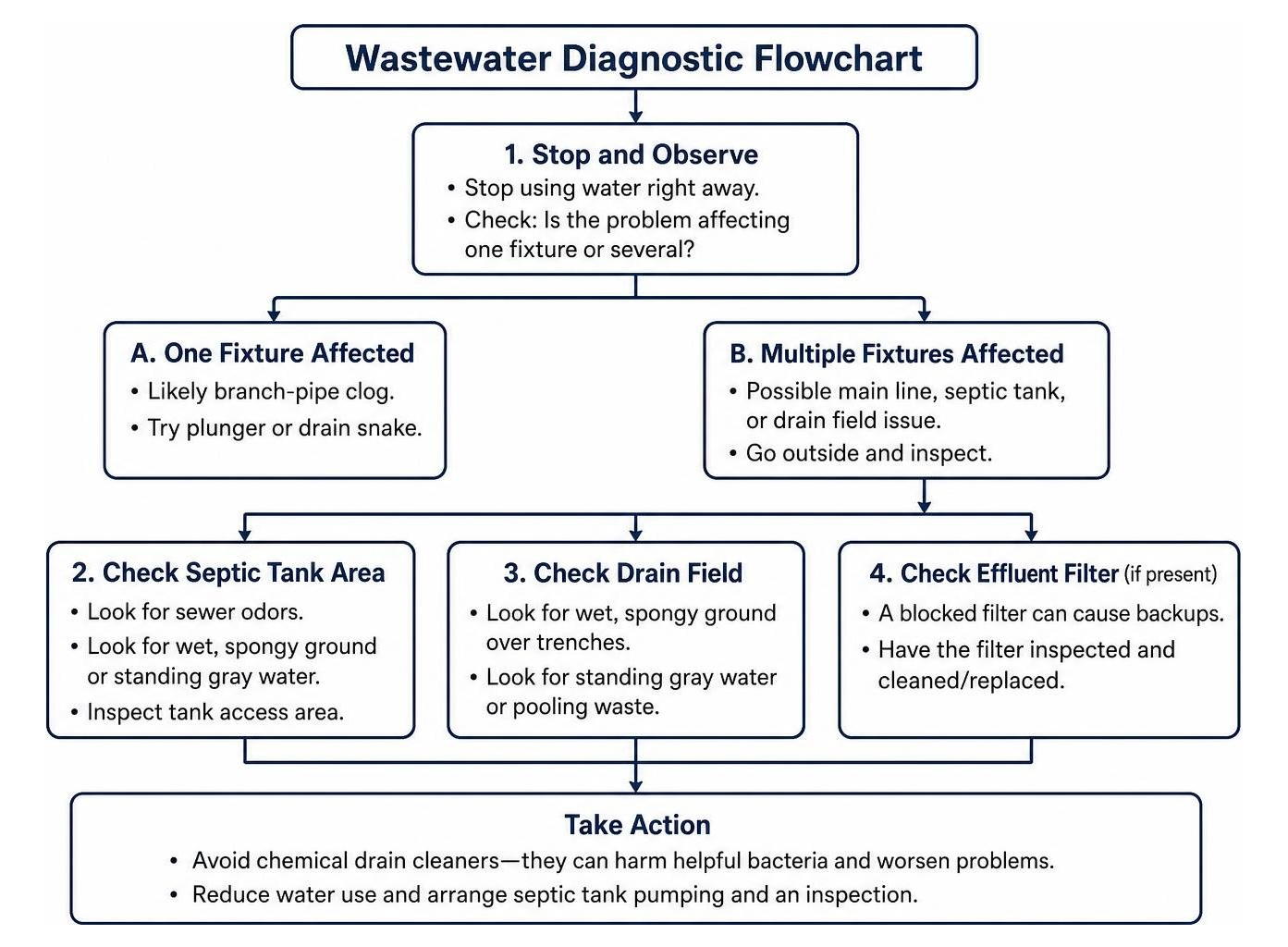
Before assuming your underground tank has failed completely, conduct the standard one-fixture diagnostic test. If only your kitchen sink drains slowly while every bathroom operates smoothly, you are dealing with an isolated branch pipe clog. Conversely, when toilets, floor drains, and bathtubs stall together, the restriction sits either in the main building sewer pipe, the inlet baffle tee, or within the septic tank itself.
| Symptom Indicator | Localized Pipe Clog | Main Sewer Line Blockage | Septic Tank or Drain Field Failure |
|---|---|---|---|
| Affected Fixtures | Single isolated drain | Multiple lowest-level drains | Whole-house fixtures stall |
| Drain Sounds | None or minor localized trickle | Gurgling in basement drains | Deep bubbling across all toilets |
| Yard Conditions | Normal dry soil | Normal dry soil | Pooling wastewater or spongy turf |
| Odor Location | Near the specific fixture drain | Basement cleanout access | Yard, absorption field, and home |
| Water Usage Impact | Isolated to fixture use | Backs up during heavy run | Backs up immediately during any use |
Common Causes of Drain Pipe and Tank Blockages
Septic system blockages usually develop gradually over time due to accumulated debris, improper disposal habits, or structural degradation. Recognizing common septic tank issues can prevent costly disruptions and emergency pump-outs down the road.
Primary causes of tank and line obstructions include:
- Flushed Non-Biodegradables: Wipes labeled flushable, feminine hygiene products, facial tissues, paper towels, and dental floss never break down in anaerobic environments. They snag on internal pipe joints and create dense physical mats that choke incoming waste.
- Fats, Oils, and Grease (FOG): Warm kitchen grease congeals as it cools inside the main inlet line, narrowing pipe diameter and restricting wastewater flow into the tank.
- Garbage Disposal Overuse: Kitchen food grinders deposit pulverized food solids into the tank, accelerating sludge buildup by 30 to 50 percent and overwhelming natural digestion.
- Inlet Baffle Deterioration or Blockage: The inlet baffle directs incoming waste downward beneath the floating scum layer. If a concrete baffle deteriorates or a PVC tee clogs with wipes, incoming sewage halts immediately at the tank boundary.
- Invasive Tree Root Intrusion: Tree and shrub roots naturally seek out moisture and mineral nutrients within pipe seams, creating dense internal webs that trap toilet paper and solids.
Safe DIY Troubleshooting vs. The Dangers of Chemical Cleaners

When household drains become sluggish, many homeowners instinctively grab whatever corrosive liquid chemical is stored under their sink. However, chemical fixes routinely trigger severe, irreversible damage to residential septic systems. Understanding the difference between safe mechanical clearing methods and harmful chemical treatments preserves your plumbing infrastructure, protects your bacterial colonies, and saves thousands of dollars on avoidable repairs.
Safe DIY Methods to Relieve a Septic Tank Clog
If you choose to troubleshoot a clog yourself, stick strictly to non-invasive mechanical solutions that clear physical obstructions without altering the biological chemistry of the tank. Learning how to clean a septic tank filter is an exceptional starting point for routine homeowner maintenance:
- Mechanical Plunging: Utilize a heavy-duty flange plunger on toilets or a flat rubber cup plunger over sink and shower drains. Plunging creates focused hydraulic pressure that can dislodge localized soft blockages near fixture traps.
- Manual Drain Snaking: Feed a manual hand snake or auger through an accessible cleanout fitting or fixture drain to clear hair, lint, or paper obstructions located close to the home’s perimeter.
- Rinsing the Effluent Filter: If your septic tank is equipped with an outlet effluent filter, accessing the outlet tee and carefully spraying the mesh screen with a garden hose directly back into the inlet compartment resolves whole-house sluggishness in minutes.
- Applying Septic-Safe Biological Enzymes: Adding natural bacterial enzyme supplements to household drains helps digest lingering organic buildup along pipe walls without disturbing pH levels or killing beneficial microbes in the main chamber.
Why Chemical Cleaners Destroy Tank Biology
Pouring caustic chemical drain openers into a septic-dependent home creates serious structural and biological hazards. Commercial chemical openers rely on concentrated sodium hydroxide (lye) or sulfuric acid to dissolve obstructions. While these harsh compounds may burn through localized hair clogs, they act like massive doses of broad-spectrum antibiotics inside your septic tank.
Introducing harsh household chemicals disrupts natural anaerobic digestion, killing the beneficial microbes responsible for liquefying solid waste. When bacterial colonies collapse, undigested solids and grease fail to settle into sludge and scum layers. Instead, raw particulate matter remains suspended and flows directly into the soil absorption field. This leads to plugged soil pores, irreversible drain field failure, and hazardous groundwater contamination that requires complete system replacement.
Drain Field Clogs and Structural System Failures
When excessive waste solids escape an unpumped or neglected tank, they travel directly into the underground soil absorption field. Over time, heavy biological loads form a dense, waterproof layer of anaerobic bacteria, polysaccharides, and organic sediment known as biomat along the trench beds. While a thin biomat layer is a natural component of wastewater treatment, excessive accumulation prevents liquid effluent from percolating into the subsoil, creating stubborn backups throughout the home.
Statewide health and environmental regulations, including the Indiana Department of Health residential sewage guidelines, emphasize proper soil absorption to keep untreated sewage from pooling on residential lawns or polluting local drinking aquifers. Understanding the severe health hazards associated with surfacing wastewater reinforces why preventative septic maintenance cannot be postponed.
Warning Signs of Drain Field Biomat and Pipe Obstruction
A clogged drain field produces distinct surface symptoms that differ from simple indoor pipe obstructions:
- Yard soil directly over the absorption trenches feels soft, wet, or spongy underfoot during dry weather.
- Unusually lush, dark green grass grows in distinct stripes along underground trench lines due to excess fertilization from untreated effluent.
- Gray water or black wastewater ponds on the lawn surface, generating intense sewage odors.
- The distribution box tilts or shifts out of level, overloading a single trench while starving others.
- Nearby private drinking water wells face severe contamination risks from untreated pathogens and nitrates surfacing in the surrounding soil.
Professional Diagnostic and Clearing Solutions
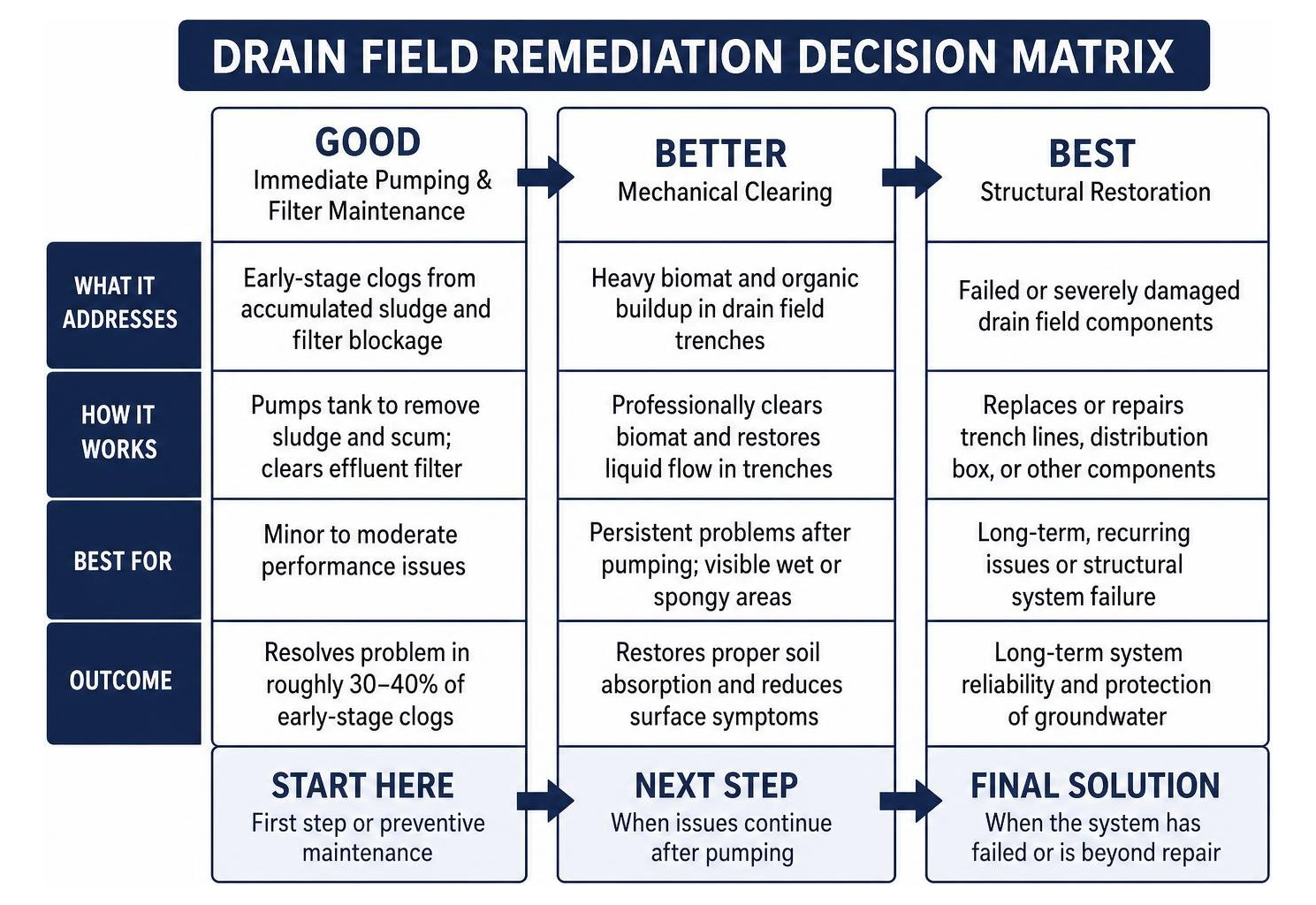
When a drainage restriction extends beyond a basic branch pipe, evaluating your options through a structured good, better, best approach helps you select the most practical and cost-effective remedy:
- Good Option (Immediate Pumping and Filter Maintenance): Scheduling professional septic tank pumping removes accumulated sludge and scum layers while cleaning clogged effluent filters. Pumping the tank first resolves drainage problems in roughly 30 to 40 percent of early-stage drain field clogs by relieving hydraulic pressure and allowing saturated soil lines time to rest.
- Better Option (Hydro-Jetting and Distribution Box Leveling): Certified technicians utilize specialized high-pressure water jetting lines to scour heavy mineral scale, grease buildup, and soft root obstructions from lateral pipes without excavating your lawn. Releveling a tilted distribution box ensures effluent distributes evenly across all absorption trenches, preventing single-line overload.
- Best Option (Mechanical Soil Aeration and Advanced Remediation): For severely compacted soil and dense biomat layers, professional mechanical aeration injects compressed air directly into the subsoil profile, fracturing hardpan and restoring natural percolation. If your system requires comprehensive diagnostic remediation, pairing advanced techniques with our dedicated emergency septic repair services provides the precision needed to save your system.
On advanced well drilling and deep site projects, our crews utilize specialized Mud Puppy equipment for clean mud recycling and drilling, protecting the surrounding yard and keeping environmental disturbance to an absolute minimum.
Choosing a Trusted Septic Service Partner
Resolving a persistent plumbing stoppage requires clear diagnostics, honest assessments, and professional pumping equipment. Blair & Norris has served Central Indiana homeowners with dependable well and septic maintenance for over 75 years. As a family-owned business, we believe in straightforward communication, ethical work, and 24/7 live phone support so you are never left stranded during an emergency.
Whether you need diagnostic help or routine tank maintenance, our licensed team focuses strictly on septic system service, cleaning, and professional pumping. We encourage every homeowner to read the verified Google Reviews for Blair & Norris Well and Pump Services to see how our family approaches every service call. When you need dependable tank service, schedule our professional septic pumping service to keep your waste system operating reliably.
Frequently Asked Questions About Septic Clogs
Can you use chemical drain openers in a septic system?
No. Chemical drain openers contain caustic substances like lye and sulfuric acid that destroy the beneficial bacteria in your septic tank. Without active bacteria, organic solids cannot break down, leading to rapid sludge buildup, filter blockages, and costly drain field failures.
How do I know if my clog is in the house pipe or the septic tank?
Perform the simple one-fixture test. If only one sink, shower, or toilet drains slowly, the obstruction is located in that specific branch line. If multiple fixtures across the house run slow, bubble, or back up together, the blockage sits in the main sewer pipe, inlet baffle, or septic tank.
How often should a septic tank be pumped to prevent severe clogs?
Most residential septic tanks should be professionally pumped every 3 to 5 years. Homes with garbage disposals, large families, or smaller tanks may require pumping every 2 to 3 years to prevent solid sludge from reaching the outlet pipe and ruining the drain field.
Conclusion
Catching the early warning signs of a plumbing obstruction protects your home from unsanitary sewage backups, structural water damage, and expensive yard excavations. Always prioritize mechanical snaking, effluent filter cleaning, and biological care over corrosive chemical drain openers that destroy tank bacteria. Routine maintenance and scheduled pumping remain the most effective ways to extend the lifespan of your septic system.
If your drains are running slow or your toilets have started gurgling, let our experienced team help. As your trusted local Central Indiana provider, Blair & Norris is ready to deliver fast, ethical, and dependable septic cleaning and pumping. Contact Blair & Norris today for a reliable estimate and keep your home plumbing flowing smoothly year after year.