
When Silence Means Trouble: Understanding Frozen Pipes
How to defrost frozen house pipes safely involves turning off your main water supply, opening the frozen faucet, and applying gentle heat using a hair dryer, heating pad, or space heater—never an open flame. Work from the faucet back toward the frozen section, allowing melting water to escape.
Quick Steps to Defrost Frozen Pipes:
- Shut off the main water supply to prevent flooding if the pipe bursts
- Open the affected faucet to relieve pressure and let water drain
- Apply gentle heat using a hair dryer (30-45 minutes), electric heating pad, or space heater
- Work from the faucet backward toward the frozen section
- Never use open flames like blowtorches or propane heaters
It’s a cold Indiana morning. You turn on the kitchen faucet and hear… nothing. That silence is a homeowner’s winter nightmare: frozen pipes.
Pipes experience increased risk sharply around 20°F, especially with wind exposure/poor insulation, like crawl spaces, attics, and exterior walls. The real danger isn’t the ice, but the pressure it creates. As water freezes, it expands with a force that can burst pipes and flood your home.
The good news is you can often thaw frozen pipes yourself. The key is using gentle, consistent heat and avoiding dangerous shortcuts like open flames, which can cause fires or make pipes rupture.
I’m Mack Blair. With over 30 years of experience with Central Indiana water systems, I’ve helped countless homeowners with frozen pipes. This guide will show you how to defrost frozen house pipes safely, spot the warning signs, and prevent future freezes.
First Signs of Trouble: Identifying a Frozen Pipe and Understanding the Risks
Suspecting a frozen pipe early is key. Knowing the signs can mean the difference between a quick fix and thousands in water damage.
What are the signs that my pipes are frozen?
The most obvious sign is no water flow from a faucet. You might get a trickle or hear gurgling. If only one faucet is affected, it’s a localized freeze. If no faucets work, your main service line could be frozen.
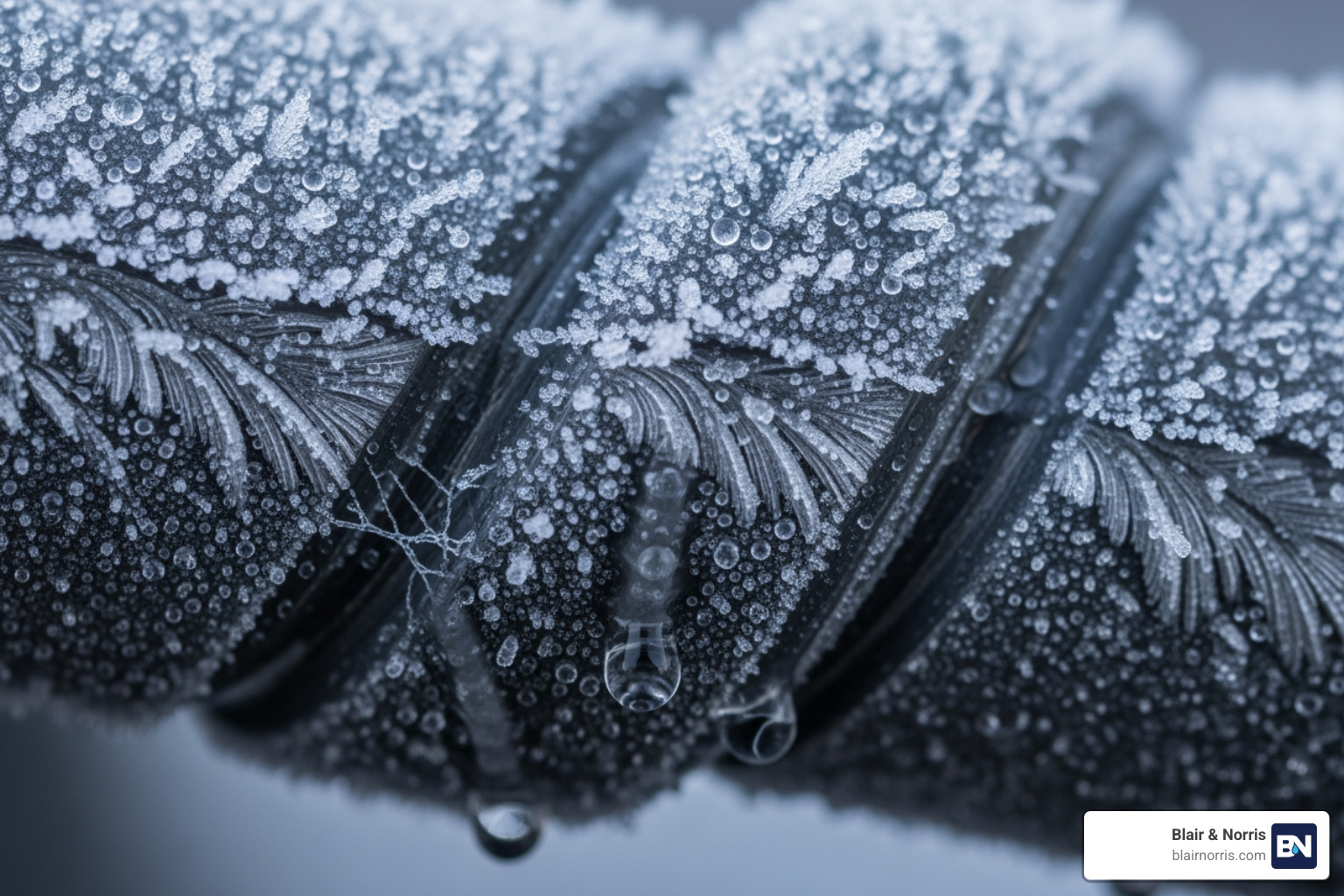
Visible frost or condensation on exposed pipes is another dead giveaway. Check your basement or crawl space for pipes covered in frost or that feel unusually cold. Cracks or bulges are a serious sign that the pipe is already damaged.
Listen for strange sounds like whistling or banging, which can signal ice in the pipes. Foul odors from drains can indicate a frozen sewer line.
Why do pipes freeze?
Water expands when it freezes, creating incredible force. This ice creates a blockage, but the real danger is the pressure buildup between the ice and a closed faucet. With nowhere to go, the expanding ice pushes against the pipe walls until they burst.
At what temperature do pipes freeze?
While water freezes at 32°F, the real danger zone for pipes starts at 20°F (-6°C). Several hours at this temperature puts unprotected pipes at risk, especially in vulnerable spots like crawl spaces, attics, garages, and exterior walls. Even pipes under sinks against an outside wall can freeze. Outdoor hose bibs and sprinkler systems are also at high risk and must be winterized.
What are the risks associated with frozen pipes?
The biggest risk is a burst pipe. A weakened pipe often bursts during the thaw when water pressure returns, flooding your home. The resulting water damage can destroy floors, walls, and furniture, with repair bills reaching tens of thousands. After the flood, mold and mildew can begin quickly—sometimes within 24–48 hours under the right conditions.
This is why learning how to defrost frozen house pipes safely and acting on the first warning signs is so critical.
Immediate Action Plan: What to Do the Moment You Suspect a Freeze
If you suspect a frozen pipe, act fast to prevent a minor freeze from becoming a major flood. Here’s what to do.
Step 1: Shut off the main water supply
First, find and turn off your home’s main water shutoff valve. This is your best defense against a flood and is usually in the basement or crawl space where the main line enters the house. This is critical because if the pipe is already cracked, it will leak as it thaws. If you don’t know where your shutoff valve is, find it now—before an emergency.
Step 2: Open the frozen faucet
With the main water off, open the hot and cold handles of the affected faucet. This step relieves pressure as the ice melts and provides an escape route for melting water and steam. If you cannot shut off water or cannot access the valve, stop and call a professional.
Step 3: Check for bursts
Before applying heat, carefully inspect visible sections of the pipe for cracks, bulges, or leaks. A burst pipe might not leak while frozen but will gush water as it thaws. If you see any damage, call a professional immediately. Burst pipe = Emergency, call now!
With these safety steps done, you can begin thawing. The goal is to defrost frozen house pipes safely and gradually—never rushing the process.
The Main Event: How to Defrost Frozen House Pipes Safely and Effectively
With the water off, faucet open, and pipe inspected, it’s time to thaw the frozen pipe. The golden rule is to use patience and gentle, consistent heat. Rushing with extreme heat will only cause more problems.
Always start thawing near the faucet and work back towards the blockage. This gives melting water an escape route. Heating the middle of a freeze first can trap water and build dangerous pressure.
Safe DIY Methods for How to Defrost Frozen House Pipes
For pipes you can reach, you have several options.
A hair dryer is a top choice for how to defrost frozen house pipes. Use low or medium heat, keeping it moving over the pipe. It may take 30-45 minutes, but it’s safe and effective.
An electric heating pad offers gentle, consistent heat. Wrap it around the pipe, ensuring it’s safe for damp areas.
A portable space heater can warm the air around a pipe in a garage or basement. Place it at least three feet from flammable items and never leave it unattended.
For small freezes, try the hot towel method. Wrap the pipe with towels soaked in hot (not boiling) water, replacing them as they cool.
Methods to Avoid at All Costs
Never use open flames like blowtorches or propane heaters. Besides the fire risk, rapid heating creates steam, which can instantly rupture the pipe. Also avoid high-heat devices like industrial heat guns that can melt pipes or start fires.
What If the Pipe is Inaccessible?
If the frozen pipe is in a wall or under a slab, increase your thermostat to 69-72°F or higher. This slowly warms the house and is the safest approach for hidden pipes. Open cabinet doors under sinks on exterior walls to let warm air circulate. A space heater in the room can also help; keep it a safe distance from flammable materials.
If no improvement after \~60 minutes on accessible pipe or you can’t find the freeze, call Blair & Norris. For more safety tips, review the Red Cross guide.
Beyond the Thaw: Special Cases and Future-Proofing Your Plumbing
Congratulations on thawing your pipes! Now, it’s time for prevention to avoid a repeat incident.
How to Prevent Pipes from Freezing in the Future
Winterizing your plumbing is essential in Indiana.
Insulation is your best defense. Use inexpensive foam pipe sleeves on pipes in unheated areas like basements and attics. For very vulnerable pipes, use UL-listed heat tape or cable, following the manufacturer’s instructions.
Seal cracks and drafts near pipes with caulk and weatherstripping.
Before the first freeze, disconnect and drain outdoor hoses. Close the interior shutoff valves for outdoor faucets, then open the outside spigots to drain them completely.
During extreme cold (below 20°F), let faucets drip overnight. A slow trickle keeps water moving and prevents freezing.
Maintain your thermostat at 55°F (13°C) or higher, even when you’re away. If traveling, have a neighbor check on your home.
For more detailed advice custom to our Central Indiana winters, check out our guide on preventing frozen pipes in Indiana homes.
Special Plumbing Systems: Irrigation, Pools, and Sewer Lines
Irrigation and pool lines must be winterized before the first freeze, which usually involves blowing out the lines with compressed air. Hire a professional if you’re not comfortable; it’s cheaper than replacing burst lines.
Sewer lines rarely freeze, but signs include foul odors and multiple backed-up drains. Thawing these buried lines usually requires professional help.
Will Homeowner’s Insurance Cover the Damage?
Most homeowner’s insurance covers “sudden and accidental” damage from burst pipes. However, insurers expect you to take preventative measures and may deny a claim if they find negligence.
Policy coverage varies widely, so review your policy or call your agent to understand what’s covered. If damage occurs, document everything with photos, videos, and receipts. Good documentation is crucial for a smooth insurance claim.
Frequently Asked Questions about Thawing Pipes
Dealing with frozen pipes is stressful. Here are answers to the most common questions I’ve heard in my 30 years of helping Indiana homeowners.
How long does it typically take for frozen pipes to thaw?
With a hair dryer on an accessible pipe, it typically takes 30 to 45 minutes. The time varies based on the pipe’s location, material, and the extent of the freeze. Relying on a natural thaw is risky and can take hours or even days.
Will frozen pipes thaw on their own without bursting?
It’s possible, but it’s a huge gamble. The longer a pipe stays frozen, the more pressure builds, increasing the risk of a burst. Even if it doesn’t burst, the pipe is weakened, making it a ticking time bomb. Proactively and safely thawing the pipe is always the best option.
When should I call a professional plumber?
While DIY is great, sometimes calling a professional is the smartest move. Call us if:
- A pipe has already burst. Shut off the main water supply and call immediately. This is an emergency.
- You can’t locate the freeze. Professionals have tools like thermal imaging to find the blockage without damaging your walls.
- The pipe is inaccessible. We have the right equipment to safely thaw pipes inside walls or under slabs.
- Your DIY efforts are failing. If you’ve made no progress after an hour, the problem may be more extensive than you realize.
- You’re uncomfortable or unsure. There’s no shame in calling for expert help.
- All your faucets are dry. This could be a frozen main service line, a job that requires a professional.
We offer 24/7 live phone support. When you call Blair & Norris, you talk to a real person who can help, not a voicemail system. Day or night, we’re here for you.
Conclusion
A frozen pipe is stressful, but it doesn’t have to be a catastrophe. By staying calm and using gentle heat sources like a hair dryer, you can safely manage the situation. Never use an open flame, as this can lead to a burst pipe or a house fire. For 24/7 emergency assistance, contact Blair & Norris.
After the thaw, focus on prevention. Insulating pipes, sealing drafts, and winterizing outdoor faucets are simple steps that can save you thousands in future repairs. Prevention is far better than dealing with a flooded basement.
However, some situations require a professional. Call for help if the pipe is inaccessible, you can’t find the freeze, or if a pipe has already burst. A burst pipe is an emergency.
That’s where we come in. The team at Blair & Norris has been serving Indianapolis and Central Indiana communities for over 75 years. We offer 24/7 live phone support—yes, a real person answers—because we know plumbing emergencies don’t wait for business hours. Whether you need help with how to defrost frozen house pipes, emergency repairs for a burst line, or expert advice on winterizing your plumbing system, we’re here to help with the ethical, high-quality service our family has built our reputation on.
Don’t wait until you’re standing in ankle-deep water to get help. Contact us today for fast water line repair and expert solutions that protect your home and give you peace of mind all winter long.