
Why Knowing How Often a Septic Tank Should Be Pumped Can Save You Thousands
How often should a septic tank be pumped depends on two main factors: the size of your tank and the number of people in your household. Here is a quick answer:
| Household Size | 1,000-Gallon Tank | 1,500-Gallon Tank |
|---|---|---|
| 1-2 people | Every 5-7 years | Every 8-10 years |
| 3-4 people | Every 2.5-3 years | Every 3.5-4 years |
| 5-6 people | Every 1-2 years | Every 2-3 years |
The EPA recommends pumping every 3 to 5 years for most households. But that range is wide enough to be nearly useless for your specific situation. A single homeowner with a large tank has very different needs than a family of six with a smaller one.
Most Central Indiana homeowners do not think about their septic system until something goes wrong. A slow drain here, a gurgling toilet there — and then suddenly a sewage backup or a soggy patch in the yard that costs far more to fix than any routine pumping ever would. Skipping routine maintenance is the single biggest cause of premature septic system failure.
The good news: staying on schedule is simple once you know what drives your pumping frequency.
I’m Mack Blair, and with over 30 years of hands-on septic experience serving Central Indiana, I have seen how a clear answer to how often should a septic tank be pumped can protect a homeowner from a repair bill that runs into the tens of thousands. In the sections below, I will walk you through exactly how to determine the right schedule for your home.
How often should a septic tank be pumped vocab explained:
The Core Problems of an Overlooked Septic System
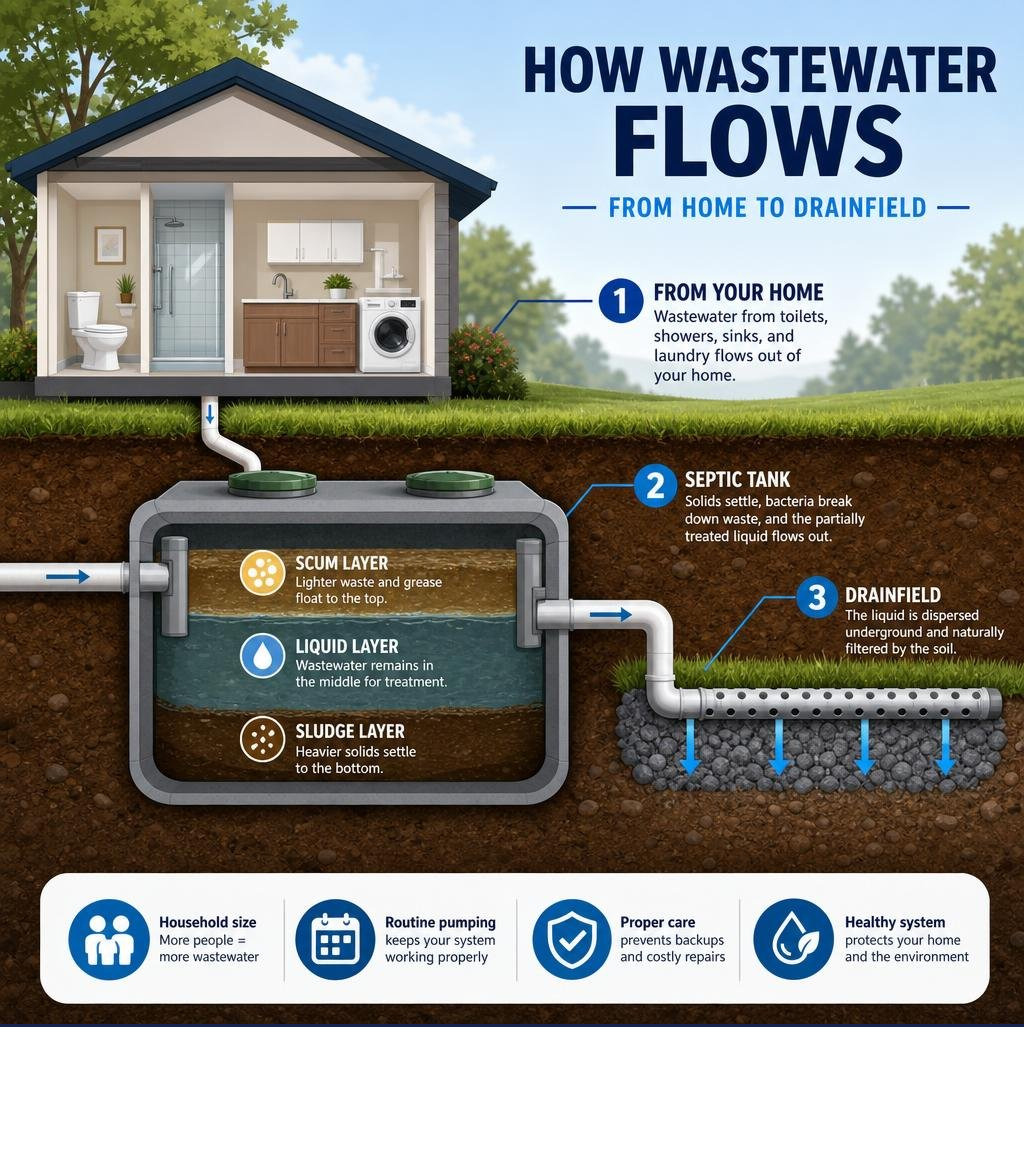
When you flush your toilet or wash a load of laundry, the wastewater does not just vanish into the ether. It flows directly into your septic tank, which is essentially a buried, watertight container designed to catch and process all your household waste. If you ignore this system, the consequences can be incredibly stressful, messy, and expensive.
Over time, solid waste accumulates at the bottom of the tank. If this waste is not pumped out, it eventually reaches the outlet pipe. Once solids escape the tank, they travel directly into your drainfield. The drainfield is a network of perforated pipes buried in gravel filled trenches. Its job is to let pre-treated liquid waste seep slowly into the soil, where natural soil microbes filter out harmful pathogens.
When heavy solids clog these perforated pipes and saturate the surrounding soil, the entire system grinds to a halt. The soil becomes compacted and waterproof, meaning liquid can no longer seep away. This is when you experience a complete drainfield failure.
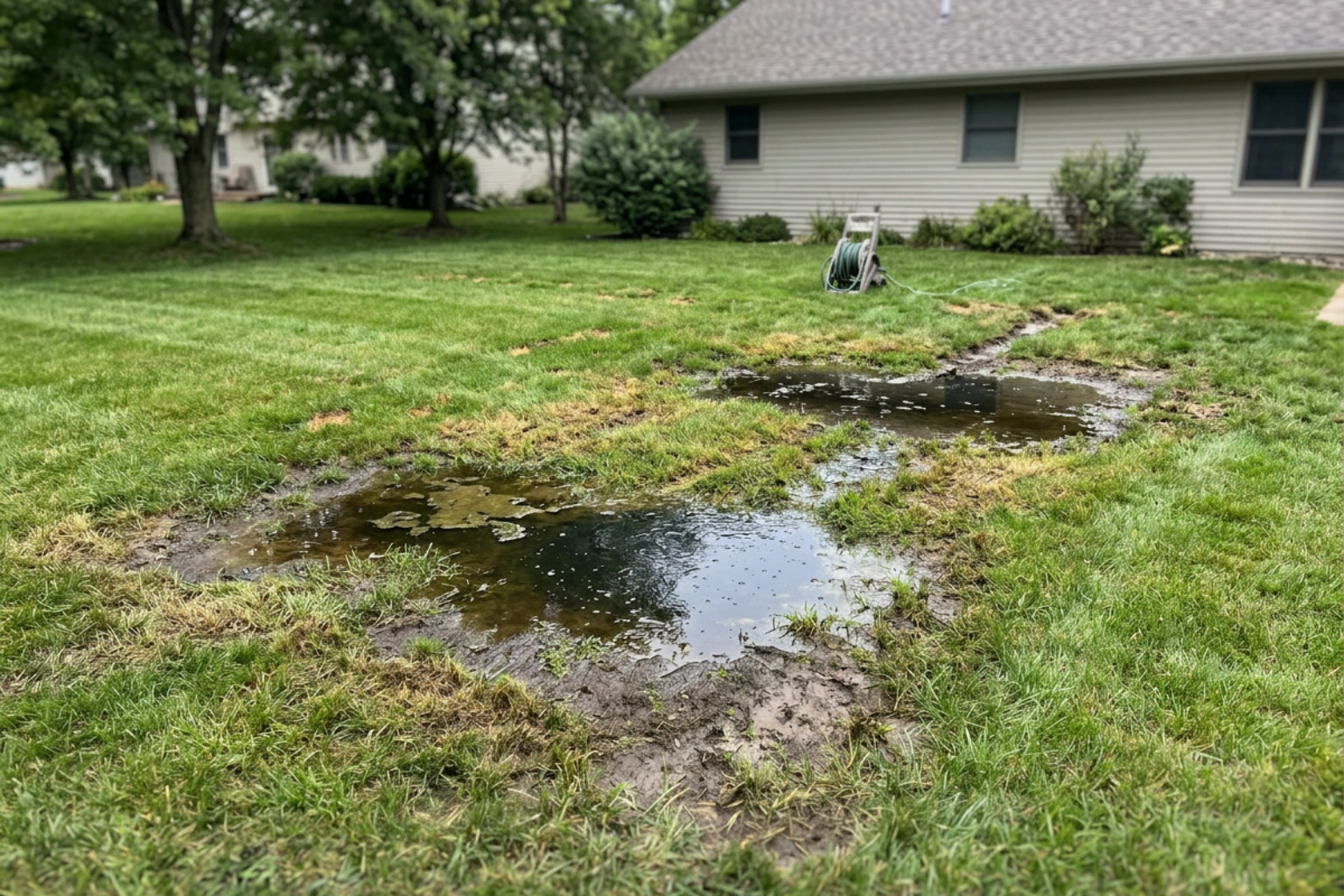
The implications of a failed drainfield are severe:
- Environmental Contamination: Untreated sewage can seep upward to the surface of your yard or downward into local aquifers. This causes serious groundwater pollution, which is a major health hazard, especially if you or your neighbors rely on private well water.
- Property Damage: Raw sewage can back up into your home through the lowest drains, ruining flooring, drywall, and personal belongings.
- Astronomical Repair Costs: While a routine septic pumping service is highly affordable, replacing a completely ruined drainfield can easily cost thousands of dollars.
Signs of a Failing Septic System and Drainfield Damage
You do not want to wait until sewage is bubbling up into your bathtub to realize you have a problem. Your system will almost always whisper before it screams.
To protect your home, keep a close eye out for these common signs of a failing septic system:
- Slow-Draining Fixtures: If your sinks, showers, and bathtubs are taking a remarkably long time to empty, and commercial drain openers do not help, the bottleneck is likely deep inside your septic tank or drainfield.
- Gurgling Pipes: If you hear strange gurgling or bubbling noises coming from your pipes when you flush the toilet or run the washing machine, it means air is trapped in the plumbing because the system is full.
- Foul Odors: A healthy septic system should keep all sewer gases contained. If you step out into your yard and smell rotten eggs or raw sewage, your tank may be overflowing or venting improperly due to excessive sludge.
- Pooling Water and Lush Green Grass: If you notice soggy patches or standing water over your drainfield, or if the grass over your septic tank is suddenly much greener and faster growing than the rest of your lawn, the soil is overloaded with liquid waste.
If you notice any of these warning signs, it is time to take action immediately. Ignoring them will only lead to a much larger emergency.
Sludge vs. Scum: Understanding the Layers Inside Your Tank
Inside your septic tank, a natural process of separation occurs. When wastewater enters the tank, it naturally divides into three distinct layers:
- The Scum Layer (Top): This layer consists of lighter materials that float, such as grease, oils, fats, and toilet paper binders.
- The Effluent Liquid (Middle): This is relatively clear water that sits in the middle. It is the only part of the waste that should ever leave the tank and enter your drainfield.
- The Sludge Layer (Bottom): This layer contains heavy organic solids that sink to the bottom. Over time, anaerobic digestion (beneficial bacteria living in the tank) breaks down up to 50 percent of these solids, turning them into liquids and gases. However, the remaining solids build up as a thick mud.
Your septic tank is equipped with baffles and a T-shaped outlet. The primary job of these components is to keep the floating scum and the settled sludge inside the tank while allowing only the clear effluent liquid to flow out.
If the sludge layer grows too deep, or the scum layer becomes too thick, they will block the baffles or slip through the T-shaped outlet. When this happens, solids escape into the drainfield, leading to the exact clogging and failure scenarios described above. This is why knowing how often should a septic tank be pumped is so vital to system health.
How Often Should a Septic Tank Be Pumped?
Determining the exact pumping frequency for your home is not a matter of guesswork. It is a calculation based on how your household uses water and the physical capacity of your septic system.
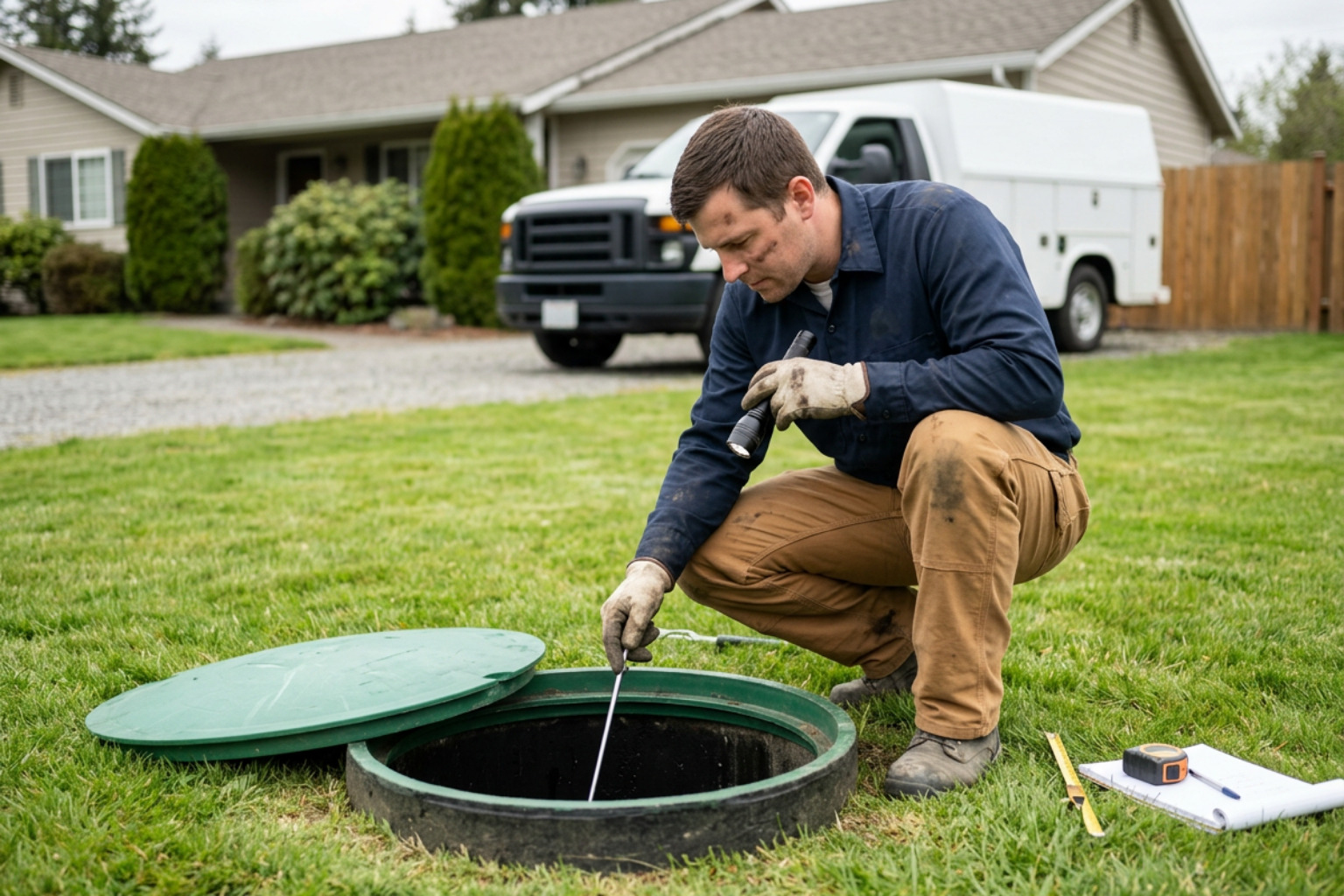
According to the EPA septic care guidelines, a standard household septic tank should be inspected at least every three years, and pumped every three to five years. However, this is just a general baseline. The actual rate at which your tank fills up depends on three main variables:
- Septic Tank Capacity: A smaller tank has less space to store solids, meaning it must be pumped more frequently.
- Household Size: More people living in a home means more wastewater entering the system daily, which accelerates solids accumulation.
- Total Wastewater Volume: High water usage habits, such as running multiple showers or doing several loads of laundry in a single day, push solids through the tank faster and reduce the time they have to settle properly.
Calculating Pumping Frequency Based on Tank and Household Size
To help you visualize your ideal maintenance schedule, we have put together a clear, data-driven schedule. This table is based on standard accumulation rates and aligns with our septic tank pumping frequency guide as well as The Septic Guide 2026 schedule.
| Tank Size (Gallons) | 1 Occupant | 2 Occupants | 3 Occupants | 4 Occupants | 5 Occupants | 6 Occupants |
|---|---|---|---|---|---|---|
| 750 | 9.0 Years | 4.2 Years | 2.6 Years | 1.8 Years | 1.3 Years | 1.0 Year |
| 1,000 | 12.0 Years | 5.9 Years | 3.7 Years | 2.6 Years | 2.0 Years | 1.5 Years |
| 1,250 | 15.6 Years | 7.5 Years | 4.8 Years | 3.4 Years | 2.6 Years | 2.0 Years |
| 1,500 | 18.9 Years | 9.1 Years | 5.9 Years | 4.2 Years | 3.3 Years | 2.6 Years |
As you can see, a standard 1,000-gallon tank serving a typical family of four should be pumped roughly every 2.6 years (or rounded to every 2.5 to 3 years) to prevent the sludge layer from encroaching on the outlet pipe. If you have a larger 1,500-gallon tank with the same family of four, you can safely extend that interval to about 4 years.
How Garbage Disposal Use and Water Habits Impact the Schedule
The numbers in the table above assume standard household water usage. However, certain modern conveniences and daily habits can dramatically shorten your pumping interval.
Garbage Disposal Usage: Using a kitchen garbage disposal is one of the quickest ways to overload your septic system. When you grind up food scraps, you are sending heavy, non-biodegradable organic solids directly into your tank. These solids do not break down easily through anaerobic digestion.
According to MassDEP septic system regulations, if your home has a garbage disposal, your septic tank should be pumped every year, or at least your pumping interval should be reduced by 30 to 50 percent. Food waste adds a massive amount of sludge and scum, which can quickly bypass your tank’s baffles.
Water Usage Habits: Your septic tank needs time to let solids settle to the bottom and scum float to the top. If you flood the system with too much water at once, the wastewater rushes through the tank too quickly, carrying suspended solids directly into your drainfield.
To prevent this, implement smart water conservation habits:
- Spread Out Laundry: Avoid doing five loads of laundry on Saturday morning. Instead, space them out throughout the week to give your system time to recover.
- Fix Leaks Promptly: A single leaky toilet can waste up to 200 gallons of water per day, constantly flushing your septic tank and preventing proper settling.
- Watch Water Softener Backwash: Water softeners can discharge 50 to 100 gallons of salty water per regeneration cycle, adding extra hydraulic load to your system.
The Risks of DIY Septic Maintenance and Chemical Additives
With the rise of internet tutorials, many homeowners are tempted to tackle septic tank maintenance themselves. However, attempting to open, inspect, or pump a septic tank without professional training and equipment is incredibly dangerous and can lead to severe consequences.
First and foremost are the physical hazards. Septic tanks are confined spaces filled with toxic gases, including hydrogen sulfide, methane, and carbon dioxide. These gases can cause immediate asphyxiation and unconsciousness. Merely leaning over an open septic tank can cause you to pass out and fall in, which is almost always fatal.
Additionally, older concrete or steel tanks can suffer from structural deterioration. Walking over or digging around an unmaintained tank can cause a sudden cave-in, resulting in severe physical injury or death. Finally, there are strict environmental laws regarding how septic waste must be handled and disposed of. Dumping septage illegally can result in massive environmental fines and permanent damage to local ecosystems.
Why You Should Avoid Septic Tank Additives and Cleaners
You have probably seen advertisements for chemical solvents, yeast additives, or bacterial enzymes that promise to “eliminate the need for pumping.” It sounds like an easy, cheap solution, but the reality is quite different.
According to the Virginia Tech Extension septic best practices, septic tank additives are generally unnecessary and can actually ruin your system:
- No Proven Benefit: A healthy septic system already contains all the natural bacteria it needs to break down waste. Adding more enzymes or bacteria does not speed up the process in any meaningful way.
- Emulsifying Solids: Some chemical additives act as solvents, breaking up the floating scum layer and suspended sludge. While this might make the tank look cleaner, it actually allows those liquefied grease and solid particles to flow directly out of the tank and into your drainfield, where they cool, solidify, and clog the soil pores.
- Killing Beneficial Bacteria: Harsh chemical cleaners can actually kill the natural, beneficial bacteria living in your tank, halting the natural digestion process entirely.
What to Avoid Putting Down Your Drains to Protect the System
To keep your septic system running smoothly between professional pumpings, you must treat your toilets and drains with respect. Your septic system is a living biological treatment process, not a trash can.
Never flush or pour the following items down your drains:
- Flushable Wipes: Despite what the packaging claims, these wipes do not disintegrate in water. They catch on baffles, clog pipes, and rapidly fill up your septic tank.
- Grease, Fats, and Oils: Cooking grease cools down and solidifies inside your pipes and tank, creating a massive, impenetrable scum layer.
- Feminine Hygiene Products and Diapers: These items are designed to absorb liquid and expand, which will instantly clog your plumbing and take up massive space in your tank.
- Household Chemicals: Paint, gasoline, motor oil, pesticides, and excessive amounts of bleach or heavy household cleaners will kill the beneficial bacteria in your tank, stopping the breakdown of waste.
- Cat Litter and Dental Floss: Cat litter does not dissolve and adds heavy clay to your sludge layer, while dental floss acts like a net, binding solids together and wrapping around baffles.
Best Practices to Extend the Lifespan of Your Septic System
A properly maintained septic system is a major asset that can easily last for decades. By taking a proactive approach to your system’s health, you can maximize its lifespan and avoid the stress of unexpected failures.
To help you manage your system effectively, we recommend thinking of maintenance in terms of a Good, Better, and Best range of options:
- Good: Have your system professionally inspected every three years and pumped according to the standard schedule for your household size. Keep accurate records of all service dates, the name of the technician, and the volume of waste removed.
- Better: In addition to regular pumping, install a septic tank riser. Risers are durable plastic or concrete pipes that extend from the tank lid to ground level, eliminating the need to dig up your yard every time your tank needs service. You should also clean your effluent filter annually to prevent solids from escaping.
- Best: Combine regular inspections, pumping, and risers with a dedicated water conservation strategy. Install high-efficiency, low-flow toilets, faucet aerators, and high-efficiency showerheads. Ensure all roof gutters, sump pumps, and foundation drains are directed completely away from your drainfield to prevent the soil from becoming waterlogged.
How Often Should a Septic Tank Be Pumped to Maximize Lifespan?
With proper care, a conventional concrete or plastic septic tank can easily achieve a system lifespan of 30 to 50 years, while a well-maintained drainfield can last 20 to 30 years.
To reach this level of durability, routine inspections are your most powerful tool. During a professional inspection, a technician will measure the actual thickness of your sludge and scum layers. As a rule of thumb, your tank must be pumped when:
- The bottom of the floating scum layer is within 6 inches of the bottom of the outlet baffle.
- The top of the settled sludge layer is within 12 inches of the outlet baffle.
- The combined depth of sludge and scum occupies more than one-third of the tank’s total liquid capacity.
By monitoring these physical levels through regular inspections, you ensure that you pump exactly when your system needs it, maximizing the overall lifespan of your entire setup. For more detailed tips, check out our ultimate guide to septic tank maintenance.
Choosing a Professional Septic Partner in Central Indiana
When it is time to have your septic tank serviced, you want to partner with a team that respects your property, your time, and your budget. A great septic service provider does not just show up and pump out liquid; they perform a comprehensive assessment of your system’s health.
A professional septic service should always include:
- An inspection of the tank’s structural integrity, checking for cracks or leaks.
- A thorough cleaning of the inlet and outlet baffles to ensure proper flow.
- An inspection and cleaning of the effluent filter.
- Detailed documentation of the sludge and scum levels before pumping.
To understand exactly what to expect on service day, take a look at our guide on what to expect during a septic pumping service.
Why Blair & Norris is Your Trusted Local Expert
At Blair & Norris, we have spent the last 75 years building a reputation as Your Local Central Indiana Provider for honest, ethical, and high-quality water and wastewater services. As a family-owned business, we understand the unique needs of our local communities, from Indianapolis and Carmel to Noblesville, Greenwood, and beyond.
We pride ourselves on using state-of-the-art technology to deliver clean, efficient, and reliable service. For our drilling and mud-management needs, we utilize advanced Mud Puppy clean mud recycling and drilling equipment. This allows us to keep our work areas incredibly clean, recycle drilling fluids efficiently, and minimize our footprint on your property.
We believe in complete transparency and ethical service. We never recommend services or repairs you do not actually need, and our 24/7 live phone support ensures that you can always reach a real person when an emergency arises. But do not just take our word for it; you can read honest feedback from your neighbors by viewing our Google Reviews.
Frequently Asked Questions About Septic Pumping
How often should a septic tank be pumped if I live alone?
If you are a single occupant living in a home with a standard 1,000-gallon septic tank, your solids accumulation rate will be very slow. Technically, your tank might have a ten-year potential before the sludge layer reaches a critical depth.
However, we still recommend having your system inspected every three to five years. Even if the tank does not require pumping, a professional needs to check the structural integrity of the tank, inspect the baffles, and ensure the effluent filter is clean. This prevents minor mechanical issues from turning into major failures.
How can you tell if your septic tank is full and needs immediate pumping?
The most reliable way to know if your tank is full of solids is to have a professional measure the sludge depth and scum thickness.
However, if you notice slow-flushing toilets, gurgling drains, foul sewer odors in your yard, or wet, spongy soil over your drainfield, these are clear signs that your tank is overloaded and needs immediate, professional pumping to prevent a complete system backup.
Can you pump a septic tank during the Indiana winter?
Yes, we can absolutely pump septic tanks during the cold Indiana winter. While snow cover and frozen ground can make locating and digging up buried tank lids more difficult and labor-intensive, emergency pumping is always possible.
To avoid the extra hassle of winter digging, we highly recommend scheduling your routine maintenance in the late summer or autumn, or investing in a riser installation so your tank is easily accessible year-round, regardless of snow or frozen soil.
Conclusion
Determining how often should a septic tank be pumped is one of the most important responsibilities of owning a home with an onsite wastewater system. By staying ahead of the sludge build-up, practicing water conservation, and avoiding harmful additives, you can protect your property, preserve the environment, and save thousands of dollars in premature replacement costs.
Do not wait for slow drains or soggy lawns to remind you of your septic system. Whether you need a routine pump-out, a system inspection, or emergency support, our family-owned team at Blair & Norris is ready to help.
Contact Blair & Norris today for an estimate and keep your home running smoothly for years to come!