
What You Need to Know About Aeration Septic System Maintenance
Aeration septic system maintenance is the routine care required to keep an aerobic treatment unit (ATU) running safely and effectively. Here is a quick summary of what it involves:
- Professional inspections every 3 to 4 months (required by law in many states)
- Chlorine tablet refills every 4 to 8 weeks using calcium hypochlorite only
- Tank pumping every 3 to 5 years depending on household size
- Monthly homeowner checks of the control panel, alarm light, and aerator sound
- Drainfield monitoring for standing water, odors, or unusually green grass
Unlike a conventional septic system, an aerobic system uses forced oxygen to fuel bacteria that break down waste far more efficiently. That added performance comes with added responsibility. These systems have electrical components, air compressors, disinfection chambers, and spray heads that all need regular attention.
Neglect is costly. A failing aerobic system can contaminate groundwater, trigger regulatory fines, and lead to drainfield repairs that run into the thousands. The good news is that a straightforward maintenance routine keeps most systems running smoothly for 20 to 30 years.
I’m Mack Blair, and with over 30 years of hands-on septic experience serving Central Indiana, I’ve seen what proper aeration septic system maintenance can prevent. At Blair & Norris, we’ve built our reputation one well-maintained system at a time.
Aeration septic system maintenance terms simplified:
Understanding Aerobic Units and Core Wastewater Problems
To truly appreciate the value of regular maintenance, we first need to understand how these systems work and what happens when they fail. Traditional septic systems rely on anaerobic bacteria, which are microbes that survive without oxygen. These bacteria work slowly and typically only remove about 60 to 80 percent of the organic waste in the tank. This means the remaining raw sewage must be processed by the soil in your drainfield.
An aerobic treatment unit, or ATU, functions like a miniature municipal wastewater treatment plant right in your backyard. By forcing oxygen into the treatment tank using an air compressor (or aerator), we create a highly oxygenated environment where aerobic bacteria thrive. These aggressive, fast-growing bacteria break down organic waste much faster and more thoroughly than their anaerobic cousins. The result is an incredibly high effluent quality, often achieving 85 to 98 percent contaminant removal. This highly treated, clear, and virtually odorless water is much easier for the soil to absorb, which protects your drainfield and extends the overall lifespan of your system.
For a deeper dive into how these mechanisms compare to traditional setups, you can read The Ultimate Guide to Septic Tank Maintenance.
However, this high performance makes the system vulnerable to specific operational issues:
- Hydraulic Overload: Because aerobic systems process wastewater continuously, sending too much water down your drains at once (such as running multiple loads of laundry on a single Saturday) can overwhelm the system. This pushes unsettled solids out of the aeration chamber and directly into the disinfection chamber or the drainfield.
- Bacterial Die-Off: Aerobic bacteria are highly sensitive living organisms. If you pour harsh chemicals, excessive bleach, or medications down the drain, you can wipe out the entire bacterial population. Without these microbes, waste stops breaking down, solids accumulate rapidly, and the system begins to produce foul odors.
- Soil Absorption Failure: If the aerator stops working and goes unnoticed, the system reverts to an anaerobic state. Unprocessed solids then escape the tank and clog the soil pores in your drainfield, leading to ponding water, system backups, and premature drainfield failure.
To understand the broader implications of these problems and how they impact your property, you can explore the Aerobic Septic System Maintenance: The Complete Owner’s Guide.
The Risks of DIY Aeration Septic System Maintenance
It is natural for homeowners to want to save money by handling home maintenance tasks themselves. While there are a few simple steps you can take, attempting to service the mechanical and electrical components of an aerobic septic system on your own carries significant risks.
First and foremost, aerobic systems are complex. They rely on a delicate balance of mechanical parts, including air compressors, electrical control panels, submersible pumps, float switches, and visual or audible alarms. If you attempt to wire a replacement aerator or adjust float switches without professional training, you risk causing an electrical short or a complete air compressor failure.
Additionally, performing your own technical maintenance can void manufacturer warranties on expensive components like the aerator or the discharge pump. Many manufacturers require certified technicians to perform all service work to keep these warranties valid.
There are also serious safety hazards to consider. Working around an open septic tank exposes you to toxic sewer gases, such as methane and hydrogen sulfide, which can cause dizziness or unconsciousness in seconds. Furthermore, contact with raw wastewater exposes you to harmful pathogens, bacteria, and viruses.
Finally, regulatory compliance is a major factor in Central Indiana. Local health departments have strict guidelines regarding who can service these systems. In many counties, failing to submit professional inspection reports can result in code violations, expensive fines, and even legal action.
For a clear breakdown of what you can safely handle and what must be left to the professionals, check out our Essential Septic System Maintenance Tips for Homeowners and refer to the Septic System Maintenance Checklist.
Step-by-Step Guide to Aerobic Septic System Care
Proper care of an aerobic system requires a combination of monthly homeowner observations and regular professional service. Let us break down the essential components and steps involved in keeping your system in peak condition.
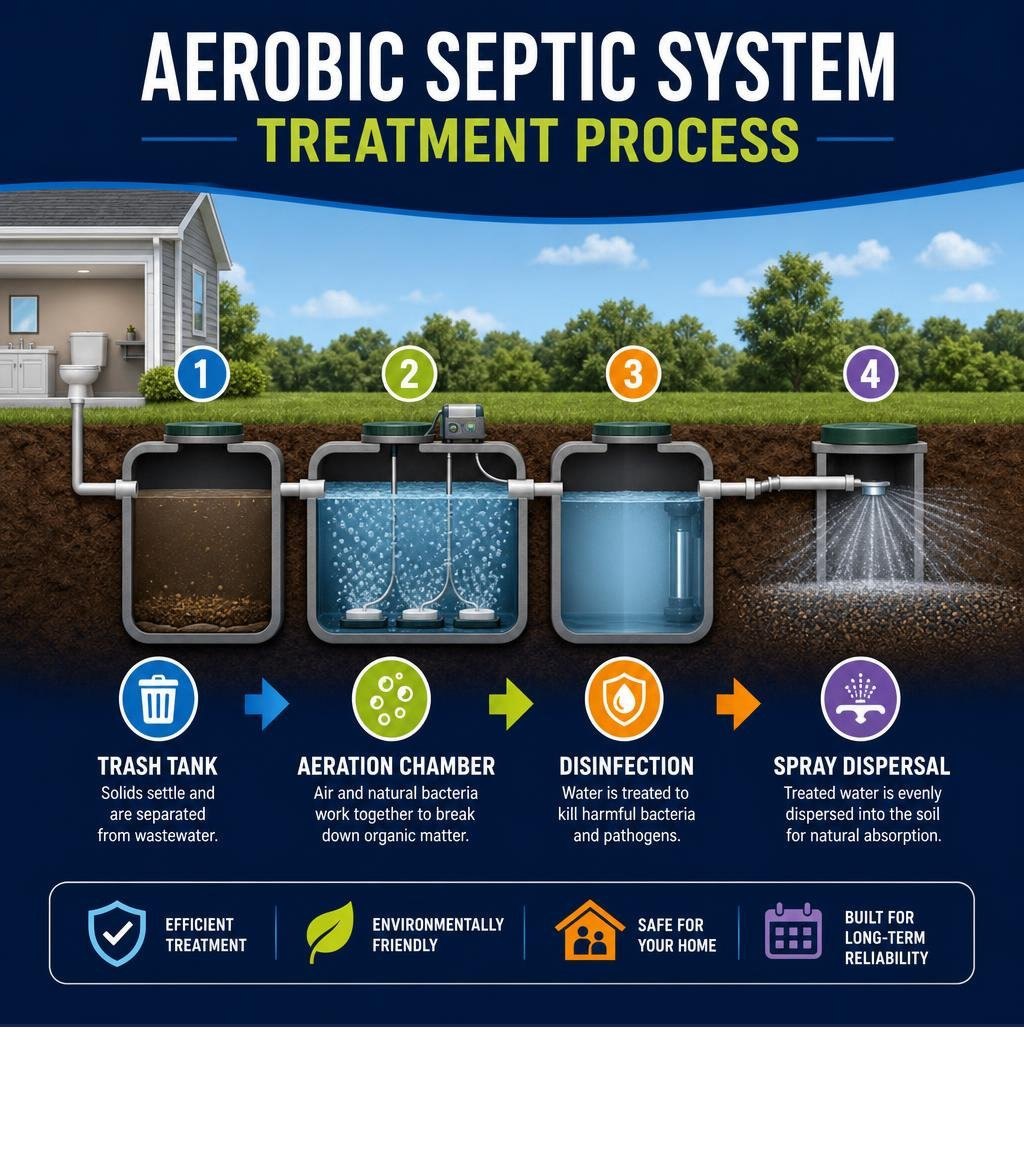
1. Understand Your Tank Chambers
Most aerobic systems utilize a multi-chamber tank design to process wastewater step-by-step:
- The Trash Tank: This is the first stop for wastewater. Heavy solids settle to the bottom, and grease floats to the top, similar to a conventional septic tank.
- The Aeration Chamber: This is the heart of the system. Here, the aerator forces air through diffusers at the bottom of the chamber, creating bubbles that mix oxygen with the wastewater to fuel the aerobic bacteria.
- The Clarifier (Settling Chamber): This chamber allows any remaining fine solids to settle out of the treated water before it moves forward. These solids are eventually returned to the aeration chamber for further treatment.
- The Disinfection Chamber: Before the clear water is discharged, it passes through a disinfection system (usually a chlorinator or UV light) to destroy any remaining harmful pathogens.
2. Manage Your Chlorine Tablets
If your system uses a tablet chlorinator for disinfection, you must check the chlorine levels every 4 to 8 weeks.
- Use Only Calcium Hypochlorite: You must only use calcium hypochlorite tablets that are specifically certified for wastewater disinfection.
- Avoid Swimming Pool Chlorine: Never use swimming pool chlorine tablets (trichloroisocyanuric acid). Pool tablets are designed to dissolve much slower and can release explosive gases when mixed with wastewater gases, creating a severe safety hazard.
3. Establish a Pumping Schedule
Even with highly efficient aerobic bacteria, non-biodegradable solids and slow-dissolving sludge will eventually accumulate in your trash tank and aeration chamber. To prevent these solids from escaping and ruining your drainfield, you must schedule professional pumping.
Most aerobic systems need to be pumped every 3 to 5 years, though this depends heavily on your household size and water usage habits. A professional technician will measure the sludge depth during routine inspections and let you know exactly when it is time to pump.
To learn more about how to identify when your tank is reaching its capacity, read our guide on When to Pump Your Septic Tank: Signs, Frequency, and Benefits.
Comparing Your Maintenance Options
To help you decide on the best approach for your home, we have put together a comparison of different maintenance strategies:
| Maintenance Level | Frequency of Action | Tasks Included | Pros & Cons |
|---|---|---|---|
| Good (Basic DIY) | Monthly | Visual check of control panel, listening for aerator operation, inspecting drainfield for wet spots. | Pros: Free, keeps you aware of obvious issues. Cons: Does not satisfy regulatory requirements; misses hidden mechanical failures. |
| Better (Semi-Annual) | Every 6 Months | Professional inspection of aerator, filter cleaning, sludge level testing, and chlorine replenishment. | Pros: Catches major issues before they cause backups; keeps system running well. Cons: May not fully comply with counties requiring quarterly reporting. |
| Best (Quarterly Contract) | Every 3 to 4 Months | Comprehensive professional inspection, electronic monitoring checks, filter cleaning, chlorine management, and priority emergency service. | Pros: Total peace of mind, full regulatory compliance, maximum system lifespan. Cons: Requires a recurring annual service agreement. |
Choosing a Trusted Partner for Your Septic System
When it comes to maintaining, repairing, or installing water and wastewater systems in Central Indiana, you need a partner who combines technical expertise with a commitment to protecting your property.
At Blair & Norris, we utilize advanced drilling and maintenance technology to ensure high-quality results. For projects that require drilling or extensive excavation, we use specialized Mud Puppy clean mud recycling and drilling equipment. This innovative technology allows us to recycle drilling fluids continuously, keeping our worksites clean, minimizing waste, and protecting your landscaping from messy runoff. This advanced mud recycling system separates solids from the drilling fluids, allowing us to reuse the water and bentonite clay mixture multiple times. This not only conserves water resources but also prevents heavy drilling mud from spilling onto your lawn, flower beds, or driveway. By utilizing this state-of-the-art equipment, we can complete complex drilling projects faster, with significantly less environmental impact and a much cleaner cleanup process once the job is done.
As Your Local Central Indiana Provider, we have spent over 75 years building a reputation for ethical, high-quality service. We are a family-owned business, and we understand how stressful septic issues can be. That is why we offer 24/7 live phone support so you can always reach a real person when you need us most. Our team of licensed technicians is fully trained in the latest industry standards, ensuring that every inspection, repair, or installation is completed with the utmost precision and care. We believe in transparent pricing, honest assessments, and long-term solutions rather than quick, temporary fixes.
Do not just take our word for it: you can read what our neighbors think of our dedication by checking out the Google Reviews for Blair & Norris Well and Pump Services.
Whether you live in Indianapolis, Carmel, Fishers, Noblesville, or any of our surrounding communities, we are here to help. If you want to ensure your system remains compliant and functions flawlessly, explore our options for expert septic tank pumping and maintenance in Indiana.
Frequently Asked Questions about Aerobic Septic Systems
How often should I schedule professional aeration septic system maintenance?
We recommend having your aerobic septic system professionally inspected at least every 6 months, though a quarterly schedule (every 3 to 4 months) is highly recommended and often required by local health departments. Regular inspections ensure that the aerator, submersible pump, and control panel are functioning properly. During these routine visits, a certified technician will check the electrical connections, measure the sludge levels in each chamber, clean the air filters, and ensure that the effluent is being properly disinfected before discharge. This proactive approach prevents minor component wear from turning into catastrophic system failures.
To help make this process automatic and worry-free, you can read A Quick Start Guide to Septic System Maintenance Plans.
What type of chlorine is safe for aeration septic system maintenance?
You must only use calcium hypochlorite tablets that are EPA-approved for wastewater disinfection. These tablets dissolve quickly and kill up to 99 percent of bacteria in the effluent within 10 minutes. Never use swimming pool chlorine tablets, as they dissolve too slowly to disinfect wastewater properly and can react chemically with septic gases to cause explosions. Pool tablets are made of trichloroisocyanuric acid, which is highly acidic and can corrode the metal and plastic components inside your disinfection chamber, leading to costly equipment damage.
What are the warning signs of an aerobic system failure?
The most common warning signs include:
- The red alarm light activating on your control panel
- An audible buzzer sounding from your system
- Slow-draining sinks, showers, or toilets throughout your home
- Gurgling sounds in your plumbing pipes
- Foul sewage odors near the tank or drainfield
- Soggy, wet soil or unusually lush, bright green grass over your drainfield
- Discharge water that appears cloudy, dark, or contains visible floating solids
- The air compressor running constantly without cycling off, or stopping completely
If you notice any of these symptoms, it is critical to act quickly. Delaying repairs can lead to complete system failure, environmental contamination, and expensive soil remediation. Read our guide on 5 Unmistakable Signs You Need Septic Tank Repair to learn what steps to take next.
Conclusion
Your aerobic septic system is a highly efficient, environmentally friendly wastewater treatment solution, but it requires consistent care to do its job. By staying on top of monthly visual checks, using the correct chlorine tablets, and partnering with a licensed professional for regular inspections and pumping, you can enjoy decades of reliable service from your system. Proper maintenance not only protects your financial investment in your property but also safeguards the health of your family, your neighbors, and the local groundwater supply in Central Indiana.
Preventative care is always more affordable than emergency repairs. At Blair & Norris, we are proud to serve as your trusted, family-owned septic experts across Central Indiana. We bring decades of hands-on experience, advanced equipment, and a customer-first philosophy to every single job we perform. Whether you need a routine inspection, a system pump-out, or emergency troubleshooting, our team is ready to deliver the reliable service you deserve.
If you are ready to schedule an inspection, need a pump-out, or simply want to speak with an expert about your system, contact us today for an estimate on our expert septic tank pumping and maintenance in Indiana. Let us help you keep your home running smoothly!