
Why Water Line Thawing Matters for Indiana Homeowners
Water line thawing is a critical winter emergency that every Central Indiana homeowner needs to understand. When temperatures drop below freezing, the water inside your pipes can turn to ice—and that’s when serious problems begin.
Quick Answer: How to Thaw Frozen Water Lines
- Shut off your main water valve immediately
- Open all faucets to relieve pressure
- Apply gentle heat using a hair dryer, heating pad, or space heater (never open flames)
- Start from the faucet end and work toward the blockage
- Call a professional if you can’t locate the freeze, pipes are inaccessible, or you see signs of damage
When to Call a Professional Immediately:
- You can’t find the frozen section
- Pipes are inside walls or underground
- You see bulging pipes or water damage
- DIY methods aren’t working
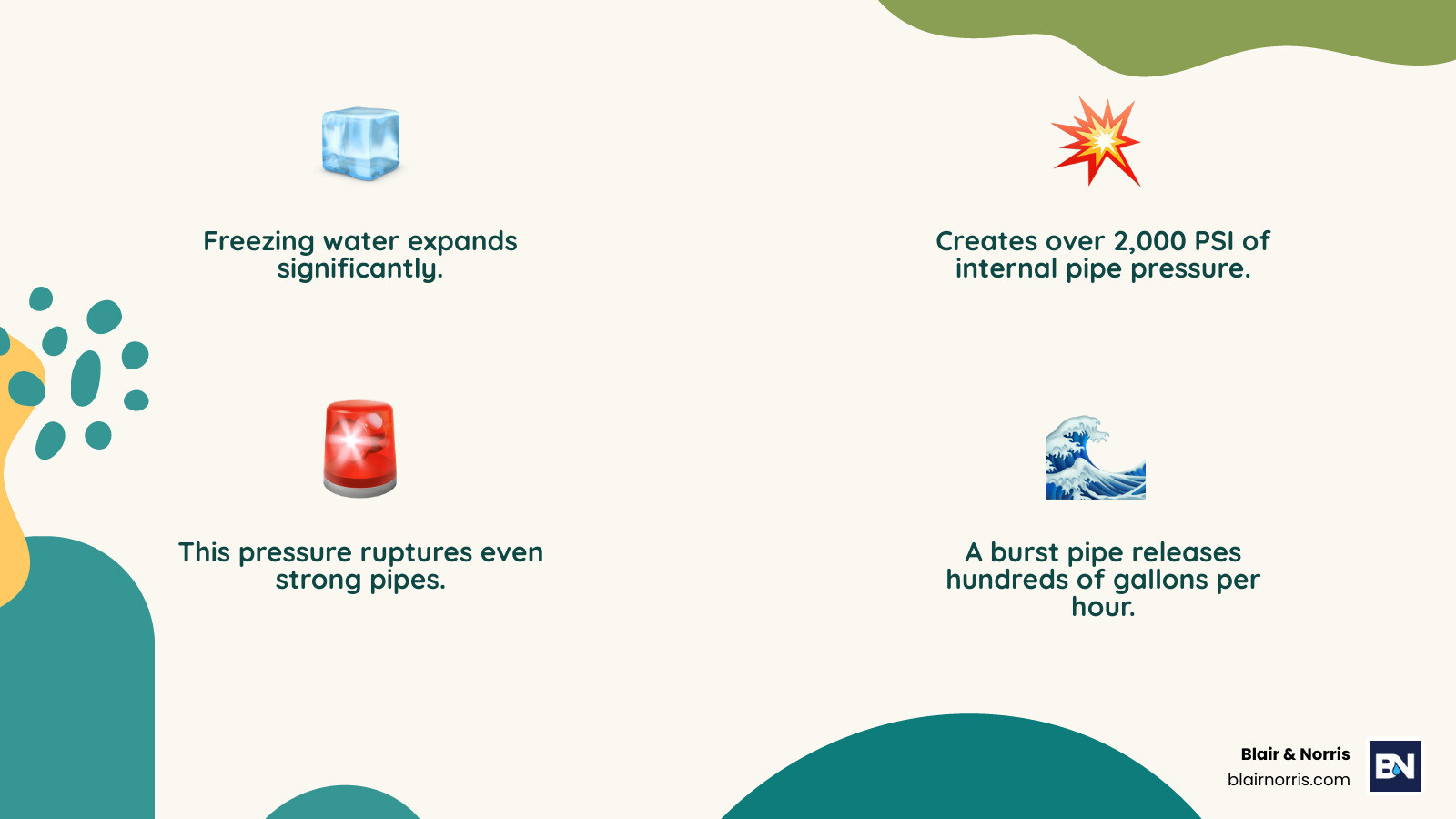
The stakes are high. When water freezes, it expands and can generate extreme pressure inside a closed pipe, enough to crack fittings or rupture weakened sections. This pressure can rupture even the strongest pipes. A burst pipe can release a large volume of water quickly, especially if the break is on a supply line, so shutting off the main valve fast is critical.
Indiana winters are particularly challenging for water lines. Our temperature swings, combined with homes that may have pipes running through unheated crawl spaces or along exterior walls, create the perfect conditions for freezing. I’ve seen too many homeowners face flooded basements, damaged walls, and emergency repairs that could have been prevented or minimized with the right knowledge.
I’m Mack Blair, and over my 30+ years in the water systems business here in Central Indiana, I’ve responded to countless emergency calls for water line thawing—often in the middle of the night when temperatures plummet. My team at Blair & Norris has the specialized equipment and experience to thaw frozen lines safely and quickly, preventing the catastrophic damage that can occur when homeowners wait too long or use unsafe methods.
Know your water line thawing terms:
Step 1: Identify the Problem and Take Immediate Action
The first step in any crisis is recognizing you have one. For water line thawing, early identification can save you a world of trouble. So, how do you know if your water pipes are frozen?
What are the signs that indicate my water pipes are frozen?
Keep an eye (and ear) out for these tell-tale signs:
- No Water Flow or a Trickle: This is the most common sign. If you turn on a faucet and get only a trickle or no water, you likely have a frozen pipe. If some faucets work but others don’t, the freeze is localized. If all faucets are dry, your main service line might be frozen, a common issue in extreme cold below 20 degrees Fahrenheit.
- Frost on Exposed Pipes: You might spot frost on the outside of visible pipes, such as those under sinks, in an unfinished basement, or in a crawl space.
- Bulging Pipes: As water freezes and expands, it can cause the pipe itself to bulge. This is a critical sign that a burst is imminent.
- Strange Smells from Drains: An unusual odor coming from a drain could indicate an ice blockage preventing proper drainage.
- Gurgling or Banging Sounds: These sounds can signal ice forming or moving within the pipes. During the thawing process, hearing gurgling or banging can be a good sign that the ice is starting to break up and move.
What is the immediate first step to take when I suspect my pipes are frozen?
Before attempting any water line thawing, the very first thing you must do is locate and shut off your main water valve. This is crucial. If a pipe has already burst or cracks while thawing, shutting off the main valve prevents a flood, saving you from extensive water damage and costly repairs.
Next, open all faucets (both hot and cold) in your home, especially those connected to the suspected frozen pipe. This helps relieve pressure within the frozen section and allows meltwater to escape, speeding up the thawing process. The expansion of freezing water puts tremendous pressure on pipes, and opening faucets provides an outlet, which can help prevent a burst.
Which pipes are at risk of freezing?
Not all pipes are created equal when it comes to freezing. Those most vulnerable in Indiana homes include:
- Pipes in unheated areas: Basements, crawl spaces, attics, garages, and even outdoor kitchens.
- Exposed pipes: Any pipes that aren’t insulated or are open to the elements.
- Pipes along exterior walls: Especially those with little or no insulation.
- Pipes under sinks: Particularly those against an outside wall.
- Outdoor hose bibs, pool supply lines, and sprinkler lines: These are highly susceptible and should be properly winterized before cold weather hits.
- Well pumps and associated lines: For homes with well systems, protecting your Well Pump Freeze Protection is paramount, as a frozen well can mean no water for your entire home.
Understanding these vulnerable spots helps you know where to focus your attention when inspecting for frozen pipes or applying preventative measures. For more comprehensive guidance, the American Red Cross offers valuable advice on Preventing & Thawing Frozen Pipes.
Step 2: Attempt a Safe DIY Thaw (And Know the Risks)
Once you’ve identified the frozen pipe and taken the critical first step of shutting off your main water supply and opening faucets, you can attempt to thaw the pipe yourself if it’s accessible. Safety first!
What are the safest methods for thawing frozen pipes?
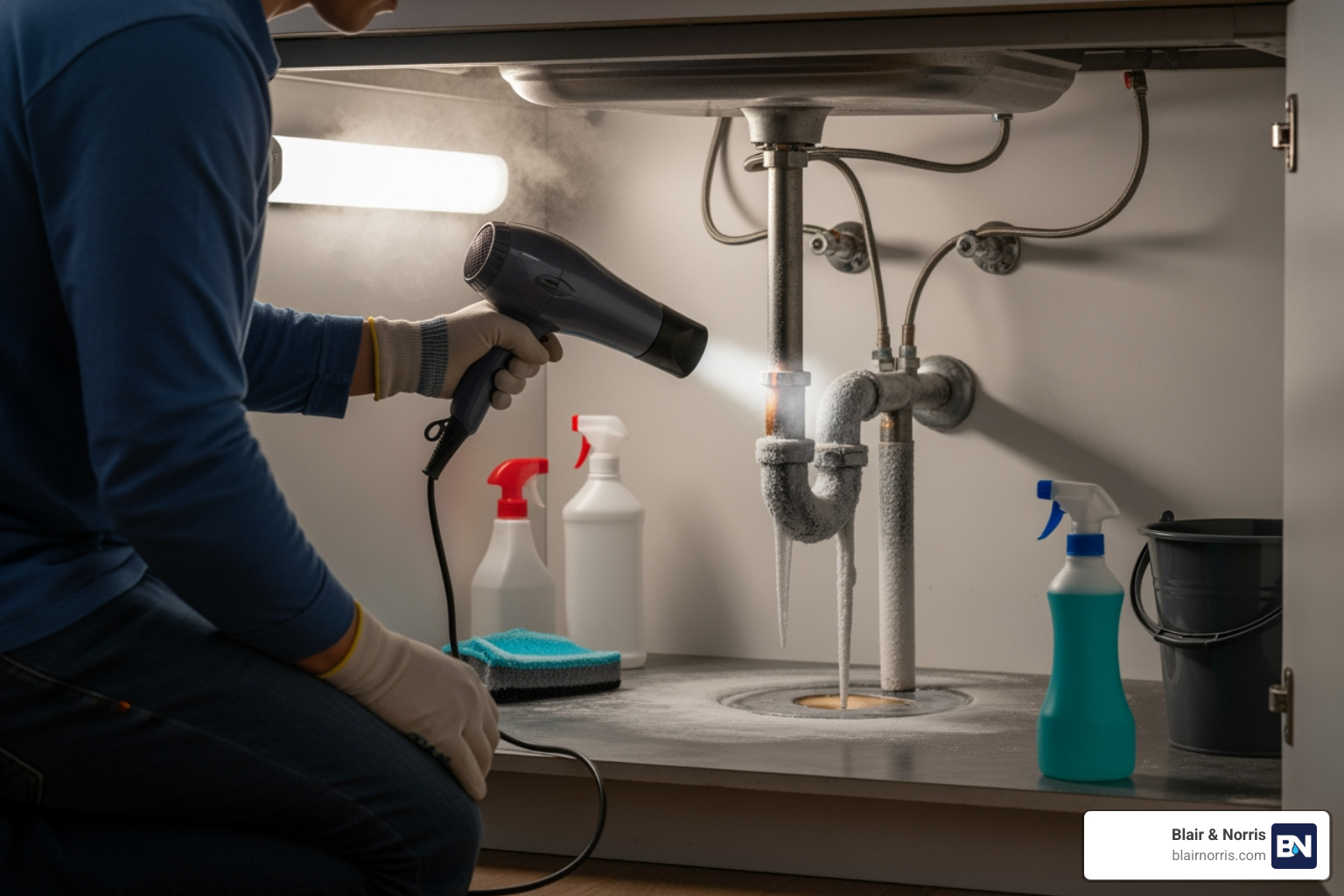
The key to safe water line thawing is gentle, gradual heat application. Rapid heating can cause pipes to crack or even melt, especially plastic ones.
- Hair Dryer: This is a go-to recommendation for DIY thawing. Aim the hair dryer at the frozen section, moving it back and forth for even heat. Always start from the faucet end and work toward the blockage. This allows melting ice and steam to escape, preventing pressure buildup.
- Electric Heating Pad: Wrap a heating pad around the frozen pipe. This provides consistent, gentle heat.
- Space Heater: Place a portable space heater in the room with the frozen pipe, keeping it at least three feet from flammable materials and never leaving it unattended. This method warms the general area and is good for pipes inside cabinets or unheated rooms.
- Hot Towels: Soak towels in warm (not boiling) water and wrap them around the frozen pipe. Replace them frequently as they cool.
Continue applying heat until full water pressure is restored and water flows freely from the faucet. Then, keep the heat on for a few minutes longer to ensure the entire blockage has cleared.
What methods should absolutely be avoided when thawing frozen pipes?
While the urge to quickly resolve a frozen pipe issue is strong, certain methods are extremely dangerous and can cause more harm than good:
- Open Flames: Never use a propane torch, kerosene heater, charcoal stove, or any open flame to thaw pipes. This is a severe fire hazard, can damage pipes (especially plastic), and may release harmful fumes.
- Boiling Water on Plastic Pipes: While hot towels are fine, pouring boiling water directly onto plastic (PVC, PEX) pipes can cause them to warp, crack, or melt.
- Electrical Devices Near Standing Water: If a pipe has already burst or is leaking, do not use electric appliances while standing in water. This poses a serious risk of electrical shock.
- Leaving Electrical Appliances Unattended: Never leave a hair dryer, heating pad, or space heater running unattended.
What is the risk of a pipe bursting after it thaws?
The risk of a pipe bursting is highest before it thaws due to the immense pressure of expanding ice. However, a frozen pipe is significantly weakened. Even if it doesn’t burst while frozen, the stress can cause hairline cracks or compromise joints. Once the ice melts, these weakened spots can leak or burst. This is why it’s crucial to leave faucets open and inspect the pipe for leaks after thawing. A burst pipe can release hundreds of gallons of water per hour, causing thousands in damage, as we’ve seen many times in Indianapolis, Carmel, and Fishers.
Step 3: When to Call for Professional Water Line Thawing
Despite your best efforts, sometimes DIY water line thawing isn’t enough, or the situation is too complex or dangerous to handle alone. That’s when it’s time to call the experienced plumbers at Blair & Norris.
When should I call a professional plumber for frozen pipe issues?
There are several clear indicators that professional help is needed:
- DIY Methods Aren’t Working: If you’ve been applying safe heat for 30 minutes or more and there’s no progress, the blockage might be too severe or in an inaccessible location.
- Signs of a Leak or Burst Pipe: If you see water dripping, a crack in the pipe, or any sign of water damage, shut off your main water valve immediately and call us. A burst pipe can be catastrophic.
- Inaccessible Pipes: If the frozen pipe is inside a wall, under a concrete slab, or deep underground, you’ll need professional equipment to thaw it without damaging your home. This is common with well lines or main service lines in areas like Noblesville or Zionsville.
- You Can’t Locate the Frozen Section: Sometimes, the signs are there (no water), but you just can’t pinpoint the exact location of the freeze. Our technicians have tools to accurately locate the blockage.
- You’re Uncomfortable or Unsure: If you feel out of your depth or unsure about any step, it’s always safer to call a professional. Your safety and your home’s integrity are worth it.
- Well System Issues: For our customers with well water in areas like Lebanon or Brownsburg, a frozen well pump or main well line requires specialized knowledge. We understand the intricacies of well pump cold weather issues and well pump freeze protection.
Even a small leak can spew 250 gallons a day, causing serious damage. Don’t hesitate to reach out for Fast Water Line Repair if you suspect a problem. If pipes burst, they can release water inside walls and under floors, often requiring emergency water restoration services from our local partners.
The Professional Water Line Thawing Process
When you call Blair & Norris for professional water line thawing, here’s what you can expect:
- Locating the Blockage: Our trained technicians use specialized equipment, such as thermal cameras or pipe locators, to accurately pinpoint the frozen section, even if it’s hidden behind walls or underground.
- Using Electric Pipe Thawers: For metal pipes, we use electric thawing machines that send a low-voltage, high-amperage current through the pipe. This generates heat that safely and quickly melts the ice from the inside out. This method is highly efficient, can thaw a pipe in minutes, and significantly reduces the risk of a burst.
- Steam Thawing Techniques: For some situations, particularly with certain types of pipes or in specific environments, steam thawing can be an effective and safe method.
- Checking for Leaks and Damage Post-Thaw: After thawing the pipe, our team inspects the entire line for any damage, cracks, or leaks caused by the freeze. This proactive check helps prevent future problems. We then slowly turn your water back on while carefully monitoring for any issues.
For a deeper dive into professional methods, resources like How to Thaw a Frozen Water Pipe often highlight the advanced techniques professionals employ.
Why Professional Water Line Thawing is Safer
Choosing a professional for your water line thawing needs offers several distinct advantages:
- Speed and Efficiency: Our specialized equipment can thaw pipes much faster than DIY methods, minimizing the time your home is without water and, more importantly, reducing the window of opportunity for a burst pipe.
- Preventing Catastrophic Bursts: With controlled, targeted heat application and expert knowledge, we can prevent the sudden and severe ruptures that often accompany amateur thawing attempts.
- Identifying Hidden Cracks or Stress Points: Freezing and thawing can stress pipes. Our technicians are trained to identify these weak spots, even if they aren’t actively leaking, and recommend appropriate repairs to prevent future issues.
- Electrical Safety: We understand the dangers of electricity and water. Our equipment and methods are designed to be safe, eliminating the risks associated with improper use of electrical devices.
- Peace of Mind: Knowing that experienced, family-owned professionals are handling your frozen pipes means you can rest easy, even in the middle of an Indiana cold snap. Our 24/7 live phone support ensures we’re always there when you need us most.
Step 4: Prevent Future Freezes with These Long-Term Solutions
The best offense is a good defense, especially when it comes to preventing frozen pipes. Taking proactive steps now can save you from the stress and expense of water line thawing emergencies down the road.
How can I prevent my water pipes from freezing in the first place?
Prevention is always better than cure. Here are our top tips for safeguarding your pipes during Indiana winters:
- Insulate Pipes: This is the most crucial step. Insulate pipes in unheated areas like basements, crawl spaces, attics, and garages, as well as under cabinets. Use foam pipe sleeves, fiberglass insulation, or UL-listed heat tape. While heat tape is effective, use it with caution and avoid leaving it on year-round, as cable deterioration can increase fire risk.
- Seal Air Leaks: Cold air drafts can significantly contribute to pipes freezing. Seal any gaps, cracks, or holes in your home’s foundation, walls, windows, and around pipe penetrations. Even small drafts can push frost below your water line, causing problems.
- Maintain Thermostat Settings: During cold spells, keep your home’s thermostat set to at least 55°F (13°C) day and night, even when you’re away. This consistent temperature helps keep interior pipes warm. For vacation homes or if you’re leaving for an extended period, consider setting it no lower than 55-60 degrees.
- Let Faucets Drip: During periods of extreme cold, especially overnight, allow a slow, steady drip of cold water from faucets connected to vulnerable pipes. Moving water is less likely to freeze than standing water, and it relieves pressure in the line.
- Open Cabinet Doors: For pipes located under sinks or in cabinets along exterior walls, open the cabinet doors to allow warmer indoor air to circulate around them.
- Winterize Outdoor Spigots and Sprinkler Systems: Before the first hard freeze, disconnect and drain garden hoses. Turn off the water supply to outdoor faucets via an indoor shut-off valve, then open the spigot to drain remaining water. Your irrigation system should also be turned off and drained. Our guide on How to Unfreeze Pipes Outside House offers more advice.
- Keep Garage Doors Closed: If you have water supply lines running through your garage, always keep the garage door closed during cold weather.
- Consider Relocating Exposed Pipes: For long-term prevention, if you have pipes that repeatedly freeze, consider having a plumber relocate them to a warmer area or add more substantial insulation to the walls or ceiling around them.
The City of Calgary provides useful information on how to Protect your water lines and meter from freezing, and many of these principles apply directly to homes in Indiana. For more Indiana-specific tips, check out our article on Prevent Frozen Pipes in Indiana: Essential Winter Tips.
Conclusion
Dealing with frozen water lines is a classic winter dilemma for homeowners across Indiana, from Indianapolis to Columbus. Frozen lines can lead to ruptures and major water damage. Fast action and safe water line thawing practices help reduce risk. We’ve walked through how to identify frozen pipes, the critical immediate actions to take, safe DIY water line thawing methods (and dangerous ones to avoid), and when it’s necessary to call in the professionals.
The high cost of water damage—potentially thousands of dollars per incident—makes prevention and timely action paramount. While DIY steps can be effective for accessible frozen pipes, don’t hesitate to seek expert help when the situation becomes too challenging or risky.
For expert help with frozen pipes, especially those connected to well systems in the Indianapolis area and surrounding communities, trust the 75 years of experience from Blair & Norris. As a family-owned business, we pride ourselves on ethical, high-quality service, backed by 24/7 live phone support. When winter strikes, we’re here to ensure your water keeps flowing.
If you’re dealing with a frozen line, don’t guess. For safe, professional water line thawing in Central Indiana, contact Blair & Norris today, and our team will help restore water flow and inspect for freeze damage.