
Your Septic System Is Working Right Now — Are You?
The best way to maintain septic system health comes down to four core habits: inspect and pump regularly, use water efficiently, dispose of waste responsibly, and protect your drainfield.
Here’s a quick breakdown:
- Inspect and pump your tank every 3 to 5 years (or every 3 years minimum)
- Use water efficiently — fix leaks, install high-efficiency fixtures, and spread out laundry loads
- Only flush waste and toilet paper — keep grease, wipes, chemicals, and medications out of the system
- Protect your drainfield — no vehicles, no deep-rooted plants, and no structures over it
Right now, buried beneath your yard, your septic system is working around the clock — breaking down waste, filtering effluent, and protecting your home and the environment. Most homeowners never think about it until something goes wrong.
And when it goes wrong, it goes really wrong.
A neglected septic system doesn’t just back up — it can contaminate groundwater, damage your property, and cost you far more than routine care ever would. The good news? Maintaining your system is simpler than you might think, and it doesn’t have to be expensive.
I’m Mack Blair, and with over 30 years of hands-on septic experience serving Central Indiana, I’ve seen what separates systems that last decades from ones that fail early — and the best way to maintain septic system health is almost always consistent, proactive care. Let me walk you through exactly what that looks like.
Quick best way to maintain septic system terms:
The High Cost of Neglect: Why Septic Maintenance Matters

When we talk about the best way to maintain septic system functionality, we aren’t just talking about avoiding a bad smell in the yard. We are talking about protecting your largest financial investment: your home. A septic system is a living, breathing biological treatment plant. When it’s neglected, the biological balance shifts, and the mechanical components fail.
The consequences of neglect are far-reaching. First, there is the environmental impact. A failing system can leak untreated sewage into the groundwater, which is especially dangerous if you or your neighbors rely on a private well for drinking water. Second, there is the hit to your property value. In Central Indiana, a failed septic inspection can completely derail a home sale in cities like Carmel, Noblesville, or Zionsville.
According to the Homeowner’s Guide to Septic Systems: Long Version, a well-maintained system can last 20 to 40 years. However, a system that is ignored can fail in as little as two to five years. For more details on what can go wrong, check out our Septic System Maintenance Guide.
The Financial Implications of a Failed System
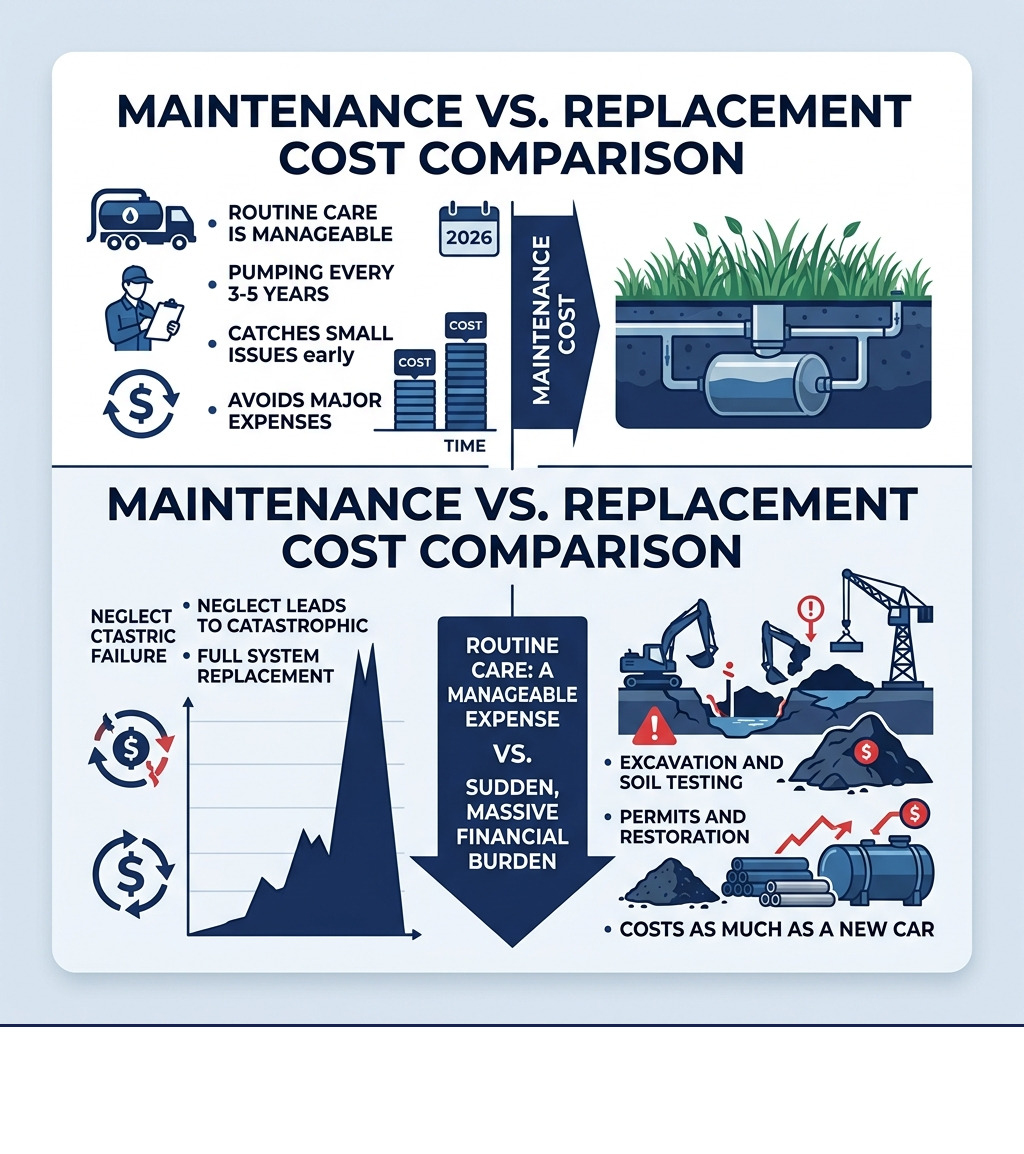
Let’s talk numbers—though we won’t get into specific quotes, the scale of the difference is massive. Routine maintenance, such as pumping every few years, is a small, manageable expense. In contrast, replacing a full drainfield or an entire septic system can cost as much as a new car.
When a system fails, you aren’t just paying for a new tank. You are paying for excavation, soil testing, permits, and the potential restoration of your landscaping. If you have an emergency backup on a holiday weekend in Fishers or Greenwood, those emergency service fees add up quickly.
| Service Type | Frequency | Impact on System |
|---|---|---|
| Routine Pumping | Every 3-5 Years | Removes solids, prevents clogs |
| Annual Inspection | Yearly | Catches small leaks/mechanical failures |
| Full Replacement | Every 25-40 Years | Required if system is neglected |
| Emergency Repair | Unpredictable | High stress and high cost |
To understand more about the costs associated with keeping your system clean, see our breakdown of Septic Clean Out Cost.
The Best Way to Maintain Septic System Health: A Comprehensive Strategy

The best way to maintain septic system health is to follow a strict schedule. As of April 2026, the standard recommendation remains that an average household should have their septic tank inspected at least every three years. If your system has mechanical components, like a pump or an aerobic treatment unit, you should really be looking at annual inspections.
Pumping frequency is determined by four main factors:
- Household size (more people = more waste)
- Total wastewater generated
- The volume of solids in the wastewater
- Septic tank size
As a rule of thumb, most tanks need to be pumped every three to five years. A professional inspector will measure the “scum” and “sludge” layers in your tank. If the bottom of the scum layer is within 6 inches of the bottom of the outlet tee, or if the top of the sludge layer is within 12 inches of the outlet, it’s time to pump. For more on this, visit How to Care for Your Septic System | US EPA or see our guide to Expert Septic Tank Pumping Maintenance In Indiana.
Best Way to Maintain Septic System Water Efficiency
Your drainfield is not a bottomless pit. It can only process a certain amount of liquid at a time. If you send too much water down the drain at once, the solids in the tank don’t have time to settle. Instead, they get pushed out into the drainfield, where they clog the soil pores and lead to system failure.
To improve water efficiency:
- Install High-Efficiency Fixtures: Modern toilets use 1.6 gallons or less per flush, compared to older models that might use 5 gallons.
- Spread Out Laundry: Avoid “Laundry Day.” Doing five loads of laundry on a Saturday can send 250+ gallons of water into your tank in a few hours. Spread those loads out across the week.
- Fix Leaks: A single leaky toilet can waste 200 gallons of water a day. That’s enough to saturate a drainfield in less than a week.
Check out our Septic Tank Pumping Frequency Guide for more tips on managing household usage.
Best Way to Maintain Septic System Drainfields
The drainfield (or leachfield) is the most expensive part of your system. It’s the area of your yard where the liquid effluent is filtered by the soil. To keep it healthy, you must treat it like a “no-go zone.”
- No Heavy Traffic: Never park a car, drive a tractor, or build a shed over your drainfield. This compacts the soil and can crush the pipes.
- Smart Landscaping: Only plant grass or shallow-rooted plants over the drainfield. Trees should be planted at least 30 feet away to prevent roots from invading the pipes.
- Control Drainage: Ensure that gutters, sump pump discharge, and surface runoff are directed away from the drainfield area. Excess water from a rainstorm shouldn’t be competing with your household wastewater for soil space.
For more landscaping tips, see Be Septic Safe: Best Practices for Septic System Maintenance | Home & Garden Information Center.
The Dangers of DIY: Why Professional Septic Care is Non-Negotiable
We love the “Do It Yourself” spirit in Indiana, but your septic tank is the one place where you should stay above ground. Septic tanks are confined spaces filled with toxic gases like hydrogen sulfide and methane. These gases can be fatal in minutes—sometimes even seconds—if inhaled in high concentrations.
Never, ever enter a septic tank. Even leaning over an open tank to look inside can be dangerous. Furthermore, a professional pumper has the equipment to ensure the tank is cleaned thoroughly. Simply “pumping out the water” isn’t enough; the heavy sludge at the bottom must be agitated and removed to truly reset the system’s capacity.
Using proper Septic Tank Risers And Covers makes it easier for professionals to access your system without digging up your yard every few years, but it also means you need to ensure those covers are secure and child-proof. For more safety information, refer to the California Area Office Maintenance Guide.
The Myth of Septic Additives and Chemicals
Many homeowners are tempted by “miracle” additives that claim to eliminate the need for pumping. As experts, we can tell you: there is no such thing as a “flush-and-forget” solution.
In fact, most additives are either useless or actively harmful. Some chemical additives can actually break down the scum layer into tiny particles that then travel into your drainfield and clog it. Your septic tank already contains all the bacteria it needs, provided by the human waste entering the system.
To keep that bacterial balance healthy:
- Avoid Antibacterial Soaps: These kill the “good” bacteria that break down waste.
- Limit Bleach: Use it sparingly. A normal load of laundry with bleach won’t kill the system, but cleaning every floor in the house with it might.
- No Harsh Drain Cleaners: Use a snake or boiling water for clogs instead of caustic chemicals.
For a better approach to long-term care, see A Quick Start Guide To Septic System Maintenance Plans.
Choosing Your Local Central Indiana Provider for Expert Septic Care
When it comes to maintaining your system in the Indianapolis area, you need a partner who understands the local soil conditions—from the heavy clays of Hamilton County to the more porous soils in parts of Johnson County.
At Blair & Norris, we’ve been serving Central Indiana for over 75 years. We aren’t just a “pump and go” company. We are a family-owned business that believes in ethical service and utilizing the best technology available. One of the ways we stand out is through our use of Mud Puppy equipment.
Mud Puppy technology is a game-changer for clean mud recycling and drilling. When we perform repairs or system installations, this equipment allows us to recycle drilling fluids and keep the job site significantly cleaner. This means less mess in your yard and a more efficient, environmentally friendly process. Whether you are in Brownsburg, Avon, or Franklin, we bring this high-level precision to every job.
Our reputation is built on 24/7 live phone support and a commitment to doing the job right the first time. We treat your property as if it were our own, ensuring your Septic Tank Cleaning And Inspection is thorough and accurate.
A Good, Better, Best Approach to System Longevity
Not every homeowner has the same needs, so we like to offer a tiered approach to maintenance:
- Good: At a minimum, adhere to a 3-5 year pumping schedule. This keeps the solids from overflowing into the drainfield and is the baseline for any functional system.
- Better: Combine your 3-year pumping with annual professional inspections and the cleaning of your effluent filter. The effluent filter is a small screen that catches hair and lint before they leave the tank. Cleaning it every 6-12 months is a simple way to prevent major backups.
- Best: Enroll in a comprehensive maintenance plan. This includes regular inspections, priority service for emergencies, and using advanced solutions like Mud Puppy-assisted repairs when necessary. This proactive approach ensures your system reaches its maximum 40-year lifespan.
Frequently Asked Questions about Septic Maintenance
How often should I pump my septic tank in 2026?
As of 2026, the standard remains every 3 to 5 years for most families. However, if you have a 1,000-gallon tank and five people living in the house, you should be pumping every 2 years. If you are a couple living in a home with a 1,500-gallon tank, you might be able to go 5 or 6 years. Always have a professional check the sludge levels to be sure.
Can I use a garbage disposal with a septic system?
We strongly recommend avoiding garbage disposals. Using one can increase the amount of solids in your tank by up to 50%. If you must use one, you will need to pump your tank much more frequently—likely every year or two—to prevent the extra organic matter from overwhelming the system.
What are the warning signs of a septic backup?
Don’t wait for sewage to appear in your bathtub! Keep an eye out for:
- Slow-draining sinks or toilets.
- Gurgling sounds in the plumbing.
- Unpleasant odors around the tank or drainfield.
- Patches of bright green, lush grass over the drainfield, even during a dry Indiana summer.
- Pooling water or muddy spots in the yard.
If you notice any of these, check out our guide on 5 Warning Signs Of A Septic System Backup Emergency and call us immediately.
Conclusion
The best way to maintain septic system health is to stop thinking of it as “out of sight, out of mind.” By following a regular pumping schedule, being mindful of your water use, and protecting your drainfield, you can save yourself thousands of dollars and years of stress.
At Blair & Norris, we are proud to be Your Local Central Indiana Provider. From the initial inspection to complex repairs using our state-of-the-art Mud Puppy equipment, our family is here to serve yours. We cover the entire region, from Anderson and Kokomo down to Bloomington and Columbus.
Don’t wait for a “soggy disaster” to strike your yard. Take the first step toward a healthier home today.
Contact Blair & Norris today to schedule your Expert Septic Tank Pumping Maintenance In Indiana and get a professional estimate for your system’s needs!