
Septic Tank Safety Tips That Protect Your Home and Family
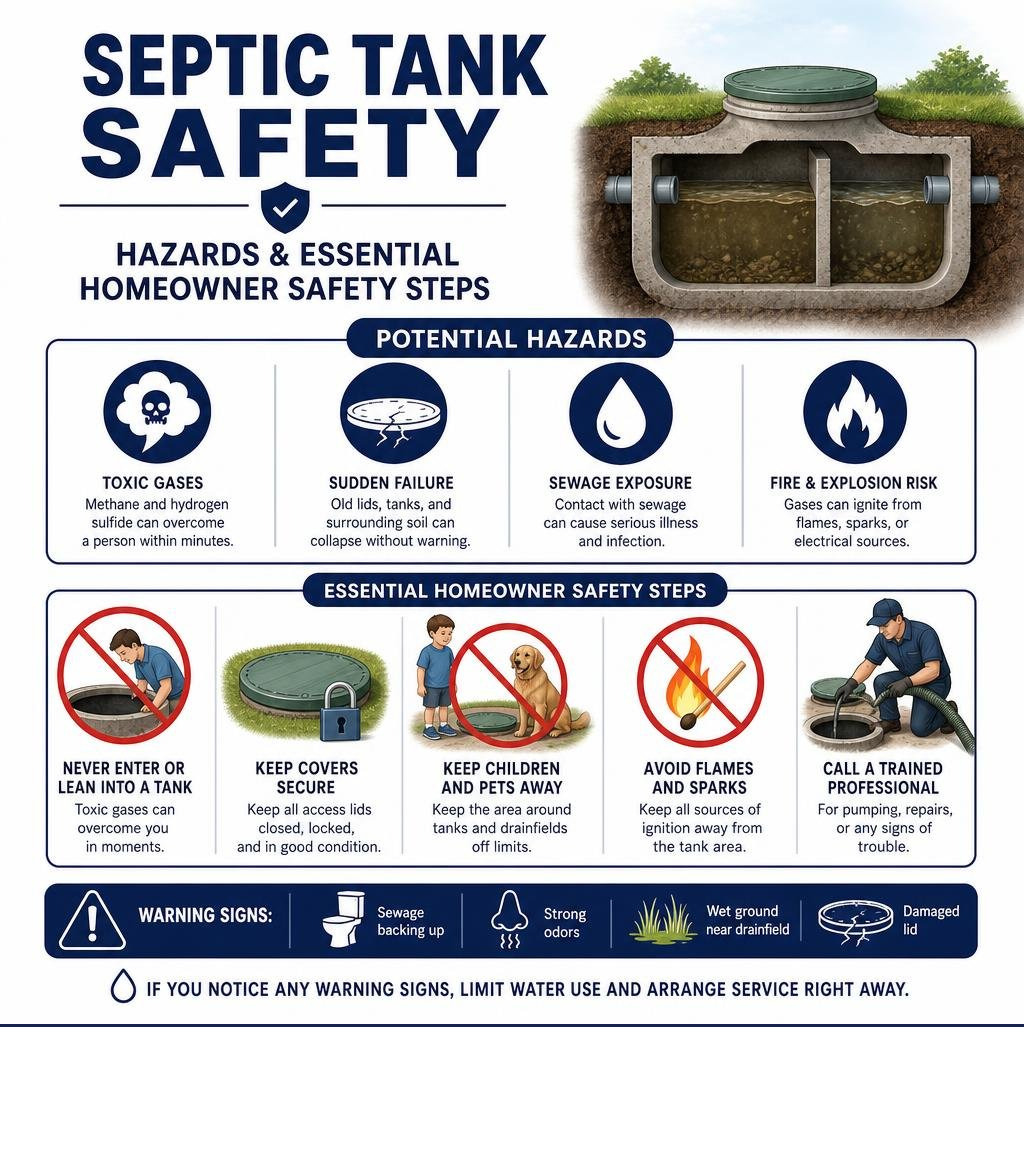
The most important septic tank safety tips are simple: never enter or lean into an open tank, keep every access cover secure, keep children and pets away, avoid flames and sparks, and call a trained professional for pumping or repairs. If you notice sewage backing up into household drains, strong sewer gas odors lingering in the yard, wet or spongy ground near the drainfield, or a damaged access lid, limit indoor water use immediately and arrange professional service right away.
Septic tanks are confined biological digestion vessels that generate dangerous concentrations of methane and hydrogen sulfide gases. These toxic vapors can overcome an adult within seconds, causing rapid loss of consciousness. In addition to toxic atmosphere hazards, aging concrete lids, corroded metal covers, and weakened surrounding soil can collapse under foot traffic without warning. Developing safe household habits protects your family, prevents direct exposure to biohazardous blackwater pathogens, and helps avoid severe subterranean damage that can shorten the operational lifespan of your onsite wastewater system.
As your local Central Indiana provider, Blair & Norris focuses exclusively on septic system service, cleaning, and pumping to help homeowners maintain safer, more reliable systems. I am Mack Blair, and after more than 30 years working in well and septic service across Central Indiana, I have seen firsthand how practical safety measures and timely pumping prevent costly property damage and stressful plumbing emergencies.
To safeguard your residential property, homeowners should review our comprehensive septic system maintenance strategies, understand the critical value of scheduled septic tank cleaning and inspection, and address ground-level access hazards highlighted in our guide on septic tank riser repair.
Hidden Hazards: Toxic Gases, Structural Collapses, and Biohazards
Beneath your lawn, an onsite wastewater system houses an active biological and chemical environment. Naturally occurring anaerobic bacteria break down solid household organic waste, converting up to 50 percent of solid matter into clarified effluent, sludge layers, and heavy airborne gases.
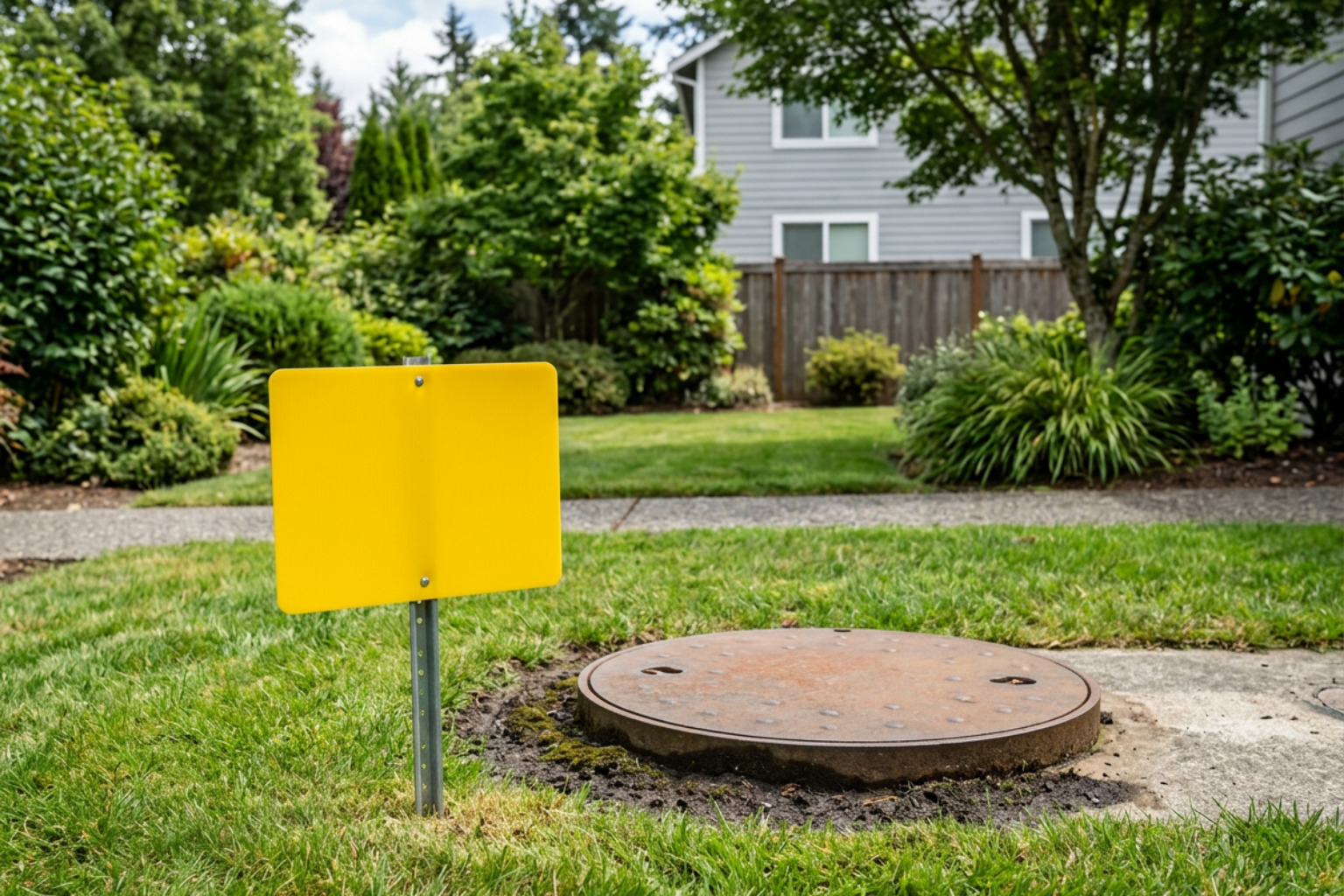
When components wear down or safety rules are overlooked, severe subterranean hazards emerge. The EPA guidance on septic system care emphasizes that understanding hidden biological, chemical, and physical risks is the foundation of keeping your property and household secure.
Lethal Septic Gases and Confined Space Hazards
Anaerobic digestion produces a volatile mixture of hazardous airborne byproducts, primarily hydrogen sulfide, methane, carbon dioxide, and ammonia.
- Hydrogen Sulfide: Characterized by a pungent rotten-egg odor at trace concentrations, hydrogen sulfide rapidly numbs olfactory nerves at higher concentrations, giving a false sense of security. Continued exposure causes rapid respiratory paralysis, pulmonary edema, and fatal asphyxiation within minutes.
- Methane Gas: Colorless, odorless, and lighter than air, methane displaces breathable atmospheric oxygen and acts as a dangerous asphyxiant. Methane is also combustible. A discarded cigarette, an open flame, or an electrical tool spark near an open inspection port can ignite an explosion.
- Carbon Dioxide and Ammonia: These gases settle into low-lying tank cavities, creating an oxygen-deficient atmosphere where breathable air is virtually non-existent.
Because oxygen levels inside these chambers are near zero, leaning over an open port to inspect the interior can cause immediate loss of consciousness, leading to catastrophic falls into the effluent chamber.
Structural Collapse Risks and Fall Hazards
Structural deterioration of aging tanks and access covers represents a major physical hazard across Central Indiana residential properties.
- Corroded Concrete and Metal: Sewer gases react with moisture to form sulfuric acid, which corrodes concrete lids, softens structural rebar, and rusts out thin steel access covers over years of service.
- Makeshift Lids and Coverings: In older rural installations, thin sheet metal, treated plywood, or unanchored pavers were sometimes substituted for engineered lids. Plywood rots rapidly from subterranean moisture and metal sheetings buckle, creating invisible pitfall traps in turf.
- Subsurface Soil Voids: Leaks around inlet or outlet pipes wash away supporting structural soil around tank walls, leaving hollow underground cavities beneath the lawn that can cave in under normal foot traffic.
- Excess Load Strain: Septic tanks and distribution lines are not engineered to support heavy dynamic or static loads. Parking passenger vehicles, driving heavy lawn tractors, or operating construction machinery over a tank can shatter concrete slabs and trigger sudden cave-ins.
Access covers must remain structurally sound, securely fastened, and engineered to support heavy surface load capacities without deflection.
Biological and Chemical Contamination Threats
Raw household sewage contains billions of dangerous microbial pathogens, including Escherichia coli, Salmonella, hepatitis A virus, norovirus, Cryptosporidium, and intestinal parasites. Direct skin contact or aerosol inhalation can cause gastrointestinal illnesses, skin infections, and bloodborne disorders. Recognizing the 5 warning signs of a septic system backup emergency helps you act before blackwater floods interior living spaces or leaches into nearby private drinking well water supplies.
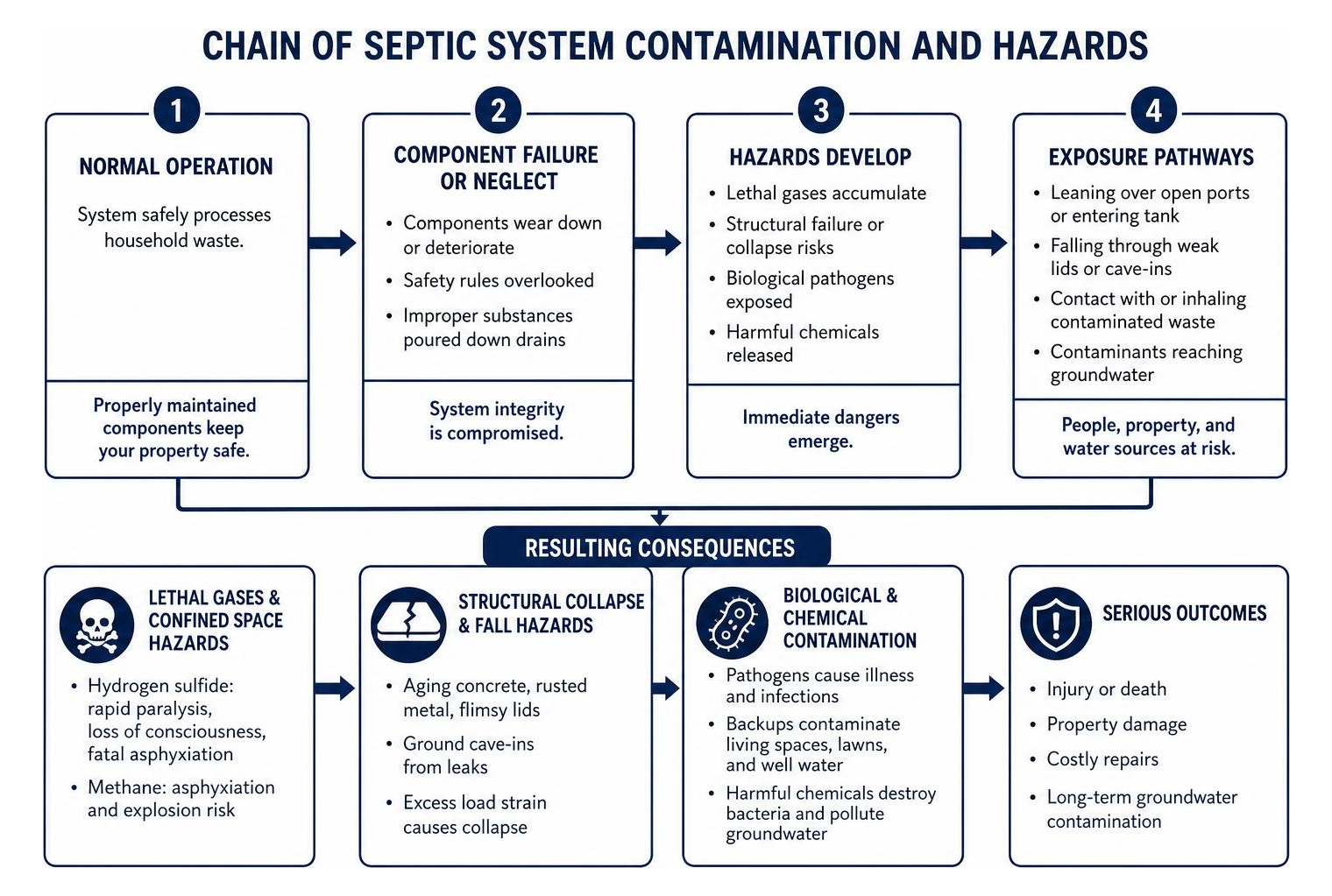
Chemical hazards are introduced when household solvents, harsh cleaners, paints, automotive lubricants, or excess chlorine bleach are flushed down drains. These harsh chemicals destroy beneficial microbial colonies responsible for digestion and seep into local groundwater aquifers.
The Hidden Dangers of DIY Septic System Interventions
Attempting to service, unclog, or enter a septic tank without industrial safety equipment and certified confined space training presents life-threatening hazards. Federal workplace safety regulations classify residential septic tanks as permit-required confined spaces due to toxic atmospheres, engulfment hazards, and severely restricted egress.

The Severe Risks of Tank Entry and Unqualified Repairs
Entering a septic tank without industrial-grade safety equipment, continuous multi-gas atmospheric monitors, top-side spotters with extraction harnesses, and positive-pressure self-contained breathing apparatus (SCBA) equipment is extremely hazardous. Simple hardware store dust masks, painter respirators, and chemical cartridge masks provide zero protection against oxygen-deficient environments and lethal concentrations of hydrogen sulfide.
Unqualified servicing attempts frequently lead to severe residential accidents:
- Asphyxiation and Engulfment: Homeowners attempting to climb inside to clear a blockage lose consciousness within breaths from concentrated sewer gas and collapse into effluent.
- Underground Utility Strikes: Digging around buried tanks without verified utility markings risks severing buried high-voltage electrical conduits, propane supply lines, or communication cables.
- Severe Cross-Contamination: Untrained pumping or drain unclogging contaminates household tools, hoses, footwear, and lawns without multi-stage decontamination procedures, exposing children and pets to blackwater pathogens.
- Structural Damage: Forcing mechanical augers or high-pressure non-regulated water lines through brittle baffles can shatter flow tees, pushing thick solid waste straight into your delicate drainfield.
Emergency Response Protocols for Backups and Odors
When a wastewater backup occurs, taking fast, structured action protects your household from toxic exposures:
- Step 1: Evacuate the Immediate Area: If raw sewage or strong sewer gas enters basement drains or living spaces, move family members and pets to fresh air immediately. Open windows for cross-ventilation if safe to do so.
- Step 2: Shut Down Household Water Supply: Cease using all water fixtures, dishwashers, and washing machines immediately to stop adding volume to the overflowing tank. Turn off the main indoor water valve if necessary.
- Step 3: Eliminate Ignition Sources: Extinguish all open flames, refrain from lighting cigarettes, and avoid operating light switches or power tools near indoor cleanouts or outdoor access ports where methane might collect.
- Step 4: Contact Professional Help Immediately: Never attempt to force clogs with harsh chemical drain cleaners, caustic crystal lyes, or mechanical augers. Contact our technicians for emergency septic repair to pump down wastewater levels safely and diagnose the underlying issue.
Essential Septic Tank Safety Tips for Every Homeowner
Protecting your property requires consistent maintenance protocols, secure physical boundaries, and heavy-duty access lids. The Indiana Department of Health onsite sewage safety guidance emphasizes strict best practices for local onsite systems across Indiana communities.
When managing your residential septic infrastructure, homeowners can evaluate their safety approach across a good, better, and best range:
- Good: Visually inspect access lids every few months for signs of cracking, maintain clear clearance around surface ports, and avoid flushing non-biodegradable items, fats, oils, and harsh household chemicals down household drains.
- Better: Fasten access lids with tamper-resistant stainless steel bolts, mark underground tank boundaries with low-profile yard stakes, maintain detailed records of system cleanouts, and schedule professional septic tank pumping every 3 to 5 years.
- Best: Install heavy-duty impact-resistant risers with secondary fall-protection safety screens beneath the main cover, schedule routine cleanings with Blair & Norris, and pair regular septic care with advanced Mud Puppy well drilling systems when updating onsite water supplies.
Critical Septic Tank Safety Tips for Child and Pet Protection
Children and household pets face extreme hazards around deteriorated, unbolted, or loose septic access lids. A light plastic lid or unbolted cover can tilt or give way under minimal weight, causing a rapid fall into the liquid holding tank.
- Install Locking Fasteners: Fasten all riser lids with tamper-proof stainless steel machine screws, hex bolts, or padlock hasps rather than relying on heavy lid weight alone.
- Use Secondary Safety Barriers: Secure a rigid safety screen, grating, or high-tensile mesh net beneath the primary lid to catch weight and prevent accidental submersion if the top cover is shifted or damaged.
- Set Clear Yard Play Boundaries: Educate children that green riser covers, cleanout ports, and vent pipes are functional utility access points that are strictly off-limits during yard games.
- Mark and Protect Access Components: Place decorative landscape rocks or low-profile boundary stakes around ports to prevent accidental collisions from riding lawn mowers and heavy yard care machinery.
Key Septic Tank Safety Tips for Routine Maintenance and Care
Regular professional pumping removes accumulated sludge before it reaches critical levels and spills into absorption fields. Consult our septic tank pumping frequency guide to establish an optimal servicing schedule tailored to your household size.
| Maintenance Task | Recommended Frequency | Primary Safety Objective | DIY Risk Level | Professional Scope |
|---|---|---|---|---|
| Visual Lid Inspection | Every 3 to 6 Months | Identify cracks, missing bolts, or soil settling | Low (Exterior only) | Homeowner visual verification |
| Effluent Filter Cleaning | Every 6 to 12 Months | Prevent solids from clogging drainfield lines | Moderate (Pathogen exposure) | Wear PPE or assign to technician |
| Septic Tank Pumping | Every 3 to 5 Years | Remove bottom sludge and floating scum layers | High (Toxic gas, collapse, biohazard) | Blair & Norris professional pumping |
| Baffle Inspection | Every 3 Years | Confirm inlet/outlet structural integrity | High (Confined space environment) | Licensed professional service |
| Pump System Check | Annually (for pump systems) | Prevent electrical shorts and high-water backups | High (High-voltage electrical shock) | Certified maintenance provider |
Homeowners should avoid chemical additives, biological stimulants, caustic degreasers, or yeast treatments. Natural anaerobic bacteria break down waste effectively without additives, which often agitate settled solids, corrode concrete tank walls, and push suspended particles straight into absorption trenches.
Drainfield Protection and Household Water Conservation
Your absorption field purifies liquid effluent before it returns to local groundwater aquifers. Protecting this dedicated zone preserves overall system safety:
- Maintain a 30-Foot Buffer from Trees: Aggressive tree and shrub roots penetrate and crush perforated distribution pipes. Keep large woody trees at least 30 feet away, planting only shallow-rooted grass over the field.
- Avoid Heavy Surface Loads: Never park cars, drive heavy trucks, build storage sheds, or construct patios over your drainfield or tank. Soil compaction crushes lateral pipes and suffocates beneficial aerobic microbes in the soil.
- Divert Surface Runoff: Direct roof gutters, downspouts, and basement sump discharge lines well away from absorption trenches to prevent soil saturation and hydraulic overloading.
- Practice Household Water Conservation: Repair leaky faucets and running toilets promptly to avoid overloading your tank with excessive water volume that pushes untreated wastewater to the lawn surface.
Choosing a Trusted Professional Septic Service Partner
Selecting an experienced professional service partner ensures thorough wastewater maintenance while prioritizing household safety. Blair & Norris has proudly served Central Indiana homeowners for over 75 years across four generations of family ownership.
Our specialized capabilities and services include:
- Professional Septic Tank Pumping and Cleaning: We provide dedicated, thorough tank pumping and cleaning that removes settled sludge and floating scum layers safely. We focus strictly on septic system service, cleaning, and pumping rather than system installations or drainfield replacements.
- Advanced Water Systems & Well Services: When servicing broader residential water infrastructure, we utilize state-of-the-art Mud Puppy equipment for clean mud recycling and drilling, ensuring clean, efficient onsite well operations.
- 24/7 Live Phone Support: Speak directly with a knowledgeable representative anytime for prompt service dispatch across Central Indiana communities.
For routine pumping, system cleaning, or preventive care, trust our team for septic tank cleaning in Indianapolis and surrounding communities throughout Marion, Hamilton, Hendricks, Boone, Johnson, and Morgan counties.
Frequently Asked Questions About Septic Tank Safety
What should I do if someone falls into a septic tank?
Immediately call 911 for emergency rescue services. Never jump into or enter the tank yourself to attempt a rescue. The same toxic gases that caused the victim to lose consciousness will overcome you within seconds, creating multiple casualties.
While emergency rescue crews are on the way, position an electric industrial box fan or leaf blower several feet away from the opening to blow clean outdoor air down into the tank cavity. This helps disperse heavy methane and hydrogen sulfide gases. If the victim is conscious, lower an extended ladder, sturdy garden hose, or secured safety rope to assist them from the surface, keeping your face well away from the open hatch.
Can toxic septic tank gases enter my home?
Yes, hazardous septic gases can enter living spaces if internal plumbing traps or vent stacks fail. Every plumbing fixture relies on a curved P-trap that holds water to block sewer gases from rising out of drains.
If a basement floor drain, utility sink, or guest bathroom goes unused for months, the water seal evaporates, allowing toxic sewer gas into the home. Blocked roof vent stacks or cracked indoor drainpipes can also release hydrogen sulfide indoors. If you detect sewer odors, pour water into all drains to refill the traps. If the odor continues, open windows, step outdoors, and call a professional for an immediate plumbing and septic assessment.
How often should a septic tank be professionally inspected and pumped?
Most residential septic systems should be professionally pumped every 3 to 5 years. The ideal schedule depends on tank capacity, total household occupancy, and daily water consumption habits.
Systems equipped with electrical float switches, effluent lift pumps, or mechanical aerators require professional inspection once a year. Additionally, homes using garbage disposals often need pumping 50 percent more frequently because ground food waste accumulates as heavy sludge much faster than ordinary wastewater solids.
Conclusion
Practicing proactive septic tank safety protects your home, your family, and the surrounding environment from hazardous gas exposure, sudden structural failures, and costly biological backups. By maintaining secure, child-proof access covers, keeping heavy vehicles off your drainfield, managing household water use, and avoiding confined-space DIY attempts, you can keep your onsite wastewater system working reliably for years to come.
As your local Central Indiana provider, Blair & Norris is committed to delivering dependable, professional service tailored to your home’s water and wastewater needs. Our 75-year history of family-owned service across Indianapolis and neighboring communities is backed by honest advice, round-the-clock live phone support, and our highly regarded Google Reviews for Blair & Norris Well and Pump Services.
Do not wait for a plumbing backup to address your system’s routine maintenance needs. Schedule your next service visit for expert septic tank pumping maintenance in Indiana by calling our team today, and let our experienced technicians provide you with a clear, straightforward estimate for your property.