
What Is Drain Field Installation and How Does It Work?
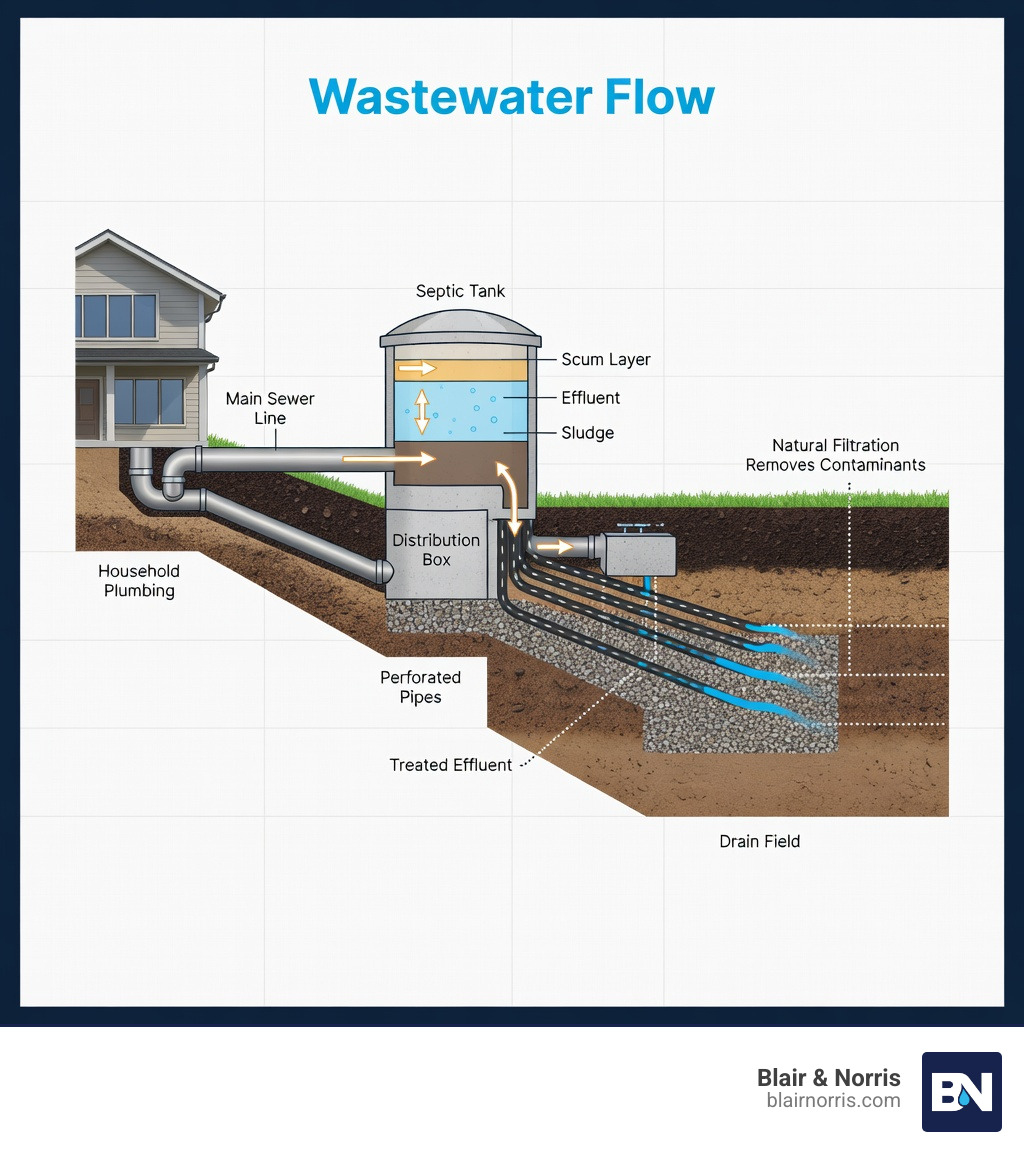
Drain field installation is the process of constructing a subsurface wastewater treatment area where liquid effluent from your septic tank is distributed into the soil for natural filtration. This is the final and most critical stage of an onsite sewage system. While the septic tank handles the primary separation of solids, the drain field (also known as a leach field or absorption field) is responsible for the actual biological treatment of the water before it returns to the environment.
In Central Indiana, where many properties rely on private systems, understanding the mechanics of this installation is vital for long-term property health. Here is a comprehensive overview of how the process works:
- Wastewater Generation: Every time you flush a toilet, run the dishwasher, or take a shower, wastewater leaves your home through the main sewer line and enters the septic tank.
- Primary Treatment: Inside the tank, the flow slows down. Solids settle at the bottom as sludge, while fats, oils, and grease (FOG) float to the top as scum. The relatively clear liquid in the middle, known as effluent, is what eventually moves toward the drain field.
- Distribution: Effluent flows out of the tank through an outlet filter and into a distribution device—often a D-box—which splits the flow into several perforated pipes or chambers buried in trenches.
- Soil Absorption and Purification: The effluent trickles through the perforations into a bed of gravel or a plastic chamber and then into the soil. As the water moves through the soil layers, naturally occurring microbes, along with physical filtration, remove harmful bacteria, viruses, and excess nutrients.
A properly installed drain field is a marvel of passive engineering. It requires no electricity (in gravity systems) and relies entirely on the natural capacity of the earth to recycle water. However, it is not just a series of trenches. It requires precise soil conditions, specific trench dimensions, and strict adherence to setback distances from wells and property lines.
I’m Mack Blair, owner of Blair & Norris. With over 30 years of hands-on experience in septic services across the Midwest, I have seen how a single mistake during the installation phase can lead to decades of headaches. In this guide, we will explore the core problems that lead to system failure, the extreme risks of attempting a DIY installation, and why professional expertise is non-negotiable for this type of infrastructure.
Core Problems: Why Drain Fields Fail and the Impact on Your Home
When we receive an emergency call about a “swampy” backyard in Carmel, Westfield, or Zionsville, the culprit is almost always a failing drain field. Understanding the core problems that lead to these failures is the first step in realizing why the drain field installation process must be so precise. A failure here isn’t just a plumbing issue; it is an environmental and financial crisis for the homeowner.
The Biomat Barrier
One of the primary biological causes of failure is “biomat” buildup. Biomat is a dense layer of anaerobic bacteria and organic matter that naturally forms along the bottom and sidewalls of the absorption trenches. In a healthy, well-oxygenated system, this layer helps filter pathogens. However, if the system is overloaded with solids—often due to 7 Common Septic Tank Issues like neglected pumping—the biomat becomes too thick and impermeable. It acts like a waterproof liner, preventing effluent from soaking into the soil. Once the soil can no longer absorb the water, it has nowhere to go but up to the surface or back into the house.
Hydraulic Overloading
Hydraulic overloading is perhaps the most common cause of premature failure in Indiana. This occurs when a household uses more water than the soil is designed to absorb. For instance, running multiple loads of laundry on a day when the ground is already saturated from heavy rain can flood the system. This excess volume pushes suspended solids out of the tank and into the drain field, where they clog the soil pores. You can find more information on how these systems are regulated and the standards they must meet at the Indiana Department of Health.
Physical Damage and Soil Compaction
Physical damage is a frequent issue in rural Indiana properties. Soil compaction from driving heavy vehicles, such as tractors or even riding lawnmowers, over the absorption area can crush the perforated pipes and compress the soil, destroying its ability to breathe and absorb water. Furthermore, root intrusion from nearby trees can seek out the moisture in the lines, eventually filling the pipes and blocking the flow entirely.
The Implications of Failure
The consequences of a failed drain field are severe. Beyond the obvious sewage odors and pooling water, a failing system can contaminate local groundwater, which is a major concern for those using private wells. It also significantly devalues your property. In many cases, a home cannot be sold in Indiana until the septic system is inspected and found to be in working order. A failed system can lead to thousands of dollars in remediation costs and potential legal action from local health departments.
The Technical Reality of Drain Field Installation
Before an excavator ever touches the soil, a massive amount of scientific data must be collected. In Indiana, our soil types vary wildly—from the heavy, poorly drained clays of Hamilton County to the more permeable loams found in parts of Marion and Hendricks counties. A successful drain field installation depends on two critical tests: the percolation (perc) test and a soil morphology evaluation.
Soil Science and Sizing
A perc test measures how quickly water moves through saturated soil, while morphology looks at the soil’s structure, color, and “mottling” to identify the seasonal high water table. In Indiana, we must ensure a specific “vertical separation” distance—usually 24 to 36 inches—between the bottom of the trench and the water table or any restrictive rock layers. If the soil is too dense or the water table is too high, a traditional trench system won’t work, and a more expensive mound system may be required. For a deeper look at Indiana soil classifications, homeowners can consult Purdue Extension, which provides extensive resources on land use and soil health.
| Feature | Traditional Gravel System | Leaching Chambers (Gravelless) |
|---|---|---|
| Materials | Perforated pipe & 12″+ clean gravel | Interlocking plastic chambers |
| Footprint | Requires larger area | Often 25-40% smaller footprint |
| Installation | Labor-intensive (hauling gravel) | Lightweight and faster to install |
| Aeration | Moderate | Superior (allows more oxygen to soil) |
| Cost | Lower material cost, higher labor | Higher material cost, lower labor |
If you skip a professional Septic Inspection during the planning phase, you risk installing a system that is doomed to fail because it is sitting in water for six months of the year. Sizing is also dictated by the number of bedrooms in the home, not the number of current occupants. Indiana regulations generally assume a daily flow of 120 to 150 gallons per day per bedroom. A three-bedroom home, therefore, must be able to handle at least 360-450 gallons of effluent daily, regardless of how many people live there.
For homeowners who want to see the exact standards installers must meet, the Indiana Department of Health provides public information on onsite sewage rules and guidance. (It’s also the resource local health departments reference when they review designs and sign off on permits.)
Material Quality
The materials used in the installation are just as important as the soil. For a traditional setup, we use 4-inch perforated PVC pipe and a significant volume of “clean shingle” or washed stone. This stone must be completely free of fine dust and dirt; otherwise, the fines will wash to the bottom of the trench and create an artificial seal, causing the system to fail prematurely. We also utilize geotextile fabric to cover the gravel before backfilling, which prevents topsoil from migrating into the stone and choking the system.
The Hidden Complexities and Risks of DIY Leach Field Construction
Many homeowners, motivated by the potential to save thousands of dollars, consider a DIY drain field installation. However, this is not a typical “weekend warrior” project. It is a complex engineering feat that requires heavy machinery, precise leveling, and a deep understanding of local health codes. The risks of a DIY approach far outweigh the initial savings.

The Precision Problem
The most critical aspect of a drain field is the slope. Your pipes must have a very slight downward slant—typically no more than 1/8 to 1/4 inch of drop per 10 feet of pipe. If the slope is too steep, the effluent will rush to the end of the trench, overloading the soil at the far end while leaving the beginning of the trench dry. If the slope is too flat, or if there are “bellies” in the pipe, water will pool and cause solids to settle in the lines, leading to immediate clogs. Achieving this level of precision with a rented excavator and a hand level is nearly impossible for an amateur.
Soil Disturbance
One of the most common DIY mistakes is “smearing” the soil. When an excavator bucket digs into wet clay soil, it can smooth over the soil pores, effectively sealing the trench before the pipe is even laid. Professionals know how to rake the sidewalls and bottoms of the trenches to ensure the soil remains open and porous. Furthermore, driving heavy rental equipment over the area where the trenches are being dug can compact the soil so severely that it loses its absorption capacity entirely. Once the soil is compacted, there is no easy way to “un-compact” it without starting over in a completely different location.
Long-Term Maintenance Failures
Even if a DIYer manages to get the pipes in the ground, they often lack the knowledge to set up the system for long-term success. This includes the proper installation of a distribution box and the establishment of a “reserve area” for future replacement. Without following a strict Septic System Maintenance Guide, a DIY system is likely to fail within a few years, leading to a total loss of the investment.
Where DIY Goes Wrong in the Real World
Drain fields fail slowly—until they don’t. DIY installations are especially vulnerable because small deviations compound over time:
- Improper setbacks from wells, property lines, and drainage features can trigger a failed inspection, forced rework, or public-health concerns.
- Incorrect trench depth can eliminate the required unsaturated soil beneath the system, leaving effluent with nowhere to treat properly.
- Poor distribution (an unlevel D-box or uneven laterals) can overload one trench while the others sit nearly unused.
These aren’t cosmetic mistakes. They change how water moves, how oxygen reaches the biomat layer, and how long the system lasts.
Financial and Legal Risks of DIY Projects
Beyond the physical difficulty of the work, the financial and legal risks of a DIY drain field installation are substantial. In Indiana, septic systems are heavily regulated to protect public health and the environment.
Permitting and Inspections
Before a single shovel hits the ground, you must obtain a permit from your local health department (such as the Marion County Public Health Department or the Hendricks County Health Department). This process requires a professional site plan and a certified soil report. During the installation, the health department will require multiple inspections. If you are doing the work yourself and fail an inspection, you may be required to rip out everything you’ve done and start over. Some Indiana counties even require that the installer be a licensed and bonded septic contractor, making DIY installation legally impossible for the homeowner.
In addition, homeowners should understand that enforcement and complaint response can involve state environmental oversight when untreated wastewater reaches ditches, streams, or neighboring properties. The Indiana Department of Environmental Management (IDEM) is the state agency that investigates environmental impacts and can require corrective action.
The Cost of Failure
While labor makes up a significant portion of a professional quote, the cost of renting equipment—excavators, skid steers, and laser levels—can quickly add up. When you factor in the cost of materials, permit fees, and the value of your own time, the “savings” of DIY often evaporate. More importantly, if a DIY system fails, it can lead to environmental fines from the Indiana Department of Environmental Management (IDEM). A failed system can also lead to sewage backups in the home, causing thousands of dollars in property damage that insurance may not cover if the system was not professionally installed.
The Importance of Professional Maintenance
Even a professionally installed system requires ongoing care. Many homeowners who attempt DIY installations also skip the necessary Expert Septic Tank Pumping Maintenance in Indiana. Without regular pumping, solids will eventually migrate into the new drain field, destroying it regardless of how well the pipes were laid. When you hire a professional, you aren’t just paying for the installation; you are paying for a system designed to last 20 to 30 years.
One more reality check: when a system is installed without proper approvals, it can become a major obstacle during refinancing or a home sale. A buyer’s inspection may flag the system, and the local health department may require a compliant replacement before transfer—turning a “budget” DIY project into an urgent, high-cost repair.
Frequently Asked Questions
Can I install a drain field myself in Indiana?
While some Indiana counties allow homeowners to perform the labor, it is highly discouraged. You must still obtain all necessary permits, pass rigorous inspections, and adhere to the same engineering standards as a professional. Many counties, however, require a licensed contractor to ensure the protection of local groundwater. Given the complexity of soil morphology and the precision required for trenching, DIY installation often leads to premature failure and legal complications.
How much does a typical drain field replacement cost?
In the Central Indiana area, a standard drain field replacement typically ranges from $7,000 to $15,000. The price varies based on the soil quality, the size of the home, and the type of system required (e.g., gravel vs. chamber). If the soil is particularly poor, requiring a mound system or an aerobic treatment unit, costs can exceed $20,000. This investment covers excavation, high-quality materials, permitting, and professional grading.
How long should a newly installed drain field last?
A professionally installed and well-maintained drain field should last between 20 and 30 years. Its longevity is almost entirely dependent on two factors: water conservation and regular septic tank pumping. If the tank is not pumped every 3-5 years, solids will enter the drain field and clog the soil, potentially causing failure in as little as 5 to 10 years.
What are the signs that my drain field is failing?
Common signs include persistent sewage odors in the yard, patches of unusually lush or bright green grass over the trenches, pooling water or muddy spots even during dry weather, and slow-draining fixtures inside the home. If you notice these signs, it is critical to call a professional immediately to prevent total system collapse.
Conclusion: Why Blair & Norris is the Expert Solution
At Blair & Norris, we have spent 75 years serving families across Indianapolis, Carmel, and the surrounding counties. We understand that drain field installation is one of the most significant investments you will make in your property. It is a project where the margin for error is incredibly thin, and the consequences of a mistake are incredibly high.
Choosing a professional installation means you get the benefit of our decades of experience, our specialized heavy equipment, and our deep understanding of Indiana’s unique soil challenges. We are a family-owned and operated business built on a foundation of ethical, high-quality service. We don’t just dig trenches; we engineer long-term solutions that protect your home, your family’s health, and the local environment.
Our team handles everything from the initial soil evaluation and permitting to the final grading and seeding of your yard. We stand behind every project we undertake, ensuring that your system meets or exceeds all local and state regulations. Whether you are in Zionsville, Greenwood, or right here in Marion County, we offer 24/7 live phone support to answer your questions and address your concerns.
If you’re planning a new build, dealing with backups, or seeing warning signs like wet spots and odors, start with the right next step: a professional evaluation. In many cases, that begins with a Septic Inspection to confirm whether the drain field is truly failing or if a less invasive fix is possible.
When replacement is the right call, we design the system around your property’s soil and long-term needs—so you’re not paying twice. And once your new field is in place, we’ll help you protect that investment with clear maintenance guidance and routine service options through our full range of Septic Services.
Ready to protect your property and avoid costly septic surprises? Contact Blair & Norris today for a professional estimate on your drain field installation or emergency septic service. We’ll evaluate your site, explain your options clearly, and build a system you can count on for decades.