What Are the Parts of a Well Pump System?
The parts of a well pump all have one simple mission: move groundwater safely to your faucet. Here is the “greatest-hits” list you’ll find in most Central Indiana private wells:
| Part | Purpose |
|---|---|
| Well Pump | Moves water from the well to your house |
| Motor | Powers the pump |
| Impeller | Pushes or pulls water through the pump |
| Drop Pipe | Carries water from the pump up to the surface |
| Check Valve | Prevents water from flowing backward |
| Pressure Tank | Stores water and keeps pressure steady |
| Pressure Switch | Turns the pump on or off based on pressure |
| Control Box | Manages electrical supply to the pump |
| Well Casing | Protects the well from dirt and collapse |
| Well Cap | Seals the top of the well to block debris |
| Pitless Adapter | Frost-proof underground connection to house plumbing |
| Well Screen | Filters out sand and grit at the bottom |
| Torque Arrestor & Cable Guards | Protect wiring and prevent twisting |
| Safety Rope | Lets you safely retrieve the pump if needed |
According to the U.S. Geological Survey, about 15 % of Americans rely on private wells. When one of the parts above fails you’ll likely feel it right away—as weak pressure, cloudy water, or rising energy bills. Knowing what each piece does is the first step toward fast troubleshooting and long pump life.
Think of your well system as a relay team: if one runner trips, the baton (your water) never reaches the finish line.
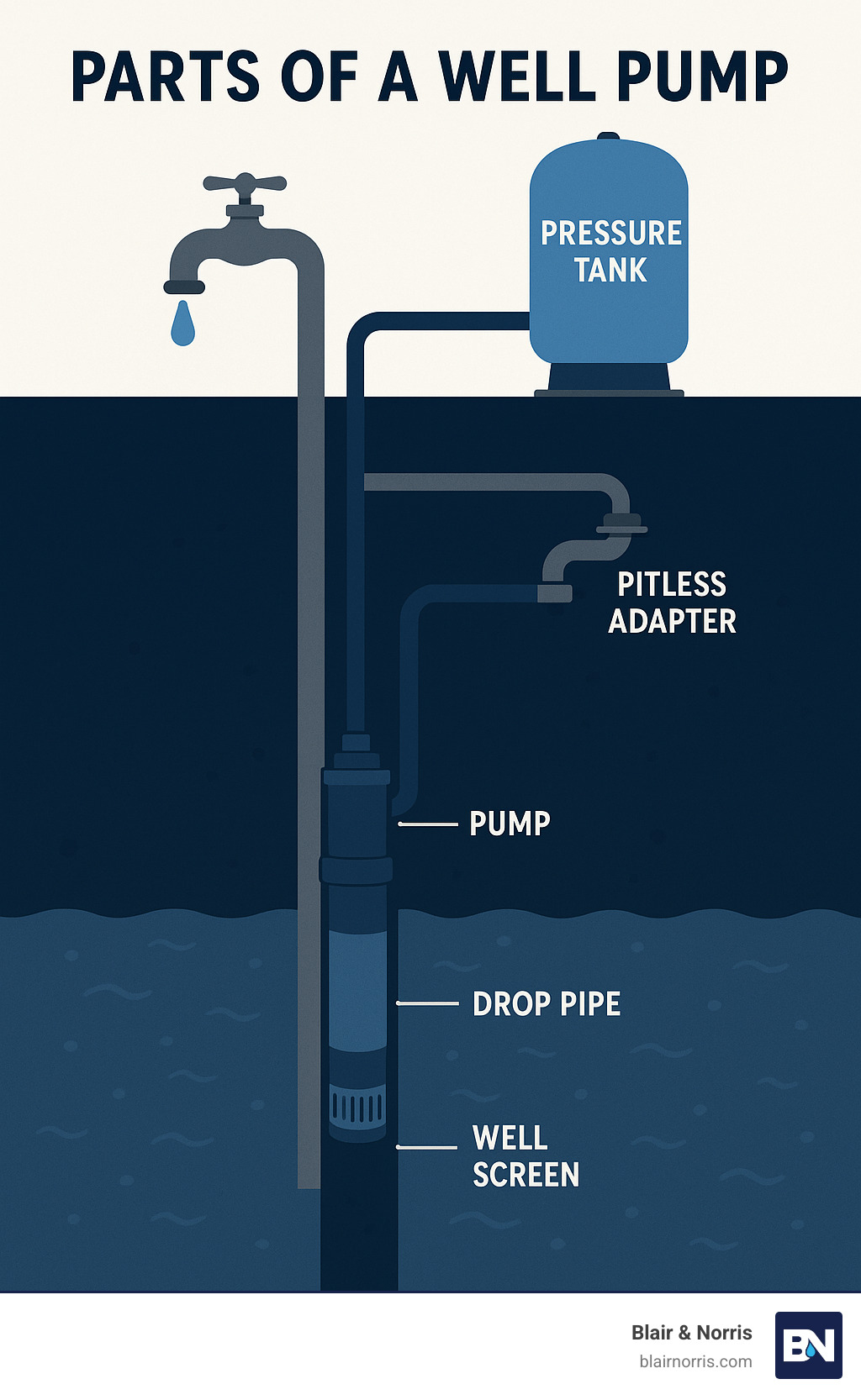
Basic parts of a well pump terms:
The Essential Parts of a Well Pump System
If you ever peek inside a well house you’ll find more than just a motor. Together the parts of a well pump below create steady, healthy water:
- Motor
- Impeller
- Diffuser
- Drop Pipe
- Check Valve
- Foot Valve (jet pumps)
- Pressure Tank
- Pressure Switch
- Control Box (submersibles)
- Wiring/Pump Cable
- Well Casing
- Well Cap
- Pitless Adapter
- Well Screen
- Gravel Pack
- Torque Arrestor
- Safety Rope
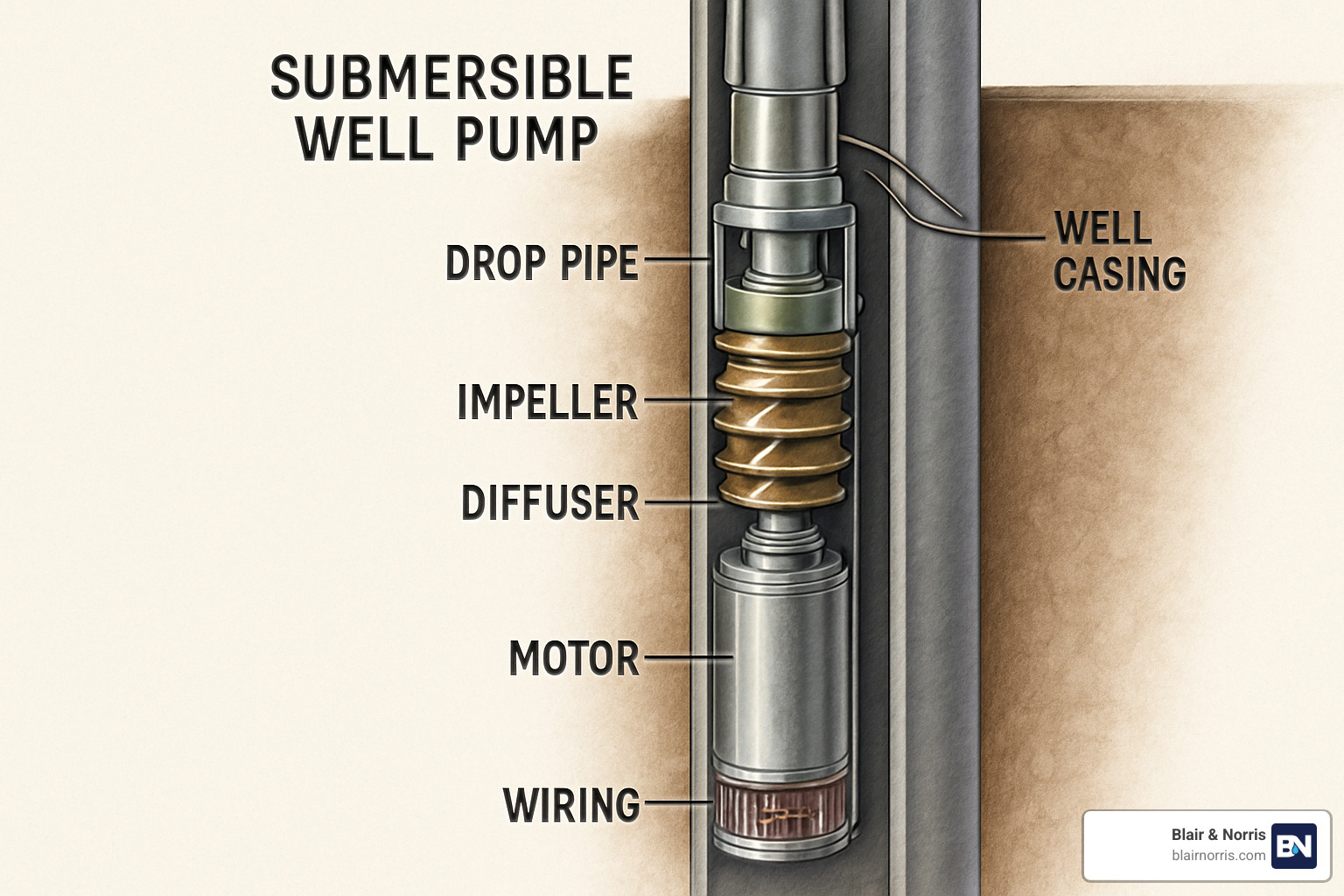
For a closer look, visit our Well Water System Diagram: 22 Key Components Explained.
How Each Part Works
The motor spins the impeller; the impeller lifts or draws water; one-way valves keep flow moving toward the house; the pressure tank stores a cushion of water; the pressure switch tells the pump when to work. Everything else—casing, cap, screen, pitless adapter—protects the water from dirt, insects, and freezing.
Why Every Part Matters
When valves leak, tanks lose air, or screens clog, you pay in higher power costs, dirty water, or shortened pump life. A few minutes learning these basics can save an expensive emergency call later.
Submersible Pumps vs Jet Pumps: Which Parts Differ?
Private wells usually rely on either a submersible pump (installed underwater) or a jet pump (above ground). The chart below highlights how their key parts vary.
| Feature | Submersible Pump | Shallow Well Jet Pump | Deep Well Jet Pump |
|---|---|---|---|
| Location | In the well, below water | Above ground | Above ground |
| Typical Depth Range | >25 ft (to 400 + ft) | 0–25 ft | 25–200 ft |
| Key Parts | Motor, impeller, check valve, drop pipe, cable, torque arrestor | Jet ejector, suction pipe, foot valve | Ejector pack (in-well), two pipes, foot valve |
| Maintenance | Infrequent, pump harder to access | Easy to reach | More parts to maintain |
| Efficiency | High (pushes water) | Moderate (limited suction) | Lower (recirculates water) |
Deep Well Jet Highlights
A two-pipe “ejector pack” sits in the well. One pipe sends water down; the venturi action lifts mixed water back up. Expect 3–4 gallons recirculated for every usable gallon.
Shallow Well Jet Highlights
A single suction pipe reaches water less than 25 ft deep. The ejector is built into the pump housing. Because atmospheric pressure limits suction, these pumps must be primed with water before start-up.
Choosing the right style—and matching parts—keeps pressure strong and energy bills low.
Beyond the Pump: Protective Well Components
A reliable system is about more than horsepower. These quiet guardians keep your water clean and flowing:
- Well Casing – steel or PVC sleeve that stops soil collapse.
- Well Cap – vented, critter-proof lid at ground level.
- Well Screen & Gravel Pack – first filter for sand and silt.
- Pitless Adapter – frost-proof, sanitary side outlet below the freeze line.
For more detail see Well System Components – Wellowner.org.
Pressure & Flow Control Hardware
The mechanical pump would burn out quickly without these three workhorses:
- Pressure Tank – stores pressurized water so the pump doesn’t start every time someone washes their hands. A quick rule: at least 1 gallon of draw-down capacity per pump GPM.
- Pressure Switch – senses tank pressure (e.g., 30/50 psi) and cycles the pump automatically.
- Check, Foot & Relief Valves – keep water moving one direction and release excess pressure for safety.

Sizing the tank correctly reduces “short-cycling,” cutting wear and electrical costs. More tips live in our How to Select the Best Water Well Pump.
Electrical, Plumbing & Accessory Parts
Electricity, plumbing, and a few simple add-ons keep everything safe:
- Pump Cable & Control Box – deliver and manage 115 V/230 V power. Waterproof splice kits keep moisture out.
- Cable Guards & Torque Arrestor – prevent chafing and twisting inside the casing.
- Safety Rope – a lifeline when the pump needs to come up.
- Drop Pipe – galvanized, PVC, or PEX; chosen for depth and water chemistry.
- Tank Tee & Ball Valve – one handy manifold for gauges, switches, and isolation.
- Sediment Filter & UV Light – optional polish for water clarity and disinfection.
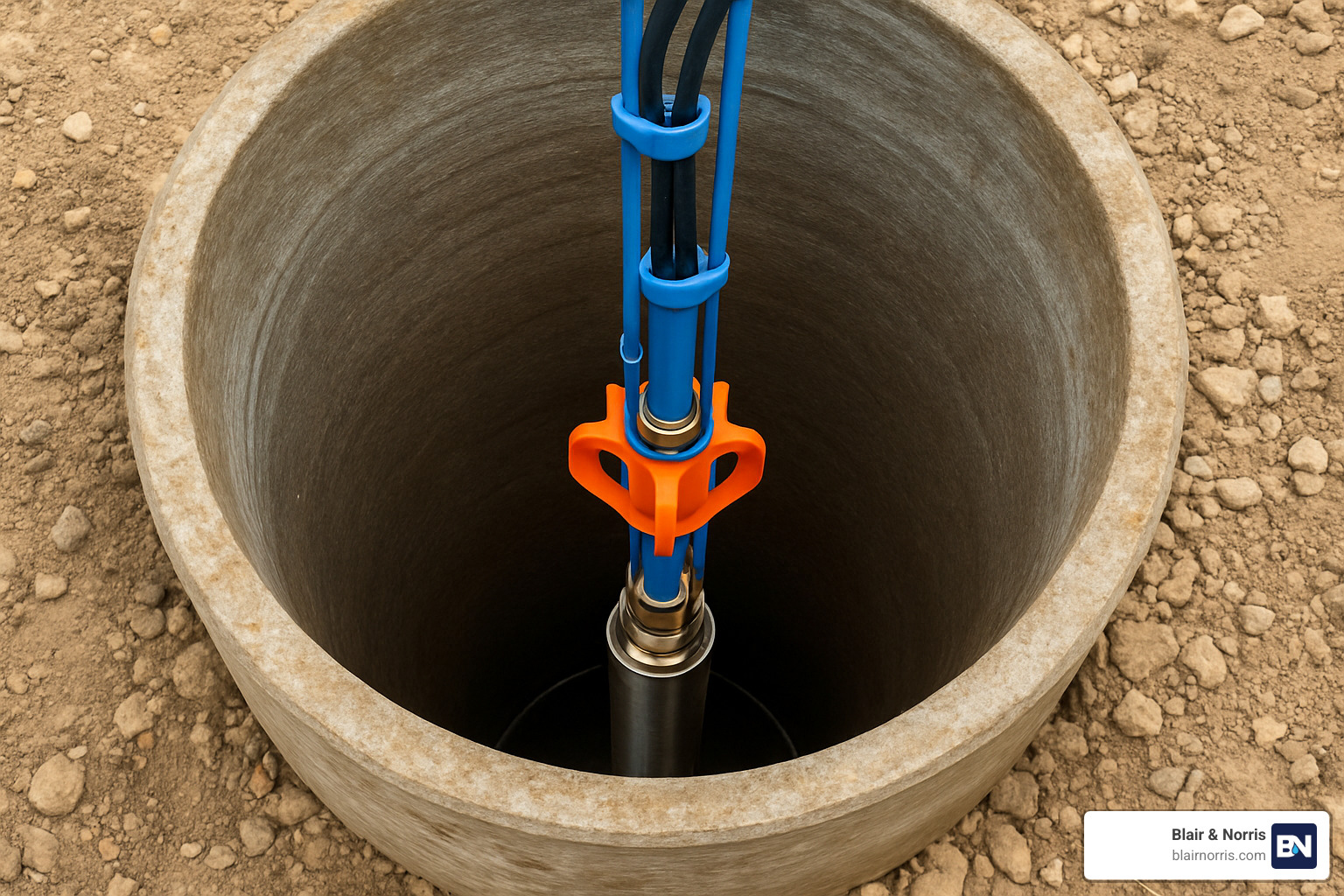
Variable-speed drives (VSDs) are becoming popular in Indiana. By ramping the motor up and down, they hold pressure rock-steady and can trim power costs.
Water Filtration & Treatment Add-Ons
Even clear water can hide surprises. A well-planned treatment chain keeps them out of your glass:
- Sediment Prefilter – blocks sand and grit.
- Activated Carbon – removes tastes, odors, and many chemicals.
- Water Softener – swaps hardness minerals for sodium or potassium.
- UV Disinfection – neutralizes bacteria and viruses (works only after sediment is removed).
- Reverse Osmosis (optional) – countertop purity at the kitchen sink.
Annual lab testing (find an EPA-certified lab here) confirms everything is working.
Correct order—sediment → carbon → softener → UV—protects each device and preserves pressure.
Sizing, Installation & Best Practices
Good design today prevents headaches tomorrow:
- Match the pump curve to both well depth and household peak demand.
- Provide at least one gallon of pressure-tank draw-down for every pump GPM.
- Install pitless adapters and water lines below the 36–42 inch Indiana frost line.
- Prime jet pumps before the first start.
- Secure the pump cable every 10 ft and add lightning/surge protection.
How to Prime a Jet Pump
- Turn off power.
- Remove the priming plug.
- Fill the pump housing with clean water.
- Replace the plug and restore power.
- Repeat once if flow does not start.
Maintenance, Troubleshooting & Warning Signs
Spend 15 minutes once a year and you can avoid most emergencies:
- Inspect the well cap and casing for cracks.
- Check tank air pressure with a tire gauge (2 psi below cut-in).
- Time a five-gallon flow test from an outdoor spigot.
- Test water for bacteria and nitrates after any repair.
Common red flags:
- Short-cycling – usually a tank or switch issue.
- Low pressure – clogged screen, worn pump, or leaking pipe.
- Air in lines – drop-pipe leak or low water level.
- Higher electric bill – pump running too often.
- New pump noises – bearings wearing out; call a pro.
DIY inspections are fine, but for electrical work or deep-well pulls, call a licensed contractor—Blair & Norris is on the phone 24/7.
Frequently Asked Questions about Well Pump Parts
How long do the main parts of a well pump last?
Wondering how long your parts of a well pump will keep doing their job? It depends on a few factors—like your water quality, how much you use your system, and whether you keep up with maintenance.
Submersible pumps are built for the long haul and usually last between 8 and 15 years. If you have a jet pump (common on shallow wells), you’ll typically get 8 to 12 years of service with regular checkups.
The pressure tank—whether it’s a bladder or diaphragm type—often lasts 5 to 15 years. And for those smaller, hardworking pieces (like your pressure switches, check and foot valves, and control boxes), most folks see them last 5 to 10 years, especially if you fix problems early and avoid electrical surges.
Of course, a little TLC goes a long way. Annual inspections and water testing can prevent early breakdowns and save you from bigger headaches down the line.
What size pressure tank do I need for a 10 GPM pump?
Choosing the right pressure tank is key to a smooth-running system. For a 10 gallons per minute (GPM) pump, you’ll want a tank that gives you at least 10 gallons of drawdown. Drawdown is just the usable water before your pump kicks back on—and it’s crucial for reducing pump wear.
In practical terms, that usually means a 30–40 gallon pressure tank (not the total tank size, but the drawdown capacity noted in the specs). Pick the right size, and your pump won’t have to work overtime—saving energy and keeping your water pressure steady.
Can I upgrade from a jet pump to a submersible in the same well?
Many homeowners consider upgrading their parts of a well pump from a jet pump to a submersible for greater efficiency and quieter operation. The good news? You often can—as long as your well casing is wide enough (usually at least 4 inches in diameter) and deep enough to handle the new pump and drop pipe.
It’s a smart upgrade if your current jet pump is struggling, or if you’re tired of priming and want a more reliable, lower-maintenance setup. Just be sure to have an experienced well contractor take a look at your well’s specs to confirm it’s a match.
Still curious about your system or ready to talk upgrades? Reach out to us at Blair & Norris—we’re always happy to help you get the most out of your well pump system, day or night!
Conclusion
When it comes to having safe and reliable water at home, every single part of a well pump system counts. From the hardworking pump and motor deep underground, to the pressure tank, check valves, filters, and the sturdy casing that keeps everything safe, each piece plays a vital role in your family’s health and comfort. Knowing what these parts do—and why they matter—gives you the power to spot issues early, make smart improvements, and keep your water running clear year after year.
If you ever need help—whether it’s a tricky installation, a mystery drop in pressure, or you’re just not sure which part is acting up—remember, you’re never on your own. Blair & Norris has proudly served Indianapolis and Central Indiana homeowners with honest, family-owned service for over 75 years. We’re here with 24/7 live phone support and real people who care about your water as much as you do.
Curious about what goes into installing a well pump, or want to plan ahead? You’ll find practical advice in Your Guide to Installing a Well Pump: Types, Costs, and Maintenance. And of course, if you ever need a hand, just give us a call—your water supply is our top priority.
Blair & Norris—your trusted neighbors for well pump expertise, proudly serving Indianapolis and the surrounding communities.