
What Every Homeowner Should Know About Peat Moss Septic System Maintenance
Peat moss septic system maintenance is something most homeowners don’t think about until something goes wrong — and by then, the repair bill can be significant. For many residents in Central Indiana, from the sprawling estates of Carmel to the quiet rural lots of Hendricks County, these systems are the invisible workhorses of the home. However, because they are “out of sight, out of mind,” they are often the most neglected part of a property’s infrastructure. In Indiana, where soil conditions vary wildly from heavy clay to sandy loam, peat biofilters have become a popular solution for lots that cannot support a traditional stone-and-pipe leach field. But this advanced technology requires a higher level of stewardship than the systems of our grandparents’ generation.
When you ignore your peat biofilter, you aren’t just risking a minor plumbing clog; you are risking the total failure of a system that can cost as much as a new luxury vehicle to replace. Routine maintenance is the only thing standing between a high-performing, eco-friendly waste solution and a soggy, expensive disaster in your backyard. This guide is designed to provide a comprehensive look at why these systems fail, the dangers of trying to fix them yourself, and how professional oversight ensures your home remains safe and compliant with local health regulations. We will explore the biological nuances of the peat media, the mechanical components that distribute the effluent, and the legal framework that governs onsite sewage systems in the Hoosier state.
Here’s what routine maintenance involves, at a glance:
- Annual inspections — required by many counties for alternative septic systems to ensure environmental safety.
- Peat surface raking (“fluffing”) — done during inspections to restore drainage, break up surface crusting, and extend media life.
- Effluent sampling and testing — confirms the system is treating wastewater properly and meeting discharge standards.
- Septic tank pumping — every 2–5 years, same as a conventional system, to prevent solids from reaching the peat.
- Peat media replacement — typically needed every 8–15 years, depending on use, household size, and upkeep.
- Distribution plate inspection and leveling — ensures effluent spreads evenly across the peat bed to prevent localized saturation.
- Surface runoff diversion — prevents hydraulic overloading from rainwater intrusion which can drown the beneficial microbes.
Skipping these steps doesn’t just shorten the life of your peat filter. It can lead to a full media replacement — a job that runs into the thousands of dollars. I’m Mack Blair, and with over 30 years of septic service experience across Central Indiana, I’ve seen how proper septic system maintenance separates a long-lasting system from a costly failure. In the sections below, I’ll walk you through everything you need to know — from the core problems that plague these systems to why professional intervention is the only way to protect your investment.
Core Problems and the Implications of Peat Filter Failure
When peat moss septic system maintenance is ignored, the system doesn’t just stop working overnight — it undergoes a slow, invisible degradation that can have catastrophic consequences for your property and the local environment. The most common issue we encounter in the field is peat compaction. Over time, the organic fibers in the peat naturally break down and settle due to the constant cycle of wetting and drying. As they lose their structure, the vital air pockets within the media disappear. This is a critical failure point because the system relies on aerobic (oxygen-loving) microbes to treat the waste. Without oxygen, these microbes die off, and the system becomes “anaerobic.”
An anaerobic peat bed is a recipe for disaster. Instead of clean, treated water, the system begins to discharge partially treated effluent. This leads to the formation of a “biomat” — a thick, slimy layer of bacteria and waste that seals off the bottom of the filter and the soil below. Once this seal forms, the water has nowhere to go but up. This results in ponding water in your yard, which is not only a nuisance but a significant health hazard. According to the Indiana Department of Health, improperly treated sewage can contaminate groundwater and surface water, spreading pathogens like E. coli, hepatitis A, and various parasites. In areas like Johnson County or Morgan County, where many homes rely on private wells, a failing septic system can directly contaminate a family’s drinking water supply.
The Financial and Legal Fallout
The implications of a failing peat system extend far beyond a smelly yard. In Indiana, septic systems are governed by strict health codes, specifically Rule 410 IAC 6-8.3. If a system is found to be failing — characterized by surfacing sewage, odors, or discharge into a tile drain — the local health department can issue a notice of violation. This can lead to mandatory, high-cost repairs and can even make a home legally uninhabitable until the system is brought back into compliance.
Furthermore, the financial impact on property value is immense. A home with a failing septic system is nearly impossible to sell. During a real estate transaction, a failed inspection will often require the seller to escrow the full cost of a system replacement, which can range from $10,000 to over $25,000 depending on the number of modules and the accessibility of the site. Identifying 7 common septic tank issues early is the only way to prevent these costs from ballooning into a financial nightmare.
Hydraulic Overloading: The Silent Killer
Another major culprit in system failure is hydraulic overloading. This occurs when the system is forced to handle more water than its design capacity. In many Indianapolis suburbs, we see this happen when a family grows, or when a leaky fixture goes unnoticed for months. When the peat bed is constantly saturated, it cannot “breathe,” accelerating the decomposition of the peat fibers. This saturation also prevents the chemical adsorption process — where the peat acts like a magnet for contaminants — from occurring effectively. The result is a system that looks functional from the surface but is failing to protect the environment below. Homeowners must be vigilant about water conservation and ensure that sump pumps and roof drains are never connected to the septic system.
Understanding the Science of Your Peat Moss Septic System
To appreciate why maintenance is so technical, one must understand the complex science happening inside the biofilter. Unlike a conventional system that uses soil as the primary filter, a peat system uses a specialized bed of Sphagnum peat moss as a “secondary treatment” step. This allows for installation in areas with heavy clay or high water tables, common in regions like Zionsville, Noblesville, and Fishers. The peat acts as a pre-filter, cleaning the water to a high standard before it ever touches the native soil.
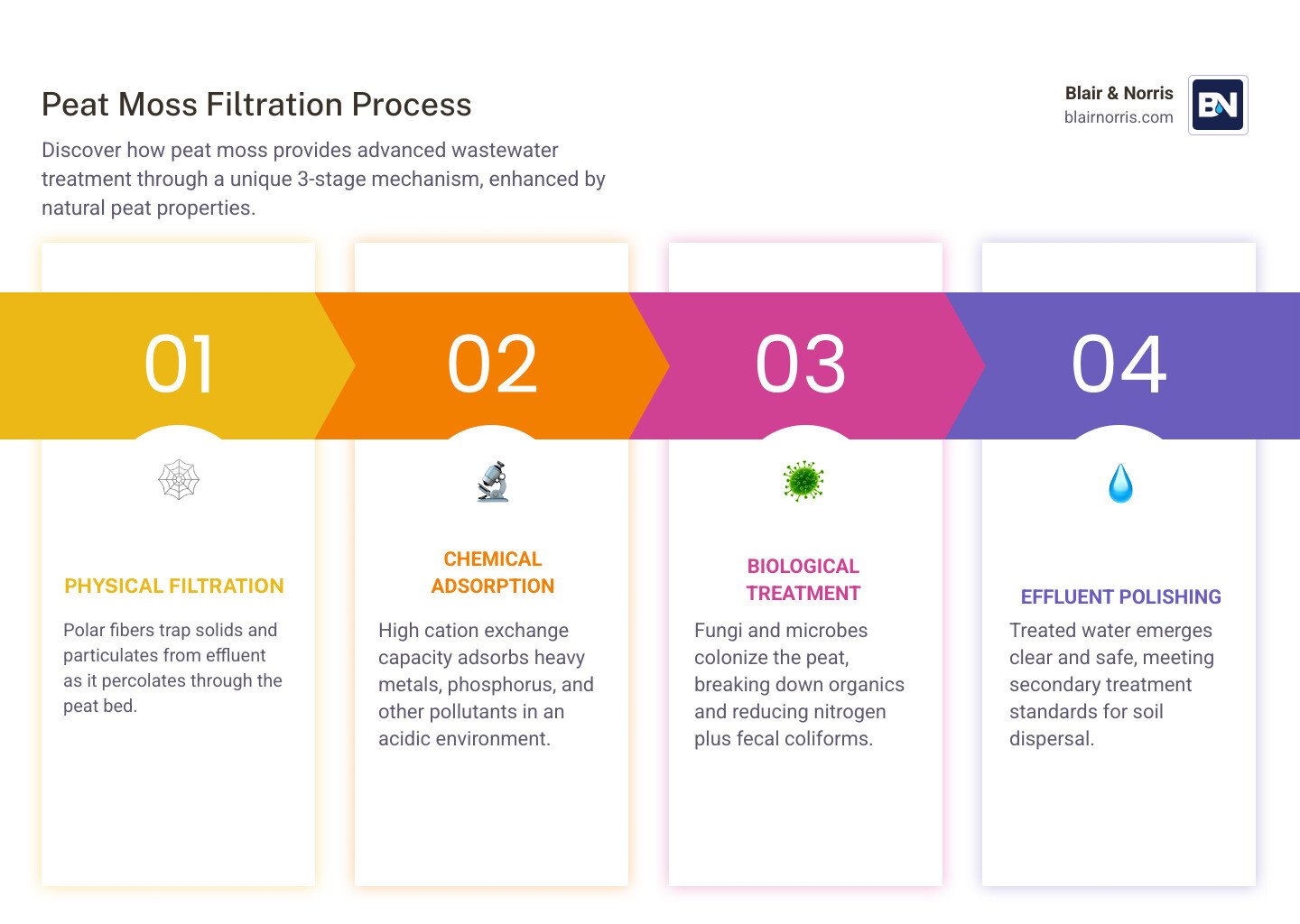
As wastewater leaves the septic tank, it is distributed over the peat. This peat isn’t the fine-milled stuff you find in a garden center; it is a coarse, air-dried variety harvested specifically for its fibrous integrity and high Cation Exchange Capacity (CEC). The treatment happens through three distinct processes:
- Physical Filtration: The dense, multi-layered network of peat fibers acts as a microscopic strainer, catching suspended solids and organic particles that escaped the septic tank. This prevents the downstream soil from becoming clogged.
- Chemical Adsorption: Peat is naturally polar and acidic. It acts like a chemical sponge, bonding with nutrients like phosphorus and nitrogen, as well as heavy metals and complex organic molecules, pulling them out of the water stream and locking them within the peat structure.
- Biological Treatment: The peat provides a massive surface area for a diverse colony of microbes. These “elite waste warriors” include specialized fungi and bacteria that thrive in the acidic environment. They consume organic matter and pathogens at a rate far higher than traditional soil microbes, effectively “digesting” the waste.
This ecosystem is delicate and requires a precise balance of moisture, nutrients, and air. As noted by Purdue University Extension, maintaining the proper balance of moisture and oxygen is essential for these biological processes to function. If the peat becomes too dry, the microbes die; if it becomes too wet, they drown. This is why professional “fluffing” and leveling of the distribution plates are so critical — they ensure the water is spread evenly, preventing any one area of the peat from becoming overwhelmed and anaerobic. Without this even distribution, the system develops “short-circuiting,” where water finds a single path through the media, leaving the rest of the peat unused while the active path becomes quickly exhausted.
The High Cost and Risks of DIY Peat Moss Septic System Maintenance
It is incredibly tempting for a handy homeowner to think, “It’s just moss, I can fix this myself.” However, attempting DIY peat moss septic system maintenance or media replacement is one of the most common ways homeowners turn a manageable repair into a total system loss. The risks are multifaceted, ranging from physical health hazards to legal and financial liabilities that can haunt a property owner for years.
The Material Sourcing Trap
The first hurdle for the DIYer is the material itself. You cannot use garden-store peat moss. Horticultural peat is typically heat-dried, which collapses the cellular structure of the fibers and removes the natural waxes that allow for proper water movement. If you put garden peat into a septic module, it will turn into a solid, impermeable block of mud within weeks, causing an immediate backup into your home. The specialized “unicorn peat” required for these systems is harvested from specific bogs and processed under strict quality controls to ensure it has the correct porosity, fiber length, and cation exchange capacity. Sourcing this material as an individual is nearly impossible, as manufacturers typically only sell to certified and factory-trained service providers to ensure the integrity of their systems.
Precision and Technical Failure
Even if you could source the correct peat, the installation is a precision engineering task. The peat must be layered and compacted to a specific density. If it is too loose, the effluent will “channel” — creating a direct path through the media without being treated. If it is too tight, the system will flood. Furthermore, the distribution plates that sit atop the peat must be perfectly level. A deviation of even half an inch can cause 90% of the wastewater to dump into one corner of the filter, leading to localized failure and the premature death of the entire peat bed. Professionals use laser levels and specialized raking tools to ensure the surface is perfectly prepared for optimal effluent distribution.
Legal and Health Hazards
In Indiana, working on a septic system without a license can lead to significant legal trouble. Most counties require permits for any work beyond basic tank pumping. If a DIY repair fails and results in groundwater contamination, the homeowner is held strictly liable for all remediation costs. There is also the matter of biohazards. Spent peat media has been saturated with raw sewage for a decade; it is teeming with pathogens, including viruses and bacteria that can survive for long periods in the moist peat environment. Professionals use specialized vacuum equipment and personal protective gear (PPE) to handle this material, ensuring it is transported and disposed of at licensed facilities. Attempting to shovel out old peat yourself exposes you and your family to serious illness. For a deeper understanding of the complexities involved, consult the ultimate guide to septic tank maintenance.
Positioning the Expert Solution: Why Blair & Norris is the Choice for Indiana
Given the complexities and risks involved, peat moss septic system maintenance is a task that demands professional expertise. At Blair & Norris, we have spent 75 years perfecting the art and science of septic care in Central Indiana. We don’t just “look” at your system; we provide a comprehensive diagnostic service that ensures every component of your peat biofilter is functioning at peak efficiency. Our legacy is built on trust, technical proficiency, and a deep understanding of the local environment.
Our professional maintenance protocol includes a multi-point inspection that covers the primary tank, the effluent filter, the distribution network, and the peat media itself. We use precision leveling tools to ensure your distribution plates are perfectly balanced, and our technicians are factory-trained in the specific “fluffing” techniques required to extend the life of your peat media. By catching small issues — like a slightly tilted plate, a partially clogged filter, or a minor leak in a riser — we can often add years to the lifespan of your system, saving you thousands of dollars in premature replacement costs.
The Blair & Norris Advantage
When you choose Blair & Norris, you are choosing a partner who understands the unique environmental challenges of Indiana. From the heavy clay soils of Hamilton County to the high water tables of the White River valley, we know how to calibrate your system for local conditions. We also handle the heavy lifting of compliance, providing the necessary documentation for county health departments to ensure your system remains in good standing. Our team stays up-to-date on the latest regulations from the Indiana Department of Health, so you don’t have to.
We also emphasize the importance of septic tank cleaning and inspection as the first line of defense. If the primary tank isn’t functioning, the peat filter doesn’t stand a chance. Our holistic approach ensures that the entire treatment train is working in harmony. As the EPA notes, regular professional maintenance is the single most effective way to protect the long-term viability of an onsite wastewater system and protect the value of your home.
Routine Maintenance Strategies to Extend System Life
| System Component | Maintenance Frequency | Critical Task | Impact on System |
|---|---|---|---|
| Peat Biofilter Media | Annual | Raking/Fluffing | Prevents compaction and restores oxygen flow |
| Distribution Plates | Annual | Leveling & Cleaning | Ensures even effluent loading across the media |
| Effluent Filter | Annual | Cleaning/Rinsing | Prevents solids from clogging the peat fibers |
| Septic Tank | 2-5 Years | Pumping & Inspection | Removes sludge that can overwhelm the biofilter |
| Media Replacement | 8-15 Years | Full Replacement | Restores treatment capacity after media exhaustion |
Beyond our professional visits, we empower homeowners with the knowledge they need to protect their systems daily. This includes water conservation strategies, the importance of using septic-safe cleaners, and ensuring that surface drainage is always directed away from the biofilter modules. We are not just your service providers; we are your consultants in home health and environmental protection.
Conclusion
A peat moss septic system is a marvel of natural engineering, providing high-level wastewater treatment while protecting the Indiana environment we all share. However, the longevity and safety of this system depend entirely on the quality of its maintenance. The risks of neglect — from environmental contamination and health hazards to massive financial loss and legal liabilities — are simply too high to ignore. The complexities of the biological and chemical processes within the peat make DIY attempts a dangerous gamble that rarely pays off.
At Blair & Norris, we are committed to providing the ethical, high-quality service that has been our family’s hallmark for three generations. Whether you are in Indianapolis, Greenwood, Plainfield, or the surrounding rural areas, our team is ready to ensure your peat system remains a silent, effective asset to your home rather than a costly liability. We take pride in our work because we know that a well-maintained septic system is the foundation of a healthy home and a clean community. Don’t wait for a backup, a foul odor, or a health department notice to take action. Proactive care is the most cost-effective strategy for any homeowner.
Contact Blair & Norris today to schedule your comprehensive peat moss septic system inspection and get a clear, honest estimate for your maintenance needs. Let our experts keep your system running at peak performance for years to come!