
Why Every Homeowner Needs Easy Septic Access
Plumbing supply septic tank risers and lids are essential components that bring your buried septic tank access to ground level, eliminating the need for costly excavation every time maintenance is required.
Key plumbing supply septic tank risers and lids components:
- Riser rings – Stackable plastic or concrete rings (6″, 12″ heights)
- Access lids – Flat or domed covers with handles for easy removal
- Adapter rings – Connect risers to existing concrete tank openings
- Safety screens – Prevent accidents if lid is removed
- Sealant materials – Butyl tape for watertight connections
- Fasteners – Stainless steel screws for secure installation
Are you tired of digging up your septic system every time that it needs serviced? One homeowner shared this frustration: “My septic tank was 2 feet under so I installed some risers on the 24 inch lids. Everything went well until I found out when they came and pumped it there is a third lid.. an inspection lid for the filter.”
This common scenario highlights why proper riser systems matter. Most septic tanks are buried 6 inches to 4 feet underground, making routine pumping and inspections a major excavation project without risers.
I’m Mack Blair, and over my 30 years in the septic and plumbing industry, I’ve helped countless Central Indiana homeowners solve access problems with quality plumbing supply septic tank risers and lids installations. From my early days learning the trade to building Blair & Norris into a trusted local service provider, I’ve seen how the right riser system transforms septic maintenance from a dreaded chore into a simple routine.
Why Septic Tank Risers and Lids are Essential for Your Home
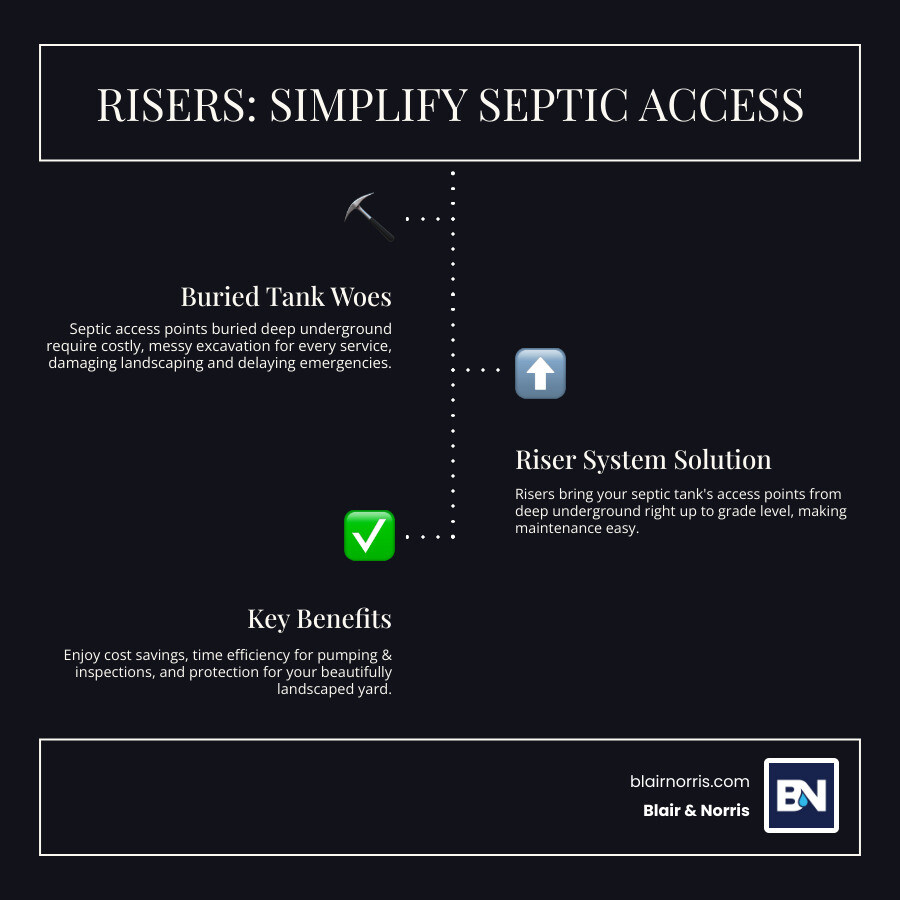
Imagine workers digging up your lawn just to find your septic tank lid. This frustrating scenario doesn’t have to be your reality. Plumbing supply septic tank risers and lids transform septic maintenance from a dreaded excavation project into a simple process by bringing buried tank access to ground level.
Risers are like your septic system’s front door—always accessible. No more guessing games, destroyed flower beds, or difficult maintenance. Just easy access that simplifies caring for your septic system.
The benefits go beyond convenience. Easy maintenance encourages proper pumping schedules and regular inspections, catching problems early. This proactive approach keeps your system healthy and saves you money on future repairs.
Plus, a well-maintained, accessible septic system increases your home’s value. Potential buyers see a professional riser system as a sign of a well-cared-for property. Learn more about preventing issues in our guide on 7 Common Septic Tank Issues.
The Problem with Buried Septic Tank Lids
Buried septic tank lids are a major hassle. Most are 6 inches to 4 feet underground, and finding them is an expensive treasure hunt. We’ve seen homeowners spend hours searching, only to call us in frustration.
The excavation costs add up quickly. Many local companies charge extra fees—sometimes $75 or more—just for the digging. Then there’s the damage to your landscaping. That beautiful lawn or those carefully planted shrubs might not survive the excavation process.
But the real problems go deeper than inconvenience and cost. Safety hazards are a serious concern. Older tanks may have deteriorated lids that could collapse, and the toxic gases septic tanks produce can be deadly in enclosed spaces.
When emergencies strike, buried lids create delayed service. If you have a backup, the last thing you want is a service crew spending precious time locating your tank. Our article on What to Do If You Have a Full Septic Tank explains why quick access is critical.
How Risers Revolutionize Septic Maintenance
Plumbing supply septic tank risers and lids are game-changers. By bringing access to grade, they eliminate digging. Our service trucks can pull up, pop the lid, and get to work immediately. A job that took hours now takes minutes.
Quick inspections become routine when your tank is this accessible. Annual inspections become simple check-ups that help catch small problems before they become expensive disasters. Faster pumping means less disruption and lower service costs.
But risers do more than just provide convenience—they actively protect your tank from surface water intrusion. A properly installed riser system creates a watertight seal that keeps rainwater and debris out of your septic tank. This protection is crucial for maintaining the delicate bacterial balance your system needs to function.
The riser cover sits at or slightly above ground level, and we ensure proper grading to direct water away. This simple design prevents water infiltration that can overwhelm your system and damage your drain field. To understand how this fits into the bigger picture, check out What to Expect During a Septic Pumping Service.
Your Guide to Plumbing Supply Septic Tank Risers and Lids
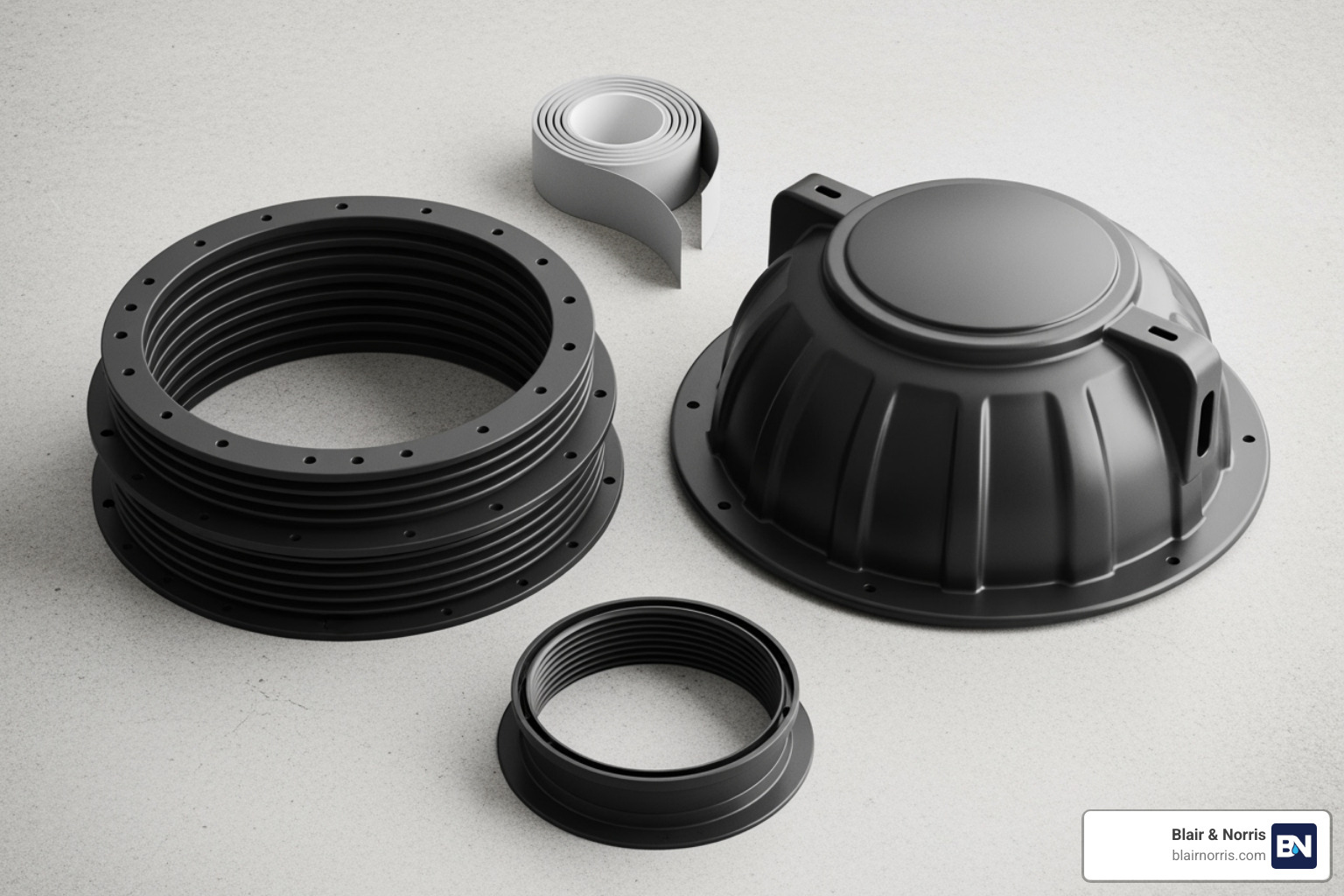
When you’re ready to invest in plumbing supply septic tank risers and lids, it helps to understand what you’re actually buying. Think of a riser system like building blocks for adults – you stack cylindrical rings on top of each other until you reach ground level, then cap it off with a secure lid.
The beauty of these systems lies in their simplicity. Most setups include stackable riser rings that come in convenient heights, a sturdy access lid with handles for easy removal, and an adapter ring that connects everything to your existing tank opening. You’ll also need some sealant tape to keep everything watertight and stainless steel screws to hold it all together securely.
Common Materials: Plastic vs. Concrete
Choosing between plastic and concrete risers is one of your first big decisions. After three decades in this business, I can tell you that both have their place, but the choice often comes down to your specific situation and budget.
High-density polyethylene (HDPE) plastic risers have become incredibly popular, and for good reason. They’re lightweight enough that you won’t throw out your back moving them around, yet strong enough to handle everything from lawnmower traffic to Indiana’s freeze-thaw cycles. The corrosion resistance is excellent – they won’t rust, crack, or deteriorate like some older materials might.
Precast concrete risers, on the other hand, are the heavy-duty champions. When you need maximum strength and durability, concrete delivers. However, they require machinery or several strong people to install, which often means calling in the professionals from day one.
| Feature | Plastic (HDPE) Risers | Concrete Risers |
|---|---|---|
| Weight | Lightweight, easy to handle and install | Very heavy, requires machinery or multiple people to move |
| Durability | Excellent corrosion resistance, strong, flexible | Very durable, can withstand heavy loads |
| Ease of Installation | Much easier for DIY or quick professional install | More complex, often requires professional installation |
| Cost | Generally more affordable for individual components | Can be more expensive due to material and installation labor |
| Sealing | Requires butyl sealant tape between sections | Often relies on mortar or specialized sealants |
For most homeowners in Central Indiana, plastic risers offer the sweet spot of affordability, durability, and DIY-friendly installation. They feature internal structural ribs for added strength and can easily handle the weight of your riding mower without breaking a sweat.
Understanding Sizes, Shapes, and Components
Here’s where things get a bit more technical, but don’t worry – it’s not rocket science. Your riser system needs to match your tank’s opening and reach from wherever your tank sits underground up to ground level.
Riser rings are your main building blocks, typically available in 6-inch and 12-inch heights. This means if your tank is 18 inches underground, you might use one 12-inch ring and one 6-inch ring to reach the surface. Common diameters include 20-inch and 24-inch rounds, though some concrete options stretch up to 30 inches for larger tanks.
The access lid is more important than you might think. Look for flat or domed designs with built-in handles – trust me, you’ll appreciate those handles when it’s time for maintenance. Some lids are designed to sit flush with your lawn, while others have a slight dome that’s easier to locate.
Adapter rings are the unsung heroes of retrofit installations. If you’re adding risers to an existing concrete tank, chances are your tank’s opening is square or rectangular, not round. A good adapter ring can cover openings up to 25 inches square or 27 inches round, creating a perfect connection point for your circular risers.
Don’t overlook the small but crucial components. Safety screens can support up to 250 pounds and prevent accidents if a lid gets damaged or improperly secured. Butyl sealant tape creates that all-important watertight seal between components, keeping odors in and surface water out. And while many kits include basic fasteners, upgrading to stainless steel screws is worth every penny in our humid Indiana climate – they won’t rust or corrode over time.
The key to success is getting the measurements right and choosing components that work together as a complete system. Whether you buy everything as a kit or piece it together individually, make sure every component is compatible and properly sealed.
How to Choose the Right System for Your Tank
Choosing the correct plumbing supply septic tank risers and lids system might seem overwhelming at first, but it’s really just about getting two things right: accurate measurements and understanding your specific needs. Think of it like buying a new shirt – you need to know your size and what style works best for your lifestyle.
For more information on septic systems in our area, you might find our article on Is a Residential Septic Tank Right for You in Indianapolis? helpful.
Measuring Your Septic Tank for a Perfect Fit
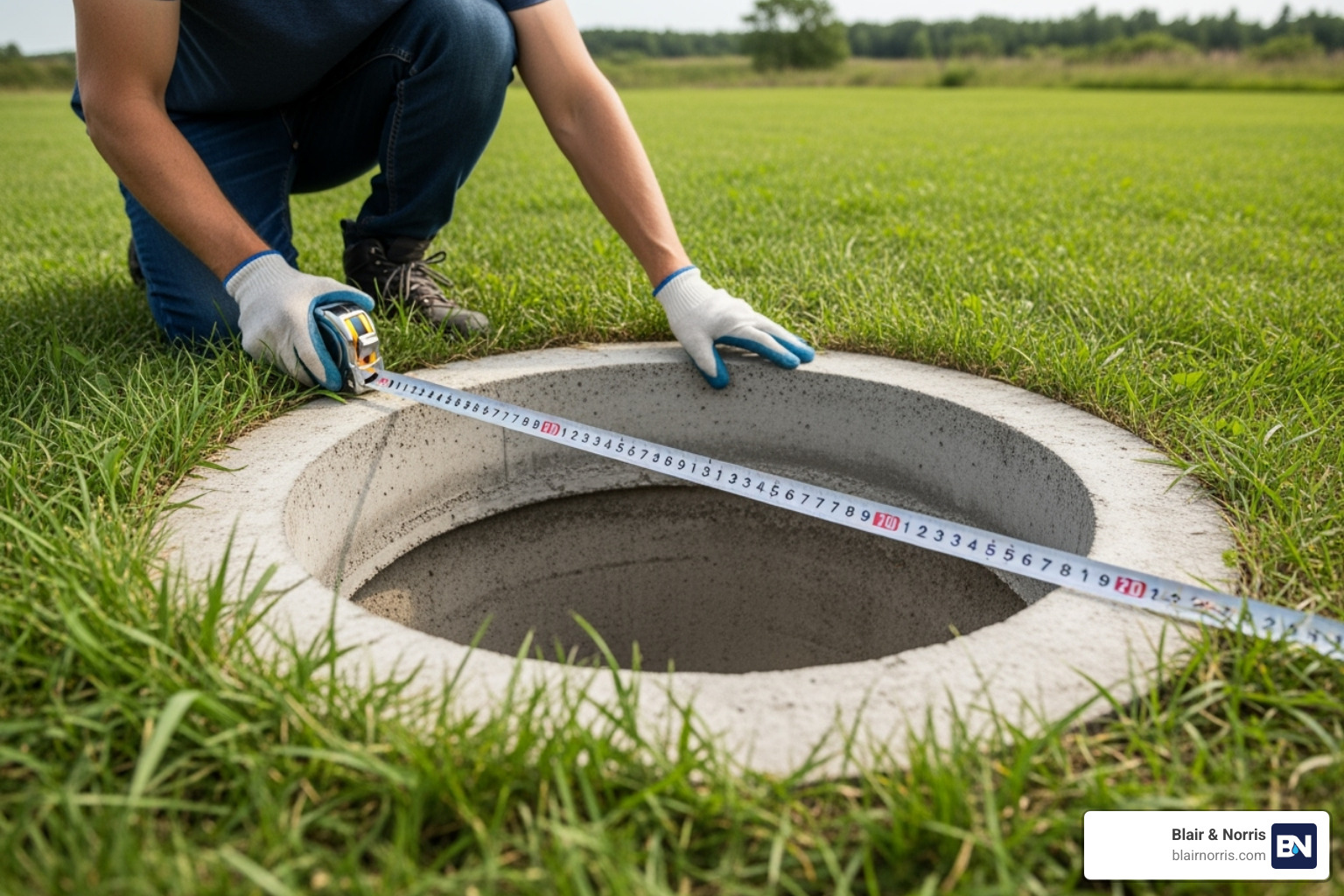
Getting the measurements right is absolutely critical. I’ve seen too many homeowners end up with parts that don’t fit because they rushed through this step. Here’s the straightforward approach we use:
Start by locating your septic tank’s main access port. This is typically the larger opening where pumping takes place, usually around 10 inches in diameter, though sizes can vary depending on your tank’s age and manufacturer.
For round openings, simply measure straight across the diameter of the existing access hole. Easy enough – just make sure you’re measuring the actual opening, not the lid that covers it.
Square or rectangular openings require a bit more math. Since most modern risers are circular, you’ll need to measure diagonally across the access port from corner to corner. Your chosen riser’s inner diameter must be larger than this diagonal measurement to fit properly. For a square opening, you can multiply one side’s length by 1.414 to get the diagonal distance.
The height measurement is equally important. Measure from the top of your septic tank’s access opening straight up to your finished ground level. This tells you exactly how much height you need to add with your riser sections. You want the final lid to sit flush with or slightly above ground level for proper drainage.
Choosing the Right Plumbing Supply Septic Tank Risers and Lids
Once you have your measurements in hand, you’ll need to decide between purchasing a complete riser kit or buying individual components. Riser kits are usually the smarter choice for most homeowners because they include everything you need: the adapter ring, riser sections, lid, and all necessary fasteners. Everything is designed to work together, which eliminates compatibility headaches and often saves money too.
However, individual components make sense when you have unique requirements. Maybe you need a specific diameter for a smaller inspection port, or you want to upgrade to a heavy-duty lid for areas where equipment will pass over.
The adapter ring deserves special attention because it’s the foundation of your entire system. This piece connects your existing tank opening to the new riser system. It must match both your tank’s opening size and shape and be compatible with your chosen riser diameter. Some adapter rings are quite versatile, accommodating various square and round openings while accepting different riser sizes.
Consider the load capacity of your lid carefully. If you regularly mow over the area or occasionally drive light equipment across it, make sure your system can handle the weight. Many modern plastic risers are engineered with structural reinforcements specifically for this purpose.
You can see a catalog of riser types from manufacturers to help visualize your options and compare different systems before making your final decision.
Installation and Safety Considerations
Installing plumbing supply septic tank risers and lids can be a rewarding DIY project for homeowners with basic skills, but it’s not something to take lightly. After three decades in this business, I’ve seen what happens when installations go right—and unfortunately, when they go wrong. The key is understanding both the process and the very real safety risks involved.
If you’re comfortable with basic home improvement tasks and have the right tools, a plastic riser installation might be within your wheelhouse. However, concrete risers or complex situations definitely call for professional help. When in doubt, our experienced team at Blair & Norris is always ready to ensure your installation is done safely and correctly.
Installation Best Practices for Plumbing Supply Septic Tank Risers and Lids
A proper riser installation creates a system that’s secure, watertight, and easily accessible for years to come. The process requires patience and attention to detail, but the results are worth it.
Excavating and cleaning is your first step, and it’s crucial to do it carefully. You’ll need to dig around your existing septic tank lid, which can be anywhere from 6 inches to 4 feet underground. Once you’ve exposed the tank, take time to thoroughly clean the surface where the adapter ring will sit. Any dirt, debris, or moisture left behind can compromise your seal.
Attaching the adapter ring comes next, and this is where precision matters most. The adapter ring creates the connection between your existing tank and the new riser system. For concrete tanks, we typically use stainless steel tapcon screws to ensure a rock-solid connection that won’t corrode over time. If your original lid is square and you’re installing a circular riser, you’ll need to remove that old lid completely.
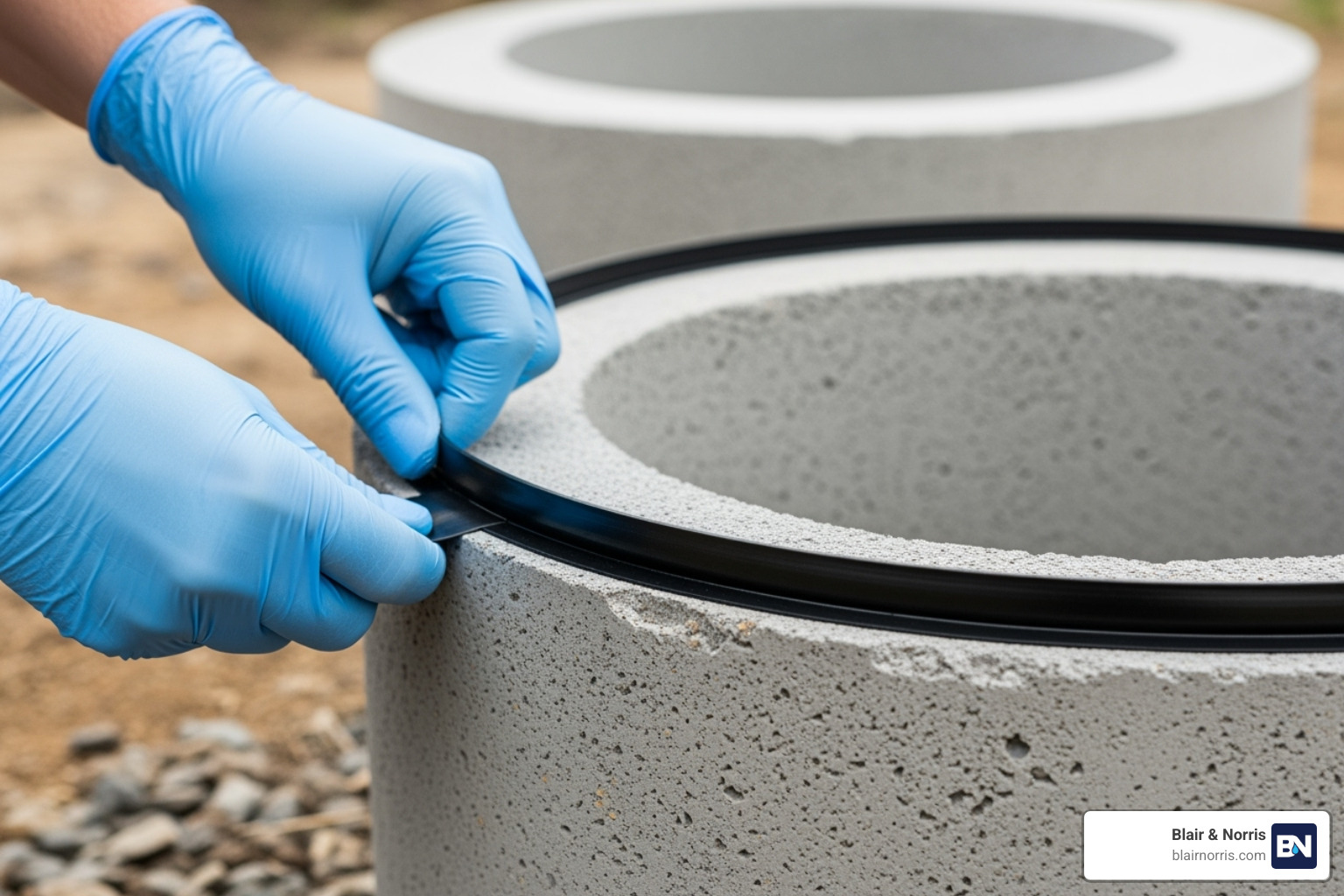
Applying butyl sealant tape is what transforms your riser from just stacked rings into a truly watertight system. This specialized tape creates a compression seal that keeps surface water out and prevents any odors from escaping. You’ll apply it to the top of the adapter ring before placing your first riser section, and between each additional section as you stack them.
Stacking risers requires careful alignment and patience. Most quality risers are designed with interlocking features that help them “lock into position” for stability. As you add each section, make sure everything stays level and properly aligned. The goal is to bring your access point flush with or slightly above ground level.
Securing with screws ensures your system stays together through freeze-thaw cycles and soil movement. While most kits include basic screws, we always recommend upgrading to stainless steel fasteners. They cost a bit more upfront but will outlast regular screws by decades in our Indiana climate.
Lid installation should result in a cover that’s secure against accidental opening but still easy for professionals to remove during maintenance. The lid needs to fit snugly and be properly fastened to the top riser section.
Backfilling and grading is your final step, and it’s more important than many people realize. As you backfill around the risers, pay special attention to grading the area so water flows away from the lid. Poor grading can lead to water pooling around your riser, which defeats the whole purpose of creating a watertight seal.
Critical Safety Measures
Working around septic systems involves real hazards that demand respect and caution. I’ve seen too many close calls over the years, and some situations that didn’t end well. Safety isn’t optional—it’s absolutely critical.
Securely fastened lids are your first line of defense against accidents. An unsecured lid is essentially a hidden trap that can be deadly, especially for children or pets. Every lid must be properly screwed down, no exceptions. For homes with young children nearby, lid locks provide an extra layer of security and peace of mind.
Safety screens or nets are what I call “no-brainer” additions to any riser system. These simple devices sit inside the riser and can support up to 250 pounds, preventing tragic accidents if a lid is ever removed or compromised. They’re inexpensive insurance against a nightmare scenario.
Preventing accidental falls goes beyond just the hardware. Make sure family members and neighbors know where your septic system is located. Mark it clearly if necessary, and never leave a lid open unattended, even for a few minutes.
Toxic gas awareness is something every homeowner needs to understand. Septic tanks produce hydrogen sulfide, methane, and other dangerous gases that can be fatal even in small amounts. These gases are often odorless, making them especially dangerous. Never, ever enter a septic tank, and always ensure good ventilation when the lid is open. If you smell anything unusual or feel lightheaded around an open tank, move away immediately and get fresh air.
The reality is that septic systems can be deadly if not handled properly. We’ve heard heartbreaking stories of people, including children, falling into unsecured tanks. That’s why we take safety so seriously and why we recommend professional installation for anything beyond basic plastic riser systems.
For more guidance on keeping your entire septic system safe and properly maintained, check out our comprehensive article on How Often Should You Clean Your Septic Tank and Water Well Systems to Keep Them Safe?.
Frequently Asked Questions about Septic Risers
Over the years, I’ve fielded countless questions from Indianapolis homeowners about plumbing supply septic tank risers and lids. Here are the answers to the most common ones.
How do I know what size riser I need?
Getting the right size is crucial. For diameter, measure your tank’s access opening. For round openings, measure straight across. For square or rectangular openings, measure diagonally from corner to corner; the riser’s inner diameter must be larger than this measurement. For height, measure from the tank’s access opening up to ground level. Risers come in stackable 6-inch and 12-inch sections, so you can combine them to get the exact height needed.
Can I install a septic tank riser myself?
Yes, homeowners with basic DIY skills can often install a plastic riser system. The process involves digging, cleaning the tank surface, applying sealant tape, and fastening the components. However, safety is critical. Opening a septic tank exposes you to dangerous, potentially deadly toxic fumes. For older tanks, complex situations, or heavy concrete risers, we strongly recommend professional installation to avoid costly mistakes or accidents.
Do septic tank risers need to be insulated in cold climates?
Yes, in cold climates like Indiana, insulating your riser and lid is excellent insurance against freezing. While the tank generates some heat, the exposed riser is vulnerable. You can use foam insulation boards or specialized insulating blankets. Smooth-sided risers also resist damage from ground freeze-thaw cycles. If you’re unsure about the best approach for your Central Indiana home, give us a call.
Conclusion
Investing in plumbing supply septic tank risers and lids is a smart decision that eliminates surprise excavation bills, damaged landscaping, and long waits for service. A proper riser system turns a major chore into the simple task of lifting a lid.
The peace of mind from easy access encourages regular maintenance, leading to fewer emergencies and a longer-lasting system. It’s also a valuable upgrade that shows potential home buyers you’ve cared for the property.
While DIY installation is possible, getting it right is crucial to prevent water intrusion or escaping odors. For a professional installation that will last for decades, trust the Blair & Norris team. With over 75 years of experience serving the Indianapolis area, we provide honest, family-owned service with 24/7 live phone support.
Ready to make septic maintenance a breeze? Give us a call to set up your system for easy access. For more tips, see our guide on Essential Septic System Maintenance Tips for Homeowners.