
When Your Water Pressure Fails: Finding Expert Help Fast
If you need pressure pump service near me, here’s how to get immediate help:
- Call a specialist: Contact a dedicated pump service technician (not a general plumber)
- Check for 24/7 availability: Most emergencies happen outside business hours
- Ask about response time: Professional services typically arrive within 2-4 hours
- Request an upfront quote: Expect $150-$600 for repairs, $900-$2,500 for replacement
- Verify credentials: Look for licensed, insured technicians with pump-specific experience
Your pressure pump is the heart of your home’s water system. When it fails, everything from showers to dishwashers stops working properly, creating an urgent household emergency. Whether you’re experiencing inconsistent water pressure, strange noises from your pump, or complete system failure, finding qualified help quickly is essential.
Most Central Indiana homeowners don’t think about their pressure pumps until something goes wrong. By then, you’re already dealing with the stress of unreliable water supply, possibly higher electric bills, and the uncertainty of not knowing how serious the problem might be.
Professional pressure pump services offer several key advantages over DIY attempts:
- Safety: Pressure pumps involve both water and electricity – a potentially dangerous combination
- Expertise: Technicians can diagnose the true problem rather than just treating symptoms
- Long-term solutions: Proper repairs prevent recurring issues and extend pump life
- Peace of mind: Professional work typically comes with service guarantees
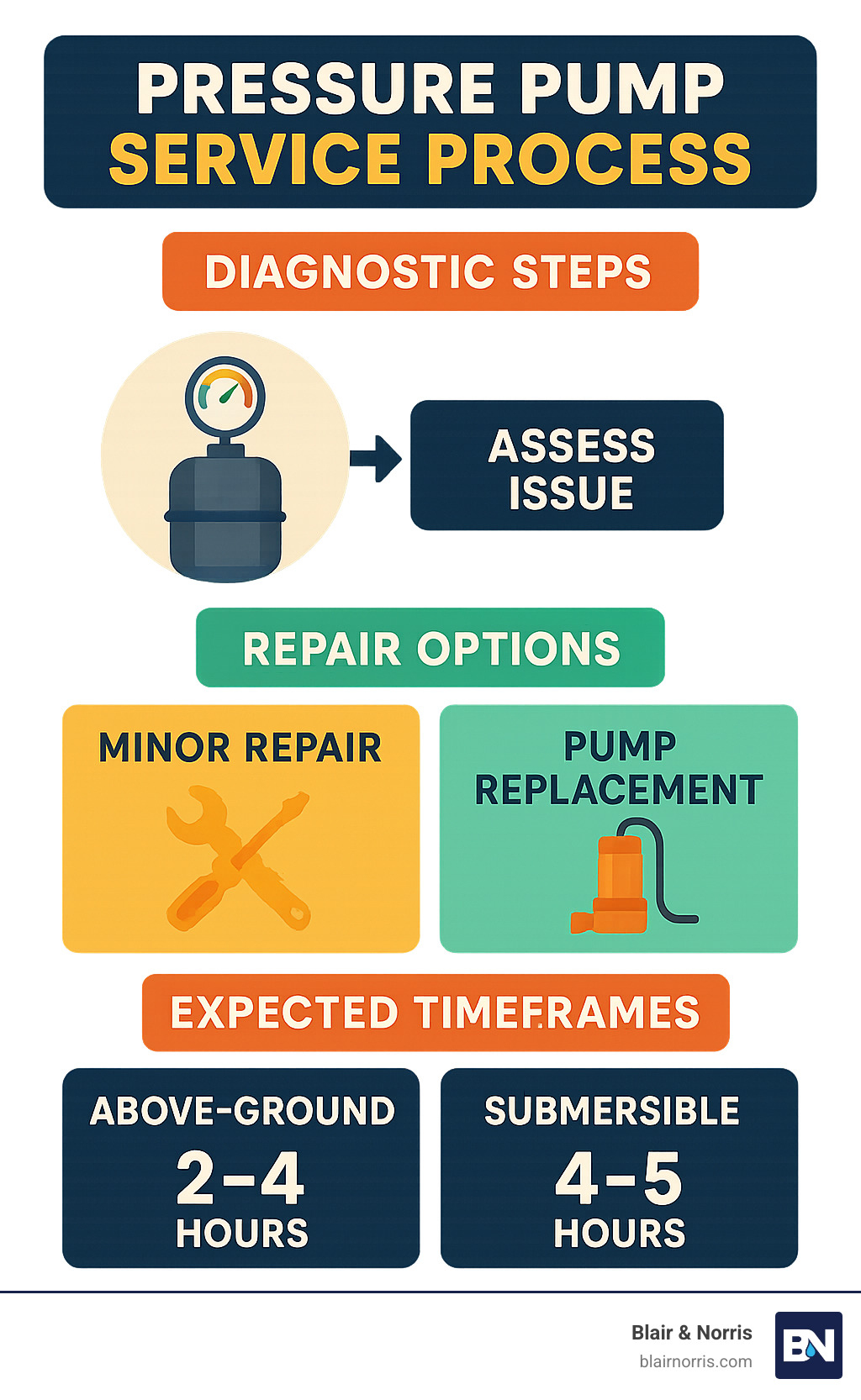
According to industry data, most pressure pump repairs take between 2-4 hours for above-ground pumps and 4-5 hours for submersible models. Having a reliable local service provider on speed dial can make the difference between a minor inconvenience and a multi-day water crisis.
Explore more about pressure pump service near me:
Pressure Pump 101: What It Does & When It Fails
Ever wondered what keeps your shower flowing strong and your washing machine filling properly? That’s your pressure pump hard at work! This unsung hero boosts water from your source—whether city water, well, or rainwater tank—to deliver that consistent, powerful flow we all depend on. Your system typically includes three main parts: the pump itself, a pressure tank, and control mechanisms that tell your pump when to kick on and off.
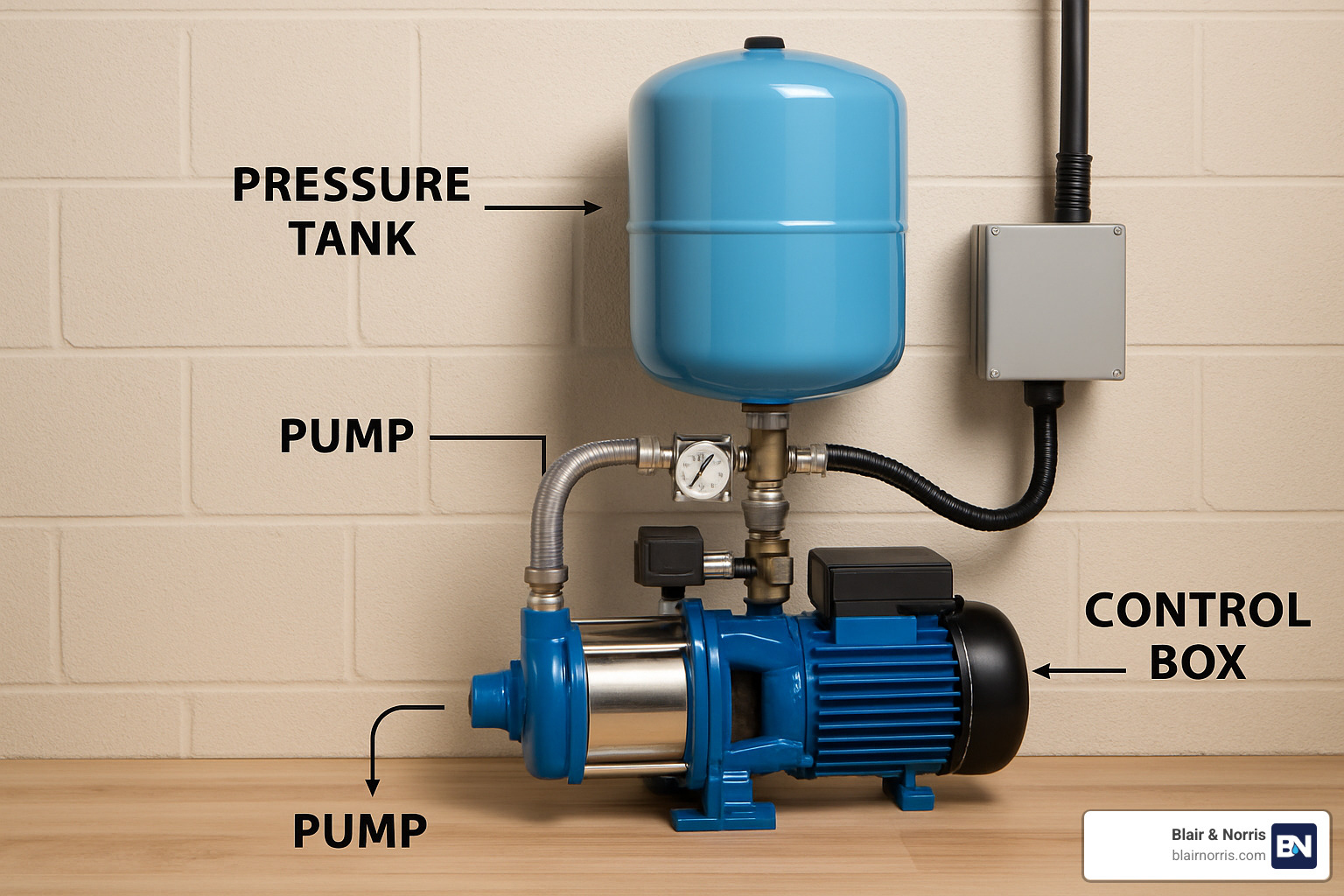
The pressure tank isn’t just a water container—it’s actually the secret to your system’s efficiency. Think of it as your water system’s battery backup that:
- Prevents your pump from constantly turning on and off (which would wear it out quickly)
- Keeps a reserve of pressurized water ready for use
- Helps your pump live longer by reducing unnecessary work
- Maintains steady pressure so your morning shower doesn’t suddenly go from powerful to pitiful
Common Signs Your Pressure Pump Needs Service
Your pressure pump typically sends out distress signals before completely giving up. Recognizing these early warnings can help you get pressure pump service near me before you’re stuck with no water and a much bigger problem.
Is your shower pressure suddenly disappointing? Low or inconsistent water pressure is usually the first red flag something’s wrong. When you turn on a faucet and it sputters and spits, that’s not normal—those air bubbles in your lines often point to pump or pressure tank issues.
Pay attention to sounds, too. That strange grinding or clicking coming from your utility room? That’s your pump crying for help. And if you’ve noticed your electric bill climbing without explanation, your struggling pump might be drawing extra power just to keep up.
“I can’t tell you how many homeowners ignore the warning signs until it’s too late,” shares our service manager at Blair & Norris. “Then they’re calling at midnight with no water and a much more expensive repair on their hands.”
Other telltale signs include a pump that never stops running, rapid on/off cycling, banging pipes (water hammer), cloudy water, or even unpleasant taste or odor in your water.
Most homeowners don’t realize that pressure pumps need regular attention. Industry experts recommend scheduling professional maintenance at least once every 12 months. This preventative approach catches minor issues before they become major headaches—and it’s significantly less expensive than emergency replacements.
Want to know exactly what to watch for? Check out our comprehensive guide on 13 signs your pump needs repair for a deeper dive into these warning signals.
Pressure Pump Service Near Me: Finding & Vetting Local Pros
When your water pressure starts acting up, finding reliable help quickly becomes a top priority. Searching for pressure pump service near me doesn’t have to be overwhelming, though. With a thoughtful approach, you can connect with qualified professionals who’ll get your water flowing properly again.
Step 1: Use Online Search Tools Effectively
The days of blindly flipping through phone books are long gone. Today’s digital tools make finding specialized help much simpler. Start by using zip-code based search platforms that connect you with local specialists who understand the unique water systems in your area.
These platforms do more than just list names and numbers. They let you filter specifically for pressure pump experts, read what other homeowners have experienced, and compare how quickly different pros respond to service calls.
Step 2: Evaluate Credentials and Specialization
Here’s something many homeowners don’t realize: not all plumbers have expertise with pressure pumps. It’s a bit like how not all mechanics specialize in transmission repair. For your pressure system, you want someone who works with pumps day in and day out.
Look for technicians who showcase their specialization in water systems, hold proper state licensing for pump work, and carry adequate insurance. The best pros often have certifications from pump manufacturers or industry associations, showing they’ve invested in specific training for your equipment.
Experience matters tremendously with pressure pumps. A technician who’s diagnosed hundreds of similar systems will likely spot your issue faster and fix it right the first time.
Step 3: Check Reviews and References
A company’s reputation tells you what to expect when they arrive at your door. When reviewing feedback, look beyond the star ratings to find reviews specifically mentioning pressure pump repairs.
Notice patterns in what customers consistently praise or complain about. Was the technician punctual? Did they explain the problem clearly? Did the repair last, or were they back making adjustments weeks later?
Don’t hesitate to ask potential service providers for references from customers with systems similar to yours. Reputable companies are happy to connect you with satisfied customers who can speak to their expertise.
Step 4: Compare Quotes and Service Offerings
Getting multiple quotes isn’t just about finding the lowest price—it’s about understanding what you’re paying for. Contact at least three service providers and compare their approach to your problem.
For more guidance on finding reliable well pump specialists in your area, our detailed resource on Residential Well Pump Repair Near Me provides additional insights.
How to Use Online Tools for Pressure Pump Service Near Me
When searching online, be specific. Rather than typing “plumber,” use terms like “pressure pump repair” or “well pump service” to find specialists. On platforms like Angi, use filters for top-rated pros and emergency availability. Thumbtack’s “responds quickly” filter is particularly helpful when you need urgent assistance.
Look for providers maintaining at least 4.5-star ratings from multiple reviewers—this consistency usually indicates reliable service. Take time to read detailed reviews, especially from customers who had issues similar to yours.
Checklist Before Booking Pressure Pump Service Near Me
Before scheduling your appointment, take a few minutes to verify crucial details that will protect your investment and ensure quality service:
First, verify the technician’s license number with your state’s licensing board—this simple step screens out unqualified operators. Confirm exactly what’s covered under their warranty, for both parts and labor, and get these terms in writing.
Ask for an itemized estimate that clearly breaks down costs for parts, labor, and any additional fees. If your system is prone to issues, verify they offer 24/7 emergency service for future peace of mind.
Types of Pressure Pumps & Services Offered
Understanding the type of pressure pump you have helps you communicate more effectively with service providers and understand the repairs they recommend.
Common Pressure Pump Types
Your home’s water pressure depends on the right pump for your specific situation. Jet pumps sit above ground and work great for shallow wells under 25 feet deep. They’re easier to service but can struggle with priming issues and switch failures as they age.
If you have a deeper well (over 25 feet), you’re likely using a submersible pump that sits underwater inside your well casing. These workhorses tend to be quieter and more efficient, though they can develop electrical problems or suffer from sediment damage over time.
Many city homes use booster pumps to increase pressure from municipal water supplies. These multi-stage systems create strong, consistent pressure but may eventually experience switch problems or seal failures.
For the environmentally conscious homeowner, rainwater harvesting pumps offer specialized solutions for collection systems. These eco-friendly options include filtration components but need protection from debris clogs and dry running.
Typical Services Offered by Pressure Pump Professionals
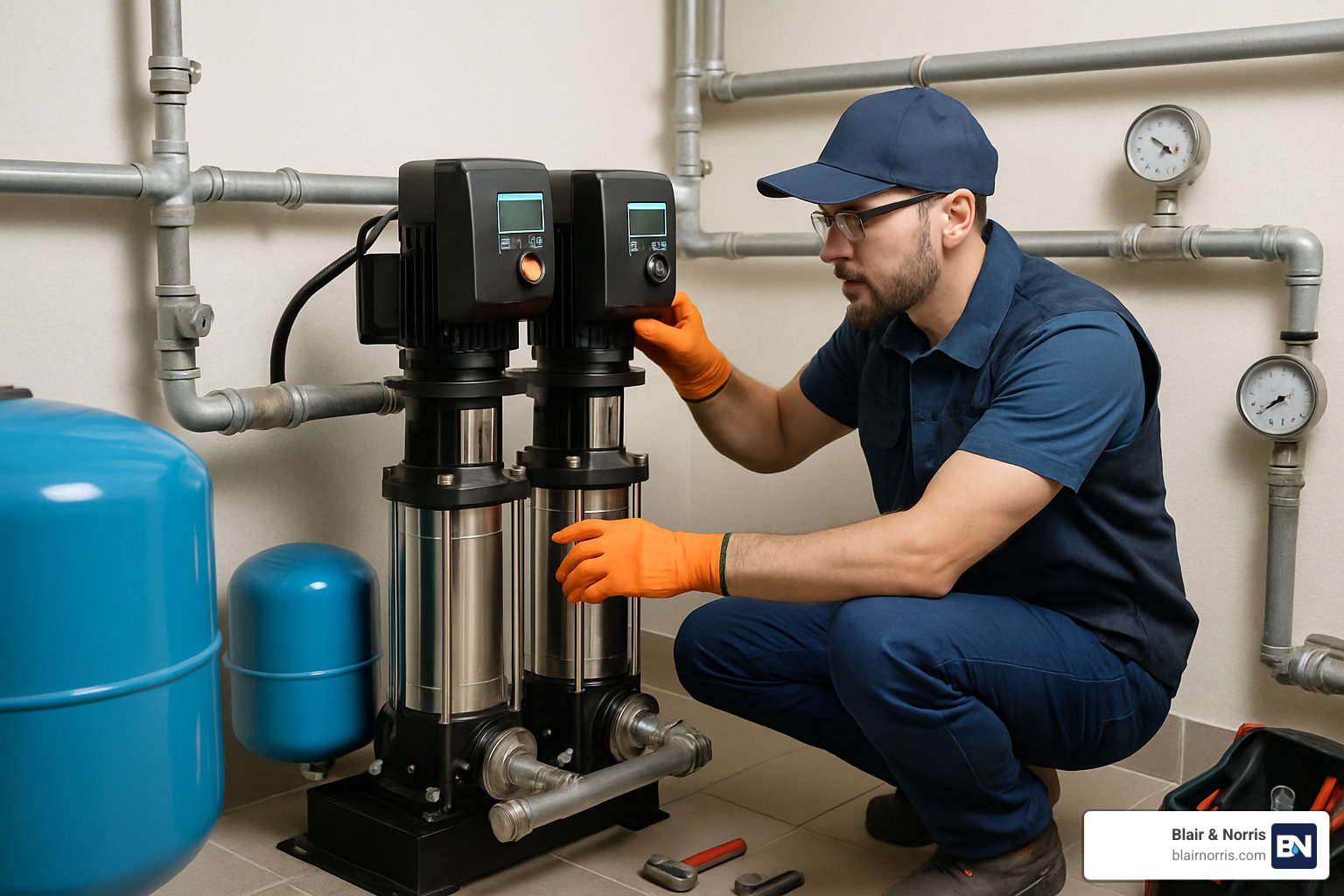
When you search for pressure pump service near me, you’ll find professionals offering comprehensive solutions for your water system needs.
Good technicians start with thorough diagnostics, testing your system’s pressure, flow rate, and electrical components. For well pumps, they might even perform video inspections to see what’s happening below ground.
Repair services cover everything from simple pressure switch replacements to more complex motor rewinding. Experienced professionals can clean or replace impellers, fix control boxes, and handle pressure tank bladder issues that affect your water delivery.
“Most homeowners don’t realize how many parts of their pressure system can be repaired rather than replaced,” explains our service team at Blair & Norris. “A good technician can often save you hundreds by fixing rather than replacing components.”
When it’s time for new equipment, installation services include complete system replacements, pump upgrades, and modernizing your control systems. Many homeowners are now upgrading to variable frequency drive (VFD) systems for better efficiency.
For more information about residential water pump repair options, visit our detailed guide on Residential Water Pump Repair.
Domestic & Booster Systems
Your home’s pressure system is designed specifically with residential comfort in mind. Modern domestic systems feature household pressure sets that combine pumps and tanks in space-saving designs, with quiet-operation motors that won’t disturb your peace.
The real game-changer in recent years has been variable-frequency drive (VFD) technology. Unlike traditional pumps that constantly turn on and off, VFDs adjust motor speed based on your actual water needs. This smart approach provides consistent pressure whether you’re taking a shower or just filling a glass of water.
“VFD systems typically save homeowners about 30% on pump-related energy costs,” our technical manager notes. “They’re also much quieter and experience less wear and tear since they’re not constantly cycling.”
Industrial & Irrigation Pumps
Larger properties and businesses often require industrial-grade pressure solutions with different capabilities than residential systems.
Industrial settings typically use vertical turbine pumps for high-volume applications or axial pumps when they need to move large amounts of water with less pressure. These robust systems feature chemical-resistant seals and heavy-duty construction designed for continuous operation.
Cost, Scheduling & Emergency Repairs
Let’s talk dollars and timelines when it comes to fixing your water pressure problems. After all, when your shower turns to a trickle, you need to know both how soon it can be fixed and how much to budget.
Typical Pressure Pump Service Costs
Your wallet will feel different depending on what’s wrong with your system. Here’s the real-world pricing you can expect:
Most basic repairs will set you back between $150-$600, with the exact figure depending on whether it’s a simple pressure switch or something more complex. For well systems with deeper issues, costs typically range from $550-$1,780 when components below ground need attention.
If you’re looking at a complete pump replacement, budget between $900-$2,500 for the whole system. Many homeowners find it worthwhile to invest in a comprehensive inspection ($250-$550) to catch problems early and avoid emergency situations.
Speaking of emergencies – yes, after-hours service typically adds an additional $50-$200 to your bill, but when you’re without water at 9pm, that premium suddenly seems quite reasonable!
Repair vs. Replacement: Making the Right Decision
One of the most common questions we hear at Blair & Norris is whether to repair an existing pump or invest in a new one. This decision comes down to several practical factors:
| Factor | Repair Makes Sense When… | Replacement Makes Sense When… |
|---|---|---|
| Age | Pump is less than 7 years old | Pump is over 10 years old |
| Repair Cost | Less than 50% of replacement | More than 50% of replacement |
| Efficiency | Current model is energy efficient | Newer models offer significant savings |
| Frequency | First major repair | Multiple repairs in recent years |
| Performance | Meets household needs | Struggles to maintain pressure |
Think of it like an aging car – there comes a point where continuing to repair becomes more expensive than replacing. Most pressure pumps have a lifespan of 8-12 years, so if yours is approaching a decade of service, replacement often makes more financial sense in the long run.
Typical Service Timeframes
When your water pressure fails, time suddenly becomes very important. Here’s what to expect:
Most above-ground pump repairs take about 2-4 hours from arrival to completion. If you have a submersible pump that needs replacement, plan for 4-5 hours since accessing it is more involved. A thorough system inspection typically requires 1-2 hours, while installing a completely new system ranges from 3-8 hours depending on complexity.
The good news? When you call for emergency pressure pump service near me, most professionals (including our team at Blair & Norris) aim to respond in under 2 hours. We understand that water isn’t a luxury – it’s essential.
“We had a family with three small children call at 7pm on a Sunday with zero water pressure,” recalls one of our senior technicians. “By 9pm, they were back to normal with a simple pressure switch replacement. The relief on their faces was worth every minute of that evening call.”
Emergency Repair Services
Water emergencies don’t politely wait for business hours. That’s why true emergency pressure pump service near me should offer:
24/7 availability with actual humans answering your call, not just an automated system promising someone will call back “tomorrow.” At Blair & Norris, we maintain live phone support around the clock because we know water emergencies can’t wait until morning.
Our emergency teams prioritize rapid response (typically within 1-2 hours) and aim for same-day resolution whenever possible. After all, the goal isn’t just to diagnose the problem – it’s to get your water flowing again as quickly as possible.
Emergency service exists for a reason. While it might cost a bit more, the peace of mind knowing your family won’t be without water for days is absolutely priceless. When you’re searching for pressure pump service near me at 10pm on a Saturday, that 24/7 availability suddenly becomes the most important feature of all.
Frequently Asked Questions about Pressure Pump Service
How often should I schedule maintenance?
Your pressure pump deserves an annual check-up, just like your car or your furnace. Think of it as a preventative health visit for the heart of your home’s water system.
For most homeowners, a yearly inspection keeps everything flowing smoothly. But some situations call for more frequent attention. If your well water contains high levels of sediment (you might notice this as gritty or sandy water), we recommend getting your system checked every 6-9 months instead.
Older systems – those over 7 years old – benefit from a twice-yearly once-over, catching small issues before they become big headaches. And if you own a vacation home or cabin, schedule a check-up before periods when you’ll be using it heavily.
During these maintenance visits, our technicians will check pressure settings, inspect electrical connections, test all control switches, measure your flow rates, listen for unusual noises, and look for any signs of leaks or corrosion.
Can I repair my pressure pump myself?
I understand the appeal of DIY repairs – they can save money and give you a sense of accomplishment. But when it comes to pressure pumps, there’s a clear line between what’s safe for homeowners to tackle and what’s best left to professionals.
Safe DIY tasks include cleaning exterior debris from around your pump, resetting a tripped circuit breaker, checking for obvious external leaks, adding air to pressure tanks (if you have the proper gauge), and cleaning accessible sediment screens.
However, it’s time to search for pressure pump service near me when you encounter:
- Any electrical issues beyond a simple breaker reset
- Problems with the motor or impeller
- Pressure switch adjustments or replacements
- Internal leaks
- Issues with your pressure tank bladder
- Any repair requiring you to take the pump apart
One of our customers learned this lesson the hard way when he tried to replace his pressure switch without proper tools or knowledge. What should have been a $150 service call turned into a $900 repair after he accidentally damaged the control box and flooded his basement.
DIY repairs might void your warranty – and more importantly, pressure pumps involve both electricity and water, a potentially dangerous combination in inexperienced hands.
What are the risks of delaying service?
Putting off pressure pump repairs is a bit like ignoring that strange noise in your car engine – it rarely resolves itself and usually gets more expensive with time.
When you delay necessary service, minor issues can snowball into major problems. That slight vibration might be the early warning sign of impeller damage. Ignore it, and you could face complete pump burnout, leaving your family without running water – often at the most inconvenient times.
Failing seals can allow contaminants into your water supply, potentially affecting your family’s health. Pressure fluctuations can damage appliances and plumbing throughout your home. And all the while, an inefficient pump silently drives up your electric bill month after month.
“I thought I was saving money by ignoring the occasional sputtering from my faucets,” one customer told us recently. “After a few months, my pump motor burned out completely. What could have been a $200 repair became a $1,500 replacement – plus three days without water while waiting for parts.”
Does homeowners insurance cover pressure pump repairs?
Many homeowners assume their insurance policy covers pressure pump issues, but the reality is more complicated.
Standard homeowners insurance typically covers damage from sudden, unexpected events like fires, lightning strikes, or other covered disasters. So if lightning fries your pump’s electrical system, you’re probably covered.
However, most policies specifically exclude damage resulting from normal wear and tear, lack of maintenance, or age-related failures. That means when your 15-year-old pump finally gives out after years of faithful service, you’ll likely be covering the replacement cost yourself.
Some insurance companies do offer additional coverage or riders specifically for well and pump systems. If you rely on a pressure pump for your home’s water supply, it’s worth having a conversation with your insurance agent about these options.
Conclusion
When your water pressure starts acting up, you need a team you can trust right away. That’s where Blair & Norris comes in for Central Indiana homeowners seeking pressure pump service near me. We’re not just another service company—we’re your neighbors who’ve been keeping water flowing in local homes for 75 years through three generations of family ownership.
What makes our approach to pressure pump service different? It starts with how we answer the phone. When you call with an emergency, you’ll speak to a real person—never an answering service—who understands the stress of water system problems. Our technicians arrive at your door fully licensed and insured, ready to provide honest assessments and transparent pricing without the sales pressure.
“We had a complete pump failure on Sunday morning before hosting a family reunion,” shared one Indianapolis customer. “Blair & Norris had a technician at our home within 90 minutes, and our water was running again before our first guest arrived.”
Water pressure problems have a knack for developing at the worst possible moments—during holiday gatherings, weekend family visits, or when you’re already running late for work. That’s why we offer genuine 24/7 emergency service with same-day response for those situations that simply can’t wait.
The truth is, most of the emergency calls we receive could have been prevented with regular maintenance. Your pressure pump gives warning signs long before it fails completely. An annual inspection costs far less than emergency repairs and helps ensure your system runs efficiently year-round, saving you money on both repairs and energy bills.
Whether you’re dealing with sputtering faucets, strange noises from your pump, or a complete loss of water pressure, our team brings decades of specialized experience to every service call. We back our work with industry-leading warranties on both parts and labor, giving you peace of mind that the job’s been done right.
For more guidance on making smart decisions about your water system, check out our comprehensive guide on well pump repair or replacement.
Ready to schedule your pressure pump service? Reach out to Blair & Norris today through our 24/7 service line. We’re standing by to provide prompt, professional solutions throughout Indianapolis and surrounding Central Indiana communities.