
When Water Stops: Finding Expert Pump and Well Service Near You
If you’re experiencing well water issues, finding pump and well service near me is likely your top priority. Here’s what you need to know:
- Emergency Response: Most reputable well service companies offer 24/7 emergency services
- Average Cost: $100 – $2,900 for typical well pump repairs
- Replacement Cost: $1,800 average for a complete well pump replacement
- Service Time: 2-4 hours for above-ground pump work, 4-5 hours for submersible pumps
- Licensing: Many states require specialized licensing for well and pump technicians
A failing well pump can quickly turn from inconvenience to crisis. When your faucets sputter or water stops flowing altogether, your home’s essential water supply is compromised. For the 13 million American households relying on private wells, this isn’t just an annoyance – it’s an emergency.
“Having your own water supply is usually a wonderful thing, but a malfunctioning well pump can be a major headache,” notes one industry expert. Those headaches include lack of water, potential damage to appliances, and even contamination risks.
Most well pump problems stem from electrical issues, clogged components, or wear and tear. The average well pump lasts 8-15 years, though proper maintenance can extend this considerably.
Local, established well service companies typically offer comprehensive solutions including:
- Emergency troubleshooting and repair
- Complete pump replacement and installation
- Well inspection and water quality testing
- Pressure tank service and replacement
- System maintenance and optimization
Simple pump and well service near me glossary:
What Is Pump & Well Service and Why It Matters
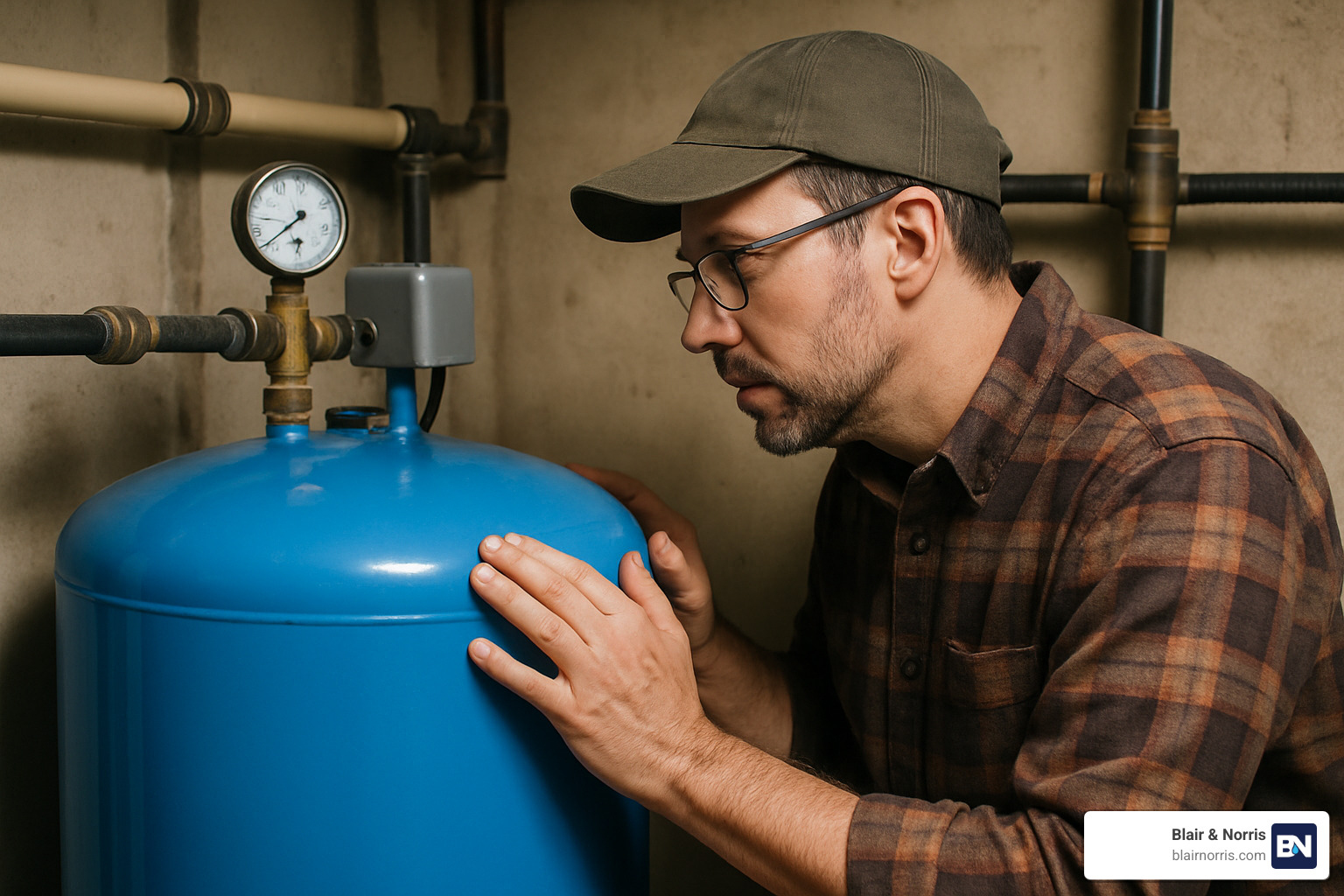
That refreshing glass of water from your kitchen tap might seem simple, but for millions of Americans with private wells, it’s the result of an intricate system working beneath your feet. So what exactly happens when you search for pump and well service near me?
Think of well service as healthcare for your home’s water system. It covers everything from installation to regular check-ups that keep water flowing year after year. Your well system is like a mini water utility plant dedicated solely to your property – complete with a pump that draws groundwater up, a pressure tank that maintains consistent water flow, and various controls that deliver water throughout your home.
For those on private wells, there’s no city water department to call when things go wrong. The responsibility for clean, safe water falls squarely on your shoulders. As one technician likes to say, “With well ownership comes well responsibility.”
This responsibility affects your family’s health and safety, protects your property value, and offers cost savings through preventive care compared to emergency repairs.
Beyond your household, proper well maintenance contributes to environmental protection by safeguarding shared groundwater resources. The Groundwater Foundation reminds us that groundwater provides drinking water for over half of all Americans and nearly all rural communities.
Many homeowners don’t realize that wells also come with regulatory requirements in most states, designed to protect public health and water quality standards.
Submersible vs. Jet Pumps – Key Differences
When it comes to getting water from your well to your faucet, not all pumps are created equal. The two main types – submersible and jet pumps – each have their own strengths.
| Feature | Submersible Pumps | Jet Pumps |
|---|---|---|
| Location | Inside well casing | Above ground |
| Ideal Well Depth | Deep wells (up to 400 feet) | Shallow wells (up to 90 feet) |
| Energy Efficiency | More efficient | Less efficient |
| Lifespan | 8-15 years average | 5-10 years average |
| Noise Level | Very quiet | Noisier |
| Initial Cost | Higher | Lower |
| Maintenance Access | Requires pulling from well | Easier access |
| Priming | Self-priming | Requires priming |
| Freeze Protection | Protected underground | Needs insulation |
Submersible pumps have become increasingly popular for good reason. As one senior technician explains, “Submersibles might cost more upfront, but they’re like the tortoise in the race – steady, reliable, and often winning in the long run.”
Jet pumps sit above ground where they’re easier to access for maintenance. They create suction to draw water upward and come in shallow well models (within 25 feet) and deep well versions (up to 90 feet).
For most modern installations, especially with deeper wells, submersible pumps are recommended for their reliability, energy efficiency, and quiet operation.
Want to learn more about pump options? Our guide to installing a well pump covers everything from sizing to maintenance schedules.
10 Warning Signs You Need Service or Repair
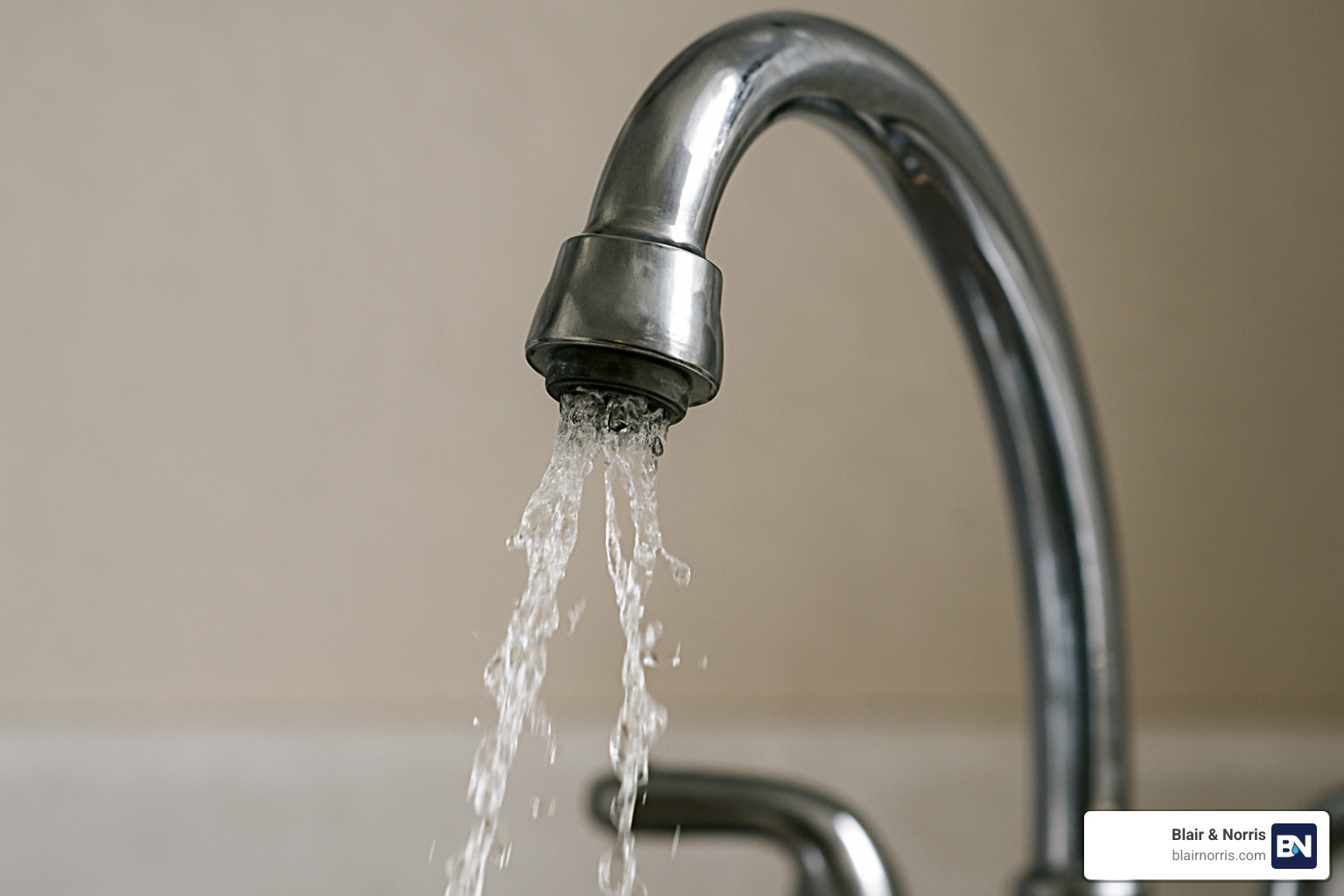
Your well pump system speaks its own language. When something’s wrong, it sends signals that can save you from a complete water emergency. Here are the key warning signs that it’s time to search for pump and well service near me:
No water flow – When you turn the tap and nothing happens, it usually points to pump failure, electrical problems, or a depleted well.
Low water pressure – That once-invigorating shower becoming a disappointing trickle isn’t just annoying – it’s your system crying for attention.
Fluctuating water pressure that surges and drops unexpectedly typically indicates pressure tank issues or a failing pressure switch.
Constantly running pump that never shuts off is likely short-cycling – a problem that wears out equipment prematurely.
Unusually high electric bills – Many homeowners first notice pump problems not at the faucet but in their monthly utility statement.
Air sputtering from faucets followed by water often signals a leak in the suction line or a dropping water table.
Muddy or discolored water can indicate problems with your well screen, casing, or pump placement.
Strange noises like grinding, clicking, or vibrating pipes aren’t just annoying – they’re valuable diagnostic clues.
Pressure tank issues like waterlogging create distinctive symptoms including rapid pump cycling and inconsistent pressure.
Burnt odors or visible wiring issues aren’t just pump problems – they’re potential fire hazards requiring immediate attention.
“In my 25 years of service, I’ve found that most catastrophic failures begin with subtle warnings homeowners dismiss,” shares our senior technician. “The earlier you address these symptoms, the simpler and less expensive the fix usually is.”
For a deeper dive into these warning signs, check out our guide on 13 signs your well pump needs repair.
DIY or Call a Pro?
When your well system shows trouble, it’s tempting to tackle the problem yourself. While we admire that spirit, well systems present unique challenges that often make professional help the wiser choice.
There are situations where DIY makes sense: resetting a tripped circuit breaker, checking for visible obstructions, testing water pressure with a gauge, and conducting basic water quality testing. A careful visual inspection of above-ground components might help you better describe the problem when you call for service.
Beyond these basics, professional help becomes increasingly important. Well systems combine electricity and water, creating significant shock hazards that have injured many well-intentioned DIYers.
State licensing requirements also come into play. In Indiana and many states, certain well pump work legally requires specific credentials. Attempting such work without proper licensing could violate local codes and potentially void your homeowner’s insurance.
Warranty considerations matter too. DIY repairs might invalidate coverage precisely when you need it most. Professional technicians have the training, specialized tools, and parts to diagnose and repair your system correctly the first time.
Finding Reliable Pump and Well Service Near Me
When your water system fails, finding trustworthy pump and well service near me becomes your top priority. But how do you separate the true professionals from those who might leave you high and dry?
Start by looking for contractors with proper credentials. Members of the National Ground Water Association (NGWA) or professionals certified through their voluntary program have demonstrated their commitment to industry excellence. The National Ground Water Association offers a contractor lookup tool featuring professionals who maintain high standards.
Proper licensing matters tremendously. Verify they’re specifically licensed for well work in your state. A qualified contractor should also carry comprehensive liability insurance and workers’ compensation coverage to protect you from potential liability.
“Always ask to see proof of bonding,” advises one industry veteran. “Bonded contractors give you that extra layer of financial protection if they fail to complete work as promised.”
Experience speaks volumes. At Blair & Norris, our 75-year history serving Indianapolis represents thousands of successfully resolved water emergencies and countless families whose trust we’ve earned.
What do your neighbors say? Read online reviews and ask for references from customers with systems similar to yours. A reputable company will happily provide these because they stand behind their work.
True emergency service makes all the difference. When we say 24/7 service at Blair & Norris, we mean you’ll speak with a real person – not leave a message while your water emergency continues.
Always get detailed written estimates that clearly outline:
- Complete scope of work
- Specific parts to be used
- Warranties provided
- Total costs with no hidden surprises
Comparing Quotes for Pump and Well Service Near Me
Once you’ve found several reputable companies, compare their quotes carefully. This isn’t just about finding the lowest price – it’s about identifying the best overall value.
Pay attention to pricing structure differences. Some companies offer flat rates, providing peace of mind that your bill won’t unexpectedly climb. Others charge hourly rates plus parts, which might save money for straightforward repairs but could cost more for complex issues.
Travel fees can significantly impact your final bill. Some companies build travel costs into their base rate, while others add separate charges based on distance. For rural homeowners, this difference alone can swing quotes by hundreds of dollars.
The warranty offered speaks volumes about a company’s confidence in their work. Quality providers typically guarantee parts and labor for at least a year.
Not all pumps and parts offer equal reliability. A quote specifying premium brands might carry a higher initial cost but deliver superior long-term value through extended service life.
Ensure each quote covers identical work to make fair comparisons. A reputable company will clearly define the scope of work without vague descriptions that could lead to surprises later.
How Much Does Pump and Well Service Near Me Cost?
Understanding typical cost ranges helps you budget appropriately and recognize when quotes are reasonable. Here’s what most homeowners can expect:
- Basic service calls and diagnostics: $100-$300
- Pressure switch replacement: $150-$350
- Control box replacement: $250-$500
- Capacitor replacement: $100-$250
- Pipe repairs: $200-$600
The average well pump repair costs about $950, though the range spans from simple $100 fixes to complex $2,900 repairs involving multiple components.
For complete replacement, jet pumps typically cost $1,000-$2,500 installed, while submersible pump replacement runs $1,500-$3,500. The industry average for replacement is around $1,800.
Costs are affected by:
- Well depth – Deeper wells require more labor and materials
- Horsepower rating – Larger pumps command premium prices
- Accessibility challenges – Difficult terrain increases labor costs
- Emergency service – After-hours service may cost more
- Additional components – Related parts often need replacement alongside the pump
Many homeowners don’t realize that financing options exist for well service. At Blair & Norris, we offer flexible payment options for qualified customers.
For more detailed information about cost factors, visit our guide on well pump repair or replacement considerations.
Maintenance, Testing & New Tech That Extend Pump Life
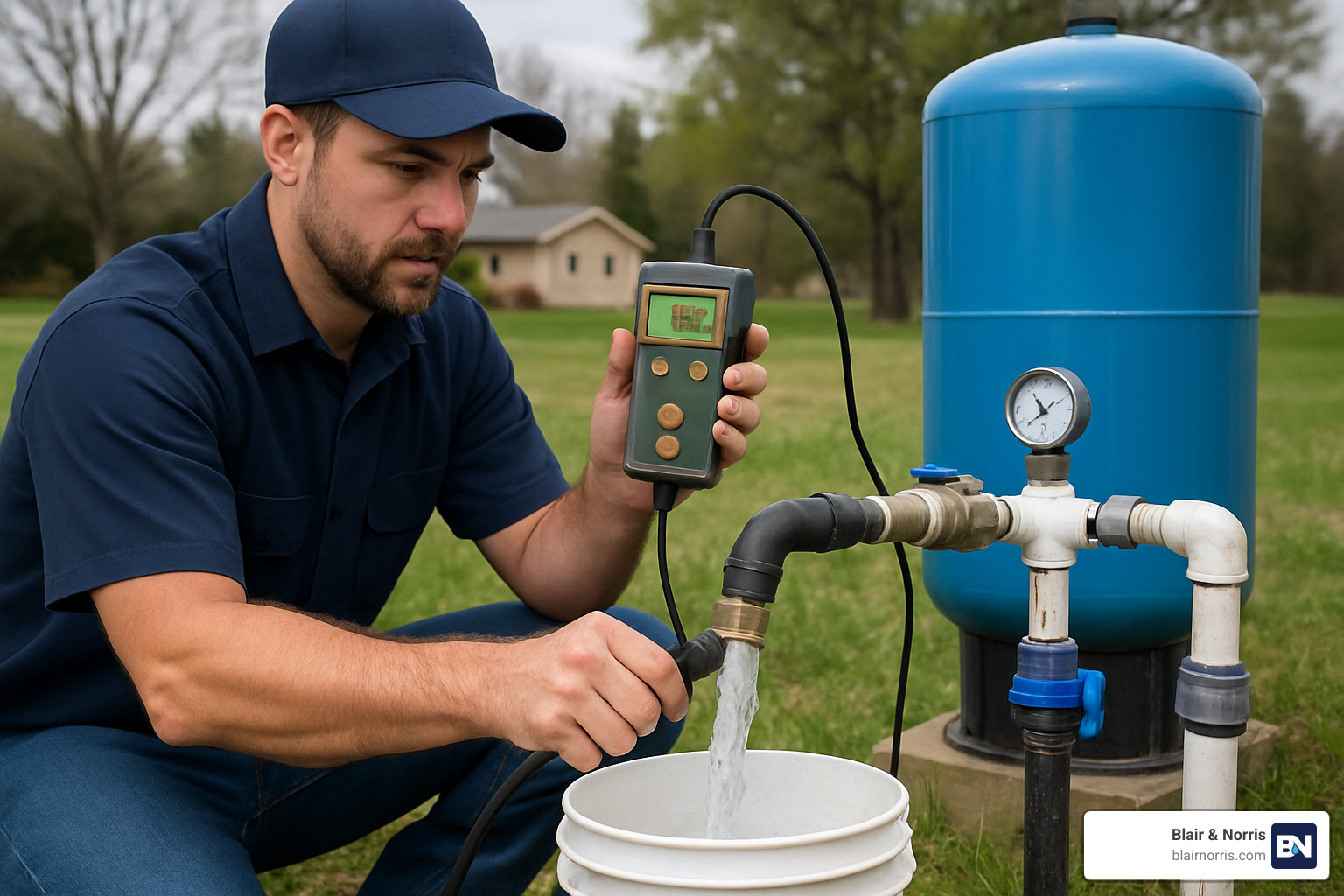
Proactive maintenance isn’t just a good idea—it’s the secret to a long-lasting well pump system. While a neglected pump might give up after just 7-8 years, a well-maintained system often serves families faithfully for 15 years or more.
Your annual professional inspection is like your well system’s yearly check-up. During this visit, a technician will check your flow rate, verify your pressure tank is functioning properly, inspect electrical components, and analyze water quality.
Your pressure switch deserves special attention. This component decides when your pump turns on and off. When it’s not properly tuned, it can cause “short cycling”—a condition where your pump rapidly switches on and off, dramatically shortening its lifespan.
The CDC recommends testing your well water annually for bacteria, nitrates, dissolved solids, and pH levels. This isn’t just about your pump’s health—it’s about your family’s health too.
Don’t forget about your filtration system! Those filters need regular replacement according to the manufacturer’s schedule. A clogged filter forces your pump to work harder.
Your pressure tank’s air charge should be checked twice yearly with a simple tire gauge. This often-overlooked maintenance task can significantly extend pump life by ensuring proper cycling.
The well pump industry has seen exciting innovations in recent years:
- Variable Frequency Drive (VFD) systems adjust your pump’s speed based on demand, providing consistent pressure while reducing wear and tear.
- Smart monitoring systems can alert you to potential problems via your smartphone before they cause complete system failure.
- High-efficiency pumps significantly reduce energy consumption, saving you money every month.
Here are some additional life-extending tips:
- Install a quality pressure gauge and get familiar with your “normal” readings
- Be mindful about running multiple water-hungry appliances simultaneously
- Add proper filtration to protect against sediment damage
- Ensure your pump has appropriate electrical protection
- Keep your well cap secure and in good condition
- Maintain a simple service log with dates and work performed
- Address small issues promptly—they rarely fix themselves!
Scheduling Routine Service
Creating a simple maintenance calendar for your well system makes a world of difference in reliability. Here’s what we recommend:
Every six months:
- Check your pressure tank’s air charge with a tire gauge
- Inspect visible pipes for leaks
- Test and record your static water level if possible
- Clean any sediment screens
- Verify your pressure switch is operating correctly
Once a year:
- Have a licensed technician perform a complete inspection including:
- Water quality testing
- Electrical component checks
- Flow rate measurement
- Pressure tank evaluation
- Check valve testing
Every 3-5 years:
- Consider a more comprehensive service including:
- Complete well cleaning if flow rate has decreased
- Video inspection of well casing
- Comprehensive water analysis
- Evaluation of pump performance
Keep a simple maintenance log recording dates of service, who performed the work, what was done, parts replaced, water test results, pressure readings, and warranty information.
Latest Trends
Today’s well technology offers convenience, efficiency, and reliability that was unimaginable just a decade ago:
Remote monitoring applications have revolutionized how homeowners interact with their well systems. These smart systems track real-time water pressure, pump activity, power consumption, and flow rates. Some can even detect potential leaks before they cause damage.
Energy-efficient motors represent another major advancement. Today’s variable speed technology adjusts to demand rather than simply turning on and off, reducing energy consumption by up to 30% compared to older models.
The materials used in well systems have also evolved. Antimicrobial drop pipes and components resist bacterial growth that can affect water quality and pump efficiency. Advanced composite pipes won’t corrode like traditional materials.
Perhaps the most noticeable improvement is the development of constant pressure systems. Unlike traditional setups that cycle on and off (causing noticeable pressure fluctuations), these systems maintain steady pressure regardless of demand.
Frequently Asked Questions about Pump & Well Systems
After 75 years of helping Indianapolis families with their well systems, we’ve heard just about every question imaginable. Here are the questions our Blair & Norris technicians hear most often:
How often should I schedule maintenance?
Your well system deserves an annual check-up, just like your car or your own health. We recommend a comprehensive professional inspection once a year that covers all the essentials: checking your pressure tank, testing electrical components, measuring flow rates, and analyzing water quality.
Don’t forget about your pressure tank between those annual visits. A quick pressure check every six months can prevent the most common system failures we see.
“Without regular service, well pumps wear down and malfunction over time,” as one of our veteran technicians often reminds customers. Think of maintenance as an investment rather than an expense – it’s always cheaper to prevent problems than to repair them in emergency situations.
What should I do if I suddenly have no water?
Before you panic, try these steps:
Check your circuit breaker. A tripped breaker is often the culprit, and fixing it takes seconds.
Take a look at your pressure switch (after turning off power to the system for safety). Check for obvious problems like burned contacts or debris.
Check your pressure gauge. A reading of zero typically points to issues with either your pump or pressure tank.
Listen for your pump. If you hear it running but still have no water, you might have a broken pipe or a pump that’s lost its prime.
If these quick checks don’t solve the problem, call a professional. Our 24/7 emergency service means you won’t be without water for long.
Water and electricity create serious safety hazards. When in doubt, put down the tools and pick up the phone.
Can I size a pump myself?
While it’s technically possible to estimate your pump needs yourself, getting it right involves more factors than most homeowners realize. If you’re determined to try, start by counting your fixtures – a general rule suggests matching the number of water fixtures to the gallons per minute (GPM) capacity of your pump.
You’ll also need to consider your peak demand periods, well depth, and pressure needs.
But as we’ve learned from decades of experience, “It’s best to have a professional technician determine the correct pump size to ensure sufficient water supply.” An undersized pump will struggle and fail prematurely, while an oversized pump wastes energy and money.
At Blair & Norris, we perform detailed calculations based on your specific home, well characteristics, and family size to recommend the perfect pump for your situation.
Conclusion
Finding reliable pump and well service near me is essential for maintaining your home’s water supply and protecting your investment. Throughout this article, we’ve covered the fundamentals of well systems, warning signs of problems, maintenance best practices, and how to find qualified service providers.
As we’ve discussed, well systems require regular attention and occasional professional service to function reliably for years. The average well pump repair costs around $950, while replacement averages $1,800 – significant expenses that can often be minimized through proper maintenance.
Remember these key takeaways:
Regular maintenance extends system life – Annual professional inspections and semi-annual pressure tank checks can prevent many common failures.
Address warning signs promptly – Sputtering faucets, pressure fluctuations, and unusual noises are early indicators of developing problems.
Choose qualified professionals – Look for licensed, insured, and NGWA-certified technicians for all well work.
Keep records – Maintain detailed service records, water test results, and system specifications for reference.
Consider modern upgrades – Technologies like constant pressure systems and remote monitoring can improve performance and reliability.
At Blair & Norris, we’ve been serving Indianapolis and surrounding communities since 1946. Our family-owned business takes pride in providing ethical, high-quality service with 24/7 live phone support for emergencies. We understand that water issues can’t wait, which is why we’re always ready to respond when you need us most.
Whether you’re experiencing an emergency water outage or simply want to establish a preventive maintenance schedule, we’re here to help. Our licensed technicians have the expertise to handle all aspects of well pump service, from minor repairs to complete system replacement.
For more information about well pump repair considerations, visit our detailed guide on well pump repair or replacement considerations.
Your well system is too important to trust to just anyone. When you need pump and well service near me, choose a provider with the experience, credentials, and commitment to keep your water flowing reliably for years to come.