
Your Well System’s Unsung Hero: The Pressure Tank
Pressure tank well pump problems can cause low water pressure, sputtering faucets, and frequent pump cycling—often right when you need steady flow most. If you’re experiencing any of these issues, your pressure tank might be failing.
Quick Answer: Common Pressure Tank Problems
| Problem | What It Means | What You’ll Notice |
|---|---|---|
| Waterlogged Tank | Bladder has ruptured, tank is full of water | Pump cycles on/off rapidly, low pressure, thud sound when tapped |
| Wrong Air Pressure | Pre-charge is too high or low | Inconsistent pressure, frequent pump cycling |
| Faulty Pressure Switch | Switch won’t turn pump on/off correctly | Pump runs constantly or won’t start, clicking sounds |
| Bad Check Valve | Water flows back into well | Pump runs constantly, water hammer, loss of pressure |
Your well pressure tank is the unsung hero of your water system. It stores water from your well and uses compressed air to maintain steady pressure throughout your home. When the tank fails, pressure tank well pump problems often show up as short cycling, your pump turning on and off repeatedly. This not only strains your pump but can lead to premature failure and costly repairs.
The good news? Many pressure tank issues show clear warning signs, and some can be diagnosed with simple tools you probably already have. Knowing what to look for can help you act early, reduce system strain, and restore reliable water pressure faster.
I’m Mack Blair. For decades, we’ve helped Central Indiana homeowners solve pressure tank well pump problems, from air charge corrections to full system repairs. My team at Blair & Norris has built our reputation on getting to the root of these issues quickly, so you can get back to reliable water pressure and peace of mind.
What is a Well Pressure Tank and How Does it Work?
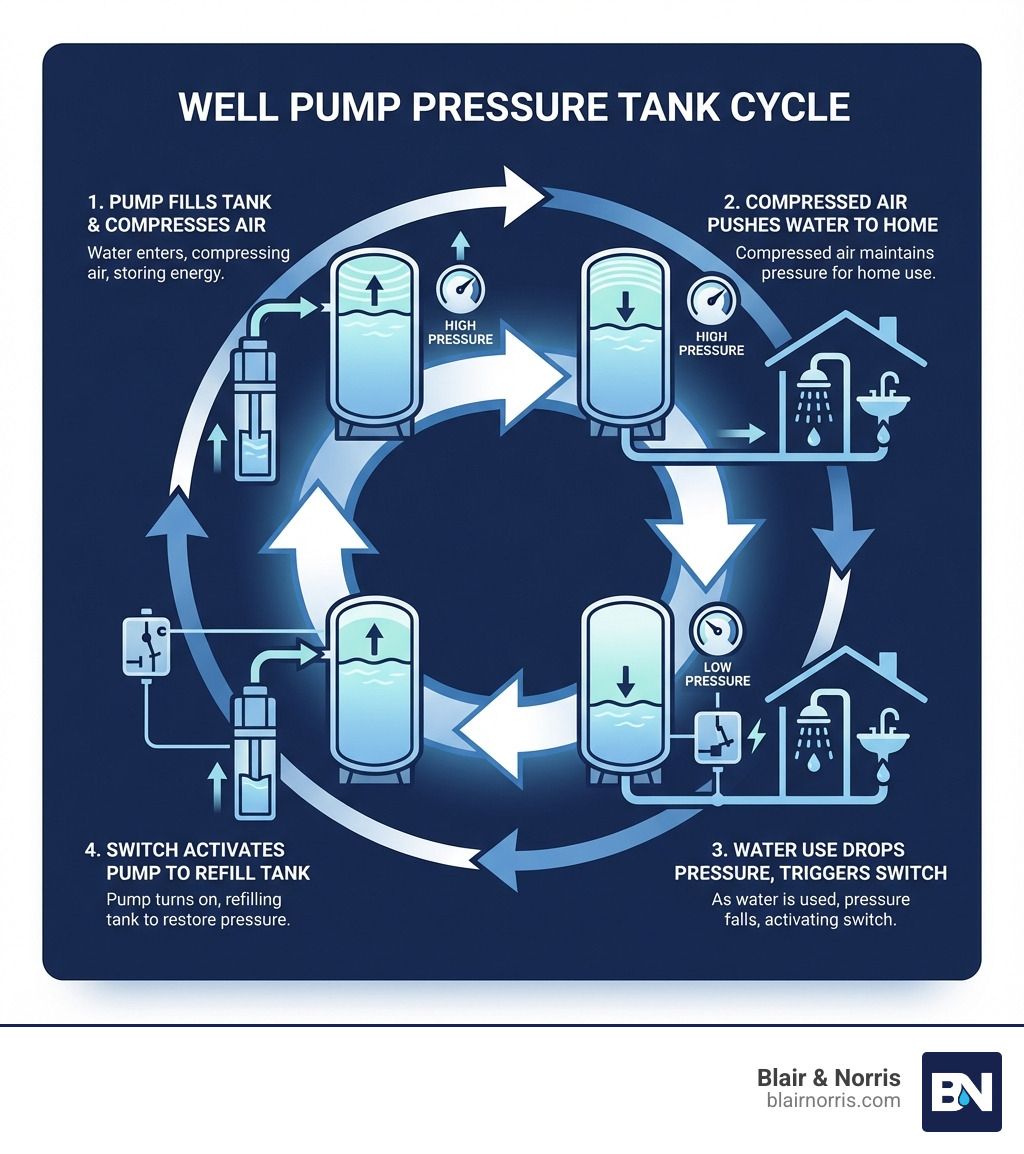
At the heart of many pressure tank well pump problems is the well pressure tank, the component that stabilizes water pressure and protects the pump. Its primary role is to store water pumped from your well and deliver it to your fixtures under consistent pressure, all while protecting your well pump from unnecessary wear and tear.
Here’s how this ingenious device works:
- Water In, Air Compressed: When your well pump activates (see our guide on how a well pump and pressure tank work), it pushes water from the well into the pressure tank. Inside most modern tanks, there’s a flexible diaphragm or bladder that separates the water from a cushion of compressed air. As water enters the tank, it pushes against this bladder, further compressing the air.
- Pressure Build-Up: The pump continues to fill the tank until the water pressure reaches a pre-set “cut-off” point (typically around 60 pounds per square inch, or PSI). At this point, a pressure switch signals the pump to turn off.
- Water Delivery: When you open a faucet, turn on a shower, or flush a toilet, the compressed air in the tank pushes the stored water out into your home’s plumbing system. This ensures you have immediate water flow without the pump needing to kick on every single time you need water.
- Pump Reactivation: As water leaves the tank, the pressure inside drops. Once it reaches a lower pre-set “cut-on” point (usually around 40 PSI), the pressure switch activates the well pump again, and the cycle repeats.
This storage and delivery system means your well pump doesn’t have to run constantly. Instead, it operates in longer, less frequent cycles, which significantly extends its lifespan and saves energy. A properly functioning pressure tank is truly the unsung hero, ensuring your water system runs smoothly and efficiently. A correctly sized tank reduces pump starts and helps prevent short cycling.
Telltale Signs: Is Your Pressure Tank Failing?
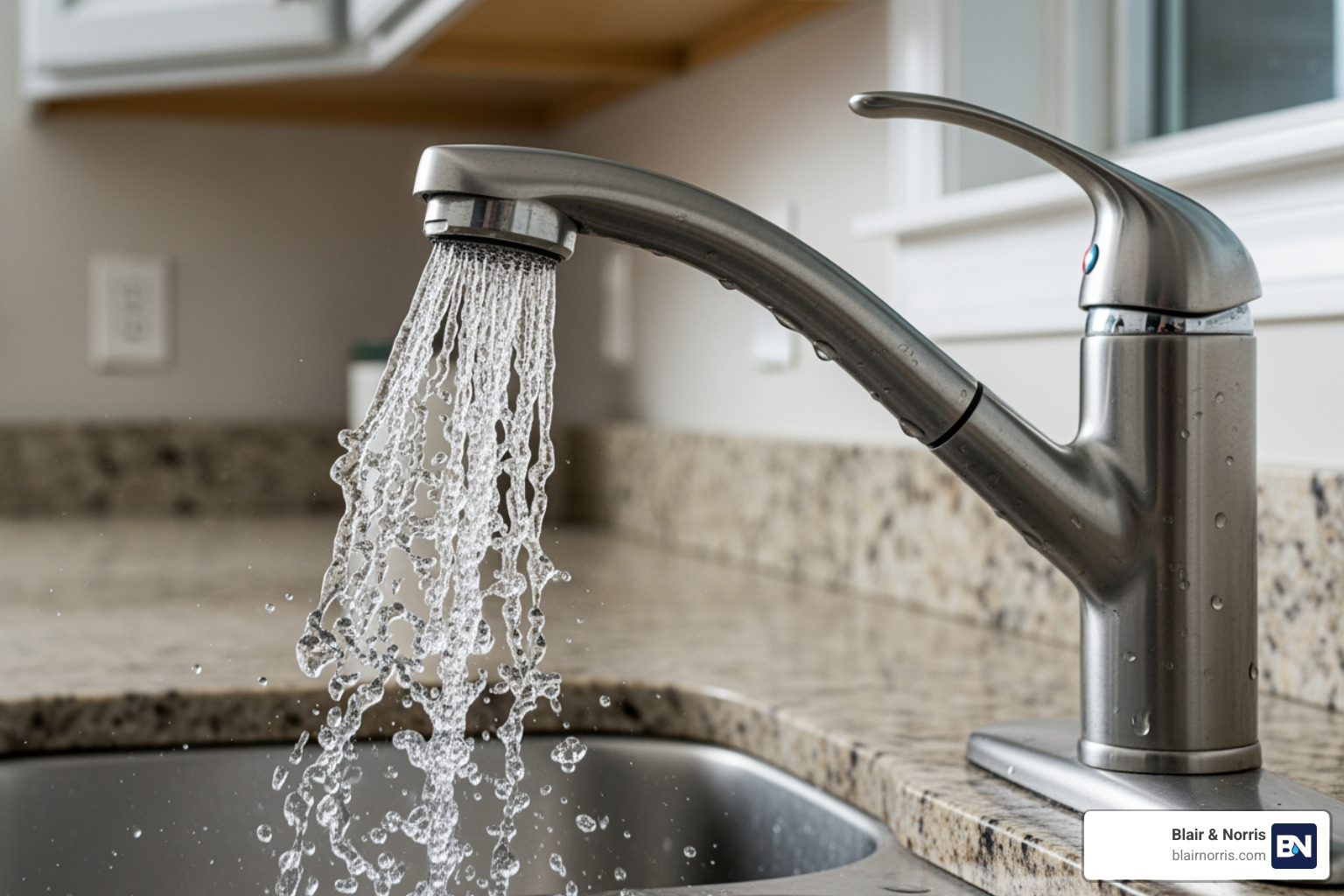
When your well pressure tank starts to falter, it usually doesn’t do so silently. Instead, it sends out clear signals that something is amiss. Recognizing these signs early helps homeowners address the issue before the pump is damaged by frequent cycling.
Here are the common symptoms that indicate your well pressure tank might be struggling:
- Rapid, noticeable pressure drops and surges: This is one of the most common indicators. You might be enjoying a steady stream, and suddenly it’s a trickle, or vice-versa. This fluctuating water pressure is a classic sign that the tank isn’t maintaining consistent pressure.
- Faucets sputtering with air: If your faucets are spitting out water mixed with air, it often points to a problem with the air charge in your pressure tank, or a waterlogged tank. It means air is entering your water lines.
- Clicking noises from the pressure switch area: While some clicking is normal when the pump turns on and off, excessive or rapid clicking indicates that your pressure switch is engaging too frequently, a symptom often tied to a failing pressure tank or a related component.
- The well pump turning on and off very frequently (short cycling): If your well pump is constantly kicking on and off, even with minimal water use, it’s a strong sign that your pressure tank isn’t holding pressure properly. This “short cycling” is detrimental to your pump’s health.
- Consistently low water pressure throughout the house: While low pressure can have many causes, if it’s accompanied by other symptoms on this list, your pressure tank could be a culprit. The tank isn’t effectively storing and delivering pressurized water.
- Erratic pressure gauge readings: If the needle on your pressure gauge is jumping wildly, or if it consistently reads below 10 PSI, it’s a red flag.
- Unusual tank sounds: Beyond clicking, listen for strange banging or gurgling sounds from the tank itself.
If you notice these symptoms, pressure tank well pump problems should be on your shortlist of likely causes. Ignoring them can lead to more severe and costly issues, including the premature failure of your well pump. If you’re noticing any of these, it’s time to investigate. For more general signs of pump issues, you can check out our guide on common well pump repair indicators.
Diagnosing Common Pressure Tank Well Pump Problems
When your well system isn’t performing as it should, the pressure tank is often a good place to start diagnosing the issue. Many pressure tank well pump problems can be identified with basic checks, but stop and call a professional if electrical testing or well access is required. Let’s dig into how we can pinpoint what’s going wrong. For a comprehensive overview of well pump issues, see our guide on well pump problems.
How to Tell if Your Well Pressure Tank is Waterlogged
A waterlogged tank means the bladder failed and the tank can’t hold an air cushion; replacement is typically required. Without that air cushion, the tank can no longer maintain pressure, leading to short cycling and other issues.
Here’s how to check if your tank is waterlogged:
- The “Knock Test”: First, shut off power to your well pump at the breaker. Then, go to your pressure tank and tap on its side from top to bottom.
- Hollow Sound: If you hear a hollow, metallic sound from the top of the tank and a dull “thud” from the bottom, it indicates the air charge is present and separated from the water, which is normal.
- “Thud” Sound All Over: If you hear a dull “thud” sound across the entire tank, it means the tank is likely filled with water and has lost its air charge – it’s waterlogged.
- Check the Air Valve: Locate the Schrader valve (looks like a tire valve) on top of your pressure tank. With the pump power still off and a faucet open to relieve pressure, press the pin in the center of the valve.
- Air Comes Out: If air comes out, your bladder is likely intact.
- Water Comes Out: If water comes out, your tank’s bladder has ruptured, and the tank is definitely waterlogged and needs replacement.
A waterlogged tank loses its ability to maintain steady water pressure, as there’s no compressed air to push the water out. This means your pump will kick on every time you open a faucet, leading to excessive wear. For more detailed troubleshooting, you might find manufacturer guides helpful, such as this detailed troubleshooting guide (PDF).
Troubleshooting Pressure Tank Well Pump Problems Yourself
Once you’ve checked for a waterlogged tank, there are a few more steps you can take to troubleshoot your pressure tank’s performance.
- Check the Tank’s Air Charge (Pre-Charge): The air pressure in your empty pressure tank (the “pre-charge”) is crucial. It should be set to 2 PSI below your pump’s “cut-on” pressure. For example, if your pressure switch turns the pump on at 40 PSI, your empty tank’s pre-charge should be 38 PSI.
- To check the pre-charge:
- Shut off power to your well pump at the breaker.
- Open a nearby faucet and let all the water drain from the pressure tank until the water stops flowing and the pressure gauge reads zero.
- Use a tire pressure gauge (the same one you use for your car tires) on the Schrader valve at the top of your tank.
- Compare the reading to your pump’s cut-on pressure (e.g., if your system is 40/60 PSI, your cut-on is 40 PSI, so your tank should read 38 PSI).
- To recharge the tank: If the pre-charge is too low, use an air compressor to add air through the Schrader valve until it reaches the correct PSI. If it’s too high, simply press the pin in the valve to release air.
- To check the pre-charge:
- Verify Ideal Pressure Range: Your well water pressure should ideally be between 40 and 60 pounds per square inch (PSI). A properly functioning system should maintain pressure within this range. If your system consistently falls outside this, even after checking the pre-charge, it might indicate a larger issue.
Advanced Pressure Tank Well Pump Problems: Switches and Valves
Beyond the tank itself, two other critical components often contribute to pressure tank well pump problems: the pressure switch and the check valve.
Faulty Well Pressure Switch
The pressure switch is the brain of your well system, telling the pump when to turn on and off based on the tank’s pressure. When it malfunctions, it can cause significant issues:
- Pump Runs Constantly or Never Stops: If the switch doesn’t reach its cut-off pressure or its contacts are stuck, the pump might run continuously, leading to high electricity bills and premature pump wear.
- Pump Won’t Turn On: Conversely, if the switch’s contacts are burnt or it’s clogged, it might not signal the pump to start when pressure drops, leaving you without water.
- Short Cycling: A faulty switch can also cause the pump to short cycle, turning on and off too frequently.
- Low Water Pressure with Pump Running: The pump might be running, but if the switch isn’t properly regulating pressure, you could still experience low water flow.
- Clogged Tubing: Physical debris lodged in the small tube leading from the water line to the pressure switch can prevent it from accurately reading pressure, causing it to malfunction.
Bad Check Valve
A check valve (often called a foot valve if located at the bottom of the well) is a one-way valve that prevents water from flowing back down into the well after the pump has pushed it up. A faulty check valve can lead to several problems:
- Pump Runs Constantly: If the check valve leaks or is stuck open, water can drain back into the well, causing the pressure tank to empty quickly. This forces the pump to run repeatedly to try and maintain pressure.
- Loss of Prime: The pump might lose its “prime” (the water that fills the pump casing, necessary for it to draw water), especially if the check valve is at the bottom of the well.
- Water Hammer: A failing check valve can contribute to “water hammer” – a banging noise in your pipes caused by sudden stops or changes in water flow direction. This hydraulic shock can put immense strain on your plumbing.
- Decreased Water Pressure: With water constantly draining back, your system struggles to maintain adequate pressure, leading to noticeable drops at your faucets.
Troubleshooting these components can be more complex, often involving electrical work for the pressure switch or accessing the well for the check valve. For detailed guidance on check valve issues, refer to our check valve well pump troubleshooting guide.
The Domino Effect: Consequences of a Malfunctioning Tank
A failing pressure tank doesn’t just cause annoying symptoms; it triggers a cascade of problems throughout your entire well system and home. These pressure tank well pump problems can lead to significant inconvenience and expense if not addressed promptly.
What Happens to the Well Pump and Plumbing When a Pressure Tank Goes Bad?
The most immediate and severe consequence of a bad pressure tank is the strain it puts on your well pump.
- Premature Pump Failure: Without the pressure tank’s air cushion, the well pump is forced to turn on and off constantly (short cycling) every time a small amount of water is used. This excessive cycling causes the pump’s motor to overheat and wear out much faster than its intended lifespan. A pump designed to last 10-15 years might fail in just a few, leading to costly replacement.
- Plumbing Strain and Water Hammer: The fluctuating water pressure caused by a bad tank can put stress on your entire plumbing system. The sudden changes in pressure can lead to water hammer, where pipes bang and vibrate. This not only creates an irritating noise but can eventually loosen fittings, cause leaks, or even damage water heaters and other appliances.
How Does a Waterlogged Tank Affect Water Quality and Filtration Systems?
A waterlogged tank can surprisingly impact your water quality and the effectiveness of your filtration systems:
- Sediment and Murky Water: The inconsistent pressure and frequent cycling can stir up sediment in your well or pipes. This can lead to murky, discolored water, or water with an unusual odor or taste. You might notice increased sediment in your water, or changes in color.
- Reduced Filtration Effectiveness: Many water filtration systems rely on consistent water pressure to effectively push water through their filter media. If your pressure tank is waterlogged and causing low or fluctuating pressure, your filters may not work efficiently. This means your water treatment might not be as effective, potentially leaving contaminants in your drinking water. For more information on maintaining good water pressure, see our guide to increasing low well water pressure.
What are the Potential Consequences of a Malfunctioning Pressure Tank on Electricity Bills?
This is where the financial impact of pressure tank well pump problems becomes very clear.
- Increased Electricity Bills: A well pump is a significant energy consumer in your home. If your pressure tank is failing, especially if it’s causing short cycling or constant running, your pump will be working much harder and much more often than it should. This translates directly into a noticeable and often substantial increase in your monthly electricity bill. The pump is drawing power continuously or in rapid bursts, consuming far more energy than a system with a healthy pressure tank.
A malfunctioning pressure tank creates a chain reaction of negative effects, impacting everything from your pump’s longevity to your water quality and household budget. Addressing these issues quickly is key to maintaining a healthy and efficient well system. You can learn more about these cascading effects in articles like More on well pump issues.
Maintenance, Costs, and When to Call a Professional
Dealing with pressure tank well pump problems can be daunting, but understanding when to call in the experts and how to prevent issues can save you a lot of hassle and money.
How Can Regular Maintenance Help Prevent Well Pressure Tank Problems?
Prevention is always better than cure, especially with your well system. Regular maintenance is key to extending the life of your pressure tank and well pump.
- Annual Inspections: We recommend a yearly inspection of your entire well system by a qualified professional. During this inspection, we’ll check the pressure tank’s air charge, inspect the pressure switch, look for leaks, and assess the overall health of your system. This proactive approach helps catch minor issues before they become major breakdowns. Learn more about the importance of water well maintenance. You can also review guidance from the EPA on private wells and the CDC’s recommendations for private well owners.
- Monitor Your System: Keep an eye (and ear!) on your well pump. Does it seem to be running more often? Are there new noises? Are your electricity bills suddenly higher? These can be early indicators of a problem.
- Maintain Proper Pressure: Ensure your system is operating within the ideal pressure range (40-60 PSI) and that your tank’s pre-charge is correctly set. Consistent pressure reduces strain on all components.
- Address Leaks Promptly: Even small leaks in your plumbing can cause your pump to run more often, stressing your pressure tank. Fix drips and leaks as soon as you notice them.
- Manage Water Quality: Poor water quality (e.g., high mineral content, corrosive water) can contribute to the corrosion of tank components over time. While not always preventable, regular water testing can help us recommend solutions.
When Should a Homeowner Call a Professional for Well Pressure Tank Issues?
While some basic troubleshooting can be done by homeowners, there are clear instances when it’s best to call a professional for pressure tank well pump problems:
- Persistent Symptoms: If you’ve tried basic troubleshooting (like checking the air charge or for waterlogging) and the problems persist, it’s time for expert intervention.
- Electrical Components: Issues involving the pressure switch, wiring, or the well pump’s electrical connections should always be handled by a certified technician. Working with electricity can be dangerous and improper repairs can cause further damage.
- Tank Replacement: If your tank is waterlogged due to a ruptured bladder, the entire tank needs to be replaced. While some very handy individuals might attempt this, it requires plumbing knowledge, proper sizing, and ensuring correct air charge and system integration.
- Suspected Contamination: If you suspect your well water is contaminated, or if the water quality issues are severe (e.g., strong odors, discoloration), call a professional immediately.
- Complicated Plumbing Systems: If your system is complex or you’re simply uncomfortable with the diagnosis or repair process, don’t hesitate to call.
- Any Doubt: As a family-owned business with over 75 years of experience, we always say, if you’re ever in doubt, give us a call. It’s better to get a professional opinion than risk further damage or injury.
Frequently Asked Questions about Pressure Tank Problems
What is the ideal water pressure for a home with a well?
For most residential well systems, the ideal water pressure range is between 40 and 60 pounds per square inch (PSI). Your pressure switch is typically set to turn the pump on when the pressure drops to 40 PSI (the “cut-on” point) and turn it off when it reaches 60 PSI (the “cut-off” point). It’s also crucial that your empty pressure tank’s pre-charge (the air pressure when no water is in the tank) is set correctly—usually 2 PSI below the cut-on pressure. So, for a 40/60 PSI system, the tank’s pre-charge should be 38 PSI.
How long does a well pressure tank last?
A modern bladder-style pressure tank, with proper care and maintenance, typically lasts between 5 to 10 years. However, several factors can influence its lifespan. Frequent pump cycling (often due to a failing pressure switch or undersized tank), poor water quality causing internal corrosion, and lack of regular maintenance can all shorten its life. Conversely, a well-maintained system with appropriate pump cycles and good water quality might see a tank last even longer.
Can I replace a well pressure tank myself?
While it is technically possible for someone with significant plumbing and electrical experience to replace a well pressure tank, we generally recommend hiring a professional. The process involves safely shutting off power and water, draining the system, disconnecting plumbing and electrical components, properly sizing the new tank, setting the correct air pre-charge, and reconnecting everything without leaks or electrical hazards. Incorrect installation can lead to system damage, leaks, improper operation, or even electrical shock. For professional help with your well system, contact our team.
Restore Your Water Pressure and Peace of Mind
A functioning pressure tank is crucial for your well pump’s longevity and consistent water pressure in your home. Recognizing the signs of failure—like short cycling, sputtering faucets, and high electric bills—is the first step. While some diagnostic checks can be done yourself, issues involving electrical components or tank replacement are best left to experts. For over 75 years, Blair & Norris has provided ethical, high-quality well system services to homeowners across Indianapolis, Carmel, Fishers, Noblesville, Westfield, and surrounding Central Indiana communities. If you’re facing pressure tank well pump problems, don’t wait for a small issue to become a major headache.
Ready to fix pressure tank well pump problems and restore steady water pressure? Contact Blair & Norris to schedule service from a team that works on well systems every day. Call us or visit our contact page to get started