
Why Every Homebuyer Needs a Septic Inspection
A real estate septic inspection is a professional evaluation of a property’s onsite wastewater system. Costing between $350 and $1,000, it assesses the septic tank, drain field, and all components for function and integrity. An inspector will:
- Visually and physically inspect the tank for damage.
- Measure sludge and scum layers to see if pumping is needed.
- Evaluate the drain field for signs of failure.
- Test pumps, alarms, and baffles.
- Provide a written report detailing the system’s condition.
More than 20% of U.S. households rely on septic systems, and a replacement can cost $20,000 to $60,000. Many buyers find these hidden costs only after wastewater backs up into their new home. A professional septic inspection is your best defense against inheriting an expensive problem in Central Indiana.
This guide covers what inspections cost, what inspectors look for, how to read the report, and your negotiation options. I’m Mack Blair, and with over 30 years of experience in Central Indiana, I’ve seen how these inspections protect buyers from costly surprises.
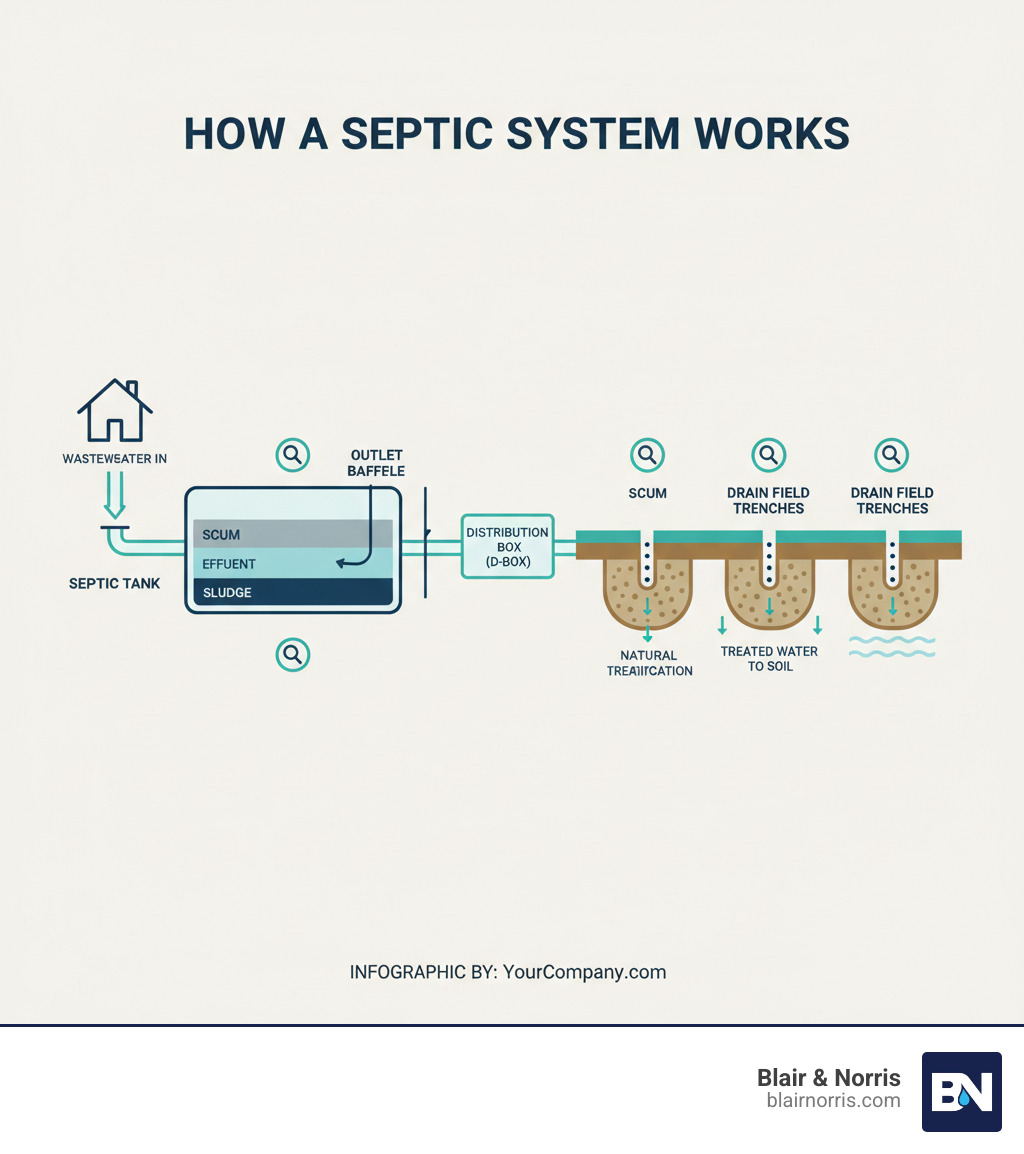
Must-know real estate septic inspection terms:
Why a Septic Inspection is a Homebuyer’s Best Friend
When buying a home with a septic system in the Indianapolis area, a real estate septic inspection is essential. Unlike homes on city sewer, these properties have a private wastewater treatment plant. If it fails, you could face a repair bill rivaling the cost of a new car.
A standard home inspection doesn’t go deep enough. A professional septic inspection protects your wallet, your family’s health, and the environment by ensuring wastewater is treated properly. It also gives you powerful negotiation leverage if problems are found. Skipping it can lead to sewage backups, surprise replacement costs that drain savings, and a major hit to your property value.
For tips on keeping your system healthy after you buy, check out our guide on Essential Septic System Maintenance Tips for Homeowners.
What a Real Estate Septic Inspection Uncovers
A thorough real estate septic inspection reveals the true condition of the entire system. Here’s what we look for:
- System Age and Type: Knowing the system’s age (most last 25-30 years) and type (e.g., conventional, aerobic) helps predict its remaining lifespan and maintenance needs.
- Tank Condition: We check the tank for cracks, leaks, or deterioration. We also examine the inlet and outlet baffles, which prevent solids from clogging the drain field. A damaged baffle is a common cause of expensive failures.
- Sludge and Scum Levels: We measure these layers to determine if the tank needs pumping. If they take up more than one-third of the tank’s volume, it’s time for service to prevent damage to the drain field.
- Drain Field Health: This is where the most expensive problems hide. We look for signs of failure like standing water, spongy ground, foul odors, or sewage surfacing in the yard. A failing drain field is the costliest component to replace.
- Component Functionality: On advanced systems, we test pumps, alarms, and electrical components to ensure they work correctly.
- Illegal Connections: We check for improperly connected sump pumps, roof drains, or washing machines that can overwhelm the system and cause it to fail prematurely.
If you’re concerned about warning signs, read our article on 5 Warning Signs of a Septic System Backup Emergency.
The High Cost of Ignorance
Skipping a real estate septic inspection is a huge financial gamble. The impact of septic problems ranges from inconvenient to catastrophic.
- Minor Repairs: Fixing a broken baffle or a clogged pipe can cost $1,000 to $5,000.
- Major Repairs & Replacement: When the drain field fails or the tank needs replacing, costs jump to between $20,000 and $60,000 or more, especially on challenging sites in Central Indiana.
- Property Value: A known septic failure makes a home difficult to sell and can slash its value. Most buyers will demand a price reduction equal to the replacement cost or walk away.
- Legal Liability: Sellers who hide septic problems can face lawsuits. A system that contaminates groundwater can also lead to fines and legal action from neighbors.
The inspection fee of $350 to $1,000 is a tiny price for peace of mind compared to a $50,000 surprise. If you do find problems, we offer Affordable Financing for Septic Systems in Indiana to help manage the costs.
The Real Estate Septic Inspection Process: What to Expect
Getting a real estate septic inspection is a straightforward process to protect your investment. Here’s a walkthrough of what to expect.
Schedule the inspection after your offer is accepted but before closing, often alongside the general home inspection. It typically takes two to four hours. The seller should locate system records and ensure access to the tank lids. We encourage buyers to attend to see the system and ask questions.
When choosing an inspector, look for a licensed and insured specialist, not just a general home inspector. At Blair & Norris, our team has over 75 years of combined experience with Indiana’s specific septic challenges, serving Indianapolis, Carmel, and surrounding areas. Indiana homeowners trust Blair & Norris for reliable septic inspections.
Types of Septic Inspections
Not all inspections are equal. Understanding the differences is key.
- Visual Inspection: The most basic level, this only catches obvious surface-level issues like wet spots or odors. It can easily miss major internal problems.
- Full Comprehensive Inspection: This is what we recommend for real estate deals. It involves opening the tank, checking its structure, measuring sludge/scum layers, inspecting baffles, and probing the drain field. It gives a complete picture of the system’s health.
- Hydraulic Load Test: This test is used if there’s concern about the drain field’s absorption capacity, especially if a home has been vacant. We introduce a large volume of water and monitor how the drain field handles it over 24-48 hours.
- Dye Testing: Flushing non-toxic dye through the system can reveal leaks if the dye appears on the ground surface. However, it’s not a comprehensive test on its own.
The EPA’s A Homebuyer’s Guide to Septic Systems reinforces why thorough inspections are so critical.
What Inspectors Look For
During a comprehensive real estate septic inspection, we methodically assess every part of the system. We locate all components, check the tank’s structural integrity, and measure the scum and sludge layers to gauge maintenance history. We examine the inlet and outlet baffles, which are critical for protecting the drain field. For advanced systems, we verify that pumps and alarms function correctly. Finally, we probe the drain field for saturation and look for any signs of backups, surface discharge, or illegal connections that could overload the system. This detailed process ensures you get a complete health assessment before you buy.
The Financial Impact: Costs, Repairs, and Property Value
Understanding the financial side of a real estate septic inspection is crucial. The inspection cost, typically $350 to $1,000, is a small investment to avoid potentially catastrophic repair bills.

If an inspection uncovers problems, repair costs can range from $1,000-$5,000 for minor issues to $20,000-$60,000+ for a full system replacement. A failed system can also slash a home’s market value, making it difficult to sell. This information is your key to negotiating a fair deal or walking away from a bad one. For more on costs, see our articles on What is the Septic Tank Pumping Cost? and Septic Clean Out Cost.
Your Negotiation Options After a Bad Inspection
A bad real estate septic inspection report gives you leverage. Here are your main options:
- Cancel the Purchase: If the problems are too severe, your inspection contingency allows you to walk away and recover your earnest money.
- Negotiate a Price Reduction: Ask the seller to lower the price to cover the estimated cost of repairs. This is a common and effective approach.
- Request Seller Repairs: Have the seller hire a qualified contractor to fix the system before closing. Be specific about the work required and demand proof of completion and permits.
- Accept Cash at Closing: The seller can provide a credit at closing for future repairs. Ensure your mortgage lender approves this arrangement.
Understanding Your Real Estate Septic Inspection Report
Your inspection report is a detailed health check-up for the septic system. It will include:
- System Description: The type, age, size, and location of components.
- Observations and Findings: Detailed notes and photos documenting the condition of each part, including sludge/scum measurements.
- Condition Rating: A clear rating such as Satisfactory (system is working), Satisfactory with Concerns (minor issues need attention), or Unsatisfactory (system is failing and needs major repair or replacement).
- Recommendations: Clear, actionable steps for maintenance, repairs, or further evaluation.
This report is your roadmap for negotiations and future maintenance. For more on common problems, see our article on 7 Common Septic Tank Issues. Armed with this information, you can make the best decision for your family and your finances.
Beyond the Sale: Documentation, Health, and Environmental Protection
A real estate septic inspection is about more than the sale; it’s about long-term safety, legal compliance, and environmental stewardship.
Documentation Required by Lenders
Mortgage lenders want to protect their investment and will often require documentation to prove the septic system is functional. This can include a Certificate of Installation, operational approvals from the local health department, and the recent real estate septic inspection report itself. While Indiana’s requirements are flexible, it’s wise to discuss this with your lender early on. For properties with both septic and well systems, our combined Well and Septic Inspection services can streamline this process.
Protecting Your Family and the Environment
A failing septic system poses serious health and environmental risks. The biggest threat is groundwater contamination. Untreated sewage can seep into the ground and contaminate your private well with harmful bacteria and viruses, leading to waterborne diseases. This is especially dangerous for children and the elderly.
Malfunctioning systems also pollute nearby streams, rivers, and lakes, harming aquatic life and making water unsafe for recreation. Protecting Indiana’s natural resources is a shared responsibility.
Proper system usage is key to prevention. Following the EPA’s Think at the Sink guidance, never flush non-biodegradable items like wipes or feminine hygiene products. Limit the use of harsh chemicals and garbage disposals, which can kill the beneficial bacteria that treat waste. Learn more about the critical relationship between your well and septic system on our Septic System and Well page.
Frequently Asked Questions about Real Estate Septic Inspections
Homebuyers and sellers often have questions about real estate septic inspections. Let’s clear up some of the most common ones.
Should the septic tank be pumped before an inspection?
No. Pumping the tank right before an inspection is a bad idea. We need to see the system under normal operating conditions. The sludge and scum layers are key health indicators that tell us about past maintenance and current function. Pumping the tank erases this crucial information and can temporarily hide evidence of a saturated or failing drain field. We want to uncover problems, not mask them.
Can a septic system be inspected in the winter?
Yes, in most cases. The wastewater in the system generates heat, which usually keeps the ground above the components from freezing solid. While deep snow or severely frozen ground can present challenges and may require more time, a winter inspection is rarely impossible. Our technicians are equipped for year-round inspections in Indiana. Don’t let the season delay this critical step. For any septic needs, regardless of weather, see our full range of Services: Septic.
Does a passed inspection guarantee the system won’t fail?
No, a passed inspection is not a guarantee of future performance. The inspection is a snapshot of the system’s condition on that specific day. It identifies existing problems and signs of imminent failure, but it cannot predict the future. A system’s longevity depends heavily on proper use and regular maintenance by the new homeowners. Flushing improper items or skipping regular pumping can cause a healthy system to fail. Think of it as a clean bill of health from a doctor—it’s only valid if you continue to take care of yourself. For a guide on long-term care, read The Ultimate Guide to Septic Tank Maintenance.
Conclusion

For any home with a septic system, a real estate septic inspection is not just an option—it’s essential protection for your investment and your family’s health. An inspection can save you from tens of thousands of dollars in unexpected repairs and gives you the power to negotiate a fair deal.
The knowledge you gain provides peace of mind, ensuring your dream home doesn’t come with a hidden nightmare. You’ll know the system’s condition and what to expect for future maintenance.
For over 75 years, Blair & Norris has helped families across Central Indiana make informed, confident decisions. We provide thorough, ethical real estate septic inspections backed by decades of experience and 24/7 live support.
Don’t gamble with one of the biggest purchases of your life. Contact us today for expert septic tank pumping and maintenance in Indiana, and let our family-owned team give you the straight answers and professional service you deserve.