
The Importance of Professional Residential Water Well Installation in Central Indiana
When you decide to invest in residential water well installation in Central Indiana, you aren’t just buying a utility; you are securing your home’s future and ensuring a lifetime of self-reliance. Water security is a growing concern for many Hoosiers, particularly as urban sprawl continues to put pressure on aging municipal infrastructures. Relying on a municipal system means you are subject to changing policies, treatment methods, and infrastructure disruptions, chemical additives (like chlorine and fluoride), and potential infrastructure failures that can lead to boil-water advisories. A private well, however, offers a sense of independence that is hard to beat, providing you with total control over your most vital resource.
Beyond peace of mind, a private well can be a long-term asset that supports consistent household water access. Installing a well can be a meaningful property feature, especially in rural or semi-rural areas where private wells are common. Buyers in the Midwest often view a private, high-yield well as a premium feature, especially in rural or semi-rural areas like Zionsville, Bargersville, or the outskirts of Noblesville. Furthermore, there are 5 advantages of installing a well on your property that go beyond just the monthly savings on your water bill. You have a self-supplied water source that is naturally filtered by the earth, providing a crispness and quality that city water simply cannot match. To learn more about how we can help you achieve this, check out more info about well services.
Key Factors Influencing Residential Water Well Installation in Central Indiana
No two properties in Central Indiana are identical, and the geological diversity of our state is truly remarkable. Our region’s geology is a complex “layer cake” of glacial materials left behind thousands of years ago by the Wisconsin Glaciation. This event deposited thick layers of till, sand, and gravel across the Tipton Till Plain, creating a subterranean landscape that requires expert navigation. Several factors dictate the success of your project:
- Aquifer Depth: In places like Carmel or Fishers, we might find a productive aquifer at 100 feet in a glacial sand pocket, while other areas in Southern Marion County might require drilling 300 feet or deeper into the limestone to hit a reliable water source.
- Soil Composition: We encounter everything from heavy, sticky “Indiana clay” to loose pockets of sand and gravel. Each requires a different drilling technique and specialized equipment to ensure the borehole stays open and the water remains clear and free of sediment.
- Bedrock Layers: Many wells in Central Indiana are finished in limestone or dolomite bedrock. The hardness and the presence of fractures within that rock determine how much water the well will produce. Understanding the local stratigraphy is essential for a high-yield well.
- Property Size and Setbacks: State and local regulations are very strict regarding well placement. We must maintain specific distances between your well and your septic system, property lines, buildings, and even nearby power lines to ensure safety and compliance.
Finding a qualified professional who understands these local nuances is vital. You can find a list of Water Well Service Contractors Near Carmel, IN | WellOwner.org to verify local expertise and ensure your driller is properly licensed by the state.
Environmental and Health Implications of Proper Siting
Siting a well is a science that requires a deep understanding of hydrology and environmental health. If a well is placed too close to a septic field or in a low-lying area prone to seasonal runoff, the risk of bacterial contamination, such as E. coli or coliform, skyrockets. Proper residential water well installation in Central Indiana involves calculating “setback distances” to protect your family’s health. We also look at the “up-gradient” of the property—ensuring that fertilizers, pesticides, or chemicals from nearby agricultural fields won’t leach into your water supply over time. If you are ever unsure about your current well’s location or quality, it is a good idea to schedule a well inspection to ensure your system is up to code and providing safe water.
The Technical Process: From Site Assessment to Flowing Water
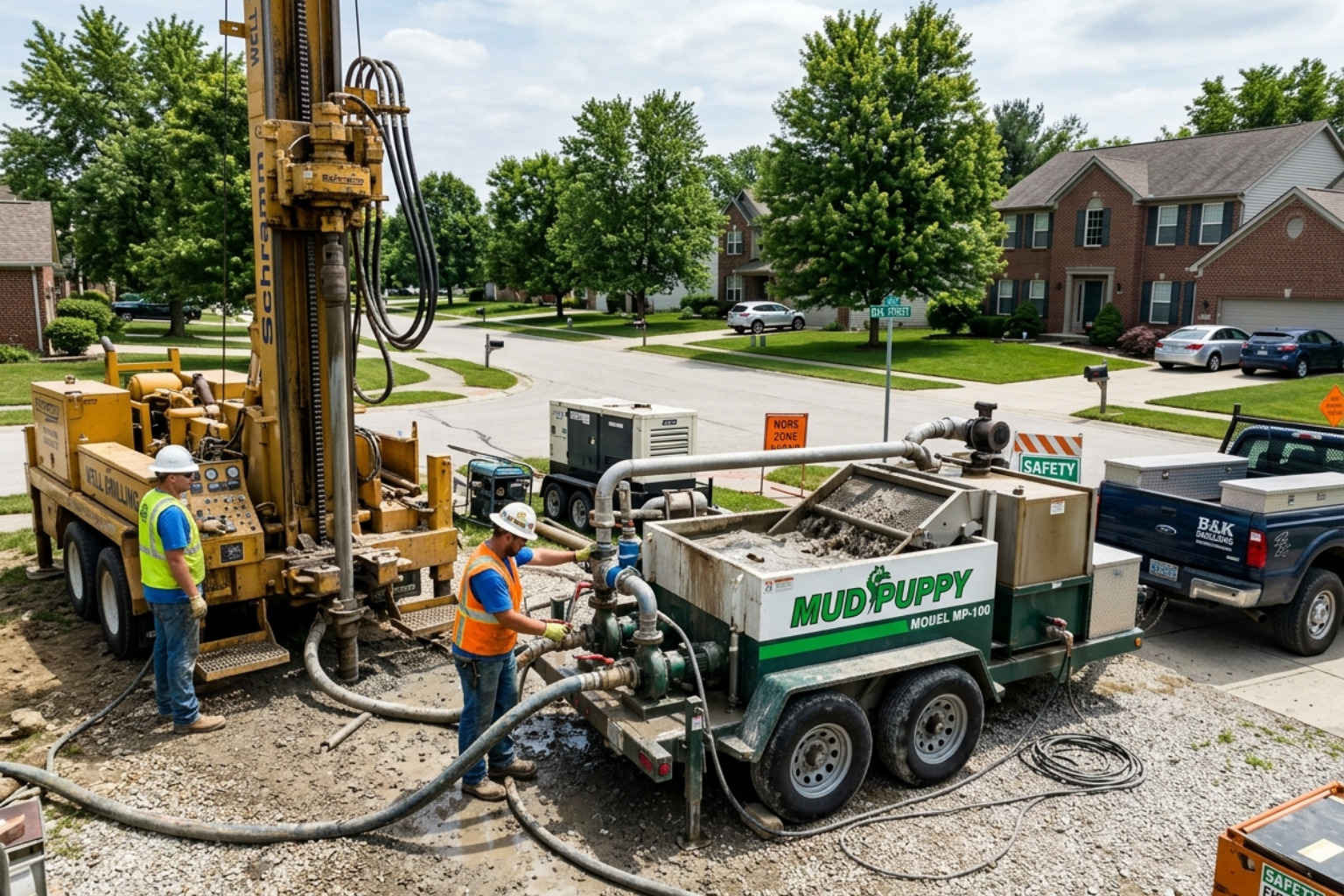
The journey to fresh water begins with a thorough site evaluation and a review of historical data. We don’t just show up and start digging blindly. We look at historical well logs from your neighbors and state geological surveys to predict what we’ll find underground. There are 7 steps that need to happen for well drilling, starting with the permit application and ending with a fully sanitized and tested system.
Once the rig is set up, the actual drilling begins. We use advanced rotary drilling rigs that utilize “drilling mud” (a mixture of water and bentonite clay) to stabilize the hole and carry the cuttings to the surface. After reaching the desired depth and confirming a strong water flow, we install the casing—the heavy-duty “pipe” that keeps the hole from collapsing. Finally, we perform “pressure grouting,” where a cement-like slurry is pumped into the space between the casing and the earth. This creates an impermeable seal that prevents surface pollutants from trickling down into your drinking water, protecting the aquifer for everyone.
Advanced Drilling Technology and Mud Recycling
In the old days, drilling a well was a messy, muddy affair that left your yard looking like a swamp for months. At Blair & Norris, we’ve modernized the process to be as clean and efficient as possible. We utilize Mud Puppy equipment for clean mud recycling and drilling. This sophisticated system filters the drilling fluids in real-time, separating the sand and cuttings so we can reuse the water and bentonite throughout the process.
The benefits of using Mud Puppy equipment include:
- A Cleaner Jobsite: No massive mud pits or trenches in your front yard. The system keeps the mess contained within the machine and the borehole.
- Environmental Stewardship: We use significantly less water and generate less waste, which is better for the local ecosystem.
- Efficiency: It allows us to complete drilling wells faster and with more precision, as the drilling fluid remains at the optimal consistency for the entire job.
- Equipment Longevity: By removing abrasive sand from the drilling fluid, we protect our pumps and bits, ensuring a more reliable drilling process.
Estimating the Timeline for Residential Water Well Installation in Central Indiana
“How long until I can take a shower?” is the question we hear most often from homeowners. While every project is different based on the geology and depth, here is a general timeline you can expect:
- Permitting (1–5 days): Getting the green light from the county health department. This involves submitting a site plan and completing county health department requirements.
- Drilling (1–3 days): Depending on the depth and the hardness of the rock layers we encounter. Bedrock drilling typically takes longer than sand-and-gravel wells.
- Pump & Tank Installation (1 day): Connecting the “heart” of the system, including the submersible pump, the drop pipe, and the pressure tank inside the home.
- Testing & Chlorination (24–48 hours): Ensuring the water is safe. We shock the well with chlorine to kill any bacteria introduced during drilling and then perform a potability test.
In total, most homeowners are looking at a 1 to 2-week window from start to finish. If you are currently out of water and need a replacement well immediately, we offer emergency well pump service to get your household back online as quickly as possible, often within 24 hours for pump-related issues.
Choosing the Right System: Pumps, Tanks, and Performance Options

Once the hole is drilled and the casing is set, you need a way to get the water from the ground into your home. This is where many homeowners get overwhelmed by the technical choices. Your system consists of a submersible pump (located deep in the well) and a pressure tank (usually in your basement or utility closet). The pump pushes the water up through the drop pipe, and the tank stores it under pressure so it’s ready the moment you turn on the faucet.
For a deeper dive into these components, see your guide to installing a well pump: types, costs, and maintenance.
Good, Better, and Best: Selecting Your Water Infrastructure
We believe in giving our customers options that fit their budget and their performance needs. Not every home needs a commercial-grade system, but every home deserves reliability. Here is how we categorize residential water well installation in Central Indiana systems:
| Feature | Good (Standard) | Better (High Performance) | Best (Premium) |
|---|---|---|---|
| Pump Material | Plastic/Composite | Partial Stainless Steel | 100% Stainless Steel |
| Pump Type | Standard Submersible | High-Efficiency Submersible | Constant Pressure (Variable Speed) |
| Pressure Tank | Standard Steel Tank | Heavy-Duty Composite | Compact Constant Pressure Tank |
| Performance | Basic water delivery | Improved pressure/durability | “City-like” constant pressure |
| Warranty | Standard manufacturer | Extended 5-year parts | Lifetime Pump Warranty Options |
Choosing the “Best” option—a constant pressure system—is like upgrading from a moped to a luxury SUV. Standard systems have a “pressure drop” where the water pressure fluctuates as the pump cycles on and off. A constant pressure system uses a variable frequency drive (VFD) to adjust the pump speed in real-time. This ensures that even if you are running the dishwasher, the laundry, and taking a shower at the same time, your water pressure never drops. Component selection affects performance, maintenance demands, and how consistent your water pressure feels throughout the home.
Water Quality Testing and Treatment Solutions
Central Indiana water is famous for being “hard”—meaning it’s full of dissolved calcium and magnesium. While these minerals aren’t harmful to your health, they can wreak havoc on your plumbing, water heater, and appliances. It can also contain iron (which causes orange stains in sinks) or sulfur (which smells like rotten eggs). Part of our installation process includes mandatory potability testing to check for bacteria. If your water has mineral issues, we can integrate water softeners, iron filters, or reverse osmosis systems to ensure your water is as pure as it is plentiful. Don’t hesitate to contact us for water testing if you have concerns about your existing supply or want to optimize your new installation.
Why Professional Expertise Trumps DIY Risks for Indiana Homeowners
In the age of YouTube tutorials and big-box hardware stores, it’s tempting to think you can handle well repairs or even small-scale drilling yourself. Don’t do it. The risks of DIY well work are massive and can lead to catastrophic safety and environmental consequences. A poorly sealed well can act as a direct straw for contaminants to enter the aquifer, potentially ruining the water supply for you and your neighbors for miles. There is also the very real danger of borehole collapse, which can trap expensive equipment underground forever and require the entire well to be abandoned and plugged at a high cost.
Understanding what to know about residential well drilling in Indianapolis means recognizing that this is a highly regulated, high-stakes trade that requires specialized machinery and years of training.
Licensing and Regulatory Requirements in the Hoosier State
The Indiana DNR Division of Water doesn’t just hand out licenses for fun. To be a licensed driller or pump installer in Indiana, an individual must pass rigorous exams covering geology, hydrology, and state law, and they must participate in annual continuing education. This ensures that every well meets Indiana Code, which dictates everything from the type of grout used to the height of the well casing above the ground. These regulations are in place to protect our state’s groundwater resources. You should always verify a contractor before they ever pull a rig onto your property. A non-licensed driller can leave you with a well that is not only illegal but dangerous.
Signs of a Poorly Installed Well and How to Avoid Them
If a well isn’t installed correctly, you’ll know it—but usually when it’s too late and the damage is done. Common red flags include:
- Sputtering Faucets: This often means air is getting into the line, possibly from a leak in the drop pipe or a failing pitless adapter.
- Sand or Sediment in Water: This indicates a failed well screen, improper casing depth, or a well that was not properly developed after drilling.
- Short Cycling: If your pump turns on and off every few seconds, your pressure tank is likely waterlogged or failing, which will eventually burn out your pump motor due to excessive heat.
- Cloudy or Discolored Water: This could be a sign that surface water is leaking into the well through a faulty grout seal.
If you notice any of these signs, you need emergency service immediately to prevent a total system failure and to protect your family from potentially contaminated water.
Selecting Your Local Central Indiana Provider for Long-Term Reliability
When you choose a partner for residential water well installation in Central Indiana, you aren’t just looking for a guy with a drill and a truck. You are looking for a company that will be there at 2:00 AM on a Sunday when your water stops running and you have a house full of guests. You are looking for a legacy of service and a commitment to the community.
At Blair & Norris, we’ve built our reputation over 75 years on a simple foundation: ethical craftsmanship and honest communication. We aren’t a “fly-by-night” operation; we are your neighbors, and we take pride in the work we do. Whether you are in Hamilton County, Johnson County, Hancock County, or anywhere in our Service Areas: Indianapolis, we bring a level of local expertise that national franchises just can’t match. We know the soil, we know the rock, and we know the people. We encourage you to check our Google Reviews—our customers stay with us for generations because we treat their homes like our own and we stand behind every foot of pipe we install. Ready to start your journey toward water independence? Get an estimate from our team today and experience the difference that 75 years of experience makes.
Frequently Asked Questions about Residential Water Well Installation
How deep do wells typically go in Central Indiana?
It varies wildly based on your specific location! In some parts of Northern Marion County or Hamilton County, we might hit great water at 80 to 120 feet in glacial gravel. In the hilly areas of Morgan, Brown, or Southern Johnson County, we might have to drill 300 to 500 feet into the bedrock to find a sufficient yield. For a detailed look at this, read water wells uncovered: how deep do they really go?
What is the average cost of a new residential well?
The cost is determined by several variables: the depth of the hole, the type of casing required (PVC vs. Steel), the geological conditions, and the pump system you choose. Project scope depends on depth, geology, casing requirements, and the pump system selected—your installer should confirm the plan after a site review.
How often should I maintain my new well system?
We recommend an annual “wellness check” to ensure everything is running at peak efficiency. This includes a bacteria test, a check of the pressure tank’s air charge, and an amp-draw test on the pump to see if it’s working harder than it should. Preventive maintenance helps reduce surprise failures and supports longer equipment life.
Will my well run dry during a drought?
Most wells in Central Indiana are drilled into deep aquifers that are not immediately affected by seasonal dry spells. However, during extreme, multi-year droughts, water levels can drop. Proper well design and depth are the best defenses against drought. We always aim to drill deep enough to provide a “buffer” for these environmental changes.
Can I use my well water for my lawn irrigation system?
Absolutely! In fact, this is one of the most popular reasons for installing a well. Using city water for irrigation can be hard on the municipal supply and may come with usage restrictions in some seasons. A high-yield well can provide all the water your lawn needs without the high monthly utility bills.
Conclusion
Investing in residential water well installation in Central Indiana is one of the smartest moves a homeowner can make in today’s world. It provides you with high-quality, self-supplied water, shields you from rising municipal costs, and adds lasting value to your property. However, the success and longevity of your well depend entirely on the expertise, technology, and integrity of the people who drill it.
Don’t leave your family’s water supply to chance—choose a licensed team that follows Indiana well standards for siting, casing, and sealing. Choose a partner with the advanced technology (like our Mud Puppy recycling systems), the proper state licensing, and the 75-year local reputation for excellence. We are here 24/7 to ensure your water keeps flowing and your family stays healthy. From the first permit to the final drop, Blair & Norris is your trusted partner in water independence.
Ready to plan residential water well installation in Central Indiana? Talk with our team about site conditions, permitting, and system design. Contact Blair & Norris to discuss residential water well installation in Central Indiana and schedule a site review.