
Why Septic Covers Matter for Your Home and Yard
Septic covers are essential for providing safe access to your septic tank while protecting your family from hazards. They fall into two main categories: functional covers (concrete, plastic) designed for safety and access, and decorative covers (faux rocks, planters) that hide septic components while blending into your landscape.
The right cover prevents accidental falls, stops groundwater infiltration, controls odors, and keeps debris out of your system. For homeowners with visible tanks or risers, a new cover can solve an aesthetic problem, turning an eyesore into a natural-looking feature. Choosing the right one depends on location (lawn vs. driveway), required weight capacity, and your aesthetic goals. Adding a riser brings the access point to ground level, making routine pumping (every 3-5 years) much easier by eliminating the need to dig.
Many Central Indiana homeowners only consider their septic cover when faced with a cracked lid or an ugly plastic dome. The good news is that modern solutions offer something for every budget and style. I’m Mack Blair, and for over 30 years at Blair & Norris, I’ve helped Indianapolis-area homeowners find the right balance of safety, accessibility, and curb appeal. Understanding your options is the first step to a better solution for your yard.
Understanding the Different Types of Septic Covers
Septic covers have evolved from heavy concrete slabs to lightweight, decorative pieces. Every cover’s primary job is to seal the septic tank, preventing accidents, keeping out debris and water, and containing odors. The best choice depends on its location, the weight it must support, and your aesthetic preference.
Many modern systems use septic risers to bring underground access points to ground level, making maintenance far easier. The cover sits on this riser, creating a clean, accessible system. Covers fall into two categories: functional and decorative. Functional covers prioritize durability, while decorative ones disguise the access point as a landscape feature.
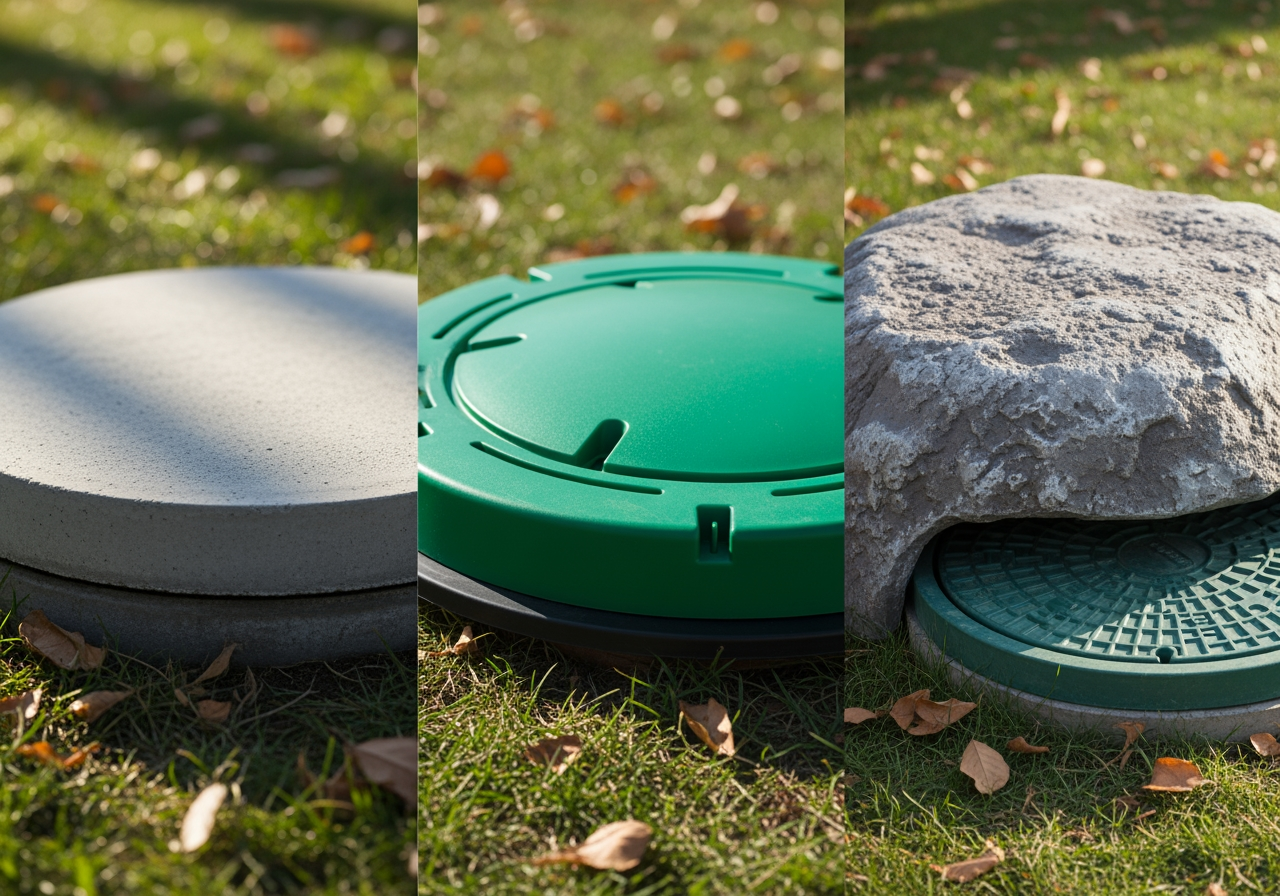
Functional Septic Covers
These are the workhorses, built for safety and durability.
- Concrete lids: The traditional option. Their weight offers security but makes them difficult to move for maintenance. They can also crack over time due to Indiana’s freeze-thaw cycles.
- Plastic or polyethylene lids: A popular modern choice. They are lightweight, corrosion-resistant, and feature watertight seals and locking mechanisms. They offer a great balance of affordability and durability.
- Fiberglass covers: Similar to plastic but with improved strength and weather resistance, making them very durable.
- Steel manhole-style covers: The heavy-duty solution for driveways or high-traffic areas. They can handle loads of 3,300 pounds or more, and stainless steel options resist rust for decades.
Decorative Septic Covers
For those who dislike a plain lid in their yard, decorative septic covers turn a utility into an attractive feature.
- Faux rocks: The most popular choice. Made from lightweight, weather-resistant materials, they look like natural stone and blend seamlessly into a garden or lawn.
- Planter covers: These integrate a planter box into the cover, allowing you to grow flowers or small shrubs on top for a living disguise.
- Other creative solutions: Easily removable birdbaths, garden benches, or decorative barrels can also be used to hide access points. For exposed vent pipes, pagoda-style vent covers can hide the pipe and help control odors.
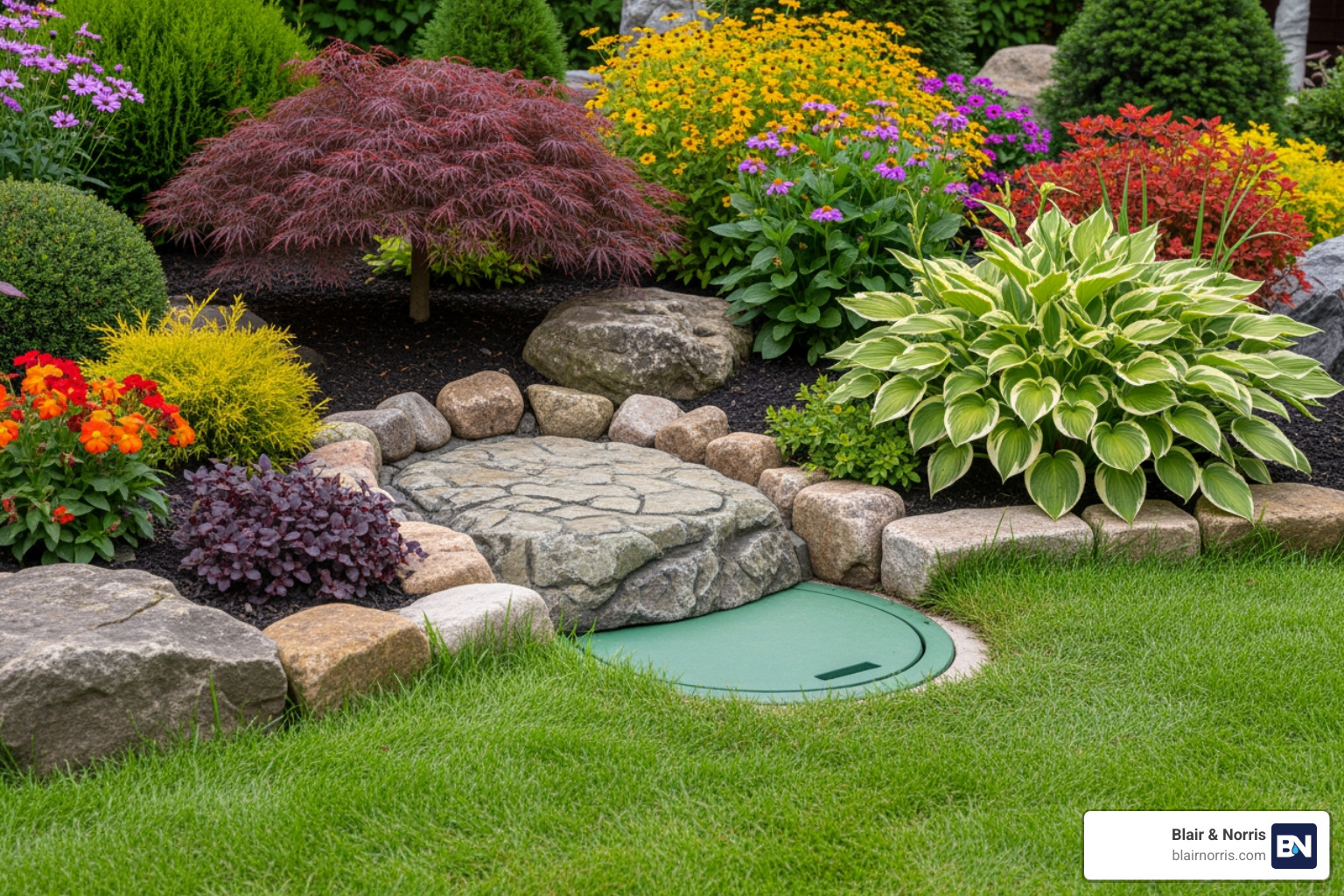
Most decorative covers are designed to work with standard septic tank risers and covers, ensuring they provide a proper seal and security while enhancing your landscape.
How to Choose the Right Septic Cover for Your System
Selecting the right septic cover is a key decision for your family’s safety, your property’s appearance, and your system’s health. Getting it right the first time saves headaches and money. The choice comes down to three factors: material, sizing, and safety features.
Comparing Materials for Septic Covers
The material determines a cover’s durability, weight, and maintenance needs. Modern plastic and fiberglass covers are popular for being lightweight, corrosion-resistant, and durable, with many meeting standards set by organizations like NSF International for wastewater components. Heavy-duty steel is essential for driveways, while traditional concrete remains a heavy but secure option. The EPA’s septic systems overview provides helpful context on how these parts work together.
| Material | Durability | Weight | Cost | Maintenance | Best For |
|---|---|---|---|---|---|
| Concrete | Strong, but can crack over time | Very Heavy | Moderate | Low until cracks form | Traditional installations, foot traffic only |
| Plastic (Polyethylene) | Excellent weather/corrosion resistance | Lightweight | Moderate-High | Minimal | Most residential uses, easy access |
| Fiberglass | Superior strength and weather resistance | Light | Moderate-High | Very low | Long-term use, harsh weather |
| Stainless Steel | Extremely durable, rust-resistant | Heavy | High | Minimal | Driveways, high-traffic areas |
Sizing and Fitment: Getting the Measurements Right
An improperly sized cover is a safety hazard and can lead to water infiltration. To ensure a correct fit, measure the diameter (for round openings) or the length and width (for square ones). If you’re replacing a cover, measure the underside. Covers are available in standard sizes from 12 to 40 inches.
If your tank opening is buried, now is the time to install a riser. A riser brings access to ground level, eliminating digging for routine maintenance. A tank adapter ring creates a secure, level base for the riser. The seal between the cover and riser is critical for keeping water out, containing odors, and ensuring the cover is stable.
Essential Safety Features for Your Septic Cover
Safety features are non-negotiable.
- Load Capacity: Always verify the weight a cover can support. Standard covers are for foot traffic only. If a cover is in a driveway or area accessible to vehicles, you must use a heavy-duty cover rated for vehicular loads (3,300+ lbs) to prevent a dangerous collapse.
- Non-Skid Surface: A textured surface provides traction and prevents slips and falls, especially when the cover is wet.
- Secure Locking Mechanisms: Child-proof fasteners that require a tool to open are essential to prevent children from accessing the tank.
- Gas-Tight Seals: A rubber gasket keeps hazardous septic gases in and groundwater out. A good seal is vital for safety and system health.
Investing in a cover with these features is a smart move. For more on keeping your system healthy, see our septic system maintenance guide.
Installation and Maintenance for Longevity
Proper installation and ongoing maintenance are key to your septic cover’s effectiveness and long life. An incorrectly installed or neglected cover can become a safety hazard and compromise your entire septic system.
Septic Cover Installation Considerations
While replacing a simple lid may seem like a DIY job, professional installation is highly recommended, especially when adding risers. A pro ensures a proper, secure fit, which is critical for safety.
- Sealing: The connection between the cover and riser must be watertight and airtight to prevent water infiltration and the escape of hazardous gases.
- Correct Hardware: Always use the manufacturer-specified bolts and screws to ensure the cover is secure.
- Level Placement: The cover must sit level to create an effective seal and prevent stress that could lead to cracking.
Maintaining Your Septic Cover
Regular attention will extend your cover’s lifespan.
- Inspect Regularly: Check for cracks or damage every few months, especially after storms. Concrete is particularly prone to cracking and should be replaced if damaged.
- Keep it Clean: Use mild detergent and water for plastic or fiberglass covers. A stiff brush works for concrete. Avoid harsh chemicals that could harm your septic system.
- Check Seals: Inspect rubber gaskets for damage or hardening. A compromised seal should be replaced immediately.
- Lubricate Locks: A light application of silicone spray on metal locks can prevent rust and keep them working smoothly, especially through Indiana winters.
Frequently Asked Questions about Septic Covers
Here are answers to common questions we hear from homeowners in Martinsville, Mooresville, and across Central Indiana about their septic covers.
What is the typical cost for septic covers?
Costs vary by material, size, and style.
- Functional Covers: Basic concrete lids can be as low as $50-$150. More durable plastic or polyethylene lids typically range from $100 to $300. Heavy-duty steel covers for driveways can cost $300 to $800 or more.
- Decorative Covers: Faux rocks or planter lids generally start around $150 and can exceed $500.
- Installation Costs: Professional installation ensures safety and proper sealing, and the cost will vary based on the job’s complexity. Choosing quality over the lowest price is a wise investment in your home’s safety.
How often should I access my septic tank?
Access is primarily for routine maintenance. Septic tanks should be pumped every 3 to 5 years to prevent sludge buildup and system failure. The exact frequency depends on your household size and water usage. Installing risers brings access to ground level, eliminating the need to dig up your yard for every service and making it easier to stick to a proper maintenance schedule. To determine the right schedule for you, learn more about how often your septic system needs septic pumping.
Can I drive over my septic tank cover?
Only if the cover is specifically rated for vehicle traffic. Standard residential septic covers are designed for foot traffic only. Driving over one can cause it to crack or collapse, creating an extremely dangerous situation.
If your septic access is in a driveway, you must install a heavy-duty, traffic-rated cover made from reinforced concrete or steel, capable of supporting at least 3,300 lbs. Driving over a non-rated cover can lead to costly damage and poses a huge safety risk. Always confirm the load rating of your cover. When in doubt, keep vehicles away. For more information, the CDC offers valuable resources on septic safety.
Conclusion: The Final Word on Protecting and Hiding Your Septic System

Septic covers are more than just lids; they are vital for safeguarding your family, protecting your septic system, and enhancing your home’s curb appeal. Choosing the right cover involves balancing safety, durability, access, and aesthetics. A secure, properly installed cover protects your investment and provides peace of mind. Whether you need a functional workhorse or a decorative cover that blends into your landscape, there is a solution for every budget.
At Blair & Norris, we have served homeowners across Indianapolis and surrounding communities like Greenfield and Pendleton for over 75 years. We understand the local climate and soil, ensuring you get a durable, safe, and suitable solution for your property.
Ready to upgrade your septic cover or need a professional inspection? For expert service you can count on, call Blair & Norris or contact us today for an estimate.