
Understanding Septic Inspections: Why They Matter
A septic inspection is a professional assessment of your home’s wastewater treatment system to ensure it’s functioning properly. For the approximately 1 in 5 American households relying on septic systems, regular inspections are essential preventative maintenance.
Quick Septic Inspection Guide:
| Inspection Type | Frequency | Average Cost | What’s Included |
|---|---|---|---|
| Visual Inspection | Annually | $100-$250 | Surface evaluation, flushing test, record review |
| Full Inspection | Every 3-5 years | $250-$500+ | Tank pumping, component check, baffle inspection |
| Point-of-Sale | Before home purchase | $300-$600+ | Comprehensive assessment with documentation |
If you’re a homeowner in Central Indiana dealing with septic system concerns, you’re not alone. Hidden beneath your yard, these systems quietly process wastewater until something goes wrong—often at the most inconvenient times.
“Most property owners don’t think about sewage management until issues arise,” notes one industry expert. This reactive approach can lead to expensive emergencies that could have been prevented with routine inspections.
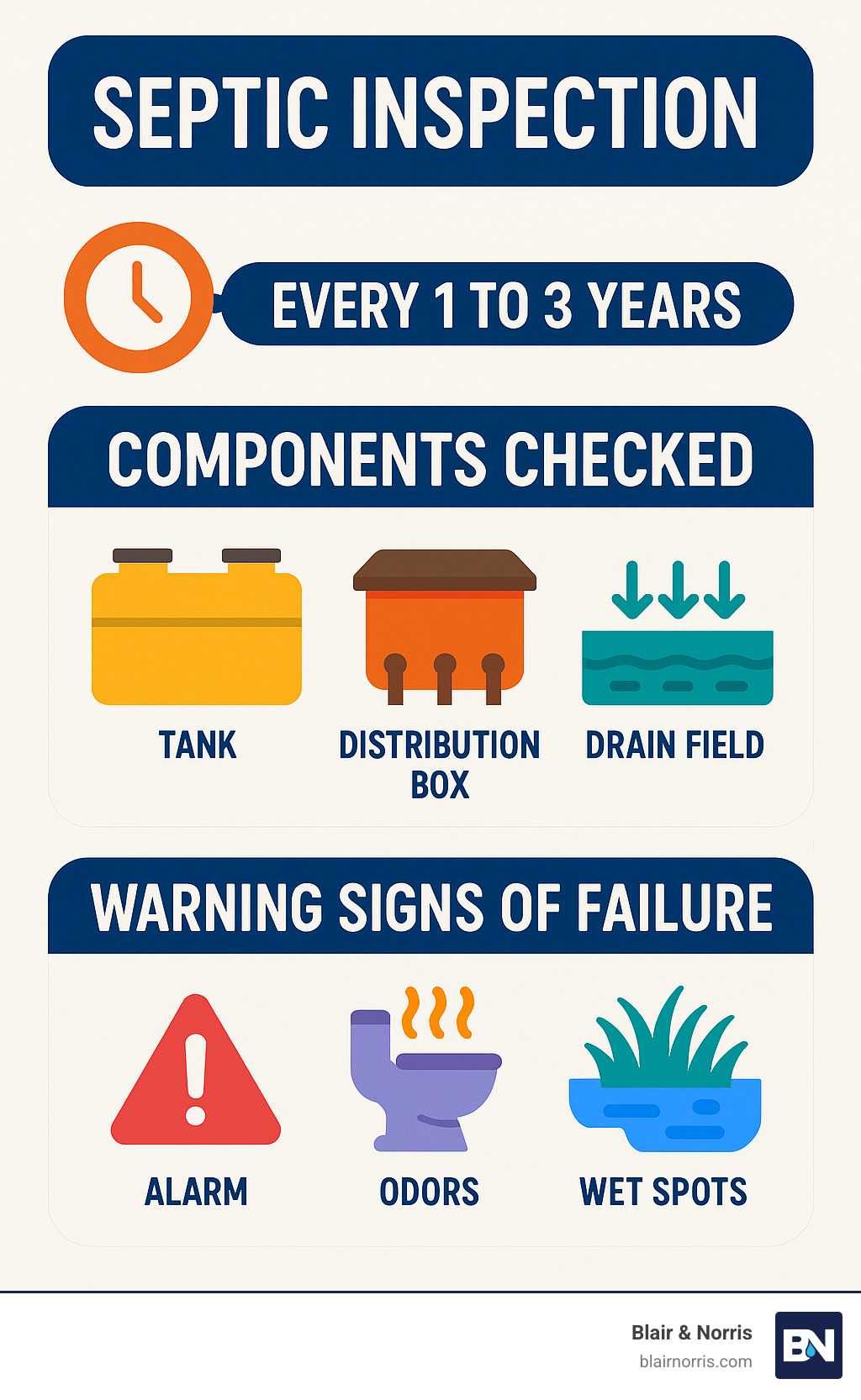
Think of your septic system like your car—regular oil changes prevent engine failure, and regular septic inspections prevent system failure. The EPA recommends inspections every 1-3 years, depending on your system type, household size, and usage patterns.
A proper inspection examines all components, including the tank, distribution box, and drain field. It can reveal issues before they become disasters: clogged filters, damaged baffles, tank overflow, or drain field saturation.
Why This Roundup Matters
When it comes to your septic system, what you don’t know can hurt you—and your wallet. Hiring the right inspection service isn’t just about compliance; it’s about protecting your investment and preventing catastrophic failures.
At Blair & Norris, we’ve seen too many Indianapolis homeowners face thousands in emergency repairs that could have been avoided with proper inspection services. Our 75 years of experience has taught us that proactive care saves money and headaches.
Septic Inspection 101: How Systems Work & Why They Matter
Your septic system is essentially a mini wastewater treatment plant working 24/7 in your backyard with two main components:
The Septic Tank collects everything flowing down your drains. Inside, heavier solids sink to form sludge at the bottom, while lighter materials like oils float to the top as scum. Between these layers, partially clarified water (effluent) prepares for its next journey.
The Drainfield allows the effluent to slowly filter through soil, which naturally removes harmful bacteria, viruses, and nutrients before the water rejoins the groundwater supply.
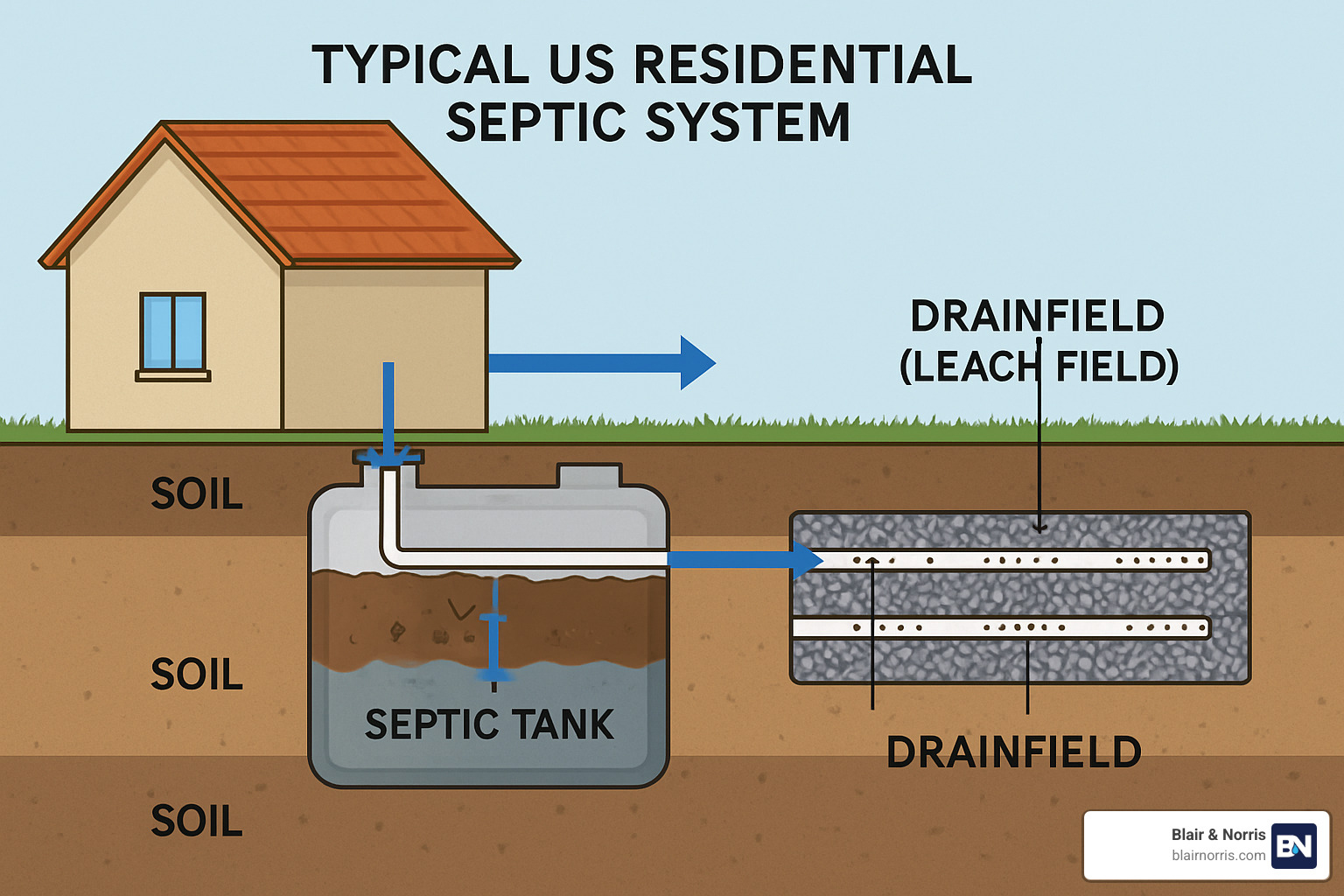
About 20% of American homes rely on septic systems according to the EPA. Here in rural Indiana, where many customers rely on well water, a properly functioning septic system is essential for health and safety.
Think of your septic inspection as a regular health check-up. These inspections:
- Catch small problems before they become expensive disasters
- Help your system reach its full 25+ year lifespan
- Protect your property value
- Keep you on the right side of environmental regulations
- Fulfill requirements when buying or selling property
As the EPA guidance on septic care points out, “Maintaining your septic system not only protects your investment in your home but also protects human health and the environment.”
What Is a Septic Inspection?
A septic inspection is when a trained professional evaluates your system’s health and functionality:
Visual Inspection examines visible components, looks for warning signs, and reviews maintenance history.
Full Inspection includes pumping the tank to examine internal components like baffles and divider walls, measuring sludge and scum layers, and checking for structural issues.
Performance Testing runs water through the system to test how well it handles volume.
Dye Load Testing uses colored dye to check if any surfaces in your yard, indicating system failure.
When we perform a thorough septic inspection at Blair & Norris, we cover all bases and provide a detailed report explaining what’s happening underground.
Consequences of Skipping Inspections
Skipping regular septic inspections is like ignoring your car’s check engine light—problems are brewing.
Environmental Contamination: Failed systems release untreated sewage into soil and water, introducing dangerous pathogens and nutrients into the ecosystem.
Financial Pain: What starts as a simple $200 inspection can become a $12,000 emergency when ignored. Minor repairs might cost a few hundred dollars, but a complete drainfield replacement can run $3,000 to $15,000.
Property Value Problems: Lenders often won’t approve mortgages for properties with failing systems.
Health Hazards: Exposure to untreated sewage can cause serious illness, affecting your family and potentially neighbors.
One Indianapolis family postponed their recommended inspection because “everything seemed fine.” Six months later, they faced a complete drainfield failure after heavy spring rains—along with a hefty bill that could have been avoided with regular maintenance.
How to Choose & Compare Septic Inspection Services
Finding the right septic inspection service in Indianapolis doesn’t have to feel overwhelming. Think of it as choosing a doctor for your home’s digestive system—you want someone trustworthy, experienced, and thorough.

When choosing a service, check their credentials first. Any reputable provider in Indiana should be properly licensed through the Indiana State Department of Health, understanding our local soil conditions, regulations, and best practices.
Technology makes a difference too. Modern inspection equipment like fiber-optic cameras can spot hairline cracks and potential failures that might be missed by the naked eye.
The inspection report itself tells another story. A quality inspector provides a detailed written assessment with photos, clear findings, and specific recommendations—not just a verbal “looks good” and a handshake.
Response time matters, especially during home purchases or when facing potential system issues. Don’t overlook warranties or guarantees, as some companies stand behind their inspections while others disappear after cashing your check.
| Inspection Feature | Basic Inspection | Comprehensive Inspection |
|---|---|---|
| Visual assessment | ✓ | ✓ |
| Flow & flush test | ✓ | ✓ |
| Tank interior check | ✓ | |
| Baffle inspection | ✓ | |
| Sludge measurement | ✓ | |
| Distribution box check | ✓ | |
| Camera inspection | Often included | |
| Written report | Brief | Detailed with photos |
| Cost range | $100-250 | $250-600 |
Must-Have Credentials for Septic Inspection
When inviting someone to evaluate your septic system, their qualifications matter tremendously. Verify their state licensing through the Indiana State Department of Health and look for industry certifications from organizations like the National Association of Wastewater Technicians (NAWT) and the National Onsite Wastewater Recycling Association (NOWRA).
Don’t overlook insurance coverage, which protects you from liability if something goes wrong during the inspection. The best septic professionals stay current through continuing education as technology and best practices evolve.
Red Flags to Avoid
Watch for these warning signs when choosing a septic inspection service:
- No written report (proper inspections always include detailed written assessments)
- Inspectors who don’t mention tank pumping when needed
- Unusually low flat fees (often leading to upselling or cut corners)
- Impatience or vague responses to your questions
- High-pressure sales tactics pushing for immediate expensive repairs
The right service gives you peace of mind about one of your home’s most critical systems.
Top Septic Inspection Service Options Reviewed
Based on our decades of experience serving Indianapolis homeowners, here’s our assessment of the various septic inspection options available:
Basic Visual Septic Inspection
This entry-level service gives you a quick health check of your system. Our technicians locate your tank, look for obvious warning signs, and run a simple flow test to ensure waste is moving properly.
At $100-$250, it’s affordable peace of mind for newer systems without any history of problems. However, visual inspections alone can miss critical internal issues developing out of sight.
We typically recommend this only as a supplement to more thorough periodic inspections or for very new systems with excellent maintenance records.
Comprehensive Septic Inspection with Pump-Out
This is the gold standard of septic inspection services. We pump your tank completely, allowing us to inspect every internal component with clarity, measuring sludge and scum layers, checking baffles for damage, inspecting divider walls, verifying proper effluent levels, and evaluating your entire system’s condition.
Priced between $250-$500 in the Indianapolis area, this inspection should be performed every 3-5 years for all septic systems, especially when buying or selling a home.
Camera-Assisted Septic Inspection
Our fiber-optic camera inspections allow us to see exactly what’s happening inside your pipes—identifying blockages, cracks, or root intrusions that would otherwise remain hidden.
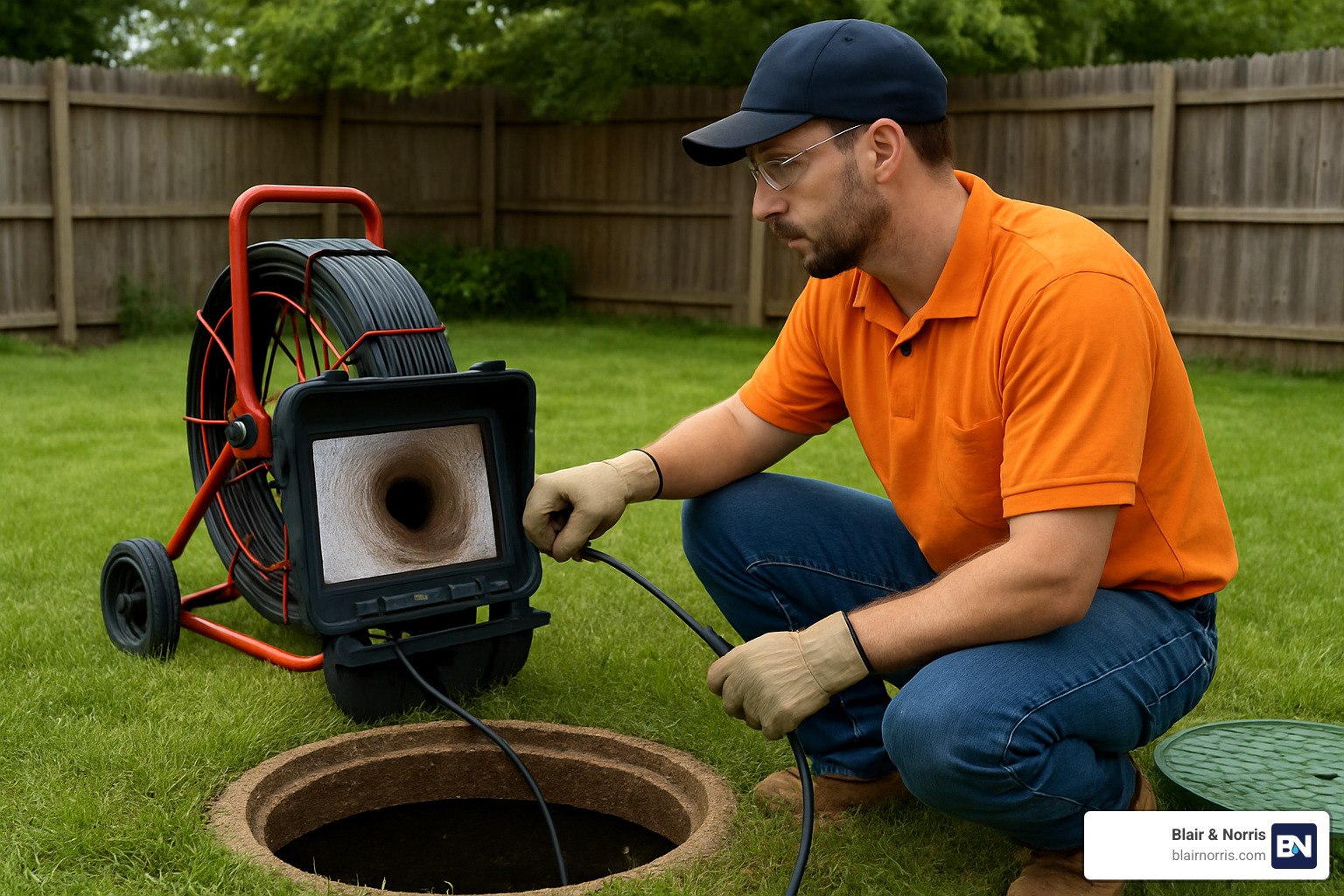
While this adds $300-$600 to your inspection cost, the high-definition images provide invaluable insights, especially for older systems or when troubleshooting specific problems. Our cameras can even precisely measure pipe pitch—a critical factor that can predict future drainfield issues.
Point-of-Sale Septic Inspection
This specialized inspection provides comprehensive documentation that satisfies lender requirements and protects both buyers and sellers during property transactions.
Costing between $300-$600 in the Indianapolis area, this inspection includes detailed reporting that can prevent unexpected post-purchase surprises. We’ve helped buyers and sellers negotiate escrow holdbacks or pre-closing repairs based on our findings, saving both parties significant headaches.
Annual Maintenance & Monitoring Plans
Our subscription maintenance plans provide regular check-ups and priority service when issues arise. Some include remote monitoring with sensor alarms that alert you to potential problems before they become emergencies.
At $150-$300 annually (plus inspection costs), maintenance plan members enjoy priority scheduling and discounted service rates—often saving more than the cost of the plan itself when service is needed.
DIY Septic Inspection Kits vs Hiring a Pro
DIY kits ($20-$50) typically contain dye tablets to check for leaks and instructions for visual assessment. While useful for supplemental checks between professional visits, they can’t replace professional inspections.
Proper septic inspection requires specialized knowledge, equipment, and safety precautions that most homeowners simply don’t have. Septic systems contain harmful bacteria and potentially dangerous gases like methane, requiring trained professionals with proper equipment.
Cost, Frequency & Maintenance Essentials
Understanding what you’ll pay for septic inspections and how often you need them helps you plan ahead and avoid emergency situations.
Most basic visual inspections around Indianapolis run between $100-$250. If your tank needs to be uncovered, expect to add another $50-$250. For comprehensive inspections including pump-out, budget $250-$500. Camera inspections typically cost $300-$600, as do point-of-sale inspections.
Repairs range from relatively minor (like a $200-$300 filter replacement) to significant investments (like a $3,000-$15,000 drainfield replacement). Regular inspections help catch small issues before they become budget-busting problems.
For standard systems, inspections every 1-3 years are typically sufficient. Systems with pumps or mechanical components should have annual check-ups. Most households need pumping service every 3-5 years, depending on family size and tank capacity.
The math is simple: spend a few hundred dollars every few years on maintenance, or risk thousands on major repairs. A well-maintained septic system can serve your family for 25+ years, while neglected ones often fail much earlier.
For more insights about pumping frequency and maintenance benefits, check out our detailed guide on when to pump your septic tank: signs, frequency, and benefits.
What Drives Septic Inspection Pricing?
Several factors affect septic inspection pricing:
- Location (properties further from our service center might incur travel charges)
- Accessibility (tanks buried under structures or landscaping require more work)
- Tank depth and size (deeper tanks need more excavation; larger tanks take longer to inspect)
- System complexity (multiple tanks, pumps, or alternative designs require more time)
- Access lids or risers (these can significantly reduce labor costs)
- Add-on services like camera inspections or dye tests
- System age and condition (older systems require more thorough examination)
- Documentation requirements (especially for real estate transactions)
At Blair & Norris, we’re always upfront about what’s affecting your specific inspection cost—no surprises.
Optimal Inspection Schedule
Based on our 75 years of experience, we recommend:
- Annual inspections for systems with mechanical components, older than 20 years, serving large families, or with previous issues
- Every 1-3 years for standard gravity systems in good condition, especially in smaller households
- Comprehensive inspection before purchasing property with a septic system
- Additional inspections after major events like flooding, home renovations that change water usage patterns, or adding new water-using appliances
Maintenance Tips Between Inspections
What you do between professional septic inspections can dramatically extend your system’s life:
Be water-wise: Fix leaks promptly, install water-efficient fixtures, and spread laundry loads throughout the week rather than doing all washing on one day.
Watch what goes down your drains: Avoid flushing non-biodegradable items, limit garbage disposal use, and dispose of grease and cooking oils in the trash.
Be mindful of chemicals: Limit harsh cleaners, antibacterial soaps, and bleach that can kill beneficial bacteria your system needs.
Protect your drainfield: Keep vehicles off this area, avoid planting trees or deep-rooted plants nearby, and direct surface water away from it.
Keep good records of your system’s location, design, permits, and maintenance history.
For more detailed guidance, check out our article on essential septic system maintenance tips for homeowners.
Preparing, Safety & Legal FAQs for Your Septic Inspection
A little preparation goes a long way toward a smooth, efficient septic inspection process. Call 811 at least three business days before your appointment if digging might be needed to mark underground utilities. If you know where your septic tank lids are located, clearing them of any objects saves time, but please don’t open the lids yourself.
“The most helpful thing a homeowner can do is locate their system records,” says one of our veteran technicians. Make sure water and electricity are available during the inspection, and have any previous maintenance records handy.
Safety around septic systems is critical. These underground chambers can contain hazardous gases like methane, which can be lethal in confined spaces. Never attempt to enter a septic tank under any circumstances, and keep children and pets away from the work area.
In Indiana, septic inspections often involve specific regulatory paperwork, particularly for home sales. Our team stays current on all local regulations so you don’t have to worry about compliance issues.
FAQ #1 – How do I locate my system if I’m unsure?
Start with property records for an “as-built” drawing showing the system’s layout. Your local health department might also have these records.
Nature provides clues too. In winter, snow tends to melt faster above the tank due to bacterial warmth. In summer, look for unusually lush grass patches or straight lines of vigorous growth indicating drain lines. Newer systems often have visible risers or lids at ground level.
If these methods don’t work, we have specialized equipment to locate your system without damaging your yard, including metal detectors and small transmitters that can be tracked to precisely locate the tank.
FAQ #2 – Who pays for the septic inspection during a home sale?
Indiana allows flexibility in negotiating who pays for septic inspections during property transactions. Typically, buyers arrange and pay for inspections as part of their due diligence, giving them direct control over who performs the inspection. However, sellers sometimes conduct pre-listing inspections to identify and address potential issues early.
The purchase agreement should clearly specify who’s responsible for the inspection cost and how any necessary repairs will be handled, whether through pre-closing repairs, price reduction, or escrow holdbacks.
At Blair & Norris, we provide objective, detailed information about system condition to help facilitate fair negotiations between all parties.
FAQ #3 – What happens if my system fails the inspection?
If your septic inspection reveals significant problems, the first step is understanding exactly what’s wrong—whether it’s a minor issue like a damaged baffle or something more serious like drainfield failure.
Most repairs require permits from your local health department. In real estate transactions, buyers and sellers often negotiate how to handle these repairs, sometimes using escrow holdbacks to ensure work gets done after closing.
The repair timeline depends on several factors: failure severity, local regulations, weather conditions, and contractor availability.
“One of our customers had a failed system right before their home closing,” shares our operations manager. “We worked with their real estate agent to set up an escrow holdback, completed the repairs the week after closing, and everyone was satisfied.”
While planning for permanent repairs, we can often implement temporary solutions like regular tank pumping to prevent immediate environmental or health hazards.
Conclusion
Regular septic inspections aren’t just another home maintenance task—they’re an investment in your property’s health, your family’s safety, and our shared environment.
When you choose the right inspection service and follow a proper maintenance schedule, you’re not just avoiding expensive emergencies—you’re potentially adding decades to your system’s life.
At Blair & Norris, our approach to septic inspections is built on values that don’t change with time. For 75 years, our family has served Indianapolis families with the same care we’d give our own homes. We’ve seen how a simple inspection can save homeowners thousands in potential repairs.
We understand that septic concerns rarely happen at convenient times. That’s why we offer 24/7 live phone support—because a backing up system at 9 PM on a Friday deserves a real person, not a voicemail. Whether you’re dealing with slow drains, planning routine maintenance, or preparing for a home sale, our certified professionals bring experience, integrity, and genuine care to every property we visit.
Don’t wait until you’re wading through problems that could have been prevented. A professional septic inspection today means fewer worries tomorrow.
For more information about our comprehensive septic maintenance services throughout Indianapolis and surrounding communities, visit our expert septic tank pumping and maintenance page.
When it comes to septic systems, what’s out of sight shouldn’t be out of mind. The small investment in regular care protects something much bigger—your home, your wallet, and your family’s wellbeing.