
Why Understanding Your Septic System and Well Matters
Septic system and well setups serve over 25% of American homes, yet many homeowners don’t fully understand how these critical systems work together. If you’re one of the millions relying on private water and wastewater systems, here’s what you need to know:
Essential Facts:
- Wells provide your drinking water by tapping into underground aquifers
- Septic systems treat all household wastewater before returning it to the soil
- Minimum separation: Wells must be at least 50 feet from septic tanks and 100 feet from drain fields
- Maintenance schedule: Test well water annually, pump septic tanks every 3-5 years
- System lifespan: Both can last 20-40 years with proper care
Many homeowners find these systems only when something goes wrong. As one frustrated homeowner put it: “You simply flush the toilet and everything disappears! Where exactly does it go?” Understanding this process isn’t just curiosity—it’s essential for protecting your family’s health and your property investment.
Rural living offers independence, but it also means taking responsibility for your water quality and waste treatment. Poor maintenance can lead to contaminated drinking water, system failures costing $15,000-$30,000, and serious health risks.
I’m Mack Blair, and for over 30 years, I’ve helped Central Indiana homeowners understand and maintain their septic system and well infrastructure. From my early days apprenticing under my grandfather to building Blair & Norris into a trusted multi-million-dollar operation, I’ve seen how proper knowledge and maintenance keep these systems running smoothly for decades.
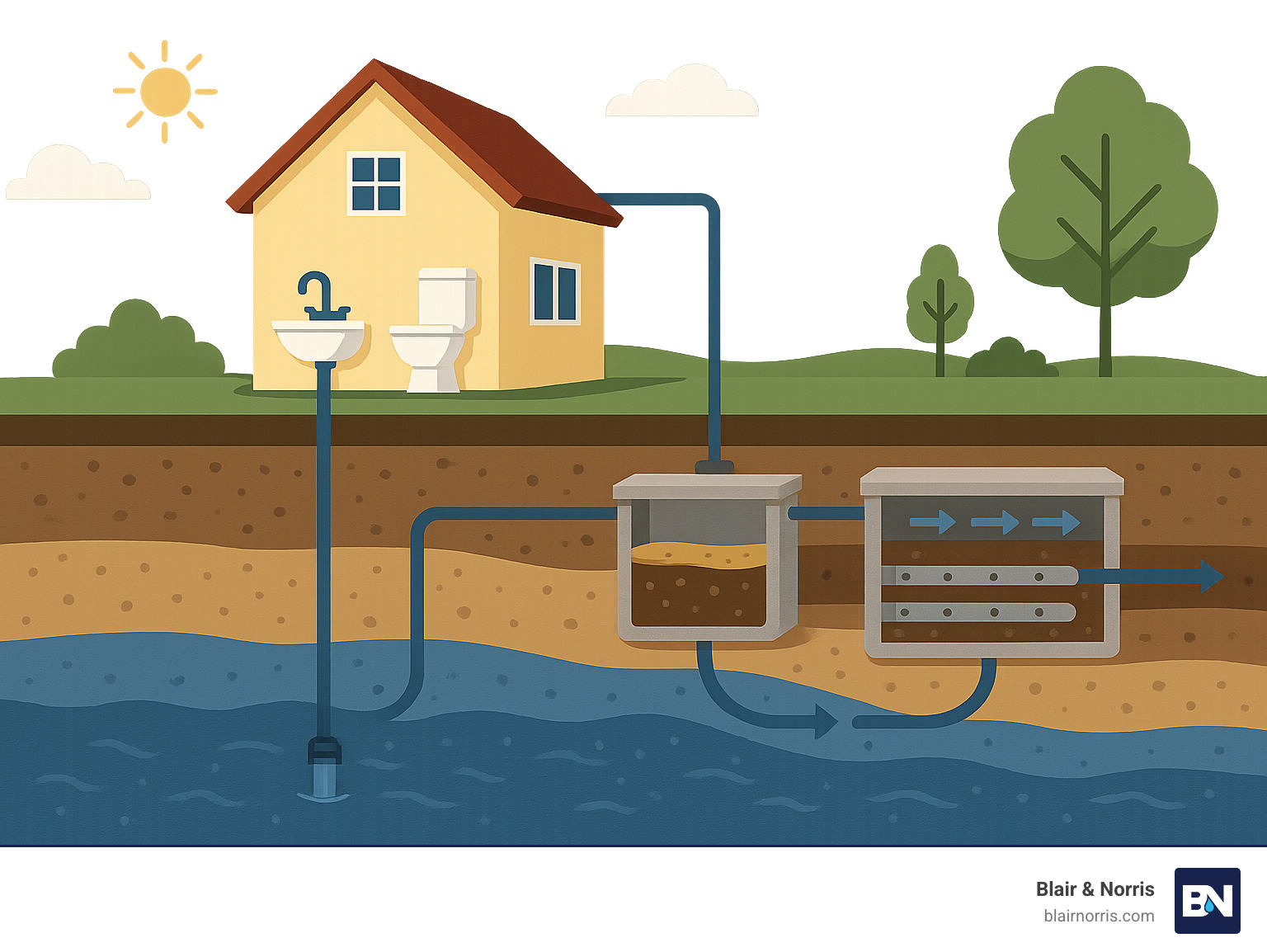
The Dynamic Duo: How a Septic System and Well Work Together
Think of your septic system and well as the ultimate tag team for rural living. Your well brings fresh water into your home, while your septic system takes care of what goes out. Understanding how these two systems work together is like knowing how your car’s engine runs – it helps you spot problems early and keep everything humming along smoothly.
What is a Water Well?
Your water well is essentially nature’s own water delivery service, drilled right into your backyard. It’s a carefully constructed hole that taps into groundwater stored in underground layers called aquifers. These natural underground reservoirs have been filtered through rock and soil for years, creating the clean water that flows from your taps.
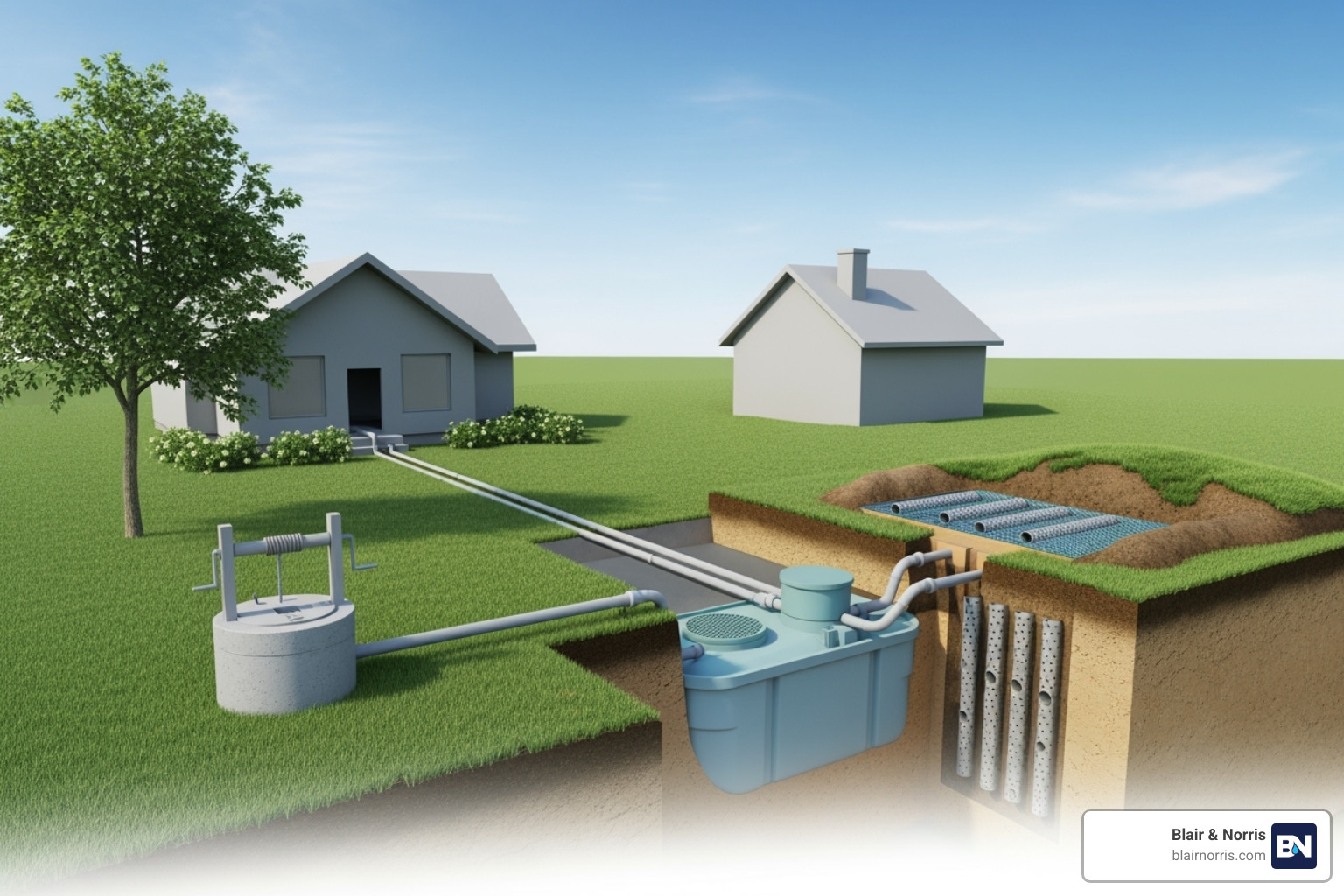
The well drilling process creates a pathway to these underground water sources, but getting that water to your kitchen sink requires several key components working together. The well casing acts like the backbone of your system – typically made from PVC, steel, or concrete in 4, 5, or 6-inch diameters. This protective shell prevents the well from collapsing and keeps surface contaminants from sneaking into your drinking water.
Around the casing, bentonite clay grout forms a watertight seal that’s crucial for keeping unwanted surface water out. At the bottom, a stainless steel screen allows clean water to flow in while filtering out sand, gravel, and other particles that could clog your system.
The well pump is where the real action happens. This hardworking piece of equipment pulls water from deep underground and pushes it into your home’s plumbing system. You’ll find detailed information about How Does a Well Pump Work? if you want to dive deeper into the mechanics.
At ground level, your well cap and seal protects everything below from contamination, while a pitless adapter connects your underground water line to your home without the need for an old-fashioned well pit.
Not all wells are created equal. Dug wells are wide and shallow, like digging a big hole at the beach, but they’re more vulnerable to contamination and dry spells. Bored wells are slightly more refined but share similar risks. Drilled wells are the gold standard – deeper, narrower, and more expensive, but they reach reliable aquifers that provide consistent, safer water year-round.
For a complete breakdown of all the parts working together, check out our guide on Components of a Water Well System.
What is a Septic System?
Your septic system is basically your home’s personal wastewater treatment plant, quietly working beneath your lawn to handle every drop of water that goes down your drains. It’s an ingenious system that collects, treats, and safely returns wastewater to the environment through natural processes.
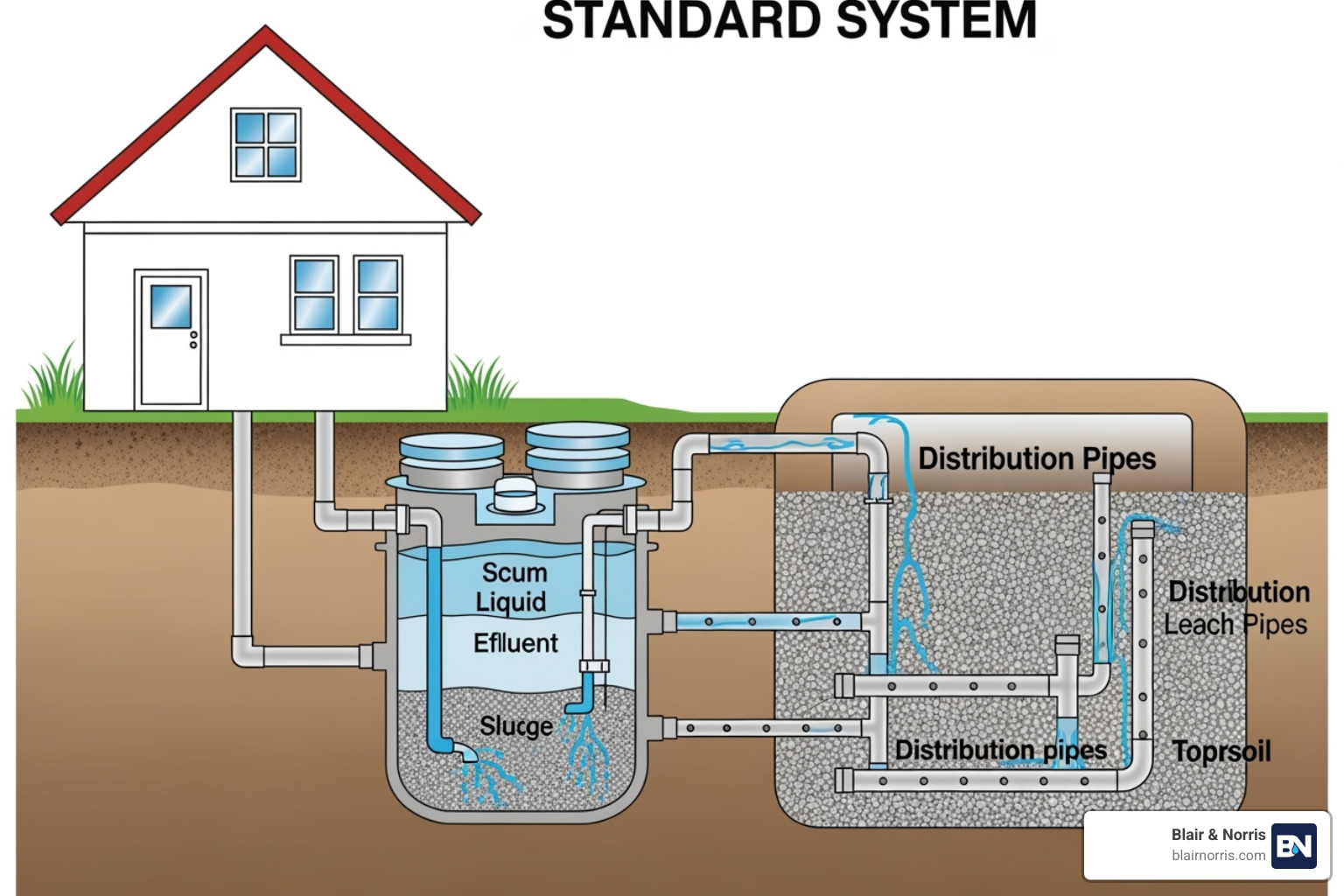
The process starts when all your household wastewater – from kitchen sinks, dishwashers, washing machines, and toilets – flows through your main drainage pipe into the septic tank. This buried, watertight container made of concrete, fiberglass, or polyethylene is where nature’s own sorting system takes over.
Inside the tank, gravity and time work their magic. Heavy solids (sludge) settle to the bottom, while lighter materials like fats and oils float to the top as scum. In between sits the liquid (effluent) – the partially treated wastewater that’s ready for the next stage.
Here’s where things get really interesting: anaerobic bacteria naturally present in your tank get to work breaking down organic material. These microscopic helpers are incredibly efficient at their job, but they can’t handle everything. That’s why septic tanks need pumping every 3-5 years to remove the accumulated sludge that builds up over time.
The drain field (also called a leaching bed) is where the final cleanup happens. This network of perforated pipes laid in gravel-filled trenches allows the effluent to slowly seep into the soil. As it moves through layers of earth, billions of beneficial organisms and natural filtration processes remove harmful bacteria and contaminants before the cleaned water rejoins the groundwater.
This onsite wastewater treatment system is remarkably effective when properly maintained. It’s like having a municipal sewage treatment plant right in your backyard, working 24/7 without any noise or fuss. For everything you need to know about keeping your system running smoothly, our The Ultimate Guide to Septic Tank Maintenance covers all the essential details.
Protecting Your Water: Maintenance, Safety, and Regulations
Proper maintenance and adherence to safety guidelines are crucial for the health of your family and the environment. Think of it like tending a garden – a little consistent care goes a long way, but neglect can lead to some pretty unpleasant surprises.
The Importance of Separation Distances for a Septic System and Well
Here’s something that might surprise you: your septic system and well need to maintain a respectful distance from each other, kind of like awkward relatives at a family reunion. If they get too cozy, you could end up drinking what you’d rather flush away – and trust me, that’s not a mistake you want to make twice.
The contamination risk is real and serious. When septic systems fail or are placed too close to wells, pathogens like E. coli, viruses, and other nasty microorganisms can travel through soil and groundwater directly into your drinking water. It’s like having a highway for germs leading straight to your kitchen tap.
That’s why minimum separation distances aren’t just suggestions – they’re often required by law. Your well to septic tank should be at least 50 feet apart, while your well to drain field needs a minimum of 100 feet of breathing room. These distances give the soil enough space to naturally filter out contaminants before they can reach your water supply.
Local health codes take this seriously, and many areas require even greater distances if you have sandy or porous soil. Why? Because contaminants can travel faster through loose soil, like water through a sieve. The EPA guidance on septic systems and drinking water provides additional insight into why these regulations exist and how they protect public health.
Recommended Maintenance for Longevity
Both your well and septic system are like that reliable friend who never complains – until something goes seriously wrong. Regular maintenance keeps them happy and saves you from those middle-of-the-night emergencies that always seem to happen at the worst possible time.
Well system maintenance doesn’t have to be complicated. Annual water testing is your first line of defense – think of it as a yearly physical for your water supply. You’ll also want a professional inspection every few years to check your pump performance, casing integrity, and that all-important well cap seal. For more details on keeping your well in top shape, check out The Importance of Water Well Maintenance.
Your septic system needs attention too, starting with septic tank pumping frequency. Most systems need pumping every 3-5 years, though your specific timeline depends on household size and water usage. A family of six will fill that tank faster than a couple of empty nesters.
Don’t forget about effluent filter cleaning – this little component works hard to keep solids from escaping into your drain field. Clean it annually, and it’ll return the favor by protecting your entire system. Washing machine lint filters are another small investment that pays big dividends, preventing lint from clogging your drain field.
With proper care, both systems can last 20-40 years. That’s a pretty good return on investment! Learn more about timing your maintenance with How Often Does Your Septic System Need Septic Pumping?.
Well Water Testing: What’s in Your Water?
Here’s a sobering truth: just because your well water looks crystal clear doesn’t mean it’s safe to drink. Some of the most dangerous contaminants are completely invisible, with no taste or smell to warn you. That’s why testing frequency matters – we recommend annual testing at minimum, though semi-annual testing gives you even better protection.
Key contaminants to watch for include coliform bacteria and E. coli, which indicate sewage contamination and can cause serious gastrointestinal illness. Nitrates from fertilizers or failing septic systems are particularly dangerous for infants, potentially causing “blue baby syndrome.” Phosphates often signal contamination from detergents or septic effluent.
The health risks from contaminated well water range from stomach upset to serious diseases like hepatitis or typhoid fever. If you’re experiencing unexplained illness, your water might be the culprit. Check out 12 Signs Your Well Water is Making You Sick to learn what symptoms to watch for.
The good news? Water treatment options exist for virtually every contamination problem. From simple carbon filters to UV purification systems, there’s a solution that fits your situation and budget. For expert guidance on whether your water needs treatment, explore Does Well Water Need Filtering? Expert Advice & Solutions.
Testing your water isn’t just about peace of mind – it’s about protecting your family’s health and catching problems before they become expensive emergencies.
Recognizing Trouble: Common Problems and Warning Signs
Picture this: you’re rushing to get ready for work when your shower suddenly turns into a weak trickle, or you walk outside to find a suspiciously green patch of grass that definitely wasn’t there last week. These aren’t just minor inconveniences – they’re your home’s way of waving a red flag and asking for help.
Knowing the signs of a failing system can save you from costly repairs and health hazards. Think of it like your car’s check engine light – ignore it, and you might find yourself stranded with a much bigger problem than you started with. The good news? Both your septic system and well are pretty good at giving you warning signs before they completely fail.
Signs of a Failing Well System
Your well system is usually pretty chatty when something’s wrong – you just need to know how to listen. Most well problems don’t happen overnight; they develop gradually and give you plenty of hints along the way.
Low water pressure is often the first sign homeowners notice. If your morning shower suddenly feels more like a gentle mist, or your kitchen faucet is sputtering and gasping for air, your well system is trying to tell you something. This could mean your well pump is struggling, your pressure tank needs attention, or – in more serious cases – your water table has dropped. We’ve all experienced that frustrating moment when the pump decides to quit mid-shampoo, and trust me, it’s never at a convenient time!
Sand or sediment in your water is another clear warning sign that shouldn’t be ignored. If you’re finding gritty particles in your faucet aerators or your water looks cloudy, it usually means your well screen is damaged or corroded. This allows sand, dirt, and other unwanted particles to sneak into your water supply. While it might seem like a minor annoyance, this sediment can damage your plumbing fixtures and appliances over time.
When your pump constantly runs, it’s like having a car engine that never turns off – something’s definitely not right. Your well pump should cycle on and off as needed, not run continuously or kick on every few minutes when nobody’s using water. This often indicates a leak somewhere in your system, a waterlogged pressure tank, or a pump that’s on its last legs. Plus, it’ll send your electricity bill through the roof!
For more detailed guidance on pressure issues, check out Your Guide to Water Pressure: How to Increase Low Well Water Pressure. If you’re dealing with cloudy water, Dealing with Sediment in Well Water has practical solutions. And to prevent pump problems before they start, read about 8 Well Pump Problems and How to Avoid Them.
Signs of a Failing Septic System
A failing septic system is like having a ticking time bomb buried in your backyard. It’s not just about unpleasant smells or inconvenience – it’s a genuine health hazard and environmental concern that needs immediate attention.

Foul odors are usually the first sign that something’s gone wrong with your septic system and well setup. That unmistakable smell of rotten eggs or raw sewage around your septic tank or drain field means your system isn’t processing waste properly, and dangerous gases are escaping. It’s nature’s way of saying “Houston, we have a problem!”
Slow drains and gurgling pipes might seem like minor plumbing issues, but they often signal septic trouble. When your sinks take forever to empty, your shower backs up, or you hear strange gurgling sounds from your pipes, it usually means your septic tank is full to the brim or there’s a serious blockage somewhere in the system.
Sewage backups are every homeowner’s worst nightmare – and for good reason. When wastewater starts backing up into your toilets, bathtubs, or sinks, your septic system has essentially thrown in the towel. This is a genuine emergency that requires immediate professional attention.
Pooling water in your yard is another red flag, especially if it appears near your septic tank or drain field. These soggy, smelly spots indicate that your system is overflowing or your drain field can no longer absorb the effluent properly. The soil has become saturated, and wastewater is rising to the surface.
Here’s a sneaky sign many homeowners miss: unusually lush grass over your drain field. While everyone loves a green lawn, a patch of exceptionally vibrant, fast-growing grass directly over your septic area means untreated wastewater is acting as fertilizer. It might look beautiful, but it’s actually a warning sign that your system is failing.
If you’re experiencing any of these warning signs, don’t wait – septic emergencies rarely resolve themselves and almost always get worse over time. Learn more about 5 Warning Signs of a Septic System Backup Emergency to understand when to call for immediate help.
The Homebuyer’s Guide to a Property with a Septic System and Well
Buying a home with these systems requires extra diligence to avoid inheriting expensive problems. I’ve watched too many excited homebuyers find their “perfect” rural property comes with a failing septic system and well setup that needs immediate replacement. Don’t let your dream home turn into a financial nightmare!
The reality is that many sellers don’t fully understand their own systems, and some might not be entirely forthcoming about known issues. A little detective work upfront can save you thousands of dollars and countless headaches down the road.
The Inspection Process: What to Look For
Here’s something most people don’t realize: septic systems and wells are typically excluded from standard home inspections. Your general home inspector might take a quick peek, but unless they hold specialized licenses, they can’t give you the detailed assessment you need.
You’ll need to hire licensed professionals who specialize in these systems. Yes, it’s an extra expense during an already costly process, but think of it as insurance against much bigger problems later.
For your well inspection, a qualified technician should examine the well casing for any cracks, corrosion, or signs of settling. The well cap should sit at least 12 inches above ground and fit tightly to prevent contamination. They’ll also test the pump’s pressure – it should hold steady between 40 and 60 psi without constantly cycling on and off.
Location matters tremendously. Your well should be positioned at least 50 feet from the septic tank and 100 feet from the drain field. The ground should slope away from the wellhead, not toward it, preventing surface water from pooling around your water source.
Most importantly, insist on a comprehensive water quality test as a condition of sale. Test for coliform bacteria, E. coli, nitrates, and heavy metals. If the seller balks at this request, consider it a red flag the size of a barn door.
For septic inspection, a licensed professional will check the tank’s structural integrity, looking for rust, cracks, or leaks. Steel tanks are particularly vulnerable to corrosion and might be living on borrowed time. They’ll measure water levels in the tank – unusually high levels often indicate a failing drain field, while very low levels might suggest the tank is leaking.
Ask to see maintenance records, especially pumping history. If the current owners can’t remember when it was last pumped, assume it’s overdue and factor that immediate cost into your offer.
The inspector will examine the drain field condition by walking the area and looking for telltale signs of failure: soggy spots, unusually lush grass patches, or that unmistakable sewage odor. They’ll also check that nothing heavy has been built or parked over the drain field, which can compact soil and damage pipes.
Inside the house, pay attention to how drains perform and whether there are any sewer gas smells. These seemingly minor issues can indicate major system problems.
When choosing inspection professionals, look for experience and proper licensing. If you’re in our service area, you might find our guide on Choosing the Best Septic Contractor in Indianapolis helpful for understanding what to look for in a qualified professional.
Understanding the Costs
Let’s talk numbers, because septic system and well ownership comes with real financial responsibilities that many first-time rural homeowners underestimate.
Well drilling costs can range from $3,000 to $15,000 depending on depth, soil conditions, and your location. A shallow well in easy-to-drill soil will cost much less than a deep well that requires drilling through rock. For detailed information, check out The Well Drilling Cost Guide.
Septic system replacement is where things get expensive quickly. A conventional system might cost $3,000 to $10,000, while advanced treatment systems can run $10,000 to $20,000 or more. Factors like soil conditions, lot size, and local regulations all affect the final price.
Routine maintenance costs are much more manageable but essential for system longevity. Septic tank pumping typically costs $200 to $500 every three to five years – a small price to pay compared to system replacement. You can learn more about What is the Septic Tank Pumping Cost? to budget accordingly.
Well water testing runs about $100 to $300 annually, depending on how comprehensive you want to be. Well pump replacement might cost $1,000 to $3,000, while septic system repairs can range from a few hundred dollars for minor issues to several thousand for major problems.
The key is factoring these potential costs into your home-buying budget. A house with a 30-year-old septic system might need replacement soon, regardless of how well it’s been maintained.
Comparing to Municipal Services
Living with a septic system and well setup is fundamentally different from city living, and it’s worth understanding what you’re signing up for.
The advantages are compelling. You’ll never receive a monthly water or sewer bill, which can save hundreds of dollars annually. Your water comes directly from natural underground sources, often tasting better than heavily treated municipal water. You’re also independent from city infrastructure – no worrying about water main breaks or treatment plant failures affecting your supply.
The trade-offs are real, though. You become responsible for all maintenance, repairs, and replacements. When your well pump fails at 2 AM on a Saturday, you can’t call the city – you need a 24/7 service provider like Blair & Norris. System failures can be expensive and inconvenient, sometimes requiring temporary water deliveries or portable restroom facilities.
Municipal services offer convenience – when something breaks, it’s typically the city’s problem, not yours. You pay a predictable monthly bill and don’t need to think about water quality testing or septic pumping schedules.
However, municipal services come with ongoing costs that many rural homeowners prefer to avoid. Monthly water and sewer bills can easily run $100 to $200 or more, adding up to thousands annually. You’re also dependent on municipal water treatment, which some people prefer to control themselves.
The choice often comes down to your comfort level with taking responsibility for these critical systems versus paying for the convenience of municipal services. Both approaches have merit – it’s about finding what fits your lifestyle and budget best.