
Why Septic System Clean Out Can’t Wait
Septic system clean out is the essential maintenance that keeps your home’s wastewater system working and prevents costly emergencies. Here’s what you need to know:
- What it is: Professional pumping and cleaning of your septic tank to remove accumulated sludge and scum
- How often: Every 3-5 years for most households, depending on tank size and usage
- Average cost: $250-$550 for standard pumping service
- Why it matters: Prevents sewage backups, drainfield failure, and system replacement costs of $3,460-$11,360
- Warning signs: Slow drains, foul odors, gurgling sounds, or standing water near your tank
Most homeowners ignore their septic system until a backup in the basement or a soggy yard signals a major problem—one preventable with regular maintenance.
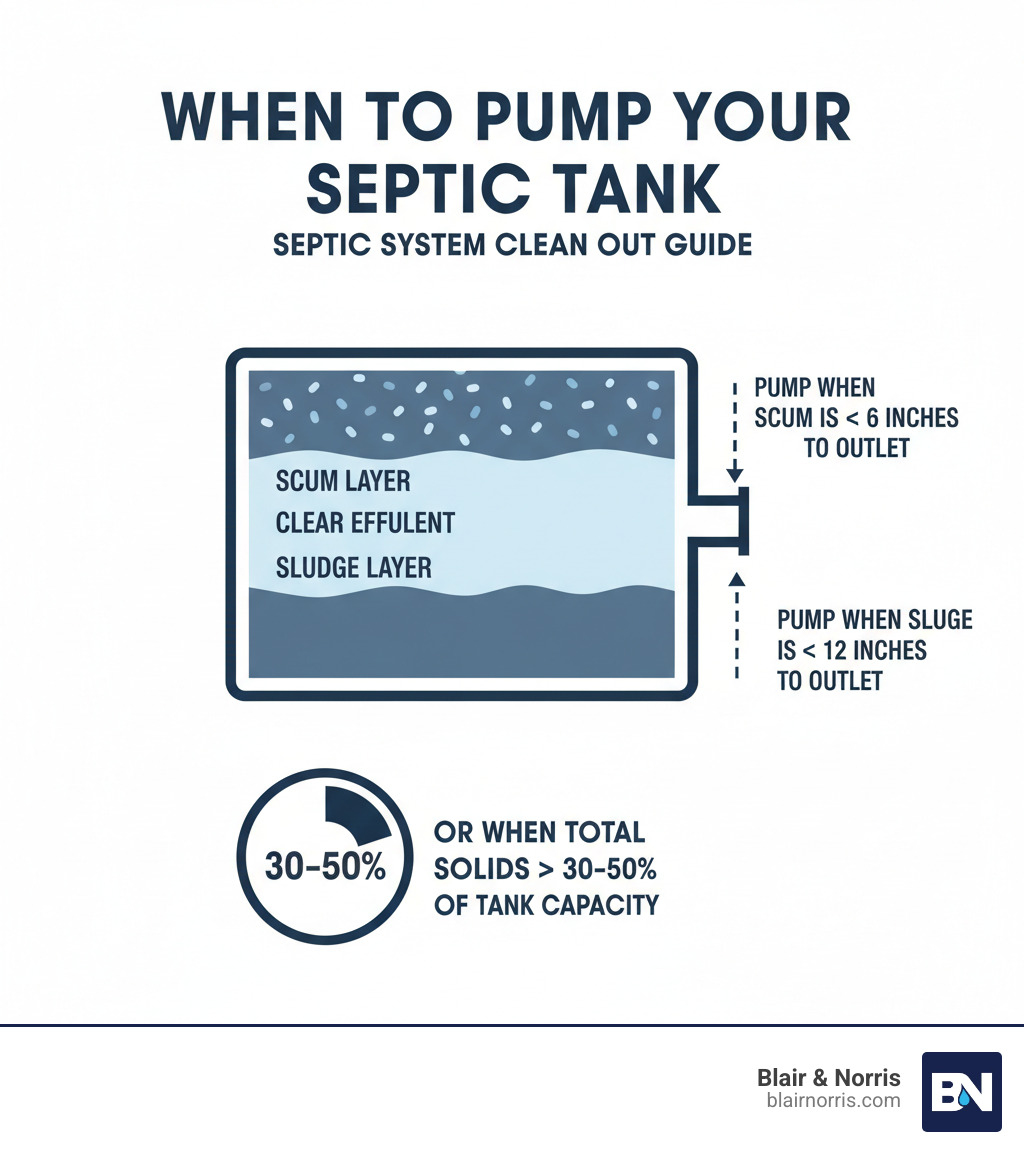
Your septic tank is a balanced ecosystem where bacteria separate waste into sludge (bottom), effluent (middle), and scum (top). Over time, the solid sludge and scum layers grow, reducing tank capacity. If not removed, they can overflow into your drainfield or back up into your home.
Fortunately, a regular clean out is simple and much cheaper than emergency repairs. Pumping your tank every 3-5 years for around $400 can prevent thousands in damage. Nearly 25% of homeowners are unaware of their last septic service date—a gap that significantly increases the risk of system failure. Maintaining an accurate service record is essential for long-term system performance.
For more than 30 years, Blair & Norris has grown from a single-truck operation into Central Indiana’s trusted leader in septic system clean out and maintenance. Our team has seen how regular pumping saves homeowners from the major system-wide failures that require extensive corrective repairs, and we’re here to help you avoid those costly mistakes.
Simple septic system clean out word guide:
What is a Septic Tank Clean Out and Why is it Crucial?
Your septic tank is a personal wastewater treatment plant. All water from your home flows into this underground tank, where waste separates into three layers: heavy sludge at the bottom, a lighter scum layer of grease and oils on top, and liquid effluent in the middle. Beneficial bacteria work constantly to break down organic matter in these layers.
A septic system clean out is the professional removal of the sludge and scum. This essential maintenance preserves the system’s balance and prevents solids from overflowing into the drainfield. Since these solid layers grow continuously with daily water use, they will eventually reduce the tank’s capacity and allow untreated waste to escape, causing serious problems.
Without regular pumping, you risk sewage backups, foul odors, drainfield failure, and environmental contamination. These are costly disasters, not minor inconveniences. Regular maintenance protects your home, wallet, and local groundwater.
For reliable protection and to prevent costly issues, schedule a professional septic system clean out or inspection with Blair & Norris today.
The Dangers of a Neglected System
Ignoring your septic system can have devastating consequences.

Property damage is a common result of neglect. Sewage backups can ruin basements, while a failed drainfield creates foul-smelling, soggy patches in your yard. Unusually lush grass over the tank is another warning sign of a leak.
Your family’s health is at stake. Raw sewage contains dangerous bacteria and viruses. Contact with sewage that surfaces in your yard or backs up into your home poses serious health risks, especially to children and pets. A failing system can also contaminate well water, making your drinking water unsafe.
Environmental contamination is another major risk. A failing system pollutes local streams, rivers, and lakes, harming wildlife and creating public health hazards for the community.
The financial impact can be staggering. When a septic system clean out is ignored, you’re looking at more than a simple pump-out. Minor repairs average $630 to $2,970. A failed drainfield can cost $2,000 to $15,000 to repair, while total system replacement is typically $3,460 to $11,360. Compare that to the $400 average cost of routine pumping.
When disaster strikes, we’re available 24/7 for emergency septic repair. But we’d much rather help you avoid the emergency in the first place.
Is It Time? Signs Your Septic Tank Needs Pumping
Your septic system will give you warning signs when it needs attention. Recognizing them can help you avoid a costly emergency.
Slow drains are a common first sign of trouble. If water drains slowly from sinks or showers, your septic tank may be full. You might also hear gurgling sounds from drains or toilets as trapped air struggles to escape an overloaded system.
Unmistakable foul odors around your drains, in your yard, or near the tank itself are a clear red flag. If you experience sewage backups into your home, it’s a full-blown emergency requiring immediate help. For more urgent indicators, check out these 5 warning signs of a septic system backup emergency.
Your yard also provides clues. Lush green grass over the tank or drainfield often means effluent is leaking and over-fertilizing the area. Standing water or soggy spots when it hasn’t rained are also serious red flags of a failing system. If you see these signs, learn what to do if you have a full septic tank before the situation worsens.
How Often Should You Pump?
How often do you need a septic system clean out? While the general rule is every three to five years, the ideal frequency depends on your specific household.
- Household size and water usage are key. A large family or a household with high water use will need to pump their tank more often.
- The size of your septic tank plays a role. For example, a 1,000-gallon tank serving a family of four may need pumping every 2.6 years, while the same tank serving two people could go 5.9 years.
- Garbage disposal use adds solids that are hard to break down, accelerating the need for pumping.
Nearly a quarter of homeowners don’t know when their tank was last serviced. Keeping track of your maintenance schedule is a simple way to protect your investment. For a detailed breakdown, check out our septic tank pumping frequency guide.
The Professional Septic System Clean Out Process
When you schedule a septic system clean out, you’re getting trained technicians who can spot problems before they become emergencies.
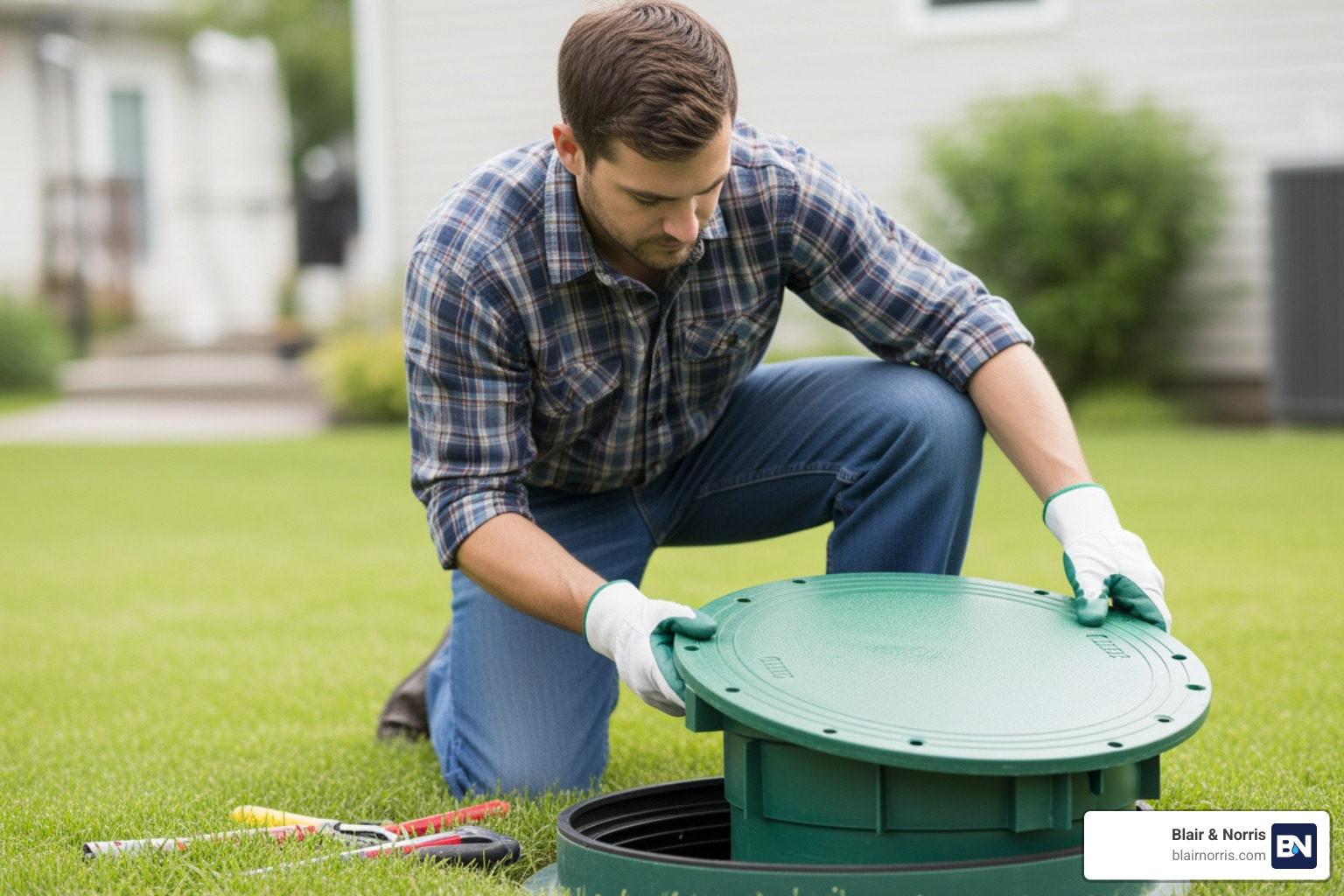
The first step is locating the tank and its cleanout pipe, which can be challenging if you’re new to the home or it’s been years since the last service. Professionals use property records, experience, and specialized equipment to find the tank and its access points.
Once the access lids are uncovered, the pumping process begins. The septic truck’s vacuum system draws out the accumulated sludge and scum, giving your system a fresh start.
What separates a professional service from a simple pump-out is the inspection. While the tank is open, we inspect the baffles and tees that control wastewater flow and prevent solids from reaching your drainfield. We also check for structural damage like cracks in the tank walls or damaged pipes.
This health checkup for your septic system allows us to spot issues before they lead to expensive failures. For a thorough evaluation beyond routine pumping, we also offer dedicated septic inspection services.
Complete vs. Selective Pumping
Not all septic pumping is the same. Understanding the two main approaches helps you know what to expect.
Complete pumping is the standard method used by reputable companies like Blair & Norris. Technicians remove virtually all liquids and solids, giving your tank a complete reset. This maximizes the time before your next service.
Selective pumping, a less common technique, involves removing only the solid layers while leaving some liquid effluent behind. The theory is that this liquid contains beneficial bacteria to restart the system. However, this requires specialized equipment and its effectiveness is debatable, especially if the tank has been neglected.
At Blair & Norris, we focus on thorough, reliable, clean septic pumping. We believe complete pumping provides the most consistent and dependable results for homeowners.
Proactive Maintenance: How to Protect Your System
Beyond scheduling regular professional septic system clean out, small changes in your daily habits can add years to your septic system’s life and save you thousands in repairs.
Your septic system can only handle a certain volume of wastewater daily. Exceeding this capacity pushes solids into the drainfield prematurely, causing failure. With the average person using 70 gallons of water indoors per day, water conservation is essential for your septic system’s health.
- Fix leaky or running toilets immediately. A single leaky toilet can waste 200 gallons of water per day.
- Choose high-efficiency appliances. ENERGY STAR certified products like clothes washers can use up to 50% less water.
- Spread out your laundry loads throughout the week. Doing multiple loads in one day can overwhelm your system.
- Upgrade older toilets, which can use 3.5 to 5 gallons per flush, to high-efficiency models that use 1.6 gallons or less.
These practices protect your septic system and lower your utility bills. For more strategies, see the ultimate guide to septic tank maintenance.
What Never to Flush or Pour Down the Drain
Treat your drains with respect. Your toilet and kitchen sink are not garbage cans, and what you put down them directly impacts your septic system’s health.
- Cooking grease and oil congeal in pipes and add to the scum layer. Pour cooled grease into a container and throw it in the trash. The EPA’s “Think at the Sink!” video explains this well.
- Never flush anything but human waste and toilet paper. Items like feminine hygiene products, condoms, dental floss, diapers, and even so-called “flushable wipes” do not break down and will cause clogs. The EPA’s “Don’t Overload the Commode!” video is a great resource.
- Coffee grounds, cat litter, paper towels, and facial tissues add unnecessary solids to your tank.
- Harsh chemicals, medications, and toxic substances can kill the beneficial bacteria that make your septic system work. Avoid pouring strong drain cleaners, paint, pesticides, or excessive bleach down your drains. Dispose of expired medications in the trash.
- Use garbage disposals sparingly, if at all. Food waste increases solids in the tank and accelerates sludge buildup.
Finally, protect your drainfield. Never park heavy vehicles over it, as the weight can crush pipes and compact the soil. Be mindful of landscaping, as tree roots can invade and damage drainfield pipes. The EPA’s “Shield Your Field!” video offers more tips.
These simple habits, combined with professional septic system clean out every few years, will keep your system running smoothly for decades.
When to Call the Pros for a Septic System Clean Out
The reality is straightforward: septic system clean out is not a DIY task. Homeowners who attempt to perform this work without proper training and equipment frequently face significant system damage, costly emergency repairs, and serious health and safety hazards. Professional service is essential to ensure the system is handled correctly and in compliance with safety and disposal regulations.
The dangers of going it alone are very real. Septic tanks contain methane, hydrogen sulfide, and other toxic gases that can cause unconsciousness or death within minutes of exposure. These aren’t scare tactics—they’re facts that every professional technician takes seriously with proper safety equipment and protocols. Even if you somehow manage to avoid the gas hazards, there’s the issue of proper disposal. Septic waste must be transported to approved treatment facilities. Dumping it anywhere else is illegal, harmful to the environment, and comes with hefty fines that make professional service look like a bargain.
Then there’s the risk of inadvertently damaging your system. Without specialized equipment and years of experience, it’s surprisingly easy to break baffles, crack pipes, or damage the tank structure itself. What starts as an attempt to save $400 can quickly turn into repair bills running into thousands of dollars.
So when should you pick up the phone immediately? If you’re experiencing sewage backups in your home, strong sewage odors that won’t go away, or standing water in your yard near the drainfield, don’t wait another day. These aren’t minor inconveniences—they’re emergency situations that will only get worse. We’re here 24/7 for emergency septic services throughout the Indianapolis area, including Carmel, Fishers, Noblesville, and surrounding communities.
But even for routine maintenance, choosing the right company matters. Not all septic contractors are created equal. You want a team with proven experience, proper licensing and insurance, and a track record of doing things right the first time. We’ve been serving Central Indiana families for 75 years—that kind of longevity doesn’t happen by accident. If you’re researching your options, our guide on choosing the best septic contractor in Indianapolis can help you know what questions to ask and what red flags to avoid.
Understanding the Cost of a Septic System Clean Out
Let’s talk numbers. The average septic system clean out costs around $400, with most homeowners paying between $250 and $550 for routine pumping service. When you stack that against the $3,460 to $11,360 you’d pay for complete system replacement, it’s clear that regular maintenance is the smart financial choice.
But what affects where your service falls in that price range? Tank size is the most obvious factor—a 1,500-gallon tank simply takes longer to pump than a 750-gallon one. Accessibility can also impact the cost. If your tank is easy to locate with clearly marked access lids at ground level, that’s straightforward. But if we need to dig to find buried lids or steer challenging terrain to get our truck in position, that additional time and effort factors into the price.
Your location within our service area can sometimes play a minor role, particularly for properties in more remote areas of Central Indiana. And if you’re calling us at 2 AM on a Sunday because sewage is backing up into your basement, emergency service fees will apply—though in those moments, you’re usually more concerned about fixing the problem than the premium.
We believe in transparent pricing with no hidden surprises. You can get more detailed information about what influences your specific costs, at what is the septic tank pumping cost. When comparing quotes, the cheapest option isn’t always the best value. You want qualified professionals who will thoroughly pump your tank, inspect all the components, and let you know if they spot any developing issues. That kind of comprehensive service protects your investment far better than a minimal-service provider that performs incomplete or insufficient septic pumping without proper inspection or verification.
At Blair & Norris, we’ve built our reputation on doing things right. Our technicians have the experience and equipment to handle any septic system challenge, and our 24/7 live phone support means you can reach a real person—not a voicemail—whenever you need us.
Conclusion
Think about all the things your septic system does for you every single day. It quietly handles every flush, every shower, every load of laundry—working around the clock to protect your home, your family’s health, and your property value. When you look at it that way, regular septic system clean out isn’t really an expense at all. It’s an investment in your home that pays you back in avoided emergencies, prevented disasters, and genuine peace of mind.
We’ve covered a lot of ground in this guide, from understanding how your septic system actually works to recognizing those warning signs before they become full-blown crises. You now know that slow drains and foul odors aren’t just annoyances—they’re your system’s way of asking for help. You understand that what goes down your drains matters just as much as regular pumping. And perhaps most importantly, you’ve learned that the $400 average cost of routine maintenance is a bargain compared to the $3,460 to $11,360 you could face for a complete system replacement.
The truth is, most septic emergencies are entirely preventable. They happen when homeowners either don’t know what their system needs or put off maintenance until it’s too late. You don’t have to be in that situation. With simple habits like conserving water, avoiding harsh chemicals, and scheduling regular pumping every three to five years, you can keep your system running smoothly for decades.
But here’s the thing: even with the best maintenance habits, your septic system still needs professional attention. At Blair & Norris, we’ve been caring for Central Indiana’s septic systems for 75 years—three generations of family ownership dedicated to doing the job right. We answer our phones 24/7 because we know septic emergencies don’t wait for business hours. And when you call us, you’re not getting a faceless corporation; you’re getting neighbors who genuinely care about protecting your home and your investment.
Whether you’re due for routine septic system clean out, dealing with an emergency backup, or simply want to know when you last had your tank serviced, we’re here to help. Don’t wait until you’re standing in your yard watching sewage bubble up through the grass—or worse, backing up into your basement.
For reliable and ethical septic system services in the Indianapolis area, trust the experts at Blair & Norris. Call us today or contact us online for expert septic tank pumping and maintenance in Indiana!