
Why Septic System Maintenance Matters for Central Indiana Homeowners
Septic system maintenance is crucial for protecting your home, health, and wallet. More than 20 percent of households in the United States rely on septic systems instead of municipal sewers, and proper care can mean the difference between a system that lasts decades versus one that fails catastrophically.
Essential septic system maintenance practices include:
- Pump your tank every 3-5 years to remove accumulated solids
- Inspect the system every 1-3 years by a qualified professional
- Conserve water to prevent system overload
- Avoid flushing harmful items like grease, wipes, and chemicals
- Protect your drainfield from vehicles and deep-rooted plants
Regular maintenance fees of $250 to $500 every three to five years are a bargain compared to repairing or replacing a failing system, which can cost between $5,000 and $15,000 for a conventional system. When septic systems fail, they can contaminate groundwater, create health hazards, and leave you with soggy, smelly yards and sewage backups in your home.
The benefits of proper maintenance extend far beyond avoiding repairs. A well-maintained system protects your property value, keeps your family healthy, and prevents environmental contamination. With proper care, septic tanks can last 15 to 40 years, while drainfields may function for more than 50 years.
I’m Mack Blair, and I’ve spent over 30 years helping Central Indiana homeowners with their septic systems through Blair & Norris. Our team has seen how proper septic system maintenance prevents costly emergencies and gives families peace of mind about their wastewater treatment.
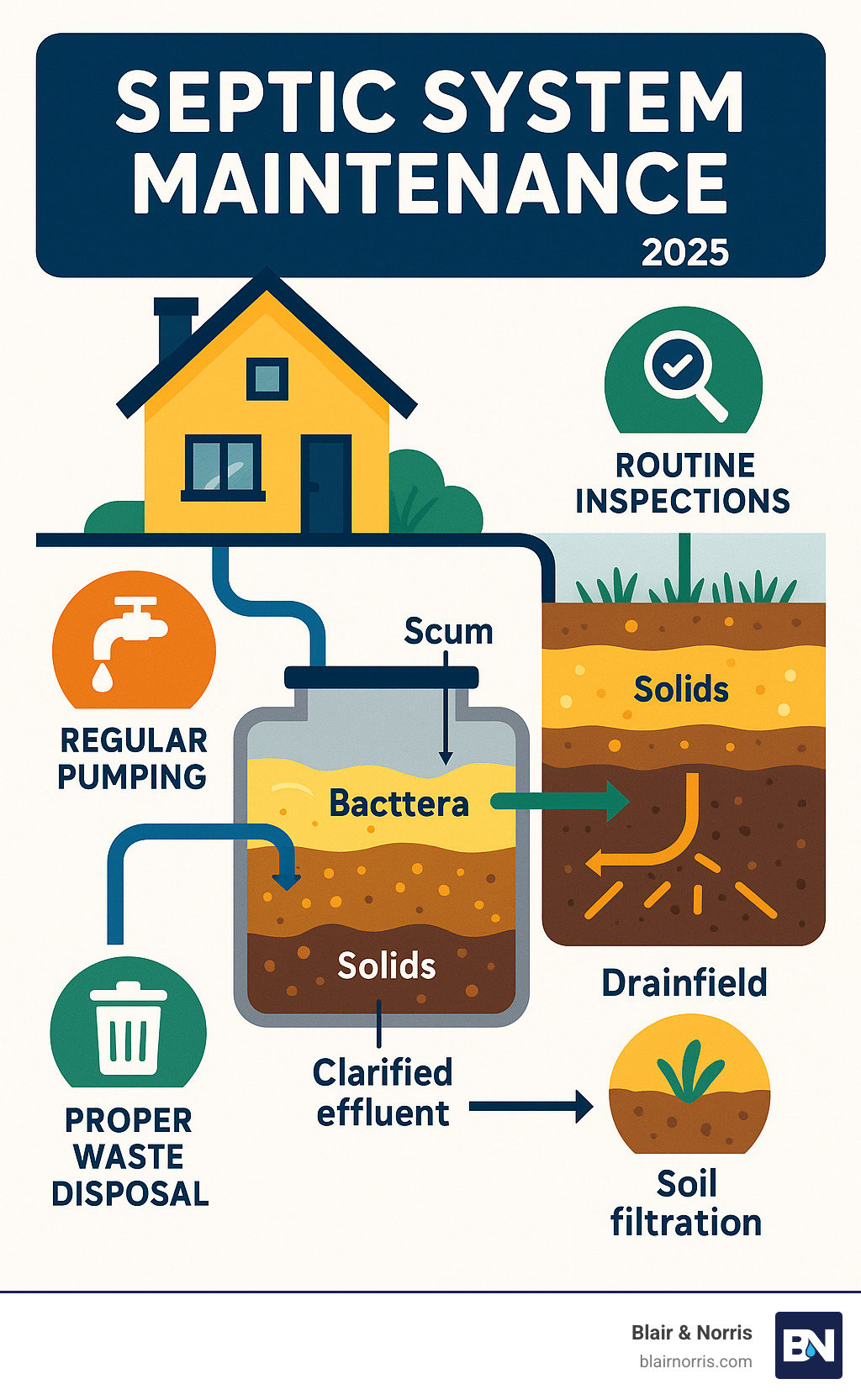
Understanding Your Septic System: Components and Function
For homes not connected to a municipal sewer system, a septic system is a vital, self-contained wastewater treatment plant in your own backyard. Understanding its components and how they work is the first step in effective septic system maintenance.
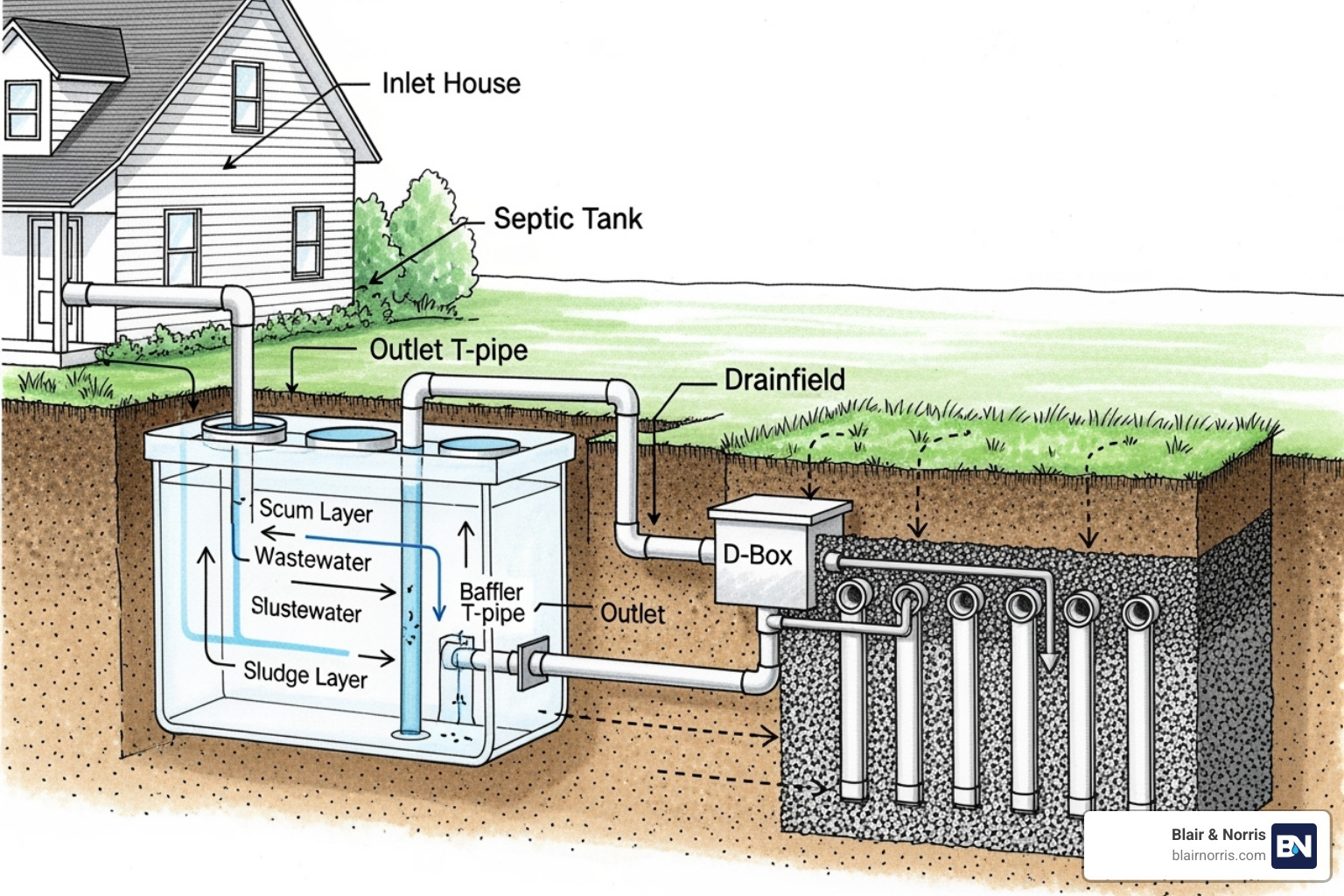
A typical septic system consists of a few key parts: the septic tank, the distribution box, and the drainfield (also known as the leach field or absorption field). Together, these components work to safely treat and disperse household wastewater. You can find more general information about these systems from the Septic Systems Overview from the EPA.
How a Septic System Works
All the drain pipes in your home – from sinks, tubs, and toilets – lead to one large drain pipe that carries wastewater to your septic tank. Once the wastewater enters the septic tank, a natural treatment process begins:
- Solids Settling: The septic tank is a watertight underground container where heavier solids settle to the bottom, forming a layer called “sludge.” Lighter materials, such as grease and oils, float to the top, creating a “scum” layer.
- Bacterial Decomposition: In the middle layer, anaerobic bacteria (bacteria that thrive without oxygen) get to work. These amazing little workers naturally break down and liquefy the organic waste, reducing the volume of solids by 50 to 60 percent.
- Liquid Effluent Dispersal: The partially treated wastewater, now called “effluent,” flows out of the septic tank, typically through an effluent filter, and into a distribution box. This box ensures the effluent is evenly dispersed into the drainfield.
- Natural Soil Treatment: The effluent then trickles through a series of perforated pipes in gravel-filled trenches in the drainfield. As it seeps into the soil, the soil acts as a natural filter, removing remaining impurities, harmful bacteria, and viruses before the water re-enters the groundwater. This final stage is crucial for protecting public health and the environment.
Key Components Explained
Let’s take a closer look at the stars of our backyard wastewater treatment show:
- Septic Tank: These are typically made of durable materials like concrete or plastic. With proper septic system maintenance, concrete tanks can last 50 years or more. Inside the tank, “baffles” are installed at the inlet and outlet. These are barriers that prevent the scum and sludge layers from exiting the tank prematurely and clogging your drainfield. Many newer systems also include an “effluent filter” at the outlet, which acts as a last line of defense, catching any stray solids before they can reach the drainfield. This filter needs to be regularly cleaned by a professional.
- Drainfield (Leach Field): This is the unsung hero of your septic system. It consists of a network of trenches or beds containing gravel and perforated pipes. The size and design of your drainfield depend on your household size, soil type, and anticipated water usage. The soil beneath and around these pipes is where the final, critical stage of wastewater purification occurs.
Lifespan and Replacement Costs
A well-maintained septic system is designed for longevity. On average, you can expect a properly cared-for system to last 20 to 30 years. Individual components have even longer lifespans: your septic tank could last 15 to 40 years, and with diligent care, your leach field might be usable for more than 50 years!
However, several factors can shorten this lifespan, including improper design, poor installation, and, most critically, a lack of regular septic system maintenance. Neglecting your system can lead to premature failure, turning a manageable maintenance cost into a hefty repair bill.
While the average installation cost for a septic tank was around $7,000 in 2023, the total price for a new septic system can range from $10,000 to $25,000, depending on the system’s complexity and local conditions. This makes a strong case for preventative septic system maintenance! For more detailed information on common issues that can lead to these costs, check out our article on More info about common septic issues.
Essential Septic System Maintenance Practices
Taking care of your septic system doesn’t have to be overwhelming. Think of it like caring for a pet – it needs regular attention, the right food, and occasional professional checkups. The good news? Most septic system maintenance comes down to simple daily habits and scheduling routine professional services.

The U.S. Environmental Protection Agency emphasizes four key areas for proper septic care: water conservation, proper waste disposal, drainfield protection, and regular professional servicing. Their comprehensive guide at Septic System Care and Maintenance | US EPA provides excellent detailed information on these practices.
Professional Septic System Maintenance: Pumping and Inspections
Here’s where the professionals come in – and honestly, this is the most important part of keeping your system healthy for decades.
Regular pumping every three to five years is essential because your septic tank naturally accumulates sludge and scum over time. Even with those hardworking bacteria breaking down waste, solid materials build up faster than they decompose. When these layers get too thick, they can flow into your drainfield and cause expensive damage.
The exact timing depends on your household. A family of four with a 1,000-gallon tank typically needs pumping every three to four years. Larger families or heavy water users need more frequent service, while smaller households might stretch it to five years. If you use a garbage disposal regularly, plan on pumping every two to three years because you’re adding significantly more solids to your tank.
During pumping, professionals measure your sludge and scum levels to determine if service is needed. If the scum layer is within six inches of the outlet or the sludge layer is within twelve inches, it’s time to pump.
Professional inspections every one to three years catch small problems before they become expensive emergencies. Systems with pumps, electrical components, or advanced treatment units need annual inspections because they have more parts that can fail.
At Blair & Norris, we’ve been helping Central Indiana families with their septic systems for over 75 years. Our experienced team provides reliable service throughout Indianapolis, Carmel, Fishers, and surrounding communities, with 24/7 live phone support when you need us most. For detailed guidance on timing, check out How Often Does Your Septic System Need Septic Pumping? and learn about costs at What is the Septic Tank Pumping Cost?.
Best Practices for Daily Septic System Maintenance: Water and Waste
What goes down your drains every day makes the biggest difference in your system’s health. Your septic tank is essentially a living ecosystem that needs the right balance to function properly.

Water conservation protects your system from overload. The average person uses about 70 gallons of water daily indoors, and too much water can push solids into your drainfield before they’re properly treated.
Fix leaks immediately – a single running toilet can add 200 gallons per day to your system, like having an extra person in your house! High-efficiency appliances make a real difference too. Modern toilets use 1.6 gallons per flush compared to older models that use up to 5 gallons. ENERGY STAR washing machines use 50% less water than standard models.
Spread out your laundry throughout the week instead of doing it all on Saturday. Your system needs time to process each load of wastewater properly.
What you flush and pour down drains can make or break your system. Your septic tank is designed for human waste and toilet paper – not as a garbage disposal for your house.
Never flush cooking grease, non-flushable wipes (even those labeled “flushable”), feminine hygiene products, condoms, dental floss, diapers, cigarette butts, coffee grounds, cat litter, paper towels, medications, or harsh chemicals like paint, pesticides, or automotive fluids. At the kitchen sink, scrape food scraps into the trash before washing dishes, and never pour fats, oils, or grease down the drain.
Garbage disposals are convenient but significantly increase the solids entering your tank. If you use one regularly, plan on more frequent pumping – those food scraps have to go somewhere, and that somewhere is taking up space in your septic tank.
The EPA created a memorable reminder about proper flushing habits in their “Don’t Overload the Commode!” EPA Video.
Protecting Your Drainfield
Your drainfield is where the final magic happens – soil naturally filters and purifies your wastewater. Protecting this area is crucial because drainfield replacement can cost $10,000 or more.

Plant only grass over your drainfield area. Grass roots help absorb excess moisture and prevent erosion without damaging the pipes below. Avoid trees, shrubs, and deep-rooted plants – their roots seek out moisture and can infiltrate your drainfield pipes, causing expensive clogs and damage.
Keep vehicles off your septic tank and drainfield areas. Cars, trucks, and heavy equipment can compact the soil, reducing its ability to absorb and treat wastewater. Worse yet, the weight can crush pipes, leading to immediate system failure.
Divert rainwater away from your drainfield. Roof drains, sump pumps, and surface water should flow away from this area. When the drainfield gets saturated with rainwater, it can’t properly treat your household wastewater, leading to backups and surfacing sewage.
Don’t build anything over your drainfield – no patios, decks, sheds, pools, or driveways. These structures prevent oxygen from reaching the soil, and that oxygen is essential for the bacteria that provide final wastewater treatment.
The EPA’s “Shield Your Field!” EPA Video offers additional visual guidance on protecting this critical component.
With these septic system maintenance practices, you’re setting yourself up for decades of trouble-free operation. Most maintenance issues we see at Blair & Norris could have been prevented with these simple, consistent habits.
Recognizing Problems and When to Call a Professional
Nobody wants to think about their septic system failing, but recognizing the warning signs early can save you thousands of dollars and protect your family’s health. Even with excellent septic system maintenance, problems can still develop over time. The key is knowing what to watch for and when to pick up the phone.
Your septic system is surprisingly good at communicating when something’s wrong – you just need to know how to listen. Think of these warning signs as your system’s way of asking for help before a small problem becomes a major disaster.
Common Warning Signs of a Failing System
Pooling water around your septic tank or drainfield is often the first visible sign that something’s amiss. If you notice soggy, wet areas in your yard that don’t dry out even during sunny weather, your system might be struggling to process wastewater properly. This happens when the soil becomes saturated or when pipes become clogged.
Unpleasant odors are another clear indicator that your system needs attention. That unmistakable sewage smell – whether it’s coming from your drains, floating around your yard, or greeting you when you step outside – means untreated wastewater isn’t staying where it should.
Slow-draining fixtures throughout your home can signal that your septic system is backing up. When your sinks take forever to empty, your toilet gurgles mysteriously, or you hear strange sounds from your pipes, it’s time to investigate. These symptoms often start small but quickly worsen if ignored.
The most alarming sign is sewage backup into your home. If wastewater starts coming back up through your drains, toilets, or bathtubs, you’re dealing with a serious emergency that requires immediate professional attention.
Interestingly, unusually lush, green grass growing over your drainfield can also indicate problems. While we all want a beautiful lawn, grass that’s noticeably greener and more vibrant than the surrounding area – especially during dry spells – might be getting “fertilized” by surfacing wastewater.
For more detailed information about these warning signs, check out our guide on 5 Warning Signs of a Septic System Backup Emergency.
The Risks of Neglect
Ignoring septic system problems creates a domino effect of increasingly serious consequences. Groundwater pollution is one of the most dangerous risks. When your system fails, untreated wastewater containing harmful bacteria, viruses, and chemicals can seep directly into the groundwater that supplies drinking water wells. This contamination can affect not just your family, but your entire neighborhood.
Surface water contamination poses another serious threat, especially if you live near lakes, rivers, or streams. Failed septic systems can introduce nitrogen, phosphorus, and disease-causing organisms into these water bodies, harming fish and wildlife while making swimming, fishing, and other recreational activities unsafe.
The financial impact of neglect is staggering. While routine septic system maintenance costs a few hundred dollars every few years, replacing a failed system can cost $10,000 to $25,000 or more. That’s like buying a new car – except you don’t get to drive it anywhere!
Legal liabilities add another layer of concern. If your failing system contaminates neighboring properties or water supplies, you could face lawsuits and regulatory fines. Your property value will also take a hit, making it difficult to sell your home until the system is repaired or replaced.
If you’re already dealing with a full septic tank, don’t panic – but do act quickly. Our article What to Do If You Have a Full Septic Tank walks you through the immediate steps to take.
The Role of a Septic Professional
When warning signs appear or it’s time for routine service, calling a qualified septic professional is essential. This isn’t a job for weekend warriors or general handymen – septic systems require specialized knowledge, equipment, and safety precautions.
Professional inspections go far beyond what homeowners can see or assess on their own. Experienced technicians check sludge and scum levels, examine baffles and effluent filters, test the distribution box, and evaluate the entire system for signs of wear, damage, or potential problems. They know exactly what to look for and can spot issues before they become emergencies.
Septic pumping requires specialized vacuum trucks and proper disposal methods for the wastewater. It’s not only unsafe for homeowners to attempt this themselves – it’s also illegal in most areas. Professional pumping services ensure the job is done safely, completely, and in compliance with local regulations.
When repairs are needed, septic professionals have the expertise to diagnose problems accurately and fix them properly the first time. Whether it’s a cracked tank, damaged pipes, or a failing drainfield, they understand the complex interactions between system components and can recommend the most effective solutions.
System diagnosis is perhaps one of the most valuable services professionals provide. Sometimes the symptoms are clear, but the underlying cause isn’t obvious. A qualified technician can conduct tests, investigate potential issues, and pinpoint the root cause of problems, saving you time and money on incorrect solutions.
At Blair & Norris, we’ve been helping Central Indiana families with their septic systems for over 75 years. Our team serves Indianapolis, Carmel, Fishers, Zionsville, and surrounding communities with the same commitment to quality and honesty that built our reputation. We offer 24/7 live phone support because septic emergencies don’t wait for business hours. When you need help, we’re here.
For guidance on selecting the right professional for your needs, read our article on Choosing the Best Septic Contractor in Indianapolis.
Frequently Asked Questions about Septic System Care
Over my 30+ years at Blair & Norris, I’ve heard just about every septic question you can imagine. Here are the ones that come up most often during our service calls and phone conversations. Understanding these basics will help you make better decisions about your septic system maintenance.
Are septic system additives necessary or beneficial?
I get this question almost weekly, and homeowners are often surprised by my answer: no, you don’t need septic additives. In fact, they can sometimes do more harm than good.
The EPA doesn’t recommend septic additives, and there’s a good reason for that. Your septic system already has everything it needs to work properly. The beneficial bacteria that break down waste come naturally from human waste – it’s a beautiful, self-sustaining process that’s been working for decades.
Think of it this way: your septic tank is like a well-balanced ecosystem. When you add chemicals or “miracle” biological boosters, you’re essentially throwing that balance out of whack. Some chemical additives containing organic solvents can actually damage your drainfield soil and contaminate groundwater.
The bacteria in your tank are incredibly efficient workers. They don’t need energy drinks or performance improvers – they just need you to avoid flushing harmful chemicals that might kill them off.
If you’re experiencing problems with your system, additives won’t fix the root cause. That’s when you need a professional diagnosis to figure out what’s really going wrong.
How does a garbage disposal affect my septic system?
This is where I have to be the bearer of not-so-great news. Garbage disposals and septic systems aren’t the best of friends.
Here’s what happens when you use a garbage disposal regularly: you’re essentially turning your kitchen into a food processing plant that dumps directly into your septic tank. All those ground-up food scraps add up to 50 percent more solid waste in your tank. That’s like adding another person to your household, waste-wise.
More solids means more frequent pumping – and that hits your wallet directly. Instead of pumping every 3-5 years, you might need service every 2-3 years. Over time, those extra service calls really add up.
The bigger risk is what happens when your tank gets overloaded. Those extra food particles can get pushed out into your drainfield, where they don’t belong. Once they clog up those perforated pipes and soil, you’re looking at drainfield failure and repair costs that can reach into the thousands.
If you’re considering whether a septic system is right for your Indianapolis home and you’re used to having a garbage disposal, this is definitely something to factor into your decision. You can learn more about this in our guide Is a Residential Septic Tank Right for You in Indianapolis?.
What kind of toilet paper is best for a septic system?
Good news here – you don’t have to suffer with sandpaper-rough toilet paper to keep your septic system happy! The key is choosing products that break down quickly and completely.
Look for “septic-safe” or “septic-friendly” labels on toilet paper packages. These products have been tested to dissolve readily in water. The NSF (National Sanitation Foundation) certification mark is another good indicator that the product won’t cause problems for your system.
Biodegradability is what really matters, not necessarily thickness or softness. That said, ultra-thick, heavily quilted papers can sometimes take longer to break down. If you’re unsure about a particular brand, here’s a simple home test: put a few squares in a jar of water, shake it up, and see how quickly it falls apart. If it disintegrates easily, it’s probably fine for your septic system.
The truth is, most standard toilet papers sold today work just fine with septic systems. You don’t need to buy special “septic” toilet paper unless you prefer it. Just avoid anything that seems unusually thick or is marketed as “ultra-strong” or “long-lasting.”
For more detailed information about septic-safe products and practices, the National Onsite Wastewater Recycling Association’s Guide is an excellent resource that covers everything from toilet paper to household cleaners.
Conclusion
Taking care of your septic system doesn’t have to feel overwhelming. After 30 years in this business, I’ve seen countless homeowners find that septic system maintenance is really just about forming good habits and staying consistent. When you think about it, you’re protecting one of your home’s most important systems – and doing it well saves you thousands of dollars down the road.
The foundation of good septic system maintenance comes down to three simple actions: Inspect, Pump, and Protect. Have a professional inspect your system every one to three years to catch small issues before they become big problems. Pump your septic tank every three to five years to remove the accumulated solids that could otherwise overflow into your drainfield. And protect your entire system by being mindful of what goes down your drains and keeping heavy vehicles off your drainfield.
The long-term benefits of this approach are remarkable. You’ll avoid the stress and expense of emergency repairs, maintain your property value, and have peace of mind knowing your family’s health and the environment are protected. A well-maintained septic system can serve your family reliably for decades – it’s truly an investment that pays for itself.
At Blair & Norris, we’ve been helping Central Indiana families with their septic systems for over 75 years. What started as a small family business has grown into a trusted partner for communities across the region, from Indianapolis and Carmel to Franklin and Columbus, and everywhere in between. We understand that septic problems don’t wait for convenient times, which is why we offer 24/7 live phone support – because when you need help, you need it right away.
Our team takes pride in providing honest, ethical service that puts your family’s needs first. We’ve built our reputation one satisfied customer at a time, and we’re committed to continuing that tradition for the next 75 years.
Don’t wait for warning signs or emergencies to think about your septic system. Proactive septic system maintenance is always the smartest and most cost-effective approach. Contact us for Expert Septic Tank Pumping Maintenance in Indiana and let us help you protect your home’s wastewater system with the care and expertise it deserves.