
Why Your Home’s Hidden Hero Needs Regular Care
Septic tank cleaning and inspection keeps your home’s wastewater system running smoothly and protects your family’s health. Most Central Indiana homeowners don’t think about their septic system until something goes wrong – but by then, you’re looking at thousands in emergency repairs.
Quick Answer for Septic Tank Cleaning and Inspection:
- How often: Every 1-3 years for inspection, every 3-5 years for pumping
- Who should do it: Licensed professionals only
- What it includes: Tank inspection, sludge measurement, pumping if needed, drainfield check
- Average cost: $100-250 for inspection, $300-700 for pumping
- Why it matters: Prevents $10,000+ system failures and protects groundwater
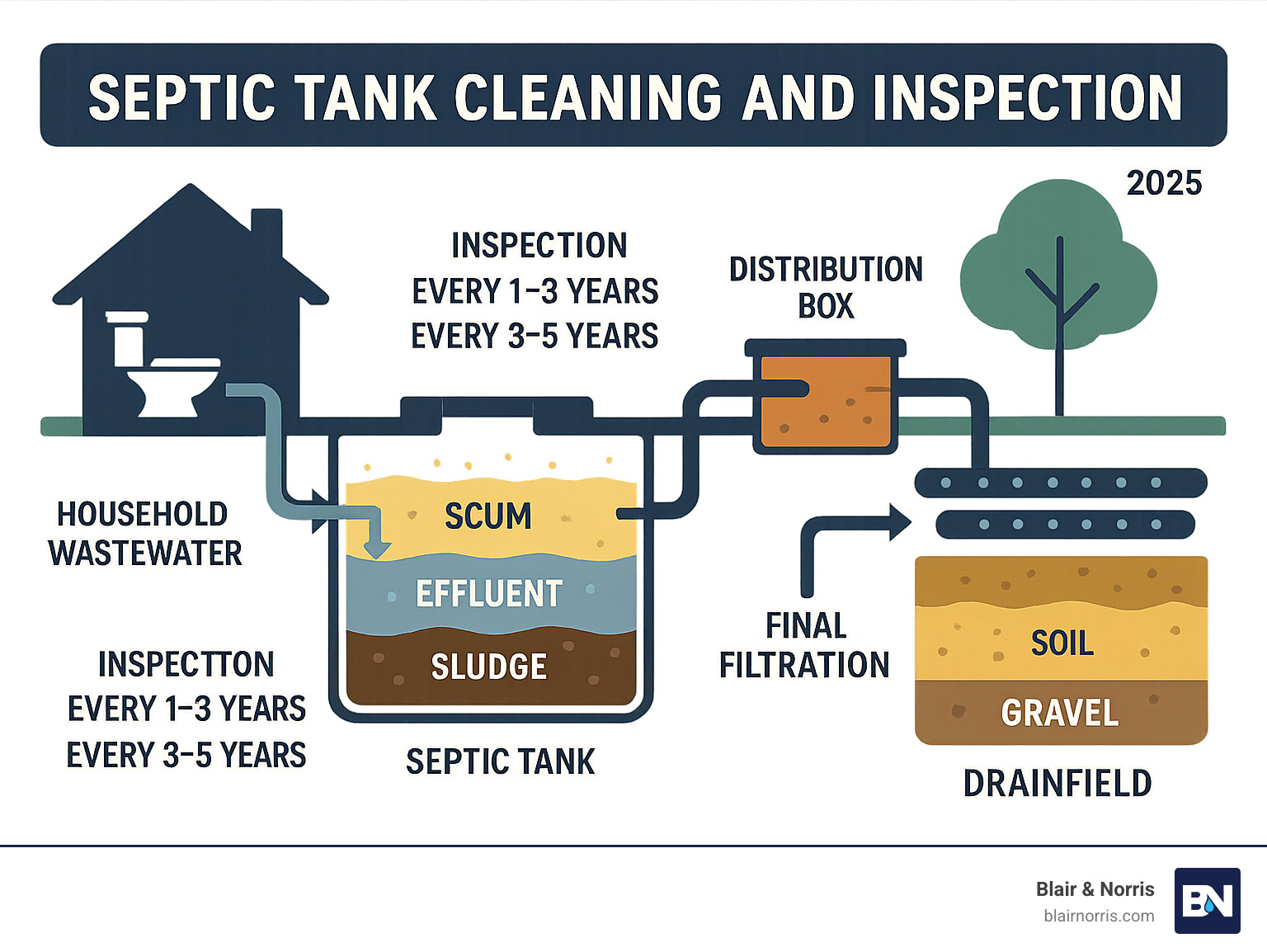
Your septic system is like a miniature wastewater treatment plant buried in your yard. It separates solids from liquids, breaks down waste with bacteria, and filters the liquid through soil. When this process breaks down, you get sewage backups, foul odors, and contaminated groundwater.
One in five households nationwide rely on septic systems, yet many homeowners skip regular maintenance. The EPA recommends septic system inspections every one to three years, with alternative systems needing annual checkups. Regular septic tank cleaning and inspection isn’t just good practice – it’s often required by local health departments.
I’m Mack Blair, and I’ve been helping Central Indiana families with their water and septic needs for over 30 years. Through Blair & Norris, I’ve seen how proper septic tank cleaning and inspection saves homeowners thousands in emergency repairs while protecting their most important investment – their home.
Why Regular Septic Maintenance is Non-Negotiable
Ignoring your septic system can lead to spectacular failures with consequences that ripple far beyond your property line. Since one in five households nationwide rely on septic systems, the EPA requires septic tank cleaning and inspection every one to three years to prevent these costly and dangerous disasters. Neglecting this maintenance leads to several serious risks:
- Health Hazards: Failing systems can contaminate groundwater with harmful bacteria, viruses, and nitrates, posing a serious risk to well water supplies.
- Environmental Impact: Pollution from a failed system can affect local streams, lakes, and community groundwater sources.
- Decreased Property Value: A home with septic problems, like sewage odors or backups, is difficult to sell and can lose $10,000 or more in value.
- Legal & Financial Penalties: Many local health departments mandate septic inspections. Skipping them can result in fines, legal issues, and problems with property transfers.
Don’t wait for warning signs. Our guide on 5 Warning Signs of a Septic System Backup Emergency shows what happens when maintenance gets skipped too long.
Understanding Different Septic Systems
Knowing your system type is key to proper septic tank cleaning and inspection scheduling.
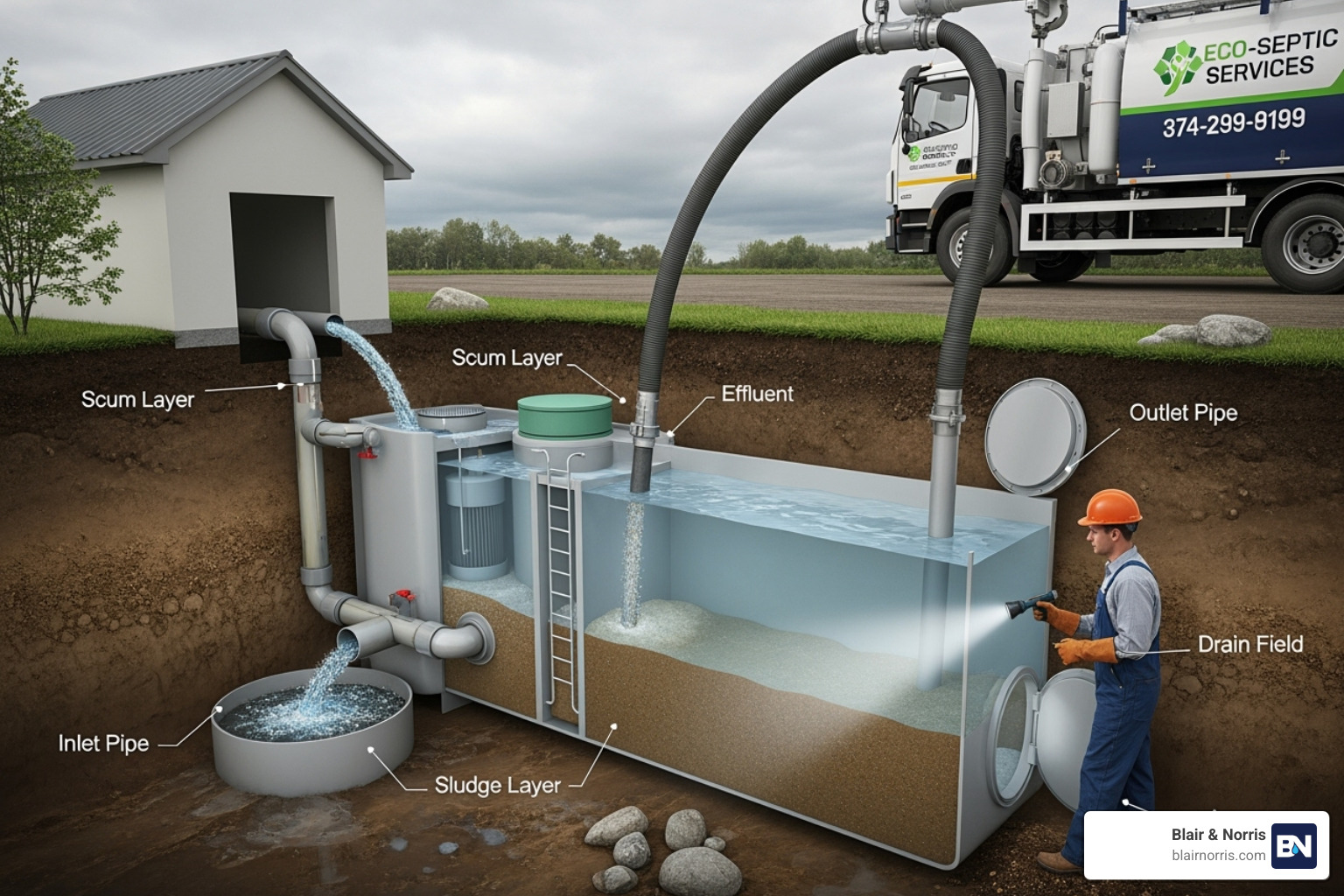
- Conventional systems: These common, gravity-fed systems use natural processes to separate solids and filter liquid through a drainfield. They are reliable and relatively low-maintenance.
- Pressure distribution systems: These use a pump to evenly distribute effluent to the drainfield, making them suitable for challenging soil conditions.
- Alternative systems: Used when conventional systems aren’t feasible, these often have mechanical parts requiring more frequent attention. Examples include:
- Aerobic Treatment Units (ATUs): These use an electric aerator to improve waste breakdown, treating wastewater more thoroughly. The Aerobic Treatment Unit requires annual inspection of its electrical components.
- Mound systems: An engineered, above-ground drainfield of sand and gravel used when soil is shallow or groundwater is high.
- Sand filter systems: Effluent passes through a sand bed for extra treatment, often required near sensitive water bodies.
The key takeaway: Systems with electrical components like ATUs need annual inspections, while conventional systems can go two to three years.
The Dangers of a Failing System
A failing septic system can cause significant problems, including:
- Sewage Backup: When a system is blocked or overloaded, wastewater can back up into your home through drains, toilets, and tubs, leading to costly cleanup.
- Clogged Drainfields: If too many solids enter the drainfield, it can clog and fail to absorb liquid. This leads to foul odors, soggy spots in the yard, and patches of unusually green grass.
- Contaminated Well Water: A failing system can leak bacteria, viruses, and nitrates into your well, posing serious health risks, especially for infants and pregnant women.
- High Financial Costs: While routine septic tank cleaning and inspection costs a few hundred dollars, emergency repairs are far more expensive. A new drainfield can cost $5,000 to $20,000, and a complete system replacement can exceed $15,000.
We’ve helped families avoid these disasters for over 75 years. Learn about the most common problems in our guide to 7 Common Septic Tank Issues and find why Is Septic Tank Cleaning Necessary? 5 Benefits explains the value of preventive care.
The Professional Septic Tank Cleaning and Inspection Process
While DIY projects can be rewarding, septic tank cleaning and inspection should always be left to licensed professionals. These systems contain hazardous materials and toxic fumes that can be fatal. Never put your head inside a septic tank.
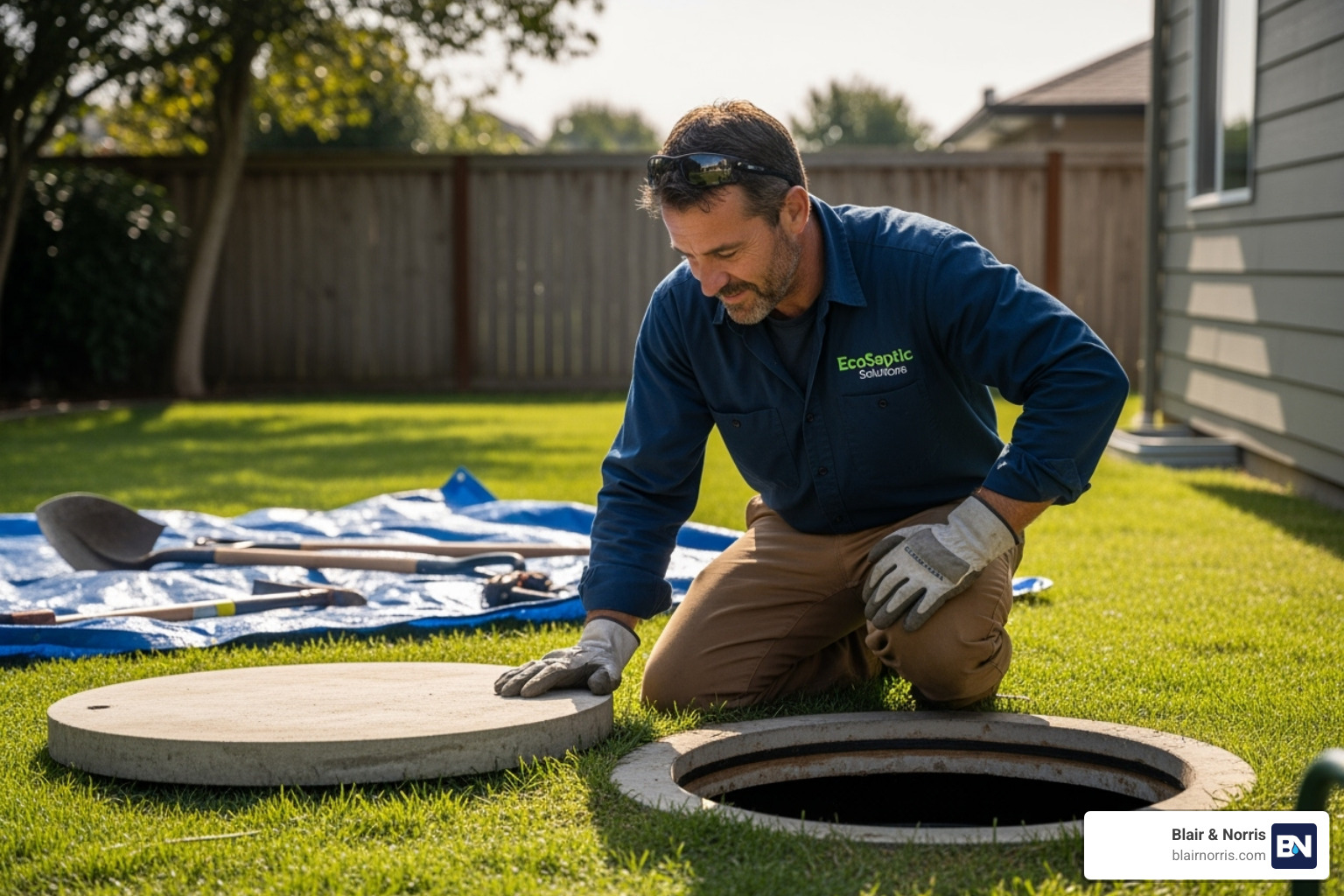
Our team at Blair & Norris is trained to handle these systems safely, following strict health department regulations. In many areas, DIY septic work is illegal due to the significant health and safety risks. We have the proper equipment and expertise to do the job right, keeping you and your family safe.
For a detailed walkthrough of our process, check out our guide on What to Expect During a Septic Pumping Service.
What to Expect from a Professional Septic Tank Cleaning and Inspection
When our Blair & Norris team arrives, we follow a refined, systematic process for every septic tank cleaning and inspection.
- Locating the tank: If you’re unsure of its location, we use local records, drain path analysis, and specialized probes to find it. Most are 10-25 feet from the house.
- Uncovering the lids: We’ll uncover the access lids. Newer tanks often have risers to the surface, while older ones may require digging (an additional charge of $50-$250 may apply).
- Checking water levels: The liquid level indicates system health. High water suggests a blockage, while low water may mean a leak.
- Inspecting the baffles: We check the inlet and outlet baffles for damage or clogs, as they are crucial for preventing solids from entering the drainfield.
- Measuring sludge and scum: Using tools like a sludge judge, we measure the solid layers. Pumping is needed if the scum is within 6 inches of the outlet, sludge is within 12 inches, or if solids make up over 25% of the tank’s liquid depth.
- Pumping the tank: We remove all accumulated waste, preventing solids from damaging your drainfield.
- Drainfield evaluation: We look for signs of failure like pooling water or foul odors and may perform a water stress test.
- Reporting our findings: You receive a detailed written report on your system’s condition and our recommendations. Keep this for your records.
Factors Influencing Septic Tank Cleaning and Inspection Frequency
The EPA recommends inspection every one to three years and pumping every three to five years, but your specific schedule for septic tank cleaning and inspection depends on several factors.
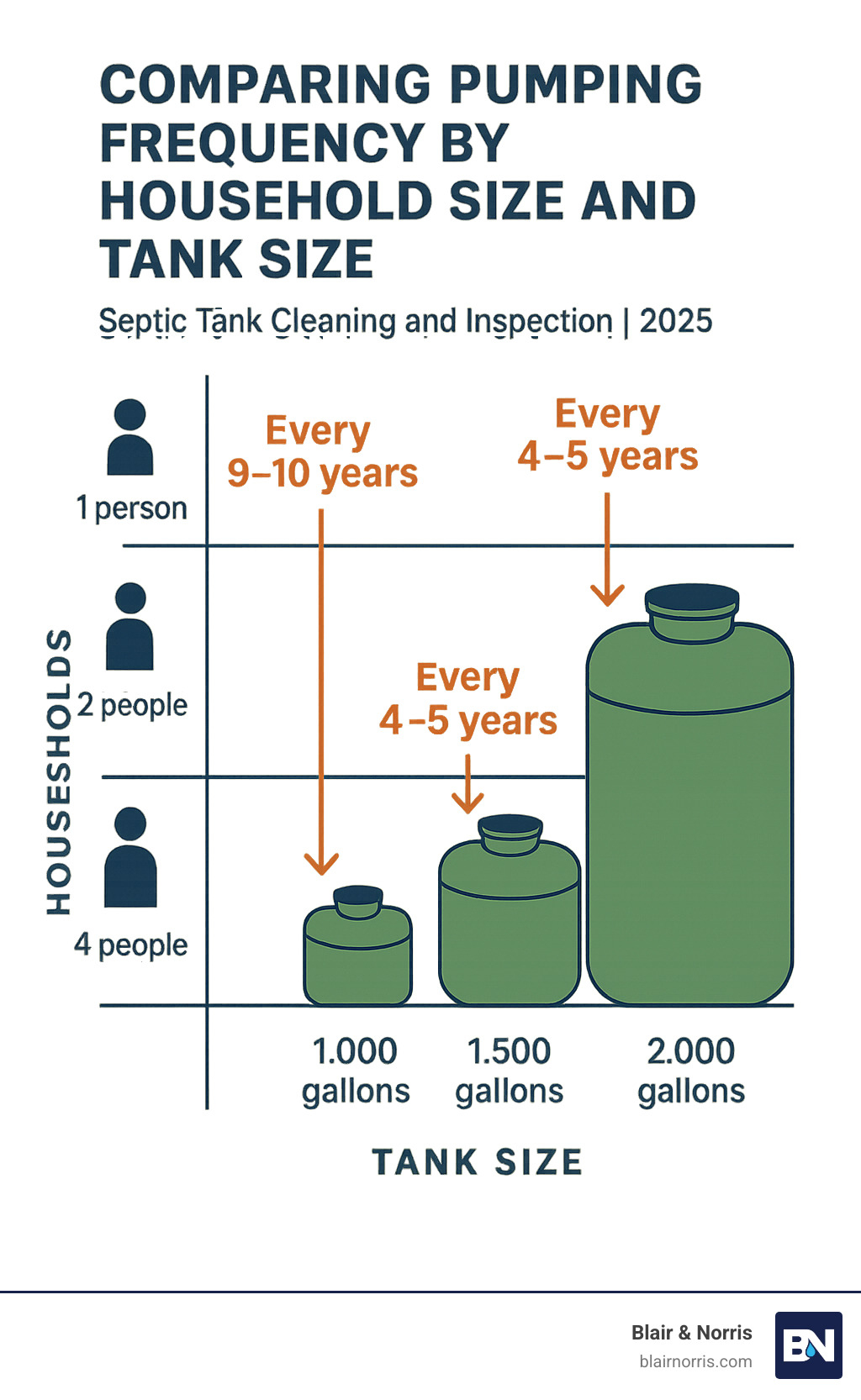
- Household size: More people means more wastewater and faster sludge buildup. A family of five will need service far more often than a single person.
- Tank size: A smaller tank fills up faster and requires more frequent pumping.
- Water usage: High water usage from long showers or frequent laundry loads strains the system.
- Garbage disposal use: Food waste adds significant solids and grease, often requiring more frequent pumping.
- System age and type: Older systems and alternative systems with electrical parts need more frequent inspections, often annually.
At Blair & Norris, we create personalized maintenance schedules to prevent costly emergencies. For detailed guidance, see our guide on How Often Does Your Septic System Need Septic Pumping?.
Common Issues, Costs, and Post-Inspection Actions
Even with regular septic tank cleaning and inspection, problems can arise. Knowing the common issues helps you spot trouble early.
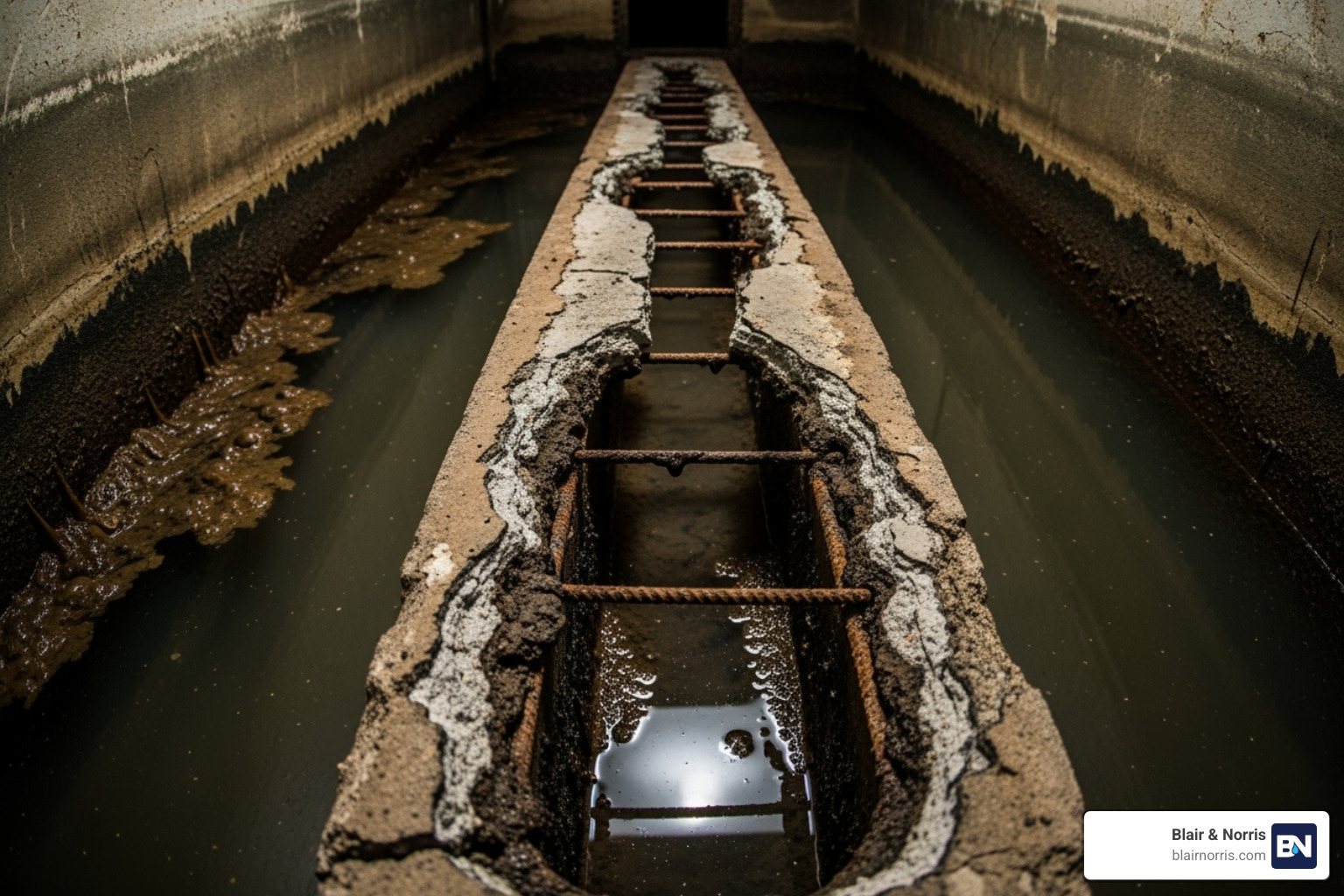
Common problems we see include:
- Cracked tanks: Shifting soil or the Indiana freeze-thaw cycle can crack tanks, leading to leaks.
- Faulty distribution box (D-box): If the D-box is damaged or uneven, it can overload parts of your drainfield, causing premature failure.
- Pump failures: Systems with pumps can fail, causing wastewater to back up toward the house.
- Invasive roots: Tree and shrub roots can seek out and damage septic lines.
- Clogged baffles: Damaged baffles allow solids to escape into the drainfield, causing clogs.
- Swampy drainfield: Standing water and foul odors indicate the drainfield can no longer absorb wastewater.
For more insights into what these problems might cost you, check out our guide on What is the Septic Tank Pumping Cost?.
A Breakdown of Potential Costs
Septic repairs can be expensive. While a routine inspection is $100 to $250 and pumping is $300 to $700, repairs may be more expensive than homeowners expect.
Here are typical repair costs in Central Indiana:
- Outlet baffle repair: $250 – $900
- Septic pump replacement: $500 – $1,500
- Distribution box repair: $500 – $1,500
- Root removal: $600 – $1,600
- Damaged tank repair: ~$2,000
- Tank replacement: >$5,000
- Drainfield replacement: $3,000 – $15,000
- New system installation: $7,000 – $12,000+
These figures show why regular septic tank cleaning and inspection is a smart financial decision. We offer Affordable Financing for Septic Systems in Indiana to help with unexpected repair costs.
Your Post-Inspection Checklist
After your septic tank cleaning and inspection, take these steps to protect your system:
- Review the inspection report: Understand our findings and recommendations. Call us if you have questions.
- Schedule repairs promptly: Don’t delay necessary repairs. Small problems can quickly become large, expensive ones.
- Follow maintenance advice: Implement our recommendations on water usage, products to avoid, or system upgrades like access risers.
- Keep all records: Maintain a folder with inspection reports, receipts, and permits. This is valuable for future service, home sales, and insurance claims. The National Onsite Wastewater Recycling Association’s Guide and Record Keeping Folder example is a useful template.
Taking these steps protects your investment. Learn more about How Regular Septic Tank Cleaning Means Big Savings.
Frequently Asked Questions about Septic System Care
Here are answers to the questions we hear most often during our septic tank cleaning and inspection visits across Central Indiana.
What are the signs my septic tank needs pumping?
Your system will give warning signs when it needs pumping. Look out for:
- Foul odors: A sewage smell around the tank, drainfield, or inside near drains.
- Slow drains: Sinks, showers, and toilets draining sluggishly throughout the house.
- Gurgling sounds: Gurgling noises from your plumbing can indicate a full tank.
- Sewage backup: Wastewater appearing in toilets, sinks, or tubs is an emergency.
- Pooling water: Soggy, smelly spots near your drainfield that don’t dry up.
- Unusually lush grass: A patch of extra-green grass over your septic area can signal a leak.
If you notice these signs, read our guide on What to Do If You Have a Full Septic Tank and call a professional immediately.
Can I use septic tank additives?
The short answer is no. The EPA and most septic professionals do not recommend additives. Your tank already has the necessary bacteria to break down waste. Additives can disrupt this biological balance, kill beneficial bacteria, and push solids into your drainfield, causing clogs. The Washington State Department of Health even requires written approval for their use. Regular septic tank cleaning and inspection, responsible waste disposal, and water conservation are all your system needs.
What should I avoid flushing or putting down the drain?
Your septic tank is not a trash can. To keep its ecosystem healthy, remember: only human waste and toilet paper belong in your toilet. See our video: “Don’t Overload the Commode!”.
Never put these items down your drains:
- Grease and oil: They solidify and cause clogs.
- “Flushable” wipes: They don’t break down and create blockages.
- Harsh chemicals: Bleach and drain cleaners kill essential bacteria.
- Coffee grounds and cat litter: These solids accumulate in the tank.
- Other items: Feminine hygiene products, diapers, dental floss, paper towels, and pharmaceuticals do not break down.
- Hot tub water: Chlorinated water can kill bacteria and shock the system.
Being mindful of what goes down the drain is the easiest form of maintenance. For more tips, see our guide on Essential Septic System Maintenance Tips for Homeowners.
Protect Your Investment with Expert Septic Care
Your septic system is one of your home’s most valuable yet invisible assets. Day after day, it quietly processes thousands of gallons of wastewater, protecting your family’s health and keeping your property safe from contamination. But here’s the thing – even the most reliable systems need a helping hand to stay in peak condition.
Proactive maintenance is the secret to avoiding those middle-of-the-night emergencies that nobody wants to deal with. Regular septic tank cleaning and inspection doesn’t just keep your system running smoothly – it actually extends its lifespan by years and protects your property value. We’ve watched too many homeowners learn this lesson the hard way, facing repair bills that could have been avoided with simple preventive care.
Think of it this way: you wouldn’t skip oil changes for your car and expect it to run forever, right? Your septic system deserves the same thoughtful attention. A small investment in regular maintenance today can save you thousands in emergency repairs tomorrow.
At Blair & Norris, we’ve been helping Central Indiana families protect their homes for 75 years of experience. As a family-owned business, we understand that your home is more than just a house – it’s where your family makes memories. That’s why we’ve built our reputation on ethical, high-quality service that you can count on, generation after generation.
We know that septic emergencies don’t wait for convenient business hours. A backup at 2 AM on a Sunday is just as urgent as one on a Tuesday afternoon. That’s exactly why we offer 24/7 support with live phone assistance. When you call us, you’ll reach a real person who can help guide you through any situation.
Don’t wait until you’re dealing with foul odors, slow drains, or worse. System longevity starts with making the smart choice today. Let our experienced team provide the thorough care your septic system needs to keep working reliably for years to come.
Ready to protect your investment? Contact us for Expert Septic Tank Pumping Maintenance in Indiana. We’re here to keep your home’s hidden hero running smoothly, so you can focus on what matters most – enjoying your home with peace of mind.