
When Your Well Water Barely Drips: Understanding Low Pressure Issues
If you’re experiencing submersible water pump low pressure, here’s a quick troubleshooting guide:
- Check pressure tank precharge (should be 2 PSI below cut-in pressure)
- Inspect pressure switch for clogs or failure (common settings: 30/50 or 40/60 PSI)
- Look for clogged screens or filters on pump intake or in plumbing
- Measure actual pressure using a gauge at pump discharge
- Verify pump sizing is appropriate for your well depth (deeper wells need stronger pumps)
Does your shower suddenly lose pressure when someone flushes a toilet? Is your garden sprinkler more of a garden mister? You’re not alone. Many Central Indiana homeowners face the frustration of inadequate water pressure from their well systems.
When a submersible pump isn’t delivering the pressure you need, everyday tasks become challenging. Washing machines take forever to fill, irrigation systems barely reach the plants, and showers feel more like a light rain than the invigorating spray you deserve.
The problem often stems from confusion between pressure (measured in PSI) and flow rate (measured in GPM). Your pump might be moving plenty of water, but not with enough force. Most residential systems should maintain 40-60 PSI for comfortable use, but many factors can reduce this pressure.
“Most submersible pumps for residential use are rated for a maximum head of 15-20 feet, which is equivalent to only 7-10 psi—about 1/4 of typical household water pressure (30-60 psi),” explains well system expert James Miller. This means your pump needs to be properly sized and maintained to achieve proper household pressure.
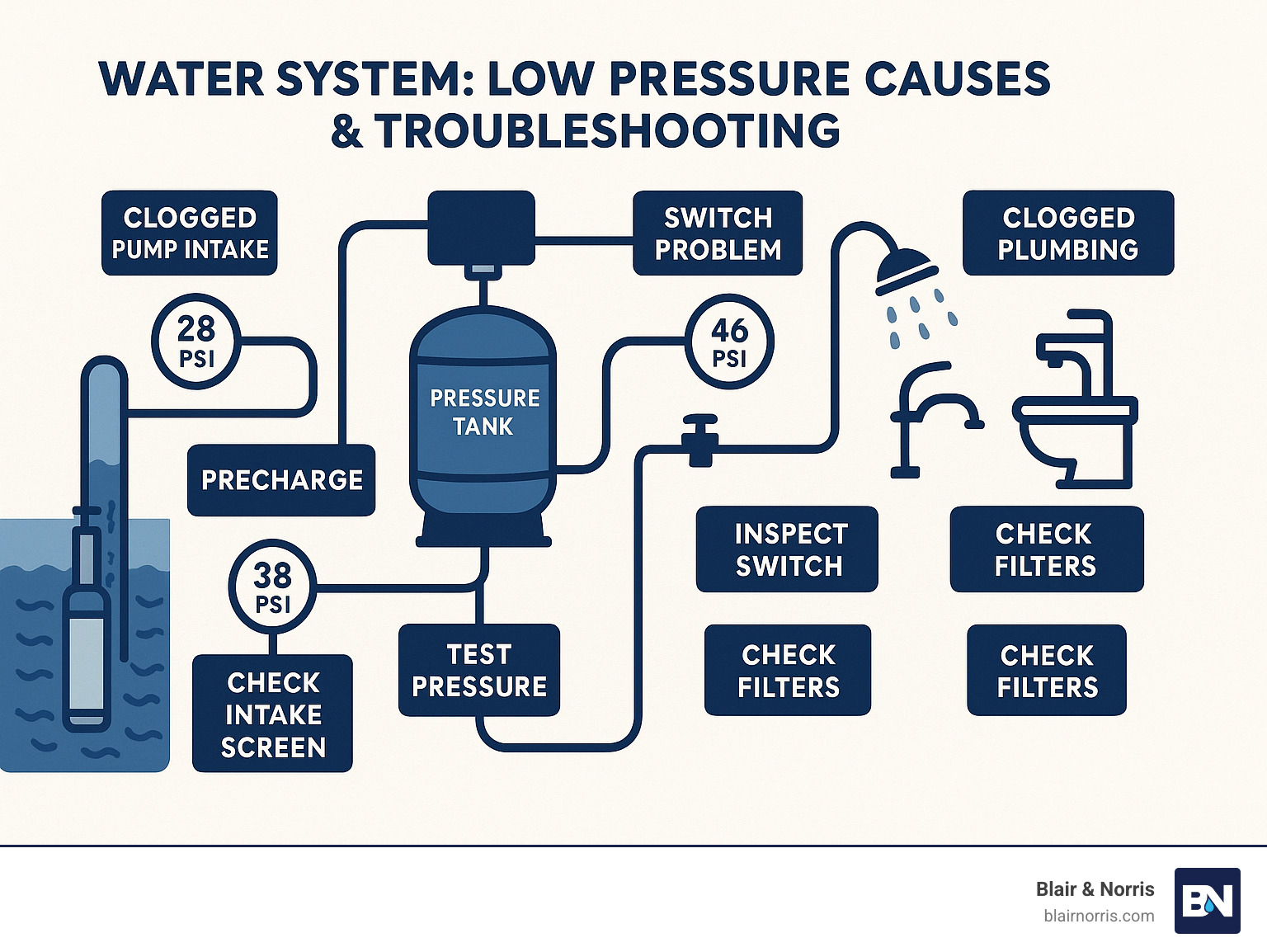
Understanding Pressure, Flow & Pump Anatomy
Before diving into troubleshooting, understand the difference between water pressure and flow rate, as these are often confused but represent different aspects of your water system.
Water Pressure is the force of water moving through your pipes, measured in pounds per square inch (PSI). Most homes operate best between 40-60 PSI. Anything below 30 PSI is considered low pressure and may trigger low-pressure cut-off switches in your system.
Flow Rate is the volume of water that moves through your pipes in a given time, measured in gallons per minute (GPM). A typical residential well pump might deliver anywhere from 5 to 20 GPM.
Your submersible pump’s performance is rated by its “head” capacity—the vertical height it can push water upward. This is measured in feet but directly correlates to pressure:
- 2.31 feet of head = 1 PSI
- A pump with a 60 ft head rating can generate about 26 PSI
The key components of your submersible pump system include:
- Pump Motor: Powers the impeller
- Impeller: Spins to create water movement and pressure
- Intake Screen: Prevents debris from entering the pump
- Pressure Tank: Stores water under pressure to reduce pump cycling
- Pressure Switch: Turns pump on/off based on pressure readings
- Check Valve: Prevents water from flowing back down into the well
| Measurement | What It Means | Typical Residential Range | Low Range Symptoms |
|---|---|---|---|
| Pressure (PSI) | Force of water | 40-60 PSI | Weak sprays, slow filling |
| Flow Rate (GPM) | Volume of water | 5-20 GPM | Multiple fixtures can’t run simultaneously |
| Head Rating (ft) | Lift capacity | 100-400 ft | Inadequate pressure for household needs |
Understanding these distinctions helps diagnose whether you’re experiencing a true submersible water pump low pressure issue or a flow rate problem.
What Causes Submersible Water Pump Low Pressure?
Several factors can contribute to low pressure from your submersible pump:
Clogged Intake Screen: Debris, sediment, or mineral buildup can restrict water entry into the pump. This is one of the most common and easily fixed issues.
Worn Impeller: After years of use, impellers can erode or become damaged, reducing their ability to generate pressure. This is especially common in areas with sandy or mineral-rich water.
Deep Well Challenges: The deeper your well, the more power your pump needs to push water to the surface. A pump that’s undersized for your well depth will struggle to maintain adequate pressure.
Undersized Pipes: Even with a powerful pump, if your pipes are too small in diameter, they’ll restrict flow and reduce pressure at the tap.
Voltage Issues: Submersible pumps require consistent electrical power. Voltage drops can cause the pump to run below optimal speed, reducing pressure output.
Pressure Tank Problems: A waterlogged pressure tank (when the bladder fails) or incorrect pressure settings can cause pressure fluctuations.
Pressure Switch Malfunction: If the switch that controls when your pump turns on and off is faulty, it may not activate the pump at the right pressure level.
How to Measure Submersible Water Pump Low Pressure Correctly
Before jumping to conclusions about your pump’s performance, it’s important to take accurate measurements:
Install a Pressure Gauge: Attach a pressure gauge to a faucet or hose bib closest to your pressure tank. This will give you a baseline reading of your system’s pressure.
Perform a Draw-Down Test: This helps determine your pump’s actual flow rate:
- Close all water fixtures in your home
- Open an outside spigot with a pressure gauge attached
- Note the starting pressure (when the pump turns on)
- Using a 5-gallon bucket and stopwatch, measure how many gallons you can collect before the pump starts again
- Divide gallons collected by the time in minutes to calculate GPM
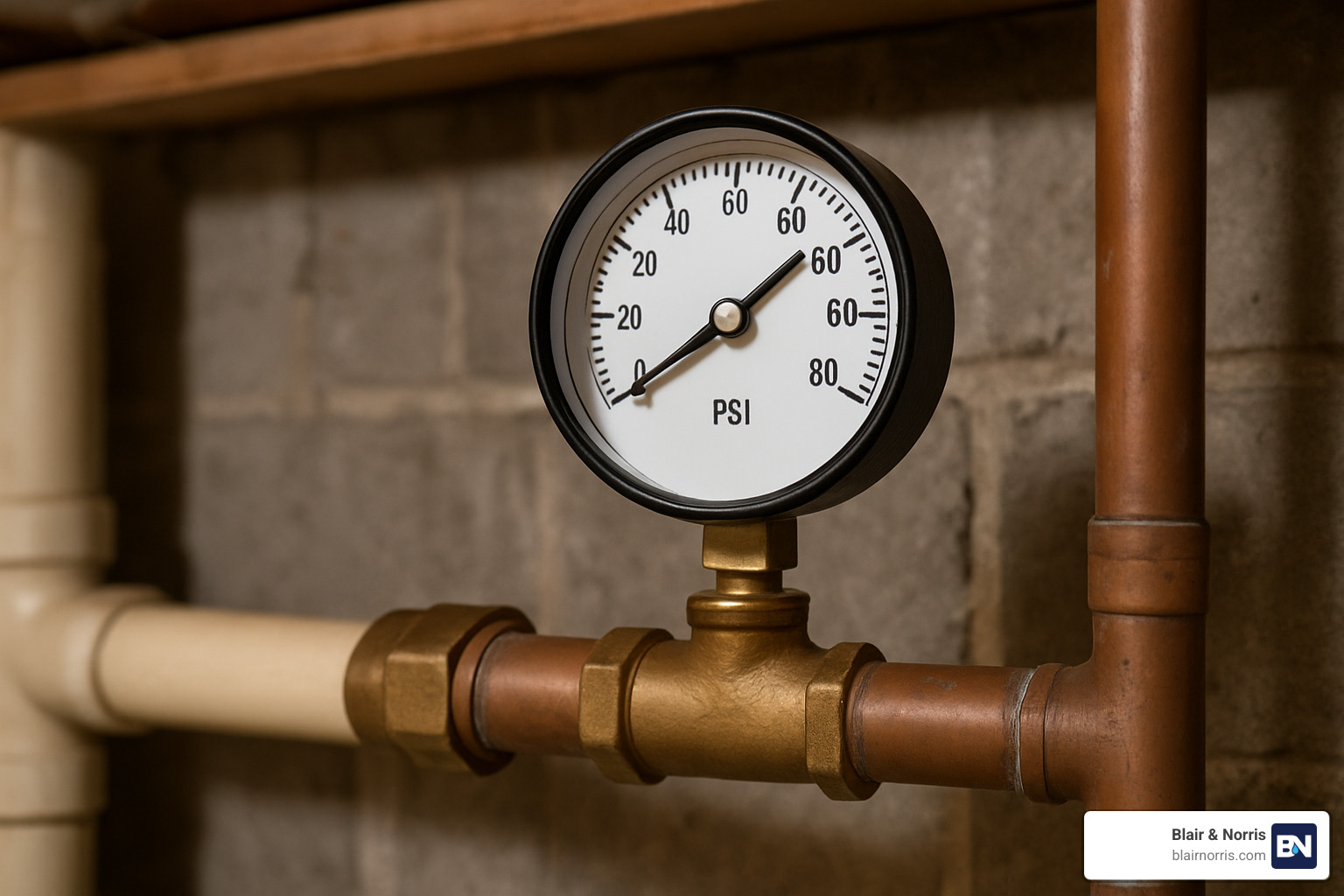
Diagnosing “submersible water pump low pressure” in 5 Steps
When your morning shower feels more like a light mist than a refreshing spray, it’s time to track down the source of your submersible water pump low pressure. After helping thousands of Indiana homeowners over our 75 years in business, we’ve developed this straightforward 5-step approach that can save you both frustration and repair costs.
Step 1: Verify Pressure Tank & Switch
The heart of your pressure system is often where problems begin. Start here before assuming your pump is failing:
Your pressure switch is like a thermostat for water pressure – it tells your pump when to turn on and off. Most homes use either 30/50 PSI settings (pump turns on at 30, off at 50) or 40/60 PSI. If these settings are too low, your showers will suffer.
To check your pressure tank, turn off power to the pump and drain the tank completely. Using a simple tire gauge, check the air pressure – it should be about 2 PSI below the cut-in pressure (so 28 PSI for a 30/50 switch). An incorrectly charged tank can’t do its job properly.
Listen carefully to your pump. Does it turn on and off frequently, even when you’re barely using water? This “short cycling” usually means your pressure tank’s bladder has failed. Not only does this cause pressure problems, but it can decrease your pump’s lifespan by up to 30%.
What Does It Mean When My Home Has Low Water Pressure?
Step 2: Rule Out Plumbing Restrictions
If your pressure tank checks out, the problem might be hiding in your plumbing:
Sediment filters are silent pressure killers. Low water pressure is often caused by clogged filters or screens, which can reduce flow by up to 50% if not regularly maintained. Pull out your whole-house water filter and hold it up to the light – if it’s dark with sediment, you’ve found a likely culprit.
Clogged fixtures are especially common in Indiana homes due to our notoriously hard water. Unscrew your faucet aerators and showerheads – you might be shocked by the mineral buildup hiding inside.
Pipe sizing matters tremendously for pressure. Follow your plumbing from the pressure tank to problem areas. If your pipes narrow from 1″ down to 1/2″, you’ve created a bottleneck that no pump can overcome.
Step 3: Inspect Pump & Well Conditions
When tank and plumbing aren’t the issue, it’s time to look deeper – literally:
Your pump’s health can be checked without pulling it from the well. Using a clamp-on ammeter, measure the current draw while the pump runs. If it’s lower than the manufacturer’s specifications, your impeller might be worn or damaged.
The check valve prevents water from flowing back down into your well when the pump stops. A failing check valve creates the illusion of low pressure as the system must refill the pipe each time before delivering water to your home.
Pay attention to how your well recovers after heavy use. If running the washing machine leaves you with a trickle in the shower that slowly improves, your well production might not match your pump’s capacity.
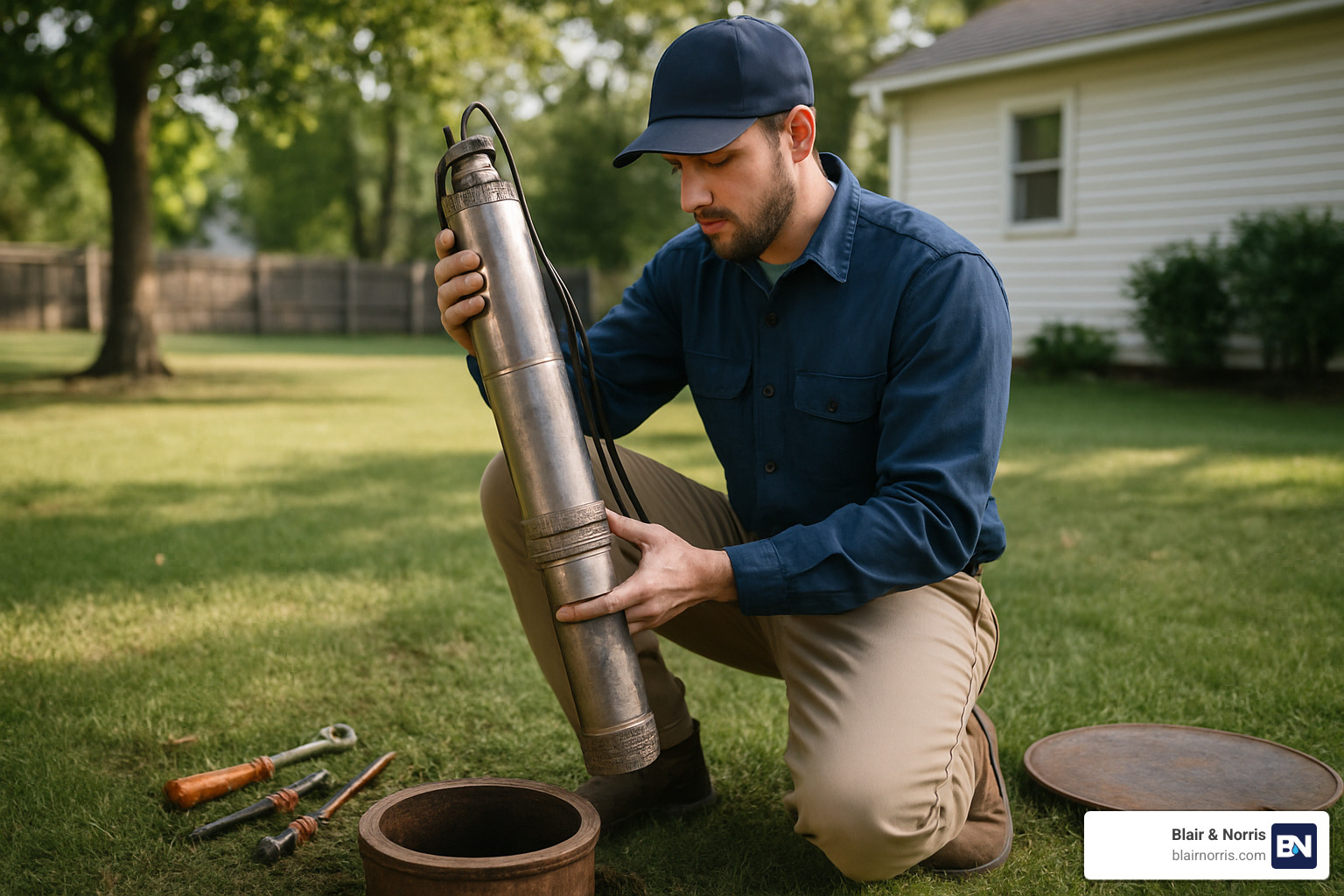
More info about water pressure troubleshooting
Fixes & Upgrades to Restore Proper Pressure
After pinpointing what’s causing your submersible water pump low pressure, it’s time to roll up your sleeves and get things flowing properly again. Whether you’re looking for a quick fix or considering a more permanent solution, we’ve got options that fit every situation and budget.
Budget Fixes for Submersible Water Pump Low Pressure
You don’t always need to break the bank to get your water pressure back. Sometimes the simplest solutions make the biggest difference.
Cleaning or replacing your pump’s intake screen can work wonders if debris is the culprit. This usually means pulling the pump, so many Indiana homeowners tackle this during regular maintenance. A clogged screen can be like trying to breathe through a straw – not enough gets through no matter how hard you try!
If your pressure gauge readings seem off, consider replacing the gauge before making other changes. We’ve seen countless cases where homeowners thought they had pressure problems when actually their gauge was just giving false readings.
Adjusting your pressure switch settings might be tempting, but proceed with caution. Small adjustments can make a noticeable difference, but never exceed manufacturer specifications.
Correcting your tank pre-charge is another simple fix that makes a big difference. Your pressure tank’s air charge should be 2 PSI below the cut-in pressure of your switch. An incorrectly charged tank can’t do its job properly, leading to pressure fluctuations throughout your home.
Long-Term Upgrades When Low Pressure Persists
When simple fixes don’t solve the problem, it’s time to consider more substantial improvements. These upgrades cost more upfront but provide lasting solutions to persistent pressure problems.
Variable speed drives have revolutionized well systems in recent years. These smart controllers adjust your pump’s speed based on demand, maintaining consistent pressure whether you’re taking a shower or watering the garden. They’re particularly valuable for larger households with varying water needs.
A larger pressure tank might be just what your system needs. With 75 years of experience serving Indiana homes, we’ve seen how upgrading to a bigger tank reduces pump cycling and provides more consistent pressure during high-demand periods. Your pump will thank you with a longer lifespan, too.
For homes with elevation changes or lengthy pipe runs, adding a booster pump can be a game-changer. These secondary pumps give your water the extra push it needs to maintain pressure at distant fixtures.
“At 440 ft depth, a 1.5 HP pump might be under-sized—consider 2 HP instead,” as one well expert puts it. If your pump simply isn’t powerful enough for your well depth or household demands, upgrading to a higher-capacity model solves many pressure issues permanently.
For wells with sediment issues, installing a proper anti-sediment filtration system protects both your pump and plumbing from wear and clogging. Think of it as preventive medicine for your entire water system.
Submersible Pump Repair Near Me
Preventive Maintenance & Best Practices
An ounce of prevention is worth a gallon of pressure! Regular maintenance can help you avoid submersible water pump low pressure issues before they start.
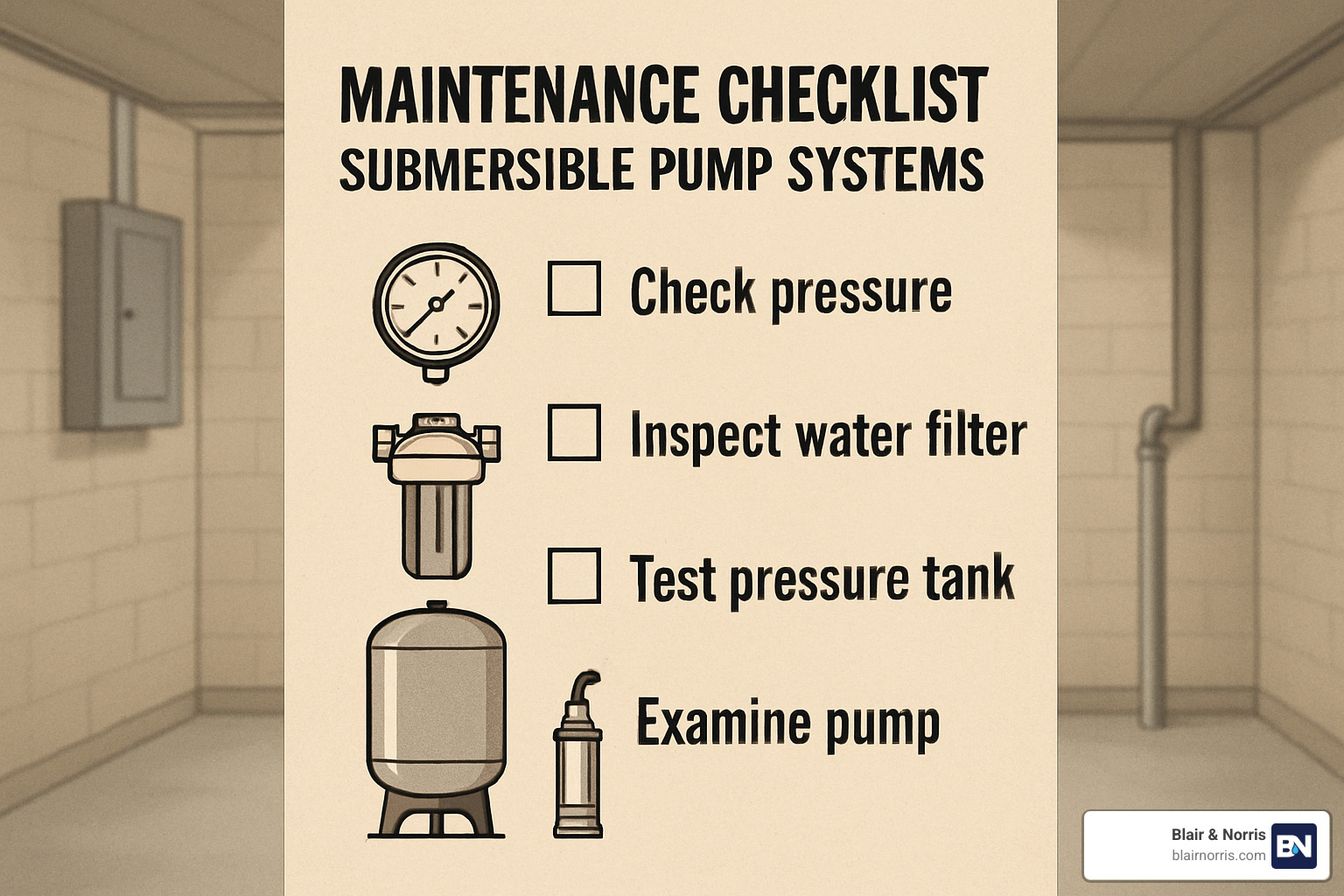
DIY Checklist to Prevent Submersible Water Pump Low Pressure
Taking care of your well system isn’t complicated, but it does require consistency. After helping Indiana homeowners for 75 years, we’ve found that simple regular checks can prevent most pressure problems.
Start by keeping an eye on your pressure gauge readings monthly. Jot down the numbers when your pump turns on and off in a small notebook. These readings are like your system’s vital signs—changes can alert you to developing issues before they become emergencies.
Every three months, check your pressure tank’s air charge. This simple maintenance task takes just minutes but can prevent the frustrating pressure fluctuations that plague many homeowners. Your pre-charge should be 2 PSI below your cut-in pressure—it’s a golden rule that pays dividends in consistent water pressure.
Those sediment filters need regular attention too, especially here in Indiana where our water often contains high mineral content. Mark your calendar for changes every 2-3 months, or whatever schedule your filter manufacturer recommends.
Once a year, set aside an hour for a complete system inspection. Look for telltale leaks at connections, check for corrosion on wire terminals, and test your pressure switch operation.
Pro Tips for Well Depth & Pump Sizing
Getting your system properly sized from the start prevents countless headaches down the road. The most important factor is understanding your total dynamic head—essentially the total “lift” your pump needs to overcome. This includes not just the vertical distance from pump to surface, but also friction loss in pipes, pressure needed at fixtures, and any additional lift to upper floors.
When planning your system, don’t forget to count your fixtures. Each water-using appliance in your home adds demand. Your bathroom faucet might need 1-2 GPM, while your washing machine could require 3-5 GPM. Add these up to understand your total potential demand.
Always plan for future needs when selecting a pump. That new irrigation system or additional bathroom can push an adequately-sized pump into inadequate territory. We typically recommend sizing your pump for 20% more capacity than your current needs.
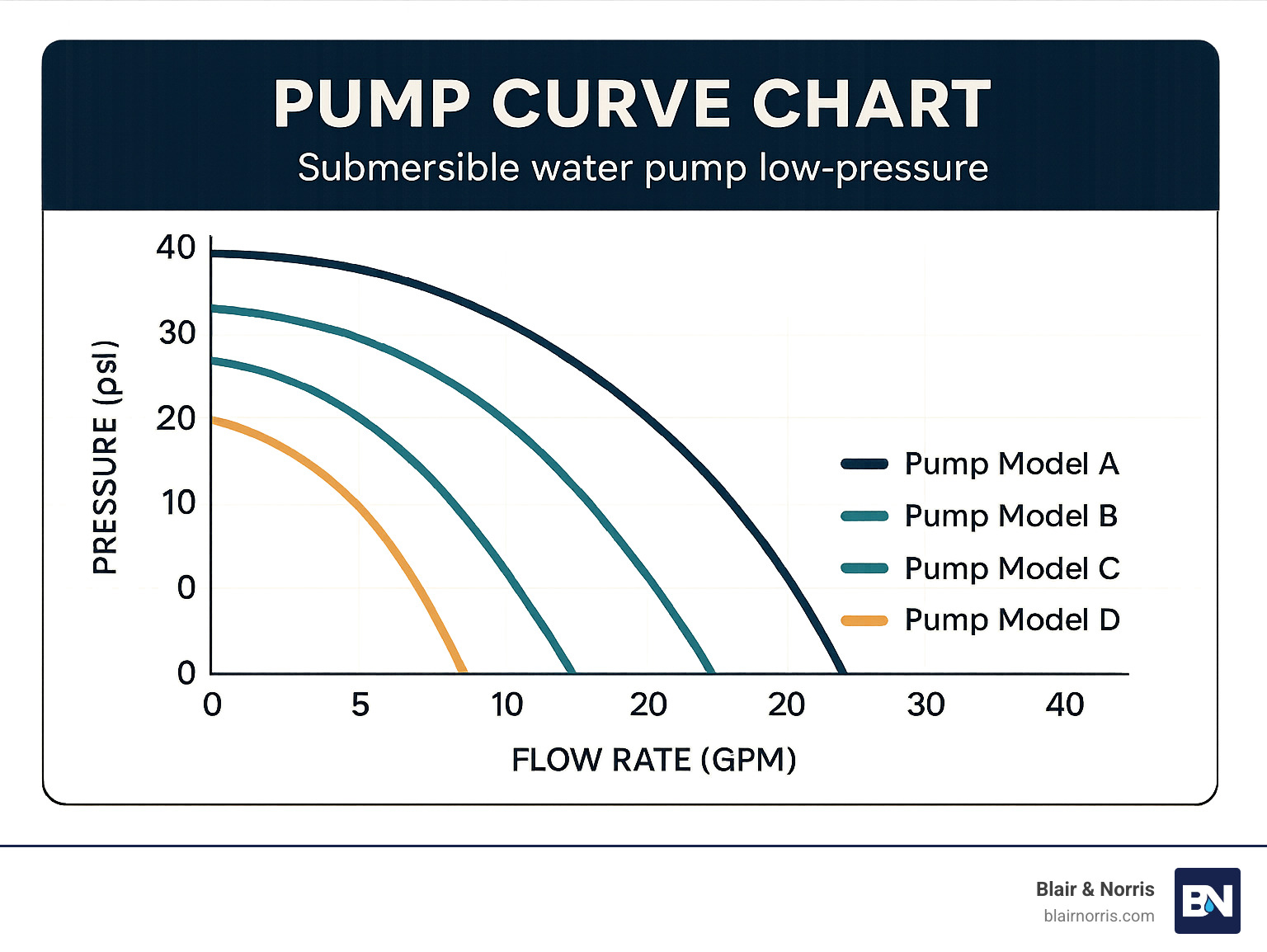
Understanding pump curves (shown in the chart above) helps you select the right equipment for your specific situation. These graphs show the relationship between flow rate and pressure for different models—essentially mapping out what your pump can deliver under various conditions.
For more detailed information about well water systems and proper sizing, check out the Water Systems Council resources for homeowners.
Frequently Asked Questions about Submersible Pump Pressure
Why does my pressure fluctuate between showers?
Nothing ruins a relaxing shower like suddenly losing water pressure when someone flushes a toilet elsewhere in the house. These frustrating fluctuations typically point to one of two culprits: a failing pressure tank bladder or an undersized pressure tank.
When your pressure tank’s bladder starts deteriorating, it simply can’t maintain consistent pressure between pump cycles. Think of it like a balloon with a slow leak – it just can’t hold the air (or in this case, pressure) that it’s supposed to. Similarly, if your family has grown but your pressure tank hasn’t, you might have a tank that’s too small for your household’s current demands.
The fix? First, check your pressure tank’s air charge and look for signs of bladder failure. If you hear water sloshing around when you tap the tank or notice the pump cycling rapidly, your tank may be waterlogged or the bladder may have failed – in which case, replacement is your best bet. If the tank simply seems too small for your needs, upgrading to a larger capacity model will provide more consistent pressure for everyone in your household.
Can I just raise the pressure switch settings safely?
While it’s tempting to simply crank up your pressure switch settings (say, from 30/50 to 40/60 PSI) for a quick fix, this isn’t always the wisest move. It’s a bit like overclocking your computer – yes, you might get better performance, but at what cost?
Increasing pressure settings forces your pump to work harder, which can lead to a cascade of potential issues: higher electricity bills, added stress on your plumbing fixtures and pipes, pump overheating, and ultimately a shortened lifespan for your expensive equipment. Your pump has specific head capacity ratings for a reason – pushing beyond them is asking for trouble.
“A drop in water pressure below 30 psi can trigger low-pressure cut-off switches, causing the pump to stop and require manual reset,” we often explain to our Indianapolis customers. Before touching those pressure switch settings, check your pump’s specifications to confirm it can handle the increased demand.
When is it time to replace instead of repair?
Knowing when to say goodbye to your current pump can save you from throwing good money after bad. After 75 years of helping Indiana homeowners with their well systems, we’ve developed some reliable guidelines for this decision.
Consider replacement when your pump is showing its age – most submersible pumps last 8-15 years, so if yours is approaching a decade of service and giving you trouble, replacement often makes more financial sense than repair. Similarly, if repair estimates exceed half the cost of a new pump, you’re better off investing in new equipment.
Submersible Pump Repair Near Me
Conclusion
Let’s face it—dealing with submersible water pump low pressure can turn simple household tasks into frustrating challenges. But now that you understand your well system better, you have the knowledge to tackle these issues head-on and restore the comfortable water pressure your home deserves.
Think about how nice it will be to take a shower without the pressure suddenly dropping when someone flushes a toilet. Imagine watering your garden with a strong, steady stream instead of a disappointing trickle. These everyday comforts aren’t luxuries—they’re what a properly functioning well system should provide.
Regular maintenance is truly your best friend when it comes to preventing pressure problems. By checking your pressure tank pre-charge, inspecting sediment filters, and listening for changes in how your system operates, you’ll catch small issues before they become major headaches.
While many homeowners can handle basic troubleshooting, some problems signal it’s time to call in the professionals. Complex electrical issues, pump replacements, and deep well problems require specialized equipment and expertise to address safely and effectively.
At Blair & Norris, we’ve spent 75 years helping Indiana families solve their well water challenges. As a family-owned business serving Indianapolis, Carmel, Fishers, and surrounding communities, we understand how important reliable water pressure is to your daily life.
Proper maintenance doesn’t just ensure comfortable showers and efficient appliances—it also improves energy efficiency and extends the life of your expensive equipment. That’s a win for both your comfort and your wallet.
Don’t ignore persistent pressure problems. Those nagging issues often point to underlying conditions that can lead to more serious damage if left unaddressed. With the right approach to troubleshooting and maintenance, you can enjoy the reliable, consistent water pressure that makes a house feel like home.