
When Winter Takes Your Sump Pump Hostage
When temperatures drop below freezing, water in your discharge pipe can freeze solid, making how to thaw the sump pump line an urgent question for protecting your basement. This can become a serious emergency: the pump may run without moving water, increasing the risk of flooding and equipment strain; one reason why sump pump line searches spike during cold snaps. The most common cause is standing water in the line from an improper slope, which freezes and creates an ice blockage. This renders your primary defense against water damage useless.
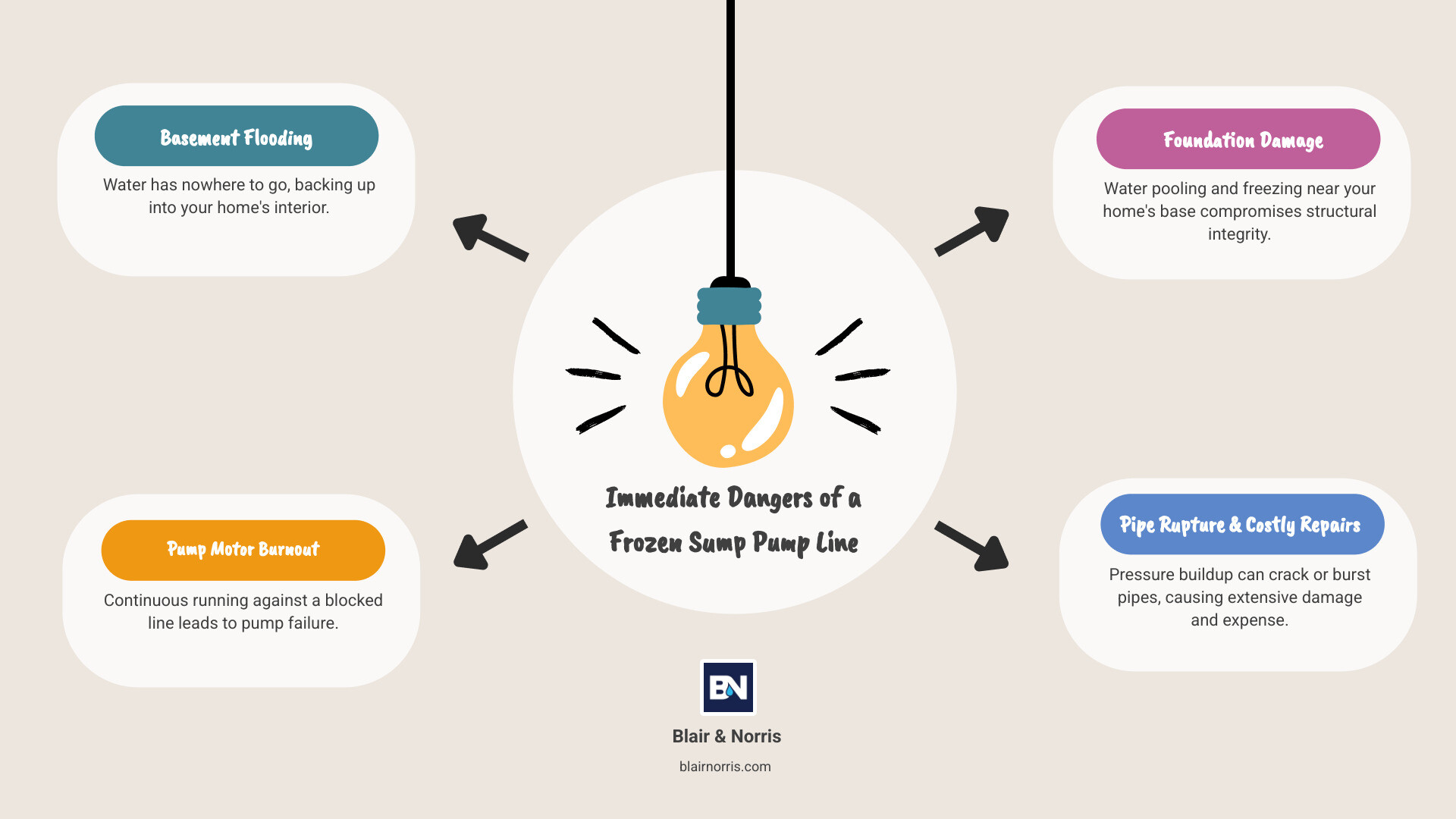
The immediate dangers include:
- Basement flooding when melting snow or rain has nowhere to go
- Pump motor burnout from the extreme strain of running against a blocked line
- Cracked or burst pipes from the immense pressure of expanding ice
- Foundation damage from water pooling and refreezing near your home’s base
- Mold growth from prolonged dampness after a backup
I’m Mack Blair, and with over three decades of experience in Central Indiana, I’ve seen this problem countless times. While DIY solutions are tempting, an improper thawing attempt can lead to catastrophic failure. While fast action matters, how to thaw sump pump line safely starts with controlled steps that reduce damage risk.
The Chilling Truth: Why Sump Pump Lines Freeze and the Risks Involved
When temperatures drop, standing water in your sump pump’s discharge line can freeze, creating a direct threat to your home. Across Indiana, we’ve seen this issue escalate into major water damage. Understanding the causes and risks is the first step toward protecting your property.
Primary Causes of a Frozen Discharge Line
Several factors can cause a frozen blockage. The primary reason is sub-freezing temperatures, which will freeze any water left in the discharge line.
Here are the most common culprits:
- Sub-Freezing Temperatures: Sustained cold temperatures common in Indiana winters are the primary trigger.
- Improper Installation and Insufficient Downward Slope: Improper slope is a leading reason how to thaw sump pump line problems happen because standing water remains in the pipe and freezes.
- Water Pooling in Low Spots: Sags or dips in the line create low spots where water pools and freezes, even with a proper overall slope.
- Lack of Insulation: Exposed sections of the pipe, especially where it exits the home, are vulnerable. Without insulation, the pipe has no protection from cold air.
- Discharge Outlet Blocked by Snow or Ice: Heavy snow or ice can block the line’s exit point, creating a dam that causes water to back up and freeze inside the pipe.
- Short Cycling Pump: A pump that short cycles (turns on and off too frequently) may not push enough water to clear the line, leaving small amounts behind to freeze.
The Dangers of Ignoring the Problem
Ignoring a frozen line has dire consequences, leading to costly repairs and major disruption.
- Basement Flooding: The most immediate risk. With a blocked line, the sump pit overflows, flooding your basement. This can happen quickly during rain or snowmelt.
- Sump Pump Motor Failure (Burnout): A pump running against a blockage will strain, overheat, and burn out its motor, requiring an expensive replacement.
- Cracked or Burst Pipes: Expanding ice creates immense pressure that can crack or burst the discharge pipe and even damage internal plumbing.
- Water Damage to Belongings: Floodwaters can ruin anything stored in your basement, including furniture, electronics, and personal heirlooms.
- Structural Damage to Foundation: Water pooling around the foundation can seep into cracks, freeze, and expand. This can cause serious structural damage and compromise your home’s stability.
- Mold Growth: Damp conditions after a flood are a perfect breeding ground for mold, which poses health risks and requires costly remediation.
- Costly Repairs: The cost of dealing with flooding, structural damage, and mold is far greater than the cost of fixing the frozen line itself.
Prompt action is key to avoiding these costly problems. For more winterization tips, see our guide on Prevent Frozen Pipes in Indiana: Essential Winter Tips and resources from the Indiana Department of Homeland Security.
The Perils of DIY: Why Thawing Your Own Sump Pump Line is Risky
When facing a frozen sump pump line, the instinct is to find a quick DIY fix. However, many common methods are risky and can worsen the problem, cause expensive damage, or create safety hazards. It’s crucial to understand these pitfalls before you act.
Risk 1: Causing Irreparable Pipe Damage
PVC discharge lines become brittle in the cold. Applying heat incorrectly can cause disastrous damage.
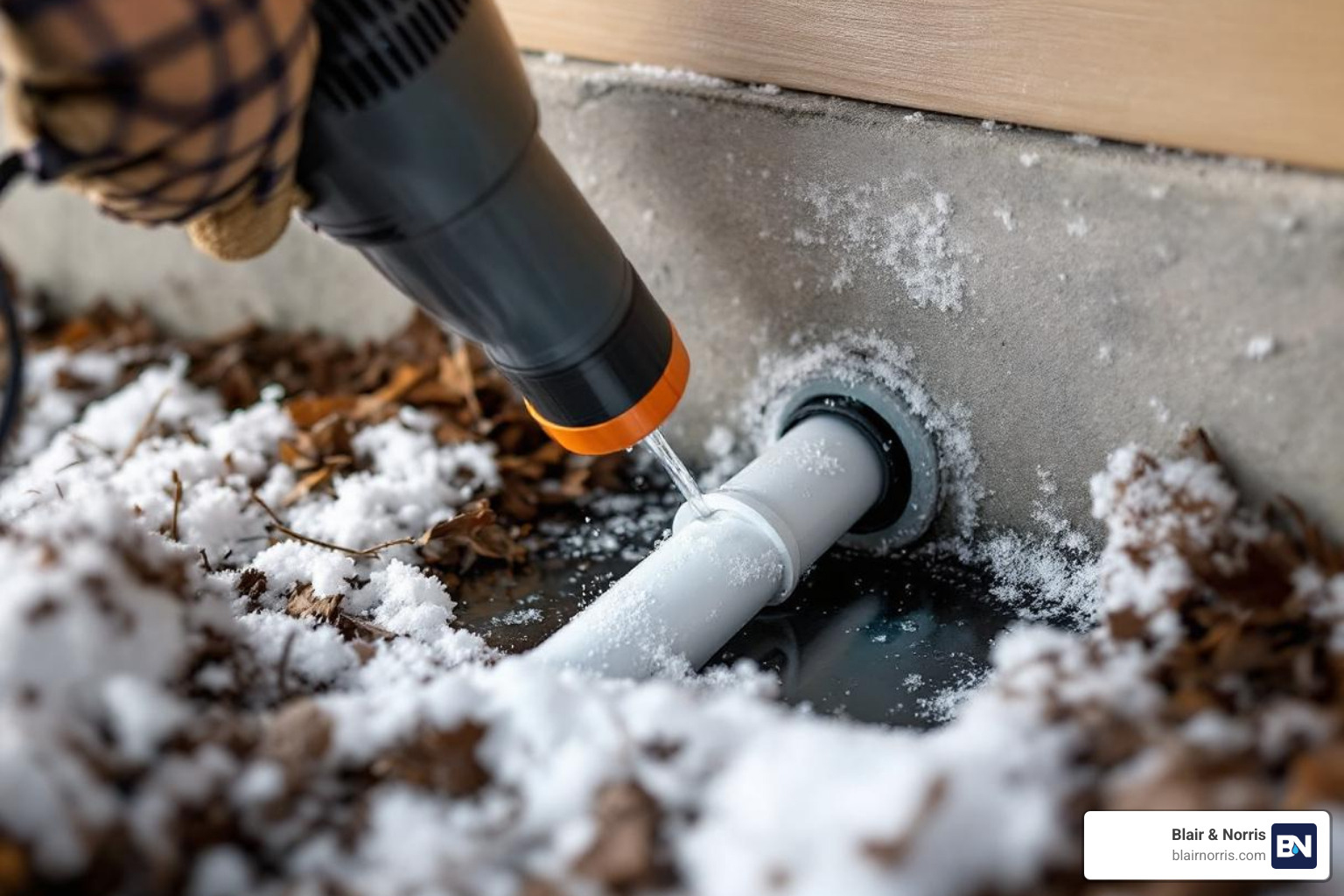
- Thermal Shock: Pouring boiling water or applying high, direct heat causes thermal shock, which can crack or shatter the brittle pipe. This turns a simple blockage into a major repair.
- Warping and Melting: High, concentrated heat is risky on cold PVC; if using a hairdryer, use low heat, keep it moving, and avoid overheating joints. The heat needed to melt a large blockage from the outside often exceeds what the pipe can handle.
Risk 2: Fire and Electrical Hazards
Using heat sources in a wet environment creates serious fire and electrical dangers.
- Open Flames: Never use an open flame like a blowtorch to thaw a pipe. It’s an extreme fire hazard near flammable materials like insulation. This method has been known to start house fires.
- Electrical Shock: Using electrical devices like hair dryers or space heaters near water poses a severe electrocution risk. Space heaters are also a fire risk if placed too close to combustible materials.
Risk 3: Ineffectiveness and Wasted Time
When water is rising, time is critical. DIY methods are often slow and ineffective, especially for large or inaccessible blockages.
- Locating the Blockage: It’s difficult for a homeowner to pinpoint the ice blockage. Applying heat to the wrong spot wastes critical time.
- Buried Lines: External heat sources are useless for buried lines. Pouring warm water down the pipe often makes the problem worse by freezing and adding to the blockage.
While the DIY urge is strong, a mistake can cost thousands in damage. The safest, most effective solution is to call a professional with the right tools and expertise.
Long-Term Protection: Professional Solutions to Prevent Future Freezes
Thawing a frozen line is a temporary fix; the real goal is prevention. The effectiveness of preventative measures depends on correct installation and an understanding of your home’s drainage system, which is why professional expertise is invaluable.
Professional Installation and Grading
Improper slope is the number one cause of frozen lines. A professional plumber ensures the system is installed correctly to prevent this.
- Guaranteed Proper Slope: Professionals use leveling tools to ensure a continuous downward slope of at least 1/4-inch per foot. This guarantees the line drains completely, leaving no water to freeze.
- Correct Burial Depth: In cold climates, burying the line below the local frost line is a key preventative measure. A professional has the knowledge and equipment to do this correctly, protecting the pipe from freezing.
- Eliminating Sags and Low Points: Professionals ensure the trench is graded and the pipe is supported to eliminate any sags where water could pool and freeze.
Advanced Protective Upgrades
A plumbing expert can also install advanced upgrades for added protection against harsh winters.
- Professional-Grade Insulation: A professional can apply durable, weather-resistant insulation to all exposed sections of the pipe for maximum protection.
- Heat Tape Installation: For problem areas, professionally installed, thermostatically controlled heat tape offers active protection. An expert will install it safely to code, preventing fire hazards.
- Freeze-Guard Discharge Systems: A freeze-guard attachment (like an IceGuard) is an excellent failsafe. Installed near the foundation, it provides an alternate escape route for water if the main line freezes, preventing a backup. Proper professional installation is critical.
- System Optimization: A professional can recommend upgrading from a flimsy flexible hose to a wider, rigid PVC pipe. A larger diameter pipe is less likely to freeze solid and improves flow.
Investing in a professional assessment and these preventative measures is the most effective way to protect your home from water damage. For a complete evaluation, explore our Sump Pump Solutions Indianapolis or learn about our integrated fast water line repair services.
When to Call in the Experts for a Frozen Sump Pump Line
While knowledge is empowering, sometimes calling a professional is the only safe option. Tackling a stubborn frozen line yourself can lead to damage, frustration, or safety hazards. Our team is here to help Indiana homeowners in these situations.
You should call a professional plumber if:
- You Can’t Locate the Blockage: If you can’t find the blockage, or if it’s buried and inaccessible, you’ll need professional equipment.
- DIY Thawing Attempts Fail: If gentle heat or warm water doesn’t work, the blockage may be too severe for DIY methods and require specialized tools.
- You Suspect Damage: If you see cracks, bulges, or leaks, or hear unusual pump noises, call a professional. Running a pump with a damaged line can cause flooding.
- The Pump Isn’t Working After Thawing: If the line is clear but the pump is silent or just hums, the motor may be burned out or have another internal issue.
- Recurring Freezing Issues: If your line freezes every winter, it indicates an installation flaw like improper slope. A professional can diagnose and implement a permanent solution.
- You’re Uncomfortable or Unsure: If you’re uncomfortable or unsure about handling plumbing and electrical work in a wet environment, call for help. Your safety is the top priority.
For buried or inaccessible lines, pros can resolve how to thaw sump pump line blockages using equipment that delivers heat inside the pipe without stressing the exterior. They can also perform a comprehensive system inspection to identify vulnerabilities and prevent future issues, including mold risks as warned by the EPA’s official guide. For urgent assistance, we offer Emergency plumbing services.
Frequently Asked Questions About Thawing Sump Pump Lines
Here are answers to common questions we receive from homeowners about frozen sump pump lines.
Can I pour antifreeze or salt into my sump pit?
No. Do not add antifreeze or salt; this does not solve how to thaw sump pump line blockages safely and can create serious contamination or equipment issues. Salt is highly corrosive and will damage your pump’s components and harm your landscaping. Stick to safe, professional thawing methods.
How can I tell if my sump pump motor has burned out?
A motor can burn out from straining against a frozen line. Look for these signs:
- Silent Pump: The pit is full, but the pump makes no sound.
- Humming or Buzzing with No Water Movement: The pump hums or buzzes but doesn’t move any water, indicating a seized or damaged motor.
- Burning Smell: A distinct electrical burning smell comes from the sump pit.
- Tripped Circuit Breaker That Won’t Reset: The pump’s circuit breaker trips repeatedly and won’t reset.
If you notice these signs, disconnect the pump’s power and call a professional for an inspection. For related issues, see our guide on Prevent Frozen Pipes in Indiana: Essential Winter Tips.
What is the best way on how to thaw sump pump line if it’s buried underground?
Thawing a buried line is a job for professionals. DIY methods are ineffective and risk damaging the pipe, while digging up a frozen line is difficult and can easily lead to cracks.
The professional approach involves:
- Specialized Equipment: Professionals use hydro-jetters or steam machines that feed a hose into the pipe, delivering heat directly to the blockage to melt it from the inside out.
- Accurate Diagnosis: They use diagnostic tools to confirm the line is clear and inspect for any ice-related damage.
- Safety and Efficiency: This professional method is much faster and safer than DIY attempts, preventing a basement backup.
Given the difficulty and risk of damage, we strongly recommend calling a professional for a frozen buried line. For more on preventing moisture damage, see the EPA’s official mold guide.
Your Trusted Solution for Frozen Sump Pump Emergencies
A frozen sump pump line is an emergency, risking flooding, mold, and structural damage. Risky DIY fixes can lead to catastrophe, including cracked pipes, fire, and electrical shock. Protecting your home requires a safe, effective, and lasting professional solution.
For over 75 years, Blair & Norris has been the trusted partner for Indianapolis homeowners. Our experienced technicians use specialized equipment to safely thaw any frozen line, including buried ones. We don’t just provide a temporary fix; we diagnose the root cause and implement long-term solutions to prevent future freezes.
Whether you need an emergency thaw, want to prevent recurring freezes, or wish to upgrade your system with our Sump Pump Solutions Indianapolis or fast water line repair services, we are ready to help.
Conclusion & Call-to-Action
A frozen line can become an emergency in hours. The risks to your basement, belongings, and foundation are too high for risky DIY methods. Professional diagnosis, safe thawing, and preventative upgrades are the most reliable ways to protect your home.
If your line is frozen, your pump is running nonstop, or you have recurring freeze-ups, contact Blair & Norris for prompt diagnosis and service. We are ready for your next project.