
Why a Water Well Storage Tank Matters for Your Home
A water well storage tank is a vessel that holds water pumped from your well, creating a reserve supply and maintaining steady pressure throughout your home. Here’s what you need to know:
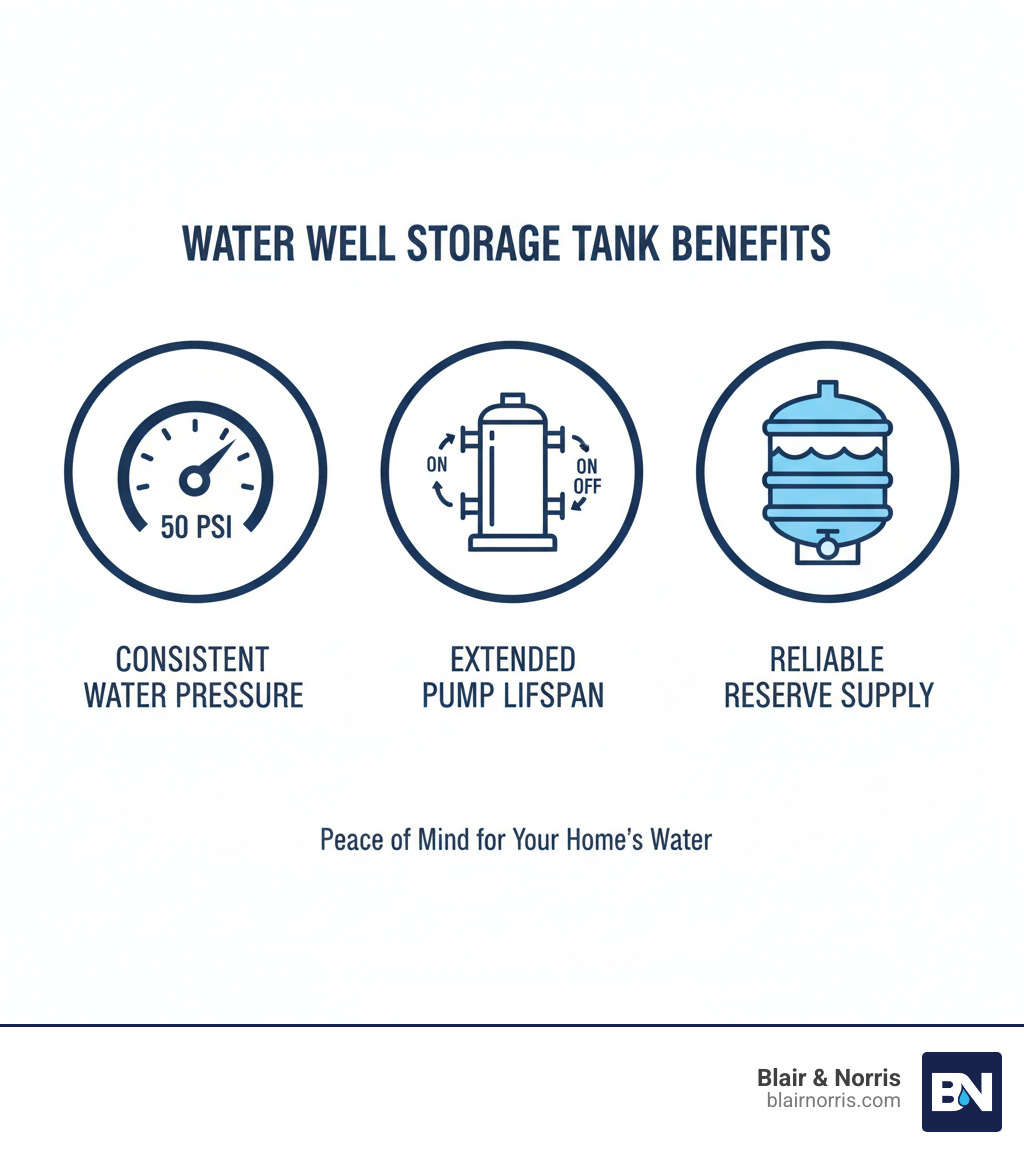
Main Benefits of a Water Well Storage Tank:
- Consistent Water Pressure: Eliminates pressure drops when multiple faucets run.
- Protected Well Pump: Reduces cycling and extends pump lifespan by years.
- Reliable Water Reserve: Provides a backup supply during peak use or well recovery.
- Cost Savings: Often cheaper than drilling a new well or hydrofracking.
Two Primary Types:
- Pressure Tanks (20-120 gallons): Maintain system pressure, ideal for most homes.
- Non-Pressurized Cisterns (500-5,000+ gallons): Large reserves for low-yield wells.
If you’re one of the millions of American households that rely on a private well, a storage tank isn’t just helpful—it’s often essential. Most homeowners don’t think about their well water system until the pressure drops mid-shower or the washing machine can’t fill. That’s when the value of proper water storage becomes crystal clear.
I’m Mack Blair, and with over 30 years in the well and pump industry here in Central Indiana, I’ve seen countless homeowners solve their water supply issues by adding the right storage tank. Let me walk you through everything you need to know to make the best choice for your home.
The Heart of a Healthy Well: Why Storage Tanks are Essential
If your well pump is the muscle of your water system, your water well storage tank is the brain. It makes everything work smoothly, protecting your equipment while keeping water flowing steadily. At Blair & Norris, we’ve seen how the right storage tank can transform a frustrating water supply into one you don’t have to think about.
Without a storage tank, your well pump would fire up every time you turned on a faucet. This is like starting your car for every block you drive—exhausting for the equipment and expensive for you. A storage tank lets your pump fill a reserve and then rest, which is key to an efficient, long-lasting system. The benefits go beyond just protecting your pump. You get consistent water pressure (no sudden pressure swings during showers), a reliable water reserve for peak demand times, and even some backup water if the power goes out. For homes with wells that can’t keep up with daily demands, a storage tank is essential, allowing the well to recover and store water during low-demand periods.
The Problem with Low-Yielding Wells
Some wells, especially older ones, can’t produce water fast enough for a modern household. These “low-yielding wells” cause frustrating problems. The first sign is usually fluctuating pressure that drops to a trickle when multiple faucets are on. If you’re dealing with this, our guide on how to increase low well water pressure can help.
Another major issue is pump short cycling, where the pump turns on and off constantly to keep up with demand. This surge of electricity and mechanical stress is the number one cause of premature pump failure we see. In the worst-case scenario, you can run completely out of water mid-shower. This constant starting and stopping also strains every component and can cause the pump to pull in sediment, damaging the pump and the well itself.
Storage Tanks vs. More Drastic Measures
Homeowners with low-yielding wells often think they need to drill a new well or try hydrofracking. These are expensive gambles that don’t always pay off. Drilling a new well can be a major investment and outcomes vary by geology. Hydrofracking is also costly, and the results are unpredictable and can even damage the ground structure.
Compare that to installing a water well storage tank. The cost is significantly lower, and typically provides a predictable improvement in usable supply/pressure when properly designed. We aren’t gambling on finding new water; we’re intelligently storing what your well already produces.
| Feature | Water Well Storage Tank | Drilling a New Well | Hydrofracking |
|---|---|---|---|
| Cost | Much lower, predictable investment | High and unpredictable (often $10,000-$30,000+) | High and unpredictable |
| Success Rate | Guaranteed improvement in availability and pressure | No guarantee of finding sufficient water | No guarantee of increasing yield |
| Well Impact | Protects your existing well, extends its life | Abandons existing investment | Can affect ground structure |
| Installation Time | Usually completed in one day | Can take weeks | Requires specialized equipment |
| Environmental Impact | Minimal, promotes conservation | New drilling footprint | High-pressure injection carries risks |
The storage tank approach protects your existing well by preventing over-pumping. The pump runs at a comfortable pace to fill the tank, allowing the well to recover naturally. This extends its productive life and is a reliable, cost-effective solution that works with your well, not against it.
Pressurized vs. Non-Pressurized: Choosing Your Tank Type
When selecting a water well storage tank, the first choice is between a pressurized tank and a non-pressurized cistern. The right answer depends on your well’s output, your household’s water needs, and your system goals.
Pressure Tanks: The Key to Consistent Flow
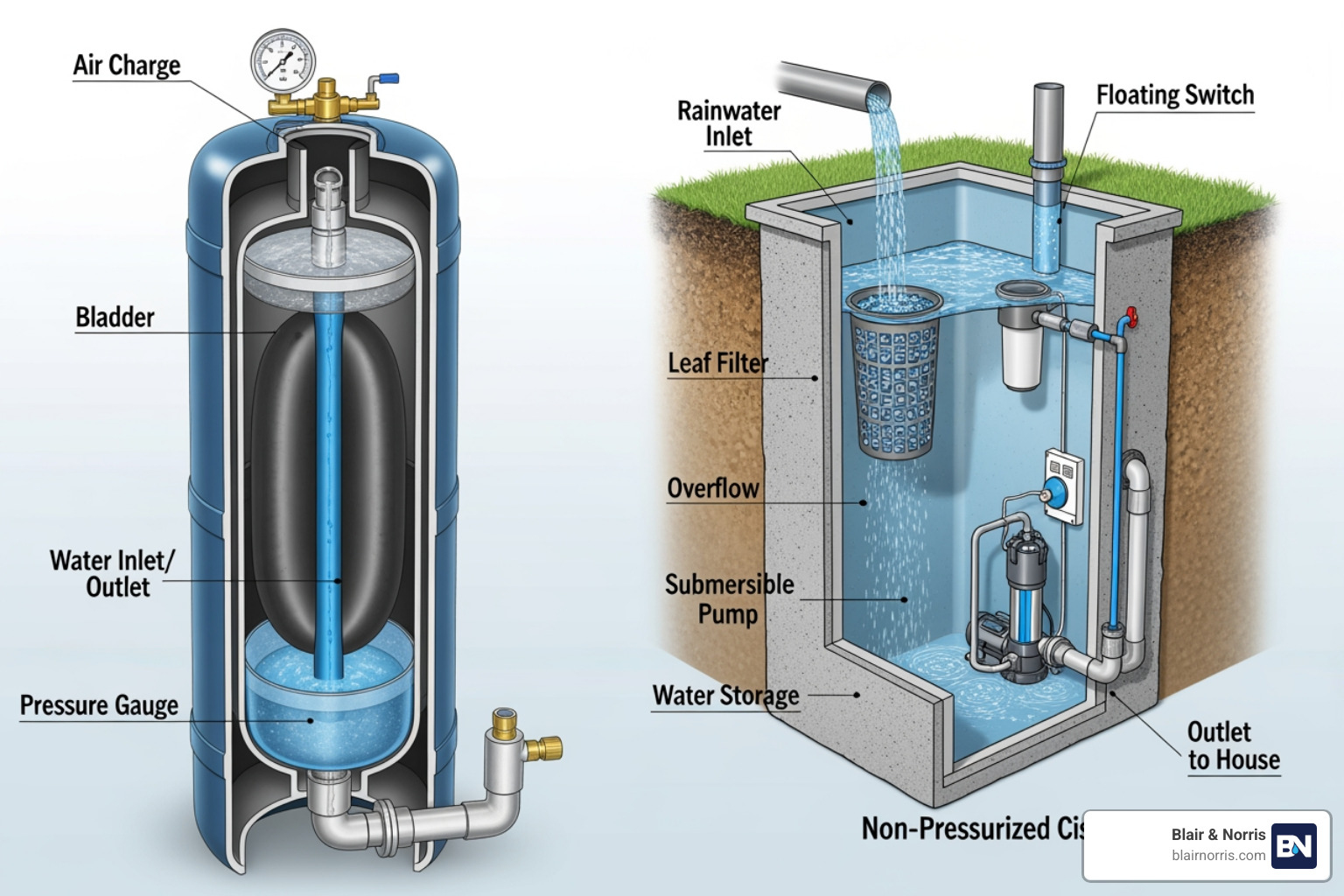
Pressure tanks are the most common type of residential water well storage tank. They maintain consistent water pressure and protect your pump from excessive wear. Inside the tank, water pumped from the well compresses a pocket of air. When you open a faucet, this compressed air pushes water out, providing instant flow without the pump needing to start.
A pressure switch monitors the tank’s pressure, telling the pump when to turn on (at the cut-in pressure, e.g., 40 psi) and off (at the cut-out pressure, e.g., 60 psi). This cycle reduces pump cycling, preventing the constant starting and stopping that wears out pumps prematurely. A properly sized pressure tank can extend a pump’s life from just a few years to 15-20 years. A check valve works with the tank to prevent backflow into the well, maintaining system pressure. You can learn more about how these pieces fit together in our guide on components of a water well system.
Most modern pressure tanks are either bladder or diaphragm tanks. Bladder tanks use a replaceable rubber bag to hold water, separating it from the air. This prevents waterlogging and makes maintenance easier. Diaphragm tanks use a fixed rubber sheet; if it fails, the whole tank usually needs replacement. For this reason, we often recommend bladder tanks for their longer-term value.
Non-Pressurized Cisterns: Your Personal Water Reservoir
Non-pressurized tanks, or cisterns, are large-capacity reservoirs (500 to 5,000+ gallons) that act like a private water tower. They don’t hold pressure themselves but are game-changers for low-yielding wells.
A cistern allows a slow well (e.g., 2-3 gallons per minute) to fill the tank over many hours. When you need water, a separate booster pump draws from the cistern and delivers it to your home under high pressure. This system prevents the well from being over-pumped, extending its life and ensuring you never run out of water. It’s a reliable solution that avoids the high cost and uncertainty of drilling a new well.
Some homeowners also pair storage with supplemental sources, where permitted. The EPA provides helpful information on private drinking water wells that includes guidance on supplemental water sources. The typical setup involves the well pump filling the cistern, and a booster pump sending that water to a small pressure tank that services the house. This two-stage approach provides both massive storage and steady pressure.
If your well has a good flow rate, a pressure tank is likely sufficient. But for slow wells, rainwater harvesting, or maximum water security, a non-pressurized cistern system is the superior solution.
Sizing and Selecting the Perfect Water Well Storage Tank
Choosing the right water well storage tank is about matching the tank to your family’s water needs and your well’s capabilities. Proper sizing and material selection ensure you’ll have reliable water for decades, while the wrong choice can lead to a constantly cycling pump or a tank that can’t keep up.
How to Calculate the Right Size for Your Water Well Storage Tank
Correctly sizing your tank is critical for a smooth-running system. The calculation involves two key factors: your household’s water use and your well’s flow rate.
First, consider your peak demand. While an average person uses 80-100 gallons daily, what matters is the simultaneous use of showers, washing machines, dishwashers, and faucets during busy times. A ten-minute shower alone can use 20 gallons. Next, we need your well’s flow rate in gallons per minute (GPM). A well producing only 2 GPM can’t meet a peak demand of 5 GPM without a storage tank to bridge the gap.
For pressure tanks, the key metric is “drawdown capacity”—the amount of water delivered before the pump turns on. This is calculated based on pump GPM and pressure switch settings (e.g., 40/60 psi) to ensure the pump runs for at least one minute per cycle, preventing damaging short cycling. If you’re replacing an old tank, our guide on well pressure tank replacement can help ensure you get the sizing right.
For non-pressurized cisterns with low-yield wells, the goal is to store enough water to cover peak usage plus a buffer. A 500-gallon tank is a realistic minimum for an average family’s daily reserve, giving the well ample time to refill the tank slowly. The math can be complex, so professional guidance is recommended to create a customized solution.
Choosing the Best Material and Features
Your tank’s material affects its longevity, maintenance needs, and water quality. Here are the common options:
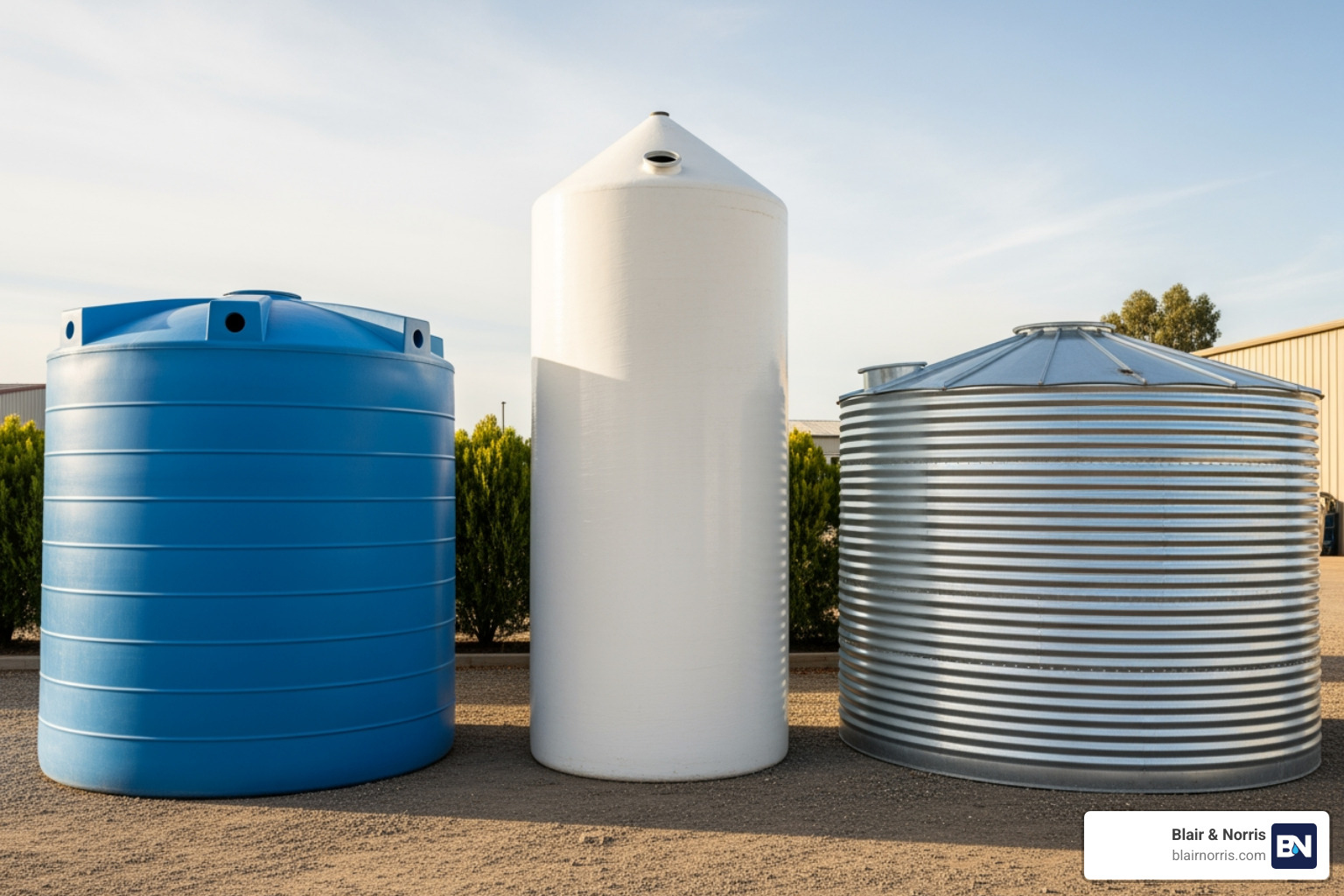
- Plastic (HDPE): Lightweight, corrosion-proof, and popular for cisterns. Dark-colored tanks are best for outdoor use as they block UV light and prevent algae growth. You can review technical specifications for a typical HDPE tank from manufacturers like this example.
- Fiberglass: A great middle-ground, offering excellent durability and corrosion resistance without the weight of steel.
- Steel: Traditional galvanized steel can rust over time. Stainless steel is a premium, rust-proof option that will likely outlast other materials. Composite tanks offer a modern, lightweight, and rust-free alternative.
- Concrete: Extremely durable and provides natural temperature insulation when buried. However, they are heavy, costly, and require specialized installation.
Always look for a strong manufacturer’s warranty and ensure any tank used for drinking water is certified as potable. Our experience in Central Indiana helps us recommend materials that stand up to our climate and provide long-term value.
Installation and Long-Term Care for Your Storage System
Installing a water well storage tank correctly is as important as choosing the right one. Professional installation ensures your system operates efficiently and safely, while a solid maintenance routine guarantees long-term reliability and clean water.
Above-Ground vs. Underground Installation
Deciding whether to install your tank above or below ground depends on your budget, property, and aesthetic preferences.
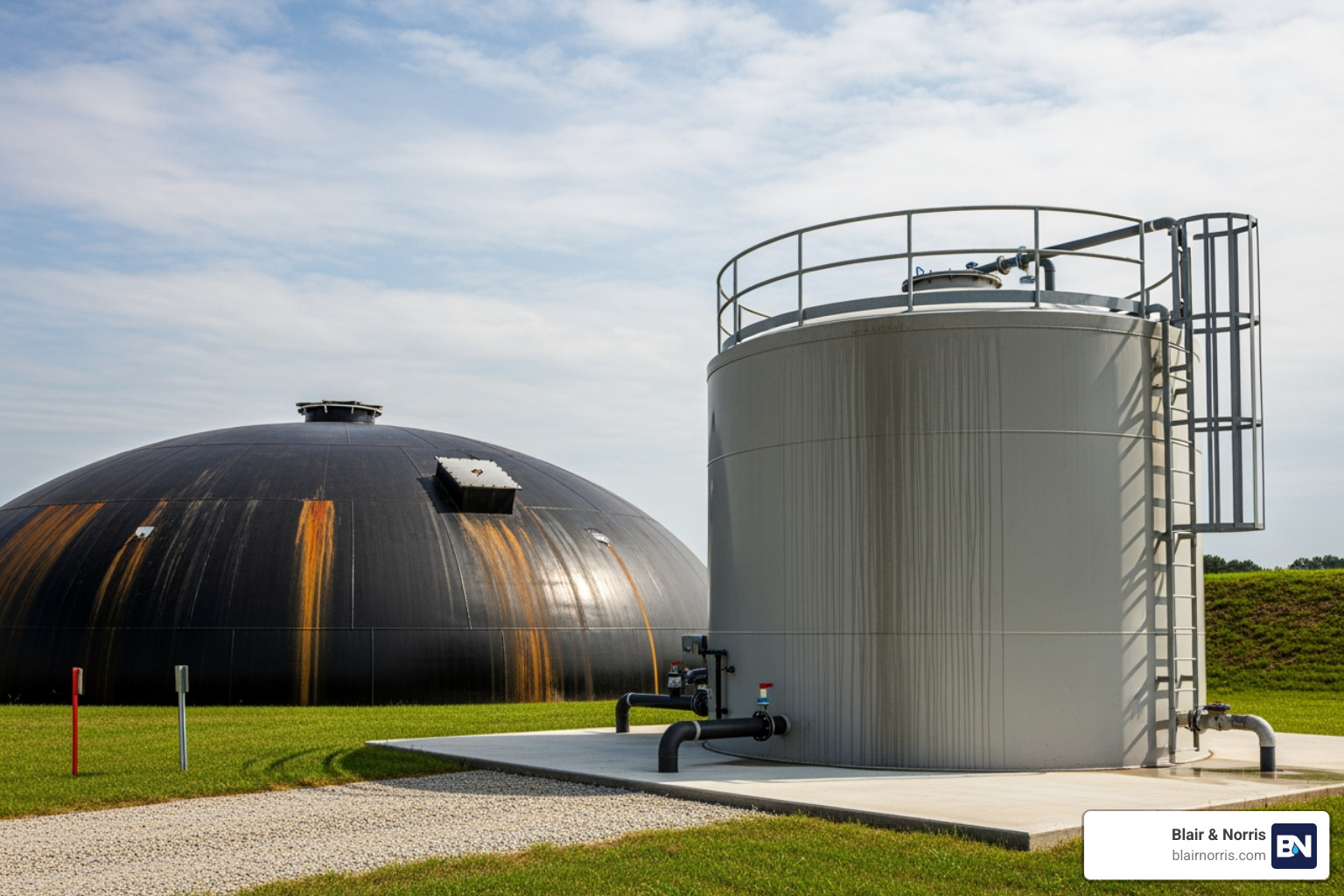
- Above-ground tanks are less expensive to install and offer easy access for maintenance. However, they take up yard space and require protection from freezing in Indiana’s winters, such as insulation or heat tape.
- Underground tanks are hidden from view and naturally insulated by the earth, keeping water cool and preventing freezing. The trade-offs are higher installation costs due to excavation and more complex access for repairs.
Regardless of the method, it’s crucial to check local building codes. Our team at Blair & Norris handles all permitting to ensure your installation is fully compliant.
Essential Maintenance and Troubleshooting
A well-maintained water well storage tank system requires regular check-ups to prevent major problems. Understanding these basics is key to a healthy system, and you can learn more about the importance of water well maintenance.
- Annual Inspection: Visually inspect the tank for rust or damage, and check all pipes and fittings for leaks. For pressure tanks, verify the air pre-charge is correct (about 2 psi below the pump’s cut-in pressure).
- Cistern Cleaning: Non-pressurized cisterns should be drained and cleaned on a periodic schedule based on sediment/water quality and manufacturer guidance.
- Component Checks: Ensure pressure switches and check valves are functioning correctly. A faulty switch or valve is a common cause of pressure fluctuations.
- Troubleshooting: Inconsistent pressure or a constantly cycling pump often points to a waterlogged pressure tank (one that has lost its air charge). This is a common and usually simple fix.
- Water Quality: Any change in your water’s color, odor, or taste requires immediate investigation. It could indicate sediment buildup, contamination, or a problem with the well itself. The EPA provides helpful information on private drinking water wells for water quality concerns.
Catching small issues early saves money and prevents emergencies. If you’re not comfortable performing these checks, professional maintenance is a wise investment.
Conclusion
Your home’s water supply shouldn’t be a source of stress. A water well storage tank is the key to changing an unreliable well into a system that delivers consistent pressure, protects your pump, and provides a dependable water reserve. Whether you need a pressure tank to stop short cycling or a cistern to solve a low-yield well problem, the right storage solution saves money and provides peace of mind.
For over 75 years, our family at Blair & Norris has helped homeowners across Central Indiana solve their well water challenges. We’ve seen how a properly designed storage system can fix pressure issues and prevent the need for costly measures like drilling a new well. It’s the kind of honest, practical advice we’ve built our reputation on.
If you’re tired of pressure drops, worried about your pump’s lifespan, or concerned about running out of water, it’s time to explore your storage options. Our team is available 24/7 to provide expert guidance custom to your home and well.
Contact us today for expert well and pump services and let’s discuss how the right water well storage tank can bring reliability to your home’s water system. Give us a call or visit our contact page—we’re here to help, day or night.