
More Than Just a Hole in the Ground
How deep are water wells? Most residential wells fall between 100 and 500 feet, but depth ultimately depends on local geology, water table behavior, and the well’s required yield. Here’s what you need to know:
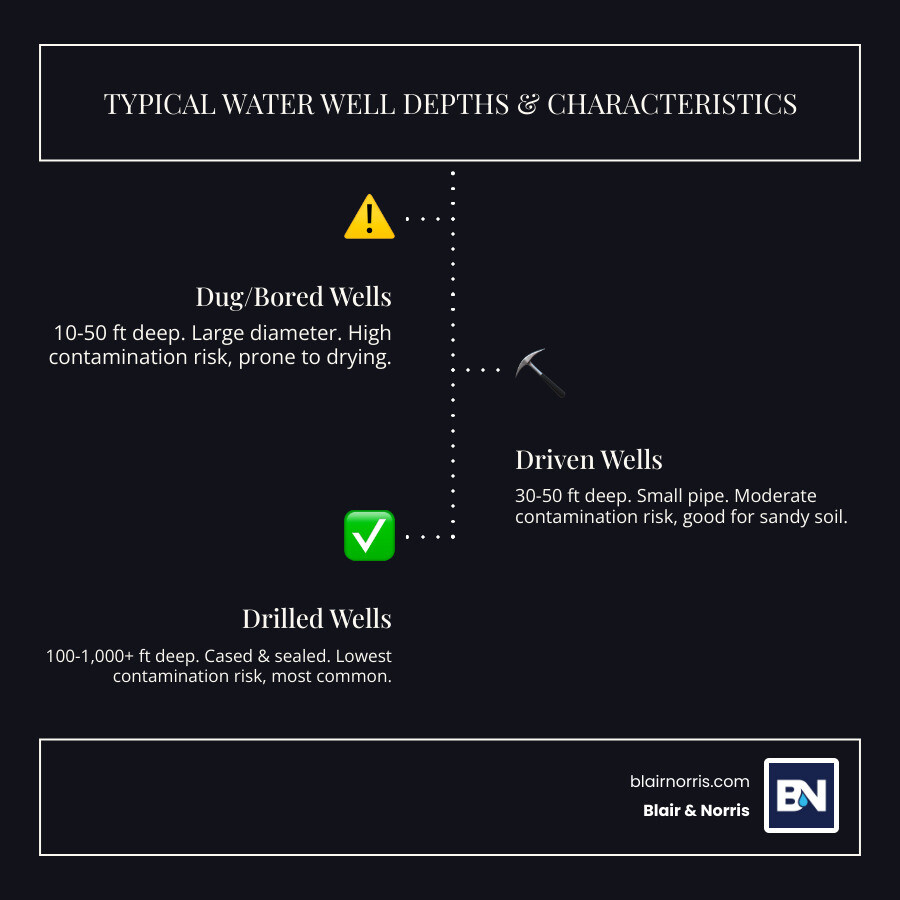
- Shallow wells: 10-50 feet (dug or bored wells)
- Moderate wells: 30-100 feet (driven wells)
- Deep wells: 100-1,000+ feet (drilled wells)
- National average: Across the U.S., domestic well depths vary widely by geology; one USGS analysis reports a median domestic-supply well depth of 142 feet.
- Median depth: 142 feet for domestic supply wells
Well depth isn’t random—it’s set by aquifer conditions and the well water system components needed to deliver steady flow safely. A well that’s too shallow might run dry during droughts or pull in contaminated surface water. One that’s too deep could cost thousands more to drill and maintain without providing better water quality.
Depth varies sharply by region; the most reliable way to estimate depth is to review local well records and nearby drilling logs. Some places require drilling more than 1,000 feet to reach a reliable water source. In Central Indiana, the geology can vary dramatically from one property to the next, which is why local expertise matters.
I’m Mack Blair, and over my 30+ years drilling wells across the Midwest, I’ve learned that understanding how deep are water wells in your specific area is the first step to ensuring reliable, safe water for your home. Every property tells a different story when we start drilling, and that’s why a one-size-fits-all answer never works.
What Determines Water Well Depth?
When we talk about how deep are water wells, we’re really talking about a complex interplay of natural forces and human needs. The perfect depth for your well isn’t just about hitting water; it’s about hitting enough water, of good quality, that’s sustainable for your household. Several factors weigh heavily into this decision.
First and foremost, the local geology and the water table beneath your property are the primary determinants. When asking how deep water wells are, the key variable is the aquifer: its depth, recharge, and how consistently it can supply water. The depth and yield of these aquifers vary greatly. The intended use of the water—whether it’s for a single home, a farm, or a small community—also influences how deep we need to drill. Finally, understanding the risks of surface contamination helps us determine a safe depth that acts as a natural barrier. For a deeper dive into where your well water comes from, check out our guide on Where Does Well Water Come From?. The CDC also offers valuable guidance on proper well siting to prevent contamination, which is directly related to depth considerations. You can find more information on their website: CDC guidance on well siting.
How does the geology of an area influence well depth?
The ground beneath us is like a multi-layered cake, and each layer plays a role in determining well depth.
- Bedrock: In many parts of Central Indiana, we often drill into bedrock. Water in bedrock isn’t typically found in large underground lakes, but rather flows through cracks and fissures in the rock. Finding these water-bearing fractures can require significant depth. If rock layers don’t transmit water well, drillers may need to reach a different water-bearing zone where fractures carry water more consistently.
- Soil Composition: Different soil types hold water differently. Sandy and gravel layers are highly permeable, meaning water can flow through them easily. If we find thick, water-saturated sand or gravel, we might not need to go as deep. Clay layers, on the other hand, are less permeable and can impede water flow, often requiring us to drill past them to reach a more productive aquifer.
- Fractured Rock: As mentioned, water in bedrock often resides in fractures. The size, number, and interconnectedness of these fractures directly affect how much water a well can yield.
- Permeability: This is the measure of how easily water can pass through a material. High permeability means less resistance to water flow, often leading to shallower wells if the water source is abundant. Low permeability means more resistance, potentially requiring deeper drilling or larger well screens to capture enough water.
The geology beneath your specific property in places like Carmel, Fishers, or Zionsville, for example, can be quite different even within a few miles. This is why a professional assessment is crucial before drilling begins.
Why is the water table level so important?
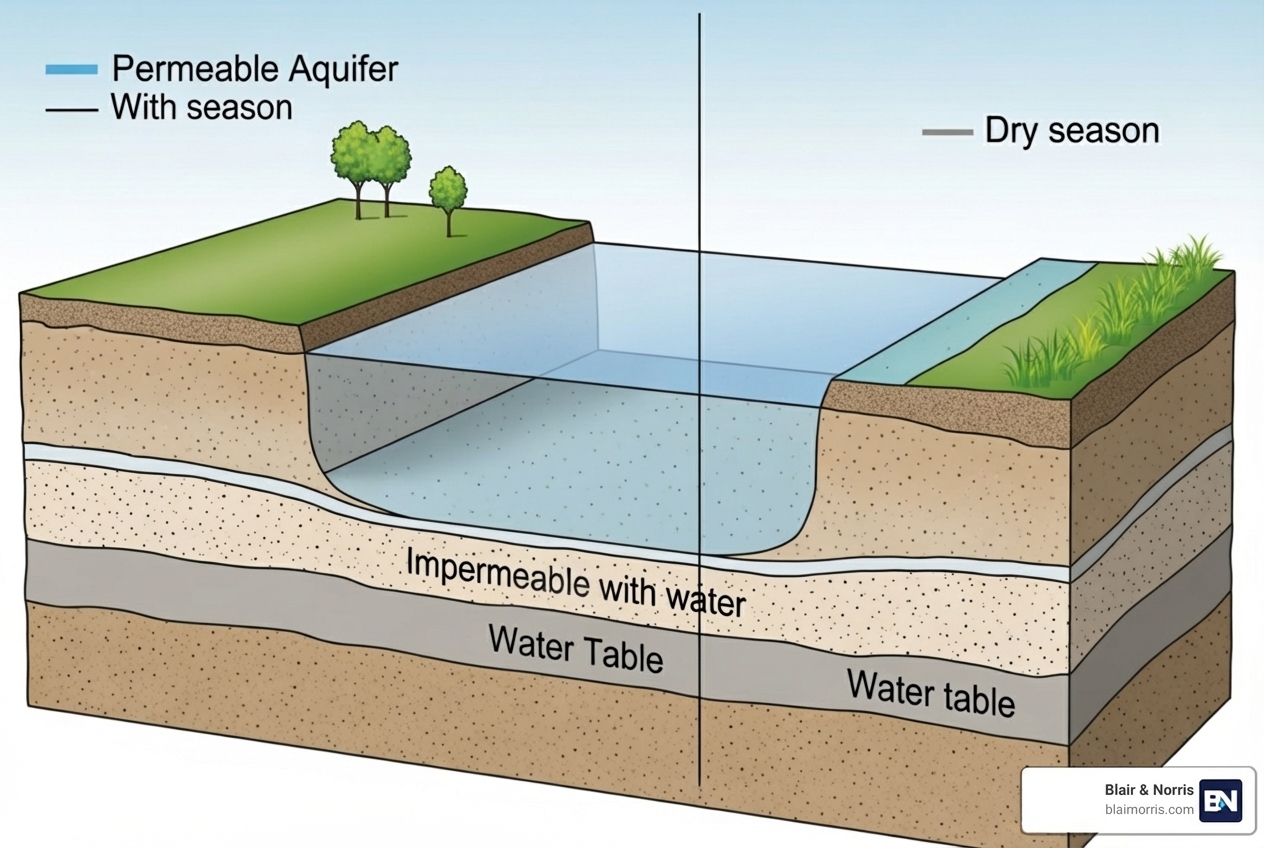
The water table is the upper surface of the zone of saturation, where the pores and fractures in the ground are saturated with water. Think of it as the “level” of underground water. But this level isn’t static; it’s a dynamic, fluctuating entity.
- Seasonal Variations: The water table naturally rises and falls throughout the year. It’s typically higher during wet seasons (spring rainfall, snowmelt) and lower during dry spells (late summer, fall). A well drilled just to meet the current water level might face scarcity during dry weather. We always aim to drill deeper than the historical low water table to ensure a consistent supply, even during droughts.
- Drought Impact: Prolonged droughts can significantly lower the water table, sometimes causing shallower wells to run dry. Drilling deeper provides a buffer against these natural fluctuations, ensuring your water supply remains reliable even when nature is parched.
- Pumping Tests: Before we decide on the final depth, we conduct pumping tests. These tests help us understand how much water an aquifer can yield and how much the water level drops when water is continuously pumped out. This helps us predict the well’s performance under stress.
- Cone of Depression: When water is pumped from a well, the water table around it lowers, creating a “cone of depression.” If wells are too close together or too shallow, their cones of depression can interfere, reducing the water yield for all of them. This is why proper well spacing and depth are important.
- Ensuring a Year-Round Supply: Understanding and accounting for the water table’s behavior is critical to ensure your well provides a dependable, year-round water supply for your home in areas like Avon, Plainfield, or Lebanon.
Types of Water Wells and Their Typical Depths
When exploring how deep are water wells, it’s important to understand that not all wells are created equal. The method of construction largely dictates their typical depth, cost, and susceptibility to contamination. We primarily deal with modern drilled wells, but it’s helpful to know the differences. Our article on Deep Well vs Shallow Well: Key Differences Explained offers more insights. For a general overview of groundwater wells, the USGS provides excellent information on their website: USGS Groundwater Wells information.
| Well Type | Typical Depth (Feet) | Construction Method | Contamination Risk | Cost (General) |
|---|---|---|---|---|
| Dug/Bored | 10-50 | Shovel, backhoe, excavator | High | Low |
| Driven | 30-50 | Driving small-diameter pipe into earth | Moderate | Moderate |
| Drilled | 100-1,000+ | Rotary or percussion drilling rig | Low | High |
Dug/Bored Wells
Dug wells are the oldest and most basic type of well. They are created by excavating a large-diameter hole, often by hand or with a backhoe, until water is reached.
- Shallow Depth (10-50 feet): These wells are typically shallow, usually less than 50 feet deep. They tap into shallow, unconfined aquifers, meaning the water source is close to the surface.
- Large Diameter: Dug wells often have a large diameter, typically around 3 feet wide. This large opening allows them to draw water from less permeable materials where water flows slowly.
- Susceptible to Contamination: Because they are shallow and not continuously cased, dug wells are highly vulnerable to contamination from surface runoff. Rainwater can pick up harmful bacteria, pesticides, and chemicals from the land’s surface and seep directly into these wells. This makes them a less desirable option for drinking water, especially in developed areas like those around Indianapolis.
- Prone to Drying Up: Their reliance on shallow aquifers means they are very susceptible to seasonal water table fluctuations and droughts. If the water table drops, a dug well is often the first to run dry.
While historically common, we generally don’t recommend dug wells for new drinking water supplies in our service areas of Indiana due to their inherent risks.
Driven Wells
Driven wells are a step up in construction from dug wells, offering better protection but still limited in depth.
- Shallow to Moderate Depth (30-50 feet): These wells are typically constructed by driving a small-diameter pipe (often 1.25 to 2 inches) into soft, unconsolidated earth, such as sand or gravel. They are usually between 30 and 50 feet deep.
- Small Diameter Pipe: The pipe is fitted with a screened drive point at the bottom, which allows water to enter while keeping out sediment.
- Suitable for Sandy Soil: Driven wells are best suited for areas with soft, sandy soils where a drill rig isn’t necessary, and the water table is relatively shallow.
- Higher Contamination Risk than Drilled Wells: While continuously cased, they still draw water from near-surface aquifers, making them more susceptible to contamination than deeper drilled wells. Surface contaminants can still seep into these shallow groundwater sources.
Driven wells are less common for new residential installations today, especially where reliable, deeper water sources are available.
Drilled Wells
Drilled wells are the most common and reliable type of well for private residences, offering the best protection against contamination and consistent water supply.
- Deep (100-1,000+ feet): These wells are constructed using powerful rotary or percussion drilling rigs. They can reach depths ranging from 100 feet to well over 1,000 feet, tapping into deep, confined aquifers that offer more stable water levels and better protection from surface contamination. In Central Indiana, residential wells often fall within the 100-500 foot range, but we’ve certainly drilled deeper in rocky regions.
- Most Common Residential Type: Their ability to access deeper, more reliable water sources makes them the preferred choice for homes and businesses in our service area, including towns like Noblesville, Westfield, and Greenwood.
- Casing and Grout Seal: A critical component of a drilled well is the casing, a tube-shaped structure (usually 4, 5, or 6 inches in diameter) that maintains the well opening and prevents the ground from collapsing. Grout, typically made of bentonite clay, is then placed around the outside of the casing. This creates a watertight seal that prevents surface water and contaminants from traveling down the outside of the casing and mixing with the clean drinking water. This continuous casing and grout seal is key to their safety.
- Lowest Contamination Risk: Due to their depth and robust construction with continuous casing and grout, drilled wells have the lowest risk of contamination from surface sources. The layers of soil and rock above act as natural filters, and the sealed casing prevents direct entry of pollutants.
For most homeowners in our service area, a properly drilled well is the gold standard for a safe, abundant, and reliable water supply.
How Deep Are Water Wells for Residential Use?
Understanding how deep are water wells for residential use is about balancing the need for reliable, clean water with the practicalities of drilling and maintenance. Most homeowners want to know what to expect for their property. For a complete understanding of what makes up your well system, refer to our guide on the Components of a Water Well System. The USGS also offers comprehensive studies on groundwater depth across the nation, providing valuable context for understanding local conditions: USGS study on groundwater depth.
What is the average depth for how deep are water wells?
While we’ve established that there’s no single answer, we can certainly give you some averages and typical ranges.
- National Average (150-300 feet): On average, most residential water wells in the United States fall between 150 and 300 feet deep. This is a good general benchmark, but averages can be misleading when local geology varies so much.
- Average Depth Range (100-500 feet): More broadly, most water wells for homes are dug between 100 and 500 feet deep. Some sources even suggest a range of 100 to 800 feet for private residences. The median depth for all domestic-supply wells across the U.S. is around 142 feet.
- Regional Variations: The depth can vary dramatically by region. For instance, in areas with abundant shallow aquifers or thick glacial deposits, wells might be shallower. In rocky or arid regions, wells can easily exceed 500 feet, sometimes even going over 1,000 feet. While we don’t operate in New England, their wells are often around 300 feet deep, serving as an example of regional differences. In Central Indiana, the depth depends heavily on whether we’re hitting unconsolidated aquifers (sand and gravel) or drilling into bedrock.
- Central Indiana Context: Our experience in Indianapolis, Carmel, Fishers, and surrounding communities like Danville and Greenfield shows that residential well depths commonly fall within the 100-500 foot range, but we always assess each property individually.
How does well depth affect water quality?
The depth of your well has a direct and significant impact on the quality of your water.
- Natural Filtration: As water percolates through layers of soil, sand, gravel, and rock, it undergoes a natural filtration process. Deeper wells benefit from more extensive natural filtration, which can remove many suspended solids, bacteria, and some chemicals.
- Protection from Surface Runoff: Shallow wells are highly susceptible to contamination from surface runoff containing pesticides, fertilizers, animal waste, and other pollutants. Deeper wells provide a greater buffer, making it much harder for these surface contaminants to reach your drinking water source. Proper well location, ensuring rainwater flows away from the well, is also crucial.
- Bacteria and Nitrates: Shallow wells are more prone to bacterial contamination (like E. coli) and liftd nitrate levels, often from agricultural runoff or septic systems. Deeper aquifers are generally more protected from these biological and chemical pollutants.
- Mineral Content: While deeper wells often offer better protection from surface contaminants, they can sometimes have higher concentrations of naturally occurring minerals. As water travels through rock formations, it dissolves minerals. This can lead to “hard water” (high in calcium and magnesium) or liftd levels of iron, manganese, or other dissolved solids. While many of these are harmless, they can affect taste, cause staining, and lead to scale buildup in pipes and appliances.
- Indiana Specifics: In parts of Central Indiana, we might encounter limestone bedrock, which can contribute to hard water at certain depths. Understanding these local geological nuances helps us anticipate water quality characteristics.
Are deeper wells always better for drinking water?
This is a common question, and the answer, like so much with wells, is nuanced.
- Pros (Purity, Reliability):
- Increased Purity: As discussed, deeper wells generally offer better protection from surface contamination due leading to cleaner water.
- Greater Reliability: Deeper aquifers are typically less affected by droughts and seasonal fluctuations, providing a more consistent and reliable water supply.
- Less Susceptible to Interference: They are also less prone to interference from nearby wells.
- Cons (Higher Mineral Content, Cost):
- Higher Mineral Content: Deeper water can have a greater concentration of dissolved minerals. While often not harmful, this can lead to hard water, off-tastes, and staining, potentially requiring water treatment.
- Increased Cost: Drilling deeper costs more per foot, requires more casing, and necessitates a larger, more powerful pump system, which in turn means higher annual running expenses for electricity.
- Water Treatment Needs: If a deep well yields water with high mineral content, we might recommend a water softener or other treatment systems to improve its usability and taste. Sometimes, a shallower, well-protected aquifer might yield perfectly good water without the added costs and mineral issues of a very deep well.
- Pumping Costs: Pumping water from greater depths requires more energy. So, while a very deep well offers excellent reliability, the long-term energy costs for your pump system will be higher.
Our goal is to find the optimal depth for your property—deep enough for safety and reliability, but not excessively deep if a suitable shallower source exists. It’s about finding that sweet spot.
The Financial and Regulatory Side of Well Depth
The decision of how deep are water wells is not just about geology and water quality; it also has significant financial and regulatory implications. We want to ensure you’re well-informed about all aspects of your well project.
How does well depth impact the cost of drilling and maintenance?
The relationship between well depth and cost is straightforward: generally, the deeper we drill, the more expensive the project becomes.
- Drilling Costs: Drilling contractors typically charge per foot. As depth increases, so does the time spent drilling, the wear and tear on equipment, and the complexity of the operation. Encountering hard rock formations, common in some areas around Martinsville or Greencastle, can further increase drilling time and cost per foot.
- Casing Costs: Deeper wells require more casing to line the borehole and protect the water source. Casing is a significant material cost, and its price increases with both length and diameter.
- Pump Size and Power: Water needs to be lifted from the bottom of the well to the surface. The deeper the well, the more powerful the pump required. Submersible pumps are typically used for deep wells, and larger, more powerful pumps are more expensive to purchase and install. They also consume more electricity to operate, leading to higher annual running expenses. Our guide on The Well Drilling Cost Guide provides a detailed breakdown of these expenses.
- Long-Term Expenses: Beyond initial drilling and installation, deeper wells can incur higher maintenance costs over their lifespan. While they may offer greater reliability, the components (like pumps) are often more complex and costly to replace or repair. Increased electricity consumption for pumping is also a continuous long-term expense.
We always provide a transparent estimate that considers all these factors, custom to your specific property in places like Noblesville, Westfield, or Avon.
What are the regulatory requirements for how deep are water wells in Indiana?
Regulatory requirements are put in place to protect groundwater resources and ensure public health. In Indiana, specific rules govern well construction, including depth.
- Minimum Depth Rules: The Indiana Department of Natural Resources (DNR) oversees groundwater resources. While there isn’t a universal minimum depth for all wells, specific regulations often dictate setbacks from contamination sources, which indirectly influence effective depth. For instance, wells must be sited a certain distance from septic systems, feedlots, and other potential pollutants. These setback distances help ensure that even if a well isn’t incredibly deep, it’s sufficiently protected from surface or near-surface contamination.
- Casing Requirements: Indiana regulations specify requirements for well casing, including material, diameter, and how it must be installed and sealed. The casing must extend a certain distance above the ground and be properly grouted to prevent surface water infiltration.
- Setback Distances: These are crucial. Wells must be located away from potential contamination sources. For example, a well needs to be a minimum distance from a septic tank or drain field. These distances vary based on local ordinances and state guidelines.
- Well Records: All newly drilled wells in Indiana must have a well record filed with the Indiana DNR. This record includes vital information such as the well’s depth, diameter, geological formations encountered, casing details, and pump information. This database is a valuable resource for understanding groundwater conditions across the state. You can often access the Indiana DNR Water Well Record Database to research existing wells in your area, which can give us insights into typical depths and conditions for your property.
Compliance with these regulations is not just about avoiding fines; it’s about ensuring the long-term safety and sustainability of your private water supply. As experienced well drillers in Indiana, we are intimately familiar with all state and local requirements.
Conclusion: Finding the Right Depth for Your Well
Understanding how deep are water wells is far more involved than simply digging until water appears. It’s a critical decision that impacts the reliability, quality, and cost-effectiveness of your water supply for decades to come. From the geological layers beneath your property to the fluctuations of the water table and the various types of wells available, every factor plays a role in determining the optimal depth for your specific needs.
We’ve explored how geology dictates access to aquifers, how water table levels influence year-round supply, and the distinct characteristics of dug, driven, and drilled wells. We’ve also highlighted the crucial link between well depth and water quality, and the financial and regulatory considerations that shape the entire process.
For homeowners in Central Indiana, from Indianapolis to Columbus, and all the communities in between, finding the right depth for your well is an investment in your property’s future and your family’s health. It requires professional assessment, local expertise, and a commitment to quality that ensures your water system will serve you well for generations.
At Blair & Norris, we bring over 75 years of family-owned experience to every well-drilling project. Our 24/7 live phone support means we’re always here to answer your questions and provide the ethical, high-quality service you deserve. We understand the unique hydrogeology of Indiana and are dedicated to providing solutions that are not just effective but built to last.
If you’re considering a new well, need an assessment of an existing one, or simply have more questions about how deep water wells are in your area, don’t hesitate to reach out to us. Blair & Norris is your trusted partners in water well solutions.