
Why Well Pump Cold Weather Protection Matters
Protecting your well pump cold weather performance is critical for a reliable water supply during Indiana’s harsh winters. When temperatures drop below freezing, water in your pipes can freeze and expand. This leads to burst pipes, cracked pump casings, and costly damage, leaving you without water.
Quick Answer: Protecting Your Well Pump in Cold Weather
- Insulate all exposed pipes with foam sleeves or heat tape
- Keep well houses heated above 40°F using space heaters or heat lamps
- Maintain water flow by letting faucets drip during extreme cold
- Drain outdoor spigots and disconnect garden hoses before winter
- Schedule a pre-winter inspection to identify vulnerable components
What Happens When Well Systems Freeze?
Freezing temperatures pose several serious risks for well pump systems:
- Frozen pipes can burst as water expands, causing extensive property damage
- Pump components like pressure switches and tanks can crack or fail
- Water supply loss leaves you without water for drinking, bathing, and daily needs
- Repair costs can run into thousands of dollars for burst pipes and damaged equipment
Vulnerable components include above-ground pipes, pressure tanks in unheated areas, and the pressure switch pipe. As water cools, it becomes denser, forcing your pump to work harder against the threat of ice.
I’m Mack Blair, and with over 30 years in Central Indiana’s well industry, I’ve seen many emergencies from overlooked winter preparation. From frozen pressure switches to burst pipes causing thousands in damage, I’ve helped families restore their water and implement strategies to prevent future problems.
Understanding the Risks: How Cold Weather Affects Your Well System
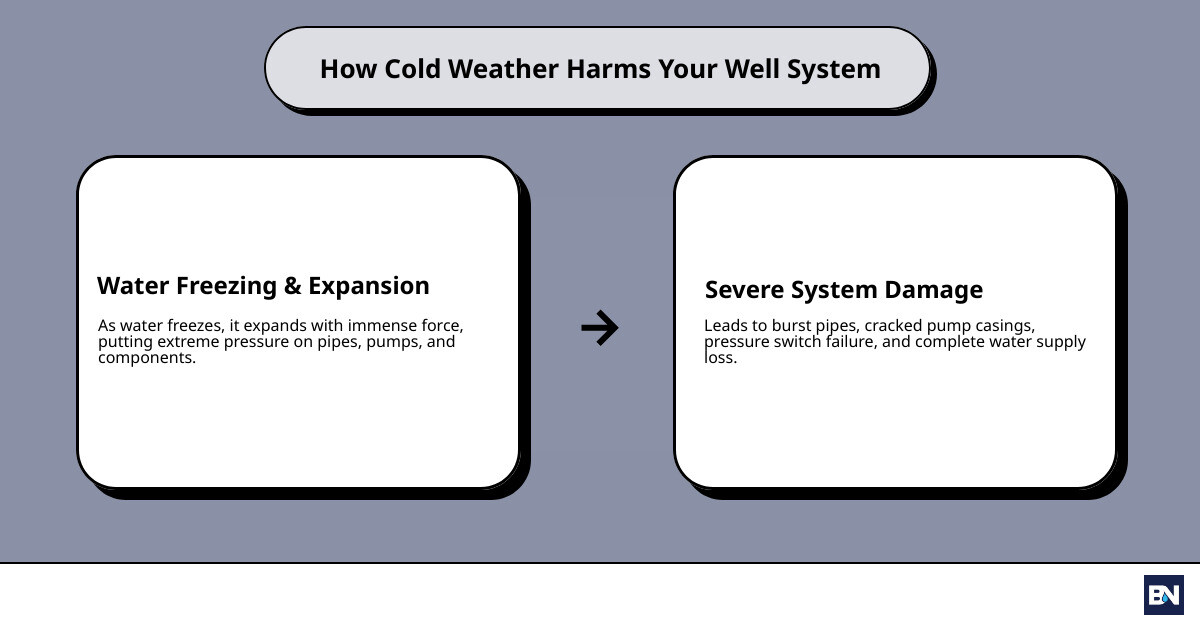
For Indiana homeowners with private wells, winter poses unique challenges. The core problem is simple physics: water expands when it freezes. This expansion exerts immense pressure on pipes, valves, and pump components, turning a small issue into a major plumbing emergency.
When water inside copper or PVC pipes turns to ice, it pushes outwards with incredible force, causing pipes to crack or burst. This leads to significant water damage once the ice thaws. The well pump and its components are also at risk. A partially frozen pump can suffer internal damage not visible until complete failure. The pressure tank, if in an unheated space, is also vulnerable, which can affect your home’s water pressure.
Colder water is denser, forcing your pump to work harder and shortening its lifespan. Frozen ground can also affect pipes that aren’t buried deep enough, hindering system efficiency. In the Indianapolis area, we’ve seen that uninsulated pipes, wellheads, and pressure tanks are most susceptible. Repair costs for burst pipes and damaged components often far exceed the expense of prevention.
How Different Well Pumps Handle Cold Weather
Not all well pump systems are created equal when it comes to battling the cold. Understanding your system is the first step in effective well pump cold weather protection.
Submersible Pumps: These pumps sit deep in the well, below Indiana’s frost line (32-42 inches), so the pump itself is protected. The vulnerability is the water supply pipe connecting the pump to your home. If it’s not buried deep enough, it can freeze. The well casing can also be damaged by ice, though this is less common in deep wells.
Aboveground Jet Pumps: Jet pumps are located above ground (in a well house, basement, or utility room), exposing them to cold air. Their housing must be kept above 40 degrees Fahrenheit. The pump and its pipes are highly vulnerable to freezing without proper insulation or heat. Shallow wells, which often use jet pumps, are more prone to freezing than deeper wells.
Regardless of the pump type, any components above the frost line are at risk. This includes the wellhead, any exposed piping leading into your home, the pressure tank, and the pressure switch assembly. Even with a deep well, pipes that aren’t buried properly are vulnerable to cold snaps.
For a deeper dive into how your well system works, check out our guide on the Components of a Water Well System.
Telltale Signs Your System is at Risk of Freezing
Catching the signs of a freezing well system early can save you from costly repairs. Here are the most common indicators that your well pump cold weather protection might be failing:
- Reduced Water Pressure: A trickle from your faucet is often the first sign of ice blocking your pipes.
- Sputtering Faucets: Air mixed with water suggests ice is creating blockages and air pockets.
- No Water Flow: Dry faucets mean a complete blockage from a significant freeze.
- Visible Frost or Ice on Pipes: Check exposed pipes in unheated areas for frost or ice buildup—a clear warning.
- Pump Cycling Irregularly or Continuously: If your pump runs too often or continuously, it may have a freeze-related leak or be struggling to pull water through icy lines.
- Pressure Switch Freezing: The small pipe to the pressure switch is prone to freezing. Ice can stop the switch from working, cutting off your water.
- Cold Pressure Tank: A tank that’s cold to the touch indicates the water inside is near freezing.
These signs are your system’s distress call. Ignoring them can lead to much bigger problems.
Proactive Protection: A Homeowner’s Guide to Winterization
With Indiana’s freezing temperatures, proactive winterization is the best defense for your well system. Preparing before the cold sets in saves you from costly damage, water outages, and major headaches.
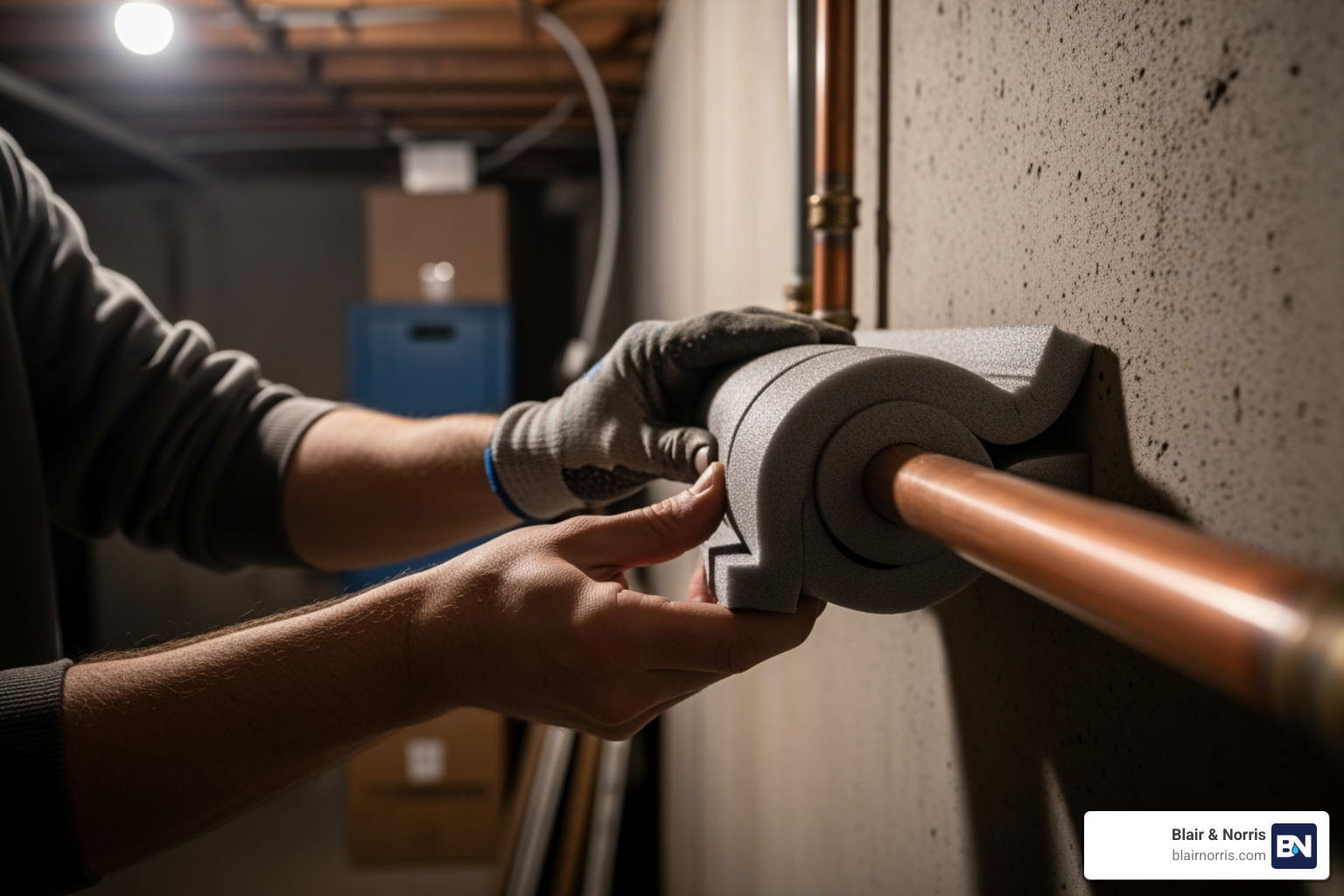
Complete a pre-winter checklist in the fall to address all vulnerable points. This includes insulating pipes and sealing drafts in your home that could expose plumbing to cold air. Early action is key, as risks increase dramatically once temperatures stay below freezing.
Key Preventative Measures for Well Pump Cold Weather Protection
Here are the key measures we recommend for effective well pump cold weather defense:
Insulate Exposed Pipes: This is the most critical step. Insulate any pipes exposed to cold air in basements, crawl spaces, well houses, or above the frost line.
- Foam Sleeves: These inexpensive, easy-to-install sleeves fit snugly around pipes to create a thermal barrier.
- Heat Tape/Cable: For extremely cold areas, use UL-listed heat tape. It wraps around pipes to provide gentle, consistent heat. Follow installation instructions carefully to prevent overheating, and combine it with foam insulation for maximum protection.
Insulated Well Covers & Well House Construction:
- Wellheads: Cover and insulate your wellhead to prevent ice buildup and cold exposure. Use a specialized insulated cover or a DIY solution.
- Well Houses/Enclosures: If you have a well house, ensure it is sealed and insulated on all sides. Temporary solutions like straw bales can offer emergency protection.
Lag Pipes and Control Equipment: Insulate smaller control lines, like the one to your pressure switch, as they are often the first to freeze.
Taking these steps significantly reduces the risk of your well system succumbing to the cold. For more general advice on preventing frozen plumbing, you might find this guide helpful: A guide to preventing frozen pipes.
Applying Heat and Maintaining Water Flow
Sometimes, insulation alone isn’t enough. Supplementing with heat and ensuring water movement provides crucial extra protection for your well pump cold weather readiness.
When to Use Heat:
Add a heat source to unheated or poorly insulated well houses when temperatures consistently drop below freezing. Jet pumps require an environment above 40°F to prevent freezing.
Safe Heating Methods:
- Thermostatically Controlled Heaters: Ideal for well houses, these maintain a consistent temperature, save energy, and prevent overheating. Use a model designed for utility spaces.
- Heat Lamps: These provide radiant heat but use more energy and pose a fire risk if not installed and monitored carefully.
- The Goal: Keep the area around your pump and pipes above freezing (32°F). A small heater can be a lifesaver.
Fire Safety Precautions:
When using an electrical heat source, ensure it is UL-listed, placed on a non-flammable surface clear of combustibles, and not plugged into an overloaded circuit. Monitor heaters regularly.
Maintaining Water Flow:
Moving water is much harder to freeze than stagnant water.
- Let Faucets Drip: During extreme cold, let a faucet drip slowly. A trickle of moving water is much harder to freeze.
- Open Cabinet Doors: Open cabinets under sinks to let warm air circulate around pipes. Move any harmful chemicals out of reach of children and pets.
- Maintain Home Thermostat: If you’re away, set your thermostat no lower than 55°F to protect pipes inside walls.
For more tips on keeping your home warm, explore Energy-saving tips for home heating.
The Importance of Pre-Winter Maintenance
A thorough pre-winter maintenance routine helps identify weaknesses before they become emergencies.
- Disconnecting Garden Hoses: A critical step. Disconnect and drain garden hoses to prevent water from freezing back into the pipe and causing a burst.
- Draining Outdoor Spigots and Sprinkler Systems: Turn off the interior shut-off valve for outdoor spigots, then open the outside spigot to drain the line. Also, ensure any irrigation systems are properly drained and winterized.
- Professional Well Inspection: Schedule a professional inspection in the fall. Our team inspects the pump, tank, wellhead, and plumbing to find and fix vulnerabilities like worn parts or a failing check valve before winter.
- Leak Detection and Repair: Fix leaks promptly. Even small drips can introduce cold air and increase freezing risk. Inspect visible pipes for dampness and call a professional for hidden leaks.
- Regular Pump Maintenance: Pre-winter maintenance includes checking the filter, lubricating parts, and testing pressure. We also clear any debris that could clog the pump.
Regular maintenance is the backbone of a reliable well system. You can learn more about its importance here: The Importance of Water Well Maintenance.
When the Cold Wins: Dealing with a Frozen Well System
Despite your best efforts, a sudden cold snap or power outage can freeze your well system. Acting quickly and safely is crucial to restore water and minimize damage.
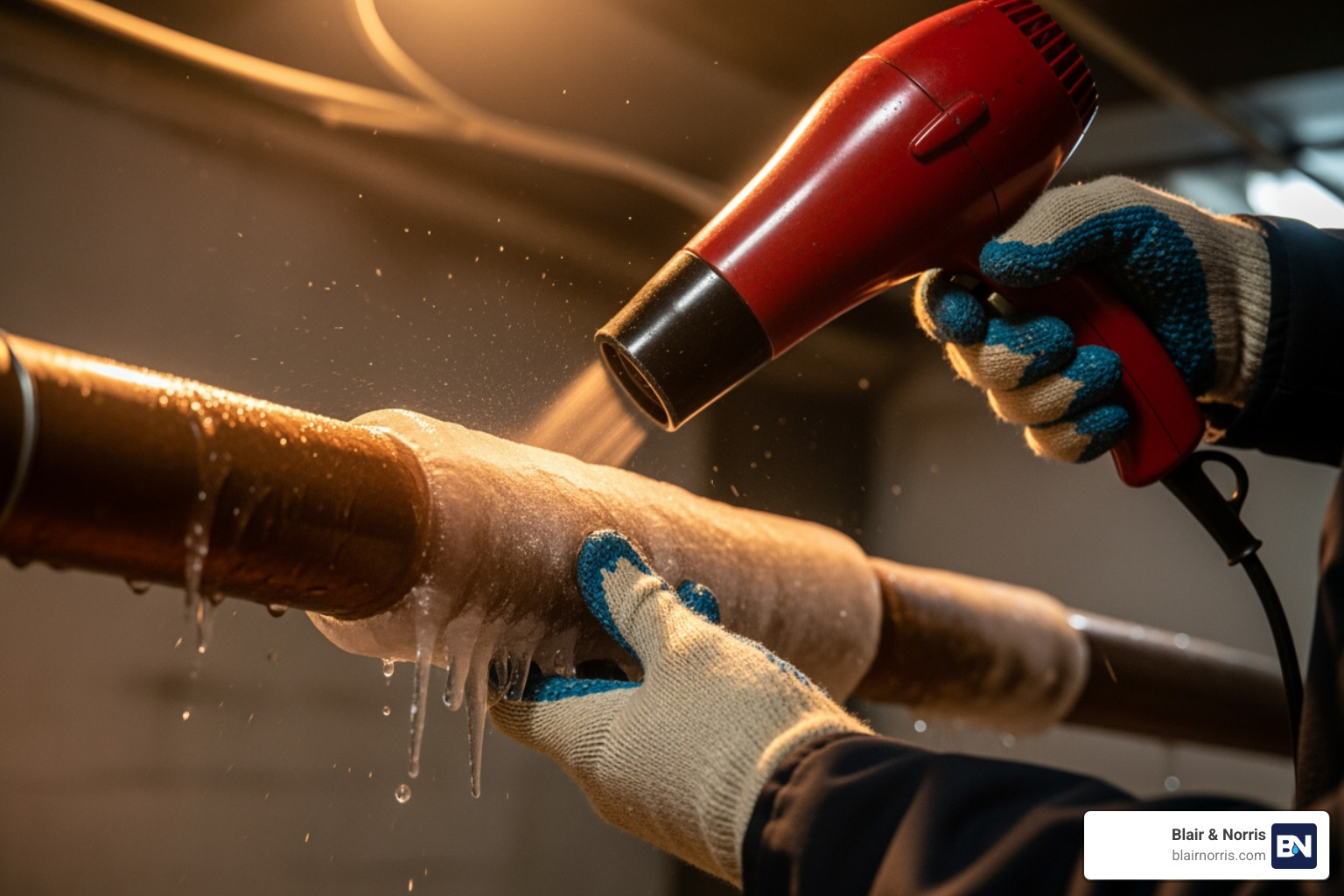
If you only get a trickle of water or none at all, suspect a frozen pipe. Assess the situation calmly and prioritize safety.
How to Safely Thaw Frozen Pipes and Pump Components
If you suspect a frozen pipe, follow these steps:
- Locate the Freeze: Inspect exposed pipes for frost, ice, or bulges, especially in unheated areas. Check the jet pump housing and the pressure switch pipe, a common freeze point.
- Turn on Faucets: Open the faucet connected to the frozen pipe. This relieves pressure and allows water to flow as the ice melts.
- Apply Heat Safely:
- Hair Dryer: The safest DIY tool. Start near the faucet and work toward the blockage, keeping the dryer moving to apply gentle, even heat.
- Electric Heating Pad or Warm Towels: Wrap the frozen section with a heating pad or towels soaked in hot water.
- Portable Space Heater: Use a space heater to warm the room, but keep it a safe distance from flammable materials and never leave it unattended.
- Dangers of Open Flames: NEVER use an open flame (like a torch) to thaw pipes. It’s a severe fire hazard and can cause pipes to burst.
- Monitor for Leaks: As the ice melts, watch carefully for drips or gushing water, which indicates a burst pipe.
- If a Pipe Bursts: Immediately shut off the main water supply, keep the faucet open, and call us for emergency repair.
Once water flows, let it run at a trickle to melt remaining ice and prevent refreezing.
Power Outages and Your Well Pump in Cold Weather
A power outage in winter is a double threat for well owners: no heat and no water. Planning for this is a critical part of well pump cold weather preparedness.
When the power goes out, your well pump stops. You’ll only have the water in your pressure tank. During a prolonged outage without heat, the risk of pipes freezing increases dramatically.
Backup Power Options:
- Generators: A reliable backup generator is essential for well owners. A properly sized unit can power your pump, maintaining your water supply. Test it regularly.
- Emergency Water Supply: Keep several gallons of fresh water per person stored for emergencies.
During an Outage:
- Conserve Water: Use your stored water sparingly.
- Protect Pipes: Open cabinet doors to let residual heat circulate. For a long outage, consider draining your plumbing system if you know how.
- Thawing Risks: If pipes freeze during an outage, you’ll need power restored to thaw them safely with electric heat sources.
Understanding how utility disruptions can impact your well system is crucial. For broader information on protecting utility infrastructure, you can refer to resources like this: Information on frozen meters and pipes from a utility provider.
When to Call a Professional for Well Pump Cold Weather Issues
While DIY prevention is great, some well pump cold weather issues require a professional. Knowing when to call an expert prevents further damage, ensures safety, and saves you money.
Here are the signs that you need to call the experts at Blair & Norris:
- No Water After Thawing Attempts: If you’ve thawed accessible pipes and still have no water, the freeze may be deeper in the system or affect a major component like the pump.
- Visible Burst Pipes or Major Leaks: If you find a burst pipe, turn off the main water supply immediately and call us. Burst pipes need professional repair to prevent water damage.
- Electrical Problems with the Pump: If the pump isn’t running, runs continuously, or trips breakers, call a professional. Well pump electrical systems are dangerous.
- Inaccessible Frozen Pipes: If the freeze is behind a wall or underground, call us. We have the tools to safely thaw hidden freezes without causing more damage.
- Complex Winterization Needs: For complex systems or if you’re unsure how to winterize, our professional service provides peace of mind by identifying vulnerabilities and implementing effective protection.
- Any Lingering Concerns: If you have any doubts about your system’s winter readiness, call us. It’s better to be safe than sorry.
Attempting a repair beyond your skill level can lead to a flood or a complete system overhaul. As a family-owned business serving the Indianapolis area for over 75 years, we offer ethical, high-quality service with 24/7 live phone support. For any well pump problems or concerns, we’re here to help.
Conclusion: Ensure a Worry-Free Winter for Your Well System
Winter in Indiana demands respect from well owners. Protecting your well pump cold weather performance safeguards your home, water supply, and peace of mind. A little preparation prevents significant expense and heartache.
To recap, the cornerstones of a robust winterization plan include:
- Insulation: Properly insulating all exposed pipes, wellheads, and pressure tanks is your first line of defense.
- Heat: Supplementing insulation with safe heat sources in unheated areas provides critical protection during extreme cold.
- Maintenance: A pre-winter inspection, disconnecting outdoor hoses, and prompt leak detection are vital steps.
- Water Flow: Maintaining a slow trickle of water through faucets during severe cold can prevent pipes from freezing solid.
Don’t wait for a freeze to leave you without water. For expert winterization, emergency repairs, or a pre-winter inspection in Indianapolis and surrounding communities like Carmel, Fishers, and Noblesville, trust Blair & Norris. With 75 years of experience and 24/7 live phone support, we’re dedicated to keeping your water flowing all winter. Contact us today to schedule your well and pump service and be ready for winter! We’re always here for your Well Pump Repair Near Me needs.