
Why Well Pump Freeze Protection Matters for Central Indiana Homeowners
Well pump freeze protection is essential for preventing winter damage to your water system. When temperatures drop below freezing, exposed pipes, pumps, and pressure switches are at serious risk. Water expands by roughly 9% when it freezes, which can crack pipes and fittings when water is trapped.
Quick Answer: Essential Freeze Protection Steps
- Insulate all exposed pipes with closed-cell foam sleeves or heat tape
- Protect your pressure switch and tank with insulation wrapping
- House above-ground pumps in insulated enclosures above 40°F
- Install a pitless adapter to keep water lines below the frost line (32-48 inches in Indiana)
- Cover your wellhead with insulated covers or blankets during cold snaps
- Disconnect and drain outdoor faucets before the first freeze
What’s Most Vulnerable?
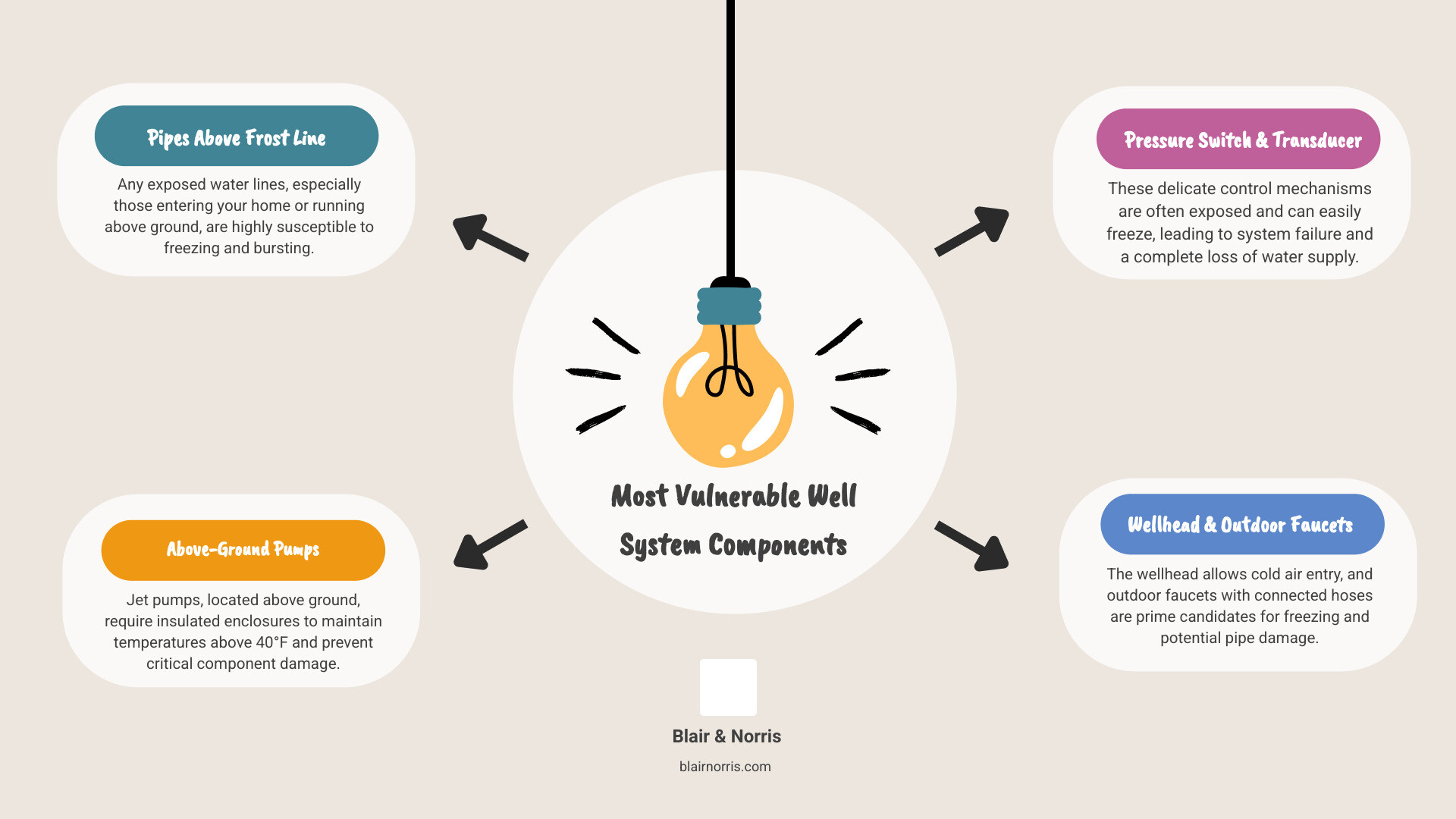
- Pipes above the frost line
- Above-ground jet pumps
- Pressure switches and transducers
- Outdoor faucets and hose bibbs
- Water tanks in unheated spaces
- The wellhead itself
The good news? The water inside your well won’t freeze—it sits well below the frost line where ground temperatures stay above freezing. But everything above ground needs your attention.
I’m Mack Blair, and over my 30+ years serving Central Indiana homeowners, I’ve seen how devastating a frozen well system can be—and how easily it can be prevented with proper well pump freeze protection measures. My team and I at Blair & Norris have helped hundreds of families winterize their systems and recover from freeze damage.
Understanding Why Well Systems Freeze
When winter descends upon Central Indiana, our well systems face a unique challenge: freezing temperatures. The fundamental culprit is water’s peculiar property of expanding as it turns into ice. This expansion can create extreme pressure inside confined plumbing, which is why freezing commonly leads to cracks or bursts. The result can be anything from a minor crack to a catastrophic burst, leading to expensive damage and a sudden loss of water supply.
While the water deep within your well remains safe from freezing, many parts of your well system are exposed and vulnerable. This includes pipes running above the frost line, any above-ground pumps (like jet pumps), the delicate mechanisms of pressure switches and transducers, the wellhead itself, and outdoor faucets. Understanding these vulnerabilities is the first step in mastering well pump freeze protection. For more comprehensive information about your well system, visit our well systems services page.
The Critical Role of the Frost Line
The frost line is the depth to which the ground is expected to freeze during the coldest parts of winter. In Central Indiana, frost depth varies by location and jurisdiction, so water lines and adapters should be installed below the local frost line. Below this line, the ground temperature remains consistently above freezing, providing a natural insulation for buried pipes.
This is why the well itself rarely freezes. The water level in a well is almost always below the frost line, meaning the vast majority of the water is protected by the earth’s natural warmth. However, any water lines that rise above this critical depth are exposed to freezing temperatures. This is where components like pitless adapters become invaluable. A pitless adapter connects the well casing to the water line below the frost line, diverting water horizontally into your home and ensuring that no water remains in the exposed upper sections of the well’s discharge pipe when the pump isn’t running. This simple, yet effective, design helps prevent freezing where the water line exits the well casing.
Consequences of a Frozen Well System
The risks of a freeze are more severe than a temporary inconvenience; this is why well pump freeze protection matters. When water freezes and expands within pipes or components, it can cause them to plug with ice or, more commonly, burst. We’ve seen how a single burst pipe can lead to significant water damage to homes in Indianapolis and surrounding areas, requiring extensive repairs.
Beyond burst pipes, a frozen system can also:
- Cause a complete loss of water supply: Even a small ice blockage can prevent water from reaching your home.
- Damage your well pump: If the pipes leading to or from your pump freeze, the pump can be forced to run against a blockage, potentially leading to overheating and mechanical failure. This is especially true for above-ground jet pumps.
- Ruin exposed well components: Pressure switches, transducers, and even the wellhead itself can crack and become inoperable. As water expands into ice, these components are very likely to burst.
- Result in extensive repairs and system downtime: The expense of replacing burst pipes, damaged pumps, or other components can considerably outweigh the cost of preventive measures.
Property owners are responsible for protecting their water pipes and water meters from cold air and wind. Water pipes and meters can freeze within hours of the onset of sub-freezing weather if they’re exposed to cold drafts. Preventing frozen pipes is much easier than replacing them, not to mention avoiding the damage to your home and possessions that can result from burst pipes. For general information on preventing frozen pipes, you can refer to this guide: Prevent Frozen Water Pipes and Meters.
Proactive Well Pump Freeze Protection Strategies
Preventing your well system from freezing is far less disruptive than responding after damage occurs. We encourage homeowners in areas like Carmel, Fishers, and Noblesville, IN, to adopt a proactive approach to well pump freeze protection as soon as the leaves start to fall. This involves a comprehensive winterization checklist that addresses all vulnerable points in your system. This strategy can save you from unexpected emergencies and ensure continuous water access throughout the cold months.
A key part of this preparedness includes sealing any drafts around your well house or basement where pipes are located. Even small cracks or openings can allow enough cold air to cause freezing. Regular maintenance of your well house, ensuring it’s well-sealed and insulated, is crucial. If your system includes a pitless adapter, ensure it’s properly installed below the frost line. In some specific cases, especially for seasonal properties, draining the system completely might be advisable.
Here’s a list of essential winterization supplies you might need:
- Closed-cell foam pipe insulation
- Heat tape or heat cables (thermostat-controlled recommended)
- Insulated covers for wellheads and outdoor faucets
- Caulk or weatherstripping for sealing drafts
- Non-toxic (RV) antifreeze for drain traps if draining the system
- A small ceramic utility heater for well houses (with proper safety precautions)
Using Insulation for Well Pump Freeze Protection
Insulation is your first line of defense against freezing pipes and components. The right type of insulation, properly installed, can make a significant difference.
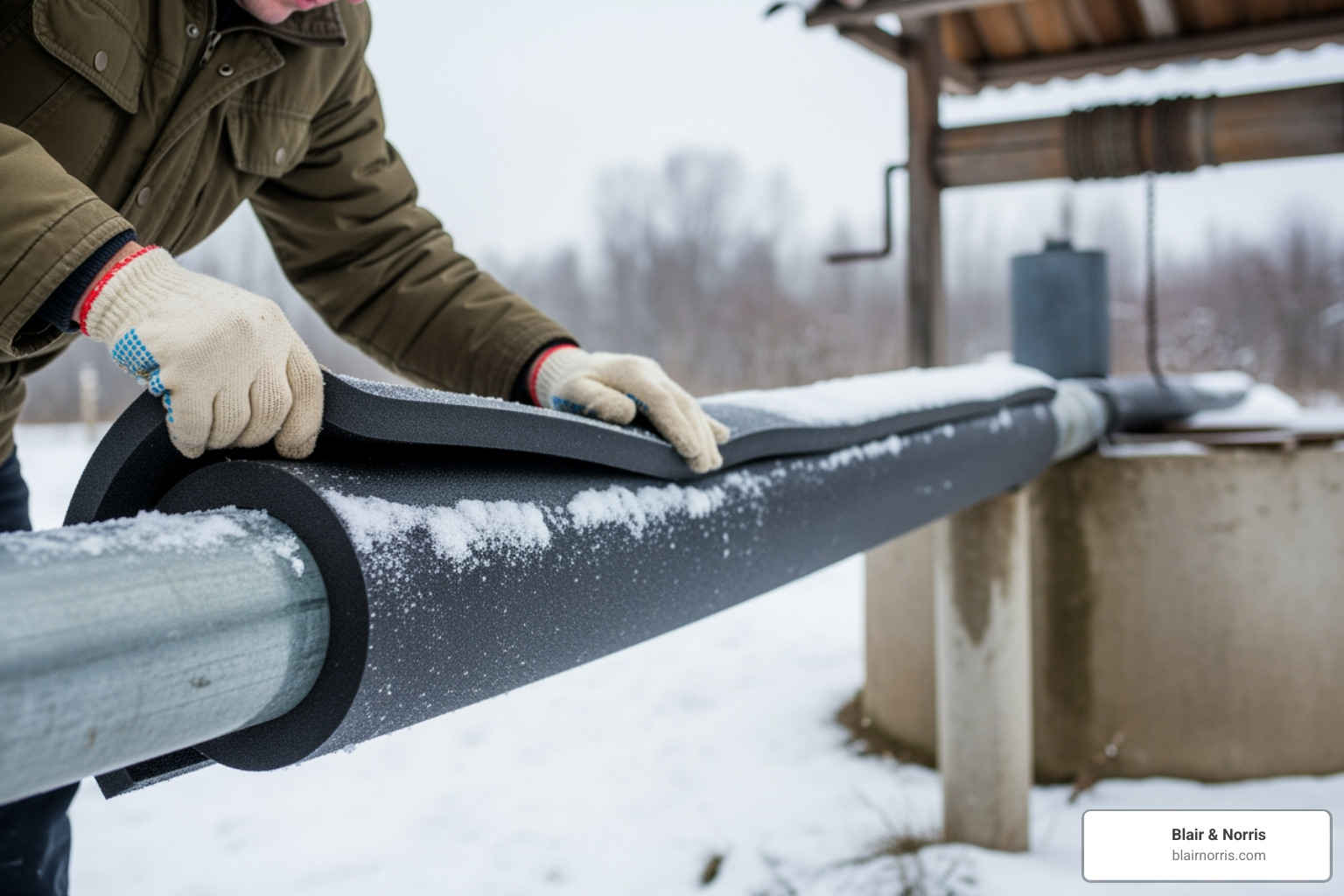
- Pipe insulation types: For outdoor piping or pipes in unheated spaces like crawl spaces or basements, we recommend closed-cell foam ‘tubes’. These foam sleeves are excellent because they prevent water saturation and maintain their insulating properties even if they get damp. They should fit snugly around the pipe and be secured with zip ties or tape. Avoid fiberglass wrap for outdoor use, as it loses effectiveness when wet.
- Insulating wellheads: The wellhead itself, where the casing rises above ground, needs protection. This can be achieved with a dedicated insulated wellhead cover or, in a pinch, by wrapping it with blankets or towels and covering them with plastic sheeting to keep them dry.
- Insulating pressure tanks: If your pressure tank is in an unheated garage or basement, wrap it with insulation. A well-insulated enclosure around the tank is even better.
- Insulating backflow preventers: These devices are sensitive to freezing and may require repair or replacement if they crack. Specialized insulated covers are available, which are often more effective than typical foam wrap. For more information on insulated covers, you can check out options like these: Insulated covers.
Advanced Well Pump Freeze Protection: Heat Tape and Heaters
While insulation is great, sometimes it’s not enough, especially during prolonged cold snaps in Indiana. This is where supplemental heating comes into play.
- Heat tape benefits: Heat tape (or heat strips) can be wrapped around vulnerable pipes and components, providing continuous warmth. They are particularly effective for exposed pipes, pressure switches, and transducers.
- Heat strip drawbacks: The main drawback is ongoing electrical use, and improper installation can create a safety risk.
- Thermostat-controlled cables: We highly recommend using automatic, thermostat-controlled heat cables. These only activate when the temperature drops to a preset level, saving energy and reducing the risk of overheating.
- Installation best practices: Ensure heat strips are in close contact with the pipe or component. For pipes, wrap insulation over the heat tape for maximum efficiency. Never cross a heat cable over itself, as this can cause it to overheat, especially with plastic pipes.
- Small utility heaters: For well houses or pump enclosures, a small ceramic utility heater can provide ambient warmth. Heaters are generally more effective and efficient than using incandescent light bulbs, which produce heat as a byproduct rather than their primary function.
- Cost of heating vs. replacement cost: When selecting a freeze strategy, prioritize reliability, correct installation, and protection of the most exposed components. This makes investing in quality heating solutions a smart financial decision.
Winterizing Outdoor Faucets and Hose Bibbs
Outdoor faucets are among the most common culprits for frozen pipe issues. They are directly exposed to the elements, and if not properly winterized, they can cause significant damage to your home’s interior plumbing.
- Disconnecting hoses: This is a simple yet critical step. Always disconnect and drain all garden hoses from outdoor faucets before the first freeze. Water trapped in a hose can freeze and expand back into the faucet and the connecting pipe, causing it to burst.
- Shut-off valves: Locate the interior shut-off valve that controls water flow to your outdoor faucets. Turn it off completely.
- Draining pipes: After turning off the interior valve, open the outdoor faucet to allow any remaining water in the pipe to drain out. Leave the faucet open until spring.
- Frost-free hose bibbs: If you’re looking for a more permanent solution, consider installing frost-free hose bibbs. These faucets are designed so that the shut-off valve is located several inches inside your heated home, preventing water from sitting in the exposed section of the pipe where it could freeze.
- Faucet insulation covers: For existing outdoor faucets without an interior shut-off, or as an added layer of protection, use insulated covers. These inexpensive Styrofoam or cloth covers fit over the faucet and help trap warmth.
- For more general cold weather protection tips, you can explore resources like this: Cold Weather Protection.
Protecting Specific Well Components
While we’ve discussed general strategies, some well system components have unique vulnerabilities that require specific attention for effective well pump freeze protection. In Central Indiana, our team at Blair & Norris understands the nuances of protecting every part of your water supply. For comprehensive care and maintenance of your well system, please visit our well system maintenance page.
Jet Pumps vs. Submersible Pumps
The type of pump you have significantly influences your freeze protection strategy.
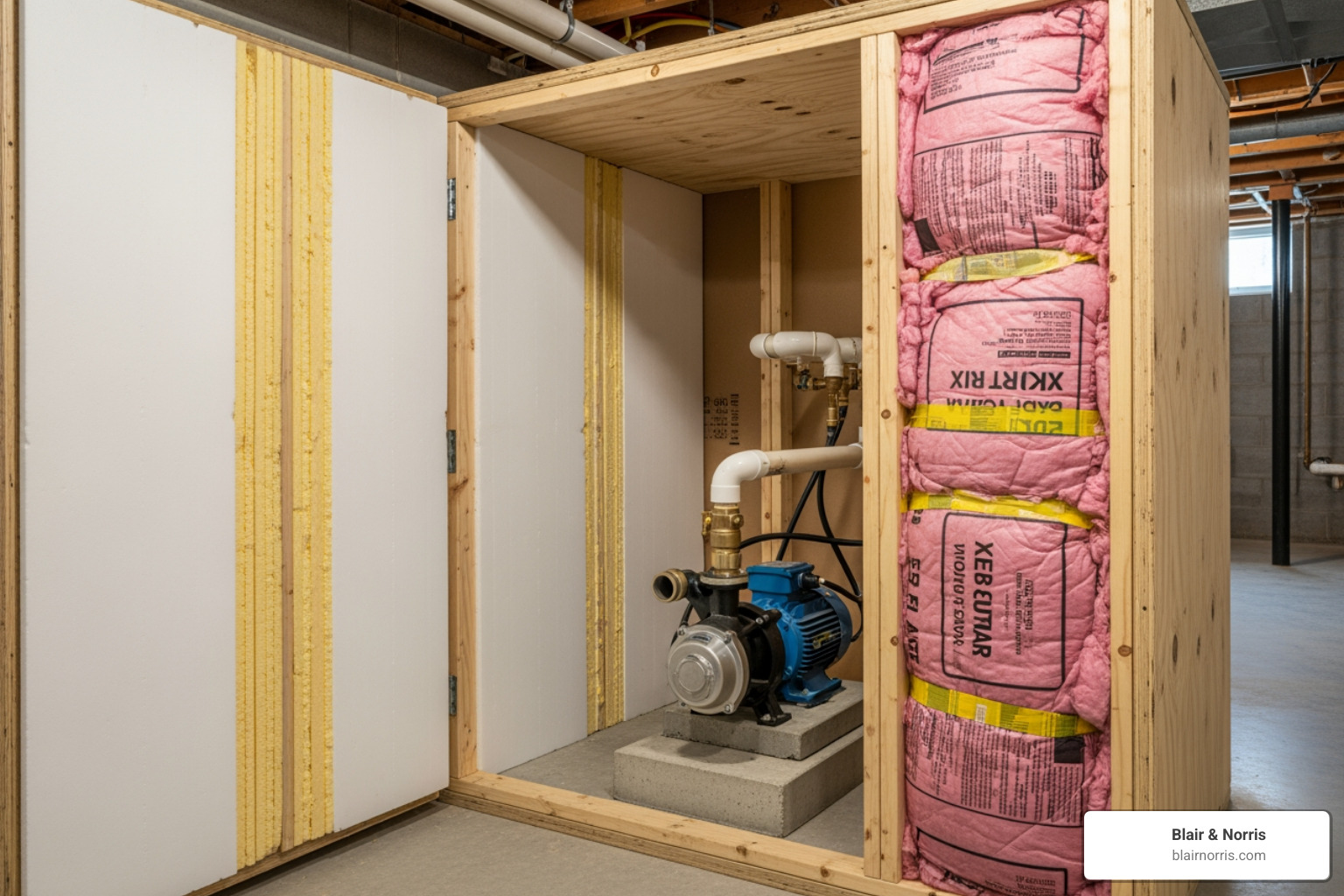
- Above-ground exposure (Jet Pumps): Jet pumps are typically located above ground, either in your home (basement, utility room) or in a dedicated well house. Because they are exposed, they are highly vulnerable to freezing. If your jet pump is in an unheated space, it absolutely needs an insulated enclosure. We recommend maintaining the temperature in this space above 40°F to prevent any freezing. The heat generated by the pump motor can actually help keep the enclosure warm if it’s well-sealed.
- Submersible pump location: Submersible pumps, on the other hand, are located deep within the well, far below the frost line. This naturally protects the pump itself from freezing. However, the discharge pipe that carries water from the submersible pump up to your home is still vulnerable where it rises above the frost line. This is where a properly installed pitless adapter is crucial, ensuring the water line exits the well casing below the freezing depth.
- For a clear visual explanation of key components, review a well-owner resource on pitless adapters and freeze-proof connections.
Shielding Pressure Switches and Tanks
These components are vital for your well system’s operation and are often overlooked in freeze protection efforts.
- Insulating the pressure switch: The pressure switch (a small grey, blue, or black box) is critical. Its most vulnerable point is the small pipe or “nipple” that connects it to the pressure tank or main water line. This small pipe can freeze quickly, rendering your pump inoperable. Ensure this entire assembly, including the switch and its connecting tubing, is thoroughly insulated.
- Protecting the transducer: If your system uses a pressure transducer (a small cylindrical component), it faces similar freeze risks to the pressure switch and should also be insulated with care.
- Insulating the pressure tank: While the tank itself is robust, if it’s in an unheated area, the water inside can freeze, potentially damaging the tank. Wrapping the tank with insulation or placing it within an insulated enclosure is recommended.
- Using heat from the pump motor: If your jet pump and pressure tank are housed together in a well-sealed, insulated enclosure, the heat generated by the pump motor during operation can help keep the space above freezing. This works best when the enclosure is tight and well-insulated.
- Preventing condensation: Ensure that any heating elements or insulation do not lead to excessive condensation, which could damage electrical components. Good ventilation within an insulated space is important.
Emergency Response: What to Do When Your Well Freezes
If you suspect a frozen well pump, quick, safe steps can reduce further damage while you plan your next actions. Recognizing the signs and knowing the immediate steps to take can minimize damage and restore your water supply quickly. At Blair & Norris, we offer 24/7 emergency service for well pumps across Central Indiana because we know these issues don’t keep business hours.
Signs of a Frozen System
The most obvious sign of a frozen pipe or well component is a sudden loss of water pressure or no water flow at all. If you turn on a faucet and only a trickle comes out, or nothing at all, and the temperatures have been below freezing, you likely have a frozen pipe somewhere in your system. This can happen within hours of sub-freezing weather if components are exposed.
Immediate Steps
- Shut off the main water supply: This is crucial. If a pipe has already burst, shutting off the water will prevent catastrophic flooding when the ice thaws. Know where your main water shut-off valve is and how to operate it.
- Locate the freeze: Try to identify where the freeze has occurred. Check exposed pipes, the wellhead, your pressure switch, and any above-ground pump. Often, a small section of pipe or the nipple to the pressure switch is the culprit.
- Open a faucet: Open a faucet in your home (preferably one that’s fed by the frozen pipe) to relieve pressure in the system. This will also allow water to flow out once the ice blockage begins to melt.
- Begin thawing: Once you’ve located the frozen section and opened a faucet, you can begin the thawing process.
Safe Methods for Thawing Frozen Pipes
When thawing pipes, safety is paramount.
- Using a hair dryer: A common and safe method is to use an electric hair dryer. Move the hair dryer slowly back and forth along the frozen section of pipe. This applies gentle, controlled heat.
- Electric heating pads: An electric heating pad wrapped around the frozen pipe can also be effective.
- Portable space heaters: These can be used to warm an entire area, such as a well house or a section of a basement. However, keep space heaters away from flammable materials (curtains, wood, paper) and never leave them unattended.
- Dangers of open flames: Never use a torch or open flame device to thaw pipes. Use gentle heat methods instead. This is extremely dangerous and can lead to fires or damage to your plumbing.
- Electrical safety precautions: Before attempting to thaw any part of your well system, especially near the pump or pressure switch, turn off the electrical breaker to the pump. Keep it off until the frozen component (like the nipple to the pressure switch) has warmed up and water is flowing again.
Once water starts flowing, let it run for a while. This helps melt any remaining ice and ensures the pipe is clear. If you’ve tried these steps and still have no water, or if you suspect significant damage, it’s time to call in the experts. For immediate assistance, our team is ready for emergency well pump services.
When to Call a Professional
Knowing when to call a professional can save you time, money, and further damage. We’re here to help Central Indiana homeowners with all their well pump needs, especially during freezing conditions.
- Persistent freeze: If you’ve attempted to thaw pipes using safe methods and still have no water flow after a reasonable amount of time.
- No water flow after thawing attempts: This could indicate a more severe blockage or a burst pipe you can’t see.
- Visible pipe damage: If you see any cracks, bulges, or leaks in your pipes, do not attempt to repair them yourself. A professional can assess the damage and perform necessary repairs or replacements.
- Suspected pump damage: If your pump is making unusual noises, constantly running, or not turning on at all after a freeze, it may be damaged.
- Electrical issues: If you suspect any electrical damage related to the freeze, or if you’re unsure about turning off power, always call a professional.
- Lack of proper tools or knowledge: If you don’t feel comfortable or equipped to handle the situation, don’t hesitate to reach out. Our team at Blair & Norris has the expertise and specialized equipment to diagnose and fix frozen well system problems efficiently and safely. We are experts in well services across the Indianapolis area.
Frequently Asked Questions about Well Freeze Protection
Can the well itself actually freeze solid?
No, the water level in a well is almost always below the frost line, where the ground temperature remains above freezing. In Central Indiana, the frost line can be 32-48 inches deep. The components at risk are the pipes, pump, and other equipment located above or near the ground surface, not the water deep within the well.
Is it a good idea to let a faucet drip to prevent freezing?
Yes, letting a faucet drip can prevent freezing. The moving water is harder to freeze, and it introduces slightly warmer water from the well into the pipes. This creates a flow that inhibits ice formation. However, for well systems, this can cause the pump to cycle more frequently. It’s an effective method, especially during extreme cold snaps or power outages, but should be considered a temporary or last-resort measure due to potential wear on your pump.
What are the most important parts of my well system to insulate?
The most critical parts to insulate are any pipes exposed to cold air, especially those above the frost line. This includes the water line entering your home, the wellhead, any above-ground pump (like a jet pump), the pressure tank, and the small pipe leading to the pressure switch. The nipple connecting the pressure switch to the tank or pipe is particularly vulnerable and should be thoroughly insulated.
Conclusion
Mastering well pump freeze protection safeguards your home and keeps your water supply reliable through winter. Proactive measures, from proper insulation and heat tape installation to winterizing outdoor faucets, are key to preventing costly and frustrating damage. We know that Central Indiana winters can be unpredictable, and even the most prepared homeowner can face unexpected challenges.
With over 75 years of experience serving communities like Zionsville, Westfield, and Plainfield, IN, our family-owned team at Blair & Norris is dedicated to providing ethical, high-quality service you can trust. We offer 24/7 live phone support because we understand that well emergencies don’t wait for business hours. Don’t risk catastrophic damage to your well system this winter.
Ready to improve well pump freeze protection for your system? Contact Blair & Norris to schedule winterization support or urgent help during a freeze.