
Why a Well Pump Failure Can Bring Your Whole Day to a Stop
When your well pump is not working, you’ll know it immediately—no water from your faucets, no shower, no way to wash dishes or flush toilets. It’s one of those home emergencies that stops everything in its tracks.
Quick Answer: Most Common Causes and First Steps
- Check your circuit breaker – A tripped breaker is the simplest fix and accounts for many “failures”
- Inspect the pressure switch – Burnt contacts or debris can prevent the pump from starting
- Look at your pressure gauge – A zero reading confirms a well system problem
- Test for power at the well – A failed start/run component in the control box is a common reason a well pump is not working.
- Listen for unusual sounds – If the pump tries to start but quickly shuts off, the motor may be damaged
The good news? Many well pump issues have straightforward solutions you can check yourself before calling for help. Some require professional expertise, especially when dealing with high-voltage electrical components or a pump that needs replacement.
I’m Mack Blair, and over the past 30+ years working with well systems throughout Central Indiana, I’ve seen just about every reason a well pump is not working. Most homeowners can handle the initial troubleshooting steps safely, and knowing what to check can help you restore water faster.
First Steps: What to Check Before You Panic
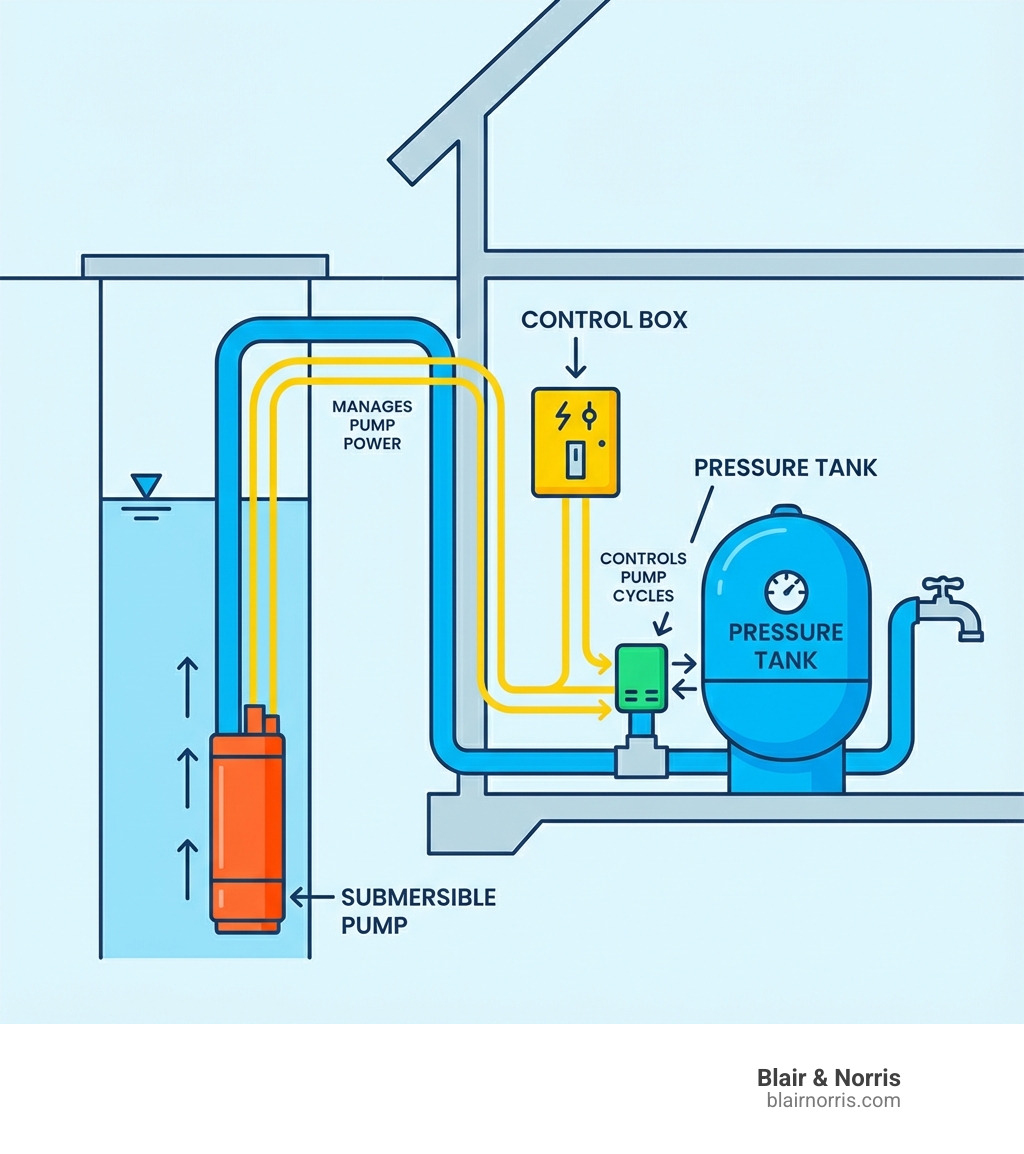
When you suddenly find yourself without water, it’s easy to jump to the worst-case scenario. But before panic sets in, there are several initial checks you can perform that might quickly resolve the issue or at least help us pinpoint the problem. Safety is our top priority, so always remember to turn off power to any electrical components before inspecting them.
One of the simplest and most common reasons a well pump is not working is a tripped circuit breaker. Your well pump has a dedicated breaker in your home’s electrical panel. Go to your circuit breaker box and look for the breaker labeled “well pump” or similar. If it’s in the “off” position, or even halfway between “on” and “off,” it’s tripped. To reset it, firmly push the breaker completely to the “off” position, then flip it back to “on.” If it immediately trips again, or if it trips repeatedly, do not keep resetting it. A repeatedly tripping breaker is a sign of a serious electrical problem, such as a short in the pump motor, damaged wiring, or a failing capacitor, and trying to reset it repeatedly can be a fire hazard and cause permanent damage. In such cases, it’s best to keep the breaker off and call us.
In some older homes, you might have fuses instead of breakers. Check for a blown fuse and replace it with one of the exact same amperage if necessary. Also, ensure the main well shut-off switch (often located near the pressure tank or well head) is in the “on” position.
Next, it’s crucial to check your pressure gauge. This gauge is usually located on or near your pressure tank. It tells you the water pressure in your system. Most residential well systems are commonly set to 30/50 or 40/60, and your pressure switch cover typically indicates your setup. If your pressure gauge reads zero, it confirms that the problem is indeed with your well water system—either the well isn’t producing water, or the well pump isn’t working properly. This zero reading is a strong indicator that the pump isn’t engaging or moving water into the tank.
Sometimes, your well pump is not working because of a simple power interruption or a switch/tank issue, not a failed pump. If you suspect a complete loss of water pressure, you can often find a helpful video guide on initial checks to walk you through these basic steps.
Why Your Well Pump is Not Working: A Deeper Dive
If the initial checks don’t solve the mystery of why your well pump is not working, it’s time to dig a little deeper into the common culprits. These often involve components directly related to how your pump operates, such as the pressure tank and pressure switch, or the electrical components that power the system.
Pressure Tank and Switch Issues
The pressure tank works hand-in-hand with your well pump to deliver water to your home and prevent the pump from cycling on and off too frequently. It contains an air bladder that stores pressurized water.
One common issue is a waterlogged pressure tank. If the air bladder inside the tank fails or loses its air charge, the tank can become “waterlogged.” This means it fills completely with water, losing its ability to store pressure effectively. The result? Your pump might start rapid-cycling, turning on and off every time you open a faucet, or it might run continuously. With power off and the tank fully drained, the pre-charge is typically set slightly below the cut-in pressure indicated on the switch cover. Most pressure tanks come pre-charged at 30 PSI, and pressure switches are often set for 30-50 PSI. If the pump kicks on every time water is running, likely, the tank isn’t holding pressure.
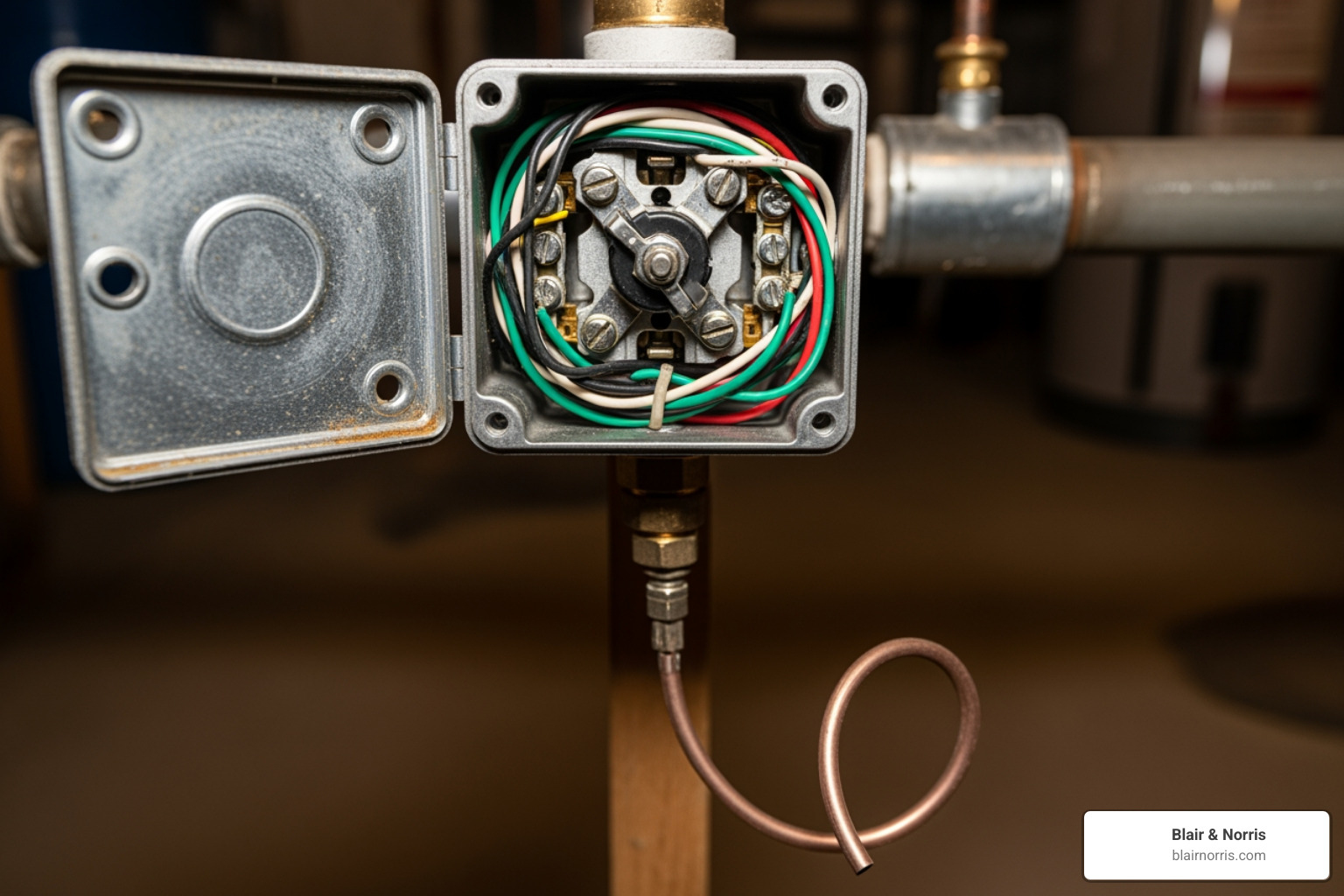
The pressure switch is a critical component, usually mounted on a pipe near the pressure tank. It monitors the system’s water pressure and signals the pump to turn on when pressure drops below a set point (e.g., 40 PSI) and to turn off when it reaches the upper limit (e.g., 60 PSI). If your well pump is not working, a faulty pressure switch is a prime suspect.
Signs of a failing pressure switch include:
- The pump running continuously or not turning on at all.
- A sudden decrease or fluctuating water pressure.
- Air sputtering from faucets, which can indicate the air bladder in the pressure tank is failing and affecting the pressure switch’s signal.
- Visible damage, such as burnt contacts on the switch. A hot contact appearing burnt is a specific symptom that strongly points to electrical issues within the switch.
- Sediment buildup in the small tube or nipple leading to the pressure switch, which can prevent it from accurately sensing pressure changes.
We recommend inspecting the electrical contact points on the pressure switch for cleanliness, corrosion, or burning. If contacts are visibly damaged or the sensing port is clogged, that’s a strong sign the switch needs professional replacement. However, for a reliable fix, replacing a faulty pressure switch is always the best option. You can find more technical details on pressure systems in this comprehensive guide.
Checking Electrical Components
Beyond the pressure switch, other electrical components can prevent your well pump from working. These include the control box, wiring, and connections. Always turn off power at the circuit breaker before inspecting any electrical components, as well pump systems can involve high voltage (up to 220 volts).
The control box, typically mounted near the pressure tank or well head, houses crucial components that start and run your pump motor, such as capacitors and relays. With the power off, open the control box and perform a visual inspection. Look for any signs of trouble, like a burnt or bulging capacitor. Faulty wiring, a failed control component, or a motor issue may be the culprit. If you see bulging, leaking, or burn marks, it’s likely the culprit. Also, gently tug on wires in the control box to ensure all connections are secure. Loose connections can interrupt power flow.
Another common electrical issue arises from corroded splices. Submersible well pumps have electrical splice connections at various points: at the wellhead, where the wire enters your home, and at the pump motor itself. These connections can corrode over time, especially at the wellhead where they are exposed to moisture, leading to power interruptions.
For a visual guide on troubleshooting your control box, check out this video:
Identifying Mechanical Failures and Blockages
Sometimes, the problem isn’t electrical but mechanical, or due to blockages in the system. These issues directly impact the pump’s ability to draw and move water.
If your well pump is pumping air, you might notice air sputtering from your faucets. This often indicates a low water level in the well, causing the pump to pull air instead of water, or a leak in the suction line. If the well water level drops below the pump’s intake, the pump will run dry, which can cause it to overheat and suffer serious damage.
Sediment buildup or blockages are also frequent culprits when a well pump is not working. If your pump is pumping sediment, you might see gritty water coming from your faucets. Sand, silt, or other debris can enter the pump from the well, leading to blockages in the pump or pipes, or causing excessive wear on the pump’s internal components. A damaged well casing can also contribute to the pump drawing sediment. If your well is trying to draw water from shallow depths, it’s more prone to bringing up silt and sand.
Worn pump parts are another common mechanical failure. Over time, components like the impeller (the spinning part that moves water) or bearings can wear out. You might hear strange noises coming from your well or pump, such as constant or rapid clicking, grinding, or humming, which can indicate that these internal parts are deteriorating. Excessive pump wear can lead to the pump running continuously or delivering little to no water. If the impeller is damaged, it can prevent the pump from moving water effectively.
Repair or Replace? Making the Smart Choice
When your well pump is not working, you’re faced with a crucial decision: repair the existing unit or invest in a new one. This choice often boils down to several factors, including the pump’s age, the cost of the repair, and the frequency of problems.
| Factor | Repair | Replace |
|---|---|---|
| Pump Age | Generally viable for pumps under 8-10 years old. | Recommended for pumps over 10-15 years old. |
| Repair Cost | Minor issues (pressure switch, capacitor) are cost-effective. | Major component failure (motor, internal pump parts) may approach replacement cost. |
| Problem Frequency | Occasional, isolated issues. | Frequent breakdowns, recurring issues, or multiple failures. |
| Efficiency | Maintains current efficiency. | Improves energy efficiency, potentially lowering bills. |
| Reliability | Restores immediate function, but underlying wear remains. | Provides renewed reliability and peace of mind. |
The typical lifespan of a well pump ranges from 8 to 15 years. Submersible pumps, which are located inside the well, generally last 8 to 15 years, with higher-quality models even reaching 15 to 25 years or more. Jet pumps, which are installed above ground, tend to have a slightly shorter lifespan, around 8 to 10 years.
Several factors influence how long your pump will last:
- Usage: A pump that runs constantly due to high demand or leaks will wear out faster.
- Water Quality: High sediment content, minerals, or corrosive water can significantly shorten a pump’s life.
- Maintenance: Regular maintenance, like keeping filters clean and checking the pressure tank’s air charge, can extend longevity.
- Installation Quality: Proper installation ensures the pump operates under optimal conditions.
When considering repair versus replacement, think about the cost-effectiveness. A minor repair, like replacing a pressure switch or capacitor, is often much cheaper than a new pump. However, if your pump is older (over 10-15 years) and experiencing major failures or frequent breakdowns, replacement often makes more financial sense. While the upfront cost of a new pump is higher, newer models are typically more energy-efficient, which can lead to lower electricity bills over time. Plus, a new pump offers renewed reliability and peace of mind.
Frequently Asked Questions About Well Pump Problems
Homeowners often have similar questions when their well pump is not working. Here, we address some of the most common concerns.
Why does my well pump breaker keep tripping?
A breaker that repeatedly trips is a clear signal of a serious electrical problem, and it’s not something to ignore. The most common culprits include:
- A short in the pump motor: This indicates an internal electrical issue within the pump itself.
- Damaged wiring: Frayed or compromised wiring, especially in the well or leading to the pump, can cause a short.
- A failing capacitor: As we’ve mentioned, a faulty capacitor is responsible for a significant percentage of pump failures (around 90%!). A failing capacitor can draw too much current, causing the breaker to trip.
It’s crucial not to repeatedly reset a tripping breaker. This isn’t just a nuisance; it’s a fire hazard and can cause permanent damage to your electrical system or the pump. If your breaker trips more than once, keep it off and call a professional to diagnose the underlying issue safely.
What are the most common reasons a well pump is not working?
Based on our decades of experience, when a well pump is not working, it’s usually due to one of these common problems:
- Power Loss: This is often the simplest fix. It could be a tripped circuit breaker, a blown fuse, a general power outage in your area, or a problem with the well shut-off switch.
- Faulty Pressure Switch: The pressure switch is the brain of your well system, telling the pump when to turn on and off. If its contacts are burnt, corroded, or if its sensor tube is clogged with sediment, the pump won’t receive the correct signals.
- Failed Capacitor: This small but mighty component in your control box is essential for starting your pump motor. A faulty capacitor is a leading cause of pump failures, accounting for about 90% of them. When it fails, the pump simply won’t start.
- Mechanical Pump Failure: This category includes issues like worn-out impellers or bearings, dry running (if the well runs low on water), or blockages from sediment. These can lead to strange noises, the pump running continuously without producing water, or a complete shutdown.
- Low Water Level in the Well: Sometimes, the well itself simply doesn’t have enough water for the pump to draw. This can be due to drought conditions, overuse, or a well that isn’t recovering quickly enough.
Understanding these common issues is the first step toward diagnosing why your well pump is not working. For more in-depth information on well system maintenance, you can consult this helpful resource:
This resource from Purdue Extension covers well system maintenance
Conclusion: When to Call the Professionals
While we encourage homeowners to tackle initial troubleshooting steps, there comes a point when the complexity, safety risks, or sheer scale of the problem demands professional expertise. When your well pump is not working, and you’ve exhausted the basic checks, it’s time to call in the experts.
Dealing with high-voltage electrical components carries significant risks. If you’re not 100% confident in performing electrical tests safely, it’s always best to step back and let trained professionals handle it. Complex diagnostics, especially for issues deep within the well or intricate electrical malfunctions, require specialized tools and knowledge. If your troubleshooting steps haven’t resolved the issue, or if you suspect a major component like the pump motor itself has failed, attempting further DIY repairs could lead to more damage or even injury.
At Blair & Norris, we’ve been helping families in Indianapolis, Carmel, Fishers, Noblesville, Westfield, Zionsville, and all across Central Indiana with their well pump and septic system needs for over 75 years. We pride ourselves on ethical, high-quality service, backed by our family ownership and 24/7 live phone support. Whether you’re in Brownsburg, Avon, Plainfield, or even further out in Shelbyville or Anderson, we’re ready to respond. We understand that a non-working well pump is an emergency, and our team is equipped to handle everything from emergency repairs to full well pump replacements.
If basic checks don’t restore water safely, it’s time to call a licensed well professional. Let our experienced team get your water flowing reliably again.
Need help when your well pump is not working? Contact Blair & Norris for fast diagnosis and reliable repair support.