
When Your Water Supply Fails: Finding Well Pump Repair Near Me
If you’re experiencing water issues and need well pump repair near me services immediately, here are the fastest solutions:
- Call a local well specialist: Look for companies with 24/7 emergency service
- Check for power issues: Ensure the breaker hasn’t tripped before calling
- Average repair cost: $150-$600 depending on the problem
- Response time: Most emergency services arrive within 2-4 hours
- Signs you need repair: No water, low pressure, sputtering faucets, strange noises
When your well pump stops working, your entire household water supply is affected. No morning showers, no flushing toilets, no washing dishes—life quickly becomes complicated.
A well pump is the heart of your private water system, responsible for drawing water from deep underground and delivering it to your home under pressure. When it fails, finding reliable well pump repair near me becomes an urgent priority.
Most homeowners with private wells will face pump issues at some point. The average well pump lasts about 15 years, but this can drop to as few as 8 years with heavy use or lower-quality equipment.
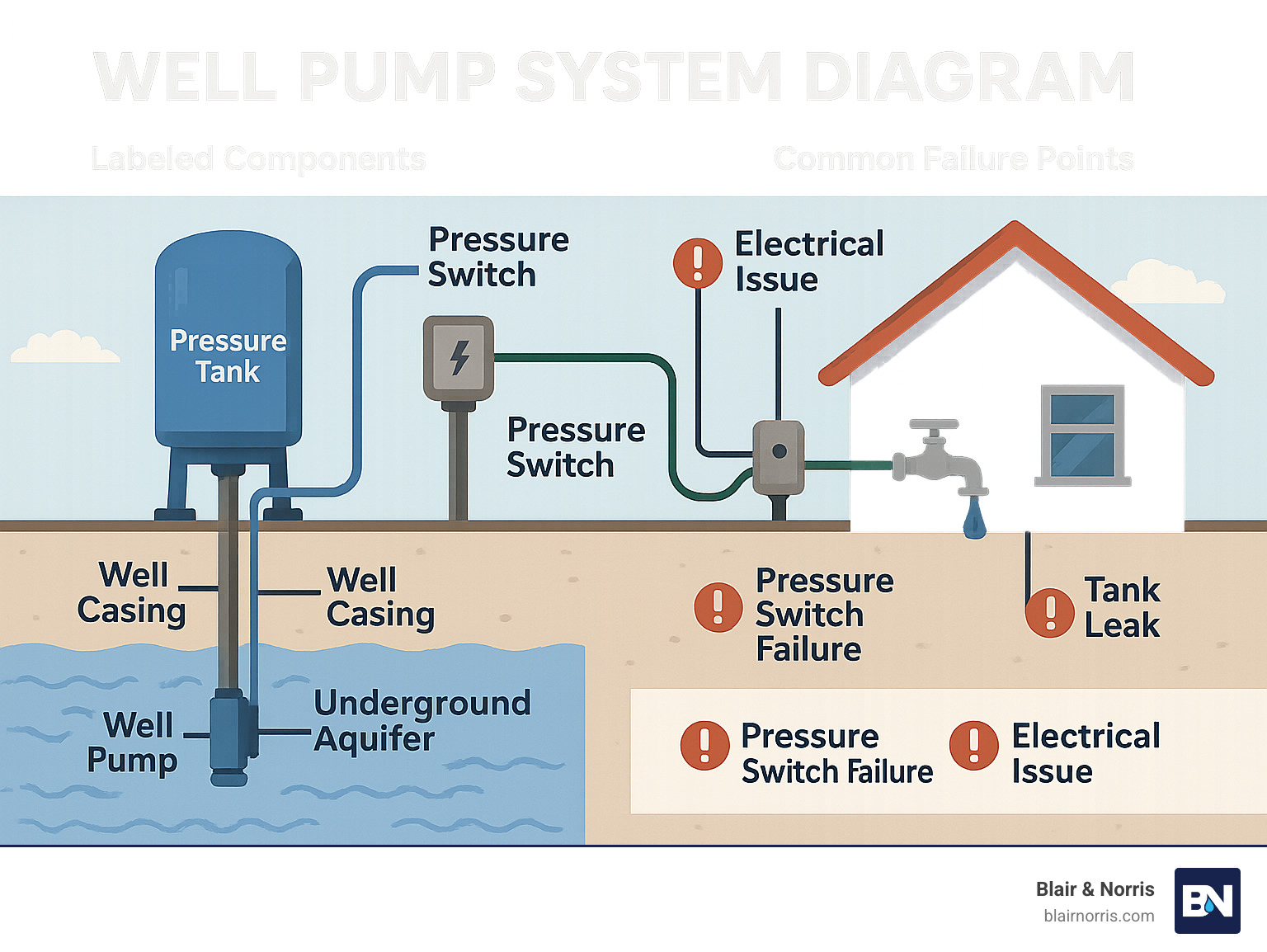
Must-know well pump repair near me terms:
1. What a Well Pump Does & How It Works
Think of your well pump as the heart of your home’s water system – tirelessly working beneath your feet to keep water flowing to your faucets, showers, and appliances. When you turn on your kitchen tap, it’s this hardworking device that makes the magic happen.
Most homes use pumps ranging from 1/2 to 3 horsepower, carefully matched to your household’s water demands and well depth. Your pump draws water from deep underground and pushes it into a pressure tank, which maintains steady water pressure throughout your home.
When you open a faucet, the pressure drops. Once it falls below a preset “cut-in” point (usually 30-40 PSI), your pump activates. It continues running until reaching the “cut-out” pressure (typically 50-60 PSI), then rests until needed again.
A check valve prevents water from flowing back down into your well, while the pressure switch monitors pressure and controls when your pump turns on and off.
For deeper wells (generally over 25 feet), well pump repair near me searches often involve submersible pumps, which operate completely underwater at the well bottom. Shallower wells might use jet pumps positioned above ground.
As the Groundwater Foundation emphasizes, understanding your well system basics is your first step toward proper maintenance.
Anatomy of a Modern Well
Your home’s well system includes several key components:
The sieve (or screen) sits at the bottom, letting water in while keeping sand and debris out. Longer sieves (4+ feet) are preferable since they don’t clog as quickly.
The well casing is a large pipe (usually 4-6 inches wide) running from below the water table up to the surface.
Surrounding this casing is well grout, typically made of bentonite clay, creating a watertight seal that prevents surface contaminants from entering.
The pitless adapter allows your water line to exit the well below the frost line, eliminating the need for a traditional well pit.
Your well cap sits atop the casing, preventing debris, insects, and critters from entering your water supply.
Pump Types Compared
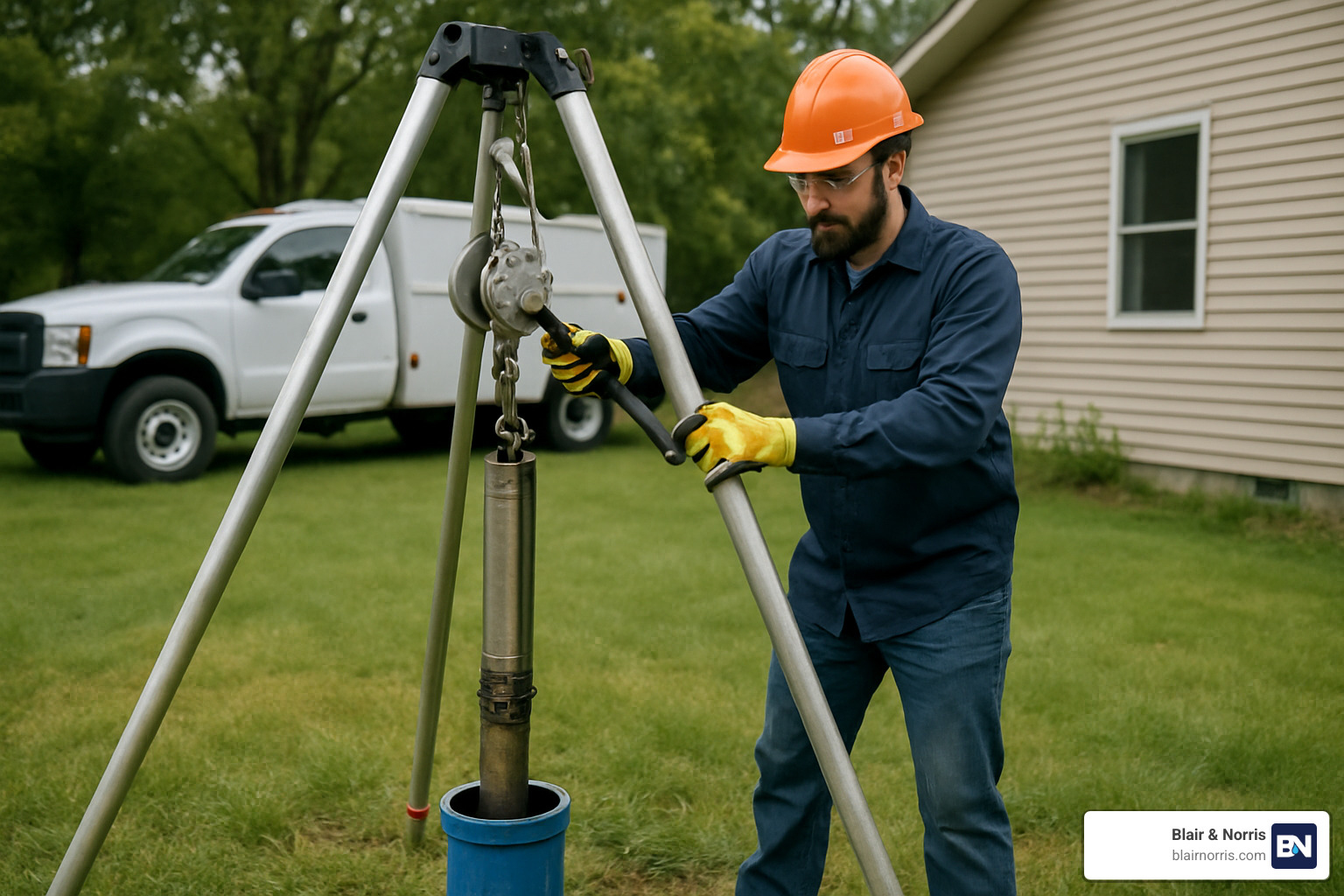
Submersible Pumps are installed completely underwater at depths ranging from 25 to 400+ feet. With lifespans of 8-15 years, they offer quieter operation and resistance to air locking problems. While they typically cost more to replace, their reliability makes them the most common choice for modern wells.
Jet Pumps come in two varieties. Single-drop models sit above ground and work effectively for wells up to 25 feet deep. They’re easier to access for repairs and generally less expensive. Their double-drop cousins can handle depths up to 90 feet by placing a jet assembly down in the well while keeping the motor above ground.
Centrifugal Pumps are the simplest option, positioned above ground beside your well head. With their straightforward design and lower initial cost, they’re easy to maintain but only work for very shallow wells (up to 25 feet).
2. 10 Warning Signs You Need Help Fast
Is your well pump trying to tell you something? Those strange noises and water quirks aren’t just annoying—they’re your system’s way of crying for help. Here are key signals that it’s time to search for well pump repair near me services:
When you turn on the faucet and get a spluttering mixture of air and water, that’s your first clue. This air sputtering often means your pump is struggling to maintain pressure. Similarly, a gradual decrease in water pressure throughout your home might indicate issues with the pressure switch or a clogged intake.
Has your water suddenly turned murky? Dirty or discolored water typically signals that your pump is pulling in sand due to a failing screen. And if your pump seems to be running constantly without shutting off, you could be facing a system leak or a waterlogged pressure tank.
A sudden spike in electricity usage often means your pump is working overtime. Strange noises like clicking, humming, or vibrating from your pressure tank or pump controller aren’t normal—they’re warning signs of electrical problems. Wet areas around your well head likely indicate a leak.
Perhaps the most obvious sign is a sudden complete stoppage of water. No water means your pump may have failed, lost power, or become disconnected. Another concerning pattern is short cycling—when your pump rapidly turns on and off every few seconds.
Finally, pay attention to any new foul odors or tastes in your water, particularly that distinctive rotten egg smell.
For a deeper dive into these warning signs, check out our guide to 13 signs your well pump needs to be repaired.
Well Pump Repair Near Me: Emergency Red Flags
While some pump issues give you a grace period, others demand immediate attention:
A complete no-water situation is an obvious emergency, especially during extreme weather or if you have family members with special needs.
Had a recent power outage or surge? Your pump’s sensitive electrical components might have suffered damage. The same goes for homes in areas hit by lightning storms—lightning strike damage can instantly fry pump controls and motors.
At Blair & Norris, we offer 24/7 live phone support because water emergencies don’t respect business hours.
Root Causes Behind the Symptoms
Many problems stem from sediment buildup over time. Sand, silt, and mineral deposits gradually accumulate in your pump, especially in areas with hard water.
The pressure switch is often the culprit behind erratic pump behavior. This component tells your pump when to turn on and off—when it fails, you might experience constant running or short cycling.
Your pressure tank contains an air bladder that can fail as it ages, allowing the tank to fill completely with water. This condition, called waterlogging, leads to short cycling.
Electrical issues account for many pump failures. Corroded connections, damaged wires, and failed capacitors can all prevent proper operation. Similarly, a failed check valve allows water to drain back down into the well.
3. Costs, Lifespan & Insurance—What to Expect
When your well pump starts acting up and you’re searching for well pump repair near me, one of the first questions is likely: “How much is this going to cost me?”
Most homeowners are relieved to learn that common well pump repairs typically range between $150 and $600. The simpler fixes, like replacing a worn-out pressure switch, usually land on the lower end. More complex issues, especially those involving submersible pumps that need to be pulled from deep underground, will naturally cost more due to the labor intensity.
A thorough well pump inspection runs between $250 and $550. Catching small issues during a routine inspection can save you thousands down the road.
If you’re facing a complete replacement, budget around $1,800 on average, though costs typically range from $1,000 to $2,500 depending on your specific setup. Factors that influence this price include the type of pump, well depth, and the horsepower needed for your household’s water demands.
Time-wise, most professionals can replace an above-ground pump in about 2-4 hours. Submersible pumps are more time-intensive, usually taking 4-5 hours to replace.
With proper care, you can expect your well pump to serve you for about 10-15 years. Several factors can influence this lifespan, including water quality, household usage, and equipment quality. Heavy-use households or those with budget pumps might see that lifespan shortened to around 8 years.
Regarding insurance, standard homeowners insurance typically only covers well pump damage if it’s caused by specific covered events like lightning strikes or fires. Normal aging and wear-and-tear repairs generally aren’t covered unless you’ve specifically added an equipment breakdown rider or purchased a home warranty that includes well systems.
The National Ground Water Association (NGWA) suggests treating your well system like any other major home component—set aside funds specifically for its maintenance and eventual replacement.
Stretching Your Pump’s Life
After you’ve invested in well pump repair near me services, you’ll naturally want to protect that investment:
Invest in quality equipment from the start. Higher-quality pumps and components typically deliver better efficiency and significantly longer lifespans.
Proper sizing matters enormously. An undersized pump will strain itself trying to meet your household’s demands, while an oversized one will cycle on and off too frequently—both scenarios lead to premature failure.
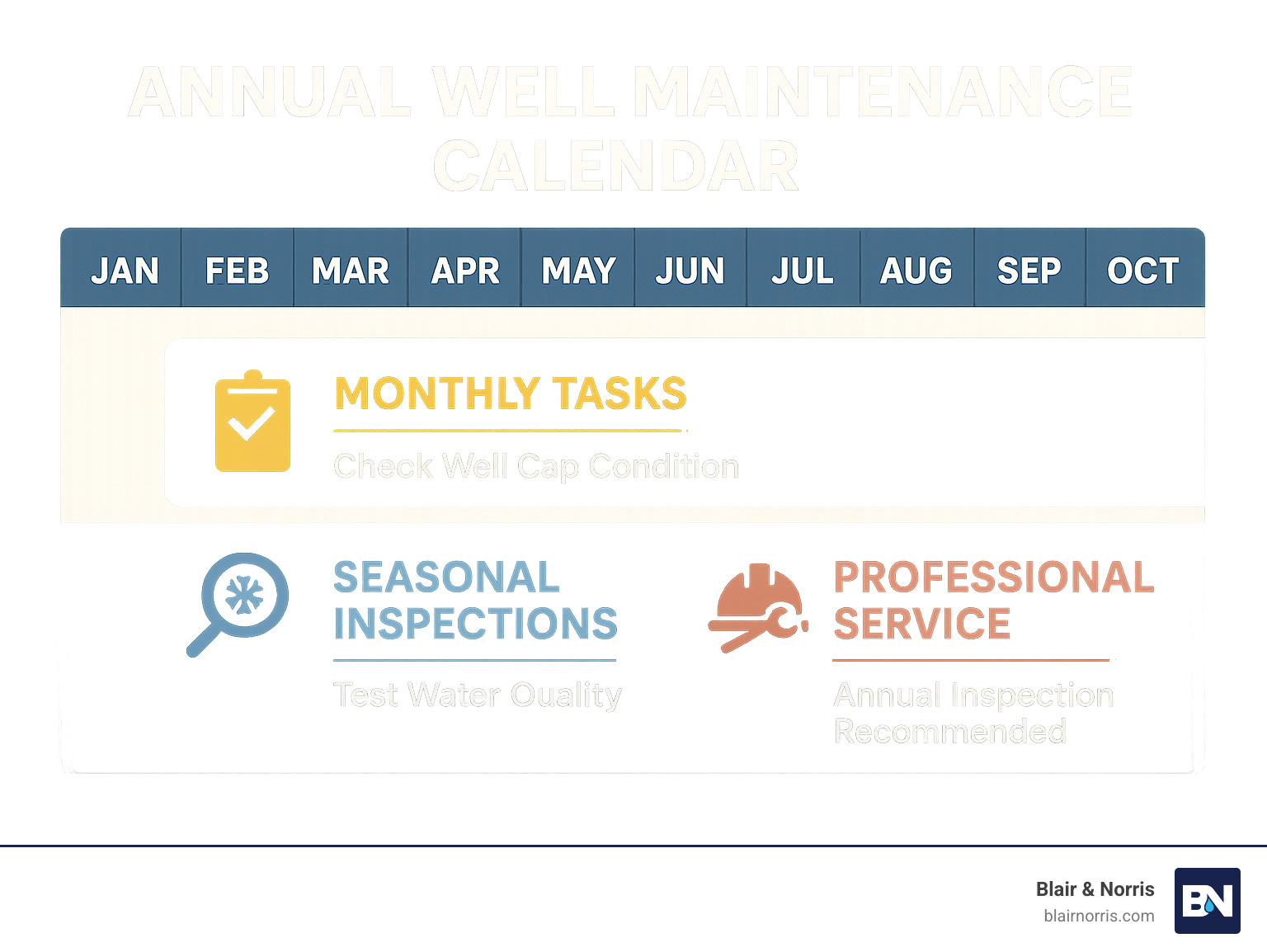
Annual inspections are worth every penny. Having a professional check your system yearly allows them to spot potential issues before they become failures.
Consider adding water filtration if your water has high sediment or mineral content. A whole-house filtration system acts like a shield for your pump, preventing abrasive particles from causing internal wear.
Power protection is often overlooked but critically important. Installing dedicated surge protection for your well system is a small investment that can prevent major electrical damage.
For more insights on selecting and maintaining the perfect pump for your specific situation, check out our guide on installing a well pump: types, costs, and maintenance.
4. How to Find Reliable Well Pump Repair Near Me
When your well pump fails and you’re frantically searching for well pump repair near me, you want someone trustworthy—not just the first name that pops up.
Start by checking proper licensing. Here in Indiana, legitimate well contractors must hold a license through the Department of Natural Resources. Also look for technicians with National Ground Water Association (NGWA) certification, which shows specialized training.
Before inviting anyone to work on your property, verify they carry adequate liability insurance and bonding. These protections safeguard you if something goes wrong during repairs.
Take some time to browse recent reviews on Google, Angie’s List, and HomeAdvisor. Look beyond the star ratings to what people are actually saying about response times, pricing, and communication.
Water emergencies don’t politely wait for business hours. That’s why at Blair & Norris, we believe true well pump repair near me services should offer genuine 24/7 availability with live phone support—not just an answering machine.
Experience matters tremendously with well systems. A company that’s been around for decades (like our 75 years at Blair & Norris) has likely encountered every possible pump configuration and problem.
Before any work begins, insist on receiving a detailed, itemized estimate in writing. This should clearly break down parts, labor, and any potential additional costs.
Well Pump Repair Near Me: Vetting Questions to Ask
When you’re on the phone with potential well pump repair near me services, the questions you ask can reveal volumes about their expertise:
“How many years have you been repairing well pumps?” Experience is golden in this field.
“Are you licensed, bonded, and insured specifically for well work?” Don’t just take their word for it—request license numbers you can verify.
“Do you charge a diagnostic fee, and is it applied toward repair costs if I proceed with your service?” Some companies waive the diagnostic fee if you approve repairs.
“What is your typical response time for emergency calls?” Quality providers prioritize no-water emergencies and offer same-day service when possible.
“Do you have experience with my specific pump model?” Different brands have unique quirks and repair requirements.
“What warranty do you offer on parts and labor?” Quality repairs should come with at least a one-year warranty.
Comparing Quotes & Services
When multiple well pump repair near me quotes land in your inbox, resist the temptation to automatically choose the lowest price.
Some companies offer flat-rate pricing for common repairs—you’ll pay the same amount regardless of how long the job takes. Others charge by the hour plus parts. Both approaches have merit, but understanding which you’re agreeing to is essential.
Ask about emergency surcharges upfront. Some companies significantly increase rates for after-hours service—sometimes doubling the standard rate.
Consider the value of maintenance plans when comparing overall service. Companies offering annual maintenance packages often catch small issues before they become expensive emergencies.
Warranty coverage can vary dramatically between providers. A quote that’s $50 higher but includes a comprehensive 2-year warranty might ultimately provide better value.
For more detailed information about finding quality residential well pump repair services, visit our residential well pump repair near me page.
5. Maintenance & DIY Checks to Prevent Future Problems
Nobody wants to frantically search for well pump repair near me at 2 AM when the shower suddenly runs dry. A little preventive maintenance can save you from those middle-of-the-night emergencies.
Your circuit breaker is often the unsung hero in well pump troubles. Every few months, locate the breaker for your pump and make sure it’s firmly in the “on” position. If you find it tripped, reset it once—but if it happens again, that’s a red flag that electrical issues need professional attention.
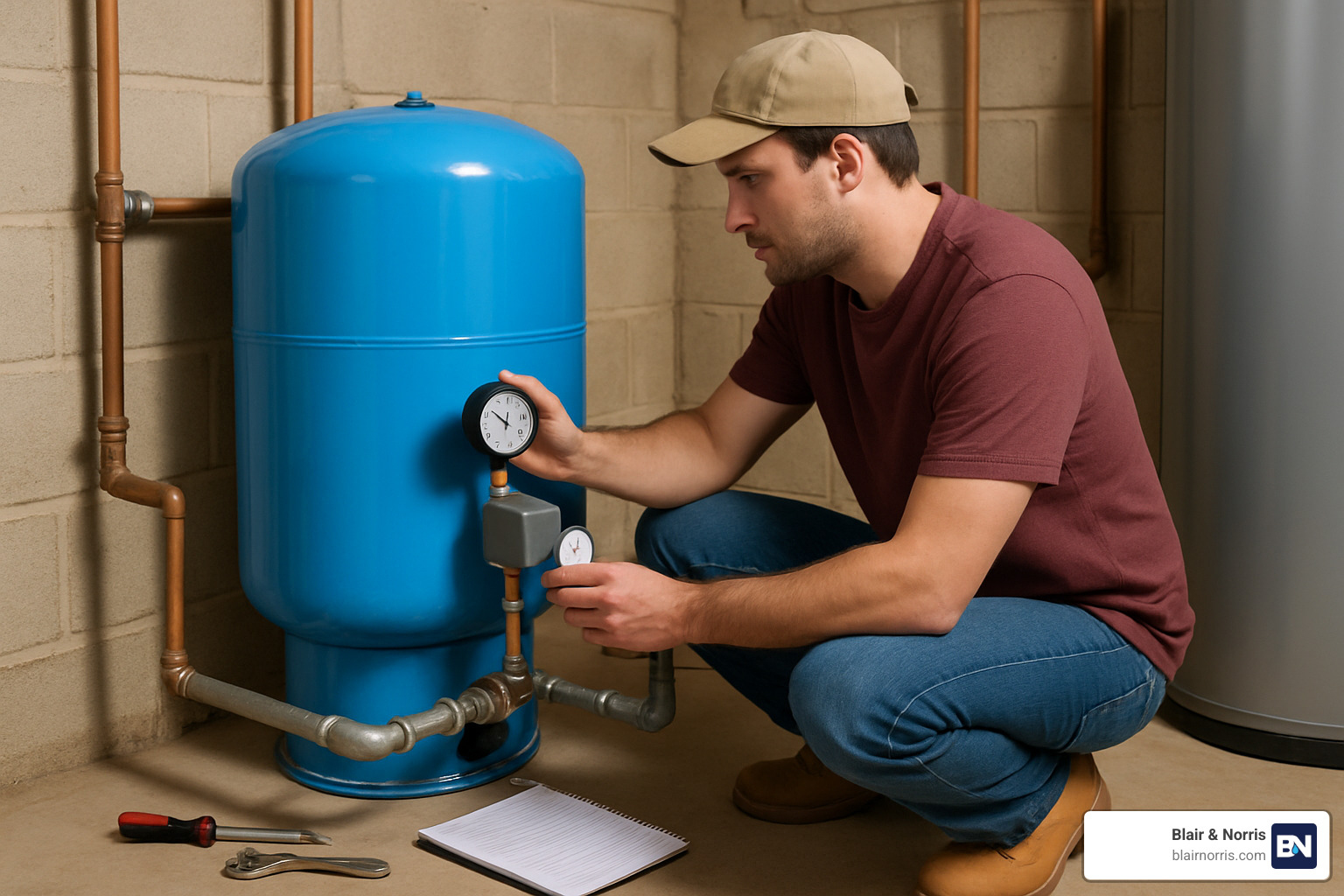
That pressure gauge on your tank isn’t just for show! When your household isn’t using water, it should read between 40-60 PSI. Numbers outside this range suggest your pressure switch might need attention.
While you’re near the pump, just listen. A healthy pump should run for at least 30 seconds when it kicks on. If yours runs for just a few seconds before shutting off again, your pressure tank or switch likely needs help.
Grab a flashlight and inspect your visible pipes and connections for leaks. Even tiny drips force your pump to work overtime, shortening its lifespan.
If your water suddenly contains floating sediment, you can partially flush the system by running an outside spigot for 15-20 minutes. Remember—this is a temporary fix for a problem that might need professional attention.
Keep a simple log of maintenance performed, unusual observations, and professional visits. This history becomes invaluable when technicians need to diagnose complex problems.
When to Call a Pro Instead of DIY
While changing your car’s oil might be within your comfort zone, some repairs should definitely stay in professional territory:
Your submersible pump lives deep underground for a reason—and it should stay there until a professional removes it. Attempting this yourself isn’t just difficult; it’s dangerous.
Your well pump runs on serious electrical power—220-240 volts that don’t forgive mistakes. Any repairs involving wiring, control boxes, or motors carry shock risks that simply aren’t worth taking.
Your well isn’t just a water source; it’s your drinking water. Improper well work can introduce bacteria and contaminants directly into your water supply.
Pressure tank issues are common, but replacement isn’t as simple as swapping parts. It involves electrical work and precise calculations to ensure proper sizing.
That warranty on your pump components? Most manufacturers will void it faster than you can say “DIY repair.” Professional service preserves your coverage.
For more insights on common problems and their solutions, our guide on 8 well pump problems and how to avoid them offers a deeper dive into preventative strategies.
Frequently Asked Questions about Well Pump Repair Near Me
How do I know if the issue is the pump or the pressure tank?
This is a question we hear almost daily when homeowners call about well pump repair near me services. While a professional diagnosis is always most accurate, you can look for these telltale signs:
If your pressure tank is the culprit, you’ll likely notice your pump turning on and off rapidly—running for just seconds before shutting down again. This short cycling is a classic pressure tank red flag. You might also experience water pressure that fluctuates wildly, or hear banging noises in your pipes when you turn off a faucet.
Here’s a simple test: gently knock on your pressure tank with your knuckles. The top portion should sound hollow, like tapping on a partially filled water bottle. If it sounds solid throughout—like knocking on a wall—your tank is likely waterlogged.
Pump problems, on the other hand, often announce themselves differently. You might face a complete water outage, steadily declining pressure over weeks, strange grinding noises, or suddenly murky water.
Is well pump repair covered by homeowners insurance?
Insurance coverage for well pumps falls into a gray area that depends entirely on what caused the problem.
Your homeowners insurance will typically cover damage resulting from specific “sudden and accidental” events. Did lightning strike your well system? That’s usually covered. Same goes for fire damage, fallen trees crushing equipment, or vandalism.
What’s almost never covered is normal wear and tear, sediment buildup, or electrical components that simply reach the end of their lifespan. Many policies also exclude freezing damage and problems resulting from poor maintenance.
Some homeowners add optional equipment breakdown coverage or specific well pump riders to their policies. These additions typically cost $25-50 annually but can save thousands when mechanical failures occur.
Can I get same-day emergency service?
When your family has no water, waiting days for help isn’t an option. That’s why at Blair & Norris, we’ve built our emergency response system around getting your water flowing again quickly.
We provide genuine 24/7 live phone support with knowledgeable staff who understand well systems. For no-water emergencies, our typical response time is just 2-4 hours throughout Indianapolis and surrounding areas.
Our service vehicles come fully stocked with common replacement parts—pressure switches, capacitors, control boxes, and even several pump models—allowing us to complete most repairs in a single visit.
To help us serve you faster, be ready to describe your symptoms in detail, know your approximate well depth if possible, and ensure clear access to both your well head and electrical panel.
Conclusion
Facing well pump issues can turn your household upside down in an instant. When you’re frantically searching for well pump repair near me services, every minute without water feels like an eternity. That’s why taking prompt action is essential for protecting both your water supply and your wallet.
Water truly is the lifeblood of your home. From morning showers to cooking dinner, from washing clothes to simply staying hydrated—reliable water delivery touches every aspect of daily life. At Blair & Norris, we’ve witnessed how disruptive water emergencies can be for families throughout Indianapolis and surrounding communities.
Over our 75 years serving Indiana homeowners, we’ve built our reputation on something simple but increasingly rare: treating your home like it’s our own. As a family-owned business, we understand that well pump problems aren’t just technical issues—they’re personal emergencies that affect your family’s comfort and routine.
That’s precisely why we offer 24/7 live phone support with real human beings, not frustrating recordings or overseas call centers. When your well pump fails at 2 AM, you deserve to speak with someone who understands both the technical aspects of your problem and the stress you’re experiencing.
Many well pump failures can be prevented through regular maintenance. With proper care and occasional professional check-ups, your well pump can provide reliable service for many years beyond the average lifespan.
Still wondering whether repair or replacement makes more sense for your situation? Visit our comprehensive guide on well pump repair or replacement: the important considerations for expert insights.
Don’t let well pump problems leave your family high and dry—contact Blair & Norris today and find why generations of Indiana homeowners have trusted us with their water systems. Because when water matters most, experience matters most.