
Maintaining Clean Well Water: When to Replace Your Filters
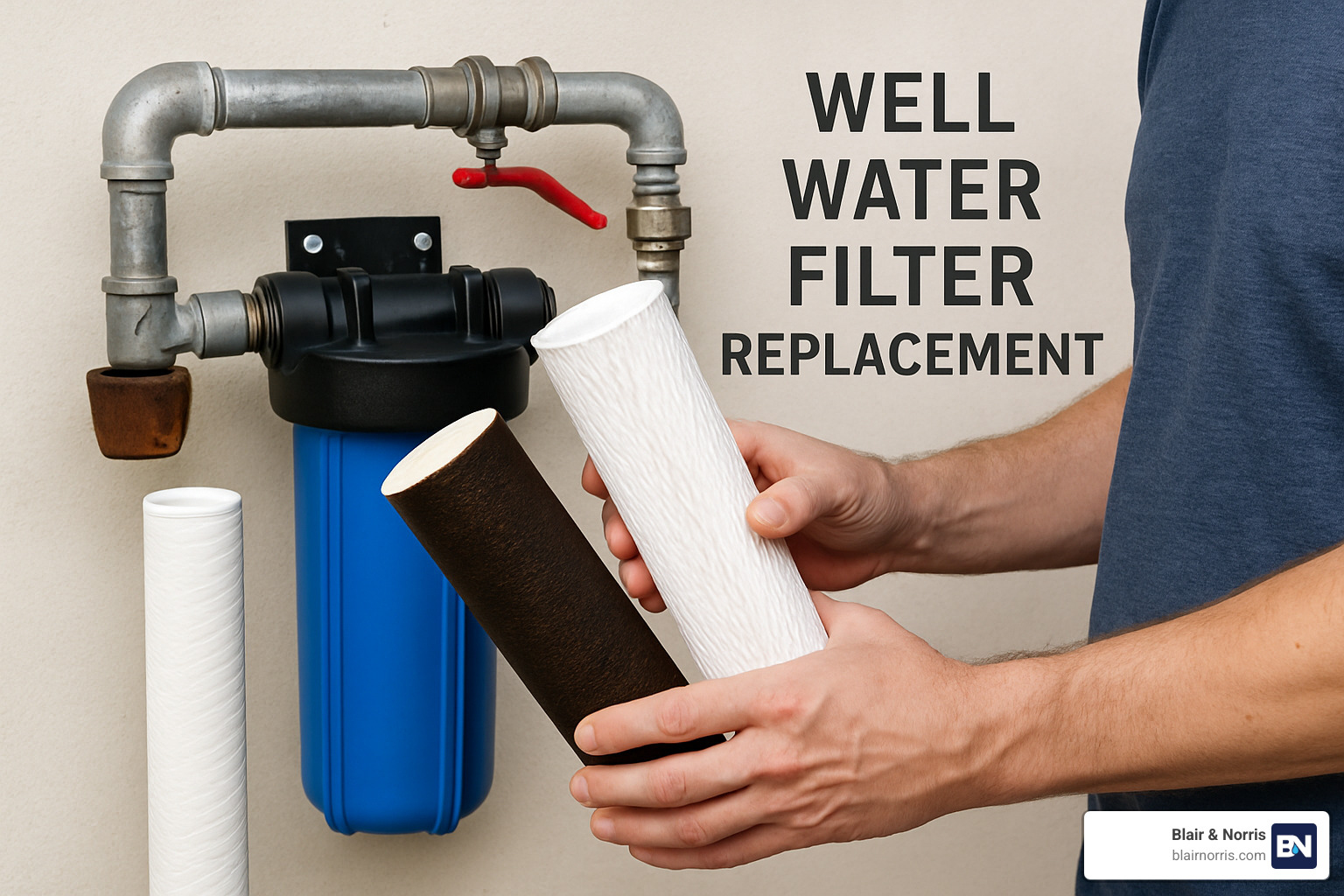
Well water filter replacement is a critical maintenance task that ensures your home’s water remains clean, safe, and pleasant to use. For Central Indiana homeowners relying on well water, knowing when and how to replace your filters can prevent costly system failures and protect your family’s health.
Quick Guide to Well Water Filter Replacement:
| Filter Type | Replacement Frequency | Signs It’s Time to Replace |
|---|---|---|
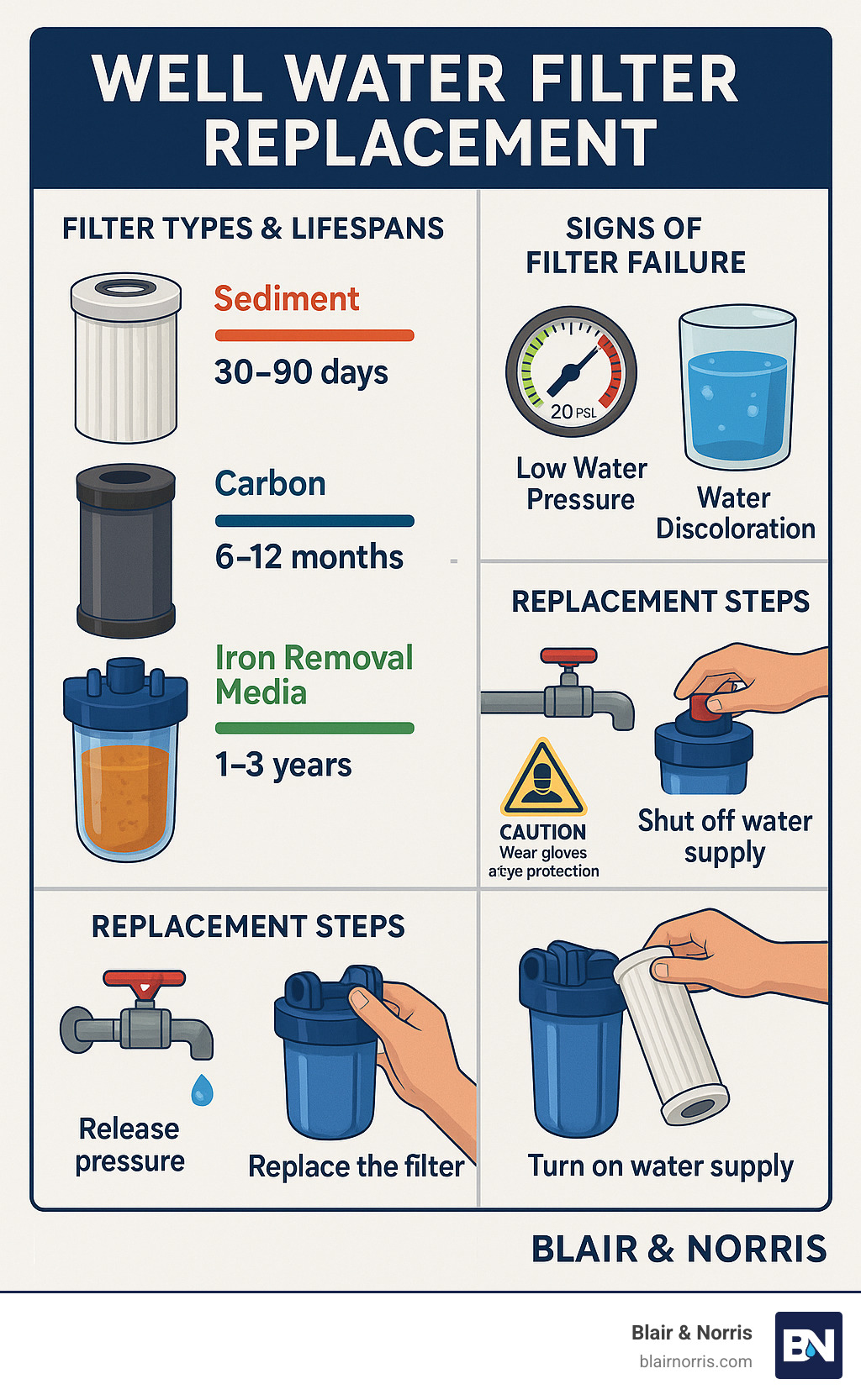
| Sediment Cartridges | 30-90 days | Pressure below 20 PSI, slow water flow |
| Carbon Block Filters | 6-12 months | Odors, bad taste, discoloration |
| Iron/Manganese Media | 1-3 years | Orange/brown staining, metallic taste |
| Specialty Media | 3-5 years | Depends on water quality and usage |
Many well owners don’t realize that different filters have vastly different lifespans. Your home’s water quality, usage patterns, and the specific contaminants in your well directly impact how often replacements are needed.
“We grew up in the city and have retired to our country home on well water…are there any things we should look for or do (or NOT do!) when looking at filter systems?” This question from a homeowner highlights the common confusion surrounding well water filtration maintenance.
The truth is, waiting until you notice problems often means you’ve waited too long. Regular, scheduled replacements are the key to maintaining consistent water quality and protecting your well pump and plumbing system.
For peace of mind and to ensure your filters are replaced on the optimal schedule, call Blair & Norris to set up an annual maintenance plan custom to your specific well system.
How to Spot a Failing Filter
Ever turned on your kitchen faucet to find brown water or noticed your shower pressure isn’t what it used to be? These aren’t just annoying inconveniences—they’re your well water system crying out for help.
Unlike city water with its regular testing and treatment, your family’s water quality depends entirely on your filtration system doing its job. When those filters fail, problems follow quickly.
“Most of the emergency calls we get at 2 AM could have been prevented with regular filter maintenance,” shares one of our veteran technicians. “It’s always better to replace a filter on Tuesday afternoon than deal with a system failure during Sunday dinner with the in-laws.”
Common well water filter replacement indicators
Your water filter won’t send you a text message when it’s ready to retire, but it does communicate in other ways. Here are the signals that well water filter replacement should move to the top of your to-do list:
That pressure gauge on your system isn’t just for show—when it drops below 20 PSI, your filter is likely clogged with sediment. This restriction forces your pump to work overtime, potentially shortening its lifespan and leading to costly repairs.
Notice a rotten-egg smell when you turn on the tap? That’s hydrogen sulfide sneaking through your worn-out carbon filter. Similarly, musty or chemical odors suggest your filter has become a breeding ground for bacteria rather than a barrier against them.
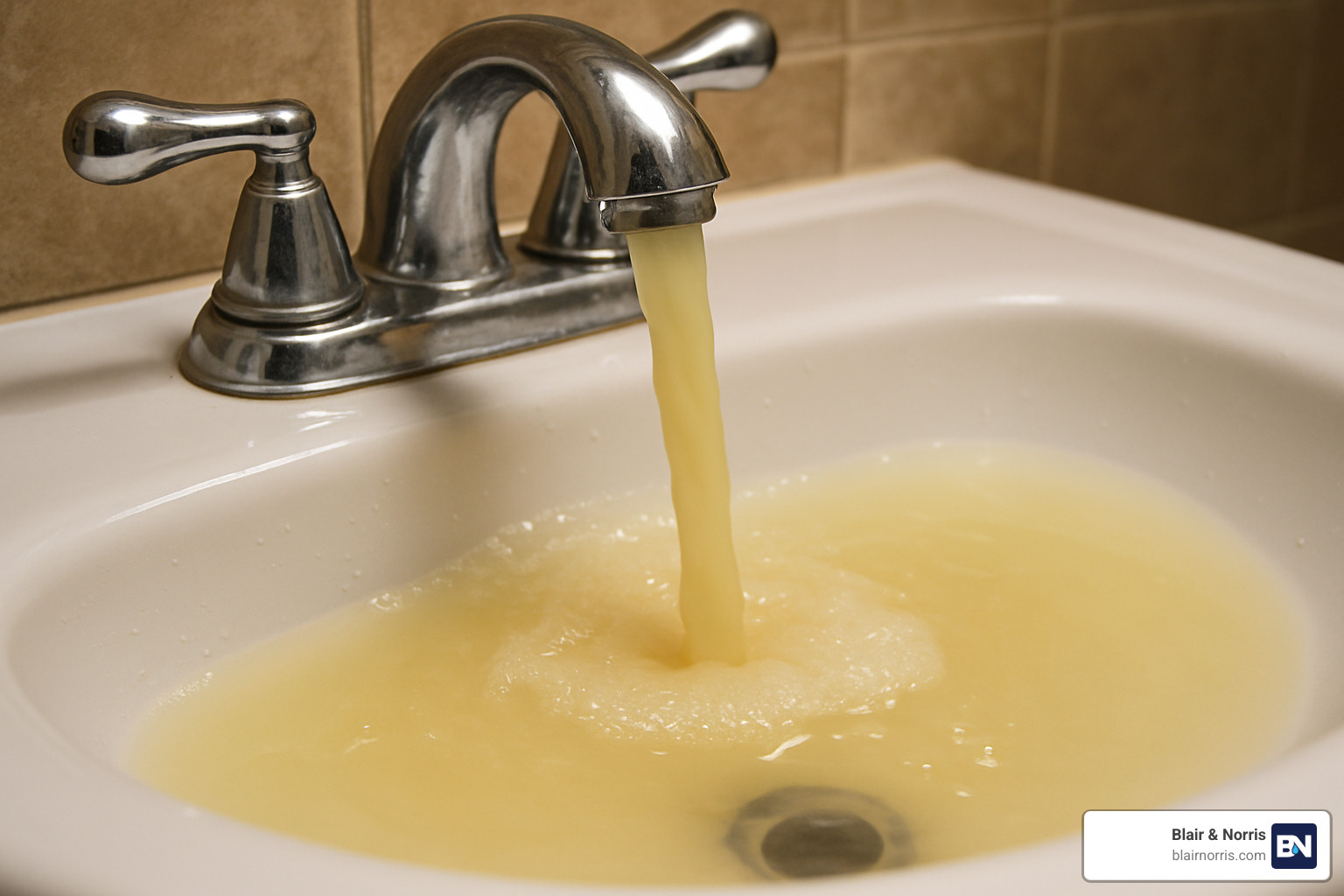
Those orange or brown stains appearing in sinks and toilets aren’t a décor choice—they’re iron and manganese that should have been captured by your filter. These minerals don’t just stain porcelain; they’ll leave their mark on your laundry and plumbing fixtures too.
When multiple faucets show reduced flow simultaneously, your filter is likely restricting water passage. And cloudy or discolored water is perhaps the most obvious red flag that your filtration system needs immediate attention.
When should you replace?
Different filters in your system have their own lifespans, and understanding these timeframes helps you stay ahead of problems:
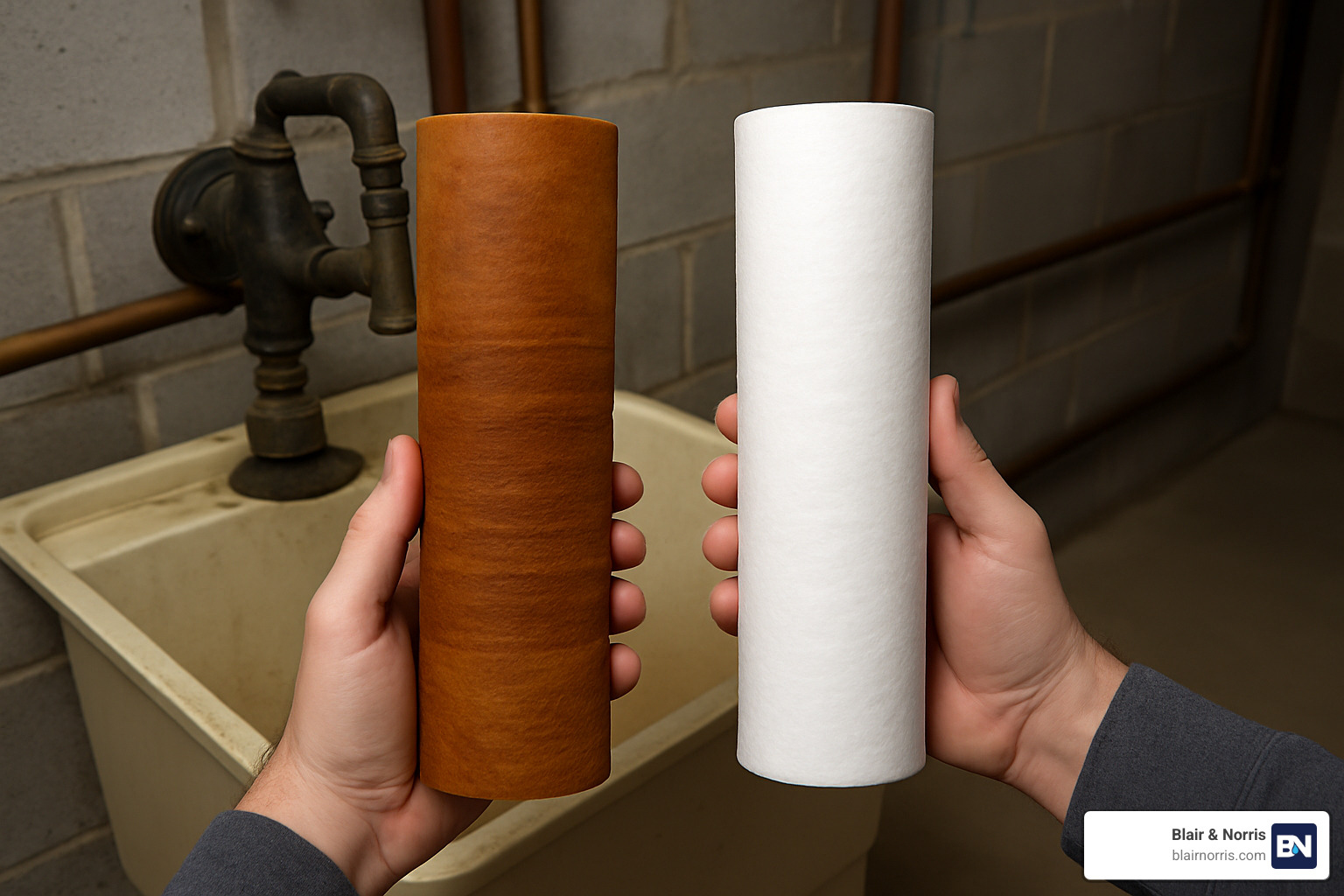
Your sediment cartridges (typically the first line of defense in your system) need the most frequent attention, usually every 30-90 days. These workhorses catch sand, silt, and rust particles before they reach your more specialized filters.
Carbon block filters that handle taste, odor, and certain chemicals typically need replacement every 6-12 months. When these overstay their welcome, that chlorine taste or musty smell will be your first clue.
Iron and manganese removal media can last 1-3 years depending on your water quality and usage. These specialized filters prevent the orange-brown staining that’s the hallmark of iron-rich well water.
Some high-capacity specialty systems can function effectively for 3-5 years, but they’re the exception rather than the rule.
“Well water isn’t consistent year-round,” explains our service manager. “Heavy spring rains can wash different contaminants into your well, while summer droughts concentrate minerals. Your replacement schedule might need seasonal adjustments.”
Homes with high sediment, iron, or hardness levels will need more frequent replacements than those blessed with relatively clean well water. If you’re noticing filters clogging faster than recommended intervals, it’s time for a water quality check.
For peace of mind and to ensure your filters are replaced on the optimal schedule, call Blair & Norris to set up an annual maintenance plan custom to your specific well system. Our technicians will create a customized replacement calendar that protects both your water quality and equipment.
For more detailed information about keeping your well water system in top shape, check out our guide to essential well water maintenance.
Well Water Filter Replacement: Best Options for Every Problem
Selecting the right replacement filter isn’t just about buying whatever’s on sale at the hardware store – it’s about understanding what’s actually in your well water. As we often tell our customers here in Central Indiana, “You wouldn’t put the wrong oil in your car, so don’t put the wrong filter in your water system!”
Let’s break down your best options for tackling common well water challenges in our region.
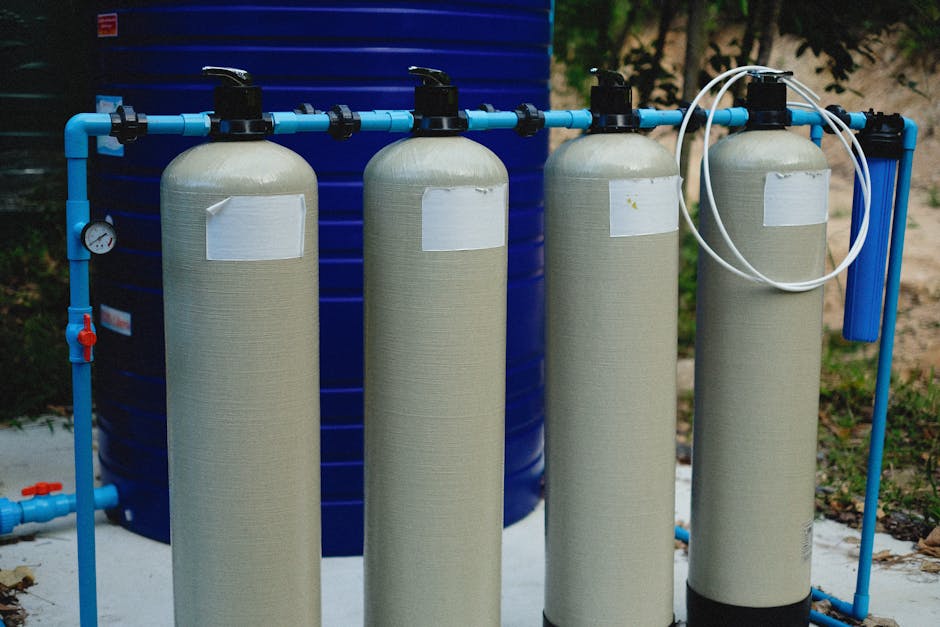
Top 6 Well Water Filter Categories for Indiana Homes
When it comes to well water filter replacement, you’ve got options that target specific problems. Think of these filters as your water’s personal bodyguards – each specializing in taking down different “bad guys” in your water.
Sediment First-Line Defense
Sediment filters are the bouncers of your water system – they stand at the front door and stop the troublemakers before they can get inside. These are typically the first filters that need replacing in your system.
If you’ve ever filled a glass of water and noticed tiny particles floating around, your sediment filter is crying for help. String-wound polypropylene filters (5-50 micron) handle coarser particles, while melt-blown options (1-20 micron) catch the finer stuff. For most Indiana wells, we recommend starting with a 20-micron filter followed by a 5-micron for that one-two punch against particles.
As Jim, one of our technicians likes to say, “If you can see sand in your water, you need a 40–50 micron filter. If you feel grit between your fingers, go with a 20-40 micron. When in doubt, start coarser and work your way down.”
Carbon Block Taste & Odor
Does your water smell like rotten eggs or taste like you’re licking a penny? That’s where carbon block filters shine. Made from compressed carbon particles, these filters are masters at trapping the chemicals causing those unpleasant sensations.
Coconut shell carbon provides superior adsorption compared to other materials, and the CTO rating (Chlorine, Taste, Odor) tells you exactly what that filter excels at removing. For the average Indiana family, these filters typically handle about 20,000-30,000 gallons before needing replacement – roughly 6-12 months of normal use.
Remember to check your flow rate compatibility – an oversized carbon block can restrict water flow like a clogged artery, leaving you with disappointing shower pressure.
Iron/Manganese Reducers
Those orange-brown stains in your toilet bowl and sinks? That’s iron and manganese saying hello. For many Indiana well owners, these minerals are public enemy #1.
KDF-85 works well for moderate iron levels, while manganese dioxide (sold as Filox or Pyrolox) offers higher capacity for homes with serious iron issues. The specialized FM25B media tackles both iron and manganese at once – perfect for efficiency.
One crucial tip we share with our customers: check your water’s acidity before installing an iron filter. As our senior technician puts it, “Treating iron in acidic water is like trying to bail out a boat with a colander – it just won’t work.” Many parts of Indiana have slightly acidic well water, so this step saves a lot of headaches.
KDF + Carbon Heavy-Metal Guard
This dynamic duo doesn’t just remove contaminants – it actively prevents bacteria from setting up camp inside your filter. The KDF (Kinetic Degradation Fluxion) media works with carbon to create a powerful defense against heavy metals like lead and mercury.
KDF-55 works best for water that’s been chlorinated (like after a shock treatment), while KDF-85 is the champion against iron and that rotten-egg smell from hydrogen sulfide. These typically last 6-12 months, making them a smart investment for your family’s health.
Reverse Osmosis Polisher
While typically installed under your kitchen sink rather than for the whole house, reverse osmosis (RO) systems are the overachievers of water filtration. They remove virtually everything from your water, leaving you with pure H2O.
RO systems remove up to 99% of dissolved contaminants through a semi-permeable membrane that acts like a bouncer at an exclusive club – only water molecules get through. The multi-stage filtration includes pre-filters, carbon filters, and post-filters for comprehensive protection.
“Think of RO as the gold standard for drinking water,” explains our water quality specialist. “The membrane typically lasts 2-5 years, while the supporting filters need changing every 6-12 months.”
UV Disinfection Backup
For the ultimate peace of mind, especially for families with young children or elderly members, UV disinfection provides that final shield against microbiological threats without using chemicals.
UV light disrupts the DNA of microorganisms, preventing them from reproducing and causing illness. With 99.99% effectiveness against bacteria, viruses, and parasites, it’s like having a microscopic security guard working 24/7.
Just remember that UV systems need clear water to work properly (so pre-filtration is essential), and the bulb needs yearly replacement regardless of how much water you use. For scientific research on UV effectiveness, check out the Water Quality Association.
Keeping track of all these filter replacements can be overwhelming, which is why many of our customers opt for Blair & Norris’s annual maintenance plan. Our technicians handle the scheduling, replacements, and system checks, so you never have to worry about when to change which filter. One call to our 24/7 live support line, and your water system maintenance is handled for the year – giving you one less thing to worry about.
Choosing & Installing the Right Replacement Filter
Selecting the correct replacement filter isn’t just about buying a new cartridge – it’s about ensuring your family’s water stays clean and your system runs smoothly. Let’s walk through this process together, just as I would explain it to my own neighbor.
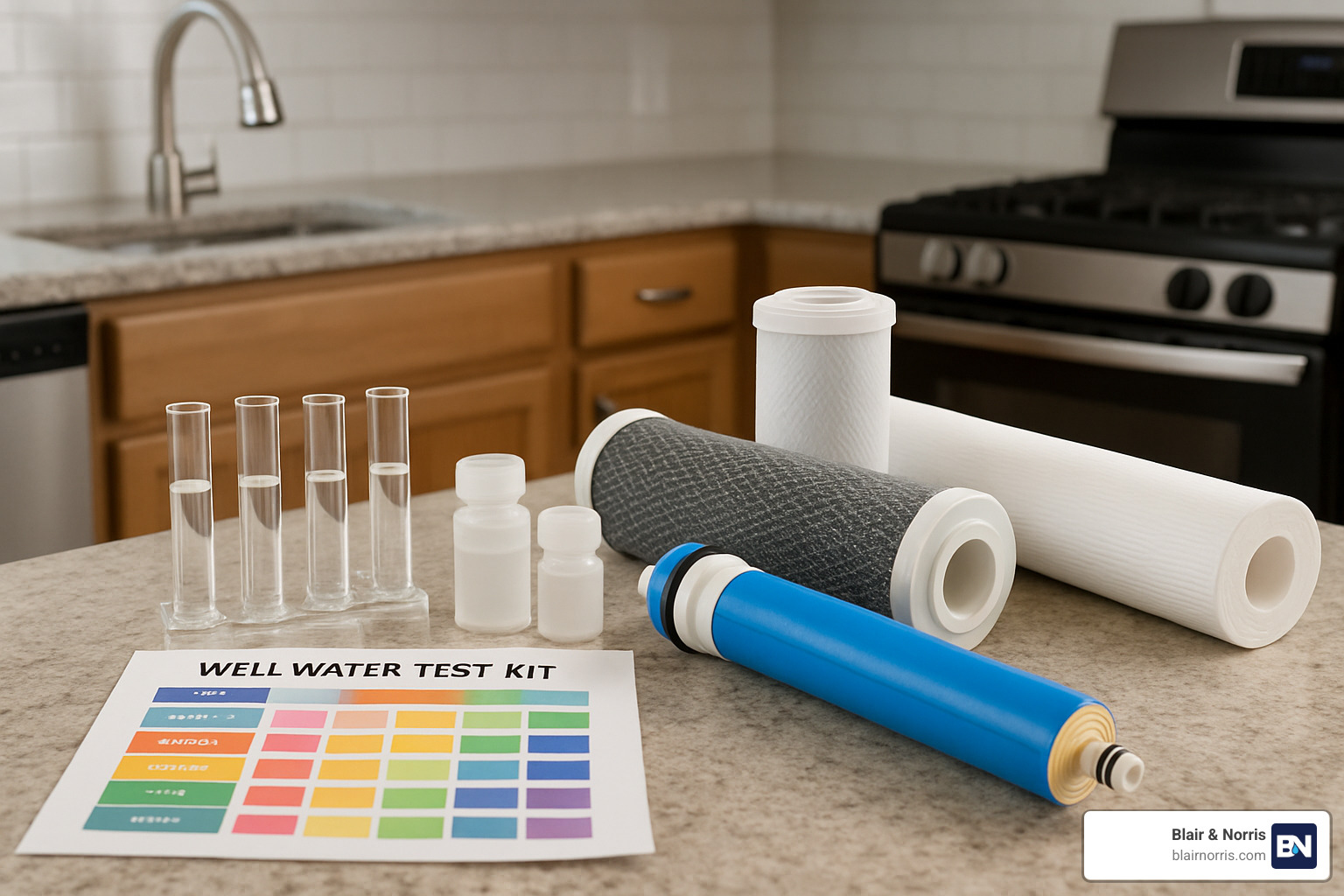
Filter Selection Guide
The foundation of good filter selection is knowing what’s actually in your water. A comprehensive water test is worth its weight in gold – it reveals exactly what you’re dealing with, from bacteria and nitrates to iron and manganese. With test results in hand, you can target specific problems rather than guessing.
Your system’s flow rate matters tremendously. Most Indiana homes need at least 8-12 gallons per minute to function properly. Think of flow rate like your home’s water highway – too narrow, and everything backs up. I’ve seen well pumps burn out prematurely simply because someone installed a filter that was too restrictive.
“The most common mistake I see is homeowners buying filters based solely on price without considering flow requirements,” shares one of our senior technicians. “That $15 savings can turn into a $1,200 pump replacement.”
When it comes to sizing, precision matters. Standard filters typically come in 10″ x 2.5″ dimensions, while “Big Blue” filters measure 10″ x 4.5″ for higher capacity. For homes with higher water usage, extended 20″ versions of both sizes are available. Using the wrong size is like trying to fit a square peg in a round hole – leaks and water bypass are inevitable.
The micron rating tells you how fine the filtration is. Lower numbers mean finer filtration – a 1-micron filter catches much smaller particles than a 20-micron filter. For context, beach sand requires 40-500 micron filtration, while dangerous cysts need 0.5 micron or smaller. Your water test results will guide this decision.
Always verify compatibility with your existing filter housing. Check the manufacturer specs, O-ring size, and thread pattern. It’s like making sure you have the right key for your lock – close isn’t good enough.
Here’s a quick comparison to help you understand what you’re working with:
| Filter Type | Best For | Replacement Frequency | Relative Cost | DIY Difficulty |
|---|---|---|---|---|
| Sediment | Sand, silt, particles | 1-3 months | $ | Easy |
| Carbon Block | Taste, odor, chemicals | 6-12 months | $$ | Easy |
| Iron Reduction | Iron, manganese | 1-3 years | $$$ | Moderate |
| RO Membrane | Comprehensive filtration | 2-5 years | $$$$ | Difficult |
| UV Lamp | Bacteria, viruses | Annual | $$ | Moderate |
Step-by-step swap procedure
When it’s time for well water filter replacement, following the right steps ensures you’ll get the job done safely and effectively.
Start by gathering everything you’ll need: your new filter cartridge, a filter housing wrench, a bucket for inevitable spills, clean towels, and food-grade silicone lubricant for the O-rings. Being prepared saves you from that frustrating mid-job trip to the hardware store.
Safety first – turn off your water supply by closing the inlet valve before the filter housing and the outlet valve after it. If needed, shut off your well pump. This prevents unexpected water sprays that I’ve seen soak more than a few ceilings!
Relieve pressure in the system by pressing the pressure relief button on top of the housing and opening a downstream faucet. Skipping this step is like opening a shaken soda can – you’ll get soaked.
Remove the housing by turning counter-clockwise with your filter wrench. Support the housing as you loosen it – it contains water and will be heavy. I learned this lesson the hard way when I dropped my first housing and cracked it.
When replacing the cartridge, take a moment to clean the housing interior with mild soap and water. Check that you’re installing the new cartridge with the correct orientation – some have a specific up/down direction.
The O-ring is your water-tight seal, so treat it with care. Remove it, check for cracks or stretching, apply a thin layer of food-grade silicone lubricant, and carefully reposition it in the groove. “That tiny O-ring is actually your most important part,” explains our senior technician. “More leaks happen from O-ring issues than anything else.”
When reinstalling, hand-tighten the housing first, then use the wrench for final tightening – but don’t go overboard. Over-tightening can crack the housing or damage the O-ring.
Restore water flow gradually by slowly opening the inlet valve and checking for leaks. Open downstream faucets to purge air, closing them once water runs clear. This slow approach prevents water hammer that can damage your plumbing.
DIY vs. pro help
Many homeowners can handle basic well water filter replacement on their own, especially for standard sediment cartridges, carbon blocks, and simple systems with accessible filter housings. It’s satisfying to maintain your own water system, and the process is straightforward once you’ve done it a time or two.
However, there are definitely situations where calling in a professional makes sense. Complex multi-stage systems, backwashing filter media replacement, or electronic control valve programming can be tricky for even the handiest homeowner. If your system is behaving unusually, showing high pressure readings (above 80 PSI), or is under warranty, professional help protects both your system and your warranty coverage.
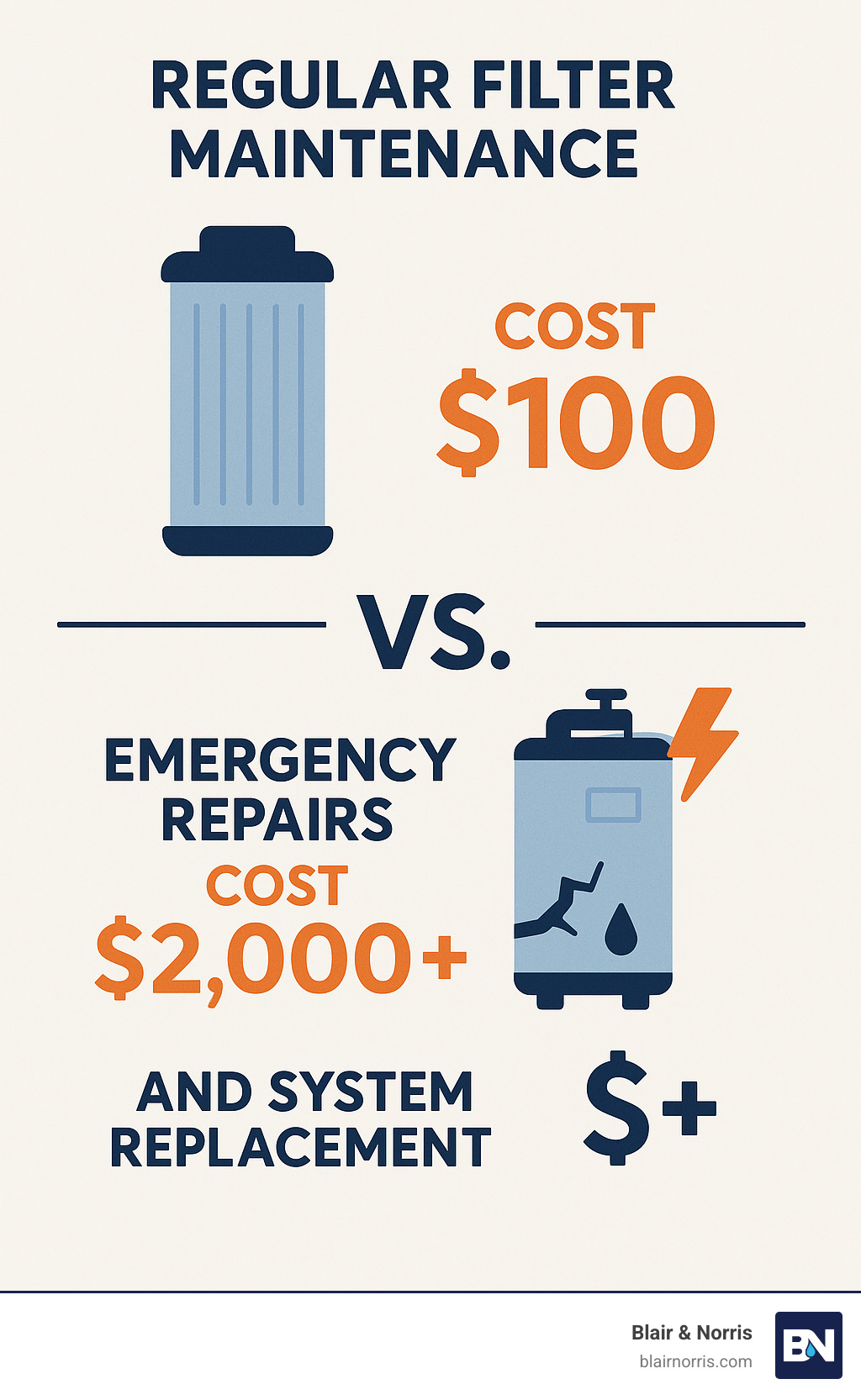
“I’ve seen DIY replacements go sideways when homeowners cross-threaded housings or installed incompatible cartridges,” notes our service manager. “What should have been a $150 service call became a $600 emergency repair.”
For safety, always wear gloves when handling used filters – they contain concentrated contaminants that you don’t want on your skin. And if you’re ever unsure about any part of the process, Blair & Norris provides 24/7 phone support to walk you through it or schedule a service call if needed.
The smartest approach for most homeowners is to set up an annual maintenance plan with Blair & Norris that includes professional well water filter replacement based on your specific system and water quality. This ensures your filters are changed at the optimal intervals by trained technicians who can spot potential issues before they become problems. One call sets up protection for your entire year, giving you peace of mind and saving you from calendar reminders and DIY hassles.
Maintenance, Subscriptions & Responsible Disposal
Establishing a regular maintenance routine for your well water filtration system not only ensures clean water but can also save you money and extend the life of your entire plumbing system.
Subscription and Multi-Pack Savings
Let’s talk about saving both money and hassle when it comes to your well water filter replacement needs.
Subscription services can save you anywhere from 10-25% on regular filter deliveries, plus you’ll never have that sinking feeling of realizing you forgot to order replacements. I remember one homeowner telling me, “I finally signed up for automatic delivery after finding myself without clean drinking water over a holiday weekend. Never again!”
Multi-pack purchases are another smart option, offering bulk discounts of 15-30% when you buy 3, 6, or 12 filters at once. As one water specialist points out, “Multi-pack purchases make perfect sense for sediment filters in Indiana wells. A typical 6-pack will cover about 6-9 months of use, and you’ll always have a backup on hand.”
For many homeowners, though, the ultimate peace of mind comes from an annual service agreement with Blair & Norris. We’ll handle your filter replacements on a set schedule, inspect your entire system, and optimize performance—all while you focus on more enjoyable things than crawling around your utility room with a filter wrench.
Proper Maintenance Practices
Taking care of your filter housing is just as important as changing the filters themselves. During cartridge changes, take a moment to clean the housing with mild soap and water. Look for any cracks or mineral buildup that might cause problems later. Plastic housings should be replaced every decade—a recommendation that many homeowners overlook until it’s too late.
Those little O-rings deserve special attention too. They’re the unsung heroes preventing leaks in your system. Inspect them during every filter change and replace any that show signs of wear. Always use food-grade silicone lubricant—never petroleum-based products that can degrade the rubber. As one of our technicians likes to say, “A $2 O-ring can prevent a $2,000 water damage claim.”
Keep an eye on your pressure gauge readings weekly and jot them down in a maintenance log. This simple habit helps you spot trends before they become problems. If your system includes backwashing components, verify that cycle times are correct and check that drain lines remain clear.
Annual professional inspections are worth their weight in gold. Our technicians at Blair & Norris can perform a comprehensive evaluation, test your water quality, and inspect control valves before small issues become major headaches.
Responsible Filter Disposal
Being environmentally conscious with your used filters is easier than you might think. For standard sediment filters, allow them to dry completely before disposal—this reduces weight and prevents any trapped contaminants from leaching. In most areas, they can go with regular household waste, though it’s always good to check local regulations.
Carbon filters sometimes have recycling options available in certain communities. If not, proper drying before disposal is still the way to go. One important note: never burn used carbon filters as they may release captured contaminants into the air.
Specialty media, particularly some iron reduction materials, might require special handling. When in doubt, check the manufacturer guidelines or contact your local hazardous waste facility for advice.
Don’t forget about the housings themselves when it’s time for replacement. Plastic components are typically recyclable (look for the recycling code), and metal parts can find new life as scrap metal. As one water treatment specialist emphasizes, “We strongly recommend replacing the bottom of all plastic housings every ten years”—a small investment compared to the water damage a catastrophic failure could cause.
Recommended well water filter replacement schedule
Creating a structured well water filter replacement schedule ensures you’ll have consistent water quality without unexpected interruptions.
Mark your filter change dates on a calendar or set smartphone reminders to stay on track. I’ve found that homeowners who label each filter housing with the last change date are far less likely to fall behind on maintenance. One customer cleverly uses a waterproof label maker to note both the date changed and the next replacement date right on the housing.
The most successful well owners schedule an annual service call with Blair & Norris. During this visit, we handle multiple filter changes at once, sanitize the system if needed, and perform a thorough inspection. Many customers time this for early spring, ensuring their system is in top shape before the heavy summer water usage begins.
Keep records of all your replacements and note any changes in water quality. This documentation helps identify patterns and optimize your maintenance schedule. Annual water testing is equally important—it reveals changes in water chemistry that might require adjustments to your filtration approach.
Extending filter life
Want to get the most value from your filters? A few expert strategies can make a significant difference.
Installing spin-down pre-filters is one of the smartest investments you can make. These self-cleaning devices capture larger sediment before it reaches your cartridge filters, often extending downstream filter life by 2-3 times. One customer reported changing her sediment cartridges every 6 weeks before adding a spin-down pre-filter—now she gets nearly 4 months from each cartridge.
If you shock-chlorinate your well, remember to bypass your filters during the process. “Chlorine can damage filter media and dramatically shorten its lifespan,” explains our senior technician. “Always use a chlorine test kit to ensure all chlorine is flushed before installing new filters.”
Using bypass valves during high-demand activities like lawn irrigation or pool filling can significantly reduce the burden on your filters. This simple habit can add months to your filter life, especially during summer when outdoor water usage peaks.
Consider your water usage patterns too. Spacing out laundry and dishwashing throughout the week rather than doing everything on “chore day” distributes the filtration load more evenly. Some customers even adjust their filter replacement schedule seasonally to account for different usage patterns between summer and winter.
Addressing root causes of water quality issues can have the biggest impact of all. Repairing well casing problems, properly sealing your well cap, and considering the depth and quality of your aquifer all contribute to better water quality before filtration even begins.
For more detailed information about managing sediment specifically, visit our comprehensive guide on sediment management.
Conclusion
Proper well water filter replacement isn’t just a maintenance task—it’s an investment in your family’s health and your home’s plumbing system. Throughout Central Indiana, well owners face water quality challenges unique to our region, from iron-rich groundwater to seasonal sediment fluctuations.
As we’ve explored throughout this guide, knowing when and how to replace your filters is essential knowledge that every well owner should have. Whether you’re dealing with clogged sediment cartridges, saturated carbon blocks, or specialized filter media, each component plays a crucial role in delivering clean, safe water to your taps.
I’ve worked with thousands of Indiana homeowners over the years, and I’ve seen how a little preventative maintenance saves enormous headaches down the road. Sediment filters might need changing every month, while specialty media could last five years—there’s no one-size-fits-all schedule. Your home’s specific water chemistry dictates your replacement timeline.
Those orange stains in your bathroom? That rotten egg smell? The dropping water pressure? These aren’t just annoyances—they’re your well system crying out for attention. Addressing these issues promptly through regular filter maintenance prevents damage to your well pump, water heater, and plumbing fixtures.
The most successful well owners I’ve worked with share one common practice: they don’t wait until there’s a problem. They have professional annual maintenance that includes filter replacements, water testing, and system optimization. This proactive approach is always more affordable than emergency repairs.
At Blair & Norris, we’ve been serving Central Indiana’s well water needs for over 75 years. We understand the limestone aquifers, seasonal changes, and agricultural influences that make our region’s groundwater unique. Our family-owned business is committed to honest service with no unnecessary upsells—just practical solutions to real water problems.
Don’t wait until you’re showering in rust-colored water or your coffee tastes like sulfur. Call Blair & Norris today to schedule your annual well water filter replacement service. Our technicians will create a customized maintenance schedule based on your specific well system, water quality, and household needs.
For additional insights about well pump considerations that might affect your filtration system, visit our comprehensive guide here.
Your family deserves clean, safe water every day of the year—let us help you keep it that way with 24/7 live phone support and decades of local well water expertise.