
Why a Residential Water Well Is Worth Understanding
A residential water well is a private water source that taps into underground aquifers, supplying your home with fresh water. Unlike municipal systems, well owners control their water supply, avoid monthly bills, and gain independence from utility rate hikes. It’s a popular choice, with over 23 million U.S. households relying on private wells.
Key facts about residential water wells:
- Water Source: Wells draw from underground aquifers through a drilled shaft.
- System Components: A well consists of a casing, pump, pressure tank, and cap.
- Typical Depth: Ranges from 50 to over 1,000 feet.
- Average Installation Cost: $4,000 to $60,000, depending on depth and geology.
- Maintenance: Annual inspections and water testing are recommended.
- Pump Lifespan: Approximately 25 years with proper care.
Owning a well means you’re responsible for water quality and system upkeep, but you’re also free from monthly bills and service interruptions. Understanding how your well works is the first step to maintaining it properly and recognizing problems early.
I’m Mack Blair, and for over 30 years, I’ve helped Central Indiana homeowners with their residential water wells. At Blair & Norris, we’ve guided thousands of families through every step, from planning to long-term care, ensuring they enjoy reliable, safe water for decades.
Understanding the Basics of a Residential Water Well
Every residential water well starts with groundwater—water that’s naturally filtered as it seeps through layers of soil and rock. This water comes from the hydrologic cycle, where rain and snow slowly make their way underground, filling the spaces between rocks and sand. These water-bearing layers are called aquifers, and they’re the reason your well can deliver fresh water year after year. According to the USGS on Groundwater Wells, groundwater accounts for about 26 percent of all freshwater use in the United States.
The top surface of this underground water is called the water table. It rises with heavy rain and drops during dry spells. Not all aquifers are the same. Unconfined aquifers are closer to the surface and more susceptible to contamination. Confined aquifers are deeper, sandwiched between layers of impermeable rock that protect the water and keep it under pressure. Most modern drilled wells tap into these safer, more reliable confined aquifers.
Types of Residential Water Wells
When planning a residential water well, you’ll encounter three main types. The right choice depends on your property’s geology and water needs.
Drilled wells are the most common choice for modern homes in Central Indiana. Using powerful rigs, they are bored from 100 to over 1,000 feet deep and are continuously cased with steel or PVC pipe. This casing prevents surface contaminants from seeping in. Because they tap into deep, confined aquifers, drilled wells offer the safest and most reliable water supply.
Dug or bored wells are an older, shallower option, typically 10 to 30 feet deep. Lined with stone or concrete, their shallow depth and incomplete casing make them vulnerable to contamination from surface runoff. They are mostly found on older properties.
Driven wells are made by driving a small-diameter pipe into the ground, usually 30 to 50 feet deep. While cased, their shallow depth still leaves them susceptible to contamination and makes them less ideal for permanent residential use.
For a detailed comparison of shallow versus deep options, check out our article on Deep Well vs. Shallow Well: Key Differences Explained.
Here’s how these three types stack up:
| Well Type | Typical Depth | Contamination Risk | Yield Potential | Common Use |
|---|---|---|---|---|
| Dug/Bored | 10-30 feet | Higher | Low to Moderate | Older homes, areas with high water table |
| Driven | 30-50 feet | Moderate to High | Low to Moderate | Temporary use, very shallow water sources |
| Drilled | 100-1,000+ feet | Lower | Moderate to High | Modern residential, agricultural, commercial |
Benefits Compared to Municipal Water
With a residential water well, you’ll notice the difference from city water. There’s no chlorine taste, and the water often contains beneficial minerals. Many well owners tell us their water simply tastes better.
The financial benefits are also significant. With no monthly water bills, you’re immune to rate increases. You also have complete control over your water supply. You decide on treatment and maintenance, and you’re not at the mercy of municipal service interruptions or boil orders. As a bonus, a well can increase your property value, as buyers appreciate the independence and cost savings.
The Anatomy of a Well System: Key Components and How They Work
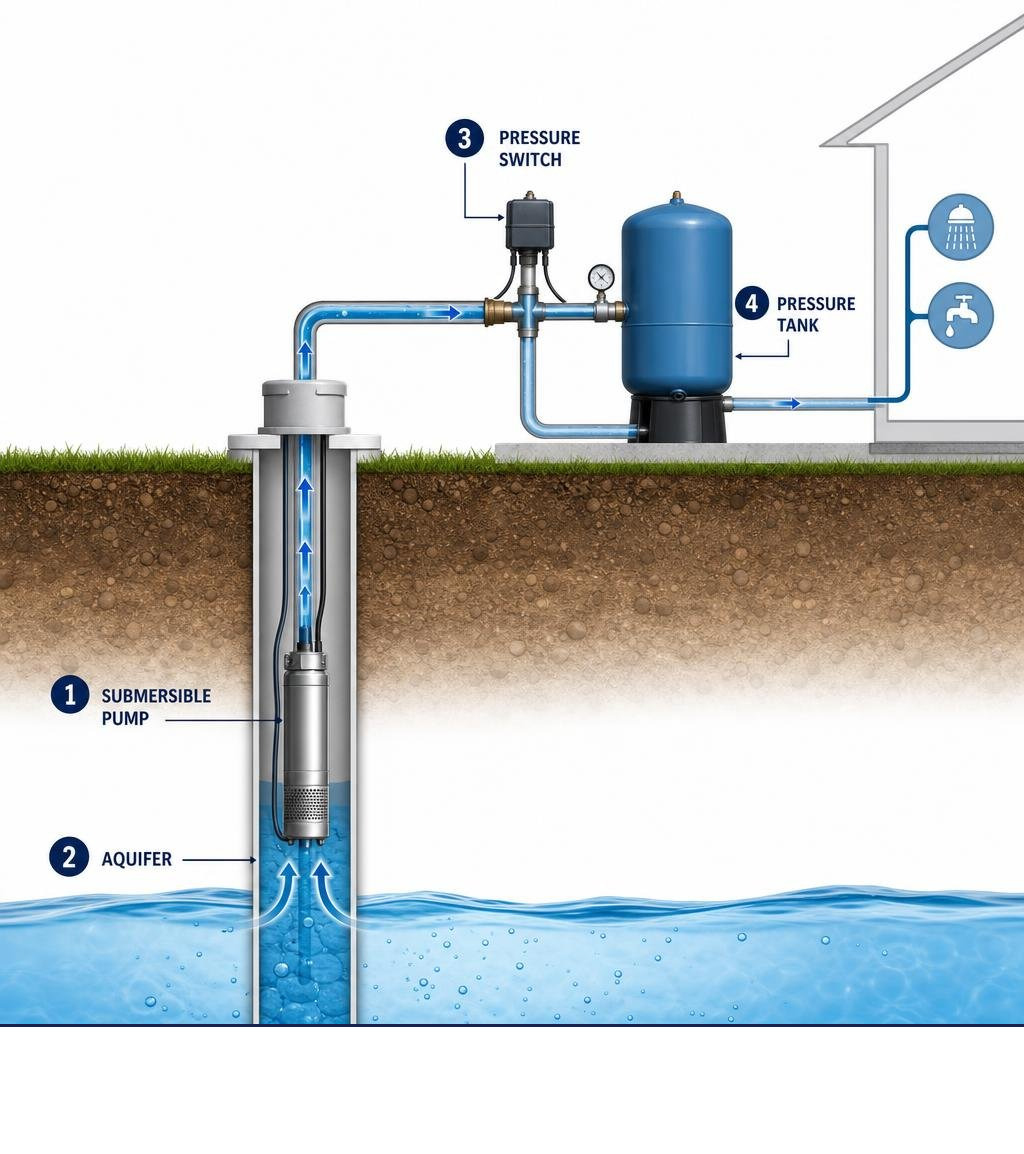
A residential water well is a carefully designed system where each part plays a vital role. When you turn on a faucet, you’re seeing the end of a journey that starts hundreds of feet below ground. Water moves from the aquifer, is lifted by a pump, stored in a pressure tank, and then flows to your home. Let’s break down how each part works.
From the Ground Up: Well Structure
The foundation of your well is its physical structure. The well casing is a sturdy PVC or steel tube that runs from the surface down to the water source, preventing the hole from collapsing and keeping out contaminants. At the top, the well cap seals the opening from debris and pests while a vent balances air pressure. The casing should extend at least 12 inches above ground to prevent surface water from entering.
At the bottom, the well screen acts as a filter, allowing water in while blocking sand and sediment. Surrounding the casing is a grout seal, a watertight barrier of bentonite clay or cement that stops surface contaminants from trickling down into the groundwater. Finally, a pitless adapter connects the well pipe to your home’s plumbing below the frost line, preventing frozen pipes in Indiana winters and eliminating the need for unsanitary well pits.
For a complete visual guide, visit our Well Water System Diagram: 22 Key Components Explained. The Water Systems Council also provides a detailed well component diagram that shows how everything fits together.
The Pumping System: Delivering Water to Your Home
Once water enters the well, the pumping system gives it the boost needed to reach your home. The most common type is the submersible pump, which sits fully submerged inside the well casing. It efficiently and quietly pushes water to the surface. For very shallow wells (25 feet or less), a jet pump may be used, which sits above ground and draws water up.
Water then flows into the pressure tank, which stores water under compressed air. This allows the system to deliver water on demand without the pump needing to turn on every time, extending the pump’s lifespan. The pressure switch monitors the tank’s pressure, turning the pump on when pressure drops and off when it’s restored. Check valves act as one-way gates, preventing water from flowing back into the well and keeping the system pressurized.
These components work together seamlessly to deliver water whenever you need it. Understanding your system helps you spot problems early and appreciate the engineering that brings fresh water to your home.
Planning and Installing Your New Water Well
Installing a new residential water well is a major project that requires careful planning to ensure decades of clean, reliable water. Let’s walk through what you need to know before the drilling rig arrives at your Indianapolis-area property.
Siting, Permits, and Regulations
Where you place your well is critical for water quality and system longevity. The location should be on high ground, allowing rainwater to flow away from the wellhead to prevent contamination. You must also adhere to setback distances, which are minimum required distances from potential contamination sources. In Indiana, a well must typically be at least 50 feet from a septic tank and 100 feet from a drain field.
While the EPA doesn’t regulate private wells, state and local construction codes do. These rules protect your investment and your family’s health. Before any digging begins, you must call 811. This free service marks all underground utility lines on your property, preventing a dangerous and costly accident.
The Drilling Process and Associated Costs
Once the site is approved and permits are secured, drilling can begin. The two most common methods are cable tool drilling, which pounds through rock, and rotary drilling, which uses a spinning bit. Your contractor will choose the best method based on your property’s geology.
The cost to install a residential water well typically ranges from $4,000 to $60,000. The final price is influenced by several factors:
- Drilling depth: The deeper the well, the higher the cost.
- Geology: Drilling through soft soil is cheaper than drilling through bedrock.
- Well diameter: A wider casing costs more.
Because every property is unique, a custom estimate is necessary. Our The Well Drilling Cost Guide breaks down these factors in more detail.
How to Hire a Qualified Well Contractor
Choosing the right contractor is as important as choosing the right location. In Indiana, your contractor must be licensed and certified, which proves their knowledge of proper construction and safety procedures. They should also be bonded and insured to protect you from liability.
Always ask for references and call past customers to inquire about their experience. Many top professionals also hold voluntary certification from the National Ground Water Association (NGWA). The NGWA guide on hiring a professional offers excellent advice on what to look for.
At Blair & Norris, we’ve been drilling wells in Central Indiana for over 75 years. Our family-owned business knows the local geology, and we’re committed to providing reliable service.
Well Maintenance, Water Quality, and Troubleshooting
Once your residential water well is installed, proactive care is key to ensuring it runs reliably for decades. Regular maintenance keeps your water safe, your system efficient, and helps you catch small problems before they become expensive headaches.
Essential Residential Water Well Maintenance
Your well system needs an annual inspection. A professional should check for cracks in the well casing, inspect the well cap’s seal, and ensure the area around the wellhead is graded to divert surface water. The well casing should extend at least 12 inches above the ground to prevent contamination. Keeping a log of all maintenance, testing, and repairs is also a great practice for tracking your system’s performance.
Your pump is the system’s workhorse and should last about 25 years with proper care. Regular inspections can spot wear and tear early, preventing a sudden failure that leaves you without water. Good maintenance not only protects your investment but also the aquifer itself, as poorly maintained wells can become pathways for contamination.
Water Testing and Common Quality Issues
Clear, good-tasting water isn’t always safe water. Your residential water well needs regular testing to detect invisible threats. We recommend testing your water annually for bacteria (like coliform) and nitrates. Every few years, consider a broader test for heavy metals like lead and arsenic. You should also test after a flood or if you notice any change in your water’s taste, smell, or color.
While home test kits are available, professional lab testing provides the most comprehensive results. The EPA info on well contaminants offers guidance on safety benchmarks. Common issues in Central Indiana include hard water (high mineral content), iron (causes rust stains), sediment, and a rotten egg smell from hydrogen sulfide gas.
Signs Your Well Needs Repair
Your well system will often give warning signs before it fails. Catching them early can save you from a major repair bill. Look out for:
- No water or low water pressure: This could indicate pump failure, electrical issues, or a leak.
- Sputtering faucets: Air in the lines may point to a low water level or a failing check valve.
- Sudden spike in electric bills: Your pump may be running constantly due to a leak or malfunction.
- Cloudy, discolored, or smelly water: These are signs of potential contamination or structural problems.
- Pump cycles on and off frequently: This can be caused by a faulty pressure switch or a waterlogged pressure tank.
For a complete breakdown of these warning signs and what they mean, read our article 13 Signs Your Well Pump Needs to Be Repaired. If you’re experiencing any of these issues, it’s time to call a professional.
Frequently Asked Questions about Residential Water Wells
We know that owning a residential water well can bring up many questions. Here are some of the most common ones we hear from homeowners in Central Indiana, with straightforward answers.
How long does a water well last?
The well structure itself—the drilled hole and casing—can last for decades, often 50 years or more. The mechanical components, however, have a finite lifespan. A well pump typically lasts about 25 years with proper maintenance, while a pressure tank may need replacement every 10 to 15 years. Regular annual inspections are the key to maximizing the longevity of your entire system.
What are the typical costs of well ownership?
Owning a residential water well involves a few cost categories. The initial installation cost is the largest, ranging from $4,000 to $60,000 depending on depth and geology. After that, you’ll have predictable maintenance costs, with an annual inspection typically running $300 to $500. Repair costs vary widely based on the issue, access, depth, and parts required. Minor service calls may cost a few hundred dollars, while major repairs such as pump replacement, pressure tank replacement, electrical troubleshooting, line repairs, or pulling equipment from a deep well can range from roughly $1,500 to $5,000 or more. Finally, water testing is affordable, with home kits around $25 and lab tests from $50 to $500. These costs are offset by the elimination of monthly municipal water bills.
Are private wells regulated?
This surprises many homeowners: private residential water wells serving fewer than 15 connections are generally not regulated by the EPA. Unlike public water systems, the responsibility for water safety rests with you, the homeowner. However, state and local codes in Indiana still govern well construction, siting, and sealing to protect groundwater. This means homeowner responsibility is crucial. You are in charge of scheduling annual water tests for bacteria and nitrates, maintaining your equipment, and addressing any problems promptly. While this may sound daunting, it gives you complete control over your water supply.
Your Partner for a Safe and Reliable Water Supply
Your residential water well is an asset that offers independence, savings, and control over one of life’s most vital resources. A well-maintained system can serve your family reliably for decades, but that reliability comes from understanding your system, staying on top of maintenance, and working with trusted professionals.
At Blair & Norris, we’ve been helping Central Indiana families with their water systems since 1948. For over 75 years, our family-owned business has drilled wells, repaired pumps, and ensured homeowners in Indianapolis and the surrounding communities have clean, safe water. We treat every customer like a neighbor and are proud to offer 24/7 live phone support because we know emergencies don’t wait for business hours.
Whether you’re considering a new well, need routine maintenance, or have an urgent repair, our team brings decades of expertise and integrity to every job. Don’t wait for a small issue to become a major problem. If you’re ready to discuss your residential water well needs, we’re here to help. Contact us today for all your well and pump needs! Give us a call or visit our contact page for a consultation—we’re ready to ensure your water keeps flowing.