
Why Grease Trap Clean Out is Essential for Your Business
If you run a restaurant, cafeteria, or commercial kitchen in Central Indiana, a scheduled grease trap clean out keeps your grease trap working like the behind-the-scenes safeguard it’s designed to be. Every time you fry food, grill meats, or wash dishes, fats, oils, and grease (FOG) flow down your drains. Without a functioning grease trap, FOG can solidify in your plumbing or municipal lines, creating backups, compliance issues, and operational disruption that a routine grease trap clean out helps prevent.
A grease trap clean out is the process of removing accumulated FOG and solid waste from this critical plumbing device. It’s not just a suggestion; it’s a requirement for preventing sewage backups, health code violations, steep fines, and expensive repairs. When a grease trap fills up, it stops working, and the consequences can shut down your business during the dinner rush.
Regular maintenance is the key, and pairing inspections with a professional grease trap clean out schedule helps keep kitchens compliant and operational. I’m Mack Blair, and with over 30 years in the plumbing and septic industry, I’ve seen how proactive grease trap clean out protects businesses and our local water systems. At Blair & Norris, we provide the responsive, professional service Central Indiana businesses rely on to stay open and avoid plumbing emergencies.
Understanding Your Grease Trap: The First Line of Defense
Every commercial kitchen generates wastewater, and a consistent grease trap clean out plan keeps that wastewater from turning into a preventable emergency. While FOG is liquid when hot, it quickly solidifies as it cools in your plumbing, creating serious problems.
What is FOG and Why is it a Problem?
FOG is the primary culprit behind most commercial kitchen plumbing issues, which is why grease trap clean out is a core part of any commercial kitchen maintenance plan. As it cools, it clings to the inside of pipes, narrowing the passageway for wastewater. This buildup catches food particles and other debris, leading to severe blockages. On a larger scale, this contributes to massive “fatbergs” that can completely obstruct municipal sewer systems, damage infrastructure, and harm local waterways. Proper FOG management is not just about protecting your business; it’s about protecting the community and environment. For more tips on prevention, see our guide on how to avoid sewer line clogs.
How a Grease Trap Works
A grease trap, or grease interceptor, is a plumbing device that captures FOG before it reaches the sewer. Grease trap clean out removes what the device captures, so it can keep doing its job.
- Wastewater Entry: FOG-laden water from sinks and dishwashers flows into the trap.
- Cooling and Separation: The trap slows the water flow, allowing it to cool. The lighter-than-water FOG floats to the top, while heavier food solids sink to the bottom.
- Clean Water Outlet: Baffles prevent the FOG and solids from escaping, allowing the cleaner water from the middle layer to exit into the sewer.
The main difference between a grease trap and a grease interceptor is size. Traps are smaller units (under 250 gallons) often found indoors, while interceptors are large tanks (500+ gallons) buried outside. Both require regular cleaning to function.
The High Cost of a Clogged Grease Trap
Ignoring your grease trap is a costly mistake. A neglected trap will eventually fail, leading to disruptions that can harm your business’s finances and reputation. Recognizing the warning signs is the first step to avoiding disaster.
Signs Your Grease Trap Needs Cleaning
Your kitchen will give you clear signals when a grease trap clean out is overdue. Be on the lookout for:
- Foul Odors: A pungent, rotten smell from your drains is the most common sign that trapped FOG and food waste are decomposing.
- Slow Drainage: If sinks and floor drains are draining sluggishly, it’s a strong indicator that FOG buildup is restricting water flow.
- Gurgling Sounds: Strange gurgling noises from pipes often mean air is being trapped by a blockage.
- Wastewater Backups: The most critical sign is wastewater backing up into your kitchen. This is a direct result of a clogged trap and creates an immediate health hazard.
- The 25% Rule: Most Indiana health departments mandate cleaning when the FOG layer reaches 25% of the trap’s capacity. Regular inspection is key to staying compliant.
The Consequences of Neglect
Failing to perform a timely grease trap clean out can have severe repercussions:
- Business Disruption: A backup can force you to pause kitchen operations during peak service and create immediate sanitation and compliance risks.
- Health Code Violations & Fines: Neglect can lead to failed health inspections, significant fines, and even forced closure by local authorities.
- Property Damage: Backups can cause water damage to floors, walls, and equipment, leading to expensive repairs.
- Damage to Reputation: Foul smells and visible plumbing problems can quickly drive customers away and lead to negative online reviews.
- Costly Repairs: A routine grease trap clean out is a controlled, scheduled service; repairs after a backup are reactive and can be far more disruptive. If you experience a backup, it’s crucial to act fast. Learn what to do in a septic system backup emergency.
What a Professional Grease Trap Clean Out Involves
A proper grease trap clean out is more than just a quick scoop and rinse. It’s a complex and hazardous job that requires specialized equipment and adherence to strict disposal regulations. While a DIY approach may seem tempting for very small traps, it’s often illegal and ineffective for commercial establishments.
Here’s what a professional service entails, highlighting why it’s a job best left to trained technicians:
- Safe Site Preparation: Professionals arrive with the necessary Personal Protective Equipment (PPE), including heavy-duty gloves, face shields, and protective clothing, to handle hazardous waste safely.
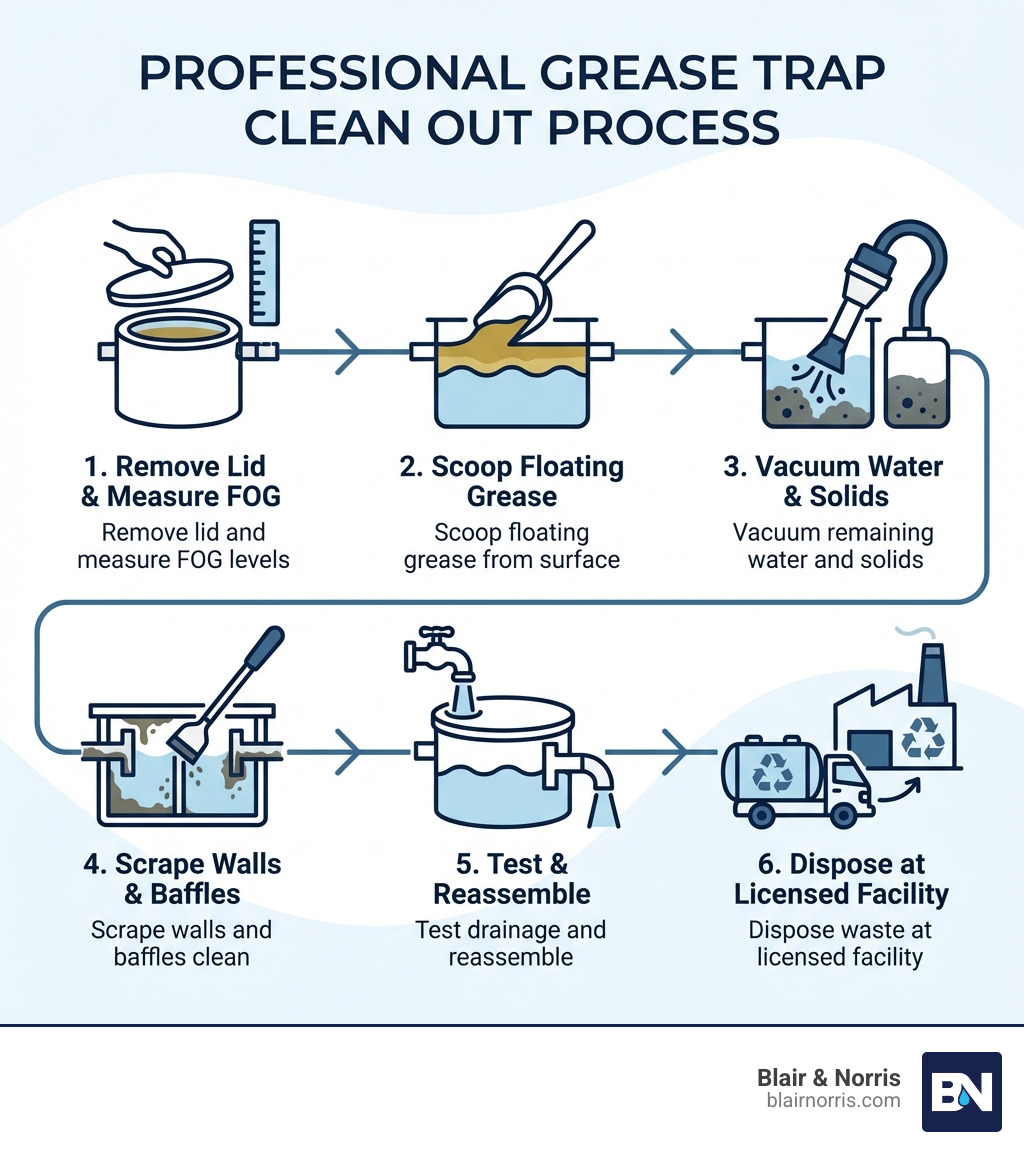
- Complete Waste Removal: The process begins by removing the heavy trap lid. Technicians then use powerful vacuum pumps to remove not just the floating top layer of grease but all the contents of the trap—water and the heavy sludge of solids at the bottom. This ensures a complete pump-out, not just a partial skimming.
- Thorough Scraping and Cleaning: With the trap empty, the real work begins. Technicians use specialized scrapers and tools to remove the hardened grease that clings to the interior walls, baffles, and lid. This step is crucial for restoring the trap’s efficiency and is often missed in DIY attempts.
- System Inspection and Reassembly: After cleaning, the technician inspects the trap for any signs of damage, checks that the inlet and outlet lines are clear, and properly reassembles the unit to ensure an airtight seal.
- Legal Waste Disposal and Manifesting: The collected waste is transported in a licensed hauler truck to an approved processing facility. The service provider gives you a manifest, or trip ticket, which serves as your legal proof of compliance for health inspectors.
This comprehensive process ensures your grease trap is not just empty but truly clean, compliant, and ready to protect your plumbing system.
Navigating Grease Trap Regulations and Maintenance
For commercial kitchens in Central Indiana, grease trap maintenance is not optional—it’s a legal requirement. Understanding local regulations and budgeting for maintenance are essential for smooth and compliant operations.
How Often Should a Grease Trap Be Cleaned?
The required frequency for a grease trap clean out depends on several factors, but the primary guideline is the 1/4 Rule. A trap must be cleaned when the combined layer of FOG and solids reaches 25% of the trap’s liquid capacity. Exceeding this limit makes the trap ineffective and non-compliant.
For most businesses, grease trap clean out typically falls on a recurring schedule based on volume, menu, and trap size, always guided by the 25% rule. However, the ideal frequency depends on:
- Kitchen Volume: High-volume kitchens require more frequent cleanings.
- Menu Type: Restaurants specializing in fried or greasy foods will fill a trap much faster.
- Trap Size: Smaller under-sink traps may need weekly attention, while large outdoor interceptors can go longer.
Indiana Regulations and Compliance
Cities across Indiana, including Indianapolis, Carmel, and Fishers, have specific ordinances to prevent FOG from damaging public sewer systems. Key compliance points include:
- Licensed Haulers: Grease trap waste must be transported and disposed of by a state-licensed hauler.
- Record-Keeping: Businesses must maintain service records and disposal manifests as proof of compliance for health inspectors. You can review FOG program details from municipalities like Indianapolis and Fishers to understand specific local requirements.
- Generator Responsibility: Your business is the “generator” of the waste and remains legally responsible for its proper disposal, even after it leaves your property. Hiring a reputable, licensed hauler is critical to avoid liability. Local utilities also provide guidance, such as these from a Central Indiana utility.
Maintenance Costs and Replacement Signs
Budgeting for regular clean outs is a smart investment. Costs vary by trap size and location but are minimal compared to the cost of fines or emergency repairs.
| Grease Trap Size | Average Cleaning Cost (Indiana) |
|---|---|
| Small (Under-sink) | $115 – $300 |
| Medium (Outdoor) | $300 – $700 |
| Large (Interceptor) | $700 – $1,040+ |
While cleaning extends a trap’s life, replacement is necessary if you notice persistent odors after cleaning, visible cracks or corrosion, or frequent clogs despite regular service.
Why Professional Cleaning is the Smart Choice for Your Business
While a DIY grease trap clean out may seem convenient, it creates compliance and safety risks for most commercial kitchens. For commercial kitchens, hiring a professional is not a luxury—it’s a necessity for safety, compliance, and peace of mind.
The Risks of DIY Cleaning
Attempting to clean a commercial grease trap yourself exposes your business to significant risks:
- Health and Safety Hazards: Grease trap waste is unsanitary and can contain harmful bacteria. Handling it without proper PPE is a health risk for your staff.
- Illegal Disposal: This is the biggest pitfall. Grease trap waste is regulated, and dumping it in the trash, down a drain, or on the ground is illegal. Fines for improper disposal can be severe.
- Incomplete Cleaning: Without industrial-strength vacuums and scraping tools, it’s nearly impossible to remove all the hardened grease and sludge. An incomplete job means the trap will fail again quickly.
- Non-Compliance: Most local ordinances require that commercial grease traps be serviced by licensed professionals who can provide a manifest for your records. A DIY job leaves you without proof of compliance for a health inspection.
Benefits of Hiring a Professional Service
Partnering with a professional service like Blair & Norris for your grease trap clean out is the smartest and safest choice. The benefits are clear:
- Guaranteed Compliance: Professionals understand state and local regulations in areas like Carmel, Noblesville, and throughout Central Indiana. We provide disposal manifests and service documentation to support inspections and demonstrate compliance.
- Proper Equipment and Expertise: We use specialized vacuum trucks and tools to perform a thorough cleaning, ensuring optimal performance and longevity for your trap.
- Legal Waste Disposal: We handle the transportation and disposal of waste at an approved facility, removing the liability from your shoulders.
- Time and Efficiency: Our trained technicians perform the job quickly and correctly, minimizing disruption to your business and freeing up your staff to focus on what they do best.
Choosing the right partner is crucial. For more guidance, see our tips for choosing the best septic contractor in Indianapolis.
Frequently Asked Questions about Grease Trap Cleaning
We often hear similar questions from business owners across Indianapolis, Westfield, Brownsburg, and beyond. Here are some of the most common ones:
What’s the difference between a grease trap and a grease interceptor?
The primary difference between a grease trap and a grease interceptor is their size and typical installation location, though they serve the same fundamental purpose. A grease trap is generally a smaller unit, typically with a capacity of less than 250 gallons (often under 50 gallons), and is usually installed indoors, often under a sink or in a basement. They are designed for smaller volumes of FOG. A grease interceptor, on the other hand, is a much larger unit, with capacities often ranging from 500 to several thousand gallons. These are almost always installed outdoors, buried underground. Interceptors are designed to handle the high volumes of FOG generated by large restaurants and commercial kitchens. Both devices work by slowing down wastewater flow, allowing FOG to cool and separate by gravity.
Can I use chemicals or enzymes to clean my grease trap?
While some enzyme or bacterial treatments are marketed for grease trap maintenance, it’s crucial to understand their limitations and potential downsides. These products contain biological agents that are supposed to break down FOG. However, they are not a substitute for a full mechanical pump-out and clean out. In many cases, these treatments only liquefy the FOG, allowing it to pass through the trap and solidify further down the plumbing system or in the municipal sewer lines, creating blockages elsewhere.
Furthermore, flushing with harsh chemicals or degreasers is often prohibited by local regulations in Indiana because they can damage pipes, interfere with wastewater treatment plants, and cause environmental harm. Always consult with your local health department or a professional service provider before using any chemical or enzymatic product in your grease trap. A professional grease trap clean out physically removes the FOG, which is the only truly effective and compliant method.
How is grease trap waste disposed of?
The disposal of grease trap waste is strictly regulated to prevent environmental pollution and protect public infrastructure. Once the FOG and solids are removed from your grease trap during a grease trap clean out, they must be transported and disposed of by a licensed waste hauler to an approved processing facility.
Here’s the typical process:
- Collection: A licensed hauler uses specialized vacuum trucks to pump out the entire contents of your grease trap.
- Transportation: The waste is securely transported to a facility authorized to process FOG, such as a rendering plant or a wastewater treatment plant with specific FOG processing capabilities.
- Manifest System: The hauler provides a detailed manifest (or trip ticket) that documents the type and volume of waste, the date of service, and the final disposal location. As the generator, you are required to keep these records for compliance purposes.
- Generator Responsibility: It’s vital to remember that even after the waste leaves your property, you, as the generator, can still be held liable if it’s illegally dumped. Always ensure your hauler is properly licensed and reputable.
Your Partner for a Clean and Compliant Kitchen
We’ve seen how a neglected grease trap can lead to foul odors, messy backups, and costly fines that jeopardize your business. From understanding FOG to navigating Indiana’s complex regulations, it’s clear that a professional grease trap clean out is a critical investment in your kitchen’s success.
At Blair & Norris, we understand the pressures of running a commercial kitchen. For over 75 years, our family-owned business has provided ethical, high-quality septic and plumbing services to businesses across Central Indiana—from Franklin to Greenfield and Carmel to Crawfordsville. We’ve built our reputation on reliability and expertise, backed by 24/7 live phone support, so you’re never left dealing with a plumbing emergency alone.
Don’t wait for a clog to shut you down. Proactive maintenance protects your operations, your reputation, and your bottom line. For reliable and compliant grease trap services in the Indianapolis area, trust the experts who have been serving our community for generations.
Ready to stay compliant and avoid preventable backups? Contact us to schedule professional grease trap clean out service for your commercial kitchen.