
How to Find an Insured Well Pump Contractor
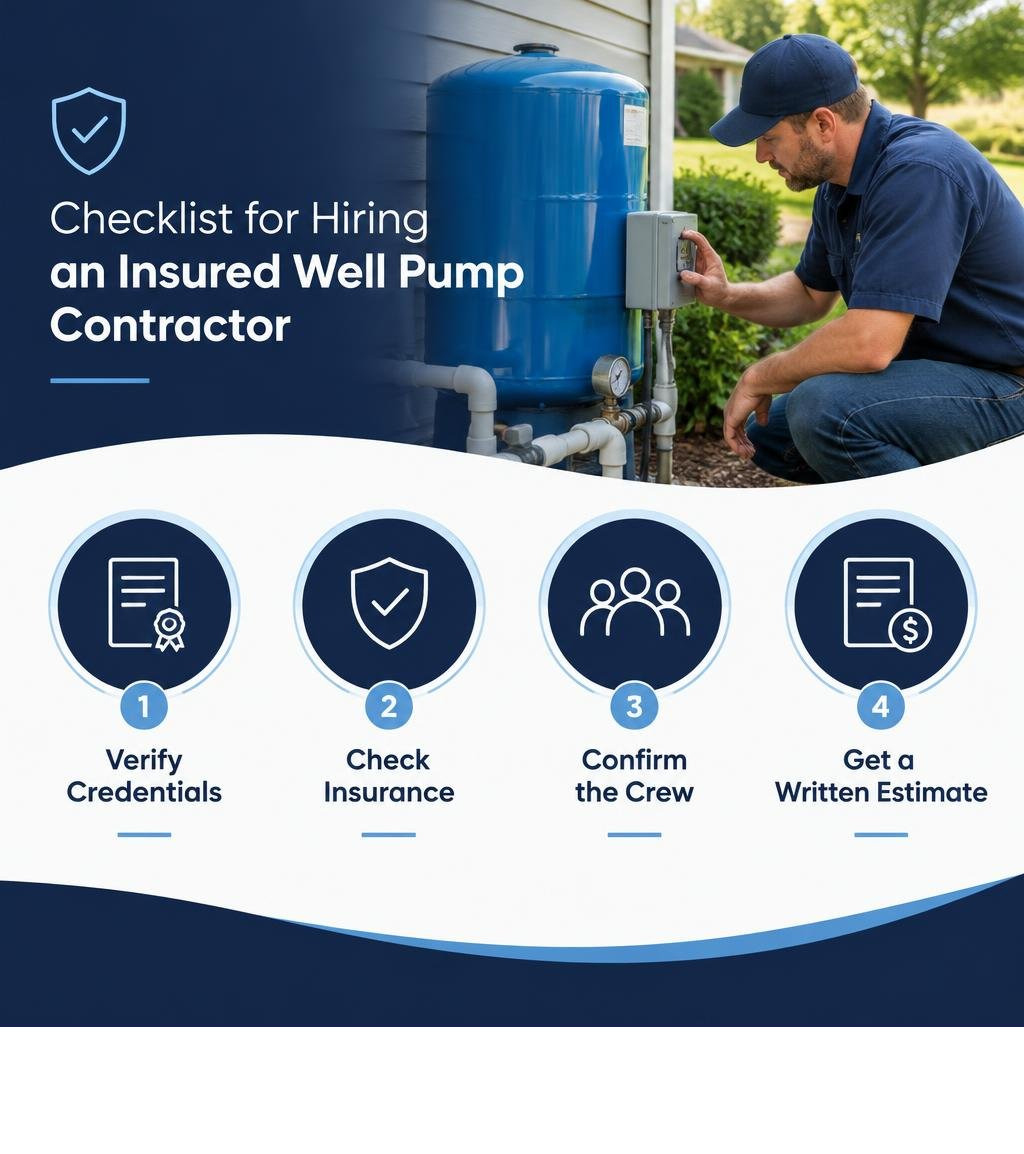
Before hiring an insured well pump contractor, ask for a current Certificate of Insurance and the license or registration required for the work in your state. Check the insurance dates and coverage directly with the listed agent. Ask who will perform the hands-on work, whether subcontractors are fully insured, and request a comprehensive written estimate before any tools touch your wellhead.
When your home suddenly loses running water, it is tempting to book the first available repair technician you discover online. However, taking a few extra minutes to verify credentials protects your residential property, your family, and your financial security. A home warranty may help pay for a covered mechanical pump failure, but it does not replace the contractor’s own commercial general liability and workers’ compensation insurance. Property owners who fail to verify these credentials before authorizing repairs take on significant risks that can lead to expensive out-of-pocket expenses and prolonged legal disputes.
I am Mack Blair. I started learning well work from my grandfather more than 30 years ago, and I now lead Blair & Norris, your local Central Indiana provider for well and pump services. That lifetime of hands-on field experience has taught me why hiring a well pump insured contractor matters before any tools touch your wellhead. Working on pressurized water equipment, heavy mechanical downhole components, and deep underground electrical circuits carries unique risks, from structural driveway and lawn damage to catastrophic groundwater aquifer contamination.
Maintaining a regular well pump maintenance schedule helps identify worn pressure switches, waterlogged pressure tanks, and early motor fatigue before complete outages happen. Well pumps operate in unforgiving subterranean environments where abrasive mineral scaling, electrical lightning surges, and physical vibration continually test every mechanical part. When problems arise, the physical extraction and replacement of downhole equipment requires heavy service vehicles, specialized boom hoists, and high-voltage electrical safety protocols.
Across the United States, freshwater withdrawals reach roughly 349 billion gallons each day, with groundwater making up an estimated 79.6 billion gallons, or 26 percent of that total. In rural and suburban communities across Central Indiana, private wells keep everyday household routines moving smoothly. When running water suddenly stops, the rush to restore service can leave homeowners vulnerable to unverified technicians, improper repairs, and serious liability risks.
Understanding how contractor insurance, licensing requirements, and warranty systems interact is the best way to safeguard your home, your water supply, and your budget. If you need immediate assistance or want an expert evaluation of your setup, contact Blair & Norris today for an estimate.
Understanding Well Pump Failures and Financial Protection
A residential well pump is a hardworking mechanical system that operates hundreds of feet beneath the ground or inside a dedicated utility space under continuous hydraulic pressure. Over years of steady service, standard mechanical friction gradually degrades bearings, impellers, and internal motor seals. Sudden electrical surges from summer thunderstorms can fry surface control boxes, while sand or sediment buildup in the bottom of your well casing can cause the pump motor to overheat and seize. Environmental factors like seasonal drought, fluctuating regional water tables, or mineral-heavy hard water can place additional operational strain on submerged components.
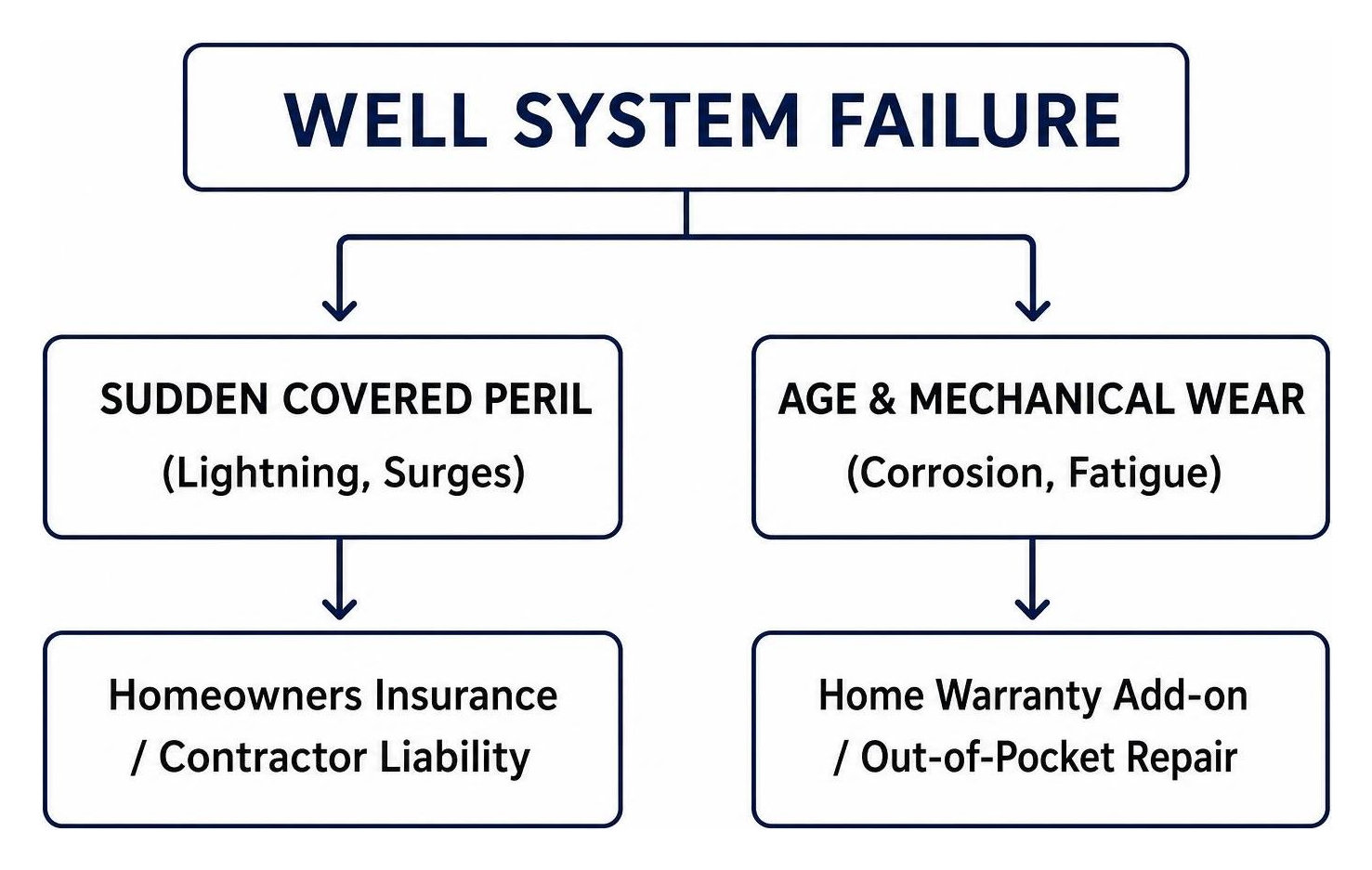
When homeowners experience common well pump problems, they often discover that resolving the breakdown involves navigating complex financial protections. While standard homeowners insurance policies sometimes help with sudden perils like lightning strikes or falling trees, they rarely cover standard mechanical wear and tear or gradual system fatigue. Navigating the claims process requires knowing what caused the outage and understanding how your coverage applies before repairs begin.
Why You Need a Well Pump Insured Contractor for System Breakdowns
Attempting to pull a deep submersible well pump without heavy-duty hoisting equipment and proper trade training can result in catastrophic damage. A dropped drop pipe can crush your well casing, contaminate the groundwater aquifer, or shatter the pump housing hundreds of feet underground. Inexperienced handymen might drop specialized tools or pipe sections down the borehole, permanently obstructing the water source and forcing an expensive, unplanned re-drilling project.
Working through a complete troubleshooting review will help identify surface electrical issues, but physical repairs demand a qualified professional. An insured professional protects your property from accidental damage, ensuring that any mishaps during heavy hoisting or electrical rewiring are covered entirely by commercial policies rather than your personal savings. When you partner with your local Central Indiana provider, you ensure certified technicians handle your critical infrastructure safely.
Comparing Home Warranties and Contractor Insurance Policies
Homeowners frequently confuse home warranty service plans with a contractor’s commercial insurance. While both provide financial relief, they serve entirely different purposes and operate under distinct legal protections.
| Protection Type | Who Purchases It | What It Covers | Key Limitations |
|---|---|---|---|
| Home Warranty Add-On | Homeowner | Normal mechanical wear, age-related motor burnouts, and standard component failure. | Dollar caps per contract term, dispatch fees, excludes pre-existing defects and property damage. |
| Manufacturer Warranty | Included with Equipment | Factory material defects and premature mechanical assembly failures. | Does not cover installation labor, electrical surge damage, or improper handling. |
| Contractor Insurance | Well Service Contractor | Property damage, worker injuries, dropped equipment, and environmental contamination. | Does not pay for basic equipment upgrades or regular maintenance tasks. |
When you file a claim through a home warranty provider, they dispatch a technician from their pre-screened network. However, the warranty company assumes no liability if an unqualified technician damages your well head or floods your basement. Verifying that the dispatched technician carries active commercial insurance ensures complete protection regardless of who pays the repair bill. If you have questions about your system or need an inspection, contact Blair & Norris for an estimate.
Essential Insurance Coverages Every Well Pump Contractor Must Carry
A certified well and pump service business must hold a comprehensive suite of commercial policies to manage the unique risks of drilling, heavy lifting, and high-voltage electrical work. Dedicated programs like the Water Well Contractors Insurance Program package specialized protections specifically for groundwater trades. Homeowners should never hesitate to verify that a contractor maintains each of the following protections before work commences:
- Commercial General Liability (CGL): Covers accidental third-party bodily injury and property damage. Examples include a service truck damaging your asphalt driveway, a heavy rig cracking an underground utility line, or a pressurized water line bursting during a pressure tank replacement. General liability ensures that unforeseen structural accidents are handled through commercial insurance rather than your own pocket. A policy with substantial occurrence limits guarantees that even major subterranean structural incidents do not create personal financial burdens for the homeowner.
- Inland Marine & Equipment Coverage: Protects specialized tools and transportable equipment in transit and on the jobsite, including pulling rigs, pump hoists, and electronic downhole diagnostic cameras. Without this coverage, damage to contractor machinery on your property can stall your repair indefinitely or create contentious legal disputes over jobsite custody.
- Rig & Vehicle Insurance: Commercial auto and specialized transport coverage tailored for heavy service cranes, boom trucks, and drilling tenders operating on residential lawns and driveways. Standard personal auto insurance completely excludes commercial hoisting and heavy transport operations, leaving unverified operators uninsured when driving over private property.
- Workers’ Compensation: Covers medical costs, rehabilitation expenses, and lost wages if a technician is injured on your property, shielding you from direct homeowner liability and personal lawsuits. In many jurisdictions, an injured uninsured worker can legally pursue the property owner for workplace injuries under premises liability statutes.
- Environmental & Aquifer Liability: Covers specialized remediation costs if drilling fluids, hydraulic oils, or surface runoff accidentally foul a potable groundwater source or breach environmental safety regulations. Restoring a damaged aquifer is exceptionally costly, making this specific coverage essential for deep excavation and well rehabilitation.
Reputable contractors invest substantial capital in these policies each year to safeguard both their crew and their clients. If a contractor hesitates to show proof of these policies, that hesitation serves as a major red flag. Always choose a fully insured contractor to protect your home and water supply.
How to Verify and Choose a Well Pump Insured Contractor
Never take a contractor’s verbal promise regarding their insurance status. Finding dependable residential well pump repair near me begins with requesting an official Certificate of Insurance (COI) issued by their insurance broker.

When reviewing a Certificate of Insurance, confirm the following details:
- Named Insured: Ensure the exact company name on the certificate matches the name on your written contract and estimate.
- Effective Policy Dates: Check that the policy period is current and will not expire before your scheduled project finishes.
- Coverage Limits: Look for minimum general liability limits of at least $1,000,000 per occurrence and $2,000,000 aggregate.
- Certificate Holder: For major drilling or system overhauls, you can ask the contractor’s insurance agent to list your name and address as the certificate holder for verified notification.
Critical Questions to Ask a Well Pump Insured Contractor Before Hiring
Before approving any contract or work order, review this quick checklist with your prospective service technician:
- Can you provide a current Certificate of Insurance sent directly from your insurance carrier or agency?
- Are all technicians on site direct employees covered by workers’ compensation, or do you use subcontractors?
- What specific state licenses and well driller registrations do you hold in Indiana?
- Do you provide a transparent, written estimate detailing labor, parts, and warranty specifics?
- How quickly do you respond to emergency no-water situations?
Reviewing a clear local estimate ahead of time helps you evaluate bids with confidence and spot unusually low quotes that may indicate missing insurance or unlicensed labor. If you want transparent, honest guidance on your well system, contact Blair & Norris for a detailed estimate.
The Step-by-Step State Verification Process
Confirming a contractor’s credentials is a straightforward process that takes only a few minutes:
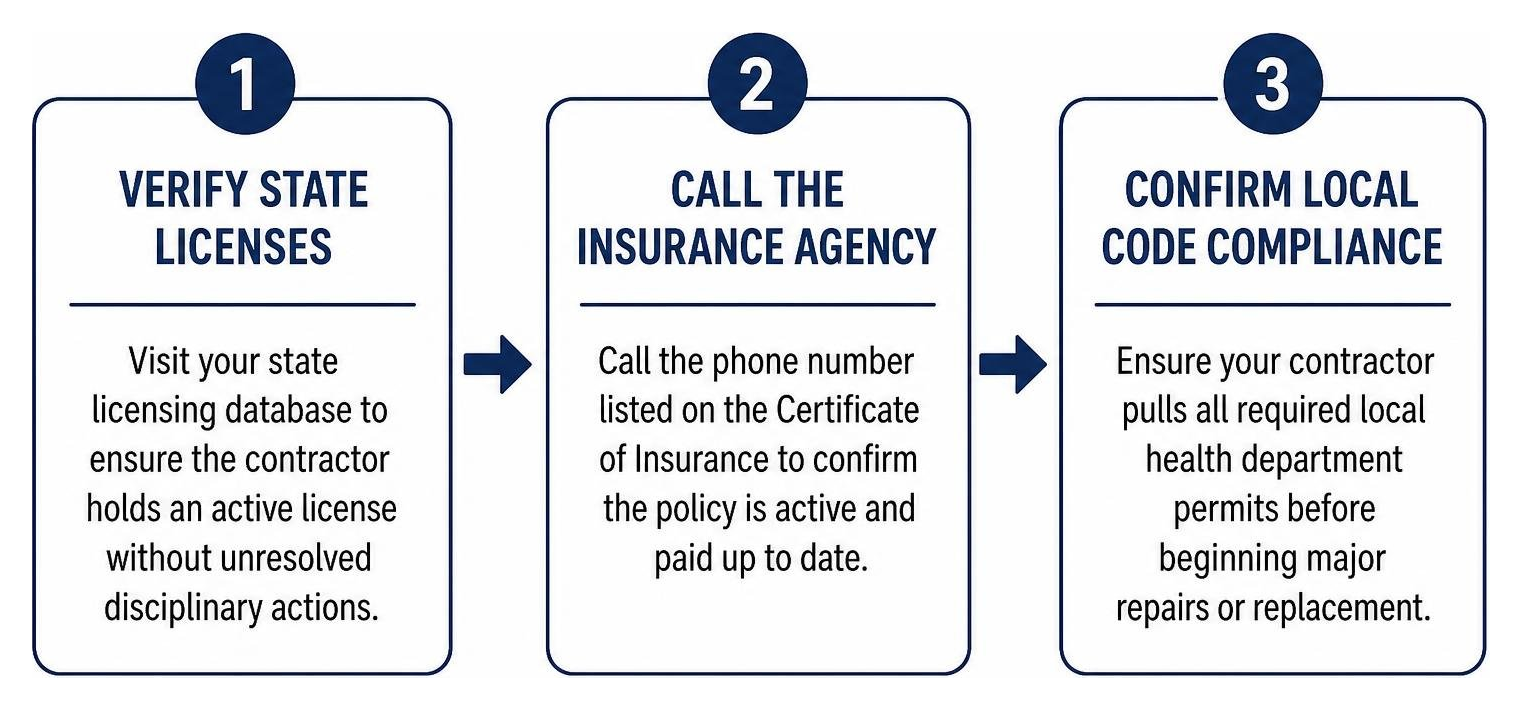
- Verify State Licenses: Visit your state licensing database, such as the Indiana Department of Natural Resources Division of Water directory, to ensure the contractor holds an active license without unresolved disciplinary actions. State certification confirms the contractor understands local water table depths, casing requirements, and sanitary sealing standards.
- Call the Insurance Agency: Call the phone number listed on the Certificate of Insurance to confirm the policy is active and paid up to date. Direct confirmation with the broker prevents fraudulent or expired certificates from putting your estate at risk.
- Confirm Local Code Compliance: Ensure your contractor pulls all required local health department permits before beginning major repairs or replacement services. Permitted work guarantees an independent check on sanitation, setbacks, and construction safety.
Solutions for Well System Care and Equipment Upgrades
When evaluating system repairs or modernizing your water infrastructure, contractors typically provide solutions across a good, better, and best range:
- Good (Basic Repair): Replacing a burned pressure switch, capacitor, or surface control box to restore water flow quickly while retaining the existing pump. This approach works well when diagnostic electrical testing proves the motor windings and downhole drop pipes remain in sound operational condition. It represents an economical, targeted fix for minor surface component failures.
- Better (Standard Replacement): Installing a durable, standard-efficiency submersible pump and replacing an aging bladder pressure tank for reliable, long-term household delivery. This tier provides balanced performance, dependable cycle life, and renewed manufacturer warranty coverage for peace of mind across years of daily household use.
- Best (Constant Pressure Upgrade): Installing a variable frequency drive (VFD) constant pressure system paired with advanced filtration, delivering consistent city-like water pressure across every fixture in your home regardless of simultaneous demand. A VFD system dynamically adjusts motor speed to match exact household usage, extending equipment life and reducing energy waste.
For major well construction, drilling with modern separation equipment such as the Mud Puppy recycling system keeps the work area tidy, protects the surrounding landscape, and prevents groundwater contamination during installation. The Mud Puppy provides clean mud recycling and drilling efficiency by continuously filtering solids from drilling fluids, minimizing environmental disturbance and speeding up project completion.
Beyond residential well systems, complete water and waste management often includes routine maintenance for specialized commercial plumbing. Businesses relying on commercial grease traps and car wash drainage systems require regular pumping and servicing to keep operations running smoothly and protect local groundwater. Commercial kitchens produce heavy fats, oils, and grease (FOG) that can overwhelm municipal lines or on-site septic tanks if not systematically pumped out. Similarly, car wash facilities generate large volumes of grit, sediment, and chemical residues in their catch basins. Regular professional maintenance and pumping prevent catastrophic backups, keep facilities compliant with environmental standards, and protect surrounding soil and water tables. Contact Blair & Norris to schedule specialized pumping and maintenance for your business.
What to Do When Your Well Pump Fails: Repairs, Claims, and Emergency Solutions
A sudden loss of household water can disrupt your daily routine. If you turn on the tap and get nothing, follow these steps:
- Check the Breaker Box: Check your main electrical panel for tripped circuit breakers connected to the well pump or pressure switch. Avoid repeatedly resetting a tripping breaker, as continuous overcurrent can cause severe motor damage or thermal hazards.
- Inspect the Pressure Gauge: Look at the gauge on your pressure tank to see if it reads zero PSI. A gauge reading zero indicates an electrical disconnect, a failed switch, or a physical break in the water line.
- Contact Your Warranty or Insurance: If you have an active home warranty add-on, file your claim online or via phone to initiate an approved dispatch. Be sure to confirm the arriving technician carries independent liability insurance before allowing work to begin.
- Call for Professional Diagnosis: If you are hiring directly, contact an insured specialist experienced with expert solutions for total well pump failure. An experienced technician uses precise diagnostic instruments to test downhole resistance and identify the root cause.

Taking prompt action minimizes the risk of extended water outages and prevents further damage to your pressure tank or underground lines. If your system goes down after normal business hours, reaching out for 24/7 emergency well pump support ensures your family has access to clean, running water without delay. Our experienced team responds promptly with fully stocked service trucks to get your water flowing again safely.
Frequently Asked Questions About Hiring a Well Pump Contractor
How do I verify a well contractor’s insurance coverage?
Ask the contractor for an official Certificate of Insurance (COI). Contact the insurance agency listed on the document to verify that the policy is currently active, paid in full, and includes both general liability and workers’ compensation.
What is the difference between a home warranty and contractor insurance?
A home warranty add-on helps pay for the repair or replacement of mechanical equipment that fails due to normal wear and tear. Contractor insurance protects you and your property if the technician causes accidental damage or suffers an injury while working on your home.
What risks do homeowners face when hiring an uninsured well technician?
If an uninsured technician drops a pump down the casing, damages your electrical panel, or suffers an injury on your property, you could be held financially liable for property repairs and medical expenses. Hiring an uninsured worker exposes your personal homeowners insurance to massive claims.
How often should a residential well pump undergo routine maintenance?
Homeowners should schedule a comprehensive well system inspection at least once every three to five years. Regular checks verify motor amp draw, tank pressure, switch contact integrity, and water flow rate to identify minor component fatigue before it causes a sudden emergency outage.
Conclusion
Protecting your home’s water supply means choosing contractors who prioritize safety, proper licensing, and full insurance coverage. Taking a few moments to confirm credentials safeguards your property against accidental damage, premature equipment failures, and unexpected liability.
At Blair & Norris, we have served as your local Central Indiana provider for over 75 years. As a family-owned business, we provide 24/7 live phone support, professional well drilling, pump installations, and reliable septic tank pumping, cleaning, and maintenance services. To read about our commitment to dependable customer care, check out our Google Reviews.
When you need reliable well service backed by complete insurance protection, contact Blair & Norris for an estimate and experience our professional, worry-free expert well and pump services. Our skilled team is ready to restore your water quickly, safely, and affordably.