
Protect Your Lateral Lines With Smart Drain Field Maintenance
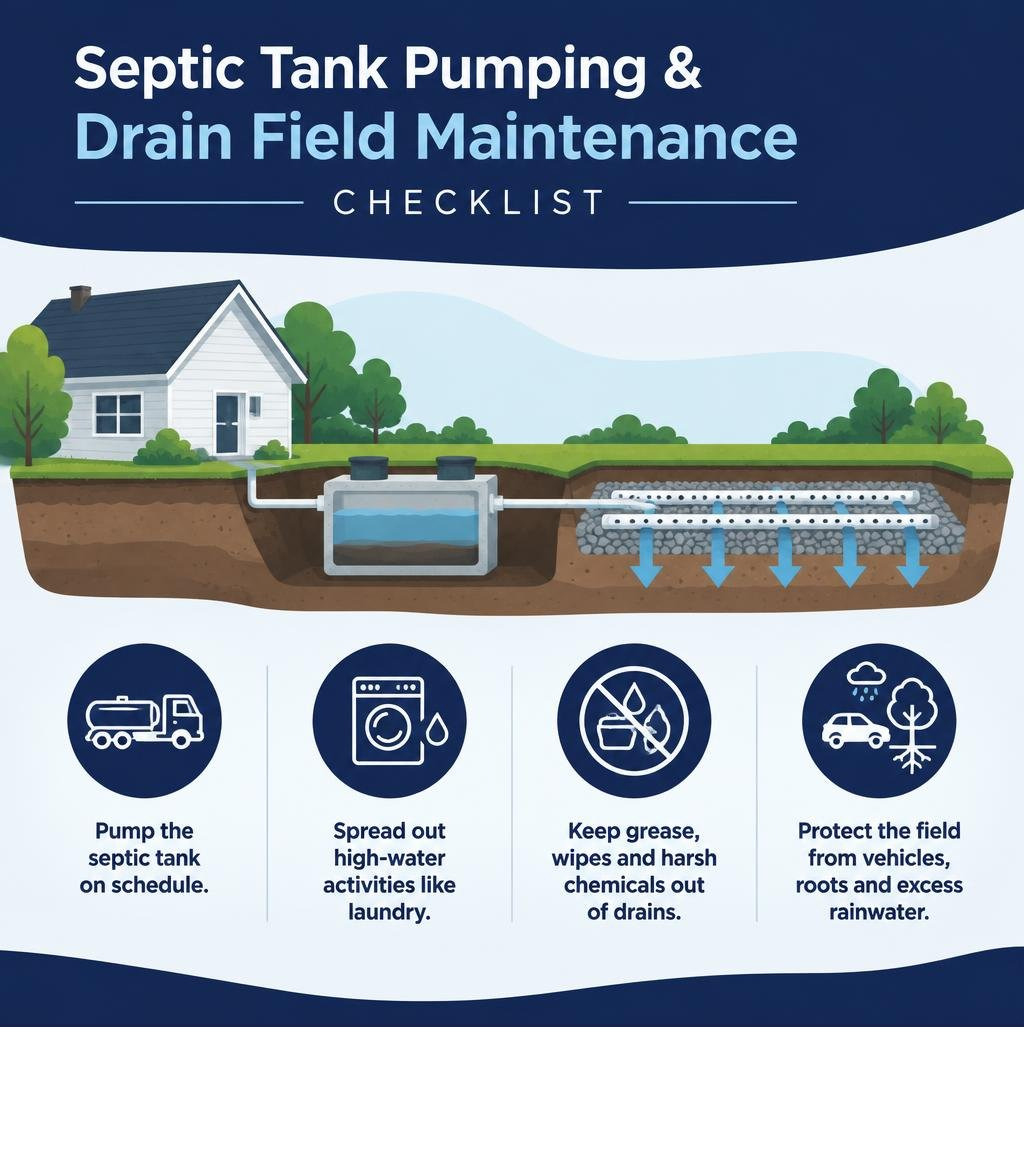
Septic system drain field maintenance starts with four fundamental habits: pump the septic tank on schedule, spread out high-water activities like laundry, keep grease, wipes, and harsh chemicals out of household drains, and protect the absorption area from heavy vehicles, deep root systems, and excessive rainwater runoff. These proactive steps allow the surrounding soil and perforated lateral lines to absorb and treat clarified wastewater naturally instead of becoming clogged, compacted, or hydraulically overloaded.
Your drain field, also commonly known as an absorption field or leach field, is not just vacant yard space. It represents the final, essential biological treatment phase of your onsite wastewater management system. When wastewater leaves your septic tank, it flows into buried lateral lines and filters gradually through gravel beds and native soil layers that neutralize pathogens, bacteria, and nutrients before water re-enters the regional groundwater supply. If undigested solids escape an overdue tank, indoor water consumption spikes uncontrollably, or surface soil gets crushed by equipment, the entire field can lose its natural percolation capacity.
A properly cared for septic system can serve a home or business reliably for several decades. The underlying strategy is straightforward: keep settled solids inside the primary tank where they can be pumped away, divert surface runoff away from absorption trenches, and recognize subtle warning signs before structural clogs take hold.
I am Mack Blair. With more than 30 years of hands-on experience serving Central Indiana property owners, I have seen firsthand how routine septic system drain field maintenance and disciplined septic tank pumping schedules protect homeowners from costly lateral line failures and property disruption.
The Science of Absorption Trenches: How Lateral Lines Process Effluent
Understanding your underground septic network begins with the movement of wastewater. Every time water flows down a drain, it enters the primary septic tank chamber. Within this compartment, physical separation takes place immediately: heavier solid matter settles to the bottom to form a sludge layer, while lighter oils, fats, and grease float upward to create a floating scum cap. The clarified liquid trapped between these two layers, known as effluent, gradually exits through an outlet tee and distribution box into underground perforated lateral pipes. These lines are embedded within washed gravel or engineered synthetic chambers, typically buried 18 to 36 inches beneath your lawn.
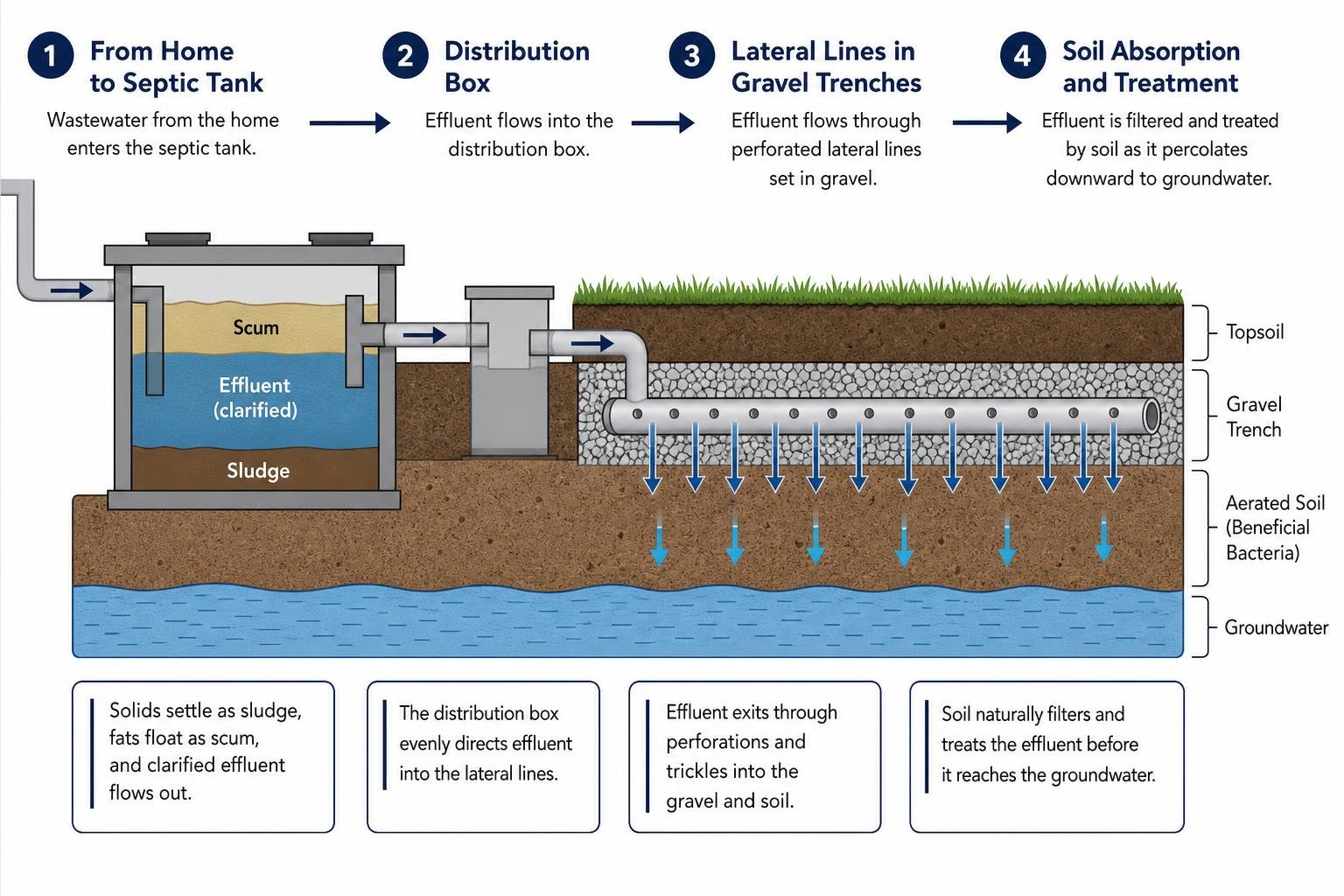
Once effluent passes through the pipe perforations into the gravel bedding, true biological purification takes place in the native soil profile. Aerobic bacteria residing in oxygen-rich soil digest harmful pathogens, suspended organic particles, and microscopic contaminants. Standard tank settling alone eliminates only a fraction of household nutrients, typically about 30% of nitrogen and 60% of phosphorus, leaving the surrounding soil column responsible for vital environmental filtration. According to onsite wastewater research published by Purdue Extension, maintaining natural soil percolation rates is critical for safeguarding regional aquifers and local drinking water wells from microbial contamination.
Without routine tank pump-outs, excess organic matter washes out into the gravel trenches, feeding a dense, gelatinous layer of anaerobic microorganisms known as a biomat. While a thin biomat is normal and aids filtration, heavy organic overload turns this barrier thick and impermeable. Over time, it completely seals the soil pores along the trench bottom, causing sewage to back up into the plumbing or pool on top of the lawn.
| System Condition | Surface Indicators | Plumbing Symptoms | Action Required |
|---|---|---|---|
| Healthy Operation | Dry, normal turf matching surrounding lawn | Fixtures drain quickly; no gurgling pipes | Continue standard inspection and routine pumping |
| Early Warning Signs | Spongy soil; isolated bright green grass strips | Drains slow down when multiple appliances run | Restrict water usage and schedule diagnostic pumping |
| Catastrophic Failure | Standing sewage; pungent odors; black sludge pooling | Toilets and basement floor drains backing up | Emergency service needed to pump out tank and isolate lines |
The Financial Cost of Neglect vs Preventative Care
Addressing subtle symptoms early prevents minor operational stress from evolving into complete absorption field failure. When property owners stay vigilant, simple interventions like cleaning an effluent filter or clearing tank sludge can resolve sluggish flow before lateral trenches suffer permanent damage. Reviewing comprehensive septic maintenance guidelines allows property owners to keep solids trapped inside the primary tank, preserving lateral line soil porosity and eliminating the need for major yard excavation.
The Core Principles of Septic System Drain Field Maintenance
A healthy drain field relies on a delicate balance of biological, physical, and environmental factors. Soil requires constant oxygen penetration to support aerobic decomposition, moderate moisture levels that avoid saturation, and freedom from mechanical soil compaction. Adhering to proven EPA septic care guidelines helps property owners preserve this natural balance for decades.
These fundamental rules apply whether you are caring for a standard residential septic system, an active commercial grease trap at a food service facility, or high-capacity car wash drainage pits handling heavy sediment and soap runoff. In every scenario, the primary goal remains identical: capture and isolate suspended solids before they can migrate downstream into secondary drainage beds or soil absorption areas.
Daily Habits and Water Conservation for Septic System Drain Field Maintenance
Every gallon of water entering your building must eventually filter through the soil in your yard. When large volumes of water enter the septic tank in a short timeframe, it creates hydraulic surge. This rapid surge agitates settled sludge and sends buoyant solids rushing past baffles and straight into your lateral lines.
- Space out water-intensive chores by running one or two loads of laundry each day rather than completing multiple loads in a single afternoon.
- Fix leaking toilets and dripping faucets promptly, since a defective toilet flapper can quietly dump hundreds of gallons of clean water into the tank every week.
- Install water-efficient showerheads and aerators to reduce overall daily hydraulic load.
- Keep cooking grease, frying oils, bacon fat, and food waste out of sink drains by placing them directly into household trash containers.
- Never flush non-biodegradable items, such as wet wipes, paper towels, facial tissues, feminine hygiene products, dental floss, or cigarette butts.
- Avoid pouring harsh chemical drain cleaners, concentrated bleach, or leftover medications down drains, as they kill the beneficial bacteria responsible for breaking down waste.
Implementing practical tips to keep lateral lines healthy ensures that the biological ecosystem within your septic tank and surrounding soil stays balanced and capable of processing daily household waste.
Landscaping and Surface Protection Over Absorption Trenches

Surface activities directly influence what happens beneath your lawn. Heavy physical weight crushes buried plastic pipes, fractures distribution boxes, and packs soil grains tightly together, eliminating the air pockets necessary for oxygen transfer and water absorption.
- Keep all motor vehicles, utility trailers, heavy riding mowers, and construction machinery off your drain field.
- Plant only shallow-rooted turf grasses or native perennial flowers directly above lateral trenches.
- Maintain safe distances from deep-rooted trees and invasive shrubs, keeping standard trees at least 30 feet away and aggressive moisture-seeking varieties like willows and maples at least 50 feet away.
- Direct roof downspouts, basement sump pump discharge pipes, and landscape irrigation systems away from the absorption area to prevent soil waterlogging.
- Never build permanent structures, such as concrete patios, storage sheds, asphalt driveways, above-ground swimming pools, or wooden decks, over any part of your lateral field.
Seasonal Checklists for Ongoing Septic System Drain Field Maintenance
Each season brings distinct environmental conditions that impact your underground drainage infrastructure:
- Spring: Inspect the yard for pooling water or sunken ground as winter snow melts and seasonal rains increase. Ensure that surface runoff is channeled away from saturated soil beds.
- Summer: Keep a close eye on your system during peak summer gatherings and dry spells. Ensure lawn sprinkler zones are positioned at least 10 feet away from trench borders.
- Fall: Trim back wild brush and remove invasive saplings around the perimeter. Verify that tank access covers fit securely to keep out autumn leaves and debris.
- Winter: Let your lawn grow slightly taller during the final autumn mowing to provide natural insulation against deep ground freezes. Avoid piling snow over the absorption area, as compacted snow drives frost further into the soil.
The Hidden Dangers of DIY Fixes and Biological Additives
When sluggish drains or localized dampness occur, homeowners are often tempted by chemical additives or store-bought enzyme treatments promising to restore drain fields overnight. Unfortunately, these products often do more harm than good. Chemical degreasers and biological additives tend to break down settled sludge blankets into tiny, emulsified particles. Instead of settling safely at the bottom of the tank, these particles stay suspended and float directly into lateral trenches, where they quickly seal soil pores and accelerate biomat buildup.
Attempting do-it-yourself lateral line clearing using mechanical snakes or consumer pressure washers can also crack fragile pipes or dislodge surrounding gravel beds. Similarly, unauthorized excavation over active absorption lines poses significant physical hazards and risks irreversible trench collapse. Professional diagnostics and regular tank pumping remain the only reliable methods for preserving drainage efficiency.
When evaluating your ongoing system maintenance strategy, consider this practical range of options:
- Good: Practice daily indoor water conservation, eliminate chemical drain cleaners, maintain shallow turf cover, and visually inspect the yard each season for surface moisture.
- Better: Combine conservation habits with annual tank inspections, routine effluent filter cleanings, and scheduled tank pump-outs every two to three years.
- Best: Partner with a dedicated local septic pumping professional for scheduled tank cleanouts, comprehensive sludge depth evaluations, and specialized commercial grease trap or drainage pit maintenance.
For heavy industrial site management and well operations, proper mud handling plays an equally critical role. Utilizing dependable Mud Puppy equipment for clean mud recycling and drilling ensures continuous solids removal, protects sensitive surrounding soil formations, and prevents excessive environmental disruption during demanding underground drilling projects.
Professional Inspection and Pumping: What to Expect from an Expert Partner
A thorough professional evaluation goes far beyond simply removing a tank lid and pumping out liquid. Experienced septic technicians evaluate your system by measuring the exact thickness of both the floating scum layer and bottom sludge deposit. When total sludge accumulation reaches within 12 inches of the outlet baffle, or the floating scum layer gets within 3 inches, immediate pumping is necessary to prevent solid particles from escaping into your absorption trenches.
During a standard professional septic service visit, a technician will perform several essential tasks:
- Inspect the structural condition of the inlet and outlet baffles to ensure solids remain safely contained inside the tank.
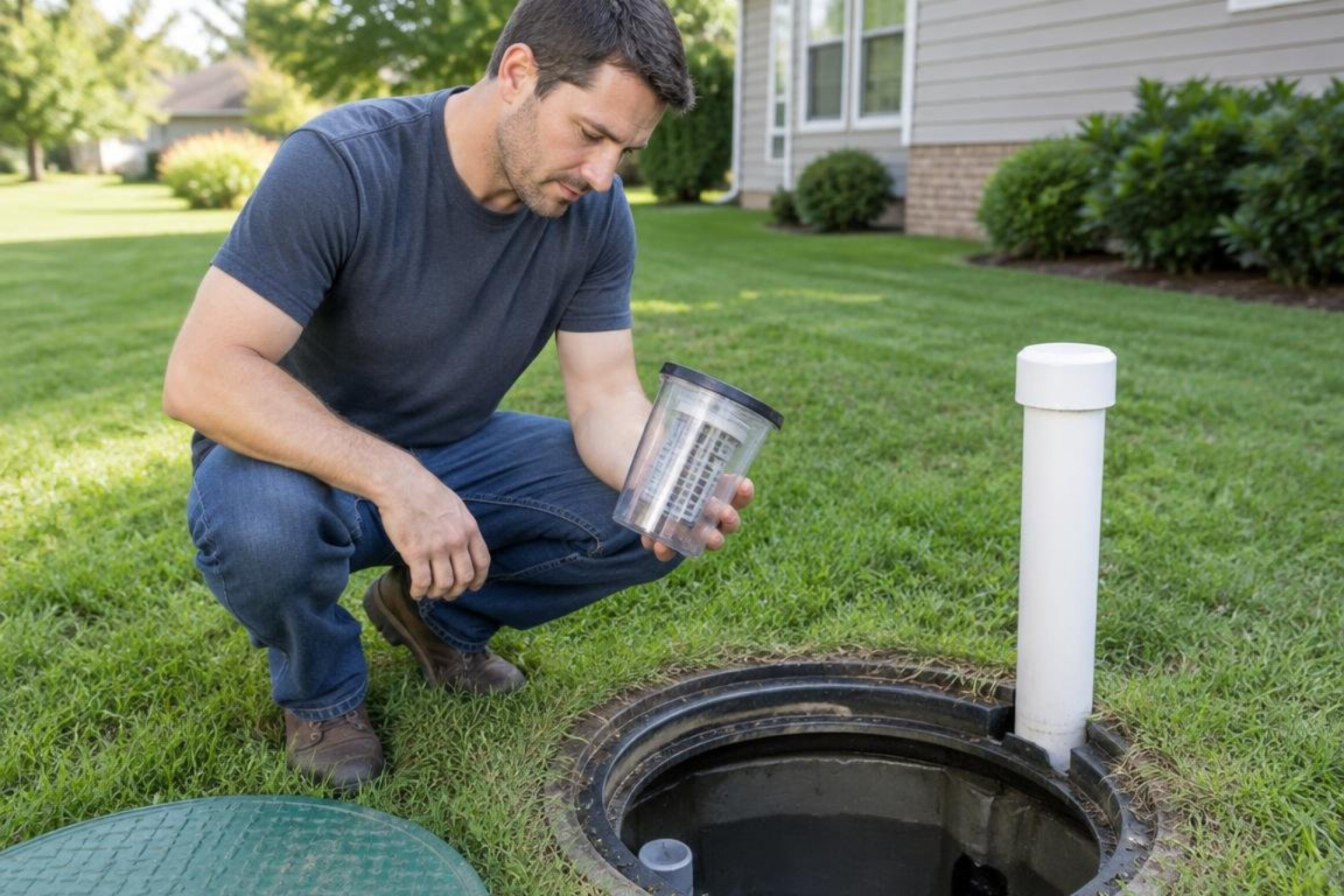
- Locate, remove, and thoroughly wash the reusable effluent filter situated in the outlet tee.
- Inspect the distribution box to confirm that clarified effluent divides evenly across all lateral runs without pooling.
- Evaluate overall tank integrity, checking for signs of concrete corrosion, root intrusion, or excessive groundwater infiltration.
- Completely pump out primary and secondary chambers to remove settled solids and restore proper retention capacity.
Maintaining proper septic tank pumping intervals ensures that your septic tank operates efficiently while protecting your lateral field from premature clogging and costly repairs.
Frequently Asked Questions About Drain Field Longevity
How long does a properly maintained drain field last?
With regular maintenance, a conventional residential absorption field typically lasts between 20 and 30 years. However, neglecting scheduled tank pumping, allowing deep tree roots to enter lateral lines, or driving heavy vehicles over absorption trenches can cause irreversible soil compaction and premature system failure in fewer than 10 years.
Can a sluggish or clogged drain field be restored without total replacement?
In many cases, an absorption field experiencing early biomat buildup can be restored if caught before total structural collapse occurs. Thoroughly pumping the septic tank, cleaning the effluent filter, resting the trenches through strict water reduction, and clearing blockages from distribution lines can allow the soil to aerate naturally and regain permeability.
How can I tell if standing water is caused by heavy rainfall or drain field failure?
Normal rainwater pooling generally recedes within 24 to 48 hours after a storm, covers broad areas of the yard evenly, and has no foul odor. If standing water remains concentrated directly over your lateral lines for days, produces a distinct sewage smell, or is accompanied by slow indoor drains and gurgling pipes, your absorption field is failing to accept effluent properly.
Conclusion
Your septic drain field is an essential component of your property infrastructure, working silently underground to protect public health and the surrounding environment. Preserving your lateral lines requires simple, steady care: pump your septic tank on schedule, practice sensible indoor water conservation, keep harmful chemicals and non-biodegradable waste out of your plumbing, and protect the soil surface from heavy equipment and invasive tree roots. Taking action at the first sign of slow drainage or yard dampness helps you avoid severe disruptions and expensive property restoration.
Blair & Norris is Your Local Central Indiana Provider for reliable, high-quality septic tank maintenance and pumping. As a family-owned business serving our local neighbors for more than 75 years, we take pride in delivering dependable service backed by 24/7 live phone support and outstanding customer feedback on Google Reviews. We proudly serve residential and commercial properties throughout Indianapolis, Carmel, Fishers, Noblesville, Westfield, Greenwood, and communities across Hamilton, Marion, Hendricks, Johnson, and Morgan counties.
Whether you need expert septic tank pumping and maintenance in Indiana or require rapid response emergency septic service when unexpected backups occur, our skilled team is ready to assist. Contact Blair & Norris today to request an estimate and ensure your septic system continues operating smoothly for years to come.